COPPER

A PS Audio Publication

Issue 164 • Free Online Magazine

Issue 164 FROM THE SWEET SPOT

Spending Time With the Grado RS1x Headphones

Spending Time With the Grado RS1x Headphones

I’m willing to bet that most of us with big speakers, bulky amps, and dedicated listening rooms rarely use headphones. I’m not talking about the sweaty loud ones you use on the treadmill, or the sound-insulating, noise-canceling cans for plane trips and office work. I’m especially not talking about portable buds, pods, and wireless sets that let you talk, stream, and tell Alexa to order groceries from your smartphone. When I say headphones, I’m talking about those large over-ear pieces of plastic, padding and metal tethered directly to an amp with a cable and whose primary function is to disconnect you from the world so you can just focus on the music.

I’ve had several sets over the years, usually for no other reason than to blast music while my parents were home. My first headphones were a pair of Realistic Nova series from RadioShack, powered by my Sony compact all-in-one receiver/turntable. For increased mobility, I bought an extension cord that uncoiled as far as my desk and bed. One Christmas, I requested the ultimate in 20th century engineering, a pair of AM/FM battery-powered headphones with tuning knobs and antennae for reception. My parents weren’t hip to that idea. They had already bought me a transistor radio, but I wanted to listen to KC and The Sunshine Band and ride my bike at the same time. They outlined a number of frightening scenarios, like not being able to hear the speeding Camaro that would run into me. Or, if it suddenly started to rain, I could be electrocuted by the batteries or struck by lightning, both causing me to ride my bike into a ditch. Then, there was the danger of other kids stealing the electronics that shouldn’t be outdoors in the first place. I’m sure it’s the thoughts of such hazards that have prevented me from ever committing fully to portable music.

In junior high school, I upgraded to a pair of chunky brown Koss with a nifty volume knob. Koss was one of the more popular brands of the 1970s, but others included Pioneer, Pickering, Sansui, Kenwood, Sony, and, of course, Tandy/Realistic from RadioShack. By the time I graduated to my NAD 7250PE receiver, I was finally ready for something a bit more refined and splurged on the Austrian-made AKG K240s. These were different than all the closed-back headphones that created a sealed listening environment around your ears. The K240s (available today as the K240 Studio and K240 MKII) are a semi open-back model that allows for some ambient sound to be heard from the outside world and gives your music a more “open” and lifelike sound. I had them for years and enjoyed their ability to provide consistently good sound, no matter what my speakers or room were like. But as my gear improved over time, my critical headphone listening nearly ceased – until we all started working from home during lockdowns. With the AKGs long gone, it was time again to get a new set of headphones so I wouldn’t bother my wife.

After researching their phono cartridges in the past, I was aware that Grado Laboratories, founded in 1953 and headquartered in Brooklyn, NY, had been making headphones for more than thirty years. (For an in-depth piece about Grado, please read John Seetoo’s Copper articles in Issue 115 and Issue 116.) Figuring that it really wasn’t worth spending too much, I decided to buy one of their more reasonable models that have been in production since the early days.

The Prestige SR80e, about $100 at the time, sounded terrific. (The current model is the SR80x.) I also got the 15-foot Grado X-Series extension cable, which cost almost as much as the headphones but allowed my wife and me to work in different rooms. When lockdowns ended and I got my listening room back, I immediately forgot about my Grados, but then a friend called on me for some headphone advice. As I explored possibilities for him, I realized how much the world had changed. There were headphones selling for nearly as much as a pair of Klipsch Cornwall floorstanding speakers. And the category had become increasingly specialized, with choices of electrostatic, planar magnetic, or dynamic drivers, and a variety of in-ear options also existed, complete with noise-cancellation and wireless features. How did we go from RadioShack Novas to the current panoply of brands, styles, and prices?

John Chen, sales manager at Grado Laboratories, reminded me that Steve Jobs and a youth-driven market have played a huge role in reinvigorating headphone technology and sales. If you’re old enough to have owned a Sony Walkman cassette player, you realize how revolutionary the Apple iPod was in portable music, followed of course by CD-quality and high-resolution streaming formats available on smartphones and other devices. Add today’s new generation of headphones, and the portable music experience is better than ever. My friend ended up getting a pair of $399 wireless over-ear Sennheiser MOMENTUM 3 headphones with active noise cancellation, which he couples with his iPhone. He really likes their convenience, comfort, and sound, but his satisfaction has not encouraged me to up my portable game.

I still have a $10 pair of earbuds for my old Android phone, and I don’t have plans to adopt Bluetooth in-ear monitors, with or without active noise-cancellation, but I’ll always have a good old-fashioned set of traditional indoor headphones.

I’ve been using the SR80e for about two years and they sound just fine to me, but there are diehard Grado users out there who spend hundreds or thousands of dollars on their sets. Grado headphones run from $100 to $1,795, and in a few months, they will release the GS3000x in their Statement Series, which will be priced at $1,995. I have never owned an expensive pair of headphones and have always wondered why someone would spend so much, until John Chen generously let me audition the Reference Series RS1x at $750 – approximately seven times the price of any headphones I’ve ever owned.
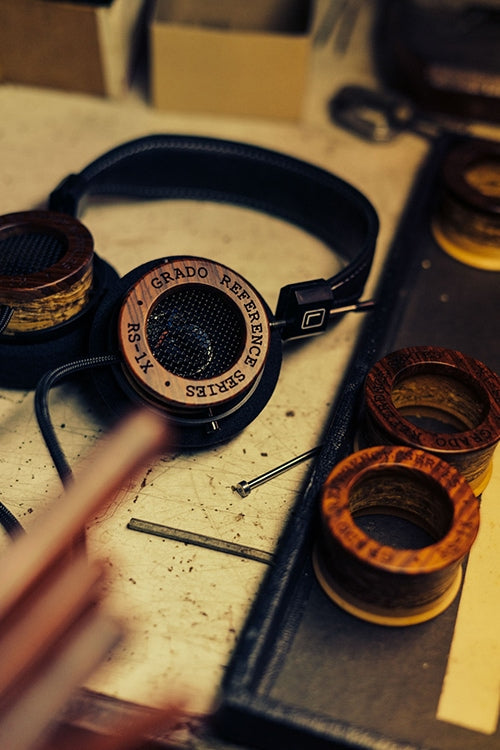


Grado Rs1x headphones.

Grado Rs1x headphones.


They arrived beautifully packaged and presented in a white box. The materials are top-notch, with a heavy copper 8-conductor cable and leather headband. I plugged the phones into my Rogers High Fidelity 65-V1 tube integrated amplifier, which has a dedicated headphone output circuit with impedance matching, a convenient feature given that some onboard stages might not power your headphones properly and require you to use an additional headphone amplifier to flesh out the signal or drive headphones with impedance levels as high as 600 ohms.  For the driver housing, the RS1x phones use gorgeous wooden cups made of maple, hemp, and cocobolo. The size of the ear cushion, the materials used, and the distance from the drivers to the ears are carefully thought out for optimal sound quality because listeners are essentially wearing a listening room on their heads.

I wasn’t even sure what to expect from high-end headphones. I remember first hearing a pair of Cerwin-Vega speakers with 15-inch woofers that sounded so good to my young ears, because I reacted to them viscerally. The bass beat my chest and the horn tweeter shrieked, but that’s certainly not what I want in headphones. I shouldn’t be blown away with thumping bass and extreme volumes – which can be achieved easily with a far cheaper set of headphones. I want a balanced full spectrum of sound and ample bass but at moderate volumes so I don’t damage my hearing even further.

I started by listening to vinyl, but decided that for extended listening, I would stream hi-res and CD-quality files from Qobuz via my laptop and a Schiit Modi 3E DAC. I enjoyed selections by Norah Jones, Bill Evans, Chet Baker, Johnny Cash, Joni Mitchell, The Chamber Music Society of Lincoln Center, and the Tedeschi Trucks Band, but it’s when I came upon Steely Dan’s Aja (1977) that the RS1x really enchanted me.
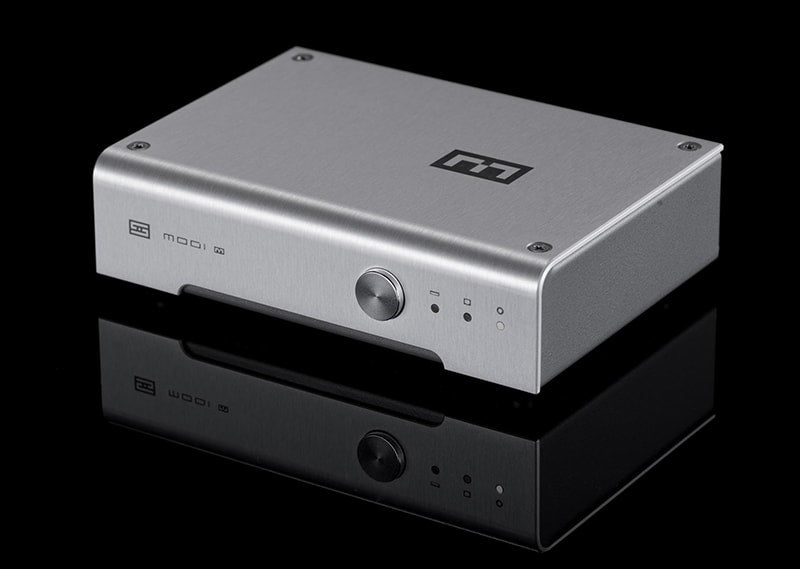
 

Schiit Modi 3E DAC.

Schiit Modi 3E DAC.


I hadn’t listened to those overplayed songs since they were on radio in the late 1970s, and hearing them fresh was a revelatory experience as Walter Becker, Donald Fagen, and something like 40 guest musicians who played on Aja, shined through the headphones. Though the vocals and instruments are layered, I always heard aural space and clarity. David Bowie, Primus, and The Police all sounded spot-on, but Steely Dan’s jazz-rock proved to be downright sublime. The RS1x were extraordinarily nuanced, precise, warm and intimate, yet sharply detailed and crisp and addictive in a way that gave me a fresh perspective on what high-end headphone listening has to offer.

First, I think most headphone enthusiasts would agree that audiophile-grade detail, dynamic range and musical engagement are possible at far lower cost than with a set of comparable speakers. That would be especially true of my Grado SR80e’s: I have yet to hear a $100 pair of speakers that sound that good. Secondly, headphones allow you to be fully immersed in great-sounding music without worrying about space requirements, room treatments, and disturbing the neighbors. Finally, integrating a pair of headphones into your existing system does not require a major investment in audio components. If you don’t already have a headphone jack on your integrated amp, preamp, or receiver, it’s as easy as adding a headphone amplifier, starting at $99. In fact, a fine speaker-less system can be built upon a DAC/integrated amp combo unit.

If there comes a time when I no longer want to maintain a scorching tube amp, floorstanding speakers, and a vinyl collection, I would get the best Grado headphones I could afford and either a Schiit Jotunheim with DAC module, PS Audio’s Sprout,  or the ultimate all-in-one player, PS Audio’s Stellar Strata. Meanwhile, I will savor the RS1x for a few more hours before I have to ship them back to Brooklyn. Maybe I’ll listen to Aja one more time.


Header image of the Grado RS1x from the Grado Labs website.

More from Issue 164

View All Articles in Issue 164

Search Copper Magazine

#230 Camaraderie by B. Jan Montana May 04, 2026 #230 AXPONA 2026: A Family Gathering by Paul McGowan May 04, 2026 #230 Pianist Ryan Benthall Explores Jazz Realms and Far Beyond With Divine Sky by Frank Doris May 04, 2026 #230 The Vinyl Beat in AXPONA-Land by Rudy Radelic May 04, 2026 #230 Teddy Thompson’s Musical Growth Deepens With Never Be the Same by Ray Chelstowski May 04, 2026 #230 More Fun in the Sun: Florida Audio Expo, Part Two by Frank Doris May 04, 2026 #230 CanJam NYC 2026 Show Report: Heady Sound, Part Two by Frank Doris and Harris Fogel May 04, 2026 #230 Sonic Youth On Murray Street by Wayne Robins May 04, 2026 #230 Graffeo Coffee: A Symphony of Sensory Experience by Joe Caplan May 04, 2026 #230 The Saul Authority: The Story of Hi-Fi Pioneer Saul Marantz by Olivier Meunier-Plante May 04, 2026 #230 How to Play in a Rock Band, 23: Encounters With Famous Musicians, Part Two by Frank Doris May 04, 2026 #230 An Outlier in the Rack: A Vintage BIC Beam Box by The Staff at Just Audio May 04, 2026 #230 PS Audio in the News by PS Audio Staff May 04, 2026 #230 A Cautionary Tale by Rich Isaacs May 04, 2026 #230 Reel-to-Reel Roots, Part 33 (Revised): Ken Kessler Reports On the 2026 (British) AudioJumble by Ken Kessler May 04, 2026 #230 Text Messaging by Frank Doris May 04, 2026 #230 The Audiophile Rat Race by Peter Xeni May 04, 2026 #230 On the Rocks by Rich Isaacs May 04, 2026 #229 The Earliest Stars of Country Music, Part Three by Jeff Weiner Apr 06, 2026 #229 The Healing Power of Music and Sound at the Omega Institute by Joe Caplan Apr 06, 2026 #229 CanJam NYC 2026 Show Report: Heady Sound, Part One by Frank Doris Apr 06, 2026 #229 Florida Audio Expo 2026: Warming Up to High-End Audio, Part One by Frank Doris Apr 06, 2026 #229 Quick Takes: Anne Bisson, Sam Morrison, The Velvet Underground, and the Stooges by Frank Doris Apr 06, 2026 #229 The Vinyl Beat: New Arrivals, and Old Audio Show Demo Scores to Settle by Rudy Radelic Apr 06, 2026 #229 Harvard Gets a High-End Audio Education by Frank Doris Apr 06, 2026 #229 No Country for Old Knees by B. Jan Montana Apr 06, 2026 #229 How To Play in A Rock Band, 22: Encounters With Famous Musicians, Part 1 by Frank Doris Apr 06, 2026 #229 The Soulful Grooves of Guinea-Bissau by Steve Kindig Apr 06, 2026 #229 Four-Hand Piano Performance at Its Finest by Stephan Haberthür Apr 06, 2026 #229 The People Who Make Audio Happen: Supreme Acoustics Systems’ Las Vegas Grand Opening by Harris Fogel Apr 06, 2026 #229 Blue Öyster Cult: Tyranny and Expectations by Wayne Robins Apr 06, 2026 #229 Guitarist Rick Vito’s Cinematic New Album, Slidemaster by Ray Chelstowski Apr 06, 2026 #229 Measurements and Observational Listening by Paul McGowan Apr 06, 2026 #229 PS Audio in the News by PS Audio Staff Apr 06, 2026 #229 Back to My Reel-to-Reel Roots, Part 28: The Cassette Strikes Back by Ken Kessler Apr 06, 2026 #229 Are You Receiving Me? by Frank Doris Apr 06, 2026 #229 Hospitality by Peter Xeni Apr 06, 2026 #229 Cantina Gateway by James Schrimpf Apr 06, 2026 #228 Serita’s Black Rose Duo Shakes Your Soul With a Blend of Funk, Rock, Blues and a Whole Lot More by Frank Doris Mar 02, 2026 #228 Vinyl, A Love Story by Wayne Robins Mar 02, 2026 #228 Thrill Seeker by B. Jan Montana Mar 02, 2026 #228 The Vinyl Beat: Donald Byrd, Bill Evans, Wes Montgomery, Eddie Palmieri and Frank Sinatra by Rudy Radelic Mar 02, 2026 #228 Listening to Prestige: The History of a Vitally Important Jazz Record Label by Frank Doris Mar 02, 2026 #228 How to Play in a Rock Band, 21: Touring With James Lee Stanley by Frank Doris Mar 02, 2026 #228 The NAMM 2026 Show: The Music Industry’s Premier Event by John Volanski Mar 02, 2026 #228 The Earliest Stars of Country Music, Part Two by Jeff Weiner Mar 02, 2026 #228 From The Audiophile's Guide: A Brief History of Stereophonic Sound by Paul McGowan Mar 02, 2026

Spending Time With the Grado RS1x Headphones

Spending Time With the Grado RS1x Headphones

I’m willing to bet that most of us with big speakers, bulky amps, and dedicated listening rooms rarely use headphones. I’m not talking about the sweaty loud ones you use on the treadmill, or the sound-insulating, noise-canceling cans for plane trips and office work. I’m especially not talking about portable buds, pods, and wireless sets that let you talk, stream, and tell Alexa to order groceries from your smartphone. When I say headphones, I’m talking about those large over-ear pieces of plastic, padding and metal tethered directly to an amp with a cable and whose primary function is to disconnect you from the world so you can just focus on the music.

I’ve had several sets over the years, usually for no other reason than to blast music while my parents were home. My first headphones were a pair of Realistic Nova series from RadioShack, powered by my Sony compact all-in-one receiver/turntable. For increased mobility, I bought an extension cord that uncoiled as far as my desk and bed. One Christmas, I requested the ultimate in 20th century engineering, a pair of AM/FM battery-powered headphones with tuning knobs and antennae for reception. My parents weren’t hip to that idea. They had already bought me a transistor radio, but I wanted to listen to KC and The Sunshine Band and ride my bike at the same time. They outlined a number of frightening scenarios, like not being able to hear the speeding Camaro that would run into me. Or, if it suddenly started to rain, I could be electrocuted by the batteries or struck by lightning, both causing me to ride my bike into a ditch. Then, there was the danger of other kids stealing the electronics that shouldn’t be outdoors in the first place. I’m sure it’s the thoughts of such hazards that have prevented me from ever committing fully to portable music.

In junior high school, I upgraded to a pair of chunky brown Koss with a nifty volume knob. Koss was one of the more popular brands of the 1970s, but others included Pioneer, Pickering, Sansui, Kenwood, Sony, and, of course, Tandy/Realistic from RadioShack. By the time I graduated to my NAD 7250PE receiver, I was finally ready for something a bit more refined and splurged on the Austrian-made AKG K240s. These were different than all the closed-back headphones that created a sealed listening environment around your ears. The K240s (available today as the K240 Studio and K240 MKII) are a semi open-back model that allows for some ambient sound to be heard from the outside world and gives your music a more “open” and lifelike sound. I had them for years and enjoyed their ability to provide consistently good sound, no matter what my speakers or room were like. But as my gear improved over time, my critical headphone listening nearly ceased – until we all started working from home during lockdowns. With the AKGs long gone, it was time again to get a new set of headphones so I wouldn’t bother my wife.

After researching their phono cartridges in the past, I was aware that Grado Laboratories, founded in 1953 and headquartered in Brooklyn, NY, had been making headphones for more than thirty years. (For an in-depth piece about Grado, please read John Seetoo’s Copper articles in Issue 115 and Issue 116.) Figuring that it really wasn’t worth spending too much, I decided to buy one of their more reasonable models that have been in production since the early days.

The Prestige SR80e, about $100 at the time, sounded terrific. (The current model is the SR80x.) I also got the 15-foot Grado X-Series extension cable, which cost almost as much as the headphones but allowed my wife and me to work in different rooms. When lockdowns ended and I got my listening room back, I immediately forgot about my Grados, but then a friend called on me for some headphone advice. As I explored possibilities for him, I realized how much the world had changed. There were headphones selling for nearly as much as a pair of Klipsch Cornwall floorstanding speakers. And the category had become increasingly specialized, with choices of electrostatic, planar magnetic, or dynamic drivers, and a variety of in-ear options also existed, complete with noise-cancellation and wireless features. How did we go from RadioShack Novas to the current panoply of brands, styles, and prices?

John Chen, sales manager at Grado Laboratories, reminded me that Steve Jobs and a youth-driven market have played a huge role in reinvigorating headphone technology and sales. If you’re old enough to have owned a Sony Walkman cassette player, you realize how revolutionary the Apple iPod was in portable music, followed of course by CD-quality and high-resolution streaming formats available on smartphones and other devices. Add today’s new generation of headphones, and the portable music experience is better than ever. My friend ended up getting a pair of $399 wireless over-ear Sennheiser MOMENTUM 3 headphones with active noise cancellation, which he couples with his iPhone. He really likes their convenience, comfort, and sound, but his satisfaction has not encouraged me to up my portable game.

I still have a $10 pair of earbuds for my old Android phone, and I don’t have plans to adopt Bluetooth in-ear monitors, with or without active noise-cancellation, but I’ll always have a good old-fashioned set of traditional indoor headphones.

I’ve been using the SR80e for about two years and they sound just fine to me, but there are diehard Grado users out there who spend hundreds or thousands of dollars on their sets. Grado headphones run from $100 to $1,795, and in a few months, they will release the GS3000x in their Statement Series, which will be priced at $1,995. I have never owned an expensive pair of headphones and have always wondered why someone would spend so much, until John Chen generously let me audition the Reference Series RS1x at $750 – approximately seven times the price of any headphones I’ve ever owned.


Grado Rs1x headphones.

Grado Rs1x headphones.


They arrived beautifully packaged and presented in a white box. The materials are top-notch, with a heavy copper 8-conductor cable and leather headband. I plugged the phones into my Rogers High Fidelity 65-V1 tube integrated amplifier, which has a dedicated headphone output circuit with impedance matching, a convenient feature given that some onboard stages might not power your headphones properly and require you to use an additional headphone amplifier to flesh out the signal or drive headphones with impedance levels as high as 600 ohms.  For the driver housing, the RS1x phones use gorgeous wooden cups made of maple, hemp, and cocobolo. The size of the ear cushion, the materials used, and the distance from the drivers to the ears are carefully thought out for optimal sound quality because listeners are essentially wearing a listening room on their heads.

I wasn’t even sure what to expect from high-end headphones. I remember first hearing a pair of Cerwin-Vega speakers with 15-inch woofers that sounded so good to my young ears, because I reacted to them viscerally. The bass beat my chest and the horn tweeter shrieked, but that’s certainly not what I want in headphones. I shouldn’t be blown away with thumping bass and extreme volumes – which can be achieved easily with a far cheaper set of headphones. I want a balanced full spectrum of sound and ample bass but at moderate volumes so I don’t damage my hearing even further.

I started by listening to vinyl, but decided that for extended listening, I would stream hi-res and CD-quality files from Qobuz via my laptop and a Schiit Modi 3E DAC. I enjoyed selections by Norah Jones, Bill Evans, Chet Baker, Johnny Cash, Joni Mitchell, The Chamber Music Society of Lincoln Center, and the Tedeschi Trucks Band, but it’s when I came upon Steely Dan’s Aja (1977) that the RS1x really enchanted me.


Schiit Modi 3E DAC.

Schiit Modi 3E DAC.


I hadn’t listened to those overplayed songs since they were on radio in the late 1970s, and hearing them fresh was a revelatory experience as Walter Becker, Donald Fagen, and something like 40 guest musicians who played on Aja, shined through the headphones. Though the vocals and instruments are layered, I always heard aural space and clarity. David Bowie, Primus, and The Police all sounded spot-on, but Steely Dan’s jazz-rock proved to be downright sublime. The RS1x were extraordinarily nuanced, precise, warm and intimate, yet sharply detailed and crisp and addictive in a way that gave me a fresh perspective on what high-end headphone listening has to offer.

First, I think most headphone enthusiasts would agree that audiophile-grade detail, dynamic range and musical engagement are possible at far lower cost than with a set of comparable speakers. That would be especially true of my Grado SR80e’s: I have yet to hear a $100 pair of speakers that sound that good. Secondly, headphones allow you to be fully immersed in great-sounding music without worrying about space requirements, room treatments, and disturbing the neighbors. Finally, integrating a pair of headphones into your existing system does not require a major investment in audio components. If you don’t already have a headphone jack on your integrated amp, preamp, or receiver, it’s as easy as adding a headphone amplifier, starting at $99. In fact, a fine speaker-less system can be built upon a DAC/integrated amp combo unit.

If there comes a time when I no longer want to maintain a scorching tube amp, floorstanding speakers, and a vinyl collection, I would get the best Grado headphones I could afford and either a Schiit Jotunheim with DAC module, PS Audio’s Sprout,  or the ultimate all-in-one player, PS Audio’s Stellar Strata. Meanwhile, I will savor the RS1x for a few more hours before I have to ship them back to Brooklyn. Maybe I’ll listen to Aja one more time.


Header image of the Grado RS1x from the Grado Labs website.

0 comments

Leave a comment

0 Comments

Your avatar

Loading comments...

🗑️ Delete Comment

Enter moderator password to delete this comment:

✏️ Edit Comment

Enter your email to verify ownership: