COPPER

A PS Audio Publication

Issue 119 • Free Online Magazine

Issue 119

Sound Pilot: Interview with Acoustic Design Consultant Philip Newell

Sound Pilot: Interview with Acoustic Design Consultant Philip Newell
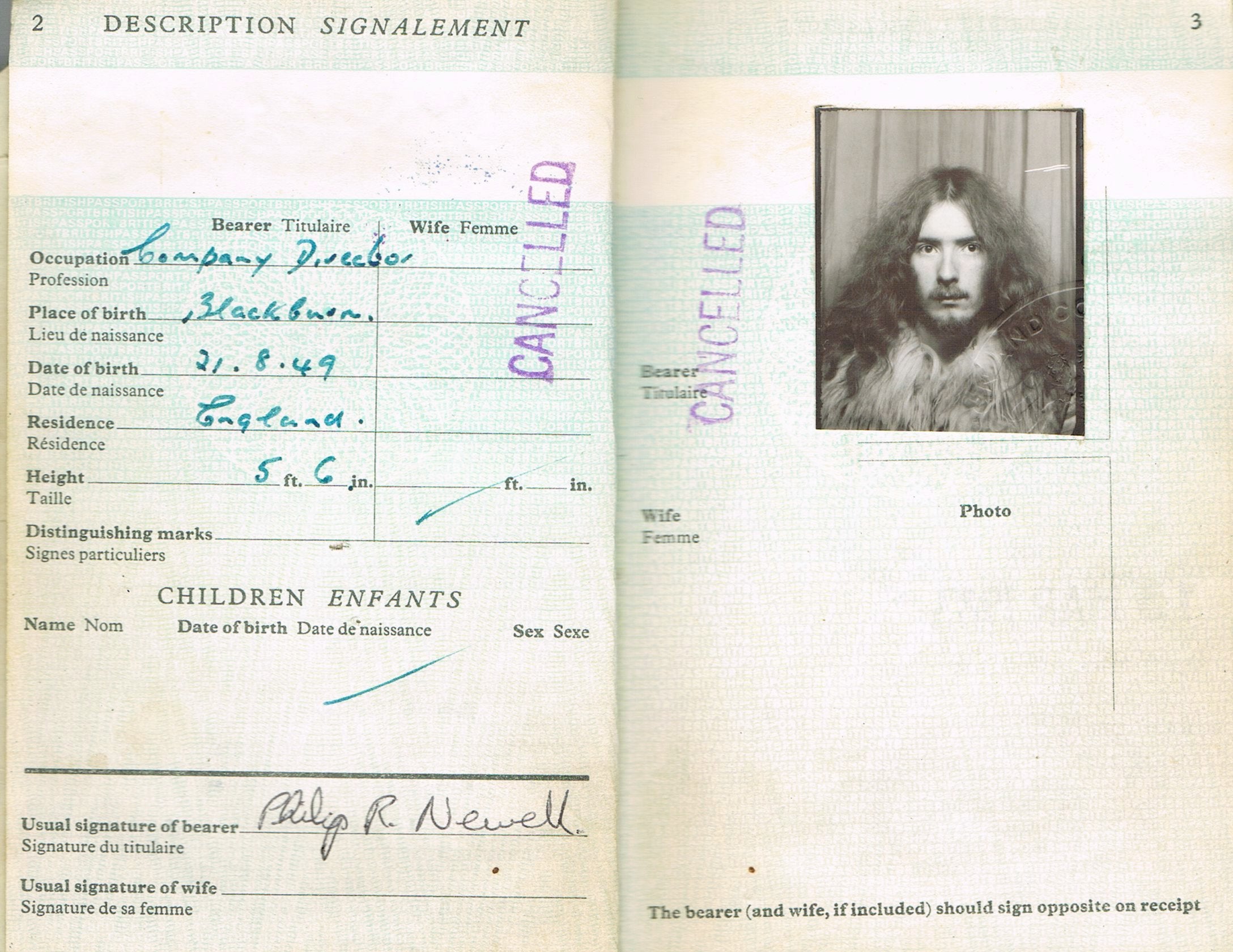
Philip Newell has been professionally involved in audio since 1966. He has done it all, from an apprenticeship in audio electronics while studying radio and television servicing, to doing live sound for internationally renowned musicians, from working in recording studios (and at Pye Records) to becoming the Technical Director of Virgin Records. He has designed and built world-class studios, mobile recording trucks, cinemas and dubbing theatres. Newell has published research papers, presented in conferences and has sponsored academic research. And if that wasn’t enough, he’s a licensed pilot and has flown airplanes and seaplanes, having owned a fleet of seaplanes, and acted as a flight instructor and examiner.
Philip Newell. All photos in this article courtesy of Philip Newell.
Throughout his career, Philip Newell has worked on a large number of recordings by world famous artists including Queen, The Who, Hawkwind, Patti Smith, The Band, Gong, Can, Tangerine Dream and Mike Oldfield, all the way to the Royal Philharmonic Orchestra, the Warsaw Philharmonic Orchestra, The Duke Ellington Orchestra, Dizzy Gillespie and others. Philip has worked in over 30 different countries. He is a fellow of the Institute of Acoustics in the UK and is a member of the Audio Engineering Society, the Society of Motion Picture and Television Engineers (SMPTE) and the Seaplane Pilots Association. He has written eight books published by Focal Press, including Loudspeakers, Studio Monitoring Design and Recording Studio Design, all of which I would highly recommend to anyone wishing to dive deeper into these subjects. In this two-part interview Philip shares his perspective into the past and present of the music industry, as well as thoughts about the laws of aerodynamics and acoustics. J.I. Agnew: You have been professionally involved in the world of music since 1966. What drew you to this sector, of all the options open to a 17-year-old in 1960s Britain? Philip Newell: The music of the late 1950s and the 1960s completely captivated me. My nickname at school was “Prof” (or “The Professor”) and it was assumed that I would go to university and study the sciences. However, when I was in my penultimate year of school, primarily studying “double mathematics” and physics, I saw an apprenticeship job advertised, which was in music-related electronics, so I shocked the school-teachers by announcing my departure and “getting a job.” They were sure that I had made a huge mistake, but the job was like a magnet for me. Very soon after, I was offered a job in live sound, working closely with musicians, and as I had been formally educated in piano playing I could easily converse with them. We got along very well, and I soon got asked to work at larger venues, which took me to London. JIA: How did your friends and family react to your decision to get a job instead of continuing on to university education at the time? PN: I think my parents could see how much I wanted the job, and they knew that music, electronics and loudspeakers had already been my main hobbies for several years. The job also involved spending one day each week at Blackburn Technical College, to study electronics, so at least they could see some further education for me. Most of my friends had already left school a year earlier, after our O Level examinations, so they were not surprised that I should also leave school. In fact, continuing to A Levels and universities was not usual in those days, and I had already done one year of the A Level course. JIA: How did the shift happen from you working at live music events to working in recording studios? PN: Once I was at the Orchid Ballroom, in Purley, I found myself working with some of the top British session musicians. They played in the resident bands of the ballroom about three nights a week (Wednesdays, Fridays and Saturdays), but spent much of their weekdays in the London recording studios, playing on many of the famous records for the top artistes. One of the musicians eventually invited me to help to supervise the building of his new recording studio, in Clapham (South London).
The control room of the Pink Museum (now the Motor Museum) in Liverpool, England in 1988.
Incidentally, in the Orchid Ballroom on Sunday and Monday there would be visiting bands, which were often world-famous groups or singers, such as Stax, Atlantic and Motown artistes. Having the chance to work on the sound for such people was enormously educating. By 1970, I went to work for Pye Recording Studios, which was one of London’s “big three” studios with Abbey Road and Decca, but I very much enjoyed working with their mobile-recording team, which often recorded live events, as well as doing other location recordings. Originally, we carried “loose” recording equipment, such as a Neve mixing console in three sections, but I later helped to install the equipment in their mobile recording truck – designed by Ray Prickett and overseen by Peter Duncan. I enjoyed the challenges of live recording. Every day was different.
The control room of The Town House in Shepherd's Bush, London in 1978, with a 32-track Telefunken M15A tape machine.
JIA: There was a certain situation in the UK around the 1960s which led to the advent of several radio stations on boats and abandoned military platforms (in what was still international waters), broadcasting the kind of music you most likely were captivated by. Were you ever involved with this scene? PN: I was not involved personally, but David Hawkins (a friend who had also worked at Pye, and who now owns Eastlake Audio) was on (I think it was) Radio London. However, these stations radically changed the 1960s music scene in the UK, and in a very positive way. I spent a great deal of time listening to Radio Caroline North, and it was probably the biggest single influence on me feeling that I had to work in music. In fact, I would probably not have left school if there had been no Radio Caroline North. It was such a major source for hearing what I thought was great music. No other radio stations in the north of England were playing this music. JIA: Early on, you started being involved in designing and constructing recording studios, mobile recording trucks and monitor loudspeakers. What was the inspiration that made you go from using studios and loudspeakers that others had designed, to designing your own?
The two Manor Mobile recording trucks in 1980.
PN: As my work was quite “mobile,” involving listening in many studios and recording in many locations, it was very obvious to me and to many others that there was very poor compatibility between their monitoring conditions, yet the very term “monitoring” suggested working to some sort of reference standard. However, to a large degree, studio acoustics was considered to be a black art, involving some sort of sorcery, and the “broadcast standards” that frequently were applied (which were originally intended for radio and TV studios) seemed to me to be largely misplaced. It was like trying to judge an orange by a standard set for apples. Yes; they are both fruit, but they are also very different, with different characteristics. I was absolutely certain that there were better ways of doing things regarding the control rooms and the loudspeaker systems, because at that time, what was being done just didn’t make sense to me.
The mobile control room in one of the Manor Mobile remote recording trucks during the 1970s.
JIA: Has the industry changed much since the 1960s? PN: I would say that in the 1960s there was much more emphasis placed on finding a great song to record. Probably the majority of the songs recorded by the great artistes were the products of specialized songwriters, so it was then the job of the artistes to interpret the songs and make them “their own.” Even groups such as The Beatles, The Rolling Stones and The Animals did this, as did the greats such as Elvis Presley, Joe Cocker, Tom Jones and Tina Turner, for example. None of these singers wrote many songs themselves, and not all great songwriters are great singers, either. The musical arrangements were also largely prepared before they went into a studio, so the principal job of any studio was to make the best recording of an already selected song. There is no doubt that this concept of specialized singers, songwriters and arrangers produced some real classics. JIA: Your transition from a very successful career in the music industry to becoming a professional seaplane pilot and instructor hardly seems like a natural career progression; what prompted such a radical change? PN: In 1978, Richard Branson bought Necker Island, in the British Virgin Islands. The original intention was to build a recording studio on the island, as a tax-haven for the big-earning artistes. When I first went there it was a totally deserted island, and seaplanes were a common form of transport in the Virgin Islands. I had already learned to fly landplanes at Kidlington (now Oxford) Airport, which was only about 2 kilometres from The Manor Studio , so I studied to add the “seaplanes and amphibians” rating to my licence, to facilitate my access to the island during the intended construction of the studio.
The Manor Studio during the late 1970s.
When the idea to build the studio was abandoned, due to a huge fall in the maximum tax rates in the UK after the election of Margaret Thatcher as Prime Minister, I was already hooked on the seaplanes. JIA: Is there any common ground between the skills required of an audio/music professional and a pilot? PN: Although the discipline of the flying world was in huge contrast to the music industry, I realised that the laws of aerodynamics were unbendable. If you disregarded them, they could kill you, but if you respected them, they could also save you. Almost by chance, after taking part in an air display on Southampton Water, I found myself in contact with the aerodynamics people at the University of Southampton, which was coincidentally in the same building as the Institute of Sound and Vibration Research (ISVR). I soon realised that the laws of acoustics were just as dependable as the laws of aerodynamics if you obeyed the rules, so this led me into looking at control rooms and monitor systems from a different perspective. As with aerodynamics, if you obey the rules, the outcome is repeatable and guaranteed. No sorcery is involved!
One of the Lake Buccaneer seaplanes owned by Philip, on River Thames.
JIA: Were you involved further with Necker Island after the studio idea was abandoned? PN: No; I never went back there. However, one day, who knows? I am sure it is not out of the question.
Necker Island, in the British Virgin Islands, owned by Richard Branson, when Philip first flew there.
In Part Two Philip will talk about fitting huge fuel tanks to the Manor Mobile recording truck during the 1973 oil crisis, life at Virgin Records, advice for people breaking into the record business and more.

More from Issue 119

View All Articles in Issue 119

Search Copper Magazine

#230 Camaraderie by B. Jan Montana May 04, 2026 #230 AXPONA 2026: A Family Gathering by Paul McGowan May 04, 2026 #230 Pianist Ryan Benthall Explores Jazz Realms and Far Beyond With Divine Sky by Frank Doris May 04, 2026 #230 The Vinyl Beat in AXPONA-Land by Rudy Radelic May 04, 2026 #230 Teddy Thompson’s Musical Growth Deepens With Never Be the Same by Ray Chelstowski May 04, 2026 #230 More Fun in the Sun: Florida Audio Expo, Part Two by Frank Doris May 04, 2026 #230 CanJam NYC 2026 Show Report: Heady Sound, Part Two by Frank Doris and Harris Fogel May 04, 2026 #230 Sonic Youth On Murray Street by Wayne Robins May 04, 2026 #230 Graffeo Coffee: A Symphony of Sensory Experience by Joe Caplan May 04, 2026 #230 The Saul Authority: The Story of Hi-Fi Pioneer Saul Marantz by Olivier Meunier-Plante May 04, 2026 #230 How to Play in a Rock Band, 23: Encounters With Famous Musicians, Part Two by Frank Doris May 04, 2026 #230 An Outlier in the Rack: A Vintage BIC Beam Box by The Staff at Just Audio May 04, 2026 #230 PS Audio in the News by PS Audio Staff May 04, 2026 #230 A Cautionary Tale by Rich Isaacs May 04, 2026 #230 Reel-to-Reel Roots, Part 33 (Revised): Ken Kessler Reports On the 2026 (British) AudioJumble by Ken Kessler May 04, 2026 #230 Text Messaging by Frank Doris May 04, 2026 #230 The Audiophile Rat Race by Peter Xeni May 04, 2026 #230 On the Rocks by Rich Isaacs May 04, 2026 #229 The Earliest Stars of Country Music, Part Three by Jeff Weiner Apr 06, 2026 #229 The Healing Power of Music and Sound at the Omega Institute by Joe Caplan Apr 06, 2026 #229 CanJam NYC 2026 Show Report: Heady Sound, Part One by Frank Doris Apr 06, 2026 #229 Florida Audio Expo 2026: Warming Up to High-End Audio, Part One by Frank Doris Apr 06, 2026 #229 Quick Takes: Anne Bisson, Sam Morrison, The Velvet Underground, and the Stooges by Frank Doris Apr 06, 2026 #229 The Vinyl Beat: New Arrivals, and Old Audio Show Demo Scores to Settle by Rudy Radelic Apr 06, 2026 #229 Harvard Gets a High-End Audio Education by Frank Doris Apr 06, 2026 #229 No Country for Old Knees by B. Jan Montana Apr 06, 2026 #229 How To Play in A Rock Band, 22: Encounters With Famous Musicians, Part 1 by Frank Doris Apr 06, 2026 #229 The Soulful Grooves of Guinea-Bissau by Steve Kindig Apr 06, 2026 #229 Four-Hand Piano Performance at Its Finest by Stephan Haberthür Apr 06, 2026 #229 The People Who Make Audio Happen: Supreme Acoustics Systems’ Las Vegas Grand Opening by Harris Fogel Apr 06, 2026 #229 Blue Öyster Cult: Tyranny and Expectations by Wayne Robins Apr 06, 2026 #229 Guitarist Rick Vito’s Cinematic New Album, Slidemaster by Ray Chelstowski Apr 06, 2026 #229 Measurements and Observational Listening by Paul McGowan Apr 06, 2026 #229 PS Audio in the News by PS Audio Staff Apr 06, 2026 #229 Back to My Reel-to-Reel Roots, Part 28: The Cassette Strikes Back by Ken Kessler Apr 06, 2026 #229 Are You Receiving Me? by Frank Doris Apr 06, 2026 #229 Hospitality by Peter Xeni Apr 06, 2026 #229 Cantina Gateway by James Schrimpf Apr 06, 2026 #228 Serita’s Black Rose Duo Shakes Your Soul With a Blend of Funk, Rock, Blues and a Whole Lot More by Frank Doris Mar 02, 2026 #228 Vinyl, A Love Story by Wayne Robins Mar 02, 2026 #228 Thrill Seeker by B. Jan Montana Mar 02, 2026 #228 The Vinyl Beat: Donald Byrd, Bill Evans, Wes Montgomery, Eddie Palmieri and Frank Sinatra by Rudy Radelic Mar 02, 2026 #228 Listening to Prestige: The History of a Vitally Important Jazz Record Label by Frank Doris Mar 02, 2026 #228 How to Play in a Rock Band, 21: Touring With James Lee Stanley by Frank Doris Mar 02, 2026 #228 The NAMM 2026 Show: The Music Industry’s Premier Event by John Volanski Mar 02, 2026 #228 The Earliest Stars of Country Music, Part Two by Jeff Weiner Mar 02, 2026 #228 From The Audiophile's Guide: A Brief History of Stereophonic Sound by Paul McGowan Mar 02, 2026

Sound Pilot: Interview with Acoustic Design Consultant Philip Newell

Sound Pilot: Interview with Acoustic Design Consultant Philip Newell
Philip Newell has been professionally involved in audio since 1966. He has done it all, from an apprenticeship in audio electronics while studying radio and television servicing, to doing live sound for internationally renowned musicians, from working in recording studios (and at Pye Records) to becoming the Technical Director of Virgin Records. He has designed and built world-class studios, mobile recording trucks, cinemas and dubbing theatres. Newell has published research papers, presented in conferences and has sponsored academic research. And if that wasn’t enough, he’s a licensed pilot and has flown airplanes and seaplanes, having owned a fleet of seaplanes, and acted as a flight instructor and examiner.
Philip Newell. All photos in this article courtesy of Philip Newell.
Throughout his career, Philip Newell has worked on a large number of recordings by world famous artists including Queen, The Who, Hawkwind, Patti Smith, The Band, Gong, Can, Tangerine Dream and Mike Oldfield, all the way to the Royal Philharmonic Orchestra, the Warsaw Philharmonic Orchestra, The Duke Ellington Orchestra, Dizzy Gillespie and others. Philip has worked in over 30 different countries. He is a fellow of the Institute of Acoustics in the UK and is a member of the Audio Engineering Society, the Society of Motion Picture and Television Engineers (SMPTE) and the Seaplane Pilots Association. He has written eight books published by Focal Press, including Loudspeakers, Studio Monitoring Design and Recording Studio Design, all of which I would highly recommend to anyone wishing to dive deeper into these subjects. In this two-part interview Philip shares his perspective into the past and present of the music industry, as well as thoughts about the laws of aerodynamics and acoustics. J.I. Agnew: You have been professionally involved in the world of music since 1966. What drew you to this sector, of all the options open to a 17-year-old in 1960s Britain? Philip Newell: The music of the late 1950s and the 1960s completely captivated me. My nickname at school was “Prof” (or “The Professor”) and it was assumed that I would go to university and study the sciences. However, when I was in my penultimate year of school, primarily studying “double mathematics” and physics, I saw an apprenticeship job advertised, which was in music-related electronics, so I shocked the school-teachers by announcing my departure and “getting a job.” They were sure that I had made a huge mistake, but the job was like a magnet for me. Very soon after, I was offered a job in live sound, working closely with musicians, and as I had been formally educated in piano playing I could easily converse with them. We got along very well, and I soon got asked to work at larger venues, which took me to London. JIA: How did your friends and family react to your decision to get a job instead of continuing on to university education at the time? PN: I think my parents could see how much I wanted the job, and they knew that music, electronics and loudspeakers had already been my main hobbies for several years. The job also involved spending one day each week at Blackburn Technical College, to study electronics, so at least they could see some further education for me. Most of my friends had already left school a year earlier, after our O Level examinations, so they were not surprised that I should also leave school. In fact, continuing to A Levels and universities was not usual in those days, and I had already done one year of the A Level course. JIA: How did the shift happen from you working at live music events to working in recording studios? PN: Once I was at the Orchid Ballroom, in Purley, I found myself working with some of the top British session musicians. They played in the resident bands of the ballroom about three nights a week (Wednesdays, Fridays and Saturdays), but spent much of their weekdays in the London recording studios, playing on many of the famous records for the top artistes. One of the musicians eventually invited me to help to supervise the building of his new recording studio, in Clapham (South London).
The control room of the Pink Museum (now the Motor Museum) in Liverpool, England in 1988.
Incidentally, in the Orchid Ballroom on Sunday and Monday there would be visiting bands, which were often world-famous groups or singers, such as Stax, Atlantic and Motown artistes. Having the chance to work on the sound for such people was enormously educating. By 1970, I went to work for Pye Recording Studios, which was one of London’s “big three” studios with Abbey Road and Decca, but I very much enjoyed working with their mobile-recording team, which often recorded live events, as well as doing other location recordings. Originally, we carried “loose” recording equipment, such as a Neve mixing console in three sections, but I later helped to install the equipment in their mobile recording truck – designed by Ray Prickett and overseen by Peter Duncan. I enjoyed the challenges of live recording. Every day was different.
The control room of The Town House in Shepherd's Bush, London in 1978, with a 32-track Telefunken M15A tape machine.
JIA: There was a certain situation in the UK around the 1960s which led to the advent of several radio stations on boats and abandoned military platforms (in what was still international waters), broadcasting the kind of music you most likely were captivated by. Were you ever involved with this scene? PN: I was not involved personally, but David Hawkins (a friend who had also worked at Pye, and who now owns Eastlake Audio) was on (I think it was) Radio London. However, these stations radically changed the 1960s music scene in the UK, and in a very positive way. I spent a great deal of time listening to Radio Caroline North, and it was probably the biggest single influence on me feeling that I had to work in music. In fact, I would probably not have left school if there had been no Radio Caroline North. It was such a major source for hearing what I thought was great music. No other radio stations in the north of England were playing this music. JIA: Early on, you started being involved in designing and constructing recording studios, mobile recording trucks and monitor loudspeakers. What was the inspiration that made you go from using studios and loudspeakers that others had designed, to designing your own?
The two Manor Mobile recording trucks in 1980.
PN: As my work was quite “mobile,” involving listening in many studios and recording in many locations, it was very obvious to me and to many others that there was very poor compatibility between their monitoring conditions, yet the very term “monitoring” suggested working to some sort of reference standard. However, to a large degree, studio acoustics was considered to be a black art, involving some sort of sorcery, and the “broadcast standards” that frequently were applied (which were originally intended for radio and TV studios) seemed to me to be largely misplaced. It was like trying to judge an orange by a standard set for apples. Yes; they are both fruit, but they are also very different, with different characteristics. I was absolutely certain that there were better ways of doing things regarding the control rooms and the loudspeaker systems, because at that time, what was being done just didn’t make sense to me.
The mobile control room in one of the Manor Mobile remote recording trucks during the 1970s.
JIA: Has the industry changed much since the 1960s? PN: I would say that in the 1960s there was much more emphasis placed on finding a great song to record. Probably the majority of the songs recorded by the great artistes were the products of specialized songwriters, so it was then the job of the artistes to interpret the songs and make them “their own.” Even groups such as The Beatles, The Rolling Stones and The Animals did this, as did the greats such as Elvis Presley, Joe Cocker, Tom Jones and Tina Turner, for example. None of these singers wrote many songs themselves, and not all great songwriters are great singers, either. The musical arrangements were also largely prepared before they went into a studio, so the principal job of any studio was to make the best recording of an already selected song. There is no doubt that this concept of specialized singers, songwriters and arrangers produced some real classics. JIA: Your transition from a very successful career in the music industry to becoming a professional seaplane pilot and instructor hardly seems like a natural career progression; what prompted such a radical change? PN: In 1978, Richard Branson bought Necker Island, in the British Virgin Islands. The original intention was to build a recording studio on the island, as a tax-haven for the big-earning artistes. When I first went there it was a totally deserted island, and seaplanes were a common form of transport in the Virgin Islands. I had already learned to fly landplanes at Kidlington (now Oxford) Airport, which was only about 2 kilometres from The Manor Studio , so I studied to add the “seaplanes and amphibians” rating to my licence, to facilitate my access to the island during the intended construction of the studio.
The Manor Studio during the late 1970s.
When the idea to build the studio was abandoned, due to a huge fall in the maximum tax rates in the UK after the election of Margaret Thatcher as Prime Minister, I was already hooked on the seaplanes. JIA: Is there any common ground between the skills required of an audio/music professional and a pilot? PN: Although the discipline of the flying world was in huge contrast to the music industry, I realised that the laws of aerodynamics were unbendable. If you disregarded them, they could kill you, but if you respected them, they could also save you. Almost by chance, after taking part in an air display on Southampton Water, I found myself in contact with the aerodynamics people at the University of Southampton, which was coincidentally in the same building as the Institute of Sound and Vibration Research (ISVR). I soon realised that the laws of acoustics were just as dependable as the laws of aerodynamics if you obeyed the rules, so this led me into looking at control rooms and monitor systems from a different perspective. As with aerodynamics, if you obey the rules, the outcome is repeatable and guaranteed. No sorcery is involved!
One of the Lake Buccaneer seaplanes owned by Philip, on River Thames.
JIA: Were you involved further with Necker Island after the studio idea was abandoned? PN: No; I never went back there. However, one day, who knows? I am sure it is not out of the question.
Necker Island, in the British Virgin Islands, owned by Richard Branson, when Philip first flew there.
In Part Two Philip will talk about fitting huge fuel tanks to the Manor Mobile recording truck during the 1973 oil crisis, life at Virgin Records, advice for people breaking into the record business and more.

0 comments

Leave a comment

0 Comments

Your avatar

Loading comments...

🗑️ Delete Comment

Enter moderator password to delete this comment:

✏️ Edit Comment

Enter your email to verify ownership: