COPPER

A PS Audio Publication

Issue 176 • Free Online Magazine

Issue 176 Idle Chatter

Nora O’Connor: Singing from My Heart

Nora O’Connor: Singing from My Heart

Singer, guitarist and bassist Nora O’Connor has shared the stages with the likes of The Decemberists, Iron and Wine, Neko Case, and others, fulfilling a lifelong dream of transcending boundaries through music.

But if her latest record, My Heart, is any indication, Nora O’Connor is never more herself than when she’s driving her message home through her own music. As one of indie music’s most plaintive troubadours, O’Connor’s music is akin to coming back to a warm home on a chilly evening in the dead of winter.

Overall, the record has something for everyone, but what’s most striking is the gritty honesty echoing from the veteran songstress’s voice on cuts such as “Follow Me,” “Grace,” and “Tarot Card.”

O’Connor is a throwback from a different time and a different space, that of the nomadic traveler whose vintage aesthetic and delicate guitar stylings pair gorgeously with her well-worn, road-weary voice. If you’re looking for a low-key album with a lot of heart and vibe to round your year out, or a soundtrack for long fall drives to nowhere, give My Heart a try.

As she contemplates her future, Nora O’Connor settled in with me to recount her earliest musical memories, the evolution of her songwriting process, the recording of My Heart, and what’s next for her.
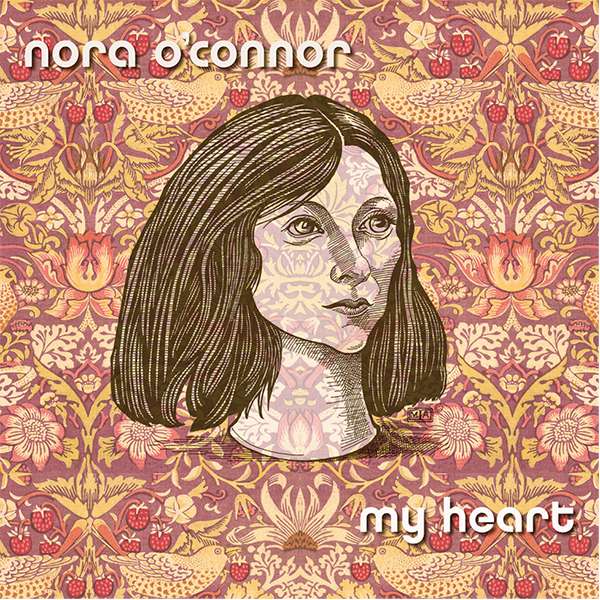
 

Nora O'Connor, My Heart, album cover.


Andrew Daly: When did you know you wanted to make music your career?

Nora O’Connor: When I was in college, I started a band with my new buddies; we were half locals, half students. We sang Crosby, Stills, Nash & Young, the Beatles, the Stones, the Dead, America, and more Crosby, Stills, Nash and Young. (laughs) Those were the first people I sang with, and I realized [I had a] knack for harmony and blending [in] vocals. I really started to feel the electricity that happens when you lock into the harmonies of a song. It was incredibly fulfilling and fun. I began to play guitar around that time, and it didn’t take long before I was playing it in front of people. I somehow knew that was the only way to get mediocre fast!

AD: Which artists influenced you most when you were young, and how have you evolved since?

NOC: When I was a kid and into my teens, I loved Pat Benatar, Heart, Eurythmics, Rickie Lee Jones, Kate Bush, Paul Rodgers, Steve Perry, and oh god, did I love Donna Summer. I would sing right into the speaker and try to lock in with Donna’s voice; I did that all the time when I wasn’t singing into a hairbrush. (laughs) But as I’ve gotten older, I’m starting to settle into the parts of my voice that are the most comfortable, and it helps to know what I cannot do, so I don’t hurt myself anymore. Also, I think my control and confidence have evolved, and I feel that it shows in my voice and approach.

AD: Can you dive deeper into the college scene you were exposed to?

NOC: I played a lot when I was in college at Southern Illinois University. We had great little joints like PK’s, Bobby’s Beer Garden, and the Pinch Penny Pub. When I moved to Chicago, I did a lot of open mics and opening slots at places like No Exit and Uncommon Ground coffee house. Eventually, I started playing small clubs like Schubas and The Hideout, and I still do.

AD: What was the songwriting process for My Heart like?

NOC: Around mid-summer 2020, I started booking little yard shows around my town. This was back when nothing else was happening, and it felt very nourishing to be with a few people for a couple of hours and play music. I wrote a couple of songs for those gigs, and it felt pretty good to see what was inside of me. Having a break from touring with other bands, I wanted to fill my solo set with more original material. I liked what was coming out and wanted the experience of recording my own music. It was an exercise of trusting myself and getting over myself.


AD: Describe your thought process going into the record.

NOC: For a long time, I was insecure and intimidated by the musicians that I worked with and for. I was in a headspace where I thought, why bother? Well, that kind of self-sabotage was getting exhausting, so I quit drinking at the beginning of the pandemic, and that made room for me to dig a little deeper and find what I have to offer musically, spiritually, for my relationships, the whole deal. From there, I took a couple of writing classes to invite discipline into my day and open up my creative senses.

AD: What was your approach to the production for My Heart?

NOC: Working with Alex Hall at Reliable Recorders in Chicago was a no-brainer for me. We [had] made two records together with the Flat Five, who Alex plays drums for. And I’ve come into his studio for many sessions over the years, and I know that Alex knows what mics are good for my voice, and he already had a good feel for my aesthetic. Plus, I was a fan of so many of the records he’s recorded, engineered, and produced. I also did some recording at Steve Dawson’s Kernel Sound Emporium in Chicago. I loved the way his records were turning out and trusted [that] he would be a great person to work with on a few of my songs.
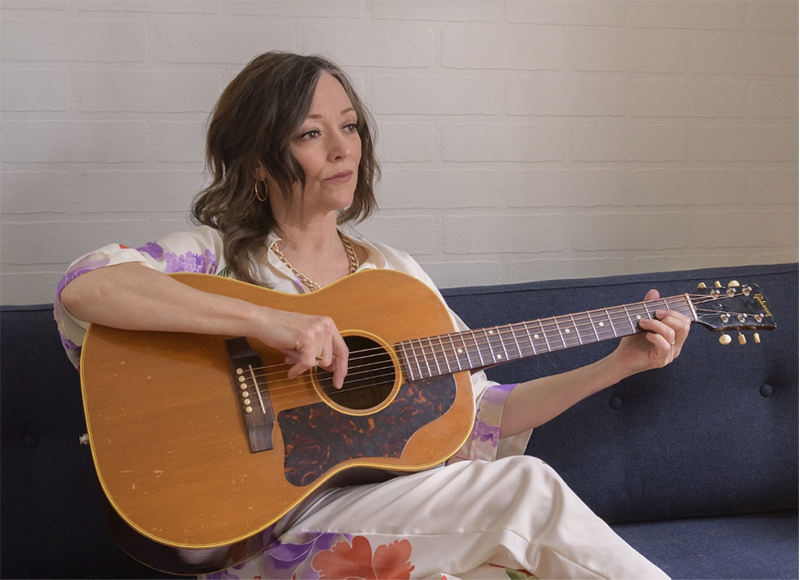
 

Nora O'Connor.

Nora O’Connor.


AD: How has working with artists like the Decemberists, Neko Case, Andrew Bird, and Iron and Wine changed your perspective?

NOC: It feels like I’ve been in a master class for the last 20-plus years, working with these music warriors on stage and offstage too. A show [lasts] two or three hours, so many tours are [really what happens in] the 19 hours between shows, and learning to co-exist with as many as 17 people. Morning coffees on the bus, reading the news on our phones and talking about the issues abound, and I devoured pre- and post-show playlists, learning so much about music I’d never heard. You would be surprised how much you could learn about Loverboy’s first drummer. (laughs)

AD: What’s next for you, Nora?

NOC: I will always do this on some level. I have lots of shows planned regionally and am trying to book a living room tour. For the record, booking your own tours blows. (laughs) I’m at a point in my life where I can’t take the car and drive around the country paying to play anymore. I have to be smart about what I can do. I love small, intimate, unconventional listening rooms like house concerts, art galleries, and yes, even libraries. So, I want to do more of that and plan to do it as often as possible.


Images courtesy of Nora O’Connor/Howlin’ Wuelf Media.

More from Issue 176

View All Articles in Issue 176

Search Copper Magazine

#230 Camaraderie by B. Jan Montana May 04, 2026 #230 AXPONA 2026: A Family Gathering by Paul McGowan May 04, 2026 #230 Pianist Ryan Benthall Explores Jazz Realms and Far Beyond With Divine Sky by Frank Doris May 04, 2026 #230 The Vinyl Beat in AXPONA-Land by Rudy Radelic May 04, 2026 #230 Teddy Thompson’s Musical Growth Deepens With Never Be the Same by Ray Chesltowski May 04, 2026 #230 More Fun in the Sun: Florida Audio Expo, Part Two by Frank Doris May 04, 2026 #230 CanJam NYC 2026 Show Report: Heady Sound, Part Two by Frank Doris and Harris Fogel May 04, 2026 #230 Sonic Youth On Murray Street by Wayne Robins May 04, 2026 #230 Graffeo Coffee: A Symphony of Sensory Experience by Joe Caplan May 04, 2026 #230 The Saul Authority: The Story of Hi-Fi Pioneer Saul Marantz by Olivier Meunier-Plante May 04, 2026 #230 How to Play in a Rock Band, 23: Encounters With Famous Musicians, Part Two by Frank Doris May 04, 2026 #230 An Outlier in the Rack: A Vintage BIC Beam Box by The Staff at Just Audio May 04, 2026 #230 PS Audio in the News by PS Audio Staff May 04, 2026 #230 A Cautionary Tale by Rich Isaacs May 04, 2026 #230 Reel-to-Reel Roots, Part 33 (Revised): Ken Kessler Reports On the 2026 (British) AudioJumble by Ken Kessler May 04, 2026 #230 Text Messaging by Frank Doris May 04, 2026 #230 The Audiophile Rat Race by Peter Xeni May 04, 2026 #230 On the Rocks by Rich Isaacs May 04, 2026 #229 The Earliest Stars of Country Music, Part Three by Jeff Weiner Apr 06, 2026 #229 The Healing Power of Music and Sound at the Omega Institute by Joe Caplan Apr 06, 2026 #229 CanJam NYC 2026 Show Report: Heady Sound, Part One by Frank Doris Apr 06, 2026 #229 Florida Audio Expo 2026: Warming Up to High-End Audio, Part One by Frank Doris Apr 06, 2026 #229 Quick Takes: Anne Bisson, Sam Morrison, The Velvet Underground, and the Stooges by Frank Doris Apr 06, 2026 #229 The Vinyl Beat: New Arrivals, and Old Audio Show Demo Scores to Settle by Rudy Radelic Apr 06, 2026 #229 Harvard Gets a High-End Audio Education by Frank Doris Apr 06, 2026 #229 No Country for Old Knees by B. Jan Montana Apr 06, 2026 #229 How To Play in A Rock Band, 22: Encounters With Famous Musicians, Part 1 by Frank Doris Apr 06, 2026 #229 The Soulful Grooves of Guinea-Bissau by Steve Kindig Apr 06, 2026 #229 Four-Hand Piano Performance at Its Finest by Stephan Haberthür Apr 06, 2026 #229 The People Who Make Audio Happen: Supreme Acoustics Systems’ Las Vegas Grand Opening by Harris Fogel Apr 06, 2026 #229 Blue Öyster Cult: Tyranny and Expectations by Wayne Robins Apr 06, 2026 #229 Guitarist Rick Vito’s Cinematic New Album, Slidemaster by Ray Chelstowski Apr 06, 2026 #229 Measurements and Observational Listening by Paul McGowan Apr 06, 2026 #229 PS Audio in the News by PS Audio Staff Apr 06, 2026 #229 Back to My Reel-to-Reel Roots, Part 28: The Cassette Strikes Back by Ken Kessler Apr 06, 2026 #229 Are You Receiving Me? by Frank Doris Apr 06, 2026 #229 Hospitality by Peter Xeni Apr 06, 2026 #229 Cantina Gateway by James Schrimpf Apr 06, 2026 #228 Serita’s Black Rose Duo Shakes Your Soul With a Blend of Funk, Rock, Blues and a Whole Lot More by Frank Doris Mar 02, 2026 #228 Vinyl, A Love Story by Wayne Robins Mar 02, 2026 #228 Thrill Seeker by B. Jan Montana Mar 02, 2026 #228 The Vinyl Beat: Donald Byrd, Bill Evans, Wes Montgomery, Eddie Palmieri and Frank Sinatra by Rudy Radelic Mar 02, 2026 #228 Listening to Prestige: The History of a Vitally Important Jazz Record Label by Frank Doris Mar 02, 2026 #228 How to Play in a Rock Band, 21: Touring With James Lee Stanley by Frank Doris Mar 02, 2026 #228 The NAMM 2026 Show: The Music Industry’s Premier Event by John Volanski Mar 02, 2026 #228 The Earliest Stars of Country Music, Part Two by Jeff Weiner Mar 02, 2026 #228 From The Audiophile's Guide: A Brief History of Stereophonic Sound by Paul McGowan Mar 02, 2026

Nora O’Connor: Singing from My Heart

Nora O’Connor: Singing from My Heart

Singer, guitarist and bassist Nora O’Connor has shared the stages with the likes of The Decemberists, Iron and Wine, Neko Case, and others, fulfilling a lifelong dream of transcending boundaries through music.

But if her latest record, My Heart, is any indication, Nora O’Connor is never more herself than when she’s driving her message home through her own music. As one of indie music’s most plaintive troubadours, O’Connor’s music is akin to coming back to a warm home on a chilly evening in the dead of winter.

Overall, the record has something for everyone, but what’s most striking is the gritty honesty echoing from the veteran songstress’s voice on cuts such as “Follow Me,” “Grace,” and “Tarot Card.”

O’Connor is a throwback from a different time and a different space, that of the nomadic traveler whose vintage aesthetic and delicate guitar stylings pair gorgeously with her well-worn, road-weary voice. If you’re looking for a low-key album with a lot of heart and vibe to round your year out, or a soundtrack for long fall drives to nowhere, give My Heart a try.

As she contemplates her future, Nora O’Connor settled in with me to recount her earliest musical memories, the evolution of her songwriting process, the recording of My Heart, and what’s next for her.


Nora O'Connor, My Heart, album cover.


Andrew Daly: When did you know you wanted to make music your career?

Nora O’Connor: When I was in college, I started a band with my new buddies; we were half locals, half students. We sang Crosby, Stills, Nash & Young, the Beatles, the Stones, the Dead, America, and more Crosby, Stills, Nash and Young. (laughs) Those were the first people I sang with, and I realized [I had a] knack for harmony and blending [in] vocals. I really started to feel the electricity that happens when you lock into the harmonies of a song. It was incredibly fulfilling and fun. I began to play guitar around that time, and it didn’t take long before I was playing it in front of people. I somehow knew that was the only way to get mediocre fast!

AD: Which artists influenced you most when you were young, and how have you evolved since?

NOC: When I was a kid and into my teens, I loved Pat Benatar, Heart, Eurythmics, Rickie Lee Jones, Kate Bush, Paul Rodgers, Steve Perry, and oh god, did I love Donna Summer. I would sing right into the speaker and try to lock in with Donna’s voice; I did that all the time when I wasn’t singing into a hairbrush. (laughs) But as I’ve gotten older, I’m starting to settle into the parts of my voice that are the most comfortable, and it helps to know what I cannot do, so I don’t hurt myself anymore. Also, I think my control and confidence have evolved, and I feel that it shows in my voice and approach.

AD: Can you dive deeper into the college scene you were exposed to?

NOC: I played a lot when I was in college at Southern Illinois University. We had great little joints like PK’s, Bobby’s Beer Garden, and the Pinch Penny Pub. When I moved to Chicago, I did a lot of open mics and opening slots at places like No Exit and Uncommon Ground coffee house. Eventually, I started playing small clubs like Schubas and The Hideout, and I still do.

AD: What was the songwriting process for My Heart like?

NOC: Around mid-summer 2020, I started booking little yard shows around my town. This was back when nothing else was happening, and it felt very nourishing to be with a few people for a couple of hours and play music. I wrote a couple of songs for those gigs, and it felt pretty good to see what was inside of me. Having a break from touring with other bands, I wanted to fill my solo set with more original material. I liked what was coming out and wanted the experience of recording my own music. It was an exercise of trusting myself and getting over myself.


AD: Describe your thought process going into the record.

NOC: For a long time, I was insecure and intimidated by the musicians that I worked with and for. I was in a headspace where I thought, why bother? Well, that kind of self-sabotage was getting exhausting, so I quit drinking at the beginning of the pandemic, and that made room for me to dig a little deeper and find what I have to offer musically, spiritually, for my relationships, the whole deal. From there, I took a couple of writing classes to invite discipline into my day and open up my creative senses.

AD: What was your approach to the production for My Heart?

NOC: Working with Alex Hall at Reliable Recorders in Chicago was a no-brainer for me. We [had] made two records together with the Flat Five, who Alex plays drums for. And I’ve come into his studio for many sessions over the years, and I know that Alex knows what mics are good for my voice, and he already had a good feel for my aesthetic. Plus, I was a fan of so many of the records he’s recorded, engineered, and produced. I also did some recording at Steve Dawson’s Kernel Sound Emporium in Chicago. I loved the way his records were turning out and trusted [that] he would be a great person to work with on a few of my songs.


Nora O'Connor.

Nora O’Connor.


AD: How has working with artists like the Decemberists, Neko Case, Andrew Bird, and Iron and Wine changed your perspective?

NOC: It feels like I’ve been in a master class for the last 20-plus years, working with these music warriors on stage and offstage too. A show [lasts] two or three hours, so many tours are [really what happens in] the 19 hours between shows, and learning to co-exist with as many as 17 people. Morning coffees on the bus, reading the news on our phones and talking about the issues abound, and I devoured pre- and post-show playlists, learning so much about music I’d never heard. You would be surprised how much you could learn about Loverboy’s first drummer. (laughs)

AD: What’s next for you, Nora?

NOC: I will always do this on some level. I have lots of shows planned regionally and am trying to book a living room tour. For the record, booking your own tours blows. (laughs) I’m at a point in my life where I can’t take the car and drive around the country paying to play anymore. I have to be smart about what I can do. I love small, intimate, unconventional listening rooms like house concerts, art galleries, and yes, even libraries. So, I want to do more of that and plan to do it as often as possible.


Images courtesy of Nora O’Connor/Howlin’ Wuelf Media.

0 comments

Leave a comment

0 Comments

Your avatar

Loading comments...

🗑️ Delete Comment

Enter moderator password to delete this comment:

✏️ Edit Comment

Enter your email to verify ownership: