COPPER

A PS Audio Publication

Issue 173 • Free Online Magazine

Issue 173 Music

Instrument Designer Rick Turner: A Life

Instrument Designer Rick Turner: A Life

These days, I struggle, aside from dealing with my illness, with taking in what else happens in the world around me. Like the death of Rick Turner at age 78. Rick is gone. This may not mean much to you. To me, it was earthbreaking. RT, GONE. He was supposed to live forever. Certainly he was supposed to outlive me.

I require of the world that it sit up and take notice. This man was among the heaviest there was, the heaviest there could possibly be. And by knowing him, he became responsible for so much of what I became. Now I feel the need to repay that. I have committed to writing a book about him and his life, and the struggle is to not make it primarily about our relationship.

And what a relationship it was. In the ways that show, to the extent that I’ve made innovations with getting tone on records, RT was right there. [For those who don’t know, Dan is a professional bassist – Ed.] I hardly made a move without checking its feasibility with him. Rick was the perfect guy to do that with, a man who had both been a part of improving things for musicians, and a real innovator in capturing them accurately.
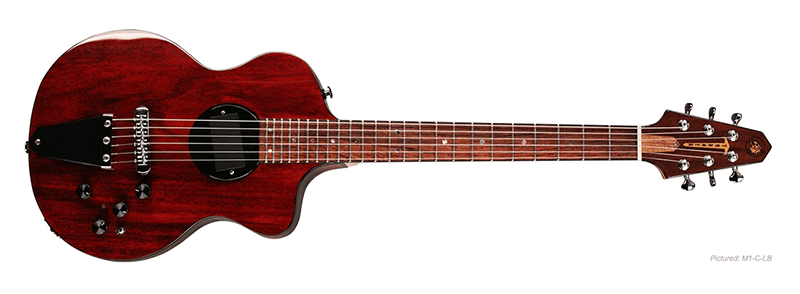
Rick Turner Model 1 guitar.

Rick Turner Model 1 guitar. Courtesy of Rick Turner Guitars.


When I met trumpeter Jon Hassell, who was in his early 50s and died last year at 84, he was drawn to me immediately because I was one of the few people he knew who had experienced the death of a parent. He referred to it as their final gift. Now I get it.

I met Rick when I was 16 and he just shy of 30. I’d been at this for three years. It was in San Francisco. I’ve told the story many times. I was visiting my brother after the death of my father the previous November, when my mother decided that I should go to my brother’s in Palo Alto to relieve the pressure I was under. I thought I should take advantage of where I was and took a Gray Line tour to Monterey, where I found that month’s Guitar Player magazine with Wes Montgomery on the cover, and in the listing of articles, “The Dead’s Gear” by Jim Aikin. The article was a goldmine for me, who, having seen Hot Tuna and the Dead, and noticed all of the custom gear they both used: someone was behind it. Someone was. But who? The article showed me:

Alembic. Rick Turner.

The next day I took the train into the city, looked up Alembic in the phone book, called them and invited myself over. A short bus ride later, I was walking into 60 Brady Street. In their showroom the first instrument I saw hanging up on the wall was the Guild fretless bass that Phil Lesh later ended up giving to me (see Dan’s article in Copper Issue 94). Rick showed up and that began a dialogue which lasted until the week before he died last spring.

RT started out as a player and almost immediately found himself also working on instruments for friends, who included the Youngbloods in their early days. Rick and founding Youngbloods member Lowell “Banana” Levinger ran a summer shop together in Martha’s Vineyard before heading their separate ways, Lowell to the Bay Area and RT to New York, where he was in a psychedelic quartet called Autosalvage, which did one record before Banana succeeded in talking RT into joining him on the West Coast. From there, one coincidence led to another, and within two years Rick found himself a shareholder in electronics (and later musical instrument maker) Alembic Inc, under the aegis of Alembic founder Owsley Stanley, the LSD impresario, where Rick’s fearlessness and lack of preciousness was most welcomed by musicians looking for innovation.


Dan Schwartz with his Alembic bass, spring 1978. Courtesy of Scott Higby.

Dan Schwartz with his Alembic bass, spring 1978. Courtesy of Scott Higby.


Dan's Alembic bass.

Dan's alembic bass.

Above: Dan’s Alembic bass. Courtesy of Dan Schwartz.


The Grateful Dead’s famous 1973 “Wall of Sound,” an unprecedented assemblage of 604 speakers and 43 Macintosh 2300 127-lb. amplifiers, was the result of RT’s membership on a small “committee” of designers, which included no less than legendary high-end audio engineer John Curl. RT told me that he did the calculations for Phil Lesh’s speaker cabinets from Harry F. Olson’s 1957 book Acoustical Engineering, the Dead’s “bible” on building the Wall.

But Rick Turner’s biggest mark was made with musical instruments, and the shape of where he would take them. The original Alembic bass was a commission from the Jefferson Airplane and Hot Tuna’s Jack Casady. The result was, perhaps not by coincidence, the best bass ever made by man, in which every note swells from low E to high G. It’s been modified over the decades and is much simpler these days than when it was developed, but acoustically it’s what it always was.

The bass is built around two hollowed out halves of zebrawood, with birds-eye maple top plates, and the halves glued to a three-piece neck that runs through the body. This neck-through-body design wasn’t exactly unprecedented (Rickenbacker used this neck configuration), but it was the first to make such a splash in public. Rick frequently drew on or was inspired by previous designs that he thought worked. Like all Alembic instruments, the Jack Casady bass is absolutely stunning in appearance and unlike anything else seen at the time. Rick can be said to have launched the entire custom guitar phenomenon.

Rick stayed at Alembic till late 1978, when, according to what he told me and others, his investigation into their books resulted in his house being burned down. Wandering into the shop the next morning was a dreary event, I must say. I found Rick at his brother-in-law’s condo, full of good humor in spite of the circumstances. His “parting gift” for Alembic (Rick went on to found Rick Turner Guitars) was a design for a new guitar he’d done for them, much more traditional in design to suit the much more conventional guitarists. It was shown to Fleetwood Mac’s Lindsey Buckingham, who immediately ordered the first one. In the very early 1980s, Turner and I drove to San Diego in his MG, where I used the prototype of the Rick Turner bass in an advertising session.

Rick Turner Model 1 bass. Courtesy of Rick Turner Guitars.

Rick Turner Model 1 bass. Courtesy of Rick Turner Guitars.


Rick Turner's signature on an Icon guitar.

Rick Turner’s signature on an Icon guitar.


In 1986, I played at the I-Beam in San Francisco, with Stanard Ridgeway (film score composer and Wall of Voodoo founding member), and when I walked out with my Steinberger bass (the first unlined fretless Ned Steinberger made – I had to wait for him to start a company to build it) RT said, “There’s our Danny!” (I barely remember anything from that time. This was told to me recently by a good friend. But it brings to mind a fairly important fact: despite all his innovations and accomplishments, the way I was personally impacted by meeting him was in my expectations for a bass: that as long as it worked, it could be ANYTHING. There were no rules.)

Rick had no time for preciousness – tools, including musical instruments, are just that. All parts are replaceable. It didn’t matter much to him that his tools were considered art by so many.

I want to bring up a facet few understood about the man. He was an audiophile from the get-go, the first I ever knew. He was my introduction to the phenomenon, and what he did with his instruments, aside from making them beautiful, was also intended to accomplish for instruments what audiophilia accomplished for home music. His goal (and Owsley’s in calling the collective “Alembic”) was the distillation and refinement, the purification, of the sound of – anything, whatever was fed into it. As he put it, he “helped ruin me for life” by showing me what was possible in 1973. In much later years I was able to return some of the energy he put into me by making possible the purchase of something of an audiophile system for him. It seemed a small way of giving back for a lifetime of influence.


Rick Turner Renaissance. Courtesy of Rick Turner Guitars.

Rick Turner Renaissance. Courtesy of Rick Turner Guitars.


Dan's Alembic bass. Courtesy of Dan Schwartz.

Dan’s Alembic bass. Courtesy of Dan Schwartz.


Header image courtesy of Rick Turner Guitars.

More from Issue 173

View All Articles in Issue 173

Search Copper Magazine

#230 Camaraderie by B. Jan Montana May 04, 2026 #230 AXPONA 2026: A Family Gathering by Paul McGowan May 04, 2026 #230 Pianist Ryan Benthall Explores Jazz Realms and Far Beyond With Divine Sky by Frank Doris May 04, 2026 #230 The Vinyl Beat in AXPONA-Land by Rudy Radelic May 04, 2026 #230 Teddy Thompson’s Musical Growth Deepens With Never Be the Same by Ray Chelstowski May 04, 2026 #230 More Fun in the Sun: Florida Audio Expo, Part Two by Frank Doris May 04, 2026 #230 CanJam NYC 2026 Show Report: Heady Sound, Part Two by Frank Doris and Harris Fogel May 04, 2026 #230 Sonic Youth On Murray Street by Wayne Robins May 04, 2026 #230 Graffeo Coffee: A Symphony of Sensory Experience by Joe Caplan May 04, 2026 #230 The Saul Authority: The Story of Hi-Fi Pioneer Saul Marantz by Olivier Meunier-Plante May 04, 2026 #230 How to Play in a Rock Band, 23: Encounters With Famous Musicians, Part Two by Frank Doris May 04, 2026 #230 An Outlier in the Rack: A Vintage BIC Beam Box by The Staff at Just Audio May 04, 2026 #230 PS Audio in the News by PS Audio Staff May 04, 2026 #230 A Cautionary Tale by Rich Isaacs May 04, 2026 #230 Reel-to-Reel Roots, Part 33 (Revised): Ken Kessler Reports On the 2026 (British) AudioJumble by Ken Kessler May 04, 2026 #230 Text Messaging by Frank Doris May 04, 2026 #230 The Audiophile Rat Race by Peter Xeni May 04, 2026 #230 On the Rocks by Rich Isaacs May 04, 2026 #229 The Earliest Stars of Country Music, Part Three by Jeff Weiner Apr 06, 2026 #229 The Healing Power of Music and Sound at the Omega Institute by Joe Caplan Apr 06, 2026 #229 CanJam NYC 2026 Show Report: Heady Sound, Part One by Frank Doris Apr 06, 2026 #229 Florida Audio Expo 2026: Warming Up to High-End Audio, Part One by Frank Doris Apr 06, 2026 #229 Quick Takes: Anne Bisson, Sam Morrison, The Velvet Underground, and the Stooges by Frank Doris Apr 06, 2026 #229 The Vinyl Beat: New Arrivals, and Old Audio Show Demo Scores to Settle by Rudy Radelic Apr 06, 2026 #229 Harvard Gets a High-End Audio Education by Frank Doris Apr 06, 2026 #229 No Country for Old Knees by B. Jan Montana Apr 06, 2026 #229 How To Play in A Rock Band, 22: Encounters With Famous Musicians, Part 1 by Frank Doris Apr 06, 2026 #229 The Soulful Grooves of Guinea-Bissau by Steve Kindig Apr 06, 2026 #229 Four-Hand Piano Performance at Its Finest by Stephan Haberthür Apr 06, 2026 #229 The People Who Make Audio Happen: Supreme Acoustics Systems’ Las Vegas Grand Opening by Harris Fogel Apr 06, 2026 #229 Blue Öyster Cult: Tyranny and Expectations by Wayne Robins Apr 06, 2026 #229 Guitarist Rick Vito’s Cinematic New Album, Slidemaster by Ray Chelstowski Apr 06, 2026 #229 Measurements and Observational Listening by Paul McGowan Apr 06, 2026 #229 PS Audio in the News by PS Audio Staff Apr 06, 2026 #229 Back to My Reel-to-Reel Roots, Part 28: The Cassette Strikes Back by Ken Kessler Apr 06, 2026 #229 Are You Receiving Me? by Frank Doris Apr 06, 2026 #229 Hospitality by Peter Xeni Apr 06, 2026 #229 Cantina Gateway by James Schrimpf Apr 06, 2026 #228 Serita’s Black Rose Duo Shakes Your Soul With a Blend of Funk, Rock, Blues and a Whole Lot More by Frank Doris Mar 02, 2026 #228 Vinyl, A Love Story by Wayne Robins Mar 02, 2026 #228 Thrill Seeker by B. Jan Montana Mar 02, 2026 #228 The Vinyl Beat: Donald Byrd, Bill Evans, Wes Montgomery, Eddie Palmieri and Frank Sinatra by Rudy Radelic Mar 02, 2026 #228 Listening to Prestige: The History of a Vitally Important Jazz Record Label by Frank Doris Mar 02, 2026 #228 How to Play in a Rock Band, 21: Touring With James Lee Stanley by Frank Doris Mar 02, 2026 #228 The NAMM 2026 Show: The Music Industry’s Premier Event by John Volanski Mar 02, 2026 #228 The Earliest Stars of Country Music, Part Two by Jeff Weiner Mar 02, 2026 #228 From The Audiophile's Guide: A Brief History of Stereophonic Sound by Paul McGowan Mar 02, 2026

Instrument Designer Rick Turner: A Life

Instrument Designer Rick Turner: A Life

These days, I struggle, aside from dealing with my illness, with taking in what else happens in the world around me. Like the death of Rick Turner at age 78. Rick is gone. This may not mean much to you. To me, it was earthbreaking. RT, GONE. He was supposed to live forever. Certainly he was supposed to outlive me.

I require of the world that it sit up and take notice. This man was among the heaviest there was, the heaviest there could possibly be. And by knowing him, he became responsible for so much of what I became. Now I feel the need to repay that. I have committed to writing a book about him and his life, and the struggle is to not make it primarily about our relationship.

And what a relationship it was. In the ways that show, to the extent that I’ve made innovations with getting tone on records, RT was right there. [For those who don’t know, Dan is a professional bassist – Ed.] I hardly made a move without checking its feasibility with him. Rick was the perfect guy to do that with, a man who had both been a part of improving things for musicians, and a real innovator in capturing them accurately.

Rick Turner Model 1 guitar.

Rick Turner Model 1 guitar. Courtesy of Rick Turner Guitars.


When I met trumpeter Jon Hassell, who was in his early 50s and died last year at 84, he was drawn to me immediately because I was one of the few people he knew who had experienced the death of a parent. He referred to it as their final gift. Now I get it.

I met Rick when I was 16 and he just shy of 30. I’d been at this for three years. It was in San Francisco. I’ve told the story many times. I was visiting my brother after the death of my father the previous November, when my mother decided that I should go to my brother’s in Palo Alto to relieve the pressure I was under. I thought I should take advantage of where I was and took a Gray Line tour to Monterey, where I found that month’s Guitar Player magazine with Wes Montgomery on the cover, and in the listing of articles, “The Dead’s Gear” by Jim Aikin. The article was a goldmine for me, who, having seen Hot Tuna and the Dead, and noticed all of the custom gear they both used: someone was behind it. Someone was. But who? The article showed me:

Alembic. Rick Turner.

The next day I took the train into the city, looked up Alembic in the phone book, called them and invited myself over. A short bus ride later, I was walking into 60 Brady Street. In their showroom the first instrument I saw hanging up on the wall was the Guild fretless bass that Phil Lesh later ended up giving to me (see Dan’s article in Copper Issue 94). Rick showed up and that began a dialogue which lasted until the week before he died last spring.

RT started out as a player and almost immediately found himself also working on instruments for friends, who included the Youngbloods in their early days. Rick and founding Youngbloods member Lowell “Banana” Levinger ran a summer shop together in Martha’s Vineyard before heading their separate ways, Lowell to the Bay Area and RT to New York, where he was in a psychedelic quartet called Autosalvage, which did one record before Banana succeeded in talking RT into joining him on the West Coast. From there, one coincidence led to another, and within two years Rick found himself a shareholder in electronics (and later musical instrument maker) Alembic Inc, under the aegis of Alembic founder Owsley Stanley, the LSD impresario, where Rick’s fearlessness and lack of preciousness was most welcomed by musicians looking for innovation.


Dan Schwartz with his Alembic bass, spring 1978. Courtesy of Scott Higby.

Dan Schwartz with his Alembic bass, spring 1978. Courtesy of Scott Higby.


Dan's Alembic bass.

Dan's alembic bass.

Above: Dan’s Alembic bass. Courtesy of Dan Schwartz.


The Grateful Dead’s famous 1973 “Wall of Sound,” an unprecedented assemblage of 604 speakers and 43 Macintosh 2300 127-lb. amplifiers, was the result of RT’s membership on a small “committee” of designers, which included no less than legendary high-end audio engineer John Curl. RT told me that he did the calculations for Phil Lesh’s speaker cabinets from Harry F. Olson’s 1957 book Acoustical Engineering, the Dead’s “bible” on building the Wall.

But Rick Turner’s biggest mark was made with musical instruments, and the shape of where he would take them. The original Alembic bass was a commission from the Jefferson Airplane and Hot Tuna’s Jack Casady. The result was, perhaps not by coincidence, the best bass ever made by man, in which every note swells from low E to high G. It’s been modified over the decades and is much simpler these days than when it was developed, but acoustically it’s what it always was.

The bass is built around two hollowed out halves of zebrawood, with birds-eye maple top plates, and the halves glued to a three-piece neck that runs through the body. This neck-through-body design wasn’t exactly unprecedented (Rickenbacker used this neck configuration), but it was the first to make such a splash in public. Rick frequently drew on or was inspired by previous designs that he thought worked. Like all Alembic instruments, the Jack Casady bass is absolutely stunning in appearance and unlike anything else seen at the time. Rick can be said to have launched the entire custom guitar phenomenon.

Rick stayed at Alembic till late 1978, when, according to what he told me and others, his investigation into their books resulted in his house being burned down. Wandering into the shop the next morning was a dreary event, I must say. I found Rick at his brother-in-law’s condo, full of good humor in spite of the circumstances. His “parting gift” for Alembic (Rick went on to found Rick Turner Guitars) was a design for a new guitar he’d done for them, much more traditional in design to suit the much more conventional guitarists. It was shown to Fleetwood Mac’s Lindsey Buckingham, who immediately ordered the first one. In the very early 1980s, Turner and I drove to San Diego in his MG, where I used the prototype of the Rick Turner bass in an advertising session.
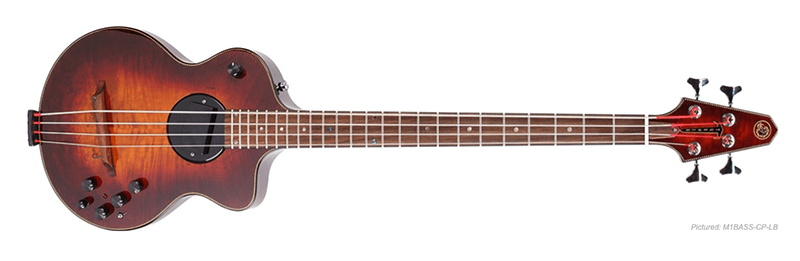
Rick Turner Model 1 bass. Courtesy of Rick Turner Guitars.
Rick Turner Model 1 bass. Courtesy of Rick Turner Guitars.


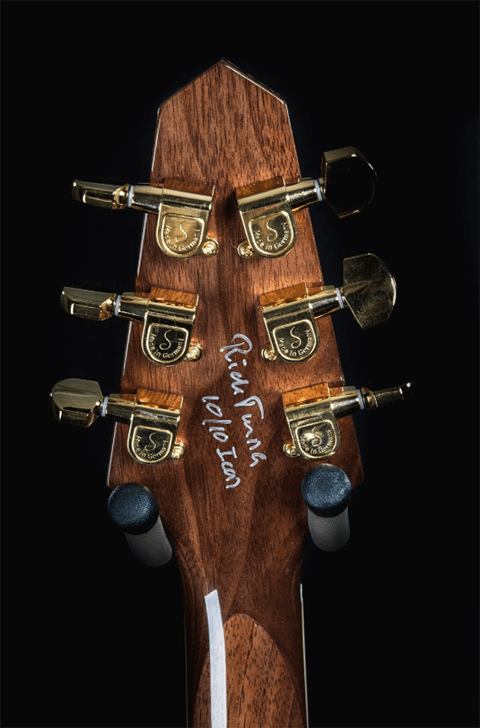
Rick Turner's signature on an Icon guitar.

Rick Turner’s signature on an Icon guitar.


In 1986, I played at the I-Beam in San Francisco, with Stanard Ridgeway (film score composer and Wall of Voodoo founding member), and when I walked out with my Steinberger bass (the first unlined fretless Ned Steinberger made – I had to wait for him to start a company to build it) RT said, “There’s our Danny!” (I barely remember anything from that time. This was told to me recently by a good friend. But it brings to mind a fairly important fact: despite all his innovations and accomplishments, the way I was personally impacted by meeting him was in my expectations for a bass: that as long as it worked, it could be ANYTHING. There were no rules.)

Rick had no time for preciousness – tools, including musical instruments, are just that. All parts are replaceable. It didn’t matter much to him that his tools were considered art by so many.

I want to bring up a facet few understood about the man. He was an audiophile from the get-go, the first I ever knew. He was my introduction to the phenomenon, and what he did with his instruments, aside from making them beautiful, was also intended to accomplish for instruments what audiophilia accomplished for home music. His goal (and Owsley’s in calling the collective “Alembic”) was the distillation and refinement, the purification, of the sound of – anything, whatever was fed into it. As he put it, he “helped ruin me for life” by showing me what was possible in 1973. In much later years I was able to return some of the energy he put into me by making possible the purchase of something of an audiophile system for him. It seemed a small way of giving back for a lifetime of influence.
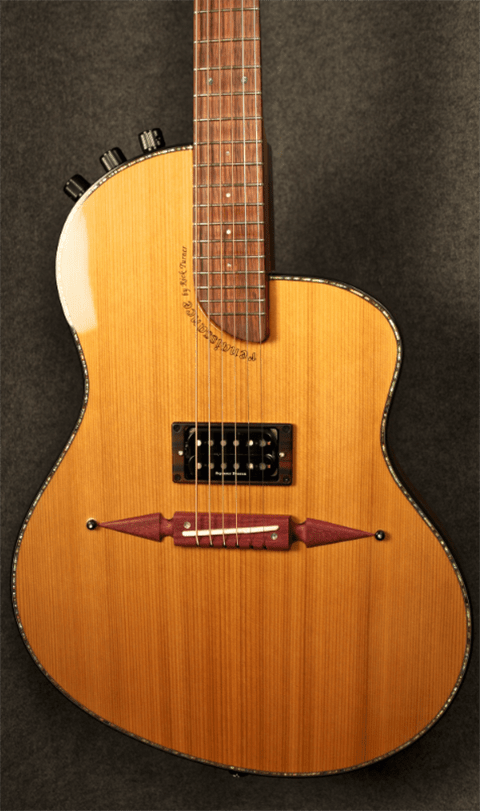
 

Rick Turner Renaissance. Courtesy of Rick Turner Guitars.

Rick Turner Renaissance. Courtesy of Rick Turner Guitars.


Dan's Alembic bass. Courtesy of Dan Schwartz.

Dan’s Alembic bass. Courtesy of Dan Schwartz.


Header image courtesy of Rick Turner Guitars.

0 comments

Leave a comment

0 Comments

Your avatar

Loading comments...

🗑️ Delete Comment

Enter moderator password to delete this comment:

✏️ Edit Comment

Enter your email to verify ownership: