COPPER

A PS Audio Publication

Issue 179 • Free Online Magazine

Issue 179 Natural Born Kessler

Celebrating the Linn Sondek LP12 Turntable, Part One

Celebrating the Linn Sondek LP12 Turntable, Part One

It was the turntable that rattled cages around the world in the 1980s and 1990s – Ken Kessler, with jaundiced eye, recalls the power of the Linn Sondek LP12.

It’s just after the closing day of 2022, and yet – as Editor Doris pointed out – there was hardly a mention of the 50th anniversary of the second-most influential turntable of all time: the Linn Sondek LP12. Technically, February 2023 is the 50th anniversary, but the roots were planted in 1972, so – like the late Queen – two birthdays may be in order.

As for the activity in 2022, here is a morsel grabbed from the company’s current website pages: Gilad Tiefenbrun, Linn’s CEO, says, “With the 50th anniversary of Sondek LP12 fast approaching, these latest upgrades showcase the longevity of this iconic product. Linn is proud to expand the range of performance enhancements available to Sondek LP12 owners worldwide, regardless of where they are on their journey to vinyl perfection.”

Let’s back up, then, to 1972, by way of a clarification peppered with my own prejudices which will be disclosed as you continue. Starting with: I don't give a flying f*ck what anyone else might say, but the single most important turntable of all time, vis-à-vis sound quality, performance and layout, is the original, Edgar Villchur-designed Acoustic Research XA of 1961/2, a.k.a. the “AR Universal” or, simply, as “The AR Turntable.” It combined the best of its predecessors, such as the Stromberg Carlson and the Weathers, to determine the template for the majority of decent-sounding record decks for the next 50 years: belt-drive and a suspended subchassis.

It was designed to be affordable, built down to a price of something like $68, so, within short order, Thorens introduced its take on the AR, the dearer TD-150. In addition to more robust construction, it addressed the one incontrovertible weakness and/or limitation of the AR, which was its fixed tonearm and the inability to change it for anything else. The AR’s arm worked well enough with high-compliance moving magnet cartridges, but it was hardly a masterpiece of solid engineering.

Although Thorens offered the TD-150 with its own arm, it was also able to accept others, such as the SME 3009, the Grace G-707, and others, and it was good enough to exploit those superior tonearms. Blank arm boards allowed users to accommodate whatever they wished to fit, and the resultant deck was – and remains – a superb LP spinner even by today’s standards.

Come the late 1960s, and the world was awash with belt-drive decks, my own bucket list performer from that era being the Empire Troubadour. The market included certain Lenco models, Pioneer’s best-selling PL-12D, and many others, while Thorens would up the ante with the larger, more sophisticated TD-125. Then, from Scotland, came the Ariston RD-11, which looked exactly like a chunkier TD-150, with a heavier plinth.

Here the origins grow murky and borderline litigious, the truth lost in the mists of time, but in essence, Glasgow’s Castle Engineering manufactured key parts of the Ariston RD-11, including the most crucial item: the main bearing. Through whatever tortuous path it followed the RD-11, the all-but-identical Linn Sondek LP-12 arrived, the lone visual clue to the differences being the rotation of the on/off rocker switch by 90 degrees on certain variants.

Unfortunately for Ariston, it swiftly faced a far more commercially-aggressive rival. Linn Products was founded and headed by Ivor Tiefenbrun, whose family-owned Castle Engineering. You can do your own search online to find out who did what to whom. It’s out there and I am not interested in repeating any of it. Suffice it to say, the LP12 would emerge the victor in the turntable stakes, and it would control – not merely dominate – the British hi-fi market for the next quarter-century, while enjoying impact in many other territories, if not achieving the near-monopoly it achieved in Great Britain.

This very morning, I spent 40 minutes on a call to Glasgow to reminisce with Ivor, in part to clear up some of the mystery without digging up the actual origins. As our recently departed Queen Elizabeth II said of her great grandson Harry’s and Meghan Markle’s bleating, “Recollections may vary,” and I care too much for Ivor to contradict him, but what he certainly didn't dispute is that he and his fellow traveler, Naim’s founder, Julian Vereker, were both showmen, and it was their combined forcefulness, years before the same tactics were used by Steve Jobs, which created a fan base of star-struck British journalists, necessary for them to conquer the home market. It would, for nearly two decades, create a team-up to equal those of Apogee/Krell, Magnepan/Audio Research, and other shared efforts.

In retrospect, the way Linn (and Naim) manipulated the British press can be regarded as both exploiting what were “useful idiots” and precursors to “cancel culture,” for they used the same bullying tactics. From the late 1970s, by which time Linn and Naim had created their dealer networks, until the early 1990s, the British press was so dominated by the LP12 that an outsider would have been right to be suspicious. And as a Yank émigré, that’s exactly what I was when I landed a position with Hi-Fi News & Record Review in 1983.

As one of the only holdouts, who refused to use a Linn when he preferred his Oracle Delphi, I recall just how pernicious was the situation. You must understand that I had come from a country where Magnepan and McIntosh and Ohm and SAE and Audio Research and Infinity were at the top. The UK scene? For me it was like coming from a land of Porsches and Corvettes to one filled with Studebaker Larks. The UK journalists were utterly ignorant of the real high-end beyond their shores, as little of it was available in the UK. Their idea of “best” was like facing a wino who believed Ripple was better than Petrus.

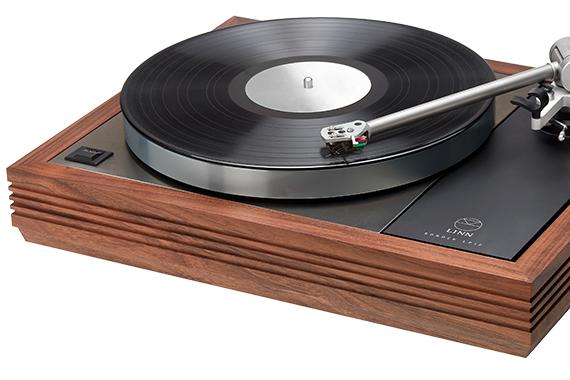
Linn Sondek LP12 turntable.

Controlling the press was part of the campaign which ultimately would depend on the real force in hi-fi: the retailers. Linn/Naim dealers were presented with a package, and a highly profitable one at that. While it would only become evident with the passage of time, Linn’s master plan worked with the same efficiency as a dealer handing out the first nickel bag. Once you got your claws into a customer…


As the Linn’s modular construction was perfectly suited to continual refinement, it kinda contradicted its fans insistence that the LP12 was utter perfection: how do you improve on that which is perfect? Once infected, though, the LP12 owner would return to the dealer for an annual fix, whether it be a new power supply, a revised subchassis, better springs, ad infinitum

I asked Ivor two key questions about the upgrades, the first being, how many were there? His answer began with one word: “Hundreds.” He went on to clarify that the LP12 has been the subject of continual refinement, with absolutely everything having been improved bar two elements: the basic format and the dimensions.

Indeed, aside from changing to a two-speed deck when the original only played at 33-1/3 rpm, the Linn Sondek LP12 adheres to exactly what appeared as in 1972: a belt-drive, suspended subchassis turntable. Which begged the question: after so many refinements, what would happen if someone turned up with a first-generation LP12? Said Ivor, all was retrofittable.

In the next part, I will try to recount as many anecdotes as I can to illustrate just how omnipresent the deck became, including some input from Editor Doris regarding the LP12’s presence in the USA, and Harry Pearson’s reaction to it. As Ivor confirmed, the UK saw the greatest impact of the LP12 on an entire market, but there were territories with dedicated Linn distributors, such as Italy, where cults were also developed, if not to the scale of the domination in Great Britain.

With such success, it is no surprise that the Sondek LP12 and its less-costly siblings, the Majik LP12 and Selekt LP12, remain in the catalogue, after the Sondek LP12 itself having sold what Ivor told me was “far in excess of 100,000 units.” That is quite an achievement for a turntable well above entry-level pricing. Its original price of £59 with plinth and cover (but without tonearm) is equivalent today to £800/$962, the £59 figure taken from the first Hi-Fi Yearbook in which it appeared, with a cover date of 1974, thus collated in 1973. And the cost of the current, fully-loaded LP12? How about just north of $25,000?

Header image: Linn Sondek LP12.

More from Issue 179

View All Articles in Issue 179

Search Copper Magazine

#226 JJ Murphy’s Sleep Paralysis is a Genre-Bending Musical Journey Through Jazz, Fusion and More by Frank Doris Jan 05, 2026 #226 Stewardship by Consent by B. Jan Montana Jan 05, 2026 #226 Food, Music, and Sensory Experience: An Interview With Professor Jonathan Zearfoss of the Culinary Institute of America by Joe Caplan Jan 05, 2026 #226 Studio Confidential: A Who’s Who of Recording Engineers Tell Their Stories by Frank Doris Jan 05, 2026 #226 Pilot Radio is Reborn, 50 Years Later: Talking With CEO Barak Epstein by Frank Doris Jan 05, 2026 #226 The Vinyl Beat Goes Down to Tijuana (By Way of Los Angeles), Part One by Rudy Radelic Jan 05, 2026 #226 Capital Audiofest 2025: Must-See Stereo, Part Two by Frank Doris Jan 05, 2026 #226 My Morning Jacket’s Carl Broemel and Tyler Ramsey Collaborate on Their Acoustic Guitar Album, Celestun by Ray Chelstowski Jan 05, 2026 #226 The People Who Make Audio Happen: CanJam SoCal 2025, Part Two by Harris Fogel Jan 05, 2026 #226 How to Play in a Rock Band, 19: Touring Can Make You Crazy, Part One by Frank Doris Jan 05, 2026 #226 Linda Ronstadt Goes Bigger by Wayne Robins Jan 05, 2026 #226 From The Audiophile’s Guide: Active Room Correction and Digital Signal Processing by Paul McGowan Jan 05, 2026 #226 PS Audio in the News by Frank Doris Jan 05, 2026 #226 Back to My Reel-to-Reel Roots, Part 25: Half-Full, Not Empty by Ken Kessler Jan 05, 2026 #226 Happy New Year! by Frank Doris Jan 05, 2026 #226 Turn It Down! by Peter Xeni Jan 05, 2026 #226 Ghost Riders by James Schrimpf Jan 05, 2026 #226 A Factory Tour of Audio Manufacturer German Physiks by Markus "Marsu" Manthey Jan 04, 2026 #225 Capital Audiofest 2025: Must-See Stereo, Part One by Frank Doris Dec 01, 2025 #225 Otis Taylor and the Electrics Delivers a Powerful Set of Hypnotic Modern Blues by Frank Doris Dec 01, 2025 #225 A Christmas Miracle by B. Jan Montana Dec 01, 2025 #225 T.H.E. Show New York 2025, Part Two: Plenty to See, Hear, and Enjoy by Frank Doris Dec 01, 2025 #225 Underappreciated Artists, Part One: Martin Briley by Rich Isaacs Dec 01, 2025 #225 Rock and Roll is Here to Stay by Wayne Robins Dec 01, 2025 #225 A Lifetime of Holiday Record (and CD) Listening by Rudy Radelic Dec 01, 2025 #225 Little Feat: Not Saying Goodbye, Not Yet by Ray Chelstowski Dec 01, 2025 #225 How to Play in a Rock Band, Part 18: Dealing With Burnout by Frank Doris Dec 01, 2025 #225 The People Who Make Audio Happen: CanJam SoCal 2025 by Harris Fogel Dec 01, 2025 #225 Chicago’s Sonic Sanctuaries: Four Hi‑Fi Listening Bars Channeling the Jazz‑Kissa Spirit by Olivier Meunier-Plante Dec 01, 2025 #225 From The Audiophile’s Guide: Controlling Bass Frequencies Through Membrane Absorbers (and How to Build Your Own) by Paul McGowan Dec 01, 2025 #225 Your Editor’s Tips for Attending Audio Shows by Frank Doris Dec 01, 2025 #225 PS Audio in the News by Frank Doris Dec 01, 2025 #225 Back to My Reel-to-Reel Roots, Part 24 by Ken Kessler Dec 01, 2025 #225 Holiday Music by Frank Doris Dec 01, 2025 #225 Puppy Prognostication by Peter Xeni Dec 01, 2025 #225 How to Post Comments on Copper by Frank Doris Dec 01, 2025 #225 Living Color by Rudy Radelic Dec 01, 2025 #224 T.H.E. Show New York 2025, Part One: A New Beginning by Frank Doris Nov 03, 2025 #224 Fool’s Leap of Faith is the Extraordinary Octave Records Debut from Singer/Songwriter Tyler Burba and Visit by Frank Doris Nov 03, 2025 #224 The Beatles’ “Aeolian Cadences.” What? by Wayne Robins Nov 03, 2025 #224 Persona Non Grata by B. Jan Montana Nov 03, 2025 #224 Talking With Recording Engineer Barry Diament of Soundkeeper Recordings, Part Two by Frank Doris Nov 03, 2025 #224 B Sides, B Movies, and Beware of Zombies by Rudy Radelic Nov 03, 2025 #224 The Burn-In Chronicles: 1,000 Hours to Sonic Salvation by Olivier Meunier-Plante Nov 03, 2025 #224 A Conversation With Mat Weisfeld of VPI Industries by Joe Caplan Nov 03, 2025 #224 Blues-Rocker Kenny Wayne Shepherd Celebrates 30 Years of Ledbetter Heights by Ray Chelstowski Nov 03, 2025 #224 Playing in a Rock Band, 17: When Good Gigs Go Bad, Part Two by Frank Doris Nov 03, 2025

Celebrating the Linn Sondek LP12 Turntable, Part One

Celebrating the Linn Sondek LP12 Turntable, Part One

It was the turntable that rattled cages around the world in the 1980s and 1990s – Ken Kessler, with jaundiced eye, recalls the power of the Linn Sondek LP12.

It’s just after the closing day of 2022, and yet – as Editor Doris pointed out – there was hardly a mention of the 50th anniversary of the second-most influential turntable of all time: the Linn Sondek LP12. Technically, February 2023 is the 50th anniversary, but the roots were planted in 1972, so – like the late Queen – two birthdays may be in order.

As for the activity in 2022, here is a morsel grabbed from the company’s current website pages: Gilad Tiefenbrun, Linn’s CEO, says, “With the 50th anniversary of Sondek LP12 fast approaching, these latest upgrades showcase the longevity of this iconic product. Linn is proud to expand the range of performance enhancements available to Sondek LP12 owners worldwide, regardless of where they are on their journey to vinyl perfection.”

Let’s back up, then, to 1972, by way of a clarification peppered with my own prejudices which will be disclosed as you continue. Starting with: I don't give a flying f*ck what anyone else might say, but the single most important turntable of all time, vis-à-vis sound quality, performance and layout, is the original, Edgar Villchur-designed Acoustic Research XA of 1961/2, a.k.a. the “AR Universal” or, simply, as “The AR Turntable.” It combined the best of its predecessors, such as the Stromberg Carlson and the Weathers, to determine the template for the majority of decent-sounding record decks for the next 50 years: belt-drive and a suspended subchassis.

It was designed to be affordable, built down to a price of something like $68, so, within short order, Thorens introduced its take on the AR, the dearer TD-150. In addition to more robust construction, it addressed the one incontrovertible weakness and/or limitation of the AR, which was its fixed tonearm and the inability to change it for anything else. The AR’s arm worked well enough with high-compliance moving magnet cartridges, but it was hardly a masterpiece of solid engineering.

Although Thorens offered the TD-150 with its own arm, it was also able to accept others, such as the SME 3009, the Grace G-707, and others, and it was good enough to exploit those superior tonearms. Blank arm boards allowed users to accommodate whatever they wished to fit, and the resultant deck was – and remains – a superb LP spinner even by today’s standards.

Come the late 1960s, and the world was awash with belt-drive decks, my own bucket list performer from that era being the Empire Troubadour. The market included certain Lenco models, Pioneer’s best-selling PL-12D, and many others, while Thorens would up the ante with the larger, more sophisticated TD-125. Then, from Scotland, came the Ariston RD-11, which looked exactly like a chunkier TD-150, with a heavier plinth.

Here the origins grow murky and borderline litigious, the truth lost in the mists of time, but in essence, Glasgow’s Castle Engineering manufactured key parts of the Ariston RD-11, including the most crucial item: the main bearing. Through whatever tortuous path it followed the RD-11, the all-but-identical Linn Sondek LP-12 arrived, the lone visual clue to the differences being the rotation of the on/off rocker switch by 90 degrees on certain variants.

Unfortunately for Ariston, it swiftly faced a far more commercially-aggressive rival. Linn Products was founded and headed by Ivor Tiefenbrun, whose family-owned Castle Engineering. You can do your own search online to find out who did what to whom. It’s out there and I am not interested in repeating any of it. Suffice it to say, the LP12 would emerge the victor in the turntable stakes, and it would control – not merely dominate – the British hi-fi market for the next quarter-century, while enjoying impact in many other territories, if not achieving the near-monopoly it achieved in Great Britain.

This very morning, I spent 40 minutes on a call to Glasgow to reminisce with Ivor, in part to clear up some of the mystery without digging up the actual origins. As our recently departed Queen Elizabeth II said of her great grandson Harry’s and Meghan Markle’s bleating, “Recollections may vary,” and I care too much for Ivor to contradict him, but what he certainly didn't dispute is that he and his fellow traveler, Naim’s founder, Julian Vereker, were both showmen, and it was their combined forcefulness, years before the same tactics were used by Steve Jobs, which created a fan base of star-struck British journalists, necessary for them to conquer the home market. It would, for nearly two decades, create a team-up to equal those of Apogee/Krell, Magnepan/Audio Research, and other shared efforts.

In retrospect, the way Linn (and Naim) manipulated the British press can be regarded as both exploiting what were “useful idiots” and precursors to “cancel culture,” for they used the same bullying tactics. From the late 1970s, by which time Linn and Naim had created their dealer networks, until the early 1990s, the British press was so dominated by the LP12 that an outsider would have been right to be suspicious. And as a Yank émigré, that’s exactly what I was when I landed a position with Hi-Fi News & Record Review in 1983.

As one of the only holdouts, who refused to use a Linn when he preferred his Oracle Delphi, I recall just how pernicious was the situation. You must understand that I had come from a country where Magnepan and McIntosh and Ohm and SAE and Audio Research and Infinity were at the top. The UK scene? For me it was like coming from a land of Porsches and Corvettes to one filled with Studebaker Larks. The UK journalists were utterly ignorant of the real high-end beyond their shores, as little of it was available in the UK. Their idea of “best” was like facing a wino who believed Ripple was better than Petrus.

Linn Sondek LP12 turntable.

Controlling the press was part of the campaign which ultimately would depend on the real force in hi-fi: the retailers. Linn/Naim dealers were presented with a package, and a highly profitable one at that. While it would only become evident with the passage of time, Linn’s master plan worked with the same efficiency as a dealer handing out the first nickel bag. Once you got your claws into a customer…


As the Linn’s modular construction was perfectly suited to continual refinement, it kinda contradicted its fans insistence that the LP12 was utter perfection: how do you improve on that which is perfect? Once infected, though, the LP12 owner would return to the dealer for an annual fix, whether it be a new power supply, a revised subchassis, better springs, ad infinitum

I asked Ivor two key questions about the upgrades, the first being, how many were there? His answer began with one word: “Hundreds.” He went on to clarify that the LP12 has been the subject of continual refinement, with absolutely everything having been improved bar two elements: the basic format and the dimensions.

Indeed, aside from changing to a two-speed deck when the original only played at 33-1/3 rpm, the Linn Sondek LP12 adheres to exactly what appeared as in 1972: a belt-drive, suspended subchassis turntable. Which begged the question: after so many refinements, what would happen if someone turned up with a first-generation LP12? Said Ivor, all was retrofittable.

In the next part, I will try to recount as many anecdotes as I can to illustrate just how omnipresent the deck became, including some input from Editor Doris regarding the LP12’s presence in the USA, and Harry Pearson’s reaction to it. As Ivor confirmed, the UK saw the greatest impact of the LP12 on an entire market, but there were territories with dedicated Linn distributors, such as Italy, where cults were also developed, if not to the scale of the domination in Great Britain.

With such success, it is no surprise that the Sondek LP12 and its less-costly siblings, the Majik LP12 and Selekt LP12, remain in the catalogue, after the Sondek LP12 itself having sold what Ivor told me was “far in excess of 100,000 units.” That is quite an achievement for a turntable well above entry-level pricing. Its original price of £59 with plinth and cover (but without tonearm) is equivalent today to £800/$962, the £59 figure taken from the first Hi-Fi Yearbook in which it appeared, with a cover date of 1974, thus collated in 1973. And the cost of the current, fully-loaded LP12? How about just north of $25,000?

Header image: Linn Sondek LP12.

0 comments

Leave a comment

0 Comments

Your avatar

Loading comments...

🗑️ Delete Comment

Enter moderator password to delete this comment: