COPPER

A PS Audio Publication

Issue 175 • Free Online Magazine

Issue 175 From the Sweet Spot

Analog Recording is Alive and Well: Audio-Technica’s 60th Anniversary Event

Analog Recording is Alive and Well: Audio-Technica’s 60th Anniversary Event

On the eve of the 153rd Audio Engineering Society convention in New York City, Audio-Technica threw a 60th anniversary party at a restaurant in Koreatown. [Full disclosure: I do some consulting work for Audio-Technica. (I did not attend the event.) – Ed.] Located on the fifth floor of an office building at 34 West 32nd Street, Turntable LP Bar & Karaoke is a cozy space with a woody interior featuring anju (foods that accompany alcohol). Lining the walls are thousands of records, vintage audio gear, and old-time radios, but this is not a Japanese-style listening bar in which patrons focus on music while quietly sipping on cocktails. Here, people enjoy their chimek (Korean fried chicken paired with beer) late into the night as a DJ plays great background music through a wall of speakers, including a beautiful pair of Tannoy Westminsters, and JBL 4350 Professional Series studio monitors –perfect speakers for the night’s celebration of analog music.

During the cocktail hour, I went to the DJ booth and chatted with Audio-Technica’s Sam Intihar, Product Manager, and Brent Chamberlin, Audio Solutions Specialist, about the company’s history. Founded by Hideo Matsushita in 1962 in Japan, the brand made one of the first affordable high-quality phono cartridges. I suddenly realized how many A-T pieces I’ve owned over the course of my audio life, including turntables, headphones, and cartridges. In fact, it was the affordable and convenient Audio-Technica AT-LP120-USB direct-drive turntable that got me back into audio and vinyl after a 10-year pause.

Aside from a few other audio writers, I didn’t recognize any of the faces from the recording and engineering world, so I walked around the room taking pictures of the gear as the industry people hobnobbed. One of the guests asked me to take his photo in front of the vintage JBL studio monitors. Figuring he was just another audio nerd, I didn’t have the wherewithal to ask if he actually used them at some point. Shortly thereafter, the panel was convened and moderated by Justin Colletti, a mastering engineer, front-of-house sound man, and journalist. The panelists were Lenise Bent, Chris Mara, and Jimmy Douglass, the person whose photo I took in front of the JBLs. You might not know their names, but you certainly know their work.
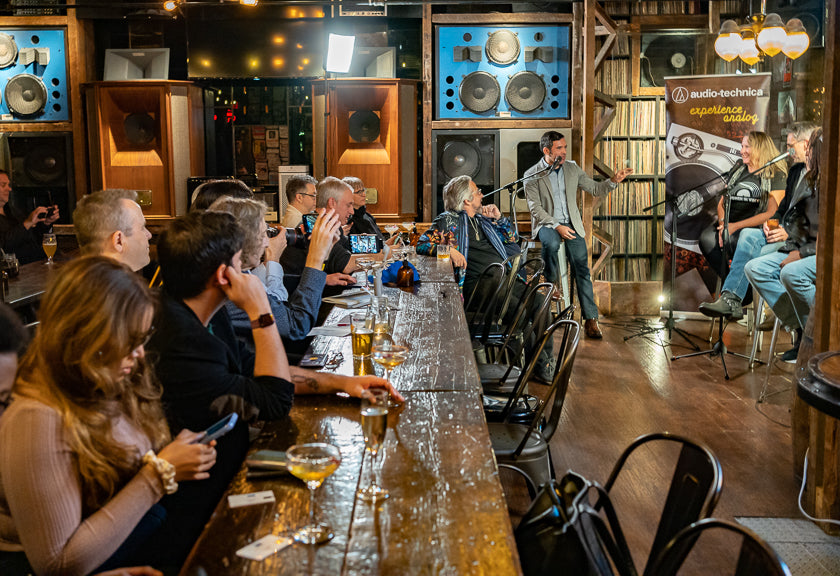
 

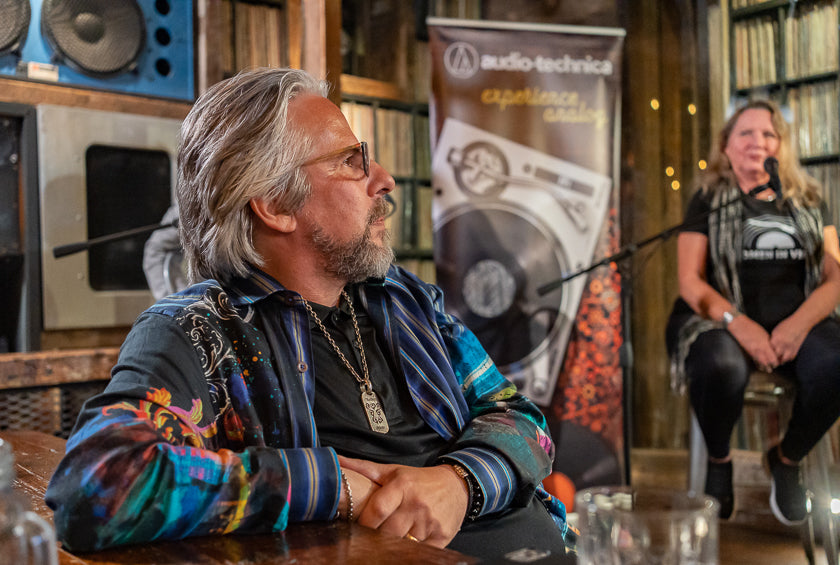
Moderator Justin Colletti (mastering engineer, educator and director of content and publishing at Sonic Scoop) on the mic. Photo courtesy of Harris Fogel.
Moderator Justin Colletti (mastering engineer, educator and director of content and publishing at Sonic Scoop) on the mic. Photo courtesy of Harris Fogel.


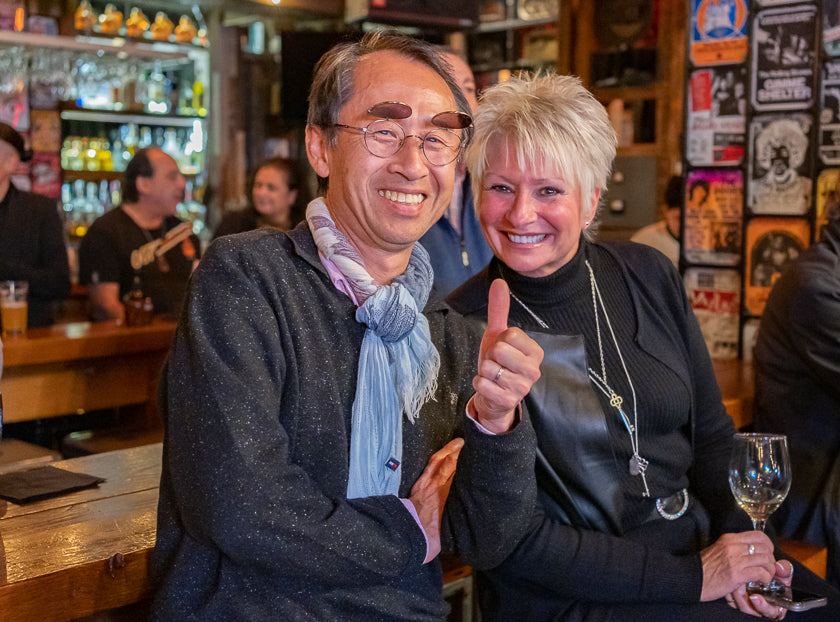
Manabu Aoki, Audio-Technica U.S. CEO and president, and Roxanne Ricks, Audio-Technica U.S. artist relations manager and events specialist.

Manabu Aoki, Audio-Technica U.S. CEO and president, and Roxanne Ricks, Audio-Technica U.S. artist relations manager and events specialist. Courtesy of Harris Fogel.


Lenise Bent worked on, get ready, Aja by Steely Dan, Breakfast in America by Supertramp, and Blondie’s AutoAmerican, known for the smash hits “Rapture” and “The Tide is High.” These were just a few of her projects. Growing up in California, she has been in show business since starting as a child actor, but a visit to Leon Russell’s home studio set her on a path of becoming a recording engineer in the days of 1970s tape machines and analog equipment at LA’s Village Recorders (now known as The Village). She’s also an educator and active in post-production sound work in films and television. Until meeting Lenise, I’m not proud to say that I couldn’t name a single female recording engineer, but upon checking out Women in Vinyl and SoundGirls, and Women’s Audio Mission, I know better now. Lenise is downright passionate about original analog pressings of records. When CDs came along, she hit the mother lode as everyone else jettisoned their old albums, me included. To paraphrase Lenise, digital music is just a collection of data that doesn’t capture everything about a physical performance either from the artist or the people in the booth.
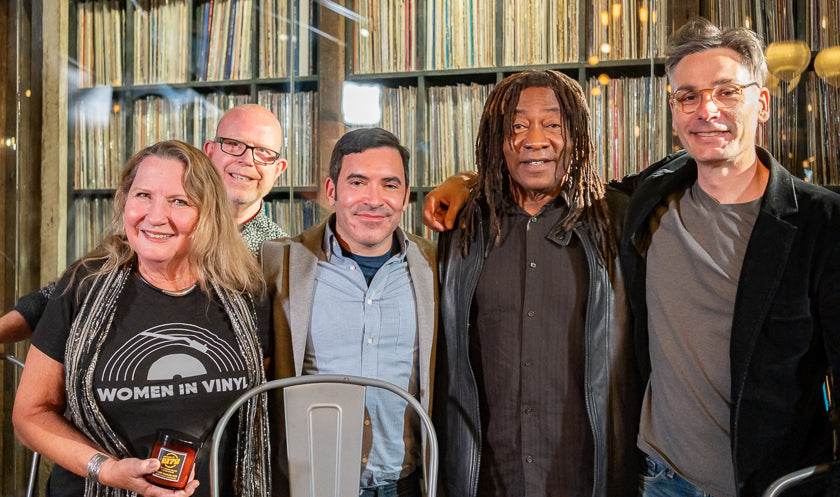
 

Lenise Bent, Gary Boss (Audio-Technica), Justin Colletti, Jimmy Douglass (engineer/producer) and Chris Mara (welcome to 1979 studio).

Lenise Bent, Gary Boss (Audio-Technica), Justin Colletti, Jimmy Douglass (engineer/producer) and Chris Mara (welcome to 1979 studio). Courtesy of Harris Fogel.
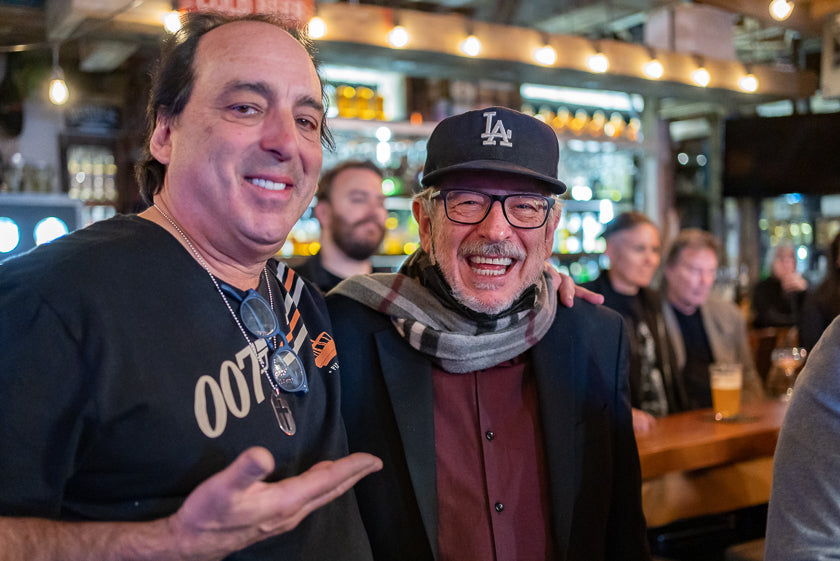
 

Chris Lord-Alge and Barry Rudolph (recording and mixing engineer, record producer, and technical writer, known for his work with Rod Stewart, Lynyrd Skynyrd and Hall and Oates).

Chris Lord-Alge (Bruce Springsteen, Aerosmith, Madonna, Green Day) and Barry Rudolph (recording and mixing engineer, record producer, and technical writer, known for his work with Rod Stewart, Lynyrd Skynyrd and Hall and Oates). Courtesy of Harris Fogel.


Next was Chris Mara of Welcome to 1979 studio in Nashville, Tennessee. Centered around a 1978 MCI JH428 mixing console and an MCI 24-track 2-inch tape machine, this place has been visited by the likes of Pete Townshend, Billy Gibbons, and Steve Earle for recording, mastering, and lacquer-cutting. Welcome to 1979 does so much more than sync files recorded by a singer in London, a guitarist in Los Angeles, and a drummer in New York. The beauty of an analog studio is capturing that natural live sound bands once had as they performed together in the same room. We heard a cut by Jason Isbell and The 400 Unit, who recorded their performance direct-to-lacquer, a method that predates tape. Welcome to 1979 does have non-vintage equipment and Pro Tools Ultimate digital recording software when needed. Chris Mara does not stand on ceremony when it comes to getting the job done right. And in case you want your very own analog tape machine, Chris sells restored MCI Mara Machines from ¼-inch 2-track models all the way up to 2-inch 24-track recorders.

Finally, the man in front of the JBLs, Jimmy Douglass, talked about his experience when he was just starting out at Atlantic Records. He was alone in a studio when Led Zeppelin manager Peter Grant, Atlantic Records head Ahmet Ertegun, and Jimmy Page showed up wanting to go through 10 reels of tape to re-arrange the “Heartbreaker” guitar solo on Led Zeppelin II. Douglass learned from the likes of producer/engineer Tom Dowd and Jerry Wexler and worked with everyone from Led Zeppelin to Jay-Z, AC/DC to Roberta Flack, and the Rolling Stones to Foreigner. Douglass mixed and acted as associate engineer on the first Foreigner record (Foreigner, 1977), and we were treated to “Feels Like the First Time,” a tune I have not heard for decades. The whole room agreed that it felt like the first time. Take a listen to that song. You don’t have to be a Foreigner fan to appreciate their solid yet sophisticated 1970s rock tunes. If you want to gain some of Jimmy’s lifelong wisdom that stretches back to Tom Dowd (who began his career in music in the 1940s), Jimmy offers intensive workshops known as The Hang, out of his Magic Mix Room studio in Miami.

So what is it about the analog process that musicians, engineers, and listeners still adore after all the advancements in audio? Certainly, modern recording and music production wouldn’t be possible without digital audio workstations like Pro Tools and other software, but there’s something special about the sound, soul, process, and provenance of well-worn gear. With so many die-hard analog fans, it’s good to know engineers find inspiration way back into history and want to capture the resonances from other eras. Just imagine working with a 1933-issue RCA 44-BX ribbon microphone or a crooner’s Shure 55 “Fatboy” mic. Luckily, for all of us with tube amps, turntables, and records, it seems like vintage tape machines, mics, and mixing consoles aren’t going anywhere just yet.
 

Engineer/producer Dave Reitzas (Barbra Streisand, The Weeknd, Josh Groban, Andrea Bocelli, Seal, Stevie Wonder, Guns N’ Roses).
Engineer/producer Dave Reitzas (Barbra Streisand, The Weeknd, Josh Groban, Andrea Bocelli, Seal, Stevie Wonder, Guns N’ Roses).


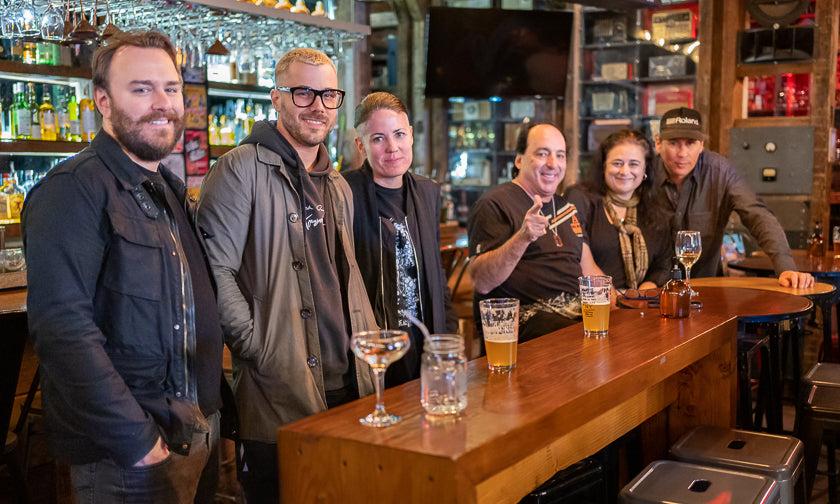
A good time was had by all.

A good time was had by all. Courtesy of Harris Fogel.


Go ahead, remind yourself of analog’s charms. Pull that 45-year-old record off the shelf – maybe an original copy of Aja or Foreigner – and give it a spin on your turntable. Better yet, see if you can find a copy of Applewood Road (2016) by the female trio Applewood Road, and listen to the acoustic instruments and three-part harmonies recorded at Welcome to 1979 studio with just a single microphone (the Mic Shop MS-47, a recreation of the famous Neumann U-47) directly to 2-track 1/4-inch tape with no overdubs or edits. Treat yourself to the three-dimensionality of the room, the sweet vocal tones, and the refreshingly natural sound. Perhaps the experience is improved by understanding the extra care and work required to make such a recording. Lincoln Grounds, chief engineer at Sugar Ray’s Vintage Recording Studio in Wickford, England, says that their 1950s-era equipment – everything from Ampex tape machines to Altec tube mixers – yields music that is honest and timeless despite all the challenges. Like I said, hearing “Feels Like the First Time” felt like it was the first time. There must be some intangible quality to analog that keeps bringing all of us back.


Header image courtesy of Audio-Technica U.S., Inc.

More from Issue 175

View All Articles in Issue 175

Search Copper Magazine

#226 JJ Murphy’s Sleep Paralysis is a Genre-Bending Musical Journey Through Jazz, Fusion and More by Frank Doris Jan 05, 2026 #226 Stewardship by Consent by B. Jan Montana Jan 05, 2026 #226 Food, Music, and Sensory Experience: An Interview With Professor Jonathan Zearfoss of the Culinary Institute of America by Joe Caplan Jan 05, 2026 #226 Studio Confidential: A Who’s Who of Recording Engineers Tell Their Stories by Frank Doris Jan 05, 2026 #226 Pilot Radio is Reborn, 50 Years Later: Talking With CEO Barak Epstein by Frank Doris Jan 05, 2026 #226 The Vinyl Beat Goes Down to Tijuana (By Way of Los Angeles), Part One by Rudy Radelic Jan 05, 2026 #226 Capital Audiofest 2025: Must-See Stereo, Part Two by Frank Doris Jan 05, 2026 #226 My Morning Jacket’s Carl Broemel and Tyler Ramsey Collaborate on Their Acoustic Guitar Album, Celestun by Ray Chelstowski Jan 05, 2026 #226 The People Who Make Audio Happen: CanJam SoCal 2025, Part Two by Harris Fogel Jan 05, 2026 #226 How to Play in a Rock Band, 19: Touring Can Make You Crazy, Part One by Frank Doris Jan 05, 2026 #226 Linda Ronstadt Goes Bigger by Wayne Robins Jan 05, 2026 #226 From The Audiophile’s Guide: Active Room Correction and Digital Signal Processing by Paul McGowan Jan 05, 2026 #226 PS Audio in the News by Frank Doris Jan 05, 2026 #226 Back to My Reel-to-Reel Roots, Part 25: Half-Full, Not Empty by Ken Kessler Jan 05, 2026 #226 Happy New Year! by Frank Doris Jan 05, 2026 #226 Turn It Down! by Peter Xeni Jan 05, 2026 #226 Ghost Riders by James Schrimpf Jan 05, 2026 #226 A Factory Tour of Audio Manufacturer German Physiks by Markus "Marsu" Manthey Jan 04, 2026 #225 Capital Audiofest 2025: Must-See Stereo, Part One by Frank Doris Dec 01, 2025 #225 Otis Taylor and the Electrics Delivers a Powerful Set of Hypnotic Modern Blues by Frank Doris Dec 01, 2025 #225 A Christmas Miracle by B. Jan Montana Dec 01, 2025 #225 T.H.E. Show New York 2025, Part Two: Plenty to See, Hear, and Enjoy by Frank Doris Dec 01, 2025 #225 Underappreciated Artists, Part One: Martin Briley by Rich Isaacs Dec 01, 2025 #225 Rock and Roll is Here to Stay by Wayne Robins Dec 01, 2025 #225 A Lifetime of Holiday Record (and CD) Listening by Rudy Radelic Dec 01, 2025 #225 Little Feat: Not Saying Goodbye, Not Yet by Ray Chelstowski Dec 01, 2025 #225 How to Play in a Rock Band, Part 18: Dealing With Burnout by Frank Doris Dec 01, 2025 #225 The People Who Make Audio Happen: CanJam SoCal 2025 by Harris Fogel Dec 01, 2025 #225 Chicago’s Sonic Sanctuaries: Four Hi‑Fi Listening Bars Channeling the Jazz‑Kissa Spirit by Olivier Meunier-Plante Dec 01, 2025 #225 From The Audiophile’s Guide: Controlling Bass Frequencies Through Membrane Absorbers (and How to Build Your Own) by Paul McGowan Dec 01, 2025 #225 Your Editor’s Tips for Attending Audio Shows by Frank Doris Dec 01, 2025 #225 PS Audio in the News by Frank Doris Dec 01, 2025 #225 Back to My Reel-to-Reel Roots, Part 24 by Ken Kessler Dec 01, 2025 #225 Holiday Music by Frank Doris Dec 01, 2025 #225 Puppy Prognostication by Peter Xeni Dec 01, 2025 #225 How to Post Comments on Copper by Frank Doris Dec 01, 2025 #225 Living Color by Rudy Radelic Dec 01, 2025 #224 T.H.E. Show New York 2025, Part One: A New Beginning by Frank Doris Nov 03, 2025 #224 Fool’s Leap of Faith is the Extraordinary Octave Records Debut from Singer/Songwriter Tyler Burba and Visit by Frank Doris Nov 03, 2025 #224 The Beatles’ “Aeolian Cadences.” What? by Wayne Robins Nov 03, 2025 #224 Persona Non Grata by B. Jan Montana Nov 03, 2025 #224 Talking With Recording Engineer Barry Diament of Soundkeeper Recordings, Part Two by Frank Doris Nov 03, 2025 #224 B Sides, B Movies, and Beware of Zombies by Rudy Radelic Nov 03, 2025 #224 The Burn-In Chronicles: 1,000 Hours to Sonic Salvation by Olivier Meunier-Plante Nov 03, 2025 #224 A Conversation With Mat Weisfeld of VPI Industries by Joe Caplan Nov 03, 2025 #224 Blues-Rocker Kenny Wayne Shepherd Celebrates 30 Years of Ledbetter Heights by Ray Chelstowski Nov 03, 2025 #224 Playing in a Rock Band, 17: When Good Gigs Go Bad, Part Two by Frank Doris Nov 03, 2025

Analog Recording is Alive and Well: Audio-Technica’s 60th Anniversary Event

Analog Recording is Alive and Well: Audio-Technica’s 60th Anniversary Event

On the eve of the 153rd Audio Engineering Society convention in New York City, Audio-Technica threw a 60th anniversary party at a restaurant in Koreatown. [Full disclosure: I do some consulting work for Audio-Technica. (I did not attend the event.) – Ed.] Located on the fifth floor of an office building at 34 West 32nd Street, Turntable LP Bar & Karaoke is a cozy space with a woody interior featuring anju (foods that accompany alcohol). Lining the walls are thousands of records, vintage audio gear, and old-time radios, but this is not a Japanese-style listening bar in which patrons focus on music while quietly sipping on cocktails. Here, people enjoy their chimek (Korean fried chicken paired with beer) late into the night as a DJ plays great background music through a wall of speakers, including a beautiful pair of Tannoy Westminsters, and JBL 4350 Professional Series studio monitors –perfect speakers for the night’s celebration of analog music.

During the cocktail hour, I went to the DJ booth and chatted with Audio-Technica’s Sam Intihar, Product Manager, and Brent Chamberlin, Audio Solutions Specialist, about the company’s history. Founded by Hideo Matsushita in 1962 in Japan, the brand made one of the first affordable high-quality phono cartridges. I suddenly realized how many A-T pieces I’ve owned over the course of my audio life, including turntables, headphones, and cartridges. In fact, it was the affordable and convenient Audio-Technica AT-LP120-USB direct-drive turntable that got me back into audio and vinyl after a 10-year pause.

Aside from a few other audio writers, I didn’t recognize any of the faces from the recording and engineering world, so I walked around the room taking pictures of the gear as the industry people hobnobbed. One of the guests asked me to take his photo in front of the vintage JBL studio monitors. Figuring he was just another audio nerd, I didn’t have the wherewithal to ask if he actually used them at some point. Shortly thereafter, the panel was convened and moderated by Justin Colletti, a mastering engineer, front-of-house sound man, and journalist. The panelists were Lenise Bent, Chris Mara, and Jimmy Douglass, the person whose photo I took in front of the JBLs. You might not know their names, but you certainly know their work.


Moderator Justin Colletti (mastering engineer, educator and director of content and publishing at Sonic Scoop) on the mic. Photo courtesy of Harris Fogel.

Moderator Justin Colletti (mastering engineer, educator and director of content and publishing at Sonic Scoop) on the mic. Photo courtesy of Harris Fogel.


Manabu Aoki, Audio-Technica U.S. CEO and president, and Roxanne Ricks, Audio-Technica U.S. artist relations manager and events specialist.

Manabu Aoki, Audio-Technica U.S. CEO and president, and Roxanne Ricks, Audio-Technica U.S. artist relations manager and events specialist. Courtesy of Harris Fogel.


Lenise Bent worked on, get ready, Aja by Steely Dan, Breakfast in America by Supertramp, and Blondie’s AutoAmerican, known for the smash hits “Rapture” and “The Tide is High.” These were just a few of her projects. Growing up in California, she has been in show business since starting as a child actor, but a visit to Leon Russell’s home studio set her on a path of becoming a recording engineer in the days of 1970s tape machines and analog equipment at LA’s Village Recorders (now known as The Village). She’s also an educator and active in post-production sound work in films and television. Until meeting Lenise, I’m not proud to say that I couldn’t name a single female recording engineer, but upon checking out Women in Vinyl and SoundGirls, and Women’s Audio Mission, I know better now. Lenise is downright passionate about original analog pressings of records. When CDs came along, she hit the mother lode as everyone else jettisoned their old albums, me included. To paraphrase Lenise, digital music is just a collection of data that doesn’t capture everything about a physical performance either from the artist or the people in the booth.


Lenise Bent, Gary Boss (Audio-Technica), Justin Colletti, Jimmy Douglass (engineer/producer) and Chris Mara (welcome to 1979 studio).

Lenise Bent, Gary Boss (Audio-Technica), Justin Colletti, Jimmy Douglass (engineer/producer) and Chris Mara (welcome to 1979 studio). Courtesy of Harris Fogel.


Chris Lord-Alge and Barry Rudolph (recording and mixing engineer, record producer, and technical writer, known for his work with Rod Stewart, Lynyrd Skynyrd and Hall and Oates).

Chris Lord-Alge (Bruce Springsteen, Aerosmith, Madonna, Green Day) and Barry Rudolph (recording and mixing engineer, record producer, and technical writer, known for his work with Rod Stewart, Lynyrd Skynyrd and Hall and Oates). Courtesy of Harris Fogel.


Next was Chris Mara of Welcome to 1979 studio in Nashville, Tennessee. Centered around a 1978 MCI JH428 mixing console and an MCI 24-track 2-inch tape machine, this place has been visited by the likes of Pete Townshend, Billy Gibbons, and Steve Earle for recording, mastering, and lacquer-cutting. Welcome to 1979 does so much more than sync files recorded by a singer in London, a guitarist in Los Angeles, and a drummer in New York. The beauty of an analog studio is capturing that natural live sound bands once had as they performed together in the same room. We heard a cut by Jason Isbell and The 400 Unit, who recorded their performance direct-to-lacquer, a method that predates tape. Welcome to 1979 does have non-vintage equipment and Pro Tools Ultimate digital recording software when needed. Chris Mara does not stand on ceremony when it comes to getting the job done right. And in case you want your very own analog tape machine, Chris sells restored MCI Mara Machines from ¼-inch 2-track models all the way up to 2-inch 24-track recorders.

Finally, the man in front of the JBLs, Jimmy Douglass, talked about his experience when he was just starting out at Atlantic Records. He was alone in a studio when Led Zeppelin manager Peter Grant, Atlantic Records head Ahmet Ertegun, and Jimmy Page showed up wanting to go through 10 reels of tape to re-arrange the “Heartbreaker” guitar solo on Led Zeppelin II. Douglass learned from the likes of producer/engineer Tom Dowd and Jerry Wexler and worked with everyone from Led Zeppelin to Jay-Z, AC/DC to Roberta Flack, and the Rolling Stones to Foreigner. Douglass mixed and acted as associate engineer on the first Foreigner record (Foreigner, 1977), and we were treated to “Feels Like the First Time,” a tune I have not heard for decades. The whole room agreed that it felt like the first time. Take a listen to that song. You don’t have to be a Foreigner fan to appreciate their solid yet sophisticated 1970s rock tunes. If you want to gain some of Jimmy’s lifelong wisdom that stretches back to Tom Dowd (who began his career in music in the 1940s), Jimmy offers intensive workshops known as The Hang, out of his Magic Mix Room studio in Miami.

So what is it about the analog process that musicians, engineers, and listeners still adore after all the advancements in audio? Certainly, modern recording and music production wouldn’t be possible without digital audio workstations like Pro Tools and other software, but there’s something special about the sound, soul, process, and provenance of well-worn gear. With so many die-hard analog fans, it’s good to know engineers find inspiration way back into history and want to capture the resonances from other eras. Just imagine working with a 1933-issue RCA 44-BX ribbon microphone or a crooner’s Shure 55 “Fatboy” mic. Luckily, for all of us with tube amps, turntables, and records, it seems like vintage tape machines, mics, and mixing consoles aren’t going anywhere just yet.


Engineer/producer Dave Reitzas (Barbra Streisand, The Weeknd, Josh Groban, Andrea Bocelli, Seal, Stevie Wonder, Guns N’ Roses).

Engineer/producer Dave Reitzas (Barbra Streisand, The Weeknd, Josh Groban, Andrea Bocelli, Seal, Stevie Wonder, Guns N’ Roses).


A good time was had by all.

A good time was had by all. Courtesy of Harris Fogel.


Go ahead, remind yourself of analog’s charms. Pull that 45-year-old record off the shelf – maybe an original copy of Aja or Foreigner – and give it a spin on your turntable. Better yet, see if you can find a copy of Applewood Road (2016) by the female trio Applewood Road, and listen to the acoustic instruments and three-part harmonies recorded at Welcome to 1979 studio with just a single microphone (the Mic Shop MS-47, a recreation of the famous Neumann U-47) directly to 2-track 1/4-inch tape with no overdubs or edits. Treat yourself to the three-dimensionality of the room, the sweet vocal tones, and the refreshingly natural sound. Perhaps the experience is improved by understanding the extra care and work required to make such a recording. Lincoln Grounds, chief engineer at Sugar Ray’s Vintage Recording Studio in Wickford, England, says that their 1950s-era equipment – everything from Ampex tape machines to Altec tube mixers – yields music that is honest and timeless despite all the challenges. Like I said, hearing “Feels Like the First Time” felt like it was the first time. There must be some intangible quality to analog that keeps bringing all of us back.


Header image courtesy of Audio-Technica U.S., Inc.

0 comments

Leave a comment

0 Comments

Your avatar

Loading comments...

🗑️ Delete Comment

Enter moderator password to delete this comment: