COPPER

A PS Audio Publication

Issue 178 • Free Online Magazine

Issue 178 Featured

Stuffy Shmitt: Portrait of an Artist

Stuffy Shmitt: Portrait of an Artist

In the 1990s I worked at the North Star Pub in Manhattan’s South Street Seaport, a stone’s throw from the East River and in view of the old Fulton Fish Market and the Brooklyn Bridge just a few blocks away. This was before the fish market had been moved to a regulated facility in the Bronx. Even though the city tried to subdue the remaining gangsters calling shots behind market stalls, the waterfront was a place where the expression “sleeping with the fishes” wasn’t a punch line to a joke but a viable threat. I usually started very early in the morning, making the stew, chowder, and Shepherd’s pie for the lunch rush of bankers and insurance men. Each day, Stuffy Shmitt, the bartender, would sweep into the bar in his black leather duster coat, pop his head into the kitchen to say hi, and then prepare his breakfast of cigarettes, vodka, and orange juice. By the time the waitresses arrived, the pub was full of music, cigarette smoke, and cups of coffee spiked with Irish whiskey for those who needed a jolt.

Stuffy often arrived at work after a full night out at any number of saloons, after-hours joints, or third-shift bars for blue collar guys. New York City was a place you could drink all day, if you had the inclination. I got to know Stuffy over the years, attending his performances and hanging out in rehearsal spaces, but I usually had to be home early for morning classes. I could never keep up with Stuffy. There were a few instances when he hosted me at the bar and I barely remember how I got home to my futon 100 blocks away. Stuffy knew how to mix a proper drink. It was a fun era and no one lived the rock and roll lifestyle harder than Stuffy, who gigged at historic rooms such as The Bitter End, Don Hill’s, Ear Inn, CBGB, Kenny’s Castaways, Luna Lounge, Cafe Wha?, Max’s Kansas City and more. He even learned the boogie from blues legend Freddie King in the dressing room of some long-gone club.

Back in his hometown of Milwaukee, Wisconsin, Stuffy decided to escape school and a chaotic childhood to follow in the footsteps of the Beatles, Rolling Stones, and the Who. He made his first record at 16, and at 17 won a spot in a showcase at The Bitter End on Bleecker Street in the 1970s. A local producer was so impressed by his talent that he took Stuffy to Electric Lady Studios to lay down some tracks. The dream of every aspiring young musician was coming true and his Call to Adventure was fully underway.


Stuffy Shmitt at age 17 in front of Manhattan's The Bitter End.

Stuffy Shmitt at age 17 in front of Manhattan’s The Bitter End.

After exhausting opportunities in New York, Stuffy headed out to Los Angeles in the early 1980s where he played up and down the strip for five years before making his way back to New York. Besides, it’s hard for me to imagine Stuffy in La-La Land with the sunshine beating down on his cold-weather flesh as he walks down Santa Monica Boulevard in boots, jeans, T-shirt, and leather jacket to his bartending gig at Barney’s Beanery.

Here’s “Scratchin’ at The Cat” From Stuff Happens, Deluxe Edition:

(Singing about the good old days while working at The Cat & Fiddle in Laurel Canyon)

Although Stuffy has always been a working musician, he was never willing to be a wedding singer or play covers out in the suburbs for a seductive amount of money and a buffet plate. You see, for some people, art is too sacred to be devalued that way. He is unwilling to give up his lifestyle for a conventional job and supports himself by bartending, a noble profession of countless actors, writers, and artists. For Stuffy, music is everything. It’s do or die, sometimes literally.

I finished college and left the pub just a few years before the North Star Pub shut down in early 2001. Around the same time, Stuffy was hospitalized for pneumonia that advanced to the often deadly ARDS (acute respiratory distress syndrome). The disease left him in the ICU for so long that he developed ICU syndrome, manifesting in physical and psychological symptoms. Afterwards, his “brain was on fire,” and he went from depression to what Stuffy refers to as “superhuman manic episodes.” He released an album, Nothing is Real, in 2001 and an all-star album in 2003 entitled Other People’s Stuff, with performances by Levon Helm, Willy DeVille, and David Johansen (yes, the one from the New York Dolls).

The next several years would be muddled by increased alcohol and drug use that sent him bouncing between every Greenwich Village bar. Stuffy had been self-medicating an undiagnosed bipolar disorder for a long time before entering rehab. After his life and death battle, the machinations of a younger man were coming to an end.

New York City has a cruel but direct way of casting out artists. For some, it might have been when Andy Warhol died or CBGB closed, when the Chelsea Hotel was turned over to the millionaires, or when the big club scene ended with Limelight’s conversion into a retail space. Stuffy’s message came as he walked down Ludlow Street on the Lower East Side. On the site of The Living Room where he often played was a new building with a banner reading, “Party Like a Rock Star, Live Like a Rockefeller.” That’s all Stuffy needed before he and his wife Donna headed to Tennessee in 2014.

Nashville was a new frontier as it has been for so many musicians packing their guitar cases for greener pastures away from the big towns. Stuffy lives in East Nashville, a thriving artist community where locally-owned businesses and well-preserved Craftsman houses await people escaping frenetic paces and exorbitant rents. Judging by some of the characters Stuffy has met, “Music City USA” seems to attract plenty of other musical renegades and talented eccentrics looking for comrades in a tempestuous industry.

This is where Stuffy found a network of performance spaces, hangouts, and dives like The 5 Spot where he met Brett Ryan Stewart and Chris Tench, local musicians and producers who run a studio together. Stuffy got in touch with Aaron Lee Tasjan, a singer, songwriter and guitarist he knew from New York, to let him know he moved. Coincidentally, Tasjan also moved to Nashville a week before. They would play together once again. As the new family he needed showed up, new music was on the horizon.

Meanwhile, the town was dealing with its own battles: first rocked by a tornado that leveled half of East Nashville, then a deadly virus, and finally the Christmas Day bombing of 2020. Right after completing detox, Stuffy set out to record his first album in eight years. Stuff Happens took a new approach to making a record by stepping back, slowing down, letting go, and allowing Brett and Chris to produce the album  – a monumental move since Stuffy has always produced his own records.

“Let go and let God” goes the old 12 Steps saying, so for his next project, Cherry, Stuffy did so both metaphorically and figuratively by selling off his inherited gold coins, all his electric guitars, and a National Resolectric to pay for studio time. That left him with three acoustics: a Martin CEO-7, Gibson Jumbo J-200, and a 1964 Gibson Dove. Who ever heard of a rocker without a single electric guitar? Stuffy can borrow anything he wants in a town packed with amazing guitarists. Stuffy was willing to confront traumas and purge ghosts while also casting off valuable possessions in the interest of making more art.

Here’s “Mommy and Daddy” from Stuff Happens:
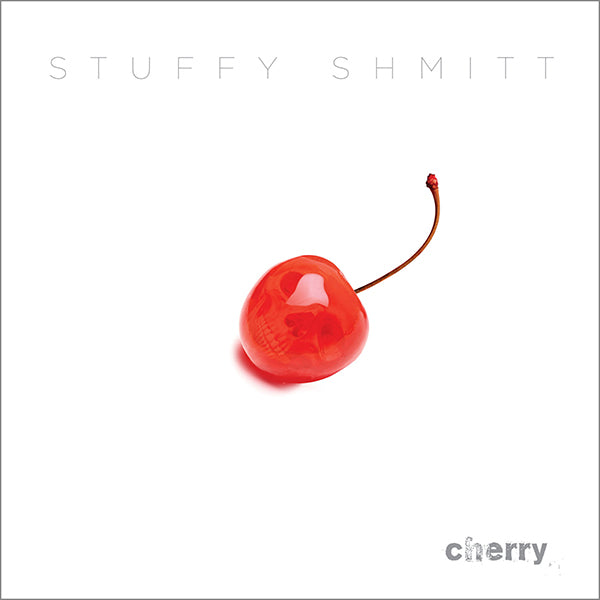
Cherry, officially released in February 2023, is about fresh sweet offerings, purgation, rebirth, a vintage machine in mint condition, and the burning passion of embers that remain lit no matter the weather and circumstances.
Stuffy Shmitt, Cherry, album cover.

Stuffy might never return to New York, so if you’re ever in East Nashville, stop by and see him at The 5 Spot. He’s clean and sober and doesn’t even smoke, but he can refer to you to what’s happening at cool spots like The Bowery Vault, The Basement East, and Brown’s Diner. And you don’t have to wait till midnight to catch a great show, because there’s music happening all the time. Also, check out his albums. Comparisons among artists are generally a disservice to all parties; however, I would agree with similarities to Elvis Costello, Warren Zevon, John Prine, Tom Waits, and Ry Cooder. Visit his website and peruse the discography. I recommend Nothing is Real, Other People’s Stuff, Stuff Happens, and Cherry for a primer of Shmitt humor, raw emotion, and even joy.
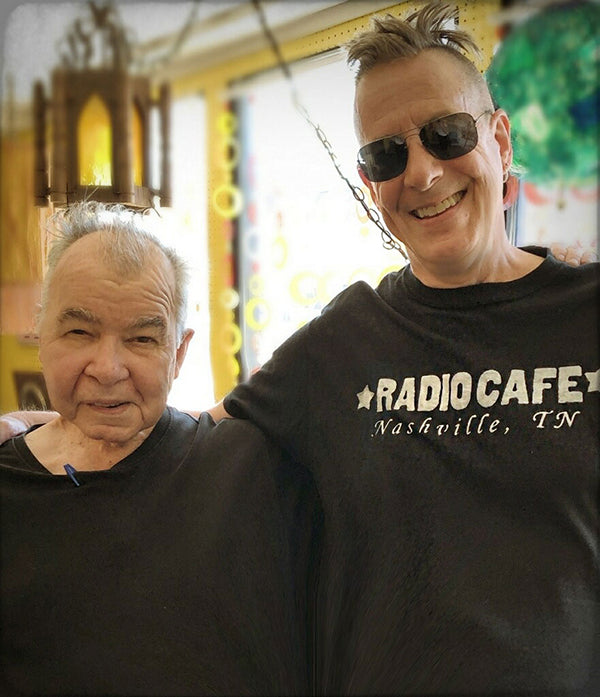
John Prine and Stuffy Shmitt.

Stuffy says he’s done whining and writing about trauma, so he chooses to live by a new credo, one he saw on a bumper sticker at The Basement East, “Get Happier F*ckers.” Sometimes a simple revelation takes a lifetime to realize – if it happens at all. After a long journey through battles, transformation, and maturity, Stuffy now has a unique position after so many years spent mastering his craft. Be forewarned: he’s in a heroic place of true artistic freedom that usually exists outside of predictability, comfort, and security – that’s how it is when you follow your bliss.
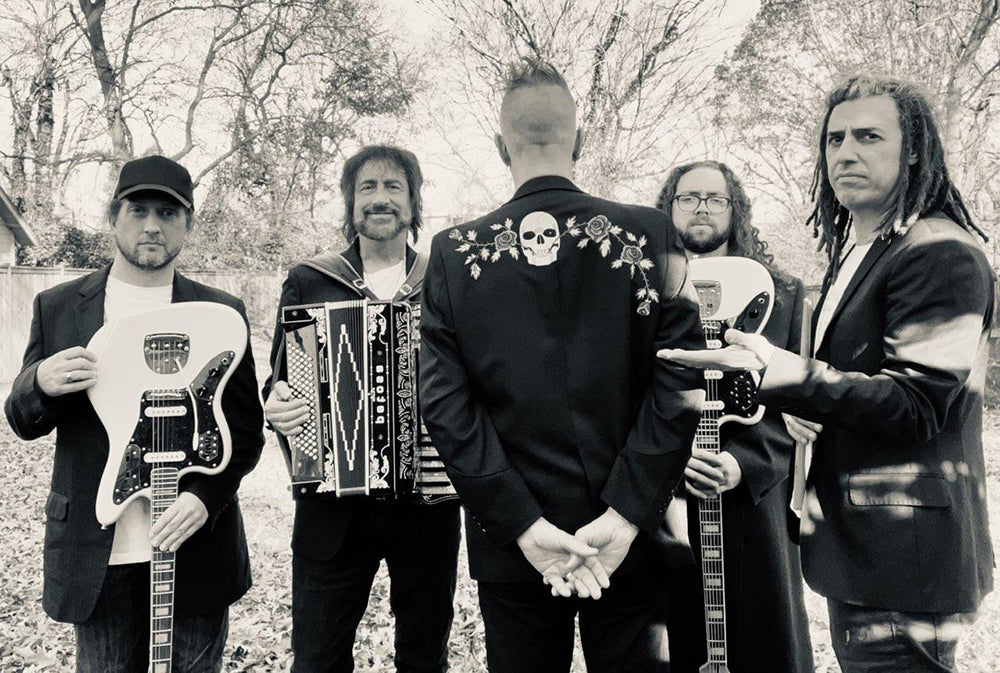
Playing in the band: Dave Coleman, Michael Webb, Stuffy Shmitt, Parker Hawkins, Dave Colella.

All images courtesy of Stuffy Shmitt.

More from Issue 178

View All Articles in Issue 178

Search Copper Magazine

#226 JJ Murphy’s Sleep Paralysis is a Genre-Bending Musical Journey Through Jazz, Fusion and More by Frank Doris Jan 05, 2026 #226 Stewardship by Consent by B. Jan Montana Jan 05, 2026 #226 Food, Music, and Sensory Experience: An Interview With Professor Jonathan Zearfoss of the Culinary Institute of America by Joe Caplan Jan 05, 2026 #226 Studio Confidential: A Who’s Who of Recording Engineers Tell Their Stories by Frank Doris Jan 05, 2026 #226 Pilot Radio is Reborn, 50 Years Later: Talking With CEO Barak Epstein by Frank Doris Jan 05, 2026 #226 The Vinyl Beat Goes Down to Tijuana (By Way of Los Angeles), Part One by Rudy Radelic Jan 05, 2026 #226 Capital Audiofest 2025: Must-See Stereo, Part Two by Frank Doris Jan 05, 2026 #226 My Morning Jacket’s Carl Broemel and Tyler Ramsey Collaborate on Their Acoustic Guitar Album, Celestun by Ray Chelstowski Jan 05, 2026 #226 The People Who Make Audio Happen: CanJam SoCal 2025, Part Two by Harris Fogel Jan 05, 2026 #226 How to Play in a Rock Band, 19: Touring Can Make You Crazy, Part One by Frank Doris Jan 05, 2026 #226 Linda Ronstadt Goes Bigger by Wayne Robins Jan 05, 2026 #226 From The Audiophile’s Guide: Active Room Correction and Digital Signal Processing by Paul McGowan Jan 05, 2026 #226 PS Audio in the News by Frank Doris Jan 05, 2026 #226 Back to My Reel-to-Reel Roots, Part 25: Half-Full, Not Empty by Ken Kessler Jan 05, 2026 #226 Happy New Year! by Frank Doris Jan 05, 2026 #226 Turn It Down! by Peter Xeni Jan 05, 2026 #226 Ghost Riders by James Schrimpf Jan 05, 2026 #226 A Factory Tour of Audio Manufacturer German Physiks by Markus "Marsu" Manthey Jan 04, 2026 #225 Capital Audiofest 2025: Must-See Stereo, Part One by Frank Doris Dec 01, 2025 #225 Otis Taylor and the Electrics Delivers a Powerful Set of Hypnotic Modern Blues by Frank Doris Dec 01, 2025 #225 A Christmas Miracle by B. Jan Montana Dec 01, 2025 #225 T.H.E. Show New York 2025, Part Two: Plenty to See, Hear, and Enjoy by Frank Doris Dec 01, 2025 #225 Underappreciated Artists, Part One: Martin Briley by Rich Isaacs Dec 01, 2025 #225 Rock and Roll is Here to Stay by Wayne Robins Dec 01, 2025 #225 A Lifetime of Holiday Record (and CD) Listening by Rudy Radelic Dec 01, 2025 #225 Little Feat: Not Saying Goodbye, Not Yet by Ray Chelstowski Dec 01, 2025 #225 How to Play in a Rock Band, Part 18: Dealing With Burnout by Frank Doris Dec 01, 2025 #225 The People Who Make Audio Happen: CanJam SoCal 2025 by Harris Fogel Dec 01, 2025 #225 Chicago’s Sonic Sanctuaries: Four Hi‑Fi Listening Bars Channeling the Jazz‑Kissa Spirit by Olivier Meunier-Plante Dec 01, 2025 #225 From The Audiophile’s Guide: Controlling Bass Frequencies Through Membrane Absorbers (and How to Build Your Own) by Paul McGowan Dec 01, 2025 #225 Your Editor’s Tips for Attending Audio Shows by Frank Doris Dec 01, 2025 #225 PS Audio in the News by Frank Doris Dec 01, 2025 #225 Back to My Reel-to-Reel Roots, Part 24 by Ken Kessler Dec 01, 2025 #225 Holiday Music by Frank Doris Dec 01, 2025 #225 Puppy Prognostication by Peter Xeni Dec 01, 2025 #225 How to Post Comments on Copper by Frank Doris Dec 01, 2025 #225 Living Color by Rudy Radelic Dec 01, 2025 #224 T.H.E. Show New York 2025, Part One: A New Beginning by Frank Doris Nov 03, 2025 #224 Fool’s Leap of Faith is the Extraordinary Octave Records Debut from Singer/Songwriter Tyler Burba and Visit by Frank Doris Nov 03, 2025 #224 The Beatles’ “Aeolian Cadences.” What? by Wayne Robins Nov 03, 2025 #224 Persona Non Grata by B. Jan Montana Nov 03, 2025 #224 Talking With Recording Engineer Barry Diament of Soundkeeper Recordings, Part Two by Frank Doris Nov 03, 2025 #224 B Sides, B Movies, and Beware of Zombies by Rudy Radelic Nov 03, 2025 #224 The Burn-In Chronicles: 1,000 Hours to Sonic Salvation by Olivier Meunier-Plante Nov 03, 2025 #224 A Conversation With Mat Weisfeld of VPI Industries by Joe Caplan Nov 03, 2025 #224 Blues-Rocker Kenny Wayne Shepherd Celebrates 30 Years of Ledbetter Heights by Ray Chelstowski Nov 03, 2025 #224 Playing in a Rock Band, 17: When Good Gigs Go Bad, Part Two by Frank Doris Nov 03, 2025

Stuffy Shmitt: Portrait of an Artist

Stuffy Shmitt: Portrait of an Artist

In the 1990s I worked at the North Star Pub in Manhattan’s South Street Seaport, a stone’s throw from the East River and in view of the old Fulton Fish Market and the Brooklyn Bridge just a few blocks away. This was before the fish market had been moved to a regulated facility in the Bronx. Even though the city tried to subdue the remaining gangsters calling shots behind market stalls, the waterfront was a place where the expression “sleeping with the fishes” wasn’t a punch line to a joke but a viable threat. I usually started very early in the morning, making the stew, chowder, and Shepherd’s pie for the lunch rush of bankers and insurance men. Each day, Stuffy Shmitt, the bartender, would sweep into the bar in his black leather duster coat, pop his head into the kitchen to say hi, and then prepare his breakfast of cigarettes, vodka, and orange juice. By the time the waitresses arrived, the pub was full of music, cigarette smoke, and cups of coffee spiked with Irish whiskey for those who needed a jolt.

Stuffy often arrived at work after a full night out at any number of saloons, after-hours joints, or third-shift bars for blue collar guys. New York City was a place you could drink all day, if you had the inclination. I got to know Stuffy over the years, attending his performances and hanging out in rehearsal spaces, but I usually had to be home early for morning classes. I could never keep up with Stuffy. There were a few instances when he hosted me at the bar and I barely remember how I got home to my futon 100 blocks away. Stuffy knew how to mix a proper drink. It was a fun era and no one lived the rock and roll lifestyle harder than Stuffy, who gigged at historic rooms such as The Bitter End, Don Hill’s, Ear Inn, CBGB, Kenny’s Castaways, Luna Lounge, Cafe Wha?, Max’s Kansas City and more. He even learned the boogie from blues legend Freddie King in the dressing room of some long-gone club.

Back in his hometown of Milwaukee, Wisconsin, Stuffy decided to escape school and a chaotic childhood to follow in the footsteps of the Beatles, Rolling Stones, and the Who. He made his first record at 16, and at 17 won a spot in a showcase at The Bitter End on Bleecker Street in the 1970s. A local producer was so impressed by his talent that he took Stuffy to Electric Lady Studios to lay down some tracks. The dream of every aspiring young musician was coming true and his Call to Adventure was fully underway.


Stuffy Shmitt at age 17 in front of Manhattan's The Bitter End.

Stuffy Shmitt at age 17 in front of Manhattan’s The Bitter End.

After exhausting opportunities in New York, Stuffy headed out to Los Angeles in the early 1980s where he played up and down the strip for five years before making his way back to New York. Besides, it’s hard for me to imagine Stuffy in La-La Land with the sunshine beating down on his cold-weather flesh as he walks down Santa Monica Boulevard in boots, jeans, T-shirt, and leather jacket to his bartending gig at Barney’s Beanery.

Here’s “Scratchin’ at The Cat” From Stuff Happens, Deluxe Edition:

(Singing about the good old days while working at The Cat & Fiddle in Laurel Canyon)

Although Stuffy has always been a working musician, he was never willing to be a wedding singer or play covers out in the suburbs for a seductive amount of money and a buffet plate. You see, for some people, art is too sacred to be devalued that way. He is unwilling to give up his lifestyle for a conventional job and supports himself by bartending, a noble profession of countless actors, writers, and artists. For Stuffy, music is everything. It’s do or die, sometimes literally.

I finished college and left the pub just a few years before the North Star Pub shut down in early 2001. Around the same time, Stuffy was hospitalized for pneumonia that advanced to the often deadly ARDS (acute respiratory distress syndrome). The disease left him in the ICU for so long that he developed ICU syndrome, manifesting in physical and psychological symptoms. Afterwards, his “brain was on fire,” and he went from depression to what Stuffy refers to as “superhuman manic episodes.” He released an album, Nothing is Real, in 2001 and an all-star album in 2003 entitled Other People’s Stuff, with performances by Levon Helm, Willy DeVille, and David Johansen (yes, the one from the New York Dolls).

The next several years would be muddled by increased alcohol and drug use that sent him bouncing between every Greenwich Village bar. Stuffy had been self-medicating an undiagnosed bipolar disorder for a long time before entering rehab. After his life and death battle, the machinations of a younger man were coming to an end.

New York City has a cruel but direct way of casting out artists. For some, it might have been when Andy Warhol died or CBGB closed, when the Chelsea Hotel was turned over to the millionaires, or when the big club scene ended with Limelight’s conversion into a retail space. Stuffy’s message came as he walked down Ludlow Street on the Lower East Side. On the site of The Living Room where he often played was a new building with a banner reading, “Party Like a Rock Star, Live Like a Rockefeller.” That’s all Stuffy needed before he and his wife Donna headed to Tennessee in 2014.

Nashville was a new frontier as it has been for so many musicians packing their guitar cases for greener pastures away from the big towns. Stuffy lives in East Nashville, a thriving artist community where locally-owned businesses and well-preserved Craftsman houses await people escaping frenetic paces and exorbitant rents. Judging by some of the characters Stuffy has met, “Music City USA” seems to attract plenty of other musical renegades and talented eccentrics looking for comrades in a tempestuous industry.

This is where Stuffy found a network of performance spaces, hangouts, and dives like The 5 Spot where he met Brett Ryan Stewart and Chris Tench, local musicians and producers who run a studio together. Stuffy got in touch with Aaron Lee Tasjan, a singer, songwriter and guitarist he knew from New York, to let him know he moved. Coincidentally, Tasjan also moved to Nashville a week before. They would play together once again. As the new family he needed showed up, new music was on the horizon.

Meanwhile, the town was dealing with its own battles: first rocked by a tornado that leveled half of East Nashville, then a deadly virus, and finally the Christmas Day bombing of 2020. Right after completing detox, Stuffy set out to record his first album in eight years. Stuff Happens took a new approach to making a record by stepping back, slowing down, letting go, and allowing Brett and Chris to produce the album  – a monumental move since Stuffy has always produced his own records.

“Let go and let God” goes the old 12 Steps saying, so for his next project, Cherry, Stuffy did so both metaphorically and figuratively by selling off his inherited gold coins, all his electric guitars, and a National Resolectric to pay for studio time. That left him with three acoustics: a Martin CEO-7, Gibson Jumbo J-200, and a 1964 Gibson Dove. Who ever heard of a rocker without a single electric guitar? Stuffy can borrow anything he wants in a town packed with amazing guitarists. Stuffy was willing to confront traumas and purge ghosts while also casting off valuable possessions in the interest of making more art.

Here’s “Mommy and Daddy” from Stuff Happens:

Cherry, officially released in February 2023, is about fresh sweet offerings, purgation, rebirth, a vintage machine in mint condition, and the burning passion of embers that remain lit no matter the weather and circumstances.
Stuffy Shmitt, Cherry, album cover.

Stuffy might never return to New York, so if you’re ever in East Nashville, stop by and see him at The 5 Spot. He’s clean and sober and doesn’t even smoke, but he can refer to you to what’s happening at cool spots like The Bowery Vault, The Basement East, and Brown’s Diner. And you don’t have to wait till midnight to catch a great show, because there’s music happening all the time. Also, check out his albums. Comparisons among artists are generally a disservice to all parties; however, I would agree with similarities to Elvis Costello, Warren Zevon, John Prine, Tom Waits, and Ry Cooder. Visit his website and peruse the discography. I recommend Nothing is Real, Other People’s Stuff, Stuff Happens, and Cherry for a primer of Shmitt humor, raw emotion, and even joy.

John Prine and Stuffy Shmitt.

Stuffy says he’s done whining and writing about trauma, so he chooses to live by a new credo, one he saw on a bumper sticker at The Basement East, “Get Happier F*ckers.” Sometimes a simple revelation takes a lifetime to realize – if it happens at all. After a long journey through battles, transformation, and maturity, Stuffy now has a unique position after so many years spent mastering his craft. Be forewarned: he’s in a heroic place of true artistic freedom that usually exists outside of predictability, comfort, and security – that’s how it is when you follow your bliss.
Playing in the band: Dave Coleman, Michael Webb, Stuffy Shmitt, Parker Hawkins, Dave Colella.

All images courtesy of Stuffy Shmitt.

0 comments

Leave a comment

0 Comments

Your avatar

Loading comments...

🗑️ Delete Comment

Enter moderator password to delete this comment: