COPPER

A PS Audio Publication

Issue 138 • Free Online Magazine

Issue 138 THE COPPER INTERVIEW

C.J. Vanston – Producer, Film Composer, Musician, Part Two

C.J. Vanston – Producer, Film Composer, Musician, Part Two

In Part One (Issue 137), producer/composer/musician C.J. Vanston talked about the beginning of his career and how he got his recording studio break, on what it was like to play with Toto and other stellar musicians, and more.

Not many artists can say they have performed for the Dalai Lama and worked with Slash in the same breath. Additionally, just some of C.J.’s film credits include: Almost Heroes, For Your Consideration and Best In Show, where he makes an appearance performing in Al Pacino’s band. In this second part of our interview, C.J. Vanston tells us about his approach to critical listening, and his music media of choice. Take it away C.J.

Russ Welton: Which is your favorite music format for listening?

C.J. Vanston: Well, I’m a bit of a contrarian on this one…any format that allows me to listen to whatever I want whenever I want. So that would be streaming. I hear people complain about the audio quality, but then I remind them that they fell in love with music from an AM radio over a 2-inch speaker! The song always wins for me, even if it’s on an MP3 that I can grab out of the air while I’m thinking about it.


RW: Could you share some of your insights of what you listen for when critically listening to instruments, before and after a finished mix?

CJV: Sometimes I’ll [put up] a mix with just drums, bass and lead vocal, to get that vocal energy right in your face, to match the energy of the snare [drum]. That way when I start adding guitars, keys and background vocals, the lead [vocal] doesn’t get diminished. I’d say that on 90 percent of things people send me to listen to, the vocal isn’t loud enough. I don’t get it. Maybe people just get used to the lyrics, or they wrote them. But most of the time the vocal is buried. Panning is huge also, creating space for different instruments to live. [Panning involves placing instruments across the stereo field through the use of pan pots (panning potentiometers) on a mixing console – Ed.] Same with EQ. You have three axes to work with: height (frequency), depth (volume) and width (pan) – use them!

RW: How does your workflow allow for your own creativity, and has this changed over time?

CJV: Well, I mastered Logic Pro (recording software) years ago. Pro Tools (software) is a great tool for an engineer, but if you’re a musician, what Logic, Digital Performer and many others offer are so much more comprehensive and creative. At any rate I mastered Logic as if it were an instrument, which empowered me to create on my own without having to call an engineer. And I learned from the best [engineers] in the business over the last 35 years…Al Schmitt, Ed Cherney, Greg Ladanyi, Chris Lord-Alge and others. [Sadly, Al Schmitt passed away last April – Ed.]

I always try to push artists to get good at whatever program they’re comfortable with, even if it’s GarageBand [free Apple IOS recording software – Ed.]. I would have killed to have had GarageBand when I was in my 20s! Not having to call an engineer every time you want to do a demo is one of the great luxuries of today’s technology.

So anyway, of course making music with a computer has been the biggest shift. I don’t miss tape at all. People get attached to the “sound” of tape. And yes, there is a certain warmth to it…but I can easily add warmth to my digital music, and the flexibility of working in the box (computer) is just amazing.
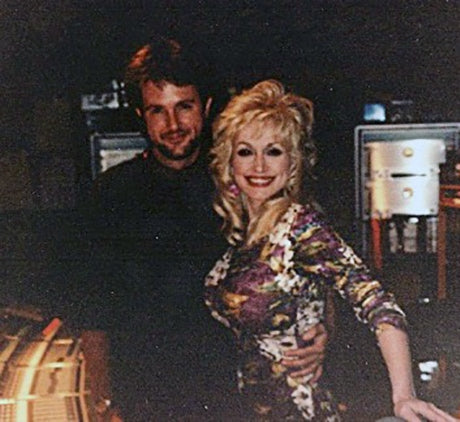

C.J. Vanston and Dolly Parton. C.J. Vanston and Dolly Parton.


RW: What key factors contribute to a good soundstage in a recording when listening to music in the studio and at home?

CJV: Acoustics of course are very important. Spend some money on some [sound treatment] panels and do some research. Better yet, hire somebody that knows what they’re doing. Other than that, if you’re working in a less-than-perfect room, keep your speakers smaller and closer, nearfield.

RW: How can your approach to production affect the emotion of the music?

CJV: It just starts with great performances. The level of players I work with deliver gold all the time. So, making sure you’ve got emotion in your basic parts and overdubs is key. But also, I like to add atmospheric clouds and counter parts that are like Easter eggs…you have to hunt for them, and you might not hear them the first time…but you feel them.


RW: How did you get into film production and what are some of the greatest challenges in composing for film?

CJV: I was never interested in doing really rootsy productions, where you close your eyes and see four guys sitting there playing. I’ll leave that to other people. Not many records made like that interest me unless it’s jazz. My music has always tended to sound “cinematic,” so when you close your eyes, you see mountains, galaxies…that interests me far more than “literal” production. So, [interest in] that [kind of] sound lent itself to composing for film.

I’ve done a lot of comedy also, and that’s another challenge. The main director I work for, Christopher Guest, has always said, “You can’t have two jokes.” What he means is if there’s a joke on screen, the music shouldn’t do the same thing. I tend to go the opposite way, scoring [that reflects] what the character is feeling, not doing. And most of the time these characters are extremely self-unaware and envision themselves with shades of grandeur. So, while they’re bumbling through life, I pump them up because that’s how they see themselves. Not [having] two jokes [take place at the same time]. It’s a fine line.
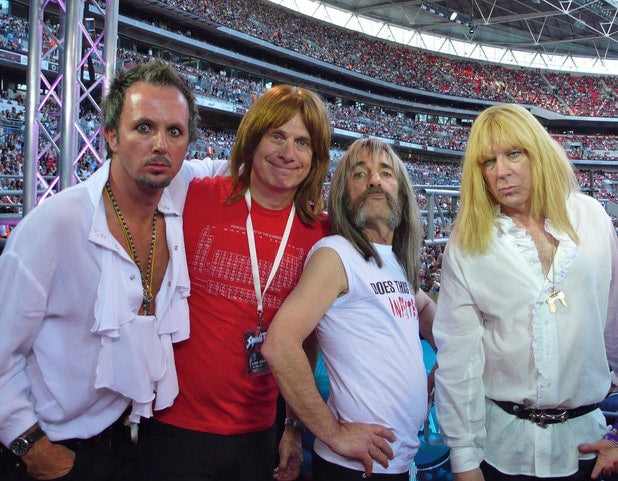

C.J. and members of Spinal Tap. C.J. and members of Spinal Tap.

RW: What future advancements in cinema and home music listening do you anticipate with object-based audio? (Object-based audio is used for immersive audio, or audio that involves more than 5.1 channels, such as Dolby Atmos or DTS:X. Each audio source, or object, can be positioned in space.)

CJV: Just starting to scratch the surface on this one, getting into Dolby Atmos, will pass on this question.

RW: What advice would you give to audiophiles to get the best experience from the dynamics of large-production film scores?

CJV: If their home systems are tuned properly (and I’d guess that 90 percent aren’t), they shouldn’t have to use the ridiculous [DSP surround-sound] presets that come with the systems. Tuning and acoustics always take precedence to software and hardware in my mind.

RW: What question(s) do you wish you had been asked that no one’s ever asked you?

CJV: Well, I don’t know what the question would be, but here’s my answer. Experiences matter much more than money or fame. I was on a Zoom call with legendary engineer Al Schmitt the other day with about twenty of the top producers and engineers on the planet, and not one person talked about, “I made XX money on XX job.” All anyone talked about were the rich experiences and the music. Concentrate on the experiences and let the money follow.


If the money leads, you’re in for a hollow life. I’ve tried to avoid working in situations where people were chasing the dollar and putting the music and people in the back seat. In doing so, I’ve left a lot of money on the table. But I carry inside me a deep history of incredible stories, experiences and [working with] people that shaped and help create not only the music I make, but the person I am. Thanks for having me here!


More from Issue 138

View All Articles in Issue 138

Search Copper Magazine

#231 Piano Prodigy Jude Kofie Releases His Debut Album On Octave Records by Frank Doris Jun 01, 2026 #231 Underappreciated Artists, Part Two: City Boy by Rich Isaacs Jun 01, 2026 #231 Music and the Art of Creation: Talking With Saxophonist Rob Scheps by Joe Caplan Jun 01, 2026 #231 How to Play in a Rock Band, 24: Further Adventures at the 2026 Montauk Music Festival by Frank Doris Jun 01, 2026 #231 Courtney Barnett: Creature of Habit by Wayne Robins Jun 01, 2026 #231 Angine de Poitrine: Interstellar Guitar Rock Saviors Headed for Late-Night TV Pop Stardom? by Mark Lepage Jun 01, 2026 #231 My Impressions of AXPONA 2026, Part One by Frank Doris Jun 01, 2026 #231 2026 La Jolla Concours d'Elegance: Another Aesthetic Feast by B. Jan Montana Jun 01, 2026 #231 Country Music Icon Jo Dee Messina’s Bridges: A New Beginning by Ray Chelstowski Jun 01, 2026 #231 The Luxury Dispatch Hosts a Video Podcast With Ken Kessler by Ken Kessler Jun 01, 2026 #231 The Vinyl Beat: Tracking in the Motor City by Rudy Radelic Jun 01, 2026 #231 Lots of Fun With DSP: The Ferrum Audio WANDLA DAC and Its Tube Mode by Frank Doris Jun 01, 2026 #231 From The Audiophile's Guide: Digital Source Components and Streaming Audio by Paul McGowan Jun 01, 2026 #231 Onkyo’s Monster M-510 power amplifier by The Staff at Just Audio Jun 01, 2026 #231 PS Audio in the News by PS Audio Staff Jun 01, 2026 #231 Naming Convention by Peter Xeni Jun 01, 2026 #231 Les Invisibles by Frank Doris Jun 01, 2026 #231 Wildlife Scene by James Schrimpf Jun 01, 2026 #230 Camaraderie by B. Jan Montana May 04, 2026 #230 AXPONA 2026: A Family Gathering by Paul McGowan May 04, 2026 #230 Pianist Ryan Benthall Explores Jazz Realms and Far Beyond With Divine Sky by Frank Doris May 04, 2026 #230 The Vinyl Beat in AXPONA-Land by Rudy Radelic May 04, 2026 #230 Teddy Thompson’s Musical Growth Deepens With Never Be the Same by Ray Chelstowski May 04, 2026 #230 More Fun in the Sun: Florida Audio Expo, Part Two by Frank Doris May 04, 2026 #230 CanJam NYC 2026 Show Report: Heady Sound, Part Two by Frank Doris and Harris Fogel May 04, 2026 #230 Sonic Youth On Murray Street by Wayne Robins May 04, 2026 #230 Graffeo Coffee: A Symphony of Sensory Experience by Joe Caplan May 04, 2026 #230 The Saul Authority: The Story of Hi-Fi Pioneer Saul Marantz by Olivier Meunier-Plante May 04, 2026 #230 How to Play in a Rock Band, 23: Encounters With Famous Musicians, Part Two by Frank Doris May 04, 2026 #230 An Outlier in the Rack: A Vintage BIC Beam Box by The Staff at Just Audio May 04, 2026 #230 PS Audio in the News by PS Audio Staff May 04, 2026 #230 A Cautionary Tale by Rich Isaacs May 04, 2026 #230 Reel-to-Reel Roots, Part 33 (Revised): Ken Kessler Reports On the 2026 (British) AudioJumble by Ken Kessler May 04, 2026 #230 Text Messaging by Frank Doris May 04, 2026 #230 The Audiophile Rat Race by Peter Xeni May 04, 2026 #230 On the Rocks by Rich Isaacs May 04, 2026 #229 The Earliest Stars of Country Music, Part Three by Jeff Weiner Apr 06, 2026 #229 The Healing Power of Music and Sound at the Omega Institute by Joe Caplan Apr 06, 2026 #229 CanJam NYC 2026 Show Report: Heady Sound, Part One by Frank Doris Apr 06, 2026 #229 Florida Audio Expo 2026: Warming Up to High-End Audio, Part One by Frank Doris Apr 06, 2026 #229 Quick Takes: Anne Bisson, Sam Morrison, The Velvet Underground, and the Stooges by Frank Doris Apr 06, 2026 #229 The Vinyl Beat: New Arrivals, and Old Audio Show Demo Scores to Settle by Rudy Radelic Apr 06, 2026 #229 Harvard Gets a High-End Audio Education by Frank Doris Apr 06, 2026 #229 No Country for Old Knees by B. Jan Montana Apr 06, 2026 #229 How To Play in A Rock Band, 22: Encounters With Famous Musicians, Part 1 by Frank Doris Apr 06, 2026 #229 The Soulful Grooves of Guinea-Bissau by Steve Kindig Apr 06, 2026 #229 Four-Hand Piano Performance at Its Finest by Stephan Haberthür Apr 06, 2026

C.J. Vanston – Producer, Film Composer, Musician, Part Two

C.J. Vanston – Producer, Film Composer, Musician, Part Two

In Part One (Issue 137), producer/composer/musician C.J. Vanston talked about the beginning of his career and how he got his recording studio break, on what it was like to play with Toto and other stellar musicians, and more.

Not many artists can say they have performed for the Dalai Lama and worked with Slash in the same breath. Additionally, just some of C.J.’s film credits include: Almost Heroes, For Your Consideration and Best In Show, where he makes an appearance performing in Al Pacino’s band. In this second part of our interview, C.J. Vanston tells us about his approach to critical listening, and his music media of choice. Take it away C.J.

Russ Welton: Which is your favorite music format for listening?

C.J. Vanston: Well, I’m a bit of a contrarian on this one…any format that allows me to listen to whatever I want whenever I want. So that would be streaming. I hear people complain about the audio quality, but then I remind them that they fell in love with music from an AM radio over a 2-inch speaker! The song always wins for me, even if it’s on an MP3 that I can grab out of the air while I’m thinking about it.


RW: Could you share some of your insights of what you listen for when critically listening to instruments, before and after a finished mix?

CJV: Sometimes I’ll [put up] a mix with just drums, bass and lead vocal, to get that vocal energy right in your face, to match the energy of the snare [drum]. That way when I start adding guitars, keys and background vocals, the lead [vocal] doesn’t get diminished. I’d say that on 90 percent of things people send me to listen to, the vocal isn’t loud enough. I don’t get it. Maybe people just get used to the lyrics, or they wrote them. But most of the time the vocal is buried. Panning is huge also, creating space for different instruments to live. [Panning involves placing instruments across the stereo field through the use of pan pots (panning potentiometers) on a mixing console – Ed.] Same with EQ. You have three axes to work with: height (frequency), depth (volume) and width (pan) – use them!

RW: How does your workflow allow for your own creativity, and has this changed over time?

CJV: Well, I mastered Logic Pro (recording software) years ago. Pro Tools (software) is a great tool for an engineer, but if you’re a musician, what Logic, Digital Performer and many others offer are so much more comprehensive and creative. At any rate I mastered Logic as if it were an instrument, which empowered me to create on my own without having to call an engineer. And I learned from the best [engineers] in the business over the last 35 years…Al Schmitt, Ed Cherney, Greg Ladanyi, Chris Lord-Alge and others. [Sadly, Al Schmitt passed away last April – Ed.]

I always try to push artists to get good at whatever program they’re comfortable with, even if it’s GarageBand [free Apple IOS recording software – Ed.]. I would have killed to have had GarageBand when I was in my 20s! Not having to call an engineer every time you want to do a demo is one of the great luxuries of today’s technology.

So anyway, of course making music with a computer has been the biggest shift. I don’t miss tape at all. People get attached to the “sound” of tape. And yes, there is a certain warmth to it…but I can easily add warmth to my digital music, and the flexibility of working in the box (computer) is just amazing.


C.J. Vanston and Dolly Parton. C.J. Vanston and Dolly Parton.


RW: What key factors contribute to a good soundstage in a recording when listening to music in the studio and at home?

CJV: Acoustics of course are very important. Spend some money on some [sound treatment] panels and do some research. Better yet, hire somebody that knows what they’re doing. Other than that, if you’re working in a less-than-perfect room, keep your speakers smaller and closer, nearfield.

RW: How can your approach to production affect the emotion of the music?

CJV: It just starts with great performances. The level of players I work with deliver gold all the time. So, making sure you’ve got emotion in your basic parts and overdubs is key. But also, I like to add atmospheric clouds and counter parts that are like Easter eggs…you have to hunt for them, and you might not hear them the first time…but you feel them.


RW: How did you get into film production and what are some of the greatest challenges in composing for film?

CJV: I was never interested in doing really rootsy productions, where you close your eyes and see four guys sitting there playing. I’ll leave that to other people. Not many records made like that interest me unless it’s jazz. My music has always tended to sound “cinematic,” so when you close your eyes, you see mountains, galaxies…that interests me far more than “literal” production. So, [interest in] that [kind of] sound lent itself to composing for film.

I’ve done a lot of comedy also, and that’s another challenge. The main director I work for, Christopher Guest, has always said, “You can’t have two jokes.” What he means is if there’s a joke on screen, the music shouldn’t do the same thing. I tend to go the opposite way, scoring [that reflects] what the character is feeling, not doing. And most of the time these characters are extremely self-unaware and envision themselves with shades of grandeur. So, while they’re bumbling through life, I pump them up because that’s how they see themselves. Not [having] two jokes [take place at the same time]. It’s a fine line.


C.J. and members of Spinal Tap. C.J. and members of Spinal Tap.

RW: What future advancements in cinema and home music listening do you anticipate with object-based audio? (Object-based audio is used for immersive audio, or audio that involves more than 5.1 channels, such as Dolby Atmos or DTS:X. Each audio source, or object, can be positioned in space.)

CJV: Just starting to scratch the surface on this one, getting into Dolby Atmos, will pass on this question.

RW: What advice would you give to audiophiles to get the best experience from the dynamics of large-production film scores?

CJV: If their home systems are tuned properly (and I’d guess that 90 percent aren’t), they shouldn’t have to use the ridiculous [DSP surround-sound] presets that come with the systems. Tuning and acoustics always take precedence to software and hardware in my mind.

RW: What question(s) do you wish you had been asked that no one’s ever asked you?

CJV: Well, I don’t know what the question would be, but here’s my answer. Experiences matter much more than money or fame. I was on a Zoom call with legendary engineer Al Schmitt the other day with about twenty of the top producers and engineers on the planet, and not one person talked about, “I made XX money on XX job.” All anyone talked about were the rich experiences and the music. Concentrate on the experiences and let the money follow.


If the money leads, you’re in for a hollow life. I’ve tried to avoid working in situations where people were chasing the dollar and putting the music and people in the back seat. In doing so, I’ve left a lot of money on the table. But I carry inside me a deep history of incredible stories, experiences and [working with] people that shaped and help create not only the music I make, but the person I am. Thanks for having me here!


0 comments

Leave a comment

0 Comments

Your avatar

Loading comments...

🗑️ Delete Comment

Enter moderator password to delete this comment:

✏️ Edit Comment

Enter your email to verify ownership: