COPPER

A PS Audio Publication

Issue 170 • Free Online Magazine

Issue 170 The Copper Interview

The Colors of Music: Synesthetic Artist Melissa McCracken Sees and Paints What She Hears, Part One

The Colors of Music: Synesthetic Artist Melissa McCracken Sees and Paints What She Hears, Part One

We’ll begin this article by having artist Melissa McCracken give us a short introduction to synesthesia and how it inspires her artwork.

Melissa McCracken: Synesthesia is a neurological condition in which the brain’s senses are cross-wired. So, in my case, whenever I hear music, the color faculty of my brain is triggered at the same time. it’s involuntary and simultaneous – an automatic response to music. Synesthesia can occur in a number of different ways. Any of the senses can be cross-wired. I have a form called grapheme synesthesia, in which, if I’m reading a book, all the letters and numbers are color coded as well. Spatial synesthesia is another [type that I have], where days of the week and numbers or anything that’s sequential is mapped out around my physical body or in my mind in specific places. It’s basically just my senses overlapping in a way they wouldn’t normally in a neuro-typical brain.

Alón Sagee: How did you discover that you had Synesthesia?

MM: When I was about 16, I honestly had never even given a thought that other people may not experience music as color, probably because there’s such a high association between visuals and music – you know, album artwork and music videos and light shows at concerts. It just kind of seemed natural to have that colorful component to it. And when I was trying to find a ringtone for my phone (laughs) I was consulting a friend on it and was talking about how this song matched my phone better. And he kind of stopped me in my tracks and said, “what are you talking about?” I was just amazed that he hadn’t had the same experience.

I thought that something must be different in his brain because the color/sound connection just seemed so apparent to me. So, we explored that conversation and not long after I opened it up to some other friends and family members and started to get a better idea of the way my brain was wired. I found out that synesthesia wasn’t very common but nevertheless it actually ended up being discussed in one of my college psychology courses! The professor asked if anyone had experience with synesthesia and since I was familiar with it and pretty sure that was what I had, I raised my hand. Hearing his analysis convinced me that this is what I have. I ended up speaking to the whole class about my experiences. So, it was relatively late in my life to understand that, you know, something was a little bit different about me.
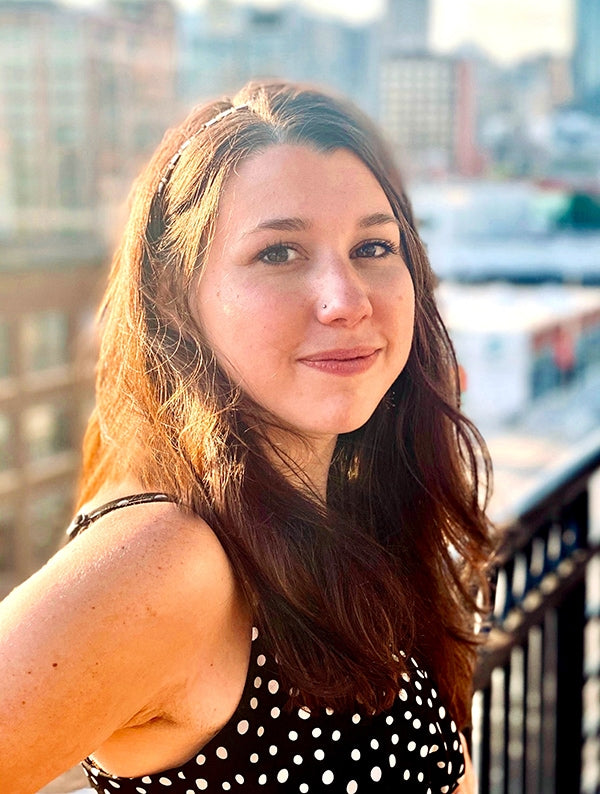
 

Melissa McCracken.

Melissa McCracken.


AS: Was it difficult as a youth to have this special ability that other people didn’t have?

MM: I think in some ways it was very helpful. I remember that math was a fairly easy subject for me since I see numbers in all their different individual colors. This made it easier for me to remember formulas because I’d be familiar with what colors were in that formula. It’s like a mnemonic device for remembering a lot of things, but it kind of would get in the way sometimes, like when meeting people. I’ll know they have a blue name, but I wonder, does it start with an “A,” does it start with an “F”…? And then alongside that, the relatability of having these experiences with music. I’m very passionate about music and it can be – I wouldn’t say frustrating, but kind of a moment of mismatch knowing that I’m having these experiences and they’re not exactly transferable or relatable to someone else. So, I think that sometimes that was a little upsetting to me, which is why I started painting – just to connect that a little bit better into the real world and with other people. So yeah, I don’t think it was much of a hindrance, but there were ups and downs to it, for sure. (laughs)

AS: Is this something that’s on all the time or can you turn it on and off?

MM: It’s involuntary, so it’s just always happening. I may not pay attention to it as much, you know, just like if I might be more in tune to the smells of the room or the conversation that I’m having rather than just focusing on the colors that are being expressed through the music [that’s playing] at that moment. So, I’ll tune in and tune out, but it’s never gone…


A Sunday Night (2018).
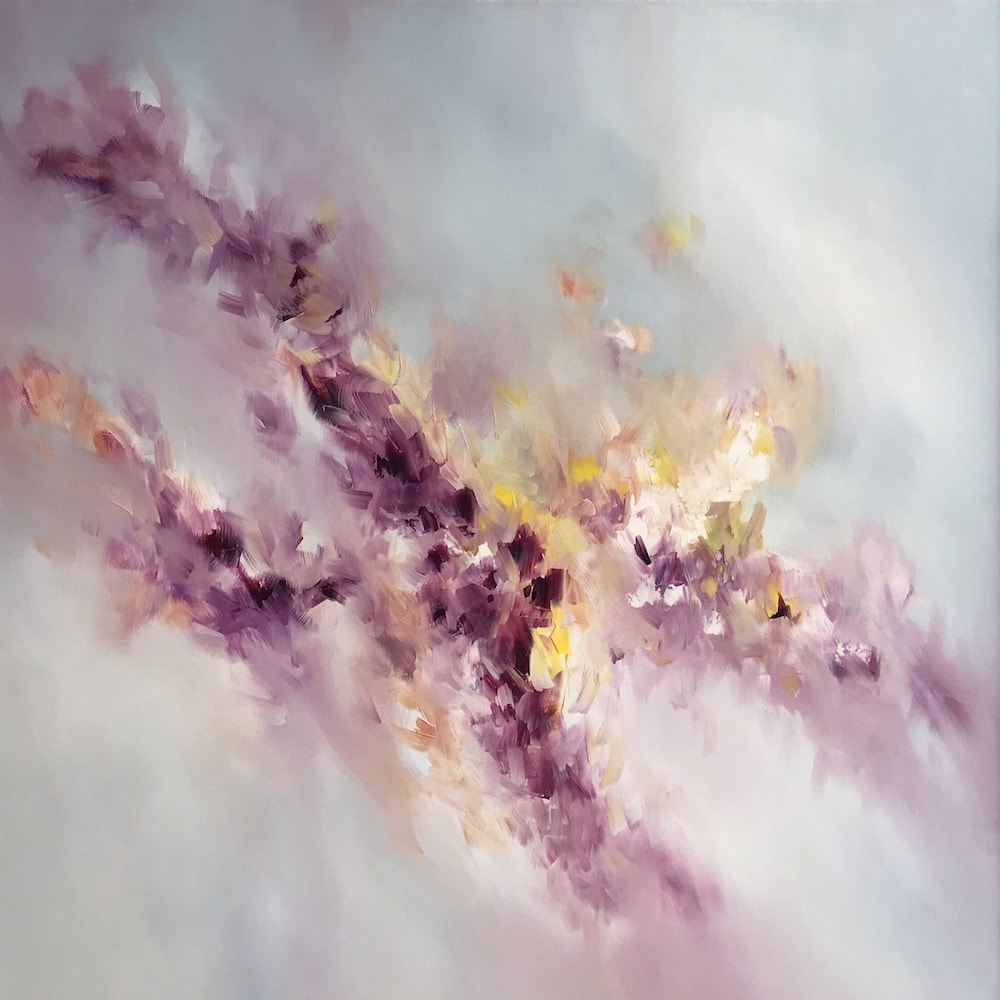
A Sunday Night (2018).


Wash (2018).

Wash (2018).


AS: Is this related to anything else that you experience? For example, years and years ago, I was taught how to focus and relax my sight to see auras around people.

MM: Oh, really?

AS: Yeah. It’s really weird and fascinating. I don’t tell too many people that, but now it’s it’ll be in print, so I’m sure to get some (ahem) comments.

MM: (laughs) Okay. Wow. That’s really cool though.

AS: I could see a yellow glow around people, especially around their heads. So I can relate to what you’re saying a little bit, although I wish I was a good visual artist. I’m not.

MM: (laughs) I actually can relate specifically to that – my roommate and I are interested in those sorts of topics and we’ve talked a lot about auras and things like that. And I think there does seem to be a spiritual connection to it just because it feels like more of an impression of the feelings the music evokes, rather than a very literal translation of what I’m experiencing, but I don’t know if that’s the same concept as feeling the aura of a song, you know what I mean?
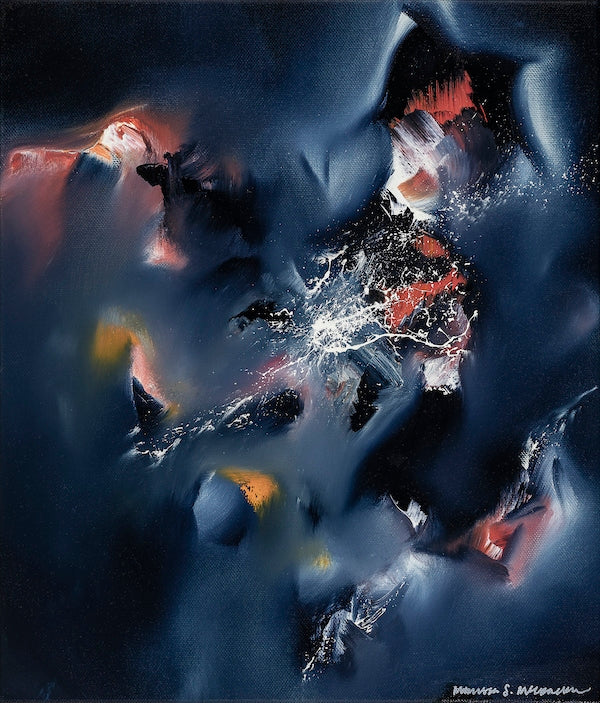
 

Ghosts (2018).

Ghosts (2018).


Kiss the Earth (2018).

Kiss the Earth (2018).


AS: Yeah, it’s fascinating stuff. One thing I’m fairly sure of is that our audiophile community would be interested in your process. How do you start a painting? Do you start with a song in your head? Is the song playing on a loop in your mind, or does it all show up at once?

MM: There are a lot of components to it. You know, a song is typically [around] four minutes long, so there’s a lot of different things happening in the visuals that aren’t stagnant, that have a lot of movement to them. I’ve tried a bunch of different approaches and [they’ll] vary from piece to piece. Many times, I’d listen to a song on repeat, and then, to be honest, I stopped doing that as much, because I’d have my favorite songs that I wanted to paint and I’d get a little numb to them just because I’m orienting myself towards [them] in a very trying-to-figure-it-out sort of way, rather than just fully enjoying the music.

So, I’ve learned to listen to a song a couple of times and kind of get a good understanding of the overall feel that I wanna get across. And then maybe I’ll turn on a podcast or something like that. And then intermittently go back to the song and make sure that – I don’t know how else to put it other than that I’m still incorporating those elements of the song that feel powerful. I relate it to the idea of creating a movie poster. You’re not putting all the scenes [in the movie] on the poster, but you’re really trying to get across the highlights. And so it’s like a screenshot in time, but at the same time a collage, and I try to make sure there’s movement in there to kind of give context to how these colors or shapes play into the song itself.

AS: It seems that the places where your paintings want to go don’t unfold all at once. Can you hear a song on the radio and then go home and paint it without putting the song back on?

MM: There’s a visual memory [aspect]. I do like to have the song [playing] as a reference because there are things I can come up with that I might have forgotten about. One of my favorite artists is Nine Inch Nails. I love Trent Reznor; his music has so much detail. There’s a lot of depth in the experience is of listening to NIN or his solo work. I think what’s cool about that is I can turn on a song that I’ve been so familiar with and notice a new little bass line or – I’m not super-technical with music, so I can’t speak [about] it in that way, but I’ll notice little elements of it that I haven’t previously experienced and that will change the picture. It’s important for me to stay in tune with the song.

Stay tuned for Part Two of this interview in our next issue.

Here’s the full list of Melissa’s paintings inspired by music: https://www.melissasmccracken.com/song-list

******

Copper Community Engagement:

Has one or more of the paintings inspired by a piece of music touched you in some way? Please share your experience by submitting a comment.

Alón Sagee is Chairman and Chief Troublemaker of the San Francisco Audiophile Society. Alón’s writings for Copper can be found in the following issues:

Also, please note: Alón’s biography for the Francisco Audiophile Society.


Header image: Gravity (2014), by Melissa McCracken. All images courtesy of Melissa McCracken.

More from Issue 170

View All Articles in Issue 170

Search Copper Magazine

#231 Piano Prodigy Jude Kofie Releases His Debut Album On Octave Records by Frank Doris Jun 01, 2026 #231 Underappreciated Artists, Part Two: City Boy by Rich Isaacs Jun 01, 2026 #231 Music and the Art of Creation: Talking With Saxophonist Rob Scheps by Joe Caplan Jun 01, 2026 #231 How to Play in a Rock Band, 24: Further Adventures at the 2026 Montauk Music Festival by Frank Doris Jun 01, 2026 #231 Courtney Barnett: Creature of Habit by Wayne Robins Jun 01, 2026 #231 Angine de Poitrine: Interstellar Guitar Rock Saviors Headed for Late-Night TV Pop Stardom? by Mark Lepage Jun 01, 2026 #231 My Impressions of AXPONA 2026, Part One by Frank Doris Jun 01, 2026 #231 2026 La Jolla Concours d'Elegance: Another Aesthetic Feast by B. Jan Montana Jun 01, 2026 #231 Country Music Icon Jo Dee Messina’s Bridges: A New Beginning by Ray Chelstowski Jun 01, 2026 #231 The Luxury Dispatch Hosts a Video Podcast With Ken Kessler by Ken Kessler Jun 01, 2026 #231 The Vinyl Beat: Tracking in the Motor City by Rudy Radelic Jun 01, 2026 #231 Lots of Fun With DSP: The Ferrum Audio WANDLA DAC and Its Tube Mode by Frank Doris Jun 01, 2026 #231 From The Audiophile's Guide: Digital Source Components and Streaming Audio by Paul McGowan Jun 01, 2026 #231 Onkyo’s Monster M-510 power amplifier by The Staff at Just Audio Jun 01, 2026 #231 PS Audio in the News by PS Audio Staff Jun 01, 2026 #231 Naming Convention by Peter Xeni Jun 01, 2026 #231 Les Invisibles by Frank Doris Jun 01, 2026 #231 Wildlife Scene by James Schrimpf Jun 01, 2026 #230 Camaraderie by B. Jan Montana May 04, 2026 #230 AXPONA 2026: A Family Gathering by Paul McGowan May 04, 2026 #230 Pianist Ryan Benthall Explores Jazz Realms and Far Beyond With Divine Sky by Frank Doris May 04, 2026 #230 The Vinyl Beat in AXPONA-Land by Rudy Radelic May 04, 2026 #230 Teddy Thompson’s Musical Growth Deepens With Never Be the Same by Ray Chelstowski May 04, 2026 #230 More Fun in the Sun: Florida Audio Expo, Part Two by Frank Doris May 04, 2026 #230 CanJam NYC 2026 Show Report: Heady Sound, Part Two by Frank Doris and Harris Fogel May 04, 2026 #230 Sonic Youth On Murray Street by Wayne Robins May 04, 2026 #230 Graffeo Coffee: A Symphony of Sensory Experience by Joe Caplan May 04, 2026 #230 The Saul Authority: The Story of Hi-Fi Pioneer Saul Marantz by Olivier Meunier-Plante May 04, 2026 #230 How to Play in a Rock Band, 23: Encounters With Famous Musicians, Part Two by Frank Doris May 04, 2026 #230 An Outlier in the Rack: A Vintage BIC Beam Box by The Staff at Just Audio May 04, 2026 #230 PS Audio in the News by PS Audio Staff May 04, 2026 #230 A Cautionary Tale by Rich Isaacs May 04, 2026 #230 Reel-to-Reel Roots, Part 33 (Revised): Ken Kessler Reports On the 2026 (British) AudioJumble by Ken Kessler May 04, 2026 #230 Text Messaging by Frank Doris May 04, 2026 #230 The Audiophile Rat Race by Peter Xeni May 04, 2026 #230 On the Rocks by Rich Isaacs May 04, 2026 #229 The Earliest Stars of Country Music, Part Three by Jeff Weiner Apr 06, 2026 #229 The Healing Power of Music and Sound at the Omega Institute by Joe Caplan Apr 06, 2026 #229 CanJam NYC 2026 Show Report: Heady Sound, Part One by Frank Doris Apr 06, 2026 #229 Florida Audio Expo 2026: Warming Up to High-End Audio, Part One by Frank Doris Apr 06, 2026 #229 Quick Takes: Anne Bisson, Sam Morrison, The Velvet Underground, and the Stooges by Frank Doris Apr 06, 2026 #229 The Vinyl Beat: New Arrivals, and Old Audio Show Demo Scores to Settle by Rudy Radelic Apr 06, 2026 #229 Harvard Gets a High-End Audio Education by Frank Doris Apr 06, 2026 #229 No Country for Old Knees by B. Jan Montana Apr 06, 2026 #229 How To Play in A Rock Band, 22: Encounters With Famous Musicians, Part 1 by Frank Doris Apr 06, 2026 #229 The Soulful Grooves of Guinea-Bissau by Steve Kindig Apr 06, 2026 #229 Four-Hand Piano Performance at Its Finest by Stephan Haberthür Apr 06, 2026

The Colors of Music: Synesthetic Artist Melissa McCracken Sees and Paints What She Hears, Part One

The Colors of Music: Synesthetic Artist Melissa McCracken Sees and Paints What She Hears, Part One

We’ll begin this article by having artist Melissa McCracken give us a short introduction to synesthesia and how it inspires her artwork.

Melissa McCracken: Synesthesia is a neurological condition in which the brain’s senses are cross-wired. So, in my case, whenever I hear music, the color faculty of my brain is triggered at the same time. it’s involuntary and simultaneous – an automatic response to music. Synesthesia can occur in a number of different ways. Any of the senses can be cross-wired. I have a form called grapheme synesthesia, in which, if I’m reading a book, all the letters and numbers are color coded as well. Spatial synesthesia is another [type that I have], where days of the week and numbers or anything that’s sequential is mapped out around my physical body or in my mind in specific places. It’s basically just my senses overlapping in a way they wouldn’t normally in a neuro-typical brain.

Alón Sagee: How did you discover that you had Synesthesia?

MM: When I was about 16, I honestly had never even given a thought that other people may not experience music as color, probably because there’s such a high association between visuals and music – you know, album artwork and music videos and light shows at concerts. It just kind of seemed natural to have that colorful component to it. And when I was trying to find a ringtone for my phone (laughs) I was consulting a friend on it and was talking about how this song matched my phone better. And he kind of stopped me in my tracks and said, “what are you talking about?” I was just amazed that he hadn’t had the same experience.

I thought that something must be different in his brain because the color/sound connection just seemed so apparent to me. So, we explored that conversation and not long after I opened it up to some other friends and family members and started to get a better idea of the way my brain was wired. I found out that synesthesia wasn’t very common but nevertheless it actually ended up being discussed in one of my college psychology courses! The professor asked if anyone had experience with synesthesia and since I was familiar with it and pretty sure that was what I had, I raised my hand. Hearing his analysis convinced me that this is what I have. I ended up speaking to the whole class about my experiences. So, it was relatively late in my life to understand that, you know, something was a little bit different about me.


Melissa McCracken.

Melissa McCracken.


AS: Was it difficult as a youth to have this special ability that other people didn’t have?

MM: I think in some ways it was very helpful. I remember that math was a fairly easy subject for me since I see numbers in all their different individual colors. This made it easier for me to remember formulas because I’d be familiar with what colors were in that formula. It’s like a mnemonic device for remembering a lot of things, but it kind of would get in the way sometimes, like when meeting people. I’ll know they have a blue name, but I wonder, does it start with an “A,” does it start with an “F”…? And then alongside that, the relatability of having these experiences with music. I’m very passionate about music and it can be – I wouldn’t say frustrating, but kind of a moment of mismatch knowing that I’m having these experiences and they’re not exactly transferable or relatable to someone else. So, I think that sometimes that was a little upsetting to me, which is why I started painting – just to connect that a little bit better into the real world and with other people. So yeah, I don’t think it was much of a hindrance, but there were ups and downs to it, for sure. (laughs)

AS: Is this something that’s on all the time or can you turn it on and off?

MM: It’s involuntary, so it’s just always happening. I may not pay attention to it as much, you know, just like if I might be more in tune to the smells of the room or the conversation that I’m having rather than just focusing on the colors that are being expressed through the music [that’s playing] at that moment. So, I’ll tune in and tune out, but it’s never gone…


A Sunday Night (2018).

A Sunday Night (2018).


Wash (2018).

Wash (2018).


AS: Is this related to anything else that you experience? For example, years and years ago, I was taught how to focus and relax my sight to see auras around people.

MM: Oh, really?

AS: Yeah. It’s really weird and fascinating. I don’t tell too many people that, but now it’s it’ll be in print, so I’m sure to get some (ahem) comments.

MM: (laughs) Okay. Wow. That’s really cool though.

AS: I could see a yellow glow around people, especially around their heads. So I can relate to what you’re saying a little bit, although I wish I was a good visual artist. I’m not.

MM: (laughs) I actually can relate specifically to that – my roommate and I are interested in those sorts of topics and we’ve talked a lot about auras and things like that. And I think there does seem to be a spiritual connection to it just because it feels like more of an impression of the feelings the music evokes, rather than a very literal translation of what I’m experiencing, but I don’t know if that’s the same concept as feeling the aura of a song, you know what I mean?


Ghosts (2018).

Ghosts (2018).


Kiss the Earth (2018).

Kiss the Earth (2018).


AS: Yeah, it’s fascinating stuff. One thing I’m fairly sure of is that our audiophile community would be interested in your process. How do you start a painting? Do you start with a song in your head? Is the song playing on a loop in your mind, or does it all show up at once?

MM: There are a lot of components to it. You know, a song is typically [around] four minutes long, so there’s a lot of different things happening in the visuals that aren’t stagnant, that have a lot of movement to them. I’ve tried a bunch of different approaches and [they’ll] vary from piece to piece. Many times, I’d listen to a song on repeat, and then, to be honest, I stopped doing that as much, because I’d have my favorite songs that I wanted to paint and I’d get a little numb to them just because I’m orienting myself towards [them] in a very trying-to-figure-it-out sort of way, rather than just fully enjoying the music.

So, I’ve learned to listen to a song a couple of times and kind of get a good understanding of the overall feel that I wanna get across. And then maybe I’ll turn on a podcast or something like that. And then intermittently go back to the song and make sure that – I don’t know how else to put it other than that I’m still incorporating those elements of the song that feel powerful. I relate it to the idea of creating a movie poster. You’re not putting all the scenes [in the movie] on the poster, but you’re really trying to get across the highlights. And so it’s like a screenshot in time, but at the same time a collage, and I try to make sure there’s movement in there to kind of give context to how these colors or shapes play into the song itself.

AS: It seems that the places where your paintings want to go don’t unfold all at once. Can you hear a song on the radio and then go home and paint it without putting the song back on?

MM: There’s a visual memory [aspect]. I do like to have the song [playing] as a reference because there are things I can come up with that I might have forgotten about. One of my favorite artists is Nine Inch Nails. I love Trent Reznor; his music has so much detail. There’s a lot of depth in the experience is of listening to NIN or his solo work. I think what’s cool about that is I can turn on a song that I’ve been so familiar with and notice a new little bass line or – I’m not super-technical with music, so I can’t speak [about] it in that way, but I’ll notice little elements of it that I haven’t previously experienced and that will change the picture. It’s important for me to stay in tune with the song.

Stay tuned for Part Two of this interview in our next issue.

Here’s the full list of Melissa’s paintings inspired by music: https://www.melissasmccracken.com/song-list

******

Copper Community Engagement:

Has one or more of the paintings inspired by a piece of music touched you in some way? Please share your experience by submitting a comment.

Alón Sagee is Chairman and Chief Troublemaker of the San Francisco Audiophile Society. Alón’s writings for Copper can be found in the following issues:

Also, please note: Alón’s biography for the Francisco Audiophile Society.


Header image: Gravity (2014), by Melissa McCracken. All images courtesy of Melissa McCracken.

0 comments

Leave a comment

0 Comments

Your avatar

Loading comments...

🗑️ Delete Comment

Enter moderator password to delete this comment:

✏️ Edit Comment

Enter your email to verify ownership: