COPPER

A PS Audio Publication

Issue 107 • Free Online Magazine

Issue 107

Complete Recovery: Unusual Takes on Others' Songs

Complete Recovery: Unusual Takes on Others' Songs
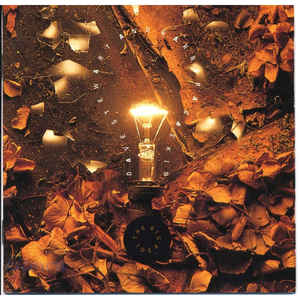
Sometimes an artist is so taken with another artist’s song that they just have to do their own performance of it. These cover versions can range from faithful portrayal of the original to something else entirely. Here are some of my favorites that fall in the latter category: Arthur Brown – “We’ve Gotta Get Out of This Place” (The Animals) You probably only know him as “The God of Hellfire” from his 1968 hit, “Fire.” Possessed of a multi-octave vocal range, he has continued to record and perform (at age 77) to this day. I’ve been a fan from the beginning, and will do a feature on him in Copper at some point. In the mid- 1970s, after three wild, spacy, progressive albums with his band, Kingdom Come (not the metal band of the late ‘80s), he took a detour back toward pop. The album, Dance, was much more subdued, but featured this bouncy version of the Animals’ hit. httpv://www.youtube.com/watch?v=atEzLhIn9Zg Shaun Cassidy – “It’s My Life” (The Animals) Yes, I said Shaun Cassidy – 1970s teen idol, brother of David Cassidy (another teen idol). Apparently, Shaun wanted to jettison that image, and in 1980 enlisted the help of rock legend Todd Rundgren. With production by Rundgren and musical accompaniment by members of Rundgren’s band Utopia, Cassidy played chameleon, shedding his previous sound like so much dried skin as he ran through cover songs that included David Bowie’s “Rebel Rebel” and Ian Hunter’s “Once Bitten, Twice Shy.” This is a track to put on and stump your friends – I’ll bet at least one will guess Iggy Pop… httpv://www.youtube.com/watch?v=cF-dEA-BXTo Burton Cummings – “You Ain’t Seen Nothing Yet” (Bachman-Turner Overdrive) Following the massive success of The Guess Who’s American Woman (both album and single) in 1970, guitarist and founding member Randy Bachman fell ill and converted to Mormonism. This led to a rift with co-founder Burton Cummings, and Bachman left the group after a 1970 gig at the Fillmore East. He went on to have a number of hits with Bachman-Turner Overdrive, including “You Ain’t Seen Nothing Yet.” Evidence of the bad blood between Bachman and Cummings was on full display years later in this quote from a 1974 Rolling Stone interview with Cummings: “When I see Bachman and Fred Turner, both 250-odd pound guys, slinking and sashaying around onstage . . .it just doesn’t work for me. It’s like seeing the f*ckin’ hippos on ice skates doing Nutcracker Suite in little frilly skirts.” The animosity was still festering when Cummings released his self-titled solo album in 1976. Pay particular attention to the solo in the middle. httpv://www.youtube.com/watch?v=M1bijvblzEE DREAD ZEPPELIN – “Your Time is Gonna Come” (Led Zeppelin) Is it cheating to include this? I don’t think so. Imagine some guys sitting around, and one of them says, “Let’s form a Led Zeppelin cover band, but let’s do the songs reggae-style, and get an Elvis impersonator for our lead vocalist!” Good drugs, right? Well, Dread Zeppelin pulls it off with superb musicianship and a great sense of humor. httpv://www.youtube.com/watch?v=aNBFy4C8Vuc BRYAN FERRY – “It’s My Party” (Leslie Gore) Roxy Music’s lead singer put out his first solo album of cover songs in 1973, when his vocal style was still, shall we say, “mannered.” Nearly ten years later, Ferry’s smooth, melodic crooning on Avalon, Boys and Girls, and Bête Noire would earn him a large following. Note that he doesn’t bother to change the lyrics here to fit his gender. httpv://www.youtube.com/watch?v=X6fqDVe863o Lone Star – “She Said, She Said” (The Beatles) Despite the Texas reference, Lone Star was a Welsh hard rock band. Formed in 1976, they counted among their personnel guitarist Paul Chapman (a cousin of rocker Dave Edmunds), who would go on to join UFO. Here they give the Beatles track a spacy, heavy treatment. httpv://www.youtube.com/watch?v=jg7Dud55qlE Monsoon – “Tomorrow Never Knows” (The Beatles) Indipop (not Indie Pop) group Monsoon featured Sheila Chandra, a London-born singer of Indian descent. This album came out in 1982. She went on to record more traditional Indian music on the Indipop label as well as solo albums for Peter Gabriel’s Real World imprint. httpv://www.youtube.com/watch?v=VcER0OonPy0 Elton Motello – “I Can’t Explain” (The Who) What a great name – obviously playing on Elvis Costello. Elton Motello (née Alan Ward) had a hit in 1977 with “Jet Boy Jet Girl” which, itself, was later covered by The Damned). The backing track for that song formed the basis of the international hit “Ça Plane Pour Moi” by Plastic Bertrand. Here, Motello goes full-on Devo with this cover of an early Who song. httpv://www.youtube.com/watch?v=xetXJvevz_M Cyndee Peters – “House of The Rising Sun” (traditional - The Animals) Cyndee Peters is an American-born gospel singer who has spent much of her life in Sweden. This compelling arrangement is from an album on the Swedish Opus 3 label, known for its minimalist approach to audiophile recording. httpv://www.youtube.com/watch?v=i-h3qqIbULE Rabbitt – “Locomotive Breath” (Jethro Tull) Hailing from South Africa, this was one of Trevor Rabin’s earliest outfits. He would go on to join Yes as part of their 90125 lineup, as well as composing film soundtracks. Rabbitt keyboardist Duncan Faure would later join the Bay City Rollers in their post-hit incarnation as The Rollers. Note the change in lyrics (“God” becomes “Charlie”). httpv://www.youtube.com/watch?v=UdVYPzO9hUQ Stewart & Gaskin – “Subterranean Homesick Blues” (Bob Dylan), “Levi Stubbs’ Tears” (Billy Bragg) Dave Stewart (not of the Eurythmics) and Barbara Gaskin were veterans of the Canterbury progressive rock scene in the ‘60s and ‘70s. Stewart had played keyboards in quite a few bands, including Egg, Khan, Hatfield and the North, National Health, and Bruford. Gaskin was a singer with Hatfield, credited along with vocalists Amanda Parsons and Ann Rosenthal as “The Northettes.” Stewart and Gaskin teamed up in the 1980s to produce three pop-oriented albums for the Rykodisc label, but had little success outside of England. Those albums featured a large number of cover versions, two of which are included here. “Subterranean Homesick Blues” is given a very quirky rap/hip-hop treatment. At the start of the track, a quiet voice can be heard saying, “So, still no luck in the music business, eh guys?” httpv://www.youtube.com/watch?v=7MYgjgrZ8ts Seeing as British singer-songwriter Billy Bragg is not exactly a household name, I’m including his original recording of “Levi Stubbs’ Tears” for comparison purposes. His is a stripped-down, demo-like track, typical of much of his recordings. httpv://www.youtube.com/watch?v=I4v8VJ0LRgA The Stewart/Gaskin version is a complete re-imagining with a massive arrangement. These two versions make a great demonstration of what “production” means in recordings. httpv://www.youtube.com/watch?v=Df_yKtbu9Y4&list=PLQ0_3KQ4DZ-puuD5APHesVd_FE_HbVPxB Of course, this is just a small sample of what’s out there (pun intended). If you have any favorites that I might want to include in a follow-up, please share them in the comments section. Header image courtesy of Wikimedia Commons/Eva Rinaldi.
More from Issue 107

View All Articles in Issue 107

Search Copper Magazine

#228 Serita’s Black Rose Duo Shakes Your Soul With a Blend of Funk, Rock, Blues and a Whole Lot More by Frank Doris Mar 02, 2026 #228 Vinyl, A Love Story by Wayne Robins Mar 02, 2026 #228 Thrill Seeker by B. Jan Montana Mar 02, 2026 #228 The Vinyl Beat: Donald Byrd, Bill Evans, Wes Montgomery, Eddie Palmieri and Frank Sinatra by Rudy Radelic Mar 02, 2026 #228 Listening to Prestige: The History of a Vitally Important Jazz Record Label by Frank Doris Mar 02, 2026 #228 How to Play in a Rock Band, 21: Touring With James Lee Stanley by Frank Doris Mar 02, 2026 #228 The NAMM 2026 Show: The Music Industry’s Premier Event by John Volanski Mar 02, 2026 #228 The Earliest Stars of Country Music, Part Two by Jeff Weiner Mar 02, 2026 #228 From The Audiophile's Guide: A Brief History of Stereophonic Sound by Paul McGowan Mar 02, 2026 #228 A Bone to Pick With Streaming Audio by Frank Doris Mar 02, 2026 #228 Blast Off With Bluesman Duke Robillard by Ray Chelstowski Mar 02, 2026 #228 A Visit to the Marten Loudspeaker Factory in Göteborg, Sweden by Ingo Schulz and Sebastian Polcyn Mar 02, 2026 #228 Pure Distortion by Peter Xeni Mar 02, 2026 #228 A Nagra Factory Tour by Markus "Marsu" Manthey Mar 02, 2026 #228 Back to My Reel-to-Reel Roots, Part 27: Noodge and Ye Shall Receive, Part Two by Ken Kessler Mar 02, 2026 #228 PS Audio in the News by PS Audio Staff Mar 02, 2026 #228 90-Degree Stereo by Frank Doris Mar 02, 2026 #228 The Keys to Art by Rich Isaacs Mar 02, 2026 #227 Seth Lewis Gets in the Groove With Take a Look Around: a Tribute to the Meters by Frank Doris Feb 02, 2026 #227 Passport to Sound: May Anwar’s Audio Learning Experience for Young People by Frank Doris Feb 02, 2026 #227 Conjectures on Cosmic Consciousness by B. Jan Montana Feb 02, 2026 #227 The Big Takeover Turns 45 by Wayne Robins Feb 02, 2026 #227 Music and Chocolate: On the Sensory Connection by Joe Caplan Feb 02, 2026 #227 Singer/Songwriter Chris Berardo: Getting Wilder All the Time by Ray Chelstowski Feb 02, 2026 #227 The Earliest Stars of Country Music, Part One by Jeff Weiner Feb 02, 2026 #227 The Vinyl Beat Goes Down to Tijuana (By Way of Los Angeles), Part Two by Rudy Radelic Feb 02, 2026 #227 How to Play in a Rock Band, 20: On the Road With Blood, Sweat & Tears’ Guitarist Gabe Cummins by Frank Doris Feb 02, 2026 #227 From The Audiophile’s Guide: Audio Specs and Measuring by Paul McGowan Feb 02, 2026 #227 Our Brain is Always Listening by Peter Trübner Feb 02, 2026 #227 PS Audio in the News by PS Audio Staff Feb 02, 2026 #227 The Listening Chair: Sleek Style and Sound From the Luxman L3 by Howard Kneller Feb 02, 2026 #227 The Los Angeles and Orange County Audio Society Celebrates Its 32nd Anniversary, Honoring David and Sheryl Lee Wilson and Bernie Grundman by Harris Fogel Feb 02, 2026 #227 Back to My Reel-to-Reel Roots, Part 26: Half Full – Not Half Empty, Redux by Ken Kessler Feb 02, 2026 #227 That's What Puzzles Us... by Frank Doris Feb 02, 2026 #227 Record-Breaking by Peter Xeni Feb 02, 2026 #227 The Long and Winding Road by B. Jan Montana Feb 02, 2026 #226 JJ Murphy’s Sleep Paralysis is a Genre-Bending Musical Journey Through Jazz, Fusion and More by Frank Doris Jan 05, 2026 #226 Stewardship by Consent by B. Jan Montana Jan 05, 2026 #226 Food, Music, and Sensory Experience: An Interview With Professor Jonathan Zearfoss of the Culinary Institute of America by Joe Caplan Jan 05, 2026 #226 Studio Confidential: A Who’s Who of Recording Engineers Tell Their Stories by Frank Doris Jan 05, 2026 #226 Pilot Radio is Reborn, 50 Years Later: Talking With CEO Barak Epstein by Frank Doris Jan 05, 2026 #226 The Vinyl Beat Goes Down to Tijuana (By Way of Los Angeles), Part One by Rudy Radelic Jan 05, 2026 #226 Capital Audiofest 2025: Must-See Stereo, Part Two by Frank Doris Jan 05, 2026 #226 My Morning Jacket’s Carl Broemel and Tyler Ramsey Collaborate on Their Acoustic Guitar Album, Celestun by Ray Chelstowski Jan 05, 2026 #226 The People Who Make Audio Happen: CanJam SoCal 2025, Part Two by Harris Fogel Jan 05, 2026 #226 How to Play in a Rock Band, 19: Touring Can Make You Crazy, Part One by Frank Doris Jan 05, 2026 #226 Linda Ronstadt Goes Bigger by Wayne Robins Jan 05, 2026

Complete Recovery: Unusual Takes on Others' Songs

Complete Recovery: Unusual Takes on Others' Songs
Sometimes an artist is so taken with another artist’s song that they just have to do their own performance of it. These cover versions can range from faithful portrayal of the original to something else entirely. Here are some of my favorites that fall in the latter category: Arthur Brown – “We’ve Gotta Get Out of This Place” (The Animals) You probably only know him as “The God of Hellfire” from his 1968 hit, “Fire.” Possessed of a multi-octave vocal range, he has continued to record and perform (at age 77) to this day. I’ve been a fan from the beginning, and will do a feature on him in Copper at some point. In the mid- 1970s, after three wild, spacy, progressive albums with his band, Kingdom Come (not the metal band of the late ‘80s), he took a detour back toward pop. The album, Dance, was much more subdued, but featured this bouncy version of the Animals’ hit. httpv://www.youtube.com/watch?v=atEzLhIn9Zg Shaun Cassidy – “It’s My Life” (The Animals) Yes, I said Shaun Cassidy – 1970s teen idol, brother of David Cassidy (another teen idol). Apparently, Shaun wanted to jettison that image, and in 1980 enlisted the help of rock legend Todd Rundgren. With production by Rundgren and musical accompaniment by members of Rundgren’s band Utopia, Cassidy played chameleon, shedding his previous sound like so much dried skin as he ran through cover songs that included David Bowie’s “Rebel Rebel” and Ian Hunter’s “Once Bitten, Twice Shy.” This is a track to put on and stump your friends – I’ll bet at least one will guess Iggy Pop… httpv://www.youtube.com/watch?v=cF-dEA-BXTo Burton Cummings – “You Ain’t Seen Nothing Yet” (Bachman-Turner Overdrive) Following the massive success of The Guess Who’s American Woman (both album and single) in 1970, guitarist and founding member Randy Bachman fell ill and converted to Mormonism. This led to a rift with co-founder Burton Cummings, and Bachman left the group after a 1970 gig at the Fillmore East. He went on to have a number of hits with Bachman-Turner Overdrive, including “You Ain’t Seen Nothing Yet.” Evidence of the bad blood between Bachman and Cummings was on full display years later in this quote from a 1974 Rolling Stone interview with Cummings: “When I see Bachman and Fred Turner, both 250-odd pound guys, slinking and sashaying around onstage . . .it just doesn’t work for me. It’s like seeing the f*ckin’ hippos on ice skates doing Nutcracker Suite in little frilly skirts.” The animosity was still festering when Cummings released his self-titled solo album in 1976. Pay particular attention to the solo in the middle. httpv://www.youtube.com/watch?v=M1bijvblzEE DREAD ZEPPELIN – “Your Time is Gonna Come” (Led Zeppelin) Is it cheating to include this? I don’t think so. Imagine some guys sitting around, and one of them says, “Let’s form a Led Zeppelin cover band, but let’s do the songs reggae-style, and get an Elvis impersonator for our lead vocalist!” Good drugs, right? Well, Dread Zeppelin pulls it off with superb musicianship and a great sense of humor. httpv://www.youtube.com/watch?v=aNBFy4C8Vuc BRYAN FERRY – “It’s My Party” (Leslie Gore) Roxy Music’s lead singer put out his first solo album of cover songs in 1973, when his vocal style was still, shall we say, “mannered.” Nearly ten years later, Ferry’s smooth, melodic crooning on Avalon, Boys and Girls, and Bête Noire would earn him a large following. Note that he doesn’t bother to change the lyrics here to fit his gender. httpv://www.youtube.com/watch?v=X6fqDVe863o Lone Star – “She Said, She Said” (The Beatles) Despite the Texas reference, Lone Star was a Welsh hard rock band. Formed in 1976, they counted among their personnel guitarist Paul Chapman (a cousin of rocker Dave Edmunds), who would go on to join UFO. Here they give the Beatles track a spacy, heavy treatment. httpv://www.youtube.com/watch?v=jg7Dud55qlE Monsoon – “Tomorrow Never Knows” (The Beatles) Indipop (not Indie Pop) group Monsoon featured Sheila Chandra, a London-born singer of Indian descent. This album came out in 1982. She went on to record more traditional Indian music on the Indipop label as well as solo albums for Peter Gabriel’s Real World imprint. httpv://www.youtube.com/watch?v=VcER0OonPy0 Elton Motello – “I Can’t Explain” (The Who) What a great name – obviously playing on Elvis Costello. Elton Motello (née Alan Ward) had a hit in 1977 with “Jet Boy Jet Girl” which, itself, was later covered by The Damned). The backing track for that song formed the basis of the international hit “Ça Plane Pour Moi” by Plastic Bertrand. Here, Motello goes full-on Devo with this cover of an early Who song. httpv://www.youtube.com/watch?v=xetXJvevz_M Cyndee Peters – “House of The Rising Sun” (traditional - The Animals) Cyndee Peters is an American-born gospel singer who has spent much of her life in Sweden. This compelling arrangement is from an album on the Swedish Opus 3 label, known for its minimalist approach to audiophile recording. httpv://www.youtube.com/watch?v=i-h3qqIbULE Rabbitt – “Locomotive Breath” (Jethro Tull) Hailing from South Africa, this was one of Trevor Rabin’s earliest outfits. He would go on to join Yes as part of their 90125 lineup, as well as composing film soundtracks. Rabbitt keyboardist Duncan Faure would later join the Bay City Rollers in their post-hit incarnation as The Rollers. Note the change in lyrics (“God” becomes “Charlie”). httpv://www.youtube.com/watch?v=UdVYPzO9hUQ Stewart & Gaskin – “Subterranean Homesick Blues” (Bob Dylan), “Levi Stubbs’ Tears” (Billy Bragg) Dave Stewart (not of the Eurythmics) and Barbara Gaskin were veterans of the Canterbury progressive rock scene in the ‘60s and ‘70s. Stewart had played keyboards in quite a few bands, including Egg, Khan, Hatfield and the North, National Health, and Bruford. Gaskin was a singer with Hatfield, credited along with vocalists Amanda Parsons and Ann Rosenthal as “The Northettes.” Stewart and Gaskin teamed up in the 1980s to produce three pop-oriented albums for the Rykodisc label, but had little success outside of England. Those albums featured a large number of cover versions, two of which are included here. “Subterranean Homesick Blues” is given a very quirky rap/hip-hop treatment. At the start of the track, a quiet voice can be heard saying, “So, still no luck in the music business, eh guys?” httpv://www.youtube.com/watch?v=7MYgjgrZ8ts Seeing as British singer-songwriter Billy Bragg is not exactly a household name, I’m including his original recording of “Levi Stubbs’ Tears” for comparison purposes. His is a stripped-down, demo-like track, typical of much of his recordings. httpv://www.youtube.com/watch?v=I4v8VJ0LRgA The Stewart/Gaskin version is a complete re-imagining with a massive arrangement. These two versions make a great demonstration of what “production” means in recordings. httpv://www.youtube.com/watch?v=Df_yKtbu9Y4&list=PLQ0_3KQ4DZ-puuD5APHesVd_FE_HbVPxB Of course, this is just a small sample of what’s out there (pun intended). If you have any favorites that I might want to include in a follow-up, please share them in the comments section. Header image courtesy of Wikimedia Commons/Eva Rinaldi.

0 comments

Leave a comment

0 Comments

Your avatar

Loading comments...

🗑️ Delete Comment

Enter moderator password to delete this comment:

✏️ Edit Comment

Enter your email to verify ownership: