COPPER

A PS Audio Publication

Issue 102 • Free Online Magazine

Issue 102 TO BE DETERMINED

Some Winners, and a Complete Snooze

Some Winners, and a Complete Snooze

Miles Davis Quintet  The Legendary Prestige Quintet Sessions

Miles Davis had been laboring for a number of years in the early fifties, hamstrung under an exclusive contract to Prestige Records. Who were paying him next to nothing for his efforts—even though his albums were among the label’s best selling recordings. After the Newport Jazz Festival of 1955, Miles was approached by George Avakian of Columbia Records; he offered him a much more lucrative contract. And he also offered to help get him out of the bad deal with Prestige, where he was still on the hook for five more albums. Bob Weinstock of Prestige agreed to release Miles and allow him to record for Columbia, with the stipulation that none of the Columbia sessions could be released until Miles had fulfilled the five-album deal with Prestige. Eager to get on with his career, Miles assembled a crack group of (at the time) relatively unknown musicians that included Sonny Rollins on sax, Red Garland on piano, Philly Joe Jones on drums, and Paul Chambers on bass. Sonny soon exited and was replaced by John Coltrane.

Miles took his new quintet and convened in Rudy Van Gelder’s Hackensack studio with Weinstock beginning in mid ’55. Three marathon sessions scattered over the next year produced enough material for five classic albums, Miles, Cookin’, Relaxin’, Workin’, and Steamin’, which form the core of Miles’ Prestige quintet output. And are, debatably, five of the finest albums in Miles lengthy discography, if not in the entirety of recorded jazz. Miles was finally released from his contract, free to form his first great Columbia quintet, and the rest—as they say—is history!

This new box set has been presented here in a couple of iterations that distinguishes it from any previous releases of the material. First of all, this represents the first time it’s been made available for high-res streaming, and here it’s presented on both Tidal and Qobuz in high resolution 24/96 and 24/192 sound (the Tidal, of course, is MQA encoded). And it’s also being released as a six LP, 180 gram set on the high-end Craft Recordings label. All my listening sessions were done via the 24/192 Qobuz and Tidal streams on my home system.

First of all, I just want to say, WOW! I own most of this material on either CD or LP, but I don’t think I’ve ever heard it sound quite so good as the 24/192 streams via Qobuz and Tidal. These are mono recordings, but they’re in exceptionally well-recorded Rudy Van Gelder mono, which has a seemingly much wider sweet spot than other mono recordings of the era. I love the sound of the OJC Prestige LPs I own, but the 24/192 transfers here are pretty much the equal of the LPs. Through my Magnepan LRS loudspeakers, the digital files showed great warmth, with deep and well-defined bass and a very liquid upper register. I’ve heard these classic sessions countless times, but they sounded so very fresh here, it was almost like hearing the material for the very first time.

The tracks are all presented here in the order in which they were recorded; they were later assembled by Bob Weinstock in varying order for the five albums they ultimately came to represent. There’s nothing in terms of extra material here; the original sessions involved virtually no alternate takes, which is amazing considering Miles had only put this group together so relatively recently. This is a truly excellent set of classic, timeless jazz, and the availability of the streaming option makes checking it out a complete no-brainer for those with Qobuz or Tidal accounts. Very highly recommended!

Concord/Prestige/Craft Recordings, 5 CDs/6 LPs (download/streaming from Amazon, Tidal, Qobuz, Google Play Music, Apple Music, Spotify, Deezer)

Moby  Long Ambients Two

I guess this is a thing, maybe with millennials and hipsters, but there really is a subculture of music designed for enhanced sleeping. I actually reviewed a disc from Sigur Ros a few issues back that fell into that category; I thought it was probably a rarity, but this album definitely proves that’s not the case. Actually, Long Ambients Two is preceded by Long Ambients 1: calm. sleep. —is this really serious?

The Sigur Ros album totaled about three hours in length, as I recall. This one, in combination with the first one, is over seven hours long. Which Moby says is long enough for someone to get a decent night’s sleep. He also says that “this is not music for listening to.” Each track is a constant, virtually non-variable drone—he’s totally right. Long Ambients Two is not music for listening to. YMMV.

Little Idiot Records, (download/streaming from Soundcloud, Qobuz, Tidal, Amazon, Google Play Music, Spotify, Deezer, iTunes, Apple Music)
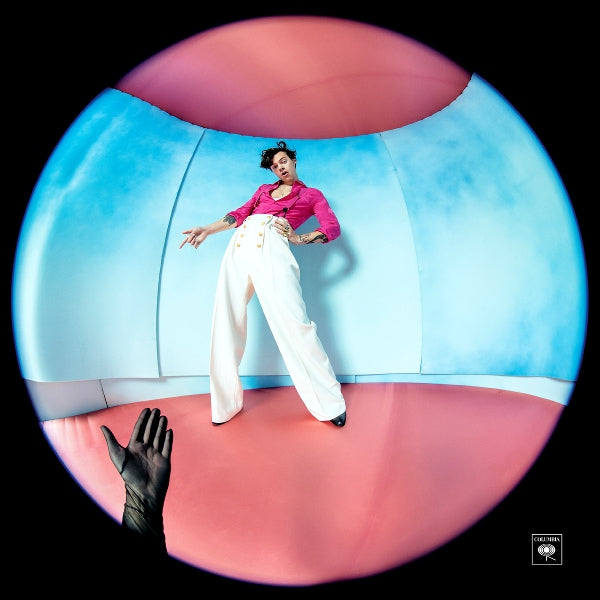
Harry Styles  Fine Line

I know next to nothing about Harry Styles; I know he’s the former focal singer of the boy-band One Direction. And I also caught a Saturday Night Live episode where he was the musical guest, and contributed a couple of bits in a really funny sketch with host Jimmy Fallon that was a future/past mixup where Styles did a really spot-on take on a young Mick Jagger. Which surprisingly impressed the hell out of me—I didn’t think he had any kind of range outside the boy-band thing, and would easily fall flat on his face once the One Direction money dried up.

All of which makes the following seem nearly impossible to me. I would never in a million years ever have expected myself to be making the following statement: I’m listening to Harry Styles new album, Fine Line, and I don’t hate it. Actually, I’m kind of grooving to it; it’s a mixture of vocals from Styles that exhibit a surprisingly soulful range of styles (pun intended!). And the album is a quirky mixture of alternately danceable pop tunes, sparsely instrumented, folk-influenced rock, and entertainingly cerebral electro-pop. And Styles’ voice is recorded pretty much straight-up and without any kind of studio trickery, à la Britney Spears and the like. He can actually sing—which is a complete shock in the current world of pop music. And he taps into a surprising range of stylistic influences.

Styles wrote or co-wrote all the songs on the album—another shocker—is there anything this kid can’t do? Fine Line is his sophomore effort, and while he may not have all the pieces to the puzzle yet, he’s making all the right moves. And there’s never a moment here where his singing and the instrumentation aren’t incredibly entertaining. There’s not really a bad song on the disc, and how often can you say that about many mainstream recording artists out there? I could definitely hear several of these songs turning up in the soundtrack of a really hip, entertainingly millennial film soundtrack.

All my listening was done through the CD-quality version streamed on Qobuz, and the sound quality was exceptionally superb. Columbia Records did well in signing Styles to a contract—I’m certain we’ll be hearing from him for years to come—let the girls start screaming. Recommended.

Columbia Records, CD/LP (download/streaming Qobuz, Amazon, Google Play Music, Spotify, Pandora, YouTube, Apple Music, iTunes, Deezer)

More from Issue 102

View All Articles in Issue 102

Search Copper Magazine

#227 Seth Lewis Gets in the Groove With Take a Look Around: a Tribute to the Meters by Frank Doris Feb 02, 2026 #227 Passport to Sound: May Anwar’s Audio Learning Experience for Young People by Frank Doris Feb 02, 2026 #227 Conjectures on Cosmic Consciousness by B. Jan Montana Feb 02, 2026 #227 The Big Takeover Turns 45 by Wayne Robins Feb 02, 2026 #227 Music and Chocolate: On the Sensory Connection by Joe Caplan Feb 02, 2026 #227 Singer/Songwriter Chris Berardo: Getting Wilder All the Time by Ray Chelstowski Feb 02, 2026 #227 The Earliest Stars of Country Music, Part One by Jeff Weiner Feb 02, 2026 #227 The Vinyl Beat Goes Down to Tijuana (By Way of Los Angeles), Part Two by Rudy Radelic Feb 02, 2026 #227 How to Play in a Rock Band, 20: On the Road With Blood, Sweat & Tears’ Guitarist Gabe Cummins by Frank Doris Feb 02, 2026 #227 From The Audiophile’s Guide: Audio Specs and Measuring by Paul McGowan Feb 02, 2026 #227 Our Brain is Always Listening by Peter Trübner Feb 02, 2026 #227 PS Audio in the News by PS Audio Staff Feb 02, 2026 #227 The Listening Chair: Sleek Style and Sound From the Luxman L3 by Howard Kneller Feb 02, 2026 #227 The Los Angeles and Orange County Audio Society Celebrates Its 32nd Anniversary, Honoring David and Sheryl Lee Wilson and Bernie Grundman by Harris Fogel Feb 02, 2026 #227 Back to My Reel-to-Reel Roots, Part 26: Half Full – Not Half Empty, Redux by Ken Kessler Feb 02, 2026 #227 That's What Puzzles Us... by Frank Doris Feb 02, 2026 #227 Record-Breaking by Peter Xeni Feb 02, 2026 #227 The Long and Winding Road by B. Jan Montana Feb 02, 2026 #226 JJ Murphy’s Sleep Paralysis is a Genre-Bending Musical Journey Through Jazz, Fusion and More by Frank Doris Jan 05, 2026 #226 Stewardship by Consent by B. Jan Montana Jan 05, 2026 #226 Food, Music, and Sensory Experience: An Interview With Professor Jonathan Zearfoss of the Culinary Institute of America by Joe Caplan Jan 05, 2026 #226 Studio Confidential: A Who’s Who of Recording Engineers Tell Their Stories by Frank Doris Jan 05, 2026 #226 Pilot Radio is Reborn, 50 Years Later: Talking With CEO Barak Epstein by Frank Doris Jan 05, 2026 #226 The Vinyl Beat Goes Down to Tijuana (By Way of Los Angeles), Part One by Rudy Radelic Jan 05, 2026 #226 Capital Audiofest 2025: Must-See Stereo, Part Two by Frank Doris Jan 05, 2026 #226 My Morning Jacket’s Carl Broemel and Tyler Ramsey Collaborate on Their Acoustic Guitar Album, Celestun by Ray Chelstowski Jan 05, 2026 #226 The People Who Make Audio Happen: CanJam SoCal 2025, Part Two by Harris Fogel Jan 05, 2026 #226 How to Play in a Rock Band, 19: Touring Can Make You Crazy, Part One by Frank Doris Jan 05, 2026 #226 Linda Ronstadt Goes Bigger by Wayne Robins Jan 05, 2026 #226 From The Audiophile’s Guide: Active Room Correction and Digital Signal Processing by Paul McGowan Jan 05, 2026 #226 PS Audio in the News by Frank Doris Jan 05, 2026 #226 Back to My Reel-to-Reel Roots, Part 25: Half-Full, Not Empty by Ken Kessler Jan 05, 2026 #226 Happy New Year! by Frank Doris Jan 05, 2026 #226 Turn It Down! by Peter Xeni Jan 05, 2026 #226 Ghost Riders by James Schrimpf Jan 05, 2026 #226 A Factory Tour of Audio Manufacturer German Physiks by Markus "Marsu" Manthey Jan 04, 2026 #225 Capital Audiofest 2025: Must-See Stereo, Part One by Frank Doris Dec 01, 2025 #225 Otis Taylor and the Electrics Delivers a Powerful Set of Hypnotic Modern Blues by Frank Doris Dec 01, 2025 #225 A Christmas Miracle by B. Jan Montana Dec 01, 2025 #225 T.H.E. Show New York 2025, Part Two: Plenty to See, Hear, and Enjoy by Frank Doris Dec 01, 2025 #225 Underappreciated Artists, Part One: Martin Briley by Rich Isaacs Dec 01, 2025 #225 Rock and Roll is Here to Stay by Wayne Robins Dec 01, 2025 #225 A Lifetime of Holiday Record (and CD) Listening by Rudy Radelic Dec 01, 2025 #225 Little Feat: Not Saying Goodbye, Not Yet by Ray Chelstowski Dec 01, 2025 #225 How to Play in a Rock Band, Part 18: Dealing With Burnout by Frank Doris Dec 01, 2025 #225 The People Who Make Audio Happen: CanJam SoCal 2025 by Harris Fogel Dec 01, 2025 #225 Chicago’s Sonic Sanctuaries: Four Hi‑Fi Listening Bars Channeling the Jazz‑Kissa Spirit by Olivier Meunier-Plante Dec 01, 2025

Some Winners, and a Complete Snooze

Some Winners, and a Complete Snooze

Miles Davis Quintet  The Legendary Prestige Quintet Sessions

Miles Davis had been laboring for a number of years in the early fifties, hamstrung under an exclusive contract to Prestige Records. Who were paying him next to nothing for his efforts—even though his albums were among the label’s best selling recordings. After the Newport Jazz Festival of 1955, Miles was approached by George Avakian of Columbia Records; he offered him a much more lucrative contract. And he also offered to help get him out of the bad deal with Prestige, where he was still on the hook for five more albums. Bob Weinstock of Prestige agreed to release Miles and allow him to record for Columbia, with the stipulation that none of the Columbia sessions could be released until Miles had fulfilled the five-album deal with Prestige. Eager to get on with his career, Miles assembled a crack group of (at the time) relatively unknown musicians that included Sonny Rollins on sax, Red Garland on piano, Philly Joe Jones on drums, and Paul Chambers on bass. Sonny soon exited and was replaced by John Coltrane.

Miles took his new quintet and convened in Rudy Van Gelder’s Hackensack studio with Weinstock beginning in mid ’55. Three marathon sessions scattered over the next year produced enough material for five classic albums, Miles, Cookin’, Relaxin’, Workin’, and Steamin’, which form the core of Miles’ Prestige quintet output. And are, debatably, five of the finest albums in Miles lengthy discography, if not in the entirety of recorded jazz. Miles was finally released from his contract, free to form his first great Columbia quintet, and the rest—as they say—is history!

This new box set has been presented here in a couple of iterations that distinguishes it from any previous releases of the material. First of all, this represents the first time it’s been made available for high-res streaming, and here it’s presented on both Tidal and Qobuz in high resolution 24/96 and 24/192 sound (the Tidal, of course, is MQA encoded). And it’s also being released as a six LP, 180 gram set on the high-end Craft Recordings label. All my listening sessions were done via the 24/192 Qobuz and Tidal streams on my home system.

First of all, I just want to say, WOW! I own most of this material on either CD or LP, but I don’t think I’ve ever heard it sound quite so good as the 24/192 streams via Qobuz and Tidal. These are mono recordings, but they’re in exceptionally well-recorded Rudy Van Gelder mono, which has a seemingly much wider sweet spot than other mono recordings of the era. I love the sound of the OJC Prestige LPs I own, but the 24/192 transfers here are pretty much the equal of the LPs. Through my Magnepan LRS loudspeakers, the digital files showed great warmth, with deep and well-defined bass and a very liquid upper register. I’ve heard these classic sessions countless times, but they sounded so very fresh here, it was almost like hearing the material for the very first time.

The tracks are all presented here in the order in which they were recorded; they were later assembled by Bob Weinstock in varying order for the five albums they ultimately came to represent. There’s nothing in terms of extra material here; the original sessions involved virtually no alternate takes, which is amazing considering Miles had only put this group together so relatively recently. This is a truly excellent set of classic, timeless jazz, and the availability of the streaming option makes checking it out a complete no-brainer for those with Qobuz or Tidal accounts. Very highly recommended!

Concord/Prestige/Craft Recordings, 5 CDs/6 LPs (download/streaming from Amazon, Tidal, Qobuz, Google Play Music, Apple Music, Spotify, Deezer)

Moby  Long Ambients Two

I guess this is a thing, maybe with millennials and hipsters, but there really is a subculture of music designed for enhanced sleeping. I actually reviewed a disc from Sigur Ros a few issues back that fell into that category; I thought it was probably a rarity, but this album definitely proves that’s not the case. Actually, Long Ambients Two is preceded by Long Ambients 1: calm. sleep. —is this really serious?

The Sigur Ros album totaled about three hours in length, as I recall. This one, in combination with the first one, is over seven hours long. Which Moby says is long enough for someone to get a decent night’s sleep. He also says that “this is not music for listening to.” Each track is a constant, virtually non-variable drone—he’s totally right. Long Ambients Two is not music for listening to. YMMV.

Little Idiot Records, (download/streaming from Soundcloud, Qobuz, Tidal, Amazon, Google Play Music, Spotify, Deezer, iTunes, Apple Music)

Harry Styles  Fine Line

I know next to nothing about Harry Styles; I know he’s the former focal singer of the boy-band One Direction. And I also caught a Saturday Night Live episode where he was the musical guest, and contributed a couple of bits in a really funny sketch with host Jimmy Fallon that was a future/past mixup where Styles did a really spot-on take on a young Mick Jagger. Which surprisingly impressed the hell out of me—I didn’t think he had any kind of range outside the boy-band thing, and would easily fall flat on his face once the One Direction money dried up.

All of which makes the following seem nearly impossible to me. I would never in a million years ever have expected myself to be making the following statement: I’m listening to Harry Styles new album, Fine Line, and I don’t hate it. Actually, I’m kind of grooving to it; it’s a mixture of vocals from Styles that exhibit a surprisingly soulful range of styles (pun intended!). And the album is a quirky mixture of alternately danceable pop tunes, sparsely instrumented, folk-influenced rock, and entertainingly cerebral electro-pop. And Styles’ voice is recorded pretty much straight-up and without any kind of studio trickery, à la Britney Spears and the like. He can actually sing—which is a complete shock in the current world of pop music. And he taps into a surprising range of stylistic influences.

Styles wrote or co-wrote all the songs on the album—another shocker—is there anything this kid can’t do? Fine Line is his sophomore effort, and while he may not have all the pieces to the puzzle yet, he’s making all the right moves. And there’s never a moment here where his singing and the instrumentation aren’t incredibly entertaining. There’s not really a bad song on the disc, and how often can you say that about many mainstream recording artists out there? I could definitely hear several of these songs turning up in the soundtrack of a really hip, entertainingly millennial film soundtrack.

All my listening was done through the CD-quality version streamed on Qobuz, and the sound quality was exceptionally superb. Columbia Records did well in signing Styles to a contract—I’m certain we’ll be hearing from him for years to come—let the girls start screaming. Recommended.

Columbia Records, CD/LP (download/streaming Qobuz, Amazon, Google Play Music, Spotify, Pandora, YouTube, Apple Music, iTunes, Deezer)

0 comments

Leave a comment

0 Comments

Your avatar

Loading comments...

🗑️ Delete Comment

Enter moderator password to delete this comment:

✏️ Edit Comment

Enter your email to verify ownership: