COPPER

A PS Audio Publication

Issue 173 • Free Online Magazine

Issue 173 Disciples of Sound

Simple Minds’ Jim Kerr: Following the Direction of the Heart

Simple Minds’ Jim Kerr: Following the Direction of the Heart

Some music sounds as fresh today as it did the moment it was first released. This has always been the case with Simple Minds. Their sound has always had muscle and a sense of atmosphere, and when it arrives on the airwaves it still packs a punch, both melodically and with the music’s message of hope in this troubled world.

Simple Minds began as a punk band in Scotland in 1977 and in the early 1980s transitioned into a group that would help to define an era, and in turn, a global generation. Their breakout 1985 hit “Don’t You (Forget About Me)” offered a lush yet hard-hitting sound that would become their trademark. Now, Simple Minds are about to release their first album of new material since 2018’s UK Top 5 album Walk Between Worlds. On October 21, the band will release Direction Of The Heart, their 18th studio album.

The lead track, “Vision Thing” was written by front man and original member Jim Kerr and Charlie Burchill, his long-time musical partner. It’s an homage to Kerr’s late father that, through a thunderous display of sound, celebrates the life of a blue-collar dad who helped fuel the dreams of those aspiring teens from Glasgow.

Most of Direction Of The Heart’s tracks were created and demoed in Sicily, where both Kerr and Burchill live. Unable to come to the UK because of quarantine rules, the album was recorded at Hamburg, Germany’s Chameleon Studios. Here they produced most of the album, later enlisting Andy Wright (Massive Attack, Echo & The Bunnymen) and Gavin Goldberg (Simply Red, KT Tunstall) for additional production. Band members Ged Grimes (Simple Minds’ bassist, who co-wrote two of the new songs, “First You Jump” and “Solstice Kiss”), drummer Cherisse Osei, and vocalist Sarah Brown joined them on some of the tracks, recording their parts separately in London. Album guests include Sparks’ front man Russell Mael (on “Human Traffic”), and Gary Clark, who played with Grimes in the band Danny Wilson. Mael and Clark recorded their respective parts in their home studios.

 

Simple Minds, Direction of the Heart, album cover.

Simple Minds, Direction of the Heart, album cover.


Direction Of The Heart is a triumphant return by a band that seems to be having as much fun today as they did when they first set out to make music as kids. We were able to catch up with Jim Kerr and talk about the band’s remarkable career that has maintained a singular purpose and sound. It was a laugh-filled exchange that tells a tale that seemingly has no foreseeable end. Whatever “direction” Simple Minds decides to take, there will always a world of fans ready to take that ride.

Ray Chelstowski: It’s been four years since your last studio record. Was COVID the reason for the long pause between outings?

Jim Kerr: Well it’s exactly like you said. It seems like anyone who is out promoting a new book, record or movie probably made it during those most hallucinogenic of times. We kind of summed things up in our press release by saying: “we tried to make a feel-good record in the worst of times.” It sounds a bit exaggerated, but that time was pretty extreme. We were about ten dates into our 2020 world tour and we had to stop because we could see the writing on the wall. Pretty soon we found ourselves on the plane back to goodness knows what. We had no idea when we’d be able to pick things up again. However, the one thing we did have is that we usually work in a bubble with only [Charlie and me] in a room. We try not to be distracted by life’s events, so after a few months, we picked up the baton and went back to writing and the new album is a result of that.
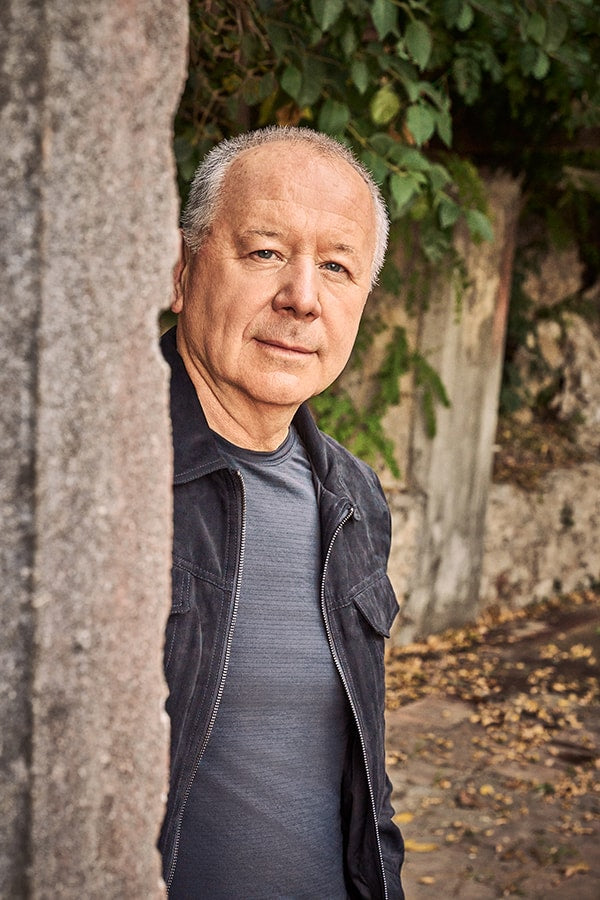
 

Jim Kerr. Courtesy of Dean Chalkley.

Jim Kerr. Courtesy of Dean Chalkley.


RC: What is the creative process like for you and Charlie? You write, then demo the songs and only pull the rest of the band in for a few tracks as needed?

JK: Yes, over the last 15 years we design the record and put together the picture and then if it’s cool we get the band in to do it for real. The band is fantastic, but what we find is that sometimes there’s just something about the demo, maybe its quirkiness or a character that when you do it for real it kind of loses something. So we kind of do it half and half. As the technology has started to get really good over the last decade, all of this has been made much easier.


RC: Russell Mael and Gary Clark make guest appearances on the record. How do you know when it’s time to bring someone from the outside into the process?

JK: Well, we are huge Sparks fans. You can even hear some of their influence on our first album [Life in a Day, 1979]. That’s how long we’ve loved the band. On our last trip through the States, Russell came to a couple of shows. Normally after a gig I don’t hang around, but I had heard that Russell was there, so we met and exchanged contact [information]. He was charming. Then when we came to work on the album, there was a song called “Human Traffic” that Charlie was really hot on. People around [us] were telling us that it was finished, but I thought that there was something missing. I thought that it had to be funny and it wasn’t. We don’t do funny, but I knew that Russell could be, and fortunately when we sent him the track he was able to send us back a few options in only a few days.

RC: The song “Vision Thing” is for your dad who has passed. Did you know always know that you would write a song for him?

JK: The funny thing is that we started writing pre-pandemic in Glasgow at my house, which was a 10-minute walk from dad’s. Charlie and I grew up on the same street, so he knew dad like I knew him. It had become apparent that he was unwell. We just didn’t know at the time how unwell he was. But like most dads, he was all about the work and encouraged us to get on with it. So indeed that’s what we did. Soon after that I ended up moving into [his house]. I like to work in the morning. That’s when I listen to the music and I tap my feet and hum along. He was in the bedroom next door as I’m listening to this piece of music that became “Vision Thing” and he didn’t realize that I’m writing it about him. I take the headphones off and he’s shouting “you’re driving me crazy with this stomping!” I said, “stop. I’m writing a song for you!” So he asked to hear it and he liked it. He’s a construction guy and he had given us the first 100 pounds [we needed] to record our demo. 40 years later I don’t think a week would pass where he didn’t remind us of how that money had blossomed. So it’s funny how when I tell people that I wrote a song for my dad, they are expecting this wistful tale, but instead we have this celebration of his life story and that’s more in sync with his character.

RC: You and Charlie are the remaining original members. What’s your relationship like and why has it lasted so long?

JK: Well it is remarkable and there’s a lot of luck involved. It’s remarkable to simply have a pal for this long. But to have a relationship within the context of a band for this long is not too common. He’s a musician; it’s how he sees the world. I am not. I’m about words and strategies, and a wing and a prayer. Charlie has much more structure. So we don’t tend to invade each other’s territory and are usually on the same page. When we aren’t we can have the most almighty of fights, and we like that as well. It shows that we’re still passionate. Most importantly, the next day all is forgotten. There’s no lingering bitterness.

We’re lucky we met. If our moms hadn’t moved to the same street I’d probably be driving a taxi.


RC: You began as a punk band. What prompted the shift to the expansive, synth-driven sound that would define you?

JK: Punk was the greatest thing. The ethic of punk seemed to come out of nowhere. Before punk you had as much chance of being an astronaut as you did getting a record deal. Everything was centralized. You had to go through London [and the record companies]. Punk had its own ethos and not only with music; people started doing their own magazines and some started fashion labels. This DIY ethic was a beautiful thing. But the limitations of the punk sound would have never been enough for us. About a year into it the first affordable synthesizer became available. Before that they looked like a bridge and that you’d need men in white coats to plug things into. Suddenly you could mess around with them and get your own sound and textures. Rock became more of an art form.

RC: You initially turned down the song “Don’t You (Forget About Me)” (written by Keith Forsey and Steve Schiff). How did the band come around and finally decide to record it?

JK: It was presented to us the wrong way. They had reached out and said that they thought we’d be great for the project [the song was included in the movie, The Breakfast Club – Ed.] and told us that they were going to send us a song. And we were like, “we write our own songs.” They told us that this would be different. The director, John Hughes, loved the song because it was centered around the script and the record guy then said, “and you’ll really like it because it sounds just like you!” So they sent us the song, and that demo version is actually online now. To be fair, it was pretty good. But it was a bit generic. So it just didn’t inspire us. Then Keith Forsey, who had co-written the song, was in Scotland and he got in touch. Keith told us that he knew we weren’t keen on the song, but that he liked Simple Minds and wanted to meet us. We were locked away in a room writing and Keith turns up. Within two days he was our best pal. It was like we’d known each other our entire lives. We didn’t really love Keith’s song but we loved Keith so we gave it a go.

RC: Do you think that was a make-or-break moment for the band? You already had a profile in the UK and had a number of songs that would appear on 1985’s hit record Once Upon A Time.

JK: It had kind of happened everywhere else in the world for us, but America is a bigger beast.  In America record companies have to spend the big bucks to make something happen. That hadn’t been happening for us until then. Whereas in London you could take [British DJ] John Peel out for a curry and that was considered payola. He had to like the record but you could charm him. America is a different thing and the stakes are much higher. You had to be able cut it live. If you could, that was a big deal, and we could. But our patience was rewarded in the sense that within weeks of The Breakfast Club there was this thing called Live Aid and MTV as well. That put [us] in homes all over the world.

RC: Your music has always had political intent.  With your support of Nelson Mandela, I was always surprised that you weren’t involved in Little Steven’s 1985 anti- Apartheid song and album project Sun City.

JK: Well I can’t say why we weren’t part of Sun City. We would have loved to have been. I remember hearing that song and just jumping up and down. If you want to be a writer, at a certain point you look around the world and want to grapple with some of the bigger issues. Certainly the themes of those days on our doorstep were Belfast, the Berlin Wall, [Ronald] Reagan [and Margaret] Thatcher; all of this. There was a sense of, “whose side are you on?” I think that our approach to it all comes from a place of empathy rather than political dogma. All of these years later it still is less about the issues and more about the questions.

RC: Will you take this record out on the road, and what do you hope fans take away from it?

JK: The promoters and agents are talking as we speak so you can expect to hear something about an upcoming tour. As for the new record, I hope that the fans feel the way we do about it, that it’s a committed record. And, that as long in the tooth as we are, that this is a record with a lot of vitality and imagination.


Header image of Simple Minds courtesy of Dean Chalkley.

More from Issue 173

View All Articles in Issue 173

Search Copper Magazine

#227 Seth Lewis Gets in the Groove With Take a Look Around: a Tribute to the Meters by Frank Doris Feb 02, 2026 #227 Passport to Sound: May Anwar’s Audio Learning Experience for Young People by Frank Doris Feb 02, 2026 #227 Conjectures on Cosmic Consciousness by B. Jan Montana Feb 02, 2026 #227 The Big Takeover Turns 45 by Wayne Robins Feb 02, 2026 #227 Music and Chocolate: On the Sensory Connection by Joe Caplan Feb 02, 2026 #227 Singer/Songwriter Chris Berardo: Getting Wilder All the Time by Ray Chelstowski Feb 02, 2026 #227 The Earliest Stars of Country Music, Part One by Jeff Weiner Feb 02, 2026 #227 The Vinyl Beat Goes Down to Tijuana (By Way of Los Angeles), Part Two by Rudy Radelic Feb 02, 2026 #227 How to Play in a Rock Band, 20: On the Road With Blood, Sweat & Tears’ Guitarist Gabe Cummins by Frank Doris Feb 02, 2026 #227 From The Audiophile’s Guide: Audio Specs and Measuring by Paul McGowan Feb 02, 2026 #227 Our Brain is Always Listening by Peter Trübner Feb 02, 2026 #227 PS Audio in the News by PS Audio Staff Feb 02, 2026 #227 The Listening Chair: Sleek Style and Sound From the Luxman L3 by Howard Kneller Feb 02, 2026 #227 The Los Angeles and Orange County Audio Society Celebrates Its 32nd Anniversary, Honoring David and Sheryl Lee Wilson and Bernie Grundman by Harris Fogel Feb 02, 2026 #227 Back to My Reel-to-Reel Roots, Part 26: Half Full – Not Half Empty, Redux by Ken Kessler Feb 02, 2026 #227 That's What Puzzles Us... by Frank Doris Feb 02, 2026 #227 Record-Breaking by Peter Xeni Feb 02, 2026 #227 The Long and Winding Road by B. Jan Montana Feb 02, 2026 #226 JJ Murphy’s Sleep Paralysis is a Genre-Bending Musical Journey Through Jazz, Fusion and More by Frank Doris Jan 05, 2026 #226 Stewardship by Consent by B. Jan Montana Jan 05, 2026 #226 Food, Music, and Sensory Experience: An Interview With Professor Jonathan Zearfoss of the Culinary Institute of America by Joe Caplan Jan 05, 2026 #226 Studio Confidential: A Who’s Who of Recording Engineers Tell Their Stories by Frank Doris Jan 05, 2026 #226 Pilot Radio is Reborn, 50 Years Later: Talking With CEO Barak Epstein by Frank Doris Jan 05, 2026 #226 The Vinyl Beat Goes Down to Tijuana (By Way of Los Angeles), Part One by Rudy Radelic Jan 05, 2026 #226 Capital Audiofest 2025: Must-See Stereo, Part Two by Frank Doris Jan 05, 2026 #226 My Morning Jacket’s Carl Broemel and Tyler Ramsey Collaborate on Their Acoustic Guitar Album, Celestun by Ray Chelstowski Jan 05, 2026 #226 The People Who Make Audio Happen: CanJam SoCal 2025, Part Two by Harris Fogel Jan 05, 2026 #226 How to Play in a Rock Band, 19: Touring Can Make You Crazy, Part One by Frank Doris Jan 05, 2026 #226 Linda Ronstadt Goes Bigger by Wayne Robins Jan 05, 2026 #226 From The Audiophile’s Guide: Active Room Correction and Digital Signal Processing by Paul McGowan Jan 05, 2026 #226 PS Audio in the News by Frank Doris Jan 05, 2026 #226 Back to My Reel-to-Reel Roots, Part 25: Half-Full, Not Empty by Ken Kessler Jan 05, 2026 #226 Happy New Year! by Frank Doris Jan 05, 2026 #226 Turn It Down! by Peter Xeni Jan 05, 2026 #226 Ghost Riders by James Schrimpf Jan 05, 2026 #226 A Factory Tour of Audio Manufacturer German Physiks by Markus "Marsu" Manthey Jan 04, 2026 #225 Capital Audiofest 2025: Must-See Stereo, Part One by Frank Doris Dec 01, 2025 #225 Otis Taylor and the Electrics Delivers a Powerful Set of Hypnotic Modern Blues by Frank Doris Dec 01, 2025 #225 A Christmas Miracle by B. Jan Montana Dec 01, 2025 #225 T.H.E. Show New York 2025, Part Two: Plenty to See, Hear, and Enjoy by Frank Doris Dec 01, 2025 #225 Underappreciated Artists, Part One: Martin Briley by Rich Isaacs Dec 01, 2025 #225 Rock and Roll is Here to Stay by Wayne Robins Dec 01, 2025 #225 A Lifetime of Holiday Record (and CD) Listening by Rudy Radelic Dec 01, 2025 #225 Little Feat: Not Saying Goodbye, Not Yet by Ray Chelstowski Dec 01, 2025 #225 How to Play in a Rock Band, Part 18: Dealing With Burnout by Frank Doris Dec 01, 2025 #225 The People Who Make Audio Happen: CanJam SoCal 2025 by Harris Fogel Dec 01, 2025 #225 Chicago’s Sonic Sanctuaries: Four Hi‑Fi Listening Bars Channeling the Jazz‑Kissa Spirit by Olivier Meunier-Plante Dec 01, 2025

Simple Minds’ Jim Kerr: Following the Direction of the Heart

Simple Minds’ Jim Kerr: Following the Direction of the Heart

Some music sounds as fresh today as it did the moment it was first released. This has always been the case with Simple Minds. Their sound has always had muscle and a sense of atmosphere, and when it arrives on the airwaves it still packs a punch, both melodically and with the music’s message of hope in this troubled world.

Simple Minds began as a punk band in Scotland in 1977 and in the early 1980s transitioned into a group that would help to define an era, and in turn, a global generation. Their breakout 1985 hit “Don’t You (Forget About Me)” offered a lush yet hard-hitting sound that would become their trademark. Now, Simple Minds are about to release their first album of new material since 2018’s UK Top 5 album Walk Between Worlds. On October 21, the band will release Direction Of The Heart, their 18th studio album.

The lead track, “Vision Thing” was written by front man and original member Jim Kerr and Charlie Burchill, his long-time musical partner. It’s an homage to Kerr’s late father that, through a thunderous display of sound, celebrates the life of a blue-collar dad who helped fuel the dreams of those aspiring teens from Glasgow.

Most of Direction Of The Heart’s tracks were created and demoed in Sicily, where both Kerr and Burchill live. Unable to come to the UK because of quarantine rules, the album was recorded at Hamburg, Germany’s Chameleon Studios. Here they produced most of the album, later enlisting Andy Wright (Massive Attack, Echo & The Bunnymen) and Gavin Goldberg (Simply Red, KT Tunstall) for additional production. Band members Ged Grimes (Simple Minds’ bassist, who co-wrote two of the new songs, “First You Jump” and “Solstice Kiss”), drummer Cherisse Osei, and vocalist Sarah Brown joined them on some of the tracks, recording their parts separately in London. Album guests include Sparks’ front man Russell Mael (on “Human Traffic”), and Gary Clark, who played with Grimes in the band Danny Wilson. Mael and Clark recorded their respective parts in their home studios.


Simple Minds, Direction of the Heart, album cover.

Simple Minds, Direction of the Heart, album cover.


Direction Of The Heart is a triumphant return by a band that seems to be having as much fun today as they did when they first set out to make music as kids. We were able to catch up with Jim Kerr and talk about the band’s remarkable career that has maintained a singular purpose and sound. It was a laugh-filled exchange that tells a tale that seemingly has no foreseeable end. Whatever “direction” Simple Minds decides to take, there will always a world of fans ready to take that ride.

Ray Chelstowski: It’s been four years since your last studio record. Was COVID the reason for the long pause between outings?

Jim Kerr: Well it’s exactly like you said. It seems like anyone who is out promoting a new book, record or movie probably made it during those most hallucinogenic of times. We kind of summed things up in our press release by saying: “we tried to make a feel-good record in the worst of times.” It sounds a bit exaggerated, but that time was pretty extreme. We were about ten dates into our 2020 world tour and we had to stop because we could see the writing on the wall. Pretty soon we found ourselves on the plane back to goodness knows what. We had no idea when we’d be able to pick things up again. However, the one thing we did have is that we usually work in a bubble with only [Charlie and me] in a room. We try not to be distracted by life’s events, so after a few months, we picked up the baton and went back to writing and the new album is a result of that.


Jim Kerr. Courtesy of Dean Chalkley.

Jim Kerr. Courtesy of Dean Chalkley.


RC: What is the creative process like for you and Charlie? You write, then demo the songs and only pull the rest of the band in for a few tracks as needed?

JK: Yes, over the last 15 years we design the record and put together the picture and then if it’s cool we get the band in to do it for real. The band is fantastic, but what we find is that sometimes there’s just something about the demo, maybe its quirkiness or a character that when you do it for real it kind of loses something. So we kind of do it half and half. As the technology has started to get really good over the last decade, all of this has been made much easier.


RC: Russell Mael and Gary Clark make guest appearances on the record. How do you know when it’s time to bring someone from the outside into the process?

JK: Well, we are huge Sparks fans. You can even hear some of their influence on our first album [Life in a Day, 1979]. That’s how long we’ve loved the band. On our last trip through the States, Russell came to a couple of shows. Normally after a gig I don’t hang around, but I had heard that Russell was there, so we met and exchanged contact [information]. He was charming. Then when we came to work on the album, there was a song called “Human Traffic” that Charlie was really hot on. People around [us] were telling us that it was finished, but I thought that there was something missing. I thought that it had to be funny and it wasn’t. We don’t do funny, but I knew that Russell could be, and fortunately when we sent him the track he was able to send us back a few options in only a few days.

RC: The song “Vision Thing” is for your dad who has passed. Did you know always know that you would write a song for him?

JK: The funny thing is that we started writing pre-pandemic in Glasgow at my house, which was a 10-minute walk from dad’s. Charlie and I grew up on the same street, so he knew dad like I knew him. It had become apparent that he was unwell. We just didn’t know at the time how unwell he was. But like most dads, he was all about the work and encouraged us to get on with it. So indeed that’s what we did. Soon after that I ended up moving into [his house]. I like to work in the morning. That’s when I listen to the music and I tap my feet and hum along. He was in the bedroom next door as I’m listening to this piece of music that became “Vision Thing” and he didn’t realize that I’m writing it about him. I take the headphones off and he’s shouting “you’re driving me crazy with this stomping!” I said, “stop. I’m writing a song for you!” So he asked to hear it and he liked it. He’s a construction guy and he had given us the first 100 pounds [we needed] to record our demo. 40 years later I don’t think a week would pass where he didn’t remind us of how that money had blossomed. So it’s funny how when I tell people that I wrote a song for my dad, they are expecting this wistful tale, but instead we have this celebration of his life story and that’s more in sync with his character.

RC: You and Charlie are the remaining original members. What’s your relationship like and why has it lasted so long?

JK: Well it is remarkable and there’s a lot of luck involved. It’s remarkable to simply have a pal for this long. But to have a relationship within the context of a band for this long is not too common. He’s a musician; it’s how he sees the world. I am not. I’m about words and strategies, and a wing and a prayer. Charlie has much more structure. So we don’t tend to invade each other’s territory and are usually on the same page. When we aren’t we can have the most almighty of fights, and we like that as well. It shows that we’re still passionate. Most importantly, the next day all is forgotten. There’s no lingering bitterness.

We’re lucky we met. If our moms hadn’t moved to the same street I’d probably be driving a taxi.


RC: You began as a punk band. What prompted the shift to the expansive, synth-driven sound that would define you?

JK: Punk was the greatest thing. The ethic of punk seemed to come out of nowhere. Before punk you had as much chance of being an astronaut as you did getting a record deal. Everything was centralized. You had to go through London [and the record companies]. Punk had its own ethos and not only with music; people started doing their own magazines and some started fashion labels. This DIY ethic was a beautiful thing. But the limitations of the punk sound would have never been enough for us. About a year into it the first affordable synthesizer became available. Before that they looked like a bridge and that you’d need men in white coats to plug things into. Suddenly you could mess around with them and get your own sound and textures. Rock became more of an art form.

RC: You initially turned down the song “Don’t You (Forget About Me)” (written by Keith Forsey and Steve Schiff). How did the band come around and finally decide to record it?

JK: It was presented to us the wrong way. They had reached out and said that they thought we’d be great for the project [the song was included in the movie, The Breakfast Club – Ed.] and told us that they were going to send us a song. And we were like, “we write our own songs.” They told us that this would be different. The director, John Hughes, loved the song because it was centered around the script and the record guy then said, “and you’ll really like it because it sounds just like you!” So they sent us the song, and that demo version is actually online now. To be fair, it was pretty good. But it was a bit generic. So it just didn’t inspire us. Then Keith Forsey, who had co-written the song, was in Scotland and he got in touch. Keith told us that he knew we weren’t keen on the song, but that he liked Simple Minds and wanted to meet us. We were locked away in a room writing and Keith turns up. Within two days he was our best pal. It was like we’d known each other our entire lives. We didn’t really love Keith’s song but we loved Keith so we gave it a go.

RC: Do you think that was a make-or-break moment for the band? You already had a profile in the UK and had a number of songs that would appear on 1985’s hit record Once Upon A Time.

JK: It had kind of happened everywhere else in the world for us, but America is a bigger beast.  In America record companies have to spend the big bucks to make something happen. That hadn’t been happening for us until then. Whereas in London you could take [British DJ] John Peel out for a curry and that was considered payola. He had to like the record but you could charm him. America is a different thing and the stakes are much higher. You had to be able cut it live. If you could, that was a big deal, and we could. But our patience was rewarded in the sense that within weeks of The Breakfast Club there was this thing called Live Aid and MTV as well. That put [us] in homes all over the world.

RC: Your music has always had political intent.  With your support of Nelson Mandela, I was always surprised that you weren’t involved in Little Steven’s 1985 anti- Apartheid song and album project Sun City.

JK: Well I can’t say why we weren’t part of Sun City. We would have loved to have been. I remember hearing that song and just jumping up and down. If you want to be a writer, at a certain point you look around the world and want to grapple with some of the bigger issues. Certainly the themes of those days on our doorstep were Belfast, the Berlin Wall, [Ronald] Reagan [and Margaret] Thatcher; all of this. There was a sense of, “whose side are you on?” I think that our approach to it all comes from a place of empathy rather than political dogma. All of these years later it still is less about the issues and more about the questions.

RC: Will you take this record out on the road, and what do you hope fans take away from it?

JK: The promoters and agents are talking as we speak so you can expect to hear something about an upcoming tour. As for the new record, I hope that the fans feel the way we do about it, that it’s a committed record. And, that as long in the tooth as we are, that this is a record with a lot of vitality and imagination.


Header image of Simple Minds courtesy of Dean Chalkley.

0 comments

Leave a comment

0 Comments

Your avatar

Loading comments...

🗑️ Delete Comment

Enter moderator password to delete this comment:

✏️ Edit Comment

Enter your email to verify ownership: