COPPER

A PS Audio Publication

Issue 177 • Free Online Magazine

Issue 177 Featured

London’s Klooks Kleek: A Sixties Music Breeding Ground

London’s Klooks Kleek: A Sixties Music Breeding Ground

1960s British music aficionados are likely familiar with many of the era’s historic music venues, including London’s Marquee Club and Saville Theater. Devout Beatles’ fans are likely to include in the mix Liverpool’s Cavern Club and Hamburg’s Kaiserkeller, where the boys honed their skills playing six hours a night, seven days a week.

Though not nearly as well known – especially among music fans on this side of the pond – was another venerable club with the very peculiar sounding name of Klooks Kleek.

From 1961 to 1970, Klooks Kleek operated as a jazz and blues club on the first floor of the Railway Hotel in northwest London. The club was founded by Geoff Williams and Dick Jordan, the former handling administrative duties and the latter club bookings. Jordan was the public face of the club. Known for his wry sense of humor, Jordan was a film cameraman by day and a club impresario by night.

The owners appropriated the club’s name from a 1956 jazz album by drummer Kenny “Klook” Clarke called Klook’s Clique. You’ll note Clarke’s album title is appropriately punctuated in the singular possessive, while the club’s name (Klooks Kleek) is devoid of any punctuation, to the dismay of English teachers everywhere.

With carpeted floors and walls curtained in red velvet, Klooks (or The Kleek, as some referred to it) provided fairly good acoustics, though still lacking in many of the accoutrements commonly found in modern-day music venues. The club didn’t have sound boards, sound engineers or even provide for band sound checks. The club’s stage was crudely constructed of sheets of plywood propped by wooden crates. The expectation was bands would show up, plug-in and play…and that they did!

Patrons wishing to attend a show at Klooks had to first become “club members.” Club membership wasn’t considered elite or economically challenging, as a lifetime membership only cost a mere shilling. Of course, members had to additionally purchase a ticket to any desired performance, with prices varying by artist.

Klooks early offerings focused on contemporary jazz music, until American R&B began to strongly permeate the London music scene. The club formally shifted its booking strategy to R&B in 1964. Legendary blues artists like Sonny Boy Williamson, John Lee Hooker, Howlin’ Wolf and T-Bone Walker played the club, while John Mayall & The Bluesbreakers very first album release – John Mayall Plays John Mayall (Decca, 1965) – was recorded live at the club the same year.


The mid to late 1960s led to lots of experimentation among London-based musicians, with many soon-to-be well-known artists jamming with other soon-to-be well-known artists. It was like musical chairs or speed dating, with musicians seeking both great sound and strong band chemistry.  Money and fame, yet to be realized by many, if any, were usurped by a love of craft. The notion that artists could achieve economic success, or even stability for that matter, was hardly a conscious thought. For the performers, it was all about the music.

Here’s a smattering of interesting performances and artist pairings that took place at Klooks:

– Appearing frequently at the club was the Graham Bond Organisation. The late Bond was a skilled vocalist, keyboard and sax player. His backing band consisted of Ginger Baker on drums, Jack Bruce on bass, John McLaughlin on guitar and Dick Heckstall-Smith on saxophone.

– In 1965 Rod Stewart’s Soul Agents opened for Buddy Guy at Klooks. Shortly thereafter Stewart joined Shotgun Express, with Peter Green on guitar and Mick Fleetwood on drums.

– A year later, 15-year old “Little” Stevie Wonder (that’s how he was billed) played the club.
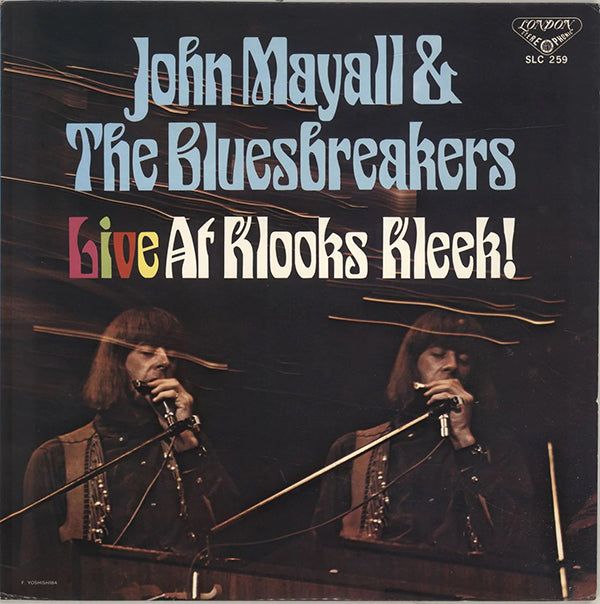
 

John Mayall & the Bluesbreakers Live at Klooks Kleek, album cover.

John Mayall & the Bluesbreakers Live at Klooks Kleek, album cover.


– Cream (frequently billed as “The Cream”) played Klooks in August 1966. Proprietor Williams remembers drummer Ginger Baker asking, “how much money will the band be paid this evening?” When Williams replied 89 (British) pounds, Baker was quite pleased, as his band’s previous pay was only 50 pounds.

– In 1967 a young keyboard player named Reg Dwight (aka Elton John) played Klooks with his band Bluesology. That was the same year the original Fleetwood Mac with Peter Green, John McVie and Mick Fleetwood played the club.

– Led Zeppelin played Klooks once in April 1969.
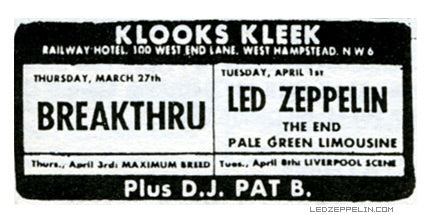
 

Ad for Led Zeppelin's appearance at Klooks Kleek. Courtesy of Wikimedia Commons/public domain.

Ad for Led Zeppelin’s appearance at Klooks Kleek. Courtesy of Wikimedia Commons/public domain.


– Jimi Hendrix was never formally booked at Klooks, but he nonetheless did play there one evening. It was a period when manager Chas Chandler was showcasing Jimi all around London, and creating quite a buzz. During a break in John Mayall’s set Jimi borrowed a guitar from Mick Taylor and promptly took the stage.

Proprietors Williams and Jordan frequently utilized humor in promotional materials to differentiate Klooks from other London-based clubs. They also organized playful field trips and contests, including a 1962 members’ only photo contest. The contest judges were in the music business or employed in other creative crafts, including a photographer who specialized in nudes. The contest’s grand prize was 10 (British) pounds, with the winning photograph published in Melody Maker, a leading British weekly music magazine.

Williams and Jordan understood the importance of marketing and creating a unique brand image for their club. Other club owners would frequently complain about the large amount of free publicity Melody Maker gave to Klooks. Said Jordan, “I made frequent trips to their editorial offices in Covent Garden with bottles of scotch. I was told by someone at the magazine that Klooks was the only club that appreciated the art of giving.”

Jordan often liked to share amusing stories about Klooks. As he tells it, one evening two Decca Records executives entered the club and asked for opinions on two songs recorded by a contract singer of theirs named Tom Woodward. One song was greatly preferred over the other, and when it was released in 1965 under the artist’s new stage name, Tom Jones, “It’s Not Unusual” went to Number 1.

Klooks was fortuitously located right next to the studios of Decca Records. As a result, many music executives, producers and engineers often frequented the club. Aspiring musicians were very eager to showcase their wares, knowing that a titan of industry (or two) might be in the audience. Decca Studios’ close proximity also meant, if desired, that the label could produce live recordings from the club by creatively rigging cables and wires over the roofs of the two adjoining buildings.
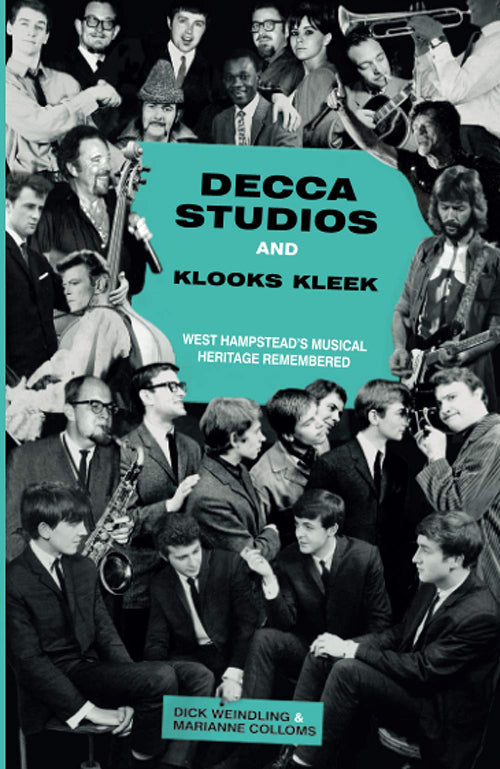
 

Decca Studios and Klooks Kleek by Dick Weindling and Marianne Colloms, book cover.

Decca Studios and Klooks Kleek by Dick Weindling and Marianne Colloms, book cover.

My first exposure to Klooks Kleek was via the classic Ten Years After LP Undead (Deram, 1968), recorded live at the club. The genesis of that album has an interesting backstory.

In the late 1960s, proprietor and promoter Bill Graham wanted to book Ten Years After (TYA) at his Fillmore West and recently opened Fillmore East venues. But the band didn’t have a new album release to tour behind, considered a prerequisite at the time for going on the road. So TYA quickly decided to record a live album at Klooks, with the goal of distributing the LP solely to the US market.

In the words of TYA’s bass player Leo Lyons, “We didn’t have time for a new studio album, so we did a live album instead. The sound engineers moved a large sound board to the back of the Decca Studios’ complex, and retrofitted limiters, echo and reverb. They then threw cables and wires across the roof (from the Decca building) to the club.”

Club owner Dick Jordan introduces TYA on the recording. Knowing the plan was to release the live album exclusively in the US, Jordan humored the audience a bit about British accents, with the expectation his self-deprecating remarks would be edited from the final mix. It didn’t quite turn out that way. Here’s Jordan’s introduction as it appears on the live album:

“Ladies and gentlemen, as you know, this is going onto the air. If I speak like a cockney, maybe the Americans think everyone talks like a cockney, if I speak like that, it sounds so forced. But they’ve asked me to say Ten Years After…TenYears After!”

And with that intro Alvin Lee and company broke into the prophetically titled “I May Be Wrong, But I Won’t Be Wrong Always.”


The Undead LP firmly took TYA back to its jazz and R&B roots. It’s an astonishingly good recording given the primitive production that went into its making. Reflecting on the live album, the late Lee said, “I was so happy with it. When I first heard it I thought, wow, what are we going to do next? My attitude was, ‘Let’s go into the studio and experiment, because we’ve already made the ultimate (live) album.’” Undead’s critical success led to a change in the album’s distribution strategy to include geography well beyond the US.

In the end, the economics of a small club for 400 to 500 patrons just wasn’t sustainable. The Keef Hartley Band was the club’s last performer in January 1970. At the time of the club’s closing, membership had grown to 58,000.

The demise of Klooks Kleek was a precursor to what soon happened to several venues in the US, including the Fillmore East. Said Dick Jordan, “They (bands) can go play (London’s) Royal Albert Hall or the Lyceum,” similar to what Bill Graham would soon be saying about (NYC’s) Madison Square Garden.

Artist growth and economic opportunities simply outpaced the magic that iconic venues like Klooks Kleek and other clubs could provide.


Header image: The Graham Bond Organisation Live at Klooks Kleek, album cover.

More from Issue 177

View All Articles in Issue 177

Search Copper Magazine

#225 Capital Audiofest 2025: Must-See Stereo, Part One by Frank Doris Dec 01, 2025 #225 Otis Taylor and the Electrics Delivers a Powerful Set of Hypnotic Modern Blues by Frank Doris Dec 01, 2025 #225 A Christmas Miracle by B. Jan Montana Dec 01, 2025 #225 T.H.E. Show New York 2025, Part Two: Plenty to See, Hear, and Enjoy by Frank Doris Dec 01, 2025 #225 Underappreciated Artists, Part One: Martin Briley by Rich Isaacs Dec 01, 2025 #225 Rock and Roll is Here to Stay by Wayne Robins Dec 01, 2025 #225 A Lifetime of Holiday Record (and CD) Listening by Rudy Radelic Dec 01, 2025 #225 Little Feat: Not Saying Goodbye, Not Yet by Ray Chelstowski Dec 01, 2025 #225 How to Play in a Rock Band, Part 18: Dealing With Burnout by Frank Doris Dec 01, 2025 #225 The People Who Make Audio Happen: CanJam SoCal 2025 by Harris Fogel Dec 01, 2025 #225 Chicago’s Sonic Sanctuaries: Four Hi‑Fi Listening Bars Channeling the Jazz‑Kissa Spirit by Olivier Meunier-Plante Dec 01, 2025 #225 From The Audiophile’s Guide: Controlling Bass Frequencies Through Membrane Absorbers (and How to Build Your Own) by Paul McGowan Dec 01, 2025 #225 Your Editor’s Tips for Attending Audio Shows by Frank Doris Dec 01, 2025 #225 PS Audio in the News by Frank Doris Dec 01, 2025 #225 Back to My Reel-to-Reel Roots, Part 24 by Ken Kessler Dec 01, 2025 #225 Holiday Music by Frank Doris Dec 01, 2025 #225 Puppy Prognostication by Peter Xeni Dec 01, 2025 #225 How to Post Comments on Copper by Frank Doris Dec 01, 2025 #225 Living Color by Rudy Radelic Dec 01, 2025 #224 T.H.E. Show New York 2025, Part One: A New Beginning by Frank Doris Nov 03, 2025 #224 Fool’s Leap of Faith is the Extraordinary Octave Records Debut from Singer/Songwriter Tyler Burba and Visit by Frank Doris Nov 03, 2025 #224 The Beatles’ “Aeolian Cadences.” What? by Wayne Robins Nov 03, 2025 #224 Persona Non Grata by B. Jan Montana Nov 03, 2025 #224 Talking With Recording Engineer Barry Diament of Soundkeeper Recordings, Part Two by Frank Doris Nov 03, 2025 #224 B Sides, B Movies, and Beware of Zombies by Rudy Radelic Nov 03, 2025 #224 The Burn-In Chronicles: 1,000 Hours to Sonic Salvation by Olivier Meunier-Plante Nov 03, 2025 #224 A Conversation With Mat Weisfeld of VPI Industries by Joe Caplan Nov 03, 2025 #224 Blues-Rocker Kenny Wayne Shepherd Celebrates 30 Years of Ledbetter Heights by Ray Chelstowski Nov 03, 2025 #224 Playing in a Rock Band, 17: When Good Gigs Go Bad, Part Two by Frank Doris Nov 03, 2025 #224 From The Audiophile’s Guide: Dealing with Odd-Shaped Rooms by Paul McGowan Nov 03, 2025 #224 TEAC’s TN-3B-SE Turntable Plays Bob Dylan by Howard Kneller Nov 03, 2025 #224 PS Audio in the News by Frank Doris Nov 03, 2025 #224 Lost in Translation by Peter Xeni Nov 03, 2025 #224 Reel-to-Reel Roots, Part 23: Better Than Rice Krispies by Ken Kessler Nov 03, 2025 #224 I Bring Joy! by Frank Doris Nov 03, 2025 #224 Screen Test by Rich Isaacs Nov 03, 2025 #224 How to Post Comments on Copper by Frank Doris Nov 03, 2025 #132 Dr. Patrick Gleeson: The Interview, Part Two by Rich Isaacs Oct 07, 2025 #223 World Fusion Meets Flamenco in Gratitude from Steve Mullins and Rim of the Well by Frank Doris Oct 06, 2025 #223 Judging Albums by Their Covers by Rich Isaacs Oct 06, 2025 #223 Recent Arrivals and 12-inch Royalty by Rudy Radelic Oct 06, 2025 #223 Summer of Creem, Part Two by Wayne Robins Oct 06, 2025 #223 Recording Engineer Barry Diament of Soundkeeper Recordings: Striving for Natural Sound by Frank Doris Oct 06, 2025 #223 Tea on the Terrace by B. Jan Montana Oct 06, 2025 #223 How Good Can Car Audio Get? by Joe Caplan Oct 06, 2025 #223 The Advantages of a Dedicated Listening Room by Paul McGowan Oct 06, 2025 #223 1! 2! 3! 4! Surrounded by the Ramones in Dolby Atmos! by Frank Doris Oct 06, 2025

London’s Klooks Kleek: A Sixties Music Breeding Ground

London’s Klooks Kleek: A Sixties Music Breeding Ground

1960s British music aficionados are likely familiar with many of the era’s historic music venues, including London’s Marquee Club and Saville Theater. Devout Beatles’ fans are likely to include in the mix Liverpool’s Cavern Club and Hamburg’s Kaiserkeller, where the boys honed their skills playing six hours a night, seven days a week.

Though not nearly as well known – especially among music fans on this side of the pond – was another venerable club with the very peculiar sounding name of Klooks Kleek.

From 1961 to 1970, Klooks Kleek operated as a jazz and blues club on the first floor of the Railway Hotel in northwest London. The club was founded by Geoff Williams and Dick Jordan, the former handling administrative duties and the latter club bookings. Jordan was the public face of the club. Known for his wry sense of humor, Jordan was a film cameraman by day and a club impresario by night.

The owners appropriated the club’s name from a 1956 jazz album by drummer Kenny “Klook” Clarke called Klook’s Clique. You’ll note Clarke’s album title is appropriately punctuated in the singular possessive, while the club’s name (Klooks Kleek) is devoid of any punctuation, to the dismay of English teachers everywhere.

With carpeted floors and walls curtained in red velvet, Klooks (or The Kleek, as some referred to it) provided fairly good acoustics, though still lacking in many of the accoutrements commonly found in modern-day music venues. The club didn’t have sound boards, sound engineers or even provide for band sound checks. The club’s stage was crudely constructed of sheets of plywood propped by wooden crates. The expectation was bands would show up, plug-in and play…and that they did!

Patrons wishing to attend a show at Klooks had to first become “club members.” Club membership wasn’t considered elite or economically challenging, as a lifetime membership only cost a mere shilling. Of course, members had to additionally purchase a ticket to any desired performance, with prices varying by artist.

Klooks early offerings focused on contemporary jazz music, until American R&B began to strongly permeate the London music scene. The club formally shifted its booking strategy to R&B in 1964. Legendary blues artists like Sonny Boy Williamson, John Lee Hooker, Howlin’ Wolf and T-Bone Walker played the club, while John Mayall & The Bluesbreakers very first album release – John Mayall Plays John Mayall (Decca, 1965) – was recorded live at the club the same year.


The mid to late 1960s led to lots of experimentation among London-based musicians, with many soon-to-be well-known artists jamming with other soon-to-be well-known artists. It was like musical chairs or speed dating, with musicians seeking both great sound and strong band chemistry.  Money and fame, yet to be realized by many, if any, were usurped by a love of craft. The notion that artists could achieve economic success, or even stability for that matter, was hardly a conscious thought. For the performers, it was all about the music.

Here’s a smattering of interesting performances and artist pairings that took place at Klooks:

– Appearing frequently at the club was the Graham Bond Organisation. The late Bond was a skilled vocalist, keyboard and sax player. His backing band consisted of Ginger Baker on drums, Jack Bruce on bass, John McLaughlin on guitar and Dick Heckstall-Smith on saxophone.

– In 1965 Rod Stewart’s Soul Agents opened for Buddy Guy at Klooks. Shortly thereafter Stewart joined Shotgun Express, with Peter Green on guitar and Mick Fleetwood on drums.

– A year later, 15-year old “Little” Stevie Wonder (that’s how he was billed) played the club.


John Mayall & the Bluesbreakers Live at Klooks Kleek, album cover.

John Mayall & the Bluesbreakers Live at Klooks Kleek, album cover.


– Cream (frequently billed as “The Cream”) played Klooks in August 1966. Proprietor Williams remembers drummer Ginger Baker asking, “how much money will the band be paid this evening?” When Williams replied 89 (British) pounds, Baker was quite pleased, as his band’s previous pay was only 50 pounds.

– In 1967 a young keyboard player named Reg Dwight (aka Elton John) played Klooks with his band Bluesology. That was the same year the original Fleetwood Mac with Peter Green, John McVie and Mick Fleetwood played the club.

– Led Zeppelin played Klooks once in April 1969.


Ad for Led Zeppelin's appearance at Klooks Kleek. Courtesy of Wikimedia Commons/public domain.

Ad for Led Zeppelin’s appearance at Klooks Kleek. Courtesy of Wikimedia Commons/public domain.


– Jimi Hendrix was never formally booked at Klooks, but he nonetheless did play there one evening. It was a period when manager Chas Chandler was showcasing Jimi all around London, and creating quite a buzz. During a break in John Mayall’s set Jimi borrowed a guitar from Mick Taylor and promptly took the stage.

Proprietors Williams and Jordan frequently utilized humor in promotional materials to differentiate Klooks from other London-based clubs. They also organized playful field trips and contests, including a 1962 members’ only photo contest. The contest judges were in the music business or employed in other creative crafts, including a photographer who specialized in nudes. The contest’s grand prize was 10 (British) pounds, with the winning photograph published in Melody Maker, a leading British weekly music magazine.

Williams and Jordan understood the importance of marketing and creating a unique brand image for their club. Other club owners would frequently complain about the large amount of free publicity Melody Maker gave to Klooks. Said Jordan, “I made frequent trips to their editorial offices in Covent Garden with bottles of scotch. I was told by someone at the magazine that Klooks was the only club that appreciated the art of giving.”

Jordan often liked to share amusing stories about Klooks. As he tells it, one evening two Decca Records executives entered the club and asked for opinions on two songs recorded by a contract singer of theirs named Tom Woodward. One song was greatly preferred over the other, and when it was released in 1965 under the artist’s new stage name, Tom Jones, “It’s Not Unusual” went to Number 1.

Klooks was fortuitously located right next to the studios of Decca Records. As a result, many music executives, producers and engineers often frequented the club. Aspiring musicians were very eager to showcase their wares, knowing that a titan of industry (or two) might be in the audience. Decca Studios’ close proximity also meant, if desired, that the label could produce live recordings from the club by creatively rigging cables and wires over the roofs of the two adjoining buildings.


Decca Studios and Klooks Kleek by Dick Weindling and Marianne Colloms, book cover.

Decca Studios and Klooks Kleek by Dick Weindling and Marianne Colloms, book cover.

My first exposure to Klooks Kleek was via the classic Ten Years After LP Undead (Deram, 1968), recorded live at the club. The genesis of that album has an interesting backstory.

In the late 1960s, proprietor and promoter Bill Graham wanted to book Ten Years After (TYA) at his Fillmore West and recently opened Fillmore East venues. But the band didn’t have a new album release to tour behind, considered a prerequisite at the time for going on the road. So TYA quickly decided to record a live album at Klooks, with the goal of distributing the LP solely to the US market.

In the words of TYA’s bass player Leo Lyons, “We didn’t have time for a new studio album, so we did a live album instead. The sound engineers moved a large sound board to the back of the Decca Studios’ complex, and retrofitted limiters, echo and reverb. They then threw cables and wires across the roof (from the Decca building) to the club.”

Club owner Dick Jordan introduces TYA on the recording. Knowing the plan was to release the live album exclusively in the US, Jordan humored the audience a bit about British accents, with the expectation his self-deprecating remarks would be edited from the final mix. It didn’t quite turn out that way. Here’s Jordan’s introduction as it appears on the live album:

“Ladies and gentlemen, as you know, this is going onto the air. If I speak like a cockney, maybe the Americans think everyone talks like a cockney, if I speak like that, it sounds so forced. But they’ve asked me to say Ten Years After…TenYears After!”

And with that intro Alvin Lee and company broke into the prophetically titled “I May Be Wrong, But I Won’t Be Wrong Always.”


The Undead LP firmly took TYA back to its jazz and R&B roots. It’s an astonishingly good recording given the primitive production that went into its making. Reflecting on the live album, the late Lee said, “I was so happy with it. When I first heard it I thought, wow, what are we going to do next? My attitude was, ‘Let’s go into the studio and experiment, because we’ve already made the ultimate (live) album.’” Undead’s critical success led to a change in the album’s distribution strategy to include geography well beyond the US.

In the end, the economics of a small club for 400 to 500 patrons just wasn’t sustainable. The Keef Hartley Band was the club’s last performer in January 1970. At the time of the club’s closing, membership had grown to 58,000.

The demise of Klooks Kleek was a precursor to what soon happened to several venues in the US, including the Fillmore East. Said Dick Jordan, “They (bands) can go play (London’s) Royal Albert Hall or the Lyceum,” similar to what Bill Graham would soon be saying about (NYC’s) Madison Square Garden.

Artist growth and economic opportunities simply outpaced the magic that iconic venues like Klooks Kleek and other clubs could provide.


Header image: The Graham Bond Organisation Live at Klooks Kleek, album cover.

0 comments

Leave a comment

0 Comments

Your avatar

Loading comments...

🗑️ Delete Comment

Enter moderator password to delete this comment: