COPPER

A PS Audio Publication

Issue 165 • Free Online Magazine

Issue 165 Featured

John Cooper Clarke: Bard of the People

John Cooper Clarke: Bard of the People

Poets are not exactly part of mainstream culture these days. I’m only familiar with a few headliners from the last 3,000 years: Homer, Geoffrey Chaucer, Shakespeare, Edgar Allen Poe, and Allen Ginsberg. It’s nothing to be proud of, but most poets don’t speak to me in the way my favorite musicians do. I remember in Miss Hill’s 11th grade English class having to memorize and recite a poem – with express instructions that we could not use song lyrics. I went through our textbook and tried to find an excerpt from something that grabbed me and would impress Miss Hill. The Faerie Queene, written in 1590 by Edmund Spencer was similar to some of the other works we studied:

Lo I the man, whose Muse whilome did maske,
As time her taught in lowly Shepheards weeds,
Am now enforst a far unfitter taske,
For trumpets sterne to chaunge mine Oaten reeds,
And sing of Knights and Ladies gentle deeds;
Whose prayses having slept in silence long,
Me, all too meane, the sacred Muse areeds
To blazon broad emongst her learned throng:
Fierce warres and faithful loves shall moralize my song…

With my stage fright, I could barely memorize this one stanza let alone two from this epic work of more than 36,000 lines. Maybe I could recite something similar I had already committed to memory. So on my performance day I went right into “My Fairy King” by Roger Meadows Taylor. It was close enough to Edmund Spencer:

In the land where horses born with eagle wings
And honey bees have lost their stings
There’s singing forever, ooh yeah
Lion’s den with fallow deer
And rivers made from wine so clear
Flow on and on forever…

The “poem” was a deep cut from Queen’s 1973 debut album Queen and it was written by Freddie Mercury. In a class full of Duran Duran and Run DMC fans, no one knew any better, not even Miss Hill. She was unimpressed by “My Fairy King,” but I was happy to maintain my solid C-average in her class. I have not given much thought to poetry since high school until Don Letts’ documentary Punk: Attitude (2005). Forty-two minutes into the film, a man in dark glasses resembling Bob Dylan from the 1960s, sang verses as he walked down a dilapidated urban landscape. It was the Bard of Salford, John Cooper Clarke, describing an overnight jail stay in “36 Hours:


…Steel shoes on the stone cold floor
I hear the screws screaming in the corridor
The bad news and the slammin’ of the door
The “what did i do’s” and the “what am I here for’s”
Shades of doubt fall deeper than the slag mine
Lights out… sack time…

Clarke’s words, appearance, and level of cool was much more appealing than Beat poets from a bygone age of smoky cafes full of Ivy league students drinking espresso. He was clearly a man of the people and a true rock and roller.

John Cooper Clarke was born on January 25, 1949 in Salford, just outside of Manchester, which is within 50 miles of Liverpool, Leeds, and Sheffield. Inspired by an English teacher, Clarke decided poetry was his calling. As every sensible person knows, choosing to write words over an honest day’s work is either brave, desperate, or just plain stupid, but brilliance sometimes perseveres despite imperfect circumstances.

Clarke’s language is raw and unadorned except for the twang of a northern accent, more like that of Liam Gallagher than a teacher of poetry in Oxford. He performed against a backdrop of Margaret Thatcher’s administration and opened for the Sex Pistols, Clash, Buzzcocks, and other acts whose fans spit all over his suits. In the early days, Clarke’s rough subject matter was softened by The Invisible Girls, his back-up band, who provided ambient soundtracks to stanzas like those in “Beasly Street”:


… From the boarding houses and the bedsits
Full of accidents and fleas
Somebody gets it
Where the missing persons freeze
Wearing dead men’s overcoats
You can’t see their feet
A riff joint shuts – opens up
Right down on Beasly Street…

The late 1970s and early 1980s were a fertile period for Clarke, but there were many years following that proved to be challenging, as he dealt with heroin addiction and financial struggles. He even shared an apartment with Nico of Velvet Underground fame, also a heroin user at the time. But seeds planted in the Punk era continued to blossom later in Clarke’s life as he enjoyed a resurgence in the 21st century. He was rediscovered by young musicians like the Arctic Monkeys, became a frequent guest on chat shows, and spread his Mancunian wisdom to far-flung places. His poem “Evidently Chickentown” was featured in a 2007 episode of The Sopranos. In 2013, Clarke was awarded an honorary doctorate from the University of Salford for 50 years of influencing culture and creating poetry for non-traditional audiences like the working class, punks and underachieving students like me. Ironically, his work is now part of the national curriculum in British schools. He’s also been busy writing, and recently completed a new collection of poems for his book, The Luckiest Guy Alive (2018), and a memoir, I Wanna Be Yours (2020).

Dr. John Cooper Clarke hit the road with Squeeze for a long-awaited 2018 tour of Australia, and the man I first learned about in Letts’ documentary was also making annual visits to New York. In 2019, I attended my first official poetry reading at Joe’s Pub in the Public Theatre in Manhattan. With his 116-pound rail-thin frame, angular face, and oversized hairdo (think Robert Smith of the Cure), Clarke was equal parts rock star, raconteur, and comedian. He performed without a band as poems old and new flowed like music to their own natural beat. Although most people came to see Clarke, Joe’s Pub was also graced by Mike Garry, Clarke’s frequent tour partner and former librarian from Manchester, who brought the audience to tears with a poem about his primary school teacher, Miss McCoombe, “Signify”:

…And in that Classroom her voice was music
Echoing prayer and hymns and songs
She was a living angel
But you’d know if you did wrong
She took us on school trips
To castles with moats across oceans on boats and we would float
And we hadn’t even left the classroom…
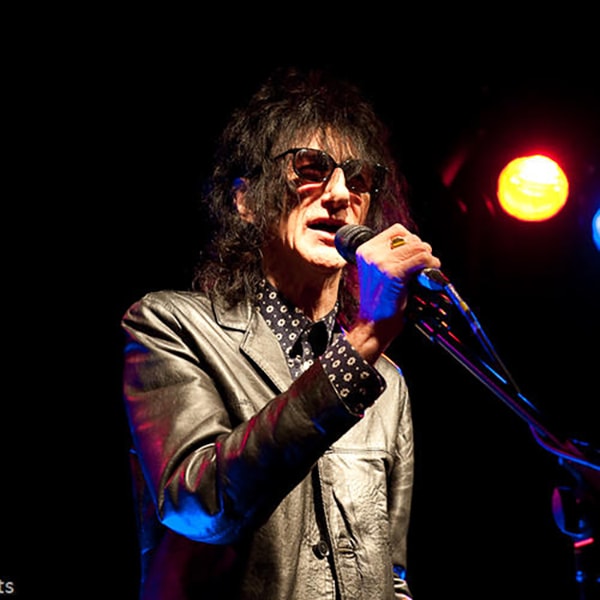
 

John Cooper Clarke. From the John Cooper Clarke website.

John Cooper Clarke. From the John Cooper Clarke website.


As Garry started reciting to a roomful of adults panic-buying cocktails before the servers vanished, we were suddenly transformed into quiet children riveted by someone reading aloud to us again. Who could believe that live poetry could be so enthralling? It is, after all, simply a combination of the correct words arranged in perfect positions like in my poem, “Ode to Miss H”:

Miss Hill was then my least favorite teacher and not one to anger
She had a steely countenance; rarely did I see her smile
and her piercing gaze was as good as a slap in the face
But she read The Canterbury Tales and Sir Gawain and the Green Knight aloud in Middle English
and brought them to life in Morningside Heights
She knew everything about grammar and history
and I believed she was fluent in Latin, French, ancient Greek, and perhaps Old English as well
I wish I weren’t so wary and fearful
I can’t imagine what went unlearned
But, only she, for-ever made me love words – some of the best ones
The old words from Beowulf, Macbeth, and The Wife of Bath’s Tale…

I could not think of a final blockbuster line except maybe, “So, it wasn’t all hell,” or “It still turned out pretty swell.” Even with heartfelt memories and emotions, there was no avoiding poor rhyme scheme, lack of imagery, and terrible verbosity. Furthermore, I am completely derivative of Garry’s beautifully-delivered poem to Miss McCoombe. The time it took to me just to write something hokey is staggering. From now on, I will leave it to professionals.

At 73, Clarke is currently making appearances throughout the UK and Ireland, and he will be doing shows in Toronto, Boston, and New York City later in the fall. If you want to see a singular legend of spoken word, do it this year. Clarke was recently diagnosed with Alzheimer’s, so we have no idea how many tours he will able to do. Even with this sad news, Clarke sees the bright side. “There are three benefits of Alzheimer’s, one, you get to meet new people every day; two, you can hide your own Easter eggs, and three, you get to meet new people every day.” Spoken like a true poet.

If you still haven’t fallen in love with poetry, I will give you one more chance with my favorite John Cooper Clarke piece, “Reader’s Wives”:


Make a date with the brassy brides of Britain
The altogether ruder readers’ wives
Who put down their needles and their knitting
At the doorway to our dismal daily lives…


Header image from the John Cooper Clarke website.

More from Issue 165

View All Articles in Issue 165

Search Copper Magazine

#227 Seth Lewis Gets in the Groove With Take a Look Around: a Tribute to the Meters by Frank Doris Feb 02, 2026 #227 Passport to Sound: May Anwar’s Audio Learning Experience for Young People by Frank Doris Feb 02, 2026 #227 Conjectures on Cosmic Consciousness by B. Jan Montana Feb 02, 2026 #227 The Big Takeover Turns 45 by Wayne Robins Feb 02, 2026 #227 Music and Chocolate: On the Sensory Connection by Joe Caplan Feb 02, 2026 #227 Singer/Songwriter Chris Berardo: Getting Wilder All the Time by Ray Chelstowski Feb 02, 2026 #227 The Earliest Stars of Country Music, Part One by Jeff Weiner Feb 02, 2026 #227 The Vinyl Beat Goes Down to Tijuana (By Way of Los Angeles), Part Two by Rudy Radelic Feb 02, 2026 #227 How to Play in a Rock Band, 20: On the Road With Blood, Sweat & Tears’ Guitarist Gabe Cummins by Frank Doris Feb 02, 2026 #227 From The Audiophile’s Guide: Audio Specs and Measuring by Paul McGowan Feb 02, 2026 #227 Our Brain is Always Listening by Peter Trübner Feb 02, 2026 #227 PS Audio in the News by PS Audio Staff Feb 02, 2026 #227 The Listening Chair: Sleek Style and Sound From the Luxman L3 by Howard Kneller Feb 02, 2026 #227 The Los Angeles and Orange County Audio Society Celebrates Its 32nd Anniversary, Honoring David and Sheryl Lee Wilson and Bernie Grundman by Harris Fogel Feb 02, 2026 #227 Back to My Reel-to-Reel Roots, Part 26: Half Full – Not Half Empty, Redux by Ken Kessler Feb 02, 2026 #227 That's What Puzzles Us... by Frank Doris Feb 02, 2026 #227 Record-Breaking by Peter Xeni Feb 02, 2026 #227 The Long and Winding Road by B. Jan Montana Feb 02, 2026 #226 JJ Murphy’s Sleep Paralysis is a Genre-Bending Musical Journey Through Jazz, Fusion and More by Frank Doris Jan 05, 2026 #226 Stewardship by Consent by B. Jan Montana Jan 05, 2026 #226 Food, Music, and Sensory Experience: An Interview With Professor Jonathan Zearfoss of the Culinary Institute of America by Joe Caplan Jan 05, 2026 #226 Studio Confidential: A Who’s Who of Recording Engineers Tell Their Stories by Frank Doris Jan 05, 2026 #226 Pilot Radio is Reborn, 50 Years Later: Talking With CEO Barak Epstein by Frank Doris Jan 05, 2026 #226 The Vinyl Beat Goes Down to Tijuana (By Way of Los Angeles), Part One by Rudy Radelic Jan 05, 2026 #226 Capital Audiofest 2025: Must-See Stereo, Part Two by Frank Doris Jan 05, 2026 #226 My Morning Jacket’s Carl Broemel and Tyler Ramsey Collaborate on Their Acoustic Guitar Album, Celestun by Ray Chelstowski Jan 05, 2026 #226 The People Who Make Audio Happen: CanJam SoCal 2025, Part Two by Harris Fogel Jan 05, 2026 #226 How to Play in a Rock Band, 19: Touring Can Make You Crazy, Part One by Frank Doris Jan 05, 2026 #226 Linda Ronstadt Goes Bigger by Wayne Robins Jan 05, 2026 #226 From The Audiophile’s Guide: Active Room Correction and Digital Signal Processing by Paul McGowan Jan 05, 2026 #226 PS Audio in the News by Frank Doris Jan 05, 2026 #226 Back to My Reel-to-Reel Roots, Part 25: Half-Full, Not Empty by Ken Kessler Jan 05, 2026 #226 Happy New Year! by Frank Doris Jan 05, 2026 #226 Turn It Down! by Peter Xeni Jan 05, 2026 #226 Ghost Riders by James Schrimpf Jan 05, 2026 #226 A Factory Tour of Audio Manufacturer German Physiks by Markus "Marsu" Manthey Jan 04, 2026 #225 Capital Audiofest 2025: Must-See Stereo, Part One by Frank Doris Dec 01, 2025 #225 Otis Taylor and the Electrics Delivers a Powerful Set of Hypnotic Modern Blues by Frank Doris Dec 01, 2025 #225 A Christmas Miracle by B. Jan Montana Dec 01, 2025 #225 T.H.E. Show New York 2025, Part Two: Plenty to See, Hear, and Enjoy by Frank Doris Dec 01, 2025 #225 Underappreciated Artists, Part One: Martin Briley by Rich Isaacs Dec 01, 2025 #225 Rock and Roll is Here to Stay by Wayne Robins Dec 01, 2025 #225 A Lifetime of Holiday Record (and CD) Listening by Rudy Radelic Dec 01, 2025 #225 Little Feat: Not Saying Goodbye, Not Yet by Ray Chelstowski Dec 01, 2025 #225 How to Play in a Rock Band, Part 18: Dealing With Burnout by Frank Doris Dec 01, 2025 #225 The People Who Make Audio Happen: CanJam SoCal 2025 by Harris Fogel Dec 01, 2025 #225 Chicago’s Sonic Sanctuaries: Four Hi‑Fi Listening Bars Channeling the Jazz‑Kissa Spirit by Olivier Meunier-Plante Dec 01, 2025

John Cooper Clarke: Bard of the People

John Cooper Clarke: Bard of the People

Poets are not exactly part of mainstream culture these days. I’m only familiar with a few headliners from the last 3,000 years: Homer, Geoffrey Chaucer, Shakespeare, Edgar Allen Poe, and Allen Ginsberg. It’s nothing to be proud of, but most poets don’t speak to me in the way my favorite musicians do. I remember in Miss Hill’s 11th grade English class having to memorize and recite a poem – with express instructions that we could not use song lyrics. I went through our textbook and tried to find an excerpt from something that grabbed me and would impress Miss Hill. The Faerie Queene, written in 1590 by Edmund Spencer was similar to some of the other works we studied:

Lo I the man, whose Muse whilome did maske,
As time her taught in lowly Shepheards weeds,
Am now enforst a far unfitter taske,
For trumpets sterne to chaunge mine Oaten reeds,
And sing of Knights and Ladies gentle deeds;
Whose prayses having slept in silence long,
Me, all too meane, the sacred Muse areeds
To blazon broad emongst her learned throng:
Fierce warres and faithful loves shall moralize my song…

With my stage fright, I could barely memorize this one stanza let alone two from this epic work of more than 36,000 lines. Maybe I could recite something similar I had already committed to memory. So on my performance day I went right into “My Fairy King” by Roger Meadows Taylor. It was close enough to Edmund Spencer:

In the land where horses born with eagle wings
And honey bees have lost their stings
There’s singing forever, ooh yeah
Lion’s den with fallow deer
And rivers made from wine so clear
Flow on and on forever…

The “poem” was a deep cut from Queen’s 1973 debut album Queen and it was written by Freddie Mercury. In a class full of Duran Duran and Run DMC fans, no one knew any better, not even Miss Hill. She was unimpressed by “My Fairy King,” but I was happy to maintain my solid C-average in her class. I have not given much thought to poetry since high school until Don Letts’ documentary Punk: Attitude (2005). Forty-two minutes into the film, a man in dark glasses resembling Bob Dylan from the 1960s, sang verses as he walked down a dilapidated urban landscape. It was the Bard of Salford, John Cooper Clarke, describing an overnight jail stay in “36 Hours:


…Steel shoes on the stone cold floor
I hear the screws screaming in the corridor
The bad news and the slammin’ of the door
The “what did i do’s” and the “what am I here for’s”
Shades of doubt fall deeper than the slag mine
Lights out… sack time…

Clarke’s words, appearance, and level of cool was much more appealing than Beat poets from a bygone age of smoky cafes full of Ivy league students drinking espresso. He was clearly a man of the people and a true rock and roller.

John Cooper Clarke was born on January 25, 1949 in Salford, just outside of Manchester, which is within 50 miles of Liverpool, Leeds, and Sheffield. Inspired by an English teacher, Clarke decided poetry was his calling. As every sensible person knows, choosing to write words over an honest day’s work is either brave, desperate, or just plain stupid, but brilliance sometimes perseveres despite imperfect circumstances.

Clarke’s language is raw and unadorned except for the twang of a northern accent, more like that of Liam Gallagher than a teacher of poetry in Oxford. He performed against a backdrop of Margaret Thatcher’s administration and opened for the Sex Pistols, Clash, Buzzcocks, and other acts whose fans spit all over his suits. In the early days, Clarke’s rough subject matter was softened by The Invisible Girls, his back-up band, who provided ambient soundtracks to stanzas like those in “Beasly Street”:


… From the boarding houses and the bedsits
Full of accidents and fleas
Somebody gets it
Where the missing persons freeze
Wearing dead men’s overcoats
You can’t see their feet
A riff joint shuts – opens up
Right down on Beasly Street…

The late 1970s and early 1980s were a fertile period for Clarke, but there were many years following that proved to be challenging, as he dealt with heroin addiction and financial struggles. He even shared an apartment with Nico of Velvet Underground fame, also a heroin user at the time. But seeds planted in the Punk era continued to blossom later in Clarke’s life as he enjoyed a resurgence in the 21st century. He was rediscovered by young musicians like the Arctic Monkeys, became a frequent guest on chat shows, and spread his Mancunian wisdom to far-flung places. His poem “Evidently Chickentown” was featured in a 2007 episode of The Sopranos. In 2013, Clarke was awarded an honorary doctorate from the University of Salford for 50 years of influencing culture and creating poetry for non-traditional audiences like the working class, punks and underachieving students like me. Ironically, his work is now part of the national curriculum in British schools. He’s also been busy writing, and recently completed a new collection of poems for his book, The Luckiest Guy Alive (2018), and a memoir, I Wanna Be Yours (2020).

Dr. John Cooper Clarke hit the road with Squeeze for a long-awaited 2018 tour of Australia, and the man I first learned about in Letts’ documentary was also making annual visits to New York. In 2019, I attended my first official poetry reading at Joe’s Pub in the Public Theatre in Manhattan. With his 116-pound rail-thin frame, angular face, and oversized hairdo (think Robert Smith of the Cure), Clarke was equal parts rock star, raconteur, and comedian. He performed without a band as poems old and new flowed like music to their own natural beat. Although most people came to see Clarke, Joe’s Pub was also graced by Mike Garry, Clarke’s frequent tour partner and former librarian from Manchester, who brought the audience to tears with a poem about his primary school teacher, Miss McCoombe, “Signify”:

…And in that Classroom her voice was music
Echoing prayer and hymns and songs
She was a living angel
But you’d know if you did wrong
She took us on school trips
To castles with moats across oceans on boats and we would float
And we hadn’t even left the classroom…


John Cooper Clarke. From the John Cooper Clarke website.

John Cooper Clarke. From the John Cooper Clarke website.


As Garry started reciting to a roomful of adults panic-buying cocktails before the servers vanished, we were suddenly transformed into quiet children riveted by someone reading aloud to us again. Who could believe that live poetry could be so enthralling? It is, after all, simply a combination of the correct words arranged in perfect positions like in my poem, “Ode to Miss H”:

Miss Hill was then my least favorite teacher and not one to anger
She had a steely countenance; rarely did I see her smile
and her piercing gaze was as good as a slap in the face
But she read The Canterbury Tales and Sir Gawain and the Green Knight aloud in Middle English
and brought them to life in Morningside Heights
She knew everything about grammar and history
and I believed she was fluent in Latin, French, ancient Greek, and perhaps Old English as well
I wish I weren’t so wary and fearful
I can’t imagine what went unlearned
But, only she, for-ever made me love words – some of the best ones
The old words from Beowulf, Macbeth, and The Wife of Bath’s Tale…

I could not think of a final blockbuster line except maybe, “So, it wasn’t all hell,” or “It still turned out pretty swell.” Even with heartfelt memories and emotions, there was no avoiding poor rhyme scheme, lack of imagery, and terrible verbosity. Furthermore, I am completely derivative of Garry’s beautifully-delivered poem to Miss McCoombe. The time it took to me just to write something hokey is staggering. From now on, I will leave it to professionals.

At 73, Clarke is currently making appearances throughout the UK and Ireland, and he will be doing shows in Toronto, Boston, and New York City later in the fall. If you want to see a singular legend of spoken word, do it this year. Clarke was recently diagnosed with Alzheimer’s, so we have no idea how many tours he will able to do. Even with this sad news, Clarke sees the bright side. “There are three benefits of Alzheimer’s, one, you get to meet new people every day; two, you can hide your own Easter eggs, and three, you get to meet new people every day.” Spoken like a true poet.

If you still haven’t fallen in love with poetry, I will give you one more chance with my favorite John Cooper Clarke piece, “Reader’s Wives”:


Make a date with the brassy brides of Britain
The altogether ruder readers’ wives
Who put down their needles and their knitting
At the doorway to our dismal daily lives…


Header image from the John Cooper Clarke website.

0 comments

Leave a comment

0 Comments

Your avatar

Loading comments...

🗑️ Delete Comment

Enter moderator password to delete this comment:

✏️ Edit Comment

Enter your email to verify ownership: