COPPER

A PS Audio Publication

Issue 13 • Free Online Magazine

Issue 13 FEATURED

How I Spent My Summer Vacation

I freely admit that I am a nerd. Aside from music and audio, I omnivorously absorb architecture, antiquarian books, cars, and all manner of mechanical devices. When traveling alone, I have no problem indulging and pursuing those interests. Traveling to San Francisco recently with my long-suffering Significant Other on an allegedly   romantic vacation, I was still able to carve out a fair amount of time to indulge my interests, and yet  managed to keep her happy. Mostly.

I think.

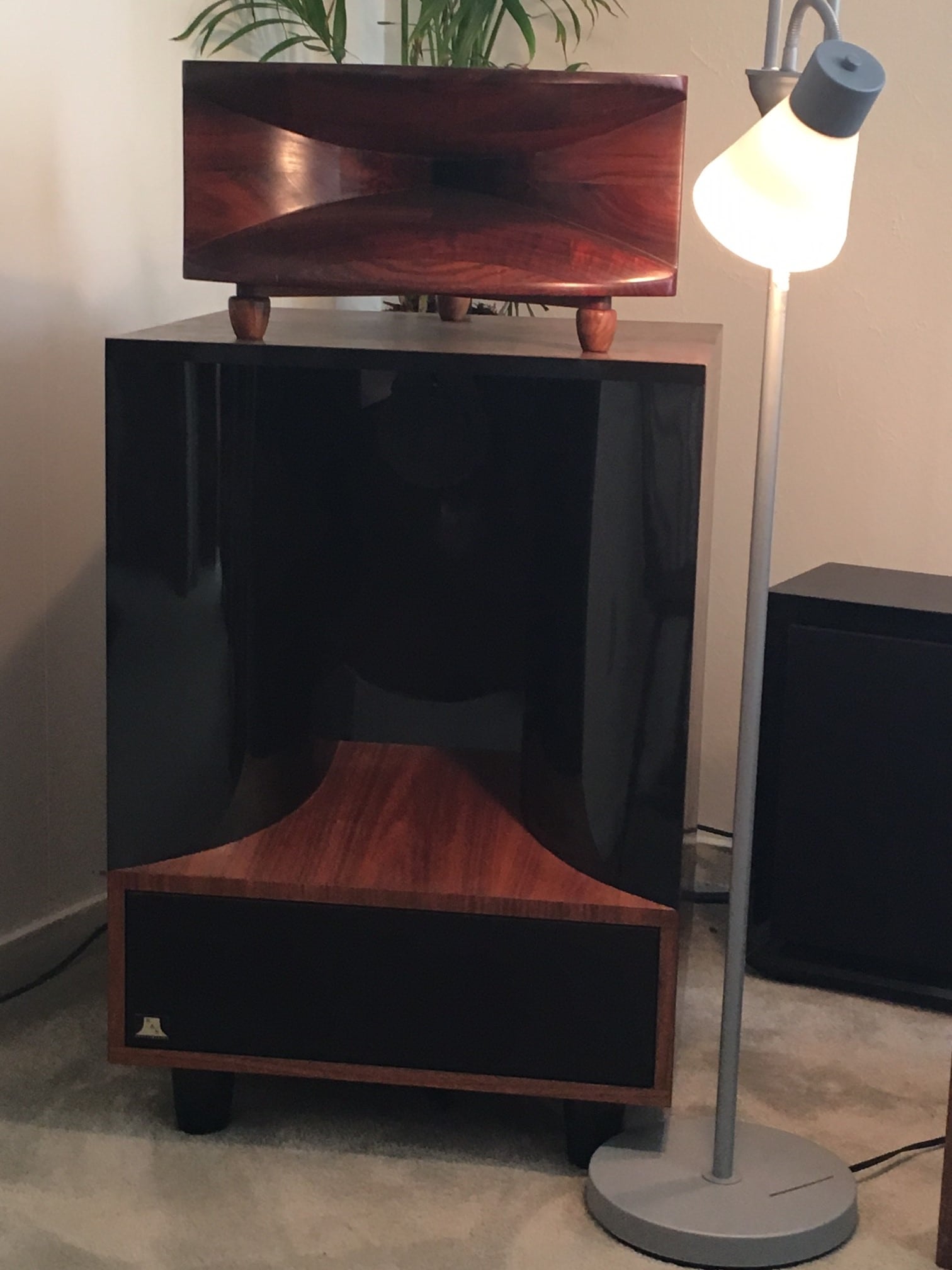
South of the city, we visited the Burwells, father and son. They build retro-nuevo speakers with amazing cabinetry, solid wood horns and vintage Altec and JBL drivers. Not your standard audiophile fare, but a type of speaker I came to appreciate at old recording studios in Memphis, where Altec monitors  were generally paired with McIntosh tube amps.The Burwell’s speakers were very nice indeed— lively, dynamic, and surprisingly unobtrusive.Summer Vac 1 Burwell One of the Burwell speakers, in all its woody glory.
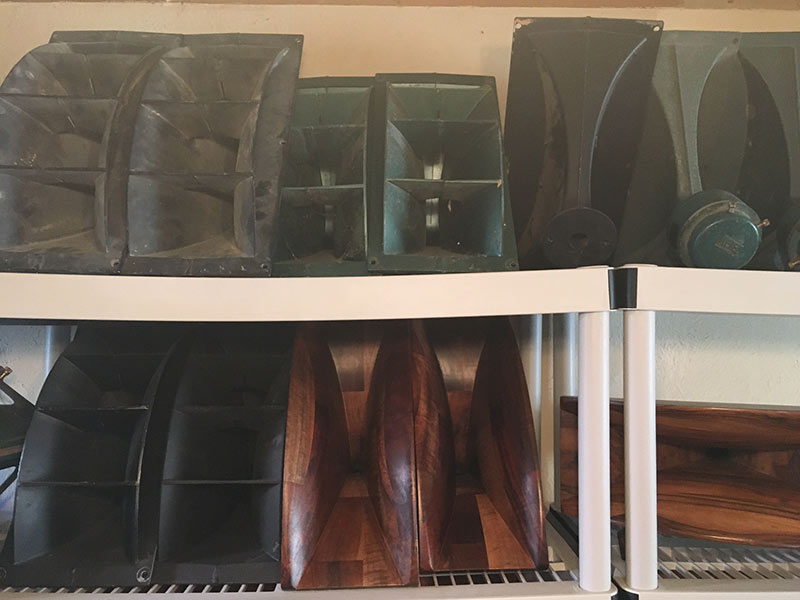
Leebens-2 A bunch of old Altec horns and brand new solid wood ones.
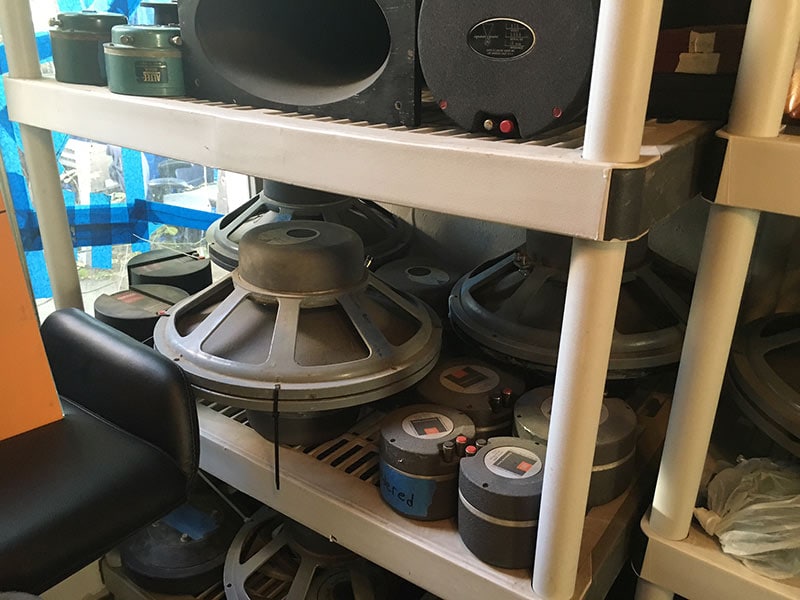
leebens-3 Vintage JBL and Altec drivers.
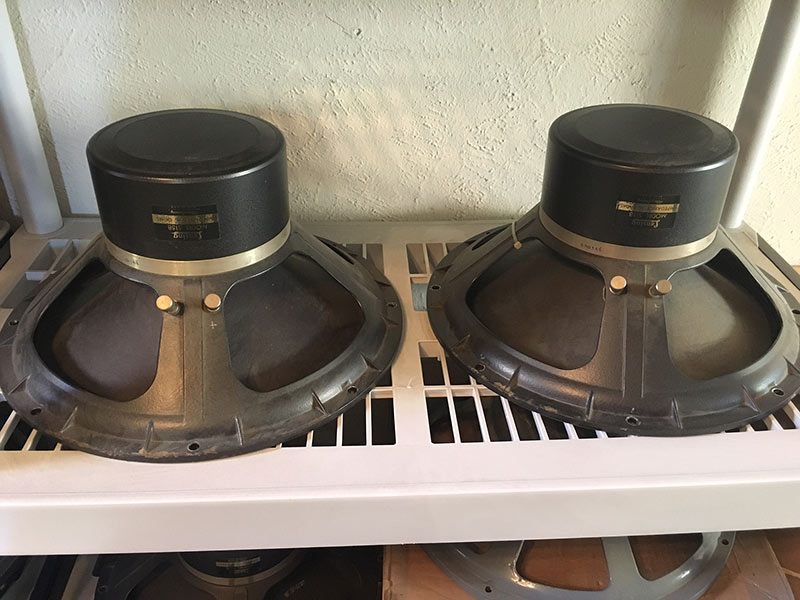
leebens-4 A pair of very early Altec-Lansing 515 woofers.
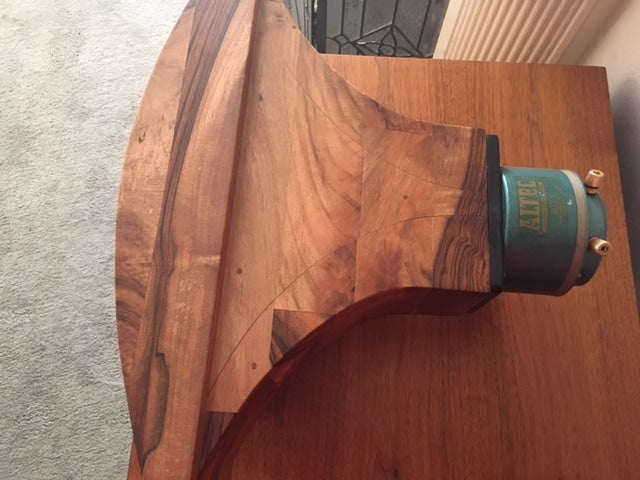
Sum vac 5 Overhead view of the Burwells' beautiful solid wood midrange horn.

http://www.burwellspeakers.com/

Heading closer to the city, we visited my old friend Cookie Marenco at OTR Studios, the base of operations for Blue Coast Records and her download empire. Given Cookie’s earthy persona, her studio’s homey vibe comes as no surprise. I’ve been to a lot of studios, and OTR is  of the make-the-musicians-comfortable variety, rather than the space shuttle/clean-room/ isolation booth feel of some studios.
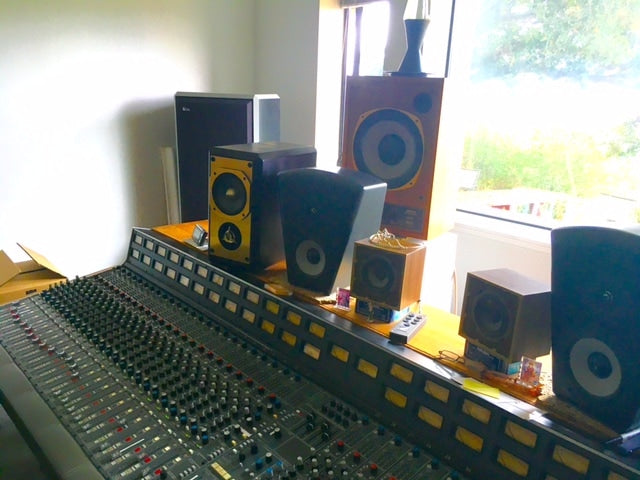
Sum vac 6 Cookie's mixing console at Blue Coast
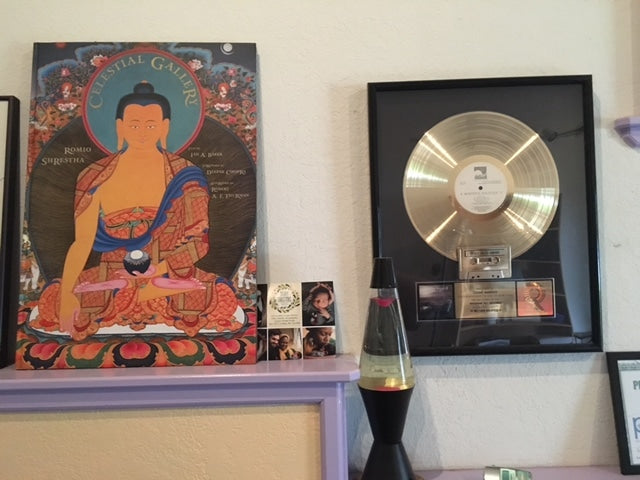
Sum vac 7 Buddha, Lava Lamp, and a gold record--the perfect studio feng shui!
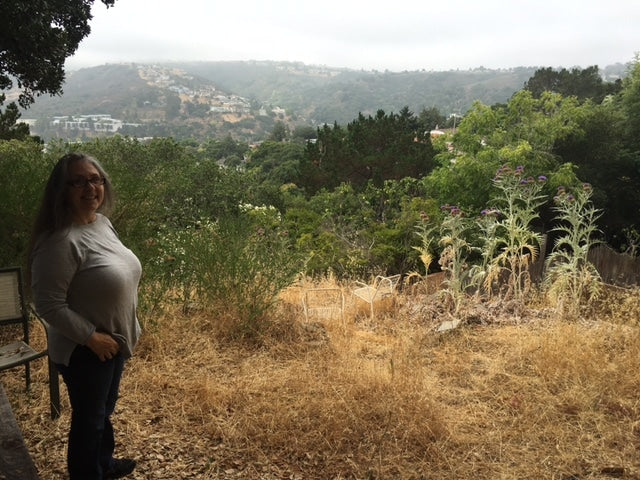
Sum vac 8 Cookie Marenco
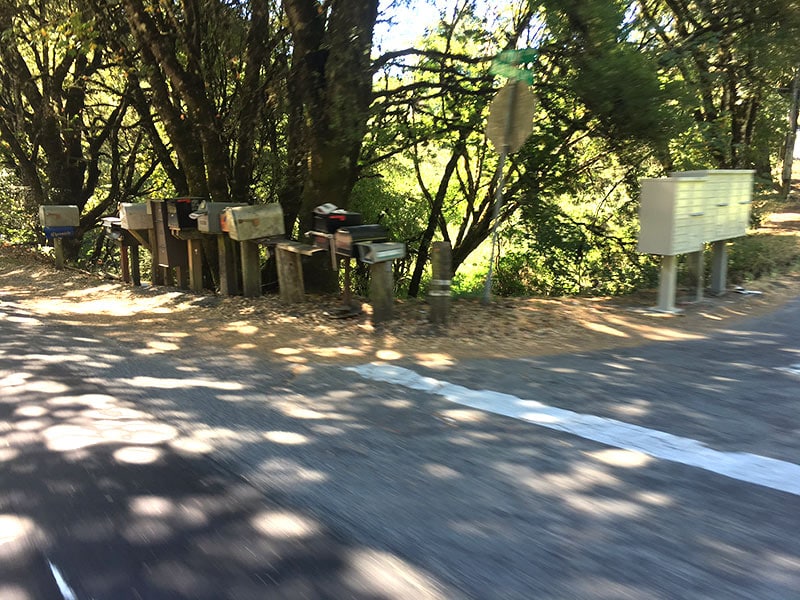
On a side-trip for breakfast, Cookie pointed out the road that (eventually) leads to Neil Young’s ranch. “But he’s not there anymore,” said Cookie. “He lost it in the divorce.”
leebens-9 Neil Young's old ranch is waaaaay down that road.
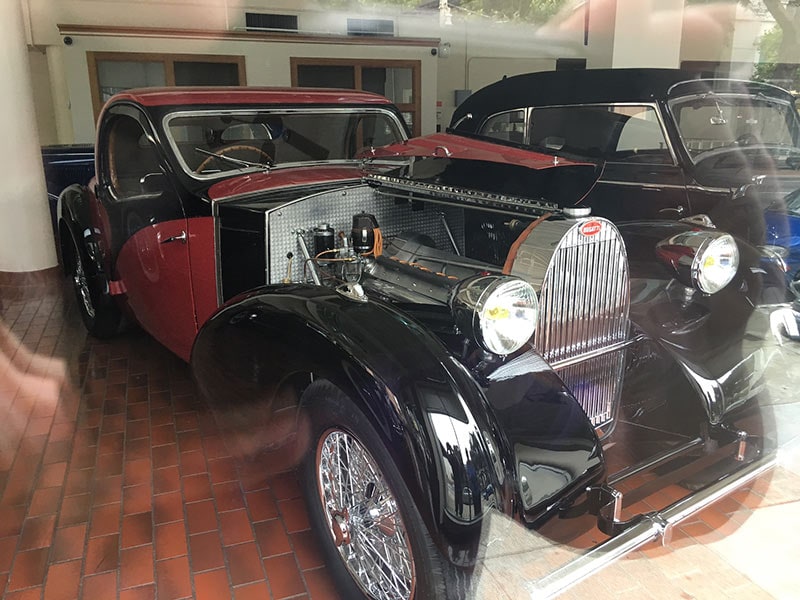
That’ll teach you to fool around with actresses, Neil. Sunday in the city, meandering down Van Ness, I spied a group of incredible vintage cars in a showroom. Long-suffering SO indulgently circled the block---not easy in that part of SF---and we parked to take a look. The showroom carried no signage, and I still have no idea what the company is. Through the showroom windows we saw a treasure-trove of great old cars:
leebens-10 Type 57 Bugatti. We're not worthy.
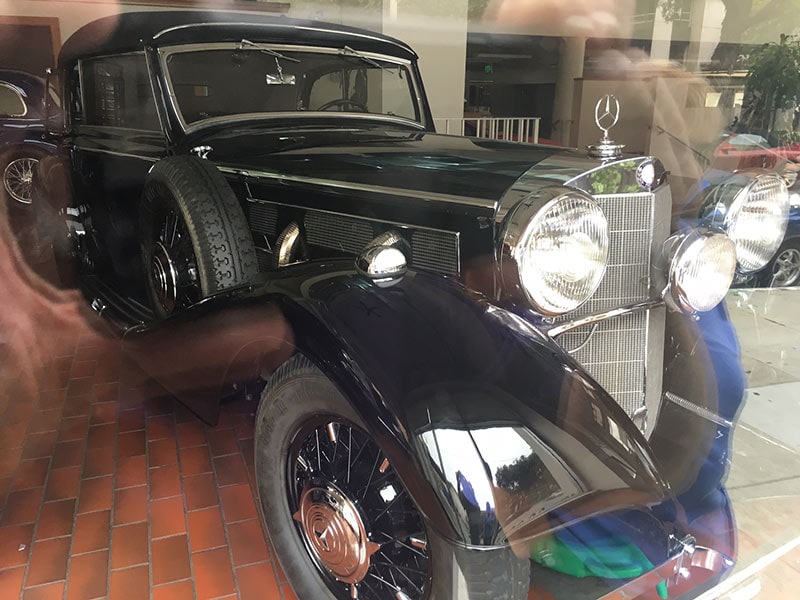
Leebens-11 Grosser Mercedes, like Der Fuehrer used to love.
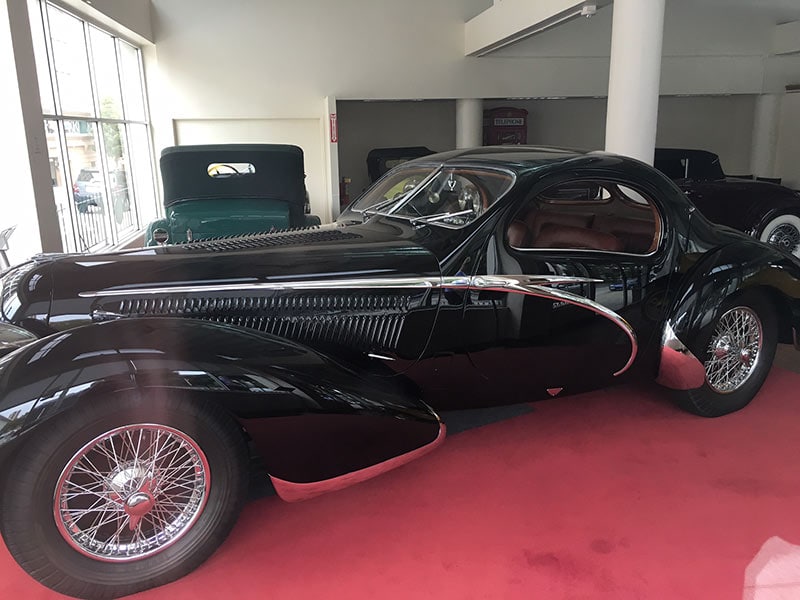
leebens-13 A swoopy, Pebble Beach-winning 1938 Talbot-Lago T150-C.
I’m sure that the value of all the cars combined was well into eight figures. Sheesh.

SO suggested a visit to the Cable Car Museum, which not only has an interesting variety of historical displays, but acts as the hub for the cable system. The cable car system was devised, not surprisingly, by a maker of wire ropes and cables. It is ingenious, if Rube  Goldberg-esque in its complexity.

I once confused cable cars with trolleys, but they’re not the same at all. Trolley Cars generally have an overhead electric line which connects to the car by way of an antennae-like feeder arm which conveys the juice to electric driving motors. Cable cars have a remote power plant with engines or motors (in SF, originally steam engines–now each line has a 500 HP GE electric motor) which drive giant  pulleys called  sheaves. The sheaves transmit force to a cable 1 ¼” in diameter which runs underground, routed by a series of pulleys, guides, and idlers. The cars are propelled by a plier-like “grip”, operated by the motorman, which actually increases or lessens the grip on the driven cable, which pulls the cable car along.

There are four separate lines in the SF cable system; all four are driven from the powerhouse at the Cable Car Museum. The longest line is nearly four miles long; the shortest, just under two miles. Think about the network of pulleys, guides and idlers required to route and change direction of  a moving cable under the city streets—it’s amazing. The technology may seem somewhat antiquated—and it is—but it works. The cable is lubricated with pine tar, which you can smell while riding the cable cars. What do they use for brakes, going down those steep hills? Blocks of pine, pressed against the wheels. You can smell them  burning when the going is tough. Two of the four cable lines, with their 500 HP motors driving 8 1/2' sheaves.
leebens-16 I wasted a lot of hours on one of these, back in high school....
Amazing stuff.

http://www.cablecarmuseum.org/

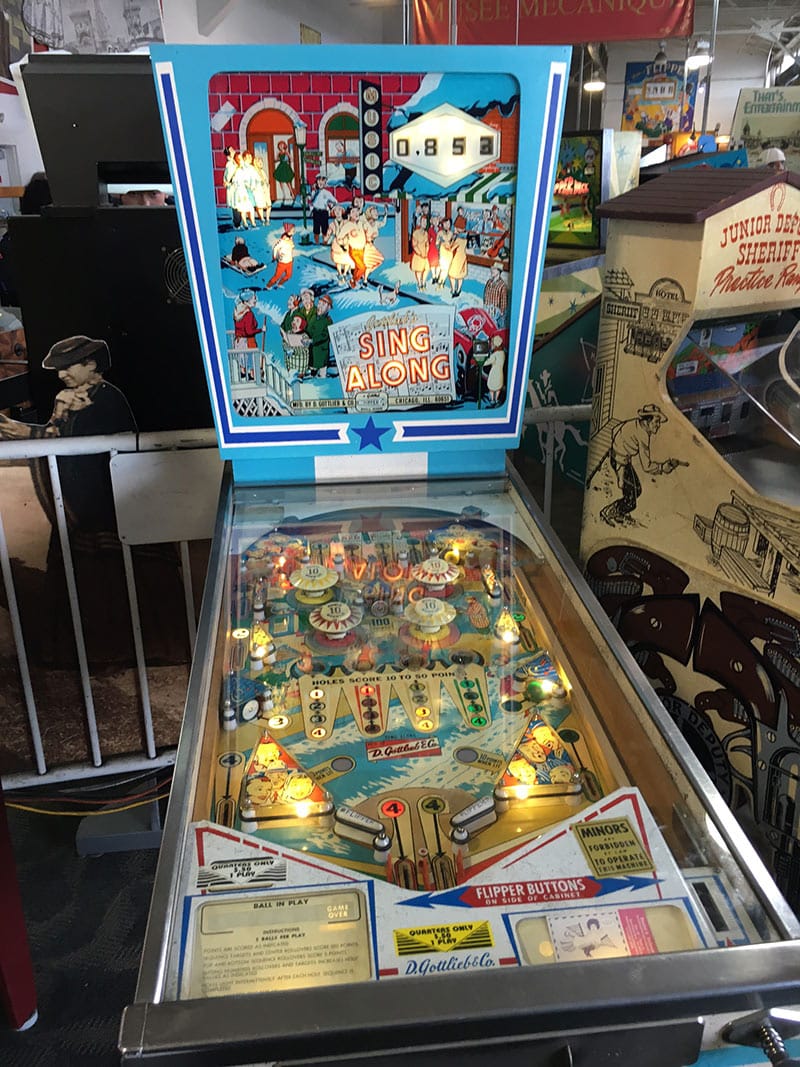
Finally, down at Fisherman’s Wharf there is an arcade rather grandly entitled Musee Mecanique, which features mechanical games and devices from the penny arcade eras. Much of it was familiar stuff for me; one piece which was very familiar indeed was an old Gottlieb Sing Along, a pinball machine I spent many hours mastering during my high school years. Even mechanical devices can generate emotional attachments!


http://museemecaniquesf.com/

More from Issue 13

View All Articles in Issue 13

Search Copper Magazine

#234 A Life in High-End Audio: The Roy Hall Interview, Part One by Frank Doris Sep 07, 2026 #234 Jason Greenlaw Offers His Personal Perspective on Jazz Guitar in Vantage Point by Frank Doris Sep 07, 2026 #234 Transcendent Phoenix: Lucina Yue Brings the Ancient Konghou Into Modern Times by Frank Doris Sep 07, 2026 #234 We Must All Follow Our Bliss by B. Jan Montana Sep 07, 2026 #234 How to Play in a Rock Band, 27: Leveling Up by Frank Doris Sep 07, 2026 #234 Ross Valory: Traveling Into New Musical Territory With All of the Above by Ray Chelstowski Sep 07, 2026 #234 Singer/Songwriter John David Schrader: On the Need to Create by Joe Caplan Sep 07, 2026 #234 The People Who Make Audio Happen: More From T.H.E. Show SoCal 2026 by Harris Fogel Sep 07, 2026 #234 The Vinyl Beat Digs Into the Gadget Box by Rudy Radelic Sep 07, 2026 #234 The Rolling Stones: Foreign Tongues Spoken Loud by Wayne Robins Sep 07, 2026 #234 Musical Moments by Rich Isaacs Sep 07, 2026 #234 Rags for Solo Piano and a Dog: David Chesky's Ragtime Music for the Modern Age by Frankly Speaking Sep 07, 2026 #234 HIGH END 2026, Vienna: Here to Stay by Carsten Barnbeck Sep 07, 2026 #234 From The Audiophile’s Guide: The Two Main Types of Loudpeakers – Box and Panel by Paul McGowan Sep 07, 2026 #234 Letting it Slide by Frank Doris Sep 07, 2026 #234 PS Audio in the News by PS Audio Staff Sep 07, 2026 #234 Long Playing by Peter Xeni Sep 07, 2026 #234 La Mer by B. Jan Montana Sep 07, 2026 #233 A Report From The Total Hi-Fi Experience Show SoCal 2026 by B. Jan Montana Aug 03, 2026 #233 Bluegrass Meets Country, Folk, Jazz and More in All That We Carried by The Squid City Slingers by Frank Doris Aug 03, 2026 #233 Corey Glover and One Tribe Nation: A Variegated Musical Collective by Ray Chelstowski Aug 03, 2026 #233 Excursions with Clive: The Late Clive Davis, A Personal History by Wayne Robins Aug 03, 2026 #233 AI, Art, and Music: A Conversation With Synthography Art by Joe Caplan Aug 03, 2026 #233 New American Symphonies: A Rediscovered Gem and a Vital Contemporary Work by Frank Doris Aug 03, 2026 #233 The Vinyl Beat: Genesis, the Dave Clark Five, Antonio Carlos Jobim and More by Rudy Radelic Aug 03, 2026 #233 How to Play in a Rock Band, 26: When It's Time to Record Your Music by Frank Doris Aug 03, 2026 #233 More From T.H.E. Show 2026, and the People Who Made it Happen by Harris Fogel Aug 03, 2026 #233 Underappreciated Artists, Part Three: Icehouse by Rich Isaacs Aug 03, 2026 #233 The Surprisingly Rich and Varied Music of Somalia by Steve Kindig Aug 03, 2026 #233 A Remarkable Discographic Legacy: The LP Recordings of the Basel Symphony Orchestra by Stephan Haberthür Aug 03, 2026 #233 From The Audiophile’s Guide: The Importance of Loudspeakers by Paul McGowan Aug 03, 2026 #233 From Swimming Pool to New Listening Room: A Conversation with Norman Varney of AV RoomService by Gilles Laferrière Aug 03, 2026 #233 PS Audio in the News by PS Audio Staff Aug 03, 2026 #233 Audio Jewelry by Peter Xeni Aug 03, 2026 #233 Enrich Your Life by Frank Doris Aug 03, 2026 #233 The Searcher by James Schrimpf Aug 03, 2026 #232 What came first: Art or Music? A Conversation With Artist Jose Acosta by Joe Caplan Jul 06, 2026 #232 Blow By Blow: The Jeff Beck Story: An Insightful Book About a Guitar Icon by Ray Chelstowski Jul 06, 2026 #232 Creed Over Camaraderie? by B. Jan Montana Jul 06, 2026 #232 Chronicles of a Sound Pilgrim at the 2026 Montreal Audiofest by Hugues Morin Jul 06, 2026 #232 The Vinyl Beat: Summer Grooves by Rudy Radelic Jul 06, 2026 #232 Hibbing Hillbilly Dylan's Acoustic Rock by Wayne Robins Jul 06, 2026 #232 Quad Quads and Plasmatronics Tweeters: An Extraordinary System Comes to Life by Frank Doris Jul 06, 2026 #232 In Praise of Live Music, Once Again by Ted Shafran Jul 06, 2026 #232 Allnic Audio’s L-9000 Preamplifier: Design and Engineering Innovation by Howard Kneller Jul 06, 2026 #232 “Best Of” Lists and Rage Bait: Enough Already by Frank Doris Jul 06, 2026 #232 Quick Takes: Bud Shank, Paulo Almeida, Jakob Dreyer, Tim Eriksen and Peter Irvine by Frank Doris Jul 06, 2026

How I Spent My Summer Vacation

I freely admit that I am a nerd. Aside from music and audio, I omnivorously absorb architecture, antiquarian books, cars, and all manner of mechanical devices. When traveling alone, I have no problem indulging and pursuing those interests. Traveling to San Francisco recently with my long-suffering Significant Other on an allegedly   romantic vacation, I was still able to carve out a fair amount of time to indulge my interests, and yet  managed to keep her happy. Mostly.

I think.

South of the city, we visited the Burwells, father and son. They build retro-nuevo speakers with amazing cabinetry, solid wood horns and vintage Altec and JBL drivers. Not your standard audiophile fare, but a type of speaker I came to appreciate at old recording studios in Memphis, where Altec monitors  were generally paired with McIntosh tube amps.The Burwell’s speakers were very nice indeed— lively, dynamic, and surprisingly unobtrusive.Summer Vac 1 Burwell One of the Burwell speakers, in all its woody glory.
Leebens-2 A bunch of old Altec horns and brand new solid wood ones.
leebens-3 Vintage JBL and Altec drivers.
leebens-4 A pair of very early Altec-Lansing 515 woofers.
Sum vac 5 Overhead view of the Burwells' beautiful solid wood midrange horn.

http://www.burwellspeakers.com/

Heading closer to the city, we visited my old friend Cookie Marenco at OTR Studios, the base of operations for Blue Coast Records and her download empire. Given Cookie’s earthy persona, her studio’s homey vibe comes as no surprise. I’ve been to a lot of studios, and OTR is  of the make-the-musicians-comfortable variety, rather than the space shuttle/clean-room/ isolation booth feel of some studios.

Sum vac 6 Cookie's mixing console at Blue Coast
Sum vac 7 Buddha, Lava Lamp, and a gold record--the perfect studio feng shui!
Sum vac 8 Cookie Marenco
On a side-trip for breakfast, Cookie pointed out the road that (eventually) leads to Neil Young’s ranch. “But he’s not there anymore,” said Cookie. “He lost it in the divorce.”
leebens-9 Neil Young's old ranch is waaaaay down that road.
That’ll teach you to fool around with actresses, Neil. Sunday in the city, meandering down Van Ness, I spied a group of incredible vintage cars in a showroom. Long-suffering SO indulgently circled the block---not easy in that part of SF---and we parked to take a look. The showroom carried no signage, and I still have no idea what the company is. Through the showroom windows we saw a treasure-trove of great old cars:
leebens-10 Type 57 Bugatti. We're not worthy.
Leebens-11 Grosser Mercedes, like Der Fuehrer used to love.
leebens-13 A swoopy, Pebble Beach-winning 1938 Talbot-Lago T150-C.
I’m sure that the value of all the cars combined was well into eight figures. Sheesh.

SO suggested a visit to the Cable Car Museum, which not only has an interesting variety of historical displays, but acts as the hub for the cable system. The cable car system was devised, not surprisingly, by a maker of wire ropes and cables. It is ingenious, if Rube  Goldberg-esque in its complexity.

I once confused cable cars with trolleys, but they’re not the same at all. Trolley Cars generally have an overhead electric line which connects to the car by way of an antennae-like feeder arm which conveys the juice to electric driving motors. Cable cars have a remote power plant with engines or motors (in SF, originally steam engines–now each line has a 500 HP GE electric motor) which drive giant  pulleys called  sheaves. The sheaves transmit force to a cable 1 ¼” in diameter which runs underground, routed by a series of pulleys, guides, and idlers. The cars are propelled by a plier-like “grip”, operated by the motorman, which actually increases or lessens the grip on the driven cable, which pulls the cable car along.

There are four separate lines in the SF cable system; all four are driven from the powerhouse at the Cable Car Museum. The longest line is nearly four miles long; the shortest, just under two miles. Think about the network of pulleys, guides and idlers required to route and change direction of  a moving cable under the city streets—it’s amazing. The technology may seem somewhat antiquated—and it is—but it works. The cable is lubricated with pine tar, which you can smell while riding the cable cars. What do they use for brakes, going down those steep hills? Blocks of pine, pressed against the wheels. You can smell them  burning when the going is tough. Two of the four cable lines, with their 500 HP motors driving 8 1/2' sheaves.
leebens-16 I wasted a lot of hours on one of these, back in high school....
Amazing stuff.

http://www.cablecarmuseum.org/

Finally, down at Fisherman’s Wharf there is an arcade rather grandly entitled Musee Mecanique, which features mechanical games and devices from the penny arcade eras. Much of it was familiar stuff for me; one piece which was very familiar indeed was an old Gottlieb Sing Along, a pinball machine I spent many hours mastering during my high school years. Even mechanical devices can generate emotional attachments!


http://museemecaniquesf.com/

0 comments

Leave a comment

0 Comments

Your avatar

Loading comments...

🗑️ Delete Comment

Enter moderator password to delete this comment:

✏️ Edit Comment

Enter your email to verify ownership: