COPPER

A PS Audio Publication

Issue 172 • Free Online Magazine

Issue 172 Disciples of Sound

Collective Soul: Rocking On With Limitless Passion

Collective Soul: Rocking On With Limitless Passion

Collective Soul burst on to the rock scene in 1993 with the single “Shine” from their debut album Hints Allegations and Things Left Unsaid. It was a remarkable record from a band that had only formed a year earlier. They were soon compared to acts like Pearl Jam and artists like David Bowie. But across their 30-year career they have built as loyal a following as can be found in the world of rock. This has been fueled by a body of music that is cohesive, with limitless energy, and appropriate amounts of attitude.

While they have seen turnover in the lead guitar and drum roles, Ed Roland (vocals/guitar), Dean Roland (rhythm guitar), and Will Turpin (bass/background vocals) have formed the backbone of the band since day one. Jesse Triplett (lead guitar/background vocals) and Johnny Rabb (drums/background vocals) round out the band and have been in their respective roles for almost ten years. Together this fivesome sounds like they have been together since the beginning – especially on their latest release, Vibrating, the band’s 11th studio recording. The first single, “All Our Pieces,” is about as perfect as any hard rock song can be. It’s no wonder that the record is already charting, a remarkable feat at a time when mainstream rock has become almost invisible.


We caught up with founding member Dean Roland about how the band continues to beat the odds and create music that seems as timeless as their biggest hits; what they have seen being back on the road after a long hiatus; and how he and his brother Ed have avoided the rivalry and feuding that has unraveled so many sibling acts like Oasis, The Kinks, the Beach Boys, the Black Crowes, and more.

Ray Chelstowski: For the last three years you have been charting again, which is a rarity in the world of rock. How does it feel?

Dean Roland: We’ll take a step back and reflect every so often, but for the most part we take it in stride, being really grateful for what we are able to do for a living.

RC: For those who say rock is dead you give us hope.

DR: I don’t know. Trends come and go. My take has always been that rock and roll is something that is steady. Our approach has never adhered to trendy stuff. We make music that we feel good about and we try to be as authentic as possible.

RC: The previous album, Blood, was originally going to be a double. Instead, you decided to split the list of songs in two.  How did you pick what song would go where?

DR: That’s a great question. Initially Blood was going to be a double album. One disc was going to be guitar-driven, while the other was going to have arrangements that were more melancholy and vibey. But when we did Blood we decided that we had too many songs and we didn’t want to over-inundate ourselves or our fans with material. So, we just went with what worked together. It’s just a feel. It really is.

RC: When did you know that this record would do as well as it has?

DR: You go in to the studio and you follow each idea to what you think is its fulfilled concept. Some end up good, others don’t work for you. We really felt like we had some good stuff on this one. We really have felt great about everything for the last few years. Ed’s been writing some really great words and that approach is just working.
 

Collective Soul, Vibrating, album cover.

Collective Soul, Vibrating, album cover.


RC: Ed writes most of the songs. How do you all help shape what he has written?

DR: We don’t put any barriers in place. Sometimes Ed comes in and he has very clear ideas about how the song will work out, both lyrically and melodically, and we just add our fairy dust. And other times we can be in rehearsal and we just start jamming on a drum groove. So we really try to not put ourselves in a box because you want that creative spark to light whenever it’s offered.

RC: Your entire catalog definitely ties together sonically. Do you enter the studio with that in mind?

DR: We’ve never taken that approach. Selfishly it’s been about what we are happy expressing. We never chase an appeal or an appraisal. Hopefully people hear it and like it; I say that with the utmost gratitude for people who do like it.

RC: You have often been compared to Bowie and I can hear that on “Back Again,” but the back half of the record has a real Paul Weller feel to it with songs like “A Conversation With” and “Just Looking Around.” Do you have people in mind when you start recording?

DR: I’ll take that as a compliment! When you go into the studio you can acknowledge the influences that arrive from everywhere. But I’ve never heard that one and that’s a cool reference. Thank you!

RC: I saw you last at Irving Plaza in October of 2015. King Washington opened the show and their guitarist George Krikes was a real prodigy at the time. Is there anyone similar opening for you on this tour?

DR: Well right now we are touring with Switchblade, and they don’t need any introduction. They’re an amazing band in their own right. Then there’s Jay Jackson, a solo artist with a gorgeous voice, whose talents are to be celebrated.

RC: At that Irving Plaza show the audience was completely engaged in the music. Who is the “Collective Soul fan?”

DR: It’s hard for me to describe it. But I hope that it’s someone who appreciates good music (laughs). If I were to sum it up they are “song-oriented folks.” It’s people who appreciate what we do and there’s an emotional connection that ties the songs into their lives. It could be that they are going through a difficult time, or a happy time like meeting their wife or having their first child. It just comes down to the song.


RC: Is there any special gear that you are bringing out on this tour?

DR: I did just get a Gretsch Penguin seafoam sparkly blue/green guitar and I love it. But most of my setup is what I have been doing for so long. I’ve been playing the same Les Paul for almost 30 years. That’s my workhorse and I just love that thing. It feels like my buddy when we get on stage and we have fun.

RC: You are well into your current tour. Any particular highlight you’d love to mention?

DR: We spent two years where our industry was in complete lockdown. It’s just good to be back out seeing people laughing and singing. That’s where our head and heart is right now.

RC: You have had very little turnover in the band. What’s the key to that success?

DR: Well, I think you have to have a passion for music along with a gratitude for being in the position we’re in. You also have to respect each other, and each other’s space and talents. It’s simple to say but relatively difficult to apply. Once you find that groove it’s just about the music.

RC: So few bands with brothers seem to be able to avoid clashes and feuds. How have you and Ed avoided that?

DR: We still have to answer to our mother (laughs). We just respect each other’s role. We obviously butt heads here and there but we realized a long time ago that we have this common goal, and two different approaches. Sometimes we fight it out, but not really. It’s about love and respect. Ed’s my buddy, my friend, so we’re locked in on that level.


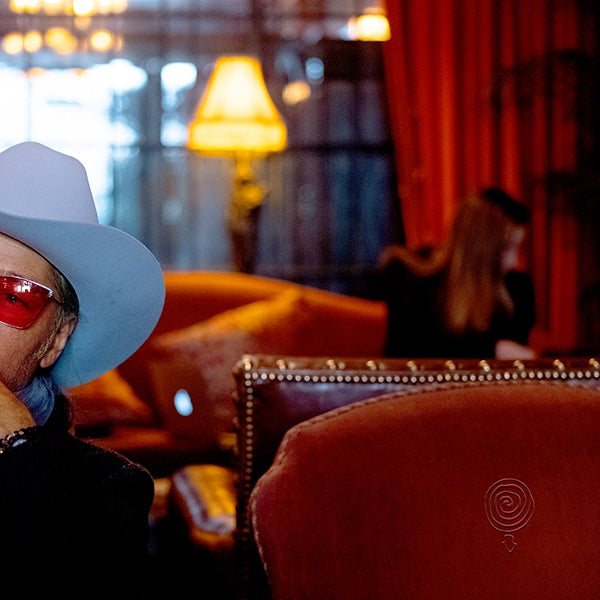
Header image courtesy of David Abbott.

More from Issue 172

View All Articles in Issue 172

Search Copper Magazine

#227 Seth Lewis Gets in the Groove With Take a Look Around: a Tribute to the Meters by Frank Doris Feb 02, 2026 #227 Passport to Sound: May Anwar’s Audio Learning Experience for Young People by Frank Doris Feb 02, 2026 #227 Conjectures on Cosmic Consciousness by B. Jan Montana Feb 02, 2026 #227 The Big Takeover Turns 45 by Wayne Robins Feb 02, 2026 #227 Music and Chocolate: On the Sensory Connection by Joe Caplan Feb 02, 2026 #227 Singer/Songwriter Chris Berardo: Getting Wilder All the Time by Ray Chelstowski Feb 02, 2026 #227 The Earliest Stars of Country Music, Part One by Jeff Weiner Feb 02, 2026 #227 The Vinyl Beat Goes Down to Tijuana (By Way of Los Angeles), Part Two by Rudy Radelic Feb 02, 2026 #227 How to Play in a Rock Band, 20: On the Road With Blood, Sweat & Tears’ Guitarist Gabe Cummins by Frank Doris Feb 02, 2026 #227 From The Audiophile’s Guide: Audio Specs and Measuring by Paul McGowan Feb 02, 2026 #227 Our Brain is Always Listening by Peter Trübner Feb 02, 2026 #227 PS Audio in the News by PS Audio Staff Feb 02, 2026 #227 The Listening Chair: Sleek Style and Sound From the Luxman L3 by Howard Kneller Feb 02, 2026 #227 The Los Angeles and Orange County Audio Society Celebrates Its 32nd Anniversary, Honoring David and Sheryl Lee Wilson and Bernie Grundman by Harris Fogel Feb 02, 2026 #227 Back to My Reel-to-Reel Roots, Part 26: Half Full – Not Half Empty, Redux by Ken Kessler Feb 02, 2026 #227 That's What Puzzles Us... by Frank Doris Feb 02, 2026 #227 Record-Breaking by Peter Xeni Feb 02, 2026 #227 The Long and Winding Road by B. Jan Montana Feb 02, 2026 #226 JJ Murphy’s Sleep Paralysis is a Genre-Bending Musical Journey Through Jazz, Fusion and More by Frank Doris Jan 05, 2026 #226 Stewardship by Consent by B. Jan Montana Jan 05, 2026 #226 Food, Music, and Sensory Experience: An Interview With Professor Jonathan Zearfoss of the Culinary Institute of America by Joe Caplan Jan 05, 2026 #226 Studio Confidential: A Who’s Who of Recording Engineers Tell Their Stories by Frank Doris Jan 05, 2026 #226 Pilot Radio is Reborn, 50 Years Later: Talking With CEO Barak Epstein by Frank Doris Jan 05, 2026 #226 The Vinyl Beat Goes Down to Tijuana (By Way of Los Angeles), Part One by Rudy Radelic Jan 05, 2026 #226 Capital Audiofest 2025: Must-See Stereo, Part Two by Frank Doris Jan 05, 2026 #226 My Morning Jacket’s Carl Broemel and Tyler Ramsey Collaborate on Their Acoustic Guitar Album, Celestun by Ray Chelstowski Jan 05, 2026 #226 The People Who Make Audio Happen: CanJam SoCal 2025, Part Two by Harris Fogel Jan 05, 2026 #226 How to Play in a Rock Band, 19: Touring Can Make You Crazy, Part One by Frank Doris Jan 05, 2026 #226 Linda Ronstadt Goes Bigger by Wayne Robins Jan 05, 2026 #226 From The Audiophile’s Guide: Active Room Correction and Digital Signal Processing by Paul McGowan Jan 05, 2026 #226 PS Audio in the News by Frank Doris Jan 05, 2026 #226 Back to My Reel-to-Reel Roots, Part 25: Half-Full, Not Empty by Ken Kessler Jan 05, 2026 #226 Happy New Year! by Frank Doris Jan 05, 2026 #226 Turn It Down! by Peter Xeni Jan 05, 2026 #226 Ghost Riders by James Schrimpf Jan 05, 2026 #226 A Factory Tour of Audio Manufacturer German Physiks by Markus "Marsu" Manthey Jan 04, 2026 #225 Capital Audiofest 2025: Must-See Stereo, Part One by Frank Doris Dec 01, 2025 #225 Otis Taylor and the Electrics Delivers a Powerful Set of Hypnotic Modern Blues by Frank Doris Dec 01, 2025 #225 A Christmas Miracle by B. Jan Montana Dec 01, 2025 #225 T.H.E. Show New York 2025, Part Two: Plenty to See, Hear, and Enjoy by Frank Doris Dec 01, 2025 #225 Underappreciated Artists, Part One: Martin Briley by Rich Isaacs Dec 01, 2025 #225 Rock and Roll is Here to Stay by Wayne Robins Dec 01, 2025 #225 A Lifetime of Holiday Record (and CD) Listening by Rudy Radelic Dec 01, 2025 #225 Little Feat: Not Saying Goodbye, Not Yet by Ray Chelstowski Dec 01, 2025 #225 How to Play in a Rock Band, Part 18: Dealing With Burnout by Frank Doris Dec 01, 2025 #225 The People Who Make Audio Happen: CanJam SoCal 2025 by Harris Fogel Dec 01, 2025 #225 Chicago’s Sonic Sanctuaries: Four Hi‑Fi Listening Bars Channeling the Jazz‑Kissa Spirit by Olivier Meunier-Plante Dec 01, 2025

Collective Soul: Rocking On With Limitless Passion

Collective Soul: Rocking On With Limitless Passion

Collective Soul burst on to the rock scene in 1993 with the single “Shine” from their debut album Hints Allegations and Things Left Unsaid. It was a remarkable record from a band that had only formed a year earlier. They were soon compared to acts like Pearl Jam and artists like David Bowie. But across their 30-year career they have built as loyal a following as can be found in the world of rock. This has been fueled by a body of music that is cohesive, with limitless energy, and appropriate amounts of attitude.

While they have seen turnover in the lead guitar and drum roles, Ed Roland (vocals/guitar), Dean Roland (rhythm guitar), and Will Turpin (bass/background vocals) have formed the backbone of the band since day one. Jesse Triplett (lead guitar/background vocals) and Johnny Rabb (drums/background vocals) round out the band and have been in their respective roles for almost ten years. Together this fivesome sounds like they have been together since the beginning – especially on their latest release, Vibrating, the band’s 11th studio recording. The first single, “All Our Pieces,” is about as perfect as any hard rock song can be. It’s no wonder that the record is already charting, a remarkable feat at a time when mainstream rock has become almost invisible.


We caught up with founding member Dean Roland about how the band continues to beat the odds and create music that seems as timeless as their biggest hits; what they have seen being back on the road after a long hiatus; and how he and his brother Ed have avoided the rivalry and feuding that has unraveled so many sibling acts like Oasis, The Kinks, the Beach Boys, the Black Crowes, and more.

Ray Chelstowski: For the last three years you have been charting again, which is a rarity in the world of rock. How does it feel?

Dean Roland: We’ll take a step back and reflect every so often, but for the most part we take it in stride, being really grateful for what we are able to do for a living.

RC: For those who say rock is dead you give us hope.

DR: I don’t know. Trends come and go. My take has always been that rock and roll is something that is steady. Our approach has never adhered to trendy stuff. We make music that we feel good about and we try to be as authentic as possible.

RC: The previous album, Blood, was originally going to be a double. Instead, you decided to split the list of songs in two.  How did you pick what song would go where?

DR: That’s a great question. Initially Blood was going to be a double album. One disc was going to be guitar-driven, while the other was going to have arrangements that were more melancholy and vibey. But when we did Blood we decided that we had too many songs and we didn’t want to over-inundate ourselves or our fans with material. So, we just went with what worked together. It’s just a feel. It really is.

RC: When did you know that this record would do as well as it has?

DR: You go in to the studio and you follow each idea to what you think is its fulfilled concept. Some end up good, others don’t work for you. We really felt like we had some good stuff on this one. We really have felt great about everything for the last few years. Ed’s been writing some really great words and that approach is just working.


Collective Soul, Vibrating, album cover.

Collective Soul, Vibrating, album cover.


RC: Ed writes most of the songs. How do you all help shape what he has written?

DR: We don’t put any barriers in place. Sometimes Ed comes in and he has very clear ideas about how the song will work out, both lyrically and melodically, and we just add our fairy dust. And other times we can be in rehearsal and we just start jamming on a drum groove. So we really try to not put ourselves in a box because you want that creative spark to light whenever it’s offered.

RC: Your entire catalog definitely ties together sonically. Do you enter the studio with that in mind?

DR: We’ve never taken that approach. Selfishly it’s been about what we are happy expressing. We never chase an appeal or an appraisal. Hopefully people hear it and like it; I say that with the utmost gratitude for people who do like it.

RC: You have often been compared to Bowie and I can hear that on “Back Again,” but the back half of the record has a real Paul Weller feel to it with songs like “A Conversation With” and “Just Looking Around.” Do you have people in mind when you start recording?

DR: I’ll take that as a compliment! When you go into the studio you can acknowledge the influences that arrive from everywhere. But I’ve never heard that one and that’s a cool reference. Thank you!

RC: I saw you last at Irving Plaza in October of 2015. King Washington opened the show and their guitarist George Krikes was a real prodigy at the time. Is there anyone similar opening for you on this tour?

DR: Well right now we are touring with Switchblade, and they don’t need any introduction. They’re an amazing band in their own right. Then there’s Jay Jackson, a solo artist with a gorgeous voice, whose talents are to be celebrated.

RC: At that Irving Plaza show the audience was completely engaged in the music. Who is the “Collective Soul fan?”

DR: It’s hard for me to describe it. But I hope that it’s someone who appreciates good music (laughs). If I were to sum it up they are “song-oriented folks.” It’s people who appreciate what we do and there’s an emotional connection that ties the songs into their lives. It could be that they are going through a difficult time, or a happy time like meeting their wife or having their first child. It just comes down to the song.


RC: Is there any special gear that you are bringing out on this tour?

DR: I did just get a Gretsch Penguin seafoam sparkly blue/green guitar and I love it. But most of my setup is what I have been doing for so long. I’ve been playing the same Les Paul for almost 30 years. That’s my workhorse and I just love that thing. It feels like my buddy when we get on stage and we have fun.

RC: You are well into your current tour. Any particular highlight you’d love to mention?

DR: We spent two years where our industry was in complete lockdown. It’s just good to be back out seeing people laughing and singing. That’s where our head and heart is right now.

RC: You have had very little turnover in the band. What’s the key to that success?

DR: Well, I think you have to have a passion for music along with a gratitude for being in the position we’re in. You also have to respect each other, and each other’s space and talents. It’s simple to say but relatively difficult to apply. Once you find that groove it’s just about the music.

RC: So few bands with brothers seem to be able to avoid clashes and feuds. How have you and Ed avoided that?

DR: We still have to answer to our mother (laughs). We just respect each other’s role. We obviously butt heads here and there but we realized a long time ago that we have this common goal, and two different approaches. Sometimes we fight it out, but not really. It’s about love and respect. Ed’s my buddy, my friend, so we’re locked in on that level.


Header image courtesy of David Abbott.

0 comments

Leave a comment

0 Comments

Your avatar

Loading comments...

🗑️ Delete Comment

Enter moderator password to delete this comment:

✏️ Edit Comment

Enter your email to verify ownership: