COPPER

A PS Audio Publication

Issue 112 • Free Online Magazine

Issue 112 TO BE DETERMINED

A Quartet of Outstanding New Releases

A Quartet of Outstanding New Releases

I’ve been away for a few issues; and besides, there haven’t been an exceptional number of interesting new releases coming out during the pandemic — not too many artists in the studio. I hope you enjoy these as much as I have!

Steve Earle & the Dukes  Ghosts of West Virginia

Steve Earle definitely falls into a grey area for me; here in the Atlanta, Georgia outskirts, his music — if it got any airplay at all — was typically heard on rock radio for songs like “Copperhead Road” which had that kind of southern anthem theme going on. Jailed in the mid-nineties for heroin possession, he managed to get clean and has proceeded to generate a fairly regular output of albums since that are often all over the place stylistically — and not always critically or commercially successful. Earle lives and breathes country music, but he hasn’t always been deeply embraced by the country music industry.

Earle was definitely moved by the West Virginia mining tragedy of 2010, where 29 miners were killed in a horrific explosion at the Upper Big Branch mine, and he started writing songs that dealt with the tragedy. Jessica Branch and Erik Jensen wrote a play about the disaster, Coal Country, and after finding out about Earle’s great interest in the events, contacted him to provide the music for the play. It eventually ended up on off-Broadway to great acclaim, and this album, Ghosts of West Virginia, showcases the original music that Earle wrote for it. The songs dig deeply into the lives of those affected by the most deadly mining disaster in recent history, and share the tales of love, loss, and corporate greed surrounding the disaster. If not for the coronavirus pandemic, Coal Country would very likely still be playing to sold-out audiences. Most unfortunately, it will probably rarely (if ever) be seen by the very persons from the region whose lives are examined in the context of the tragedy.

At times more Americana than country, Ghosts of West Virginia doesn’t necessarily chronicle the events surrounding the explosion, but delves deeply into the lives and psyche of miners and their dangerous occupation, and the cast of characters intertwined with their existences. The song titles are virtually self-explanatory, with the likes of “Union, God and Country,” “Devil Put the Coal in the Ground,” “John Henry was a Steel Drivin’ Man,” “Time is Never on Our Side,” and “Black Lung” offering gripping and compelling examinations of Earle’s perspective on the human condition of the coal miners and their kin. Ghosts of West Virginia easily provides one of the most tightly focused narrative presentations of Steve Earle’s recent career.

The 24/96 stream via Qobuz was nothing short of excellent, and really helped highlight what a well-recorded album Ghosts is. This is Steve Earle at his very best, and it comes very highly recommended.

New West Records, CD/Vinyl (download/streaming from Qobuz, Tidal, Amazon, Google Play Music, Deezer, iTunes, Apple Music, Spotify, YouTube)


The 1975  Notes on a Conditional Form

The 1975 is an English alternative, pop/rock progressive band that’s been performing for about 18 years now. The core members of the group met in high school, and the band presently consists of frontman and guitarist Matty Healy, guitarist Adam Hann, bassist Ross MacDonald; drummer and album producer George Daniel rounds out the quartet and also doubles on synths. The group’s previous three albums all hit the number one slot on the UK album charts, and they’ve done respectably here in the US as well, with their previous release, A Brief Inquiry Into Online Relationships reaching the number four position. Their music is incredibly difficult to categorize; some of it has an ethereal, almost ambient quality, while a lot of it is quite overtly poppish; Matty Healy says a lot of the group’s inspiration comes from country music. The opening track on Notes on a Conditional Form, “The 1975,” is an interesting case in point; on all their previous releases, there’s also been a track titled “The 1975” that’s been this kind of ever-evolving mission statement of sorts. On the newest release, it’s a nearly five-minute ambient treatise on climate change that features a lengthy spoken word segment by climate change activist Greta Thunberg. Not quite your typical fare for a chart-topping indie release, to say the least!

Notes on a Conditional Form was officially released on May 22, but somehow, the entire album ended up getting leaked and released online a couple of days earlier. Matty Healy has already had several intense social media exchanges with fans complaining about certain lyrical content in the new record. One of the record’s prominent tracks, “Roadkill,” doles out Healy’s response to an incident where a homophobic slur was tossed at him in an American airport. The fan in question declared, “There’s a line in the song that’s not f*cking cool. You can’t say that sh*t!” Healy’s response was, “First of all, you just stole my album and then came to me and complained about it?” He’s already joked on Twitter that he’s sending everyone who listened to the leaked album to 1975 Jail.

At nearly 75 minutes in length, Notes on a Conditional Form sprawls across subgenres, constantly flitting between ambient drones, folksy ballads, and twangly, twin-guitar power pop. Highlights for me are the absolute cojones of Healy to even think about including the opening Greta Thunberg rant track, the eerie calm of “Jesus Christ 2005 God Bless America,” the aforementioned power pop of “Roadkill” (despite the subject material), and “If You’re Too Shy (Let Me Know),” which has an eighties synth-pop kind of groove and sounds as though it could be the bands next hit single. The album closes with “Guys,” which is Healy’s tribute to his band members — they’ve known each other since high school, and literally spent over half of their lifetimes with each other.

All my listening was done with Qobuz’s 24/44.1 stream, and the sound was exceptionally good. While stylistically all over the place, Notes on a Conditional Form is an excellent album from a band that deserves to be on more people’s radar. Highly recommended.

Polydor/Interscope Records, CD/2 LPs (download/streaming from Amazon, Qobuz, Tidal, Google Play Music, Apple Music, YouTube, Spotify, Pandora, Deezer)
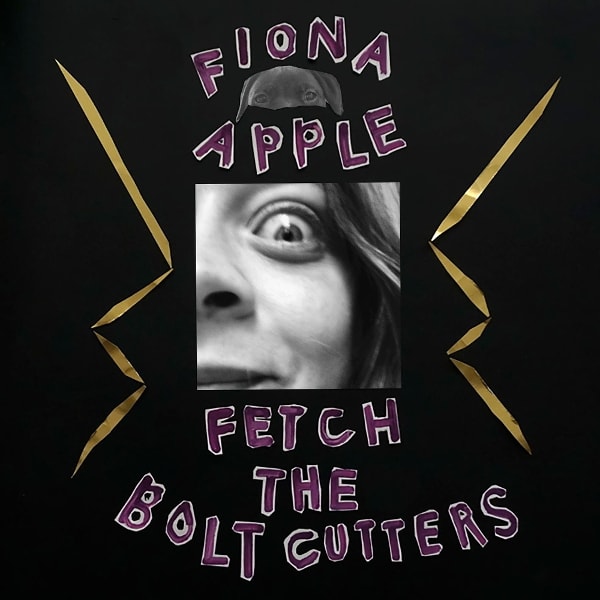
 

Fiona Apple  Fetch the Bolt Cutters

Fetch the Bolt Cutters, Fiona Apple’s first album in over eight years, has met with a surprisingly positive gush of critical acclaim since its release a few weeks ago. Shockingly, the Metacritic website (which monitors and compiles results of reviews and critiques from industry professionals) has thus far, based on 24 reviews, given it a 100-out-of-100 — its highest score, like, ever! And Apple’s near-rabid fan base has totally embraced her return to the spotlight from the captivating confines of Venice Beach, California. The album was recorded over a period of five years in her home studio, but sounds as though it could have been laid down over just the last couple of months; it’s about as raw and unpolished an album as you could possibly imagine. There’s very little here that follows anything approaching any kind of traditional pop music conventions — it’s mostly a cacophony of the mundane and the everyday. Apple and her words, and just about every household noise you could imagine: almost non-stop beating and banging of every sort, and at one point, there’s a chorus of about five dogs barking non stop in the background. The overall effect is surprisingly — intoxicating.

Most of the tracks are very sparsely instrumented, with occasional drums, bass, guitars, keyboards, synths, percussion, natural percussion — but never really all at the same time, just here and there. And I don’t think Fiona’s voice has ever sounded quite so self-assured as on this new release. The whole album sounds like it could have been recorded during the lockdown and pandemic. There’s plenty of self-deprecating humor, but Apple clearly has a firm grasp of who calls the shots in her current reality. On the title track — which has a lilting, kind of reggae vibe — Apple sings about childhood struggles. “The cool kids voted to get rid of me…I’m ashamed of what it did to me…they stole my fun…fetch the bolt cutters, I’ve been in here too long.” And as the song begins to wind down and segue into “Under the Table,” there’s the previously alluded to canine chorus of Mercy, Maddie, Leo, Little, and Alfie — Apple’s five dogs, barking away furiously.

And the song “Shameika” chronicles another schoolyard interaction with a girl named Shameika, who wasn’t particularly nice to Fiona, but nonetheless, “Shameika said I had potential.” Another outstanding track is “Heavy Balloon,” where Apple states that “People like us get so heavy and so lost sometimes…that the bottom is the only place that we can find…we get dragged down, down…the bottom begins to feel like the only safe place that you know.” Feels pretty much like what a lot of us are feeling during this time of the quarantine and everything, huh?

I found this album to be both introspective and entertaining. All my listening was via Qobuz’s 24/48 FLAC stream; the sound quality was absolutely superb. This is a really compelling listen, and it’s very highly recommended.

Epic Records, CD/LP (download/streaming from Amazon, Tidal, Qobuz, YouTube, Spotify, Deezer, Google Play Music)

Sara Evans  Copy That

When country singer Sara Evans decided on an album of cover tunes for her tenth studio release, she said it was partially due to her reaction to the current state of country music. Which, she says, is a genre she feels like she no longer recognizes: “I just feel like aliens have come in and taken country music and done something with it.” I can totally relate — I’m not a huge fan of country music, but I’ve been around it my entire life, and much of what passes for country music nowadays is pretty out there in my book! Anyway, Evans had been rewatching episodes of Mad Men, the classic AMC series on the whole sixties Madison Avenue experience, and suddenly decided she wanted to sing cover tunes in a kind of Tammy Wynette channels Betty Draper persona. She got a couple of blond wigs and dressed the part for the album’s artwork — it’s pretty campy stuff, but also quite a fun look that’s very much in tune with the album’s dozen songs.

Evans’ prior recordings have always tended to hew much closer to the party line in terms of country credibility, but she’s also shown a knack for throwing in the occasional off-kilter cover on most of her albums. And this outstanding release follows in that mold, and if nothing else, proves that Sara Evans has a much greater range — both vocally and stylistically — than many might have given her credit for previously in a career of cranking out mostly boozy bangers and cryin’ in you beer ballads. Evans recruited producer Jarrad Kritzstein (Goo Goo Dolls and Weezer) and her three grown children, guitarist Avery and singers Olivia and Audrey, along with vocalist Philip Sweet (Little Big Town) and members of Old Crow Medicine Show. Only three of the songs here are technically country, including the Hank Williams’ classic “I’m So Lonesome I Could Cry,” which is the first time in her career Sara Evans has ever covered a Hank Williams tune.

So, right out of the gate — I know, cover tunes? But shockingly, Sara Evans pretty easily pulls it off, opening with a pretty convincing version of the Bee Gees’ “If I Can’t Have You,” (as done by Yvonne Elliman), and she really shows her robust vocal range. And the album has surprisingly deep bass content; from the opening notes of track one, my dual subwoofer’s cones started moving and shaking to a degree rarely observed with even really demanding music! The best songs here are surprisingly the handful of country tunes, especially the Hank Williams cover with Old Crow Medicine Show, which has a really authentic fifties kind of vibe. And “She’s Got You,” the Hank Cochran classic where Evans channels Patsy Cline’s original to absolutely thrilling effect; son Avery offers some really choice guitar playing to complement Evans authentically plaintive vocal. Not everything works perfectly; “Whenever I Call You Friend” (Kenny Loggins) and “Hard To Say I’m Sorry” (Peter Cetera) are both a little cringe-worthy for me, although Evans does a credible job with each and Little Big Town’s Phillip Sweet delivers a pretty decent take on Kenny Loggins’ original vocal. At the very least, there’s a pretty great instrumental coda tacked onto the Peter Cetera tune that really lifts it out of the vocal maudlin of the original.

All said, this is a pretty entertaining, if not groundbreaking album, and definitely casts Sara Evans in a much more positive light for me personally — she can definitely sing! There’s not a ton of great stuff coming out in this time of the Corona pandemic, but this album proved good to help pass some of the quarantine time with upbeat takes on interesting songs, if nothing else. YMMV, but the 24/96 tracks on Qobuz sounded pretty outstanding to me! Recommended.

Born To Fly Records, CD/LP (download/streaming from Amazon, Qobuz, Tidal, YouTube, Google Play Music, Spotify, Pandora, Apple Music, Deezer)


More from Issue 112

View All Articles in Issue 112

Search Copper Magazine

#226 JJ Murphy’s Sleep Paralysis is a Genre-Bending Musical Journey Through Jazz, Fusion and More by Frank Doris Jan 05, 2026 #226 Stewardship by Consent by B. Jan Montana Jan 05, 2026 #226 Food, Music, and Sensory Experience: An Interview With Professor Jonathan Zearfoss of the Culinary Institute of America by Joe Caplan Jan 05, 2026 #226 Studio Confidential: A Who’s Who of Recording Engineers Tell Their Stories by Frank Doris Jan 05, 2026 #226 Pilot Radio is Reborn, 50 Years Later: Talking With CEO Barak Epstein by Frank Doris Jan 05, 2026 #226 The Vinyl Beat Goes Down to Tijuana (By Way of Los Angeles), Part One by Rudy Radelic Jan 05, 2026 #226 Capital Audiofest 2025: Must-See Stereo, Part Two by Frank Doris Jan 05, 2026 #226 My Morning Jacket’s Carl Broemel and Tyler Ramsey Collaborate on Their Acoustic Guitar Album, Celestun by Ray Chelstowski Jan 05, 2026 #226 The People Who Make Audio Happen: CanJam SoCal 2025, Part Two by Harris Fogel Jan 05, 2026 #226 How to Play in a Rock Band, 19: Touring Can Make You Crazy, Part One by Frank Doris Jan 05, 2026 #226 Linda Ronstadt Goes Bigger by Wayne Robins Jan 05, 2026 #226 From The Audiophile’s Guide: Active Room Correction and Digital Signal Processing by Paul McGowan Jan 05, 2026 #226 PS Audio in the News by Frank Doris Jan 05, 2026 #226 Back to My Reel-to-Reel Roots, Part 25: Half-Full, Not Empty by Ken Kessler Jan 05, 2026 #226 Happy New Year! by Frank Doris Jan 05, 2026 #226 Turn It Down! by Peter Xeni Jan 05, 2026 #226 Ghost Riders by James Schrimpf Jan 05, 2026 #226 A Factory Tour of Audio Manufacturer German Physiks by Markus "Marsu" Manthey Jan 04, 2026 #225 Capital Audiofest 2025: Must-See Stereo, Part One by Frank Doris Dec 01, 2025 #225 Otis Taylor and the Electrics Delivers a Powerful Set of Hypnotic Modern Blues by Frank Doris Dec 01, 2025 #225 A Christmas Miracle by B. Jan Montana Dec 01, 2025 #225 T.H.E. Show New York 2025, Part Two: Plenty to See, Hear, and Enjoy by Frank Doris Dec 01, 2025 #225 Underappreciated Artists, Part One: Martin Briley by Rich Isaacs Dec 01, 2025 #225 Rock and Roll is Here to Stay by Wayne Robins Dec 01, 2025 #225 A Lifetime of Holiday Record (and CD) Listening by Rudy Radelic Dec 01, 2025 #225 Little Feat: Not Saying Goodbye, Not Yet by Ray Chelstowski Dec 01, 2025 #225 How to Play in a Rock Band, Part 18: Dealing With Burnout by Frank Doris Dec 01, 2025 #225 The People Who Make Audio Happen: CanJam SoCal 2025 by Harris Fogel Dec 01, 2025 #225 Chicago’s Sonic Sanctuaries: Four Hi‑Fi Listening Bars Channeling the Jazz‑Kissa Spirit by Olivier Meunier-Plante Dec 01, 2025 #225 From The Audiophile’s Guide: Controlling Bass Frequencies Through Membrane Absorbers (and How to Build Your Own) by Paul McGowan Dec 01, 2025 #225 Your Editor’s Tips for Attending Audio Shows by Frank Doris Dec 01, 2025 #225 PS Audio in the News by Frank Doris Dec 01, 2025 #225 Back to My Reel-to-Reel Roots, Part 24 by Ken Kessler Dec 01, 2025 #225 Holiday Music by Frank Doris Dec 01, 2025 #225 Puppy Prognostication by Peter Xeni Dec 01, 2025 #225 How to Post Comments on Copper by Frank Doris Dec 01, 2025 #225 Living Color by Rudy Radelic Dec 01, 2025 #224 T.H.E. Show New York 2025, Part One: A New Beginning by Frank Doris Nov 03, 2025 #224 Fool’s Leap of Faith is the Extraordinary Octave Records Debut from Singer/Songwriter Tyler Burba and Visit by Frank Doris Nov 03, 2025 #224 The Beatles’ “Aeolian Cadences.” What? by Wayne Robins Nov 03, 2025 #224 Persona Non Grata by B. Jan Montana Nov 03, 2025 #224 Talking With Recording Engineer Barry Diament of Soundkeeper Recordings, Part Two by Frank Doris Nov 03, 2025 #224 B Sides, B Movies, and Beware of Zombies by Rudy Radelic Nov 03, 2025 #224 The Burn-In Chronicles: 1,000 Hours to Sonic Salvation by Olivier Meunier-Plante Nov 03, 2025 #224 A Conversation With Mat Weisfeld of VPI Industries by Joe Caplan Nov 03, 2025 #224 Blues-Rocker Kenny Wayne Shepherd Celebrates 30 Years of Ledbetter Heights by Ray Chelstowski Nov 03, 2025 #224 Playing in a Rock Band, 17: When Good Gigs Go Bad, Part Two by Frank Doris Nov 03, 2025

A Quartet of Outstanding New Releases

A Quartet of Outstanding New Releases

I’ve been away for a few issues; and besides, there haven’t been an exceptional number of interesting new releases coming out during the pandemic — not too many artists in the studio. I hope you enjoy these as much as I have!

Steve Earle & the Dukes  Ghosts of West Virginia

Steve Earle definitely falls into a grey area for me; here in the Atlanta, Georgia outskirts, his music — if it got any airplay at all — was typically heard on rock radio for songs like “Copperhead Road” which had that kind of southern anthem theme going on. Jailed in the mid-nineties for heroin possession, he managed to get clean and has proceeded to generate a fairly regular output of albums since that are often all over the place stylistically — and not always critically or commercially successful. Earle lives and breathes country music, but he hasn’t always been deeply embraced by the country music industry.

Earle was definitely moved by the West Virginia mining tragedy of 2010, where 29 miners were killed in a horrific explosion at the Upper Big Branch mine, and he started writing songs that dealt with the tragedy. Jessica Branch and Erik Jensen wrote a play about the disaster, Coal Country, and after finding out about Earle’s great interest in the events, contacted him to provide the music for the play. It eventually ended up on off-Broadway to great acclaim, and this album, Ghosts of West Virginia, showcases the original music that Earle wrote for it. The songs dig deeply into the lives of those affected by the most deadly mining disaster in recent history, and share the tales of love, loss, and corporate greed surrounding the disaster. If not for the coronavirus pandemic, Coal Country would very likely still be playing to sold-out audiences. Most unfortunately, it will probably rarely (if ever) be seen by the very persons from the region whose lives are examined in the context of the tragedy.

At times more Americana than country, Ghosts of West Virginia doesn’t necessarily chronicle the events surrounding the explosion, but delves deeply into the lives and psyche of miners and their dangerous occupation, and the cast of characters intertwined with their existences. The song titles are virtually self-explanatory, with the likes of “Union, God and Country,” “Devil Put the Coal in the Ground,” “John Henry was a Steel Drivin’ Man,” “Time is Never on Our Side,” and “Black Lung” offering gripping and compelling examinations of Earle’s perspective on the human condition of the coal miners and their kin. Ghosts of West Virginia easily provides one of the most tightly focused narrative presentations of Steve Earle’s recent career.

The 24/96 stream via Qobuz was nothing short of excellent, and really helped highlight what a well-recorded album Ghosts is. This is Steve Earle at his very best, and it comes very highly recommended.

New West Records, CD/Vinyl (download/streaming from Qobuz, Tidal, Amazon, Google Play Music, Deezer, iTunes, Apple Music, Spotify, YouTube)


The 1975  Notes on a Conditional Form

The 1975 is an English alternative, pop/rock progressive band that’s been performing for about 18 years now. The core members of the group met in high school, and the band presently consists of frontman and guitarist Matty Healy, guitarist Adam Hann, bassist Ross MacDonald; drummer and album producer George Daniel rounds out the quartet and also doubles on synths. The group’s previous three albums all hit the number one slot on the UK album charts, and they’ve done respectably here in the US as well, with their previous release, A Brief Inquiry Into Online Relationships reaching the number four position. Their music is incredibly difficult to categorize; some of it has an ethereal, almost ambient quality, while a lot of it is quite overtly poppish; Matty Healy says a lot of the group’s inspiration comes from country music. The opening track on Notes on a Conditional Form, “The 1975,” is an interesting case in point; on all their previous releases, there’s also been a track titled “The 1975” that’s been this kind of ever-evolving mission statement of sorts. On the newest release, it’s a nearly five-minute ambient treatise on climate change that features a lengthy spoken word segment by climate change activist Greta Thunberg. Not quite your typical fare for a chart-topping indie release, to say the least!

Notes on a Conditional Form was officially released on May 22, but somehow, the entire album ended up getting leaked and released online a couple of days earlier. Matty Healy has already had several intense social media exchanges with fans complaining about certain lyrical content in the new record. One of the record’s prominent tracks, “Roadkill,” doles out Healy’s response to an incident where a homophobic slur was tossed at him in an American airport. The fan in question declared, “There’s a line in the song that’s not f*cking cool. You can’t say that sh*t!” Healy’s response was, “First of all, you just stole my album and then came to me and complained about it?” He’s already joked on Twitter that he’s sending everyone who listened to the leaked album to 1975 Jail.

At nearly 75 minutes in length, Notes on a Conditional Form sprawls across subgenres, constantly flitting between ambient drones, folksy ballads, and twangly, twin-guitar power pop. Highlights for me are the absolute cojones of Healy to even think about including the opening Greta Thunberg rant track, the eerie calm of “Jesus Christ 2005 God Bless America,” the aforementioned power pop of “Roadkill” (despite the subject material), and “If You’re Too Shy (Let Me Know),” which has an eighties synth-pop kind of groove and sounds as though it could be the bands next hit single. The album closes with “Guys,” which is Healy’s tribute to his band members — they’ve known each other since high school, and literally spent over half of their lifetimes with each other.

All my listening was done with Qobuz’s 24/44.1 stream, and the sound was exceptionally good. While stylistically all over the place, Notes on a Conditional Form is an excellent album from a band that deserves to be on more people’s radar. Highly recommended.

Polydor/Interscope Records, CD/2 LPs (download/streaming from Amazon, Qobuz, Tidal, Google Play Music, Apple Music, YouTube, Spotify, Pandora, Deezer)


Fiona Apple  Fetch the Bolt Cutters

Fetch the Bolt Cutters, Fiona Apple’s first album in over eight years, has met with a surprisingly positive gush of critical acclaim since its release a few weeks ago. Shockingly, the Metacritic website (which monitors and compiles results of reviews and critiques from industry professionals) has thus far, based on 24 reviews, given it a 100-out-of-100 — its highest score, like, ever! And Apple’s near-rabid fan base has totally embraced her return to the spotlight from the captivating confines of Venice Beach, California. The album was recorded over a period of five years in her home studio, but sounds as though it could have been laid down over just the last couple of months; it’s about as raw and unpolished an album as you could possibly imagine. There’s very little here that follows anything approaching any kind of traditional pop music conventions — it’s mostly a cacophony of the mundane and the everyday. Apple and her words, and just about every household noise you could imagine: almost non-stop beating and banging of every sort, and at one point, there’s a chorus of about five dogs barking non stop in the background. The overall effect is surprisingly — intoxicating.

Most of the tracks are very sparsely instrumented, with occasional drums, bass, guitars, keyboards, synths, percussion, natural percussion — but never really all at the same time, just here and there. And I don’t think Fiona’s voice has ever sounded quite so self-assured as on this new release. The whole album sounds like it could have been recorded during the lockdown and pandemic. There’s plenty of self-deprecating humor, but Apple clearly has a firm grasp of who calls the shots in her current reality. On the title track — which has a lilting, kind of reggae vibe — Apple sings about childhood struggles. “The cool kids voted to get rid of me…I’m ashamed of what it did to me…they stole my fun…fetch the bolt cutters, I’ve been in here too long.” And as the song begins to wind down and segue into “Under the Table,” there’s the previously alluded to canine chorus of Mercy, Maddie, Leo, Little, and Alfie — Apple’s five dogs, barking away furiously.

And the song “Shameika” chronicles another schoolyard interaction with a girl named Shameika, who wasn’t particularly nice to Fiona, but nonetheless, “Shameika said I had potential.” Another outstanding track is “Heavy Balloon,” where Apple states that “People like us get so heavy and so lost sometimes…that the bottom is the only place that we can find…we get dragged down, down…the bottom begins to feel like the only safe place that you know.” Feels pretty much like what a lot of us are feeling during this time of the quarantine and everything, huh?

I found this album to be both introspective and entertaining. All my listening was via Qobuz’s 24/48 FLAC stream; the sound quality was absolutely superb. This is a really compelling listen, and it’s very highly recommended.

Epic Records, CD/LP (download/streaming from Amazon, Tidal, Qobuz, YouTube, Spotify, Deezer, Google Play Music)

Sara Evans  Copy That

When country singer Sara Evans decided on an album of cover tunes for her tenth studio release, she said it was partially due to her reaction to the current state of country music. Which, she says, is a genre she feels like she no longer recognizes: “I just feel like aliens have come in and taken country music and done something with it.” I can totally relate — I’m not a huge fan of country music, but I’ve been around it my entire life, and much of what passes for country music nowadays is pretty out there in my book! Anyway, Evans had been rewatching episodes of Mad Men, the classic AMC series on the whole sixties Madison Avenue experience, and suddenly decided she wanted to sing cover tunes in a kind of Tammy Wynette channels Betty Draper persona. She got a couple of blond wigs and dressed the part for the album’s artwork — it’s pretty campy stuff, but also quite a fun look that’s very much in tune with the album’s dozen songs.

Evans’ prior recordings have always tended to hew much closer to the party line in terms of country credibility, but she’s also shown a knack for throwing in the occasional off-kilter cover on most of her albums. And this outstanding release follows in that mold, and if nothing else, proves that Sara Evans has a much greater range — both vocally and stylistically — than many might have given her credit for previously in a career of cranking out mostly boozy bangers and cryin’ in you beer ballads. Evans recruited producer Jarrad Kritzstein (Goo Goo Dolls and Weezer) and her three grown children, guitarist Avery and singers Olivia and Audrey, along with vocalist Philip Sweet (Little Big Town) and members of Old Crow Medicine Show. Only three of the songs here are technically country, including the Hank Williams’ classic “I’m So Lonesome I Could Cry,” which is the first time in her career Sara Evans has ever covered a Hank Williams tune.

So, right out of the gate — I know, cover tunes? But shockingly, Sara Evans pretty easily pulls it off, opening with a pretty convincing version of the Bee Gees’ “If I Can’t Have You,” (as done by Yvonne Elliman), and she really shows her robust vocal range. And the album has surprisingly deep bass content; from the opening notes of track one, my dual subwoofer’s cones started moving and shaking to a degree rarely observed with even really demanding music! The best songs here are surprisingly the handful of country tunes, especially the Hank Williams cover with Old Crow Medicine Show, which has a really authentic fifties kind of vibe. And “She’s Got You,” the Hank Cochran classic where Evans channels Patsy Cline’s original to absolutely thrilling effect; son Avery offers some really choice guitar playing to complement Evans authentically plaintive vocal. Not everything works perfectly; “Whenever I Call You Friend” (Kenny Loggins) and “Hard To Say I’m Sorry” (Peter Cetera) are both a little cringe-worthy for me, although Evans does a credible job with each and Little Big Town’s Phillip Sweet delivers a pretty decent take on Kenny Loggins’ original vocal. At the very least, there’s a pretty great instrumental coda tacked onto the Peter Cetera tune that really lifts it out of the vocal maudlin of the original.

All said, this is a pretty entertaining, if not groundbreaking album, and definitely casts Sara Evans in a much more positive light for me personally — she can definitely sing! There’s not a ton of great stuff coming out in this time of the Corona pandemic, but this album proved good to help pass some of the quarantine time with upbeat takes on interesting songs, if nothing else. YMMV, but the 24/96 tracks on Qobuz sounded pretty outstanding to me! Recommended.

Born To Fly Records, CD/LP (download/streaming from Amazon, Qobuz, Tidal, YouTube, Google Play Music, Spotify, Pandora, Apple Music, Deezer)


0 comments

Leave a comment

0 Comments

Your avatar

Loading comments...

🗑️ Delete Comment

Enter moderator password to delete this comment: