COPPER

A PS Audio Publication

Issue 164 • Free Online Magazine

Issue 164 Octave Pitch

Octave Records’ New Releases: TIERRO Band with Bridget Law, and Audiophile Masters, Volume VI

Octave Records’ New Releases: TIERRO Band with Bridget Law, and Audiophile Masters, Volume VI

Octave Records has two new releases for your musical and audiophile enjoyment: Everlasting Dance by the “Gypsy Grass” group TIERRO Band with Bridget Law, and Audiophile Masters, Volume VI, the latest in Octave’s series of reference-quality sampler discs.

Everlasting Dance combines world music, bluegrass, country, Americana, jazz and other not-so-categorizable influences. Like Audiophile Masters, Volume VI, It’s recorded in high-resolution DSD and SACD using Octave’s proprietary recording and mastering system and new premium gold disc formulation.

The band features Tierro Lee’s dazzling acoustic and electric guitar playing, and the fiddle and vocals of Bridget Law. The other musicians include Charles Parker Mertens (acoustic bass), Jonny Jyemo (percussion) and Nabin Shrestha (tabla), along with guest vocalists Bonnie Paine, Xerephine, and Megan Letts. Together, they bring a world of experience to the making of Everlasting Dance. Tierro Lee is lead guitarist for blues legend Otis Taylor, and Bridget Law is the founder of Americana group Elephant Revival. Mertens has studied ragas in India and toured with Thievery Corporation and Rapidgrass.
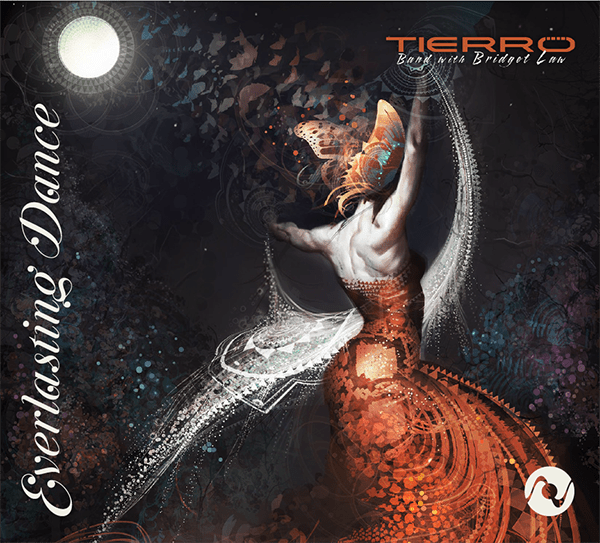
 

TIERRO Band With Bridget Lee, album cover.


(Scroll down for our interview with Tierro and Bridget.)

Everlasting Dance was recorded mostly live by GRAMMY-winning engineer Mike Yach at Animal Lane Studios in Lyons, Colorado using Octave Records’ Pure DSD process and the Sonoma multi-track DSD recording system. It features Octave’s premium gold disc formulation, and the disc is playable on any SACD, CD, DVD, or Blu-ray player. Everlasting Dance (SRP: $19 – $29 depending on format) also has a high-resolution DSD layer that is accessible by using any SACD player, a PS Audio SACD transport, or by copying the DSD tracks on the included DVD data discs. In addition, the master DSD and PCM files are available for purchase and download (including DSD64, DSDDirect Mastered 192kHz/24-bit, 96kHz/24-bit and 44.1kHz/16-bit PCM), along with Octave’s newest addition, 24-karat gold CDs at standard resolution. These CDs have been cut directly off the DSD master using BitPerfect’s state-of-the-art Zephiir filter.

From the beginning cymbal crash and Lee’s driving guitar on the opening track, “Dorset of Perception,” the album immerses listeners in a feast of worldly musical influences and varied rhythms. The musical styles range from the outlaw-country “Gypsy Weed” to the introspective violin-featured ballad, “Sitka,” and the driving beat and nylon-string acoustic guitar of “Casa Latina.”

******
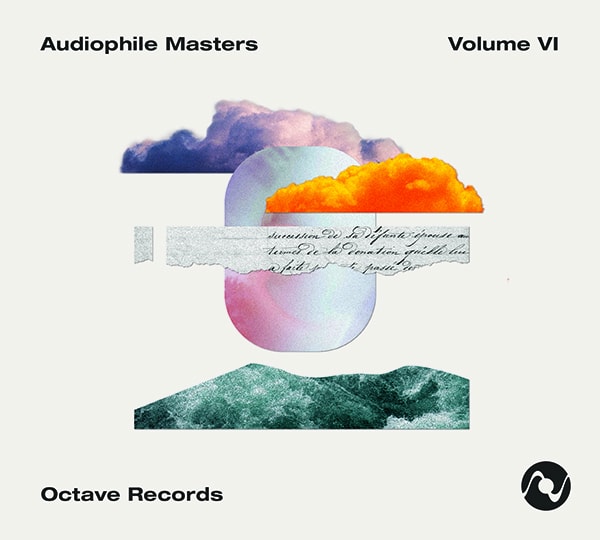
Audiophile Masters, Volume VI, album cover.


Audiophile Masters, Volume VI offers an eclectic selection of music, including flamenco guitarist Miguel Espinoza, the avant-jazz Seth Lewis Quintet, the classical piano and vocal group, Duo Azure, plus a strong selection of rock, pop, Americana, and other not-so-categorizable music. It’s available in the same formats as Everlasting Dance (SRP: $19 – $29) and was recorded using Octave Records’ Pure DSD process.

The album kicks off with a flourish, with Miguel Espinoza’s dazzling “Journey Home,” featuring flamenco guitar, cello, bass and percussion. The Seth Lewis Quintet navigates through harmonic twists and turns with the contemporary jazz of “Dream Theme.” There’s plenty of pop, country and Americana courtesy of Bonnie and Taylor Sims’ contemplative “Sleep,” Dylan McCarthy’s bluegrass workout “Marigold,” the piano- and vocal-driven title track from Clandestine Amigo’s Things Worth Remembering album, and the irresistible funk/rock/pop “Drug of Choice” from Dechen Hawk. Duo Azure offers “Liederkreis, Op. 39, no 6 – Schöne Fremde,” a beautiful classical piece for piano and voice. Additional selections from accordionist/vocalist Alicia Jo Straka, singer/songwriter Monica Marie LaBonte, and the marimba/handpans duo More Than Physics round out the album with the ethereal “Why We Fell In Love.”

******

We interviewed Tierro Lee and Bridget Law about the making of Everlasting Dance.

Frank Doris: How did everybody in the band meet? You have quite a variety of different players and styles.

Bridget Law: We met because the singer for his band fell in love with my best friend! So, we were basically the instrumentalists who were backing them up.

Tierro Lee: We hit it off musically right away. It was a spark that everybody in the room felt. When we first jammed together, which was live on a stage, everybody in the room felt that magic. It sort of felt like Bridget and I were flirting, musically, in front of all of these people.

We’ve both known almost all of the other musicians, but we met them in a variety of different paths.

BL: By 2014 we were playing together, and this is our second studio album.

FD: You have all these disparate elements, like tablas, flamenco guitar, violin, and it doesn’t feel forced. It has all these elements, but it doesn’t sound like they’re clashing. Was that a conscious thing, or did it just happen?

BL: I think it’s the type of musicians we are. We pick the pieces that work for us and work and then kind of thread them into our own expression of music. For example, I’m really inspired by Hungarian gypsy fiddle players. I haven’t necessarily learned the entire genre, but I’ve been around it enough to know what the scales are and to feel the soul behind what they’re playing. Tierro has certainly done that with Latin and Arabian and using likes to use Hijaz scales. We can kind of speak a few musical words in this language and speak a few musical words in that language.

TL: The musicians in the band are just so good, it feels really natural. The other thing I want to say is that on the record, it does sound like everything was really easy, but it was so much work. There are compositions on that record that took years of playing them live and tweaking to get into a place where it was like, OK, this is really where it should be.

BL: During the beginning of quarantine, our son was born. When he was about nine months old, we flew to Canada and quarantined for two weeks in a lake house up in Northern Ontario. And that’s basically where we really pulled this record together. That’s where we wrote “Gypsy Weed.” That’s where we arranged “Everlasting Dance” and “Casa Latina.” That’s where the bulk of it came together, whether it was stuff that we had worked on for years or [newer songs].

FD: Which answers the question I was going to ask about how the pandemic has affected your music. The other half of the question is, what does everybody do going forward?

BL: I don’t think we let the pandemic get in the way of the music, at least the making of this album. Of course, we didn’t play shows and things like that, but we definitely made use of the quiet space in order to put down some really special material.

TL: 80 percent of that happened live and, and about 20 percent I think it’s fair to say overdubs.

I probably wouldn’t have been so motivated to make a record if it wasn’t for the DSD recording process. It’s definitely a format that I like. It’s the only format I like to record records on, now. I’ve been an audio engineer for about 15 years. And, and I got very deep into [high-resolution audio] very early on. And at the end of the day, I tell people that if I’m working in DSD, I can mix, I can record for 10, 12 hours a day. And at the end of my 12-hour day, my ears feel fine and I’d be happy to keep going. If I’m doing that at 16-bit/44.1 audio, give me four hours and I don’t want to do it anymore.
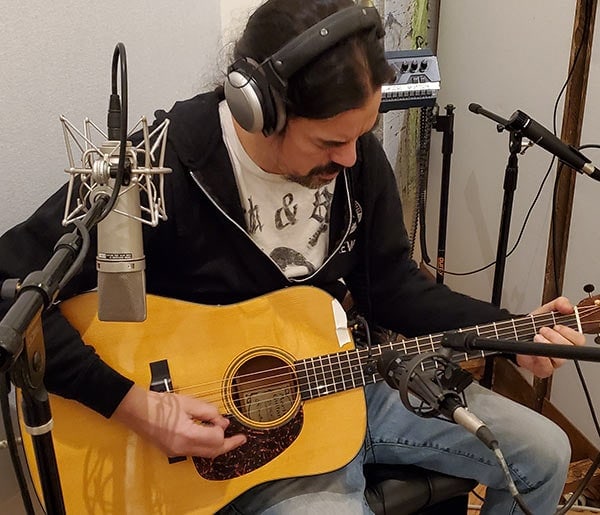
 

Tierro Lee.

Tierro Lee.


BL: It’s like DSD captures the space between the notes more accurately, which allows you to hear so much dimension; you hear where everything [in the mix] sits in an almost physical way.

FD: I should get back to talking about the music because I’ll go totally audio geek if we don’t!

TL: “Casa Latina” is a song that was inspired because I was so in love with that flamenco sound and the Latin American culture. That song kind of came out of longing for that experience of being in a Latin American country and feeling their music and that heart and the love for the music. For years and years, I tried to capture that on my own and just failed for years and years and years. But I think I finally got it with that song.

BL: The original title of “Everlasting Dance” is actually “Gwen’s Everlasting Dance.” Gwen was my ballet teacher growing up. She was in her 70s and was really special in my life. I carried her obituary around in my fiddle case. And then one day I sat down by the river and I opened up the fiddle and I was like, all right, Gwen, let’s dance. And out comes this crazy gypsy fiddle tune, which is very unlike my classical ballet teacher.

BL: You asked before; where are we going from here? We have a whole other album that was sort of recorded with a different intention, kind of more “produced” version of a lot of these songs [and others].

TL: We’re doing some more gigs now that things are gonna open up a little bit, and we want to support the record and get out there. We’re playing the Sonic Bloom festival [at Hummingbird Ranch, Colorado June 16 – 19].

BL: We’ve got a couple of local shows, like the Niwot concert series, and then we do this kind of fun beach party in Buena Vista. We don’t have a ton of gigs. But we’re looking forward to getting back at it as things open up.

The shows have become more of a sacred experience. You never take them for granted anymore.

Header image: TIERRO band with Bridget Lee.

More from Issue 164

View All Articles in Issue 164

Search Copper Magazine

#231 Piano Prodigy Jude Kofie Releases His Debut Album On Octave Records by Frank Doris Jun 01, 2026 #231 Underappreciated Artists, Part Two: City Boy by Rich Isaacs Jun 01, 2026 #231 Music and the Art of Creation: Talking With Saxophonist Rob Scheps by Joe Caplan Jun 01, 2026 #231 How to Play in a Rock Band, 24: Further Adventures at the 2026 Montauk Music Festival by Frank Doris Jun 01, 2026 #231 Courtney Barnett: Creature of Habit by Wayne Robins Jun 01, 2026 #231 Angine de Poitrine: Interstellar Guitar Rock Saviors Headed for Late-Night TV Pop Stardom? by Mark Lepage Jun 01, 2026 #231 My Impressions of AXPONA 2026, Part One by Frank Doris Jun 01, 2026 #231 2026 La Jolla Concours d'Elegance: Another Aesthetic Feast by B. Jan Montana Jun 01, 2026 #231 Country Music Icon Jo Dee Messina’s Bridges: A New Beginning by Ray Chelstowski Jun 01, 2026 #231 The Luxury Dispatch Hosts a Video Podcast With Ken Kessler by Ken Kessler Jun 01, 2026 #231 The Vinyl Beat: Tracking in the Motor City by Rudy Radelic Jun 01, 2026 #231 Lots of Fun With DSP: The Ferrum Audio WANDLA DAC and Its Tube Mode by Frank Doris Jun 01, 2026 #231 From The Audiophile's Guide: Digital Source Components and Streaming Audio by Paul McGowan Jun 01, 2026 #231 Onkyo’s Monster M-510 power amplifier by The Staff at Just Audio Jun 01, 2026 #231 PS Audio in the News by PS Audio Staff Jun 01, 2026 #231 Naming Convention by Peter Xeni Jun 01, 2026 #231 Les Invisibles by Frank Doris Jun 01, 2026 #231 Wildlife Scene by James Schrimpf Jun 01, 2026 #230 Camaraderie by B. Jan Montana May 04, 2026 #230 AXPONA 2026: A Family Gathering by Paul McGowan May 04, 2026 #230 Pianist Ryan Benthall Explores Jazz Realms and Far Beyond With Divine Sky by Frank Doris May 04, 2026 #230 The Vinyl Beat in AXPONA-Land by Rudy Radelic May 04, 2026 #230 Teddy Thompson’s Musical Growth Deepens With Never Be the Same by Ray Chelstowski May 04, 2026 #230 More Fun in the Sun: Florida Audio Expo, Part Two by Frank Doris May 04, 2026 #230 CanJam NYC 2026 Show Report: Heady Sound, Part Two by Frank Doris and Harris Fogel May 04, 2026 #230 Sonic Youth On Murray Street by Wayne Robins May 04, 2026 #230 Graffeo Coffee: A Symphony of Sensory Experience by Joe Caplan May 04, 2026 #230 The Saul Authority: The Story of Hi-Fi Pioneer Saul Marantz by Olivier Meunier-Plante May 04, 2026 #230 How to Play in a Rock Band, 23: Encounters With Famous Musicians, Part Two by Frank Doris May 04, 2026 #230 An Outlier in the Rack: A Vintage BIC Beam Box by The Staff at Just Audio May 04, 2026 #230 PS Audio in the News by PS Audio Staff May 04, 2026 #230 A Cautionary Tale by Rich Isaacs May 04, 2026 #230 Reel-to-Reel Roots, Part 33 (Revised): Ken Kessler Reports On the 2026 (British) AudioJumble by Ken Kessler May 04, 2026 #230 Text Messaging by Frank Doris May 04, 2026 #230 The Audiophile Rat Race by Peter Xeni May 04, 2026 #230 On the Rocks by Rich Isaacs May 04, 2026 #229 The Earliest Stars of Country Music, Part Three by Jeff Weiner Apr 06, 2026 #229 The Healing Power of Music and Sound at the Omega Institute by Joe Caplan Apr 06, 2026 #229 CanJam NYC 2026 Show Report: Heady Sound, Part One by Frank Doris Apr 06, 2026 #229 Florida Audio Expo 2026: Warming Up to High-End Audio, Part One by Frank Doris Apr 06, 2026 #229 Quick Takes: Anne Bisson, Sam Morrison, The Velvet Underground, and the Stooges by Frank Doris Apr 06, 2026 #229 The Vinyl Beat: New Arrivals, and Old Audio Show Demo Scores to Settle by Rudy Radelic Apr 06, 2026 #229 Harvard Gets a High-End Audio Education by Frank Doris Apr 06, 2026 #229 No Country for Old Knees by B. Jan Montana Apr 06, 2026 #229 How To Play in A Rock Band, 22: Encounters With Famous Musicians, Part 1 by Frank Doris Apr 06, 2026 #229 The Soulful Grooves of Guinea-Bissau by Steve Kindig Apr 06, 2026 #229 Four-Hand Piano Performance at Its Finest by Stephan Haberthür Apr 06, 2026

Octave Records’ New Releases: TIERRO Band with Bridget Law, and Audiophile Masters, Volume VI

Octave Records’ New Releases: TIERRO Band with Bridget Law, and <em>Audiophile Masters, Volume VI</em>

Octave Records has two new releases for your musical and audiophile enjoyment: Everlasting Dance by the “Gypsy Grass” group TIERRO Band with Bridget Law, and Audiophile Masters, Volume VI, the latest in Octave’s series of reference-quality sampler discs.

Everlasting Dance combines world music, bluegrass, country, Americana, jazz and other not-so-categorizable influences. Like Audiophile Masters, Volume VI, It’s recorded in high-resolution DSD and SACD using Octave’s proprietary recording and mastering system and new premium gold disc formulation.

The band features Tierro Lee’s dazzling acoustic and electric guitar playing, and the fiddle and vocals of Bridget Law. The other musicians include Charles Parker Mertens (acoustic bass), Jonny Jyemo (percussion) and Nabin Shrestha (tabla), along with guest vocalists Bonnie Paine, Xerephine, and Megan Letts. Together, they bring a world of experience to the making of Everlasting Dance. Tierro Lee is lead guitarist for blues legend Otis Taylor, and Bridget Law is the founder of Americana group Elephant Revival. Mertens has studied ragas in India and toured with Thievery Corporation and Rapidgrass.


TIERRO Band With Bridget Lee, album cover.


(Scroll down for our interview with Tierro and Bridget.)

Everlasting Dance was recorded mostly live by GRAMMY-winning engineer Mike Yach at Animal Lane Studios in Lyons, Colorado using Octave Records’ Pure DSD process and the Sonoma multi-track DSD recording system. It features Octave’s premium gold disc formulation, and the disc is playable on any SACD, CD, DVD, or Blu-ray player. Everlasting Dance (SRP: $19 – $29 depending on format) also has a high-resolution DSD layer that is accessible by using any SACD player, a PS Audio SACD transport, or by copying the DSD tracks on the included DVD data discs. In addition, the master DSD and PCM files are available for purchase and download (including DSD64, DSDDirect Mastered 192kHz/24-bit, 96kHz/24-bit and 44.1kHz/16-bit PCM), along with Octave’s newest addition, 24-karat gold CDs at standard resolution. These CDs have been cut directly off the DSD master using BitPerfect’s state-of-the-art Zephiir filter.

From the beginning cymbal crash and Lee’s driving guitar on the opening track, “Dorset of Perception,” the album immerses listeners in a feast of worldly musical influences and varied rhythms. The musical styles range from the outlaw-country “Gypsy Weed” to the introspective violin-featured ballad, “Sitka,” and the driving beat and nylon-string acoustic guitar of “Casa Latina.”

******

Audiophile Masters, Volume VI, album cover.


Audiophile Masters, Volume VI offers an eclectic selection of music, including flamenco guitarist Miguel Espinoza, the avant-jazz Seth Lewis Quintet, the classical piano and vocal group, Duo Azure, plus a strong selection of rock, pop, Americana, and other not-so-categorizable music. It’s available in the same formats as Everlasting Dance (SRP: $19 – $29) and was recorded using Octave Records’ Pure DSD process.

The album kicks off with a flourish, with Miguel Espinoza’s dazzling “Journey Home,” featuring flamenco guitar, cello, bass and percussion. The Seth Lewis Quintet navigates through harmonic twists and turns with the contemporary jazz of “Dream Theme.” There’s plenty of pop, country and Americana courtesy of Bonnie and Taylor Sims’ contemplative “Sleep,” Dylan McCarthy’s bluegrass workout “Marigold,” the piano- and vocal-driven title track from Clandestine Amigo’s Things Worth Remembering album, and the irresistible funk/rock/pop “Drug of Choice” from Dechen Hawk. Duo Azure offers “Liederkreis, Op. 39, no 6 – Schöne Fremde,” a beautiful classical piece for piano and voice. Additional selections from accordionist/vocalist Alicia Jo Straka, singer/songwriter Monica Marie LaBonte, and the marimba/handpans duo More Than Physics round out the album with the ethereal “Why We Fell In Love.”

******

We interviewed Tierro Lee and Bridget Law about the making of Everlasting Dance.

Frank Doris: How did everybody in the band meet? You have quite a variety of different players and styles.

Bridget Law: We met because the singer for his band fell in love with my best friend! So, we were basically the instrumentalists who were backing them up.

Tierro Lee: We hit it off musically right away. It was a spark that everybody in the room felt. When we first jammed together, which was live on a stage, everybody in the room felt that magic. It sort of felt like Bridget and I were flirting, musically, in front of all of these people.

We’ve both known almost all of the other musicians, but we met them in a variety of different paths.

BL: By 2014 we were playing together, and this is our second studio album.

FD: You have all these disparate elements, like tablas, flamenco guitar, violin, and it doesn’t feel forced. It has all these elements, but it doesn’t sound like they’re clashing. Was that a conscious thing, or did it just happen?

BL: I think it’s the type of musicians we are. We pick the pieces that work for us and work and then kind of thread them into our own expression of music. For example, I’m really inspired by Hungarian gypsy fiddle players. I haven’t necessarily learned the entire genre, but I’ve been around it enough to know what the scales are and to feel the soul behind what they’re playing. Tierro has certainly done that with Latin and Arabian and using likes to use Hijaz scales. We can kind of speak a few musical words in this language and speak a few musical words in that language.

TL: The musicians in the band are just so good, it feels really natural. The other thing I want to say is that on the record, it does sound like everything was really easy, but it was so much work. There are compositions on that record that took years of playing them live and tweaking to get into a place where it was like, OK, this is really where it should be.

BL: During the beginning of quarantine, our son was born. When he was about nine months old, we flew to Canada and quarantined for two weeks in a lake house up in Northern Ontario. And that’s basically where we really pulled this record together. That’s where we wrote “Gypsy Weed.” That’s where we arranged “Everlasting Dance” and “Casa Latina.” That’s where the bulk of it came together, whether it was stuff that we had worked on for years or [newer songs].

FD: Which answers the question I was going to ask about how the pandemic has affected your music. The other half of the question is, what does everybody do going forward?

BL: I don’t think we let the pandemic get in the way of the music, at least the making of this album. Of course, we didn’t play shows and things like that, but we definitely made use of the quiet space in order to put down some really special material.

TL: 80 percent of that happened live and, and about 20 percent I think it’s fair to say overdubs.

I probably wouldn’t have been so motivated to make a record if it wasn’t for the DSD recording process. It’s definitely a format that I like. It’s the only format I like to record records on, now. I’ve been an audio engineer for about 15 years. And, and I got very deep into [high-resolution audio] very early on. And at the end of the day, I tell people that if I’m working in DSD, I can mix, I can record for 10, 12 hours a day. And at the end of my 12-hour day, my ears feel fine and I’d be happy to keep going. If I’m doing that at 16-bit/44.1 audio, give me four hours and I don’t want to do it anymore.


Tierro Lee.

Tierro Lee.


BL: It’s like DSD captures the space between the notes more accurately, which allows you to hear so much dimension; you hear where everything [in the mix] sits in an almost physical way.

FD: I should get back to talking about the music because I’ll go totally audio geek if we don’t!

TL: “Casa Latina” is a song that was inspired because I was so in love with that flamenco sound and the Latin American culture. That song kind of came out of longing for that experience of being in a Latin American country and feeling their music and that heart and the love for the music. For years and years, I tried to capture that on my own and just failed for years and years and years. But I think I finally got it with that song.

BL: The original title of “Everlasting Dance” is actually “Gwen’s Everlasting Dance.” Gwen was my ballet teacher growing up. She was in her 70s and was really special in my life. I carried her obituary around in my fiddle case. And then one day I sat down by the river and I opened up the fiddle and I was like, all right, Gwen, let’s dance. And out comes this crazy gypsy fiddle tune, which is very unlike my classical ballet teacher.

BL: You asked before; where are we going from here? We have a whole other album that was sort of recorded with a different intention, kind of more “produced” version of a lot of these songs [and others].

TL: We’re doing some more gigs now that things are gonna open up a little bit, and we want to support the record and get out there. We’re playing the Sonic Bloom festival [at Hummingbird Ranch, Colorado June 16 – 19].

BL: We’ve got a couple of local shows, like the Niwot concert series, and then we do this kind of fun beach party in Buena Vista. We don’t have a ton of gigs. But we’re looking forward to getting back at it as things open up.

The shows have become more of a sacred experience. You never take them for granted anymore.

Header image: TIERRO band with Bridget Lee.

0 comments

Leave a comment

0 Comments

Your avatar

Loading comments...

🗑️ Delete Comment

Enter moderator password to delete this comment:

✏️ Edit Comment

Enter your email to verify ownership: