When Huey Lewis and The News sang “the heart of rock n roll is still beating” back in 1984, rock was arguably in its strongest position ever. FM rock radio was at its peak, MTV was “appointment television,” and CDs which had just been introduced to the market (in 1982) would breathe new life into unit sales. Yet somehow even then there was an underlying concern as to what rock’s future might look like.
Today terrestrial radio only offers cookie-cutter formats and symmetrical playlists of the same songs over and over again. Streaming platforms have so eroded the ability for bands and musicians to make a living that many have stopped recording new music. It might well be why arena rock country has become so popular: it’s accessible and the closest thing to rock anyone can find up and down the radio dial.
But not far below the surface is an army of rockers who continue to carry the torch and ensure that rock’s best days could be yet to come. One of their most fervent voices comes from Ryan Hamilton, an artist from Fort Worth, Texas and a key member of Steven Van Zandt’s Wicked Cool Records roster. Lauded as the best thing to happen to rock in years by bands like the Alarm and artists like Adam Duritz (of Counting Crows), Hamilton has crafted a sound that is dynamic and filled with fun, often with a lighthearted sense of irreverence. While his music can tackle tough topics with the appropriate amount of maturity and reflection, it’s on the songs that come with a launch pad and take off like a rocket where his fans lean in longest, and look forward to hearing live when his show hits their town.
Hamilton is about to release his first full album on Wicked Cool, Hunted By The Holy Ghost. It’s his most complete work yet and delivers a terrific balance of what he does best. The record opens with the playful “Asshole,” and it kicks the door wide open like the best rock records do, with a catchy hook, swagger, and a series of sideways smirks. What follows is a wonderful blend of music that offers elegance (“Overdose” and “Absence of Love”) alongside honky-tonk sing alongs likes “Sad Bastard Song.”
Copper caught up with Hamilton between tours and we talked about his approach to creating music, the role his mentor Steven Van Zandt continues to have on Hamilton’s work, and what the new year has in store for he and his fans.
Ray Chelstowski: You’ve been on Wicked Cool Records for a few years now. In this age of streaming, how does Steve Van Zandt define “success?”
Ryan Hamilton:, Well, I’ve been lucky as far as [being on the charts] goes, especially overseas. So, seeing [Hunted by the Holy Ghost] chart well does factor into the equation, even though people can whittle down streaming stats to make it look like they have a Number One record. They keep narrowing down the genre until they’re the only “alt metal garage pop artist.” But doing well on actual charts really seems to excite Stevie. Other than that, I don’t hear a lot about it. He doesn’t let music go into the world unless it’s something that he loves, is proud of and that he’s confident people will really enjoy. Once that happens he’s ready to see what it can do and I love that about him.
RC: He was very hands-on with your first record together, 1221. How involved was he here?
RH: Well, I finished the demos for [Hunted by the Holy Ghost] and he said “no.” I wanted to make more of a country-sounding record and he shot it down. He said that if I wanted to do this he would support me, but he said, “trust me when I tell you this is career suicide, and if anybody knows how to really screw up their career it’s me. I’m telling you. Don’t do this.” So I trashed all of those demos and started over. In the end, it was the first time he didn’t have any notes [suggested changes] to share on the record. I got a really strong sense of pride from him that I’d come into my own in a way. I’ve learned so much from him, so when I turned the final product in, to have no notes back from him made me feel like the student had come into his own.
Ryan Hamilton. Courtesy of Ryan Hamilton.
RC: This is a bit of a label affair with singer Jesse Wagner guesting on “On The Edge.”
RH: I wrote the song as a duet and I thought that Jesse would be great because I had seen her with [Little Steven and] the Disciples of Soul, and she had put out a great solo record. She’s just part of the family so I just kind of floated the idea by the label of her participating on the song, and it resulted in an immediate “yes” from both her and the label. A lot of people wouldn’t describe my voice as “pretty” and I’m OK with that. But she’s such a huge talent and I love the contrast between our two voices.
RC: Another labelmate is Jesse Malin, who you’ve shared stages with. Two tracks in particular (“Absence of Love” and “Overdose”) remind me of him. How much of an influence is here?
RC: I’m really happy to hear you mention those two songs. As a songwriter, those are the ones that scratch that itch. What’s interesting is that you become part of the record label family and while I’m not competitive you see what’s successful. I probably don’t even realize at times how I’ve been inspired by other artists, and he’s incredible. So, I’m sure that part of that lives within my stratosphere of inspiration and I’m happy to say he has inspired me for sure.
RC: Many of the songs, the opening track “Asshole” included, use explicit language. How do you weigh the benefits of using strong language in your writing?
RH: I think I’ve finally become old enough to be done worrying about what people are going to think or if the record is going to make it on the radio. I’m just going to go into the studio and try to not overthink it. To open with a track called “Asshole” and love and be proud of it is a weird dynamic. You have a song with that name, and it’s never going to be played on the radio, but it’s probably going to be the most popular song on the record. Something really interesting is that we did a litmus test on how any other songs with that name performed in the past. We found two or three fairly well-known artists that had a song with the same name. That song for those artists had at minimum 10 times more streaming plays than any other song on their respective records. So, the name doesn’t put people off. Instead it gets them excited about what they are going to hear. Thankfully ours is a fun song and I can’t wait to see what happens with it.
RC: There’s a lot more sonic depth to this record than your previous releases. Was that intentional?
RH: This record just kind of took off on its own and developed its own personality. It just happened to have more depth. I noticed that when we were mixing the record and I didn’t want to jinx it. I wasn’t sure what was going on and I’m not sure how it happened but there was some depth that we have ever had before.
RC: You’ve opened for some well-established acts like the Alarm. How have their fans received your music?
RH: I’ve been really fortunate in that bands like the Alarm have fans that are true music lovers. I seem to slot well into these audiences. These are the folks that want the vinyl and the foldout album covers. Frankly I’m one of those people. So that makes me feel like I’m in the right place when I’m out on tour with these acts.
RC: As you look into the New Year, what excites you most about 2023?
RH: This is my first studio album in almost three years. Like a lot of people, I feel like finally we can do all of these things [again]. We can put an album out. We can go on tour. But more than that, there’s been three years to prepare for this, which is more time than I have ever had. I’m heading out soon on what will be the biggest tour I’ve ever been on, I’m about to enter the biggest year of my career, and it all feels really good, Ray!
When Huey Lewis and The News sang “the heart of rock n roll is still beating” back in 1984, rock was arguably in its strongest position ever. FM rock radio was at its peak, MTV was “appointment television,” and CDs which had just been introduced to the market (in 1982) would breathe new life into unit sales. Yet somehow even then there was an underlying concern as to what rock’s future might look like.
Today terrestrial radio only offers cookie-cutter formats and symmetrical playlists of the same songs over and over again. Streaming platforms have so eroded the ability for bands and musicians to make a living that many have stopped recording new music. It might well be why arena rock country has become so popular: it’s accessible and the closest thing to rock anyone can find up and down the radio dial.
But not far below the surface is an army of rockers who continue to carry the torch and ensure that rock’s best days could be yet to come. One of their most fervent voices comes from Ryan Hamilton, an artist from Fort Worth, Texas and a key member of Steven Van Zandt’s Wicked Cool Records roster. Lauded as the best thing to happen to rock in years by bands like the Alarm and artists like Adam Duritz (of Counting Crows), Hamilton has crafted a sound that is dynamic and filled with fun, often with a lighthearted sense of irreverence. While his music can tackle tough topics with the appropriate amount of maturity and reflection, it’s on the songs that come with a launch pad and take off like a rocket where his fans lean in longest, and look forward to hearing live when his show hits their town.
Hamilton is about to release his first full album on Wicked Cool, Hunted By The Holy Ghost. It’s his most complete work yet and delivers a terrific balance of what he does best. The record opens with the playful “Asshole,” and it kicks the door wide open like the best rock records do, with a catchy hook, swagger, and a series of sideways smirks. What follows is a wonderful blend of music that offers elegance (“Overdose” and “Absence of Love”) alongside honky-tonk sing alongs likes “Sad Bastard Song.”
Copper caught up with Hamilton between tours and we talked about his approach to creating music, the role his mentor Steven Van Zandt continues to have on Hamilton’s work, and what the new year has in store for he and his fans.
Ray Chelstowski: You’ve been on Wicked Cool Records for a few years now. In this age of streaming, how does Steve Van Zandt define “success?”
Ryan Hamilton:, Well, I’ve been lucky as far as [being on the charts] goes, especially overseas. So, seeing [Hunted by the Holy Ghost] chart well does factor into the equation, even though people can whittle down streaming stats to make it look like they have a Number One record. They keep narrowing down the genre until they’re the only “alt metal garage pop artist.” But doing well on actual charts really seems to excite Stevie. Other than that, I don’t hear a lot about it. He doesn’t let music go into the world unless it’s something that he loves, is proud of and that he’s confident people will really enjoy. Once that happens he’s ready to see what it can do and I love that about him.
RC: He was very hands-on with your first record together, 1221. How involved was he here?
RH: Well, I finished the demos for [Hunted by the Holy Ghost] and he said “no.” I wanted to make more of a country-sounding record and he shot it down. He said that if I wanted to do this he would support me, but he said, “trust me when I tell you this is career suicide, and if anybody knows how to really screw up their career it’s me. I’m telling you. Don’t do this.” So I trashed all of those demos and started over. In the end, it was the first time he didn’t have any notes [suggested changes] to share on the record. I got a really strong sense of pride from him that I’d come into my own in a way. I’ve learned so much from him, so when I turned the final product in, to have no notes back from him made me feel like the student had come into his own.
Ryan Hamilton. Courtesy of Ryan Hamilton.
RC: This is a bit of a label affair with singer Jesse Wagner guesting on “On The Edge.”
RH: I wrote the song as a duet and I thought that Jesse would be great because I had seen her with [Little Steven and] the Disciples of Soul, and she had put out a great solo record. She’s just part of the family so I just kind of floated the idea by the label of her participating on the song, and it resulted in an immediate “yes” from both her and the label. A lot of people wouldn’t describe my voice as “pretty” and I’m OK with that. But she’s such a huge talent and I love the contrast between our two voices.
RC: Another labelmate is Jesse Malin, who you’ve shared stages with. Two tracks in particular (“Absence of Love” and “Overdose”) remind me of him. How much of an influence is here?
RC: I’m really happy to hear you mention those two songs. As a songwriter, those are the ones that scratch that itch. What’s interesting is that you become part of the record label family and while I’m not competitive you see what’s successful. I probably don’t even realize at times how I’ve been inspired by other artists, and he’s incredible. So, I’m sure that part of that lives within my stratosphere of inspiration and I’m happy to say he has inspired me for sure.
RC: Many of the songs, the opening track “Asshole” included, use explicit language. How do you weigh the benefits of using strong language in your writing?
RH: I think I’ve finally become old enough to be done worrying about what people are going to think or if the record is going to make it on the radio. I’m just going to go into the studio and try to not overthink it. To open with a track called “Asshole” and love and be proud of it is a weird dynamic. You have a song with that name, and it’s never going to be played on the radio, but it’s probably going to be the most popular song on the record. Something really interesting is that we did a litmus test on how any other songs with that name performed in the past. We found two or three fairly well-known artists that had a song with the same name. That song for those artists had at minimum 10 times more streaming plays than any other song on their respective records. So, the name doesn’t put people off. Instead it gets them excited about what they are going to hear. Thankfully ours is a fun song and I can’t wait to see what happens with it.
RC: There’s a lot more sonic depth to this record than your previous releases. Was that intentional?
RH: This record just kind of took off on its own and developed its own personality. It just happened to have more depth. I noticed that when we were mixing the record and I didn’t want to jinx it. I wasn’t sure what was going on and I’m not sure how it happened but there was some depth that we have ever had before.
RC: You’ve opened for some well-established acts like the Alarm. How have their fans received your music?
RH: I’ve been really fortunate in that bands like the Alarm have fans that are true music lovers. I seem to slot well into these audiences. These are the folks that want the vinyl and the foldout album covers. Frankly I’m one of those people. So that makes me feel like I’m in the right place when I’m out on tour with these acts.
RC: As you look into the New Year, what excites you most about 2023?
RH: This is my first studio album in almost three years. Like a lot of people, I feel like finally we can do all of these things [again]. We can put an album out. We can go on tour. But more than that, there’s been three years to prepare for this, which is more time than I have ever had. I’m heading out soon on what will be the biggest tour I’ve ever been on, I’m about to enter the biggest year of my career, and it all feels really good, Ray!
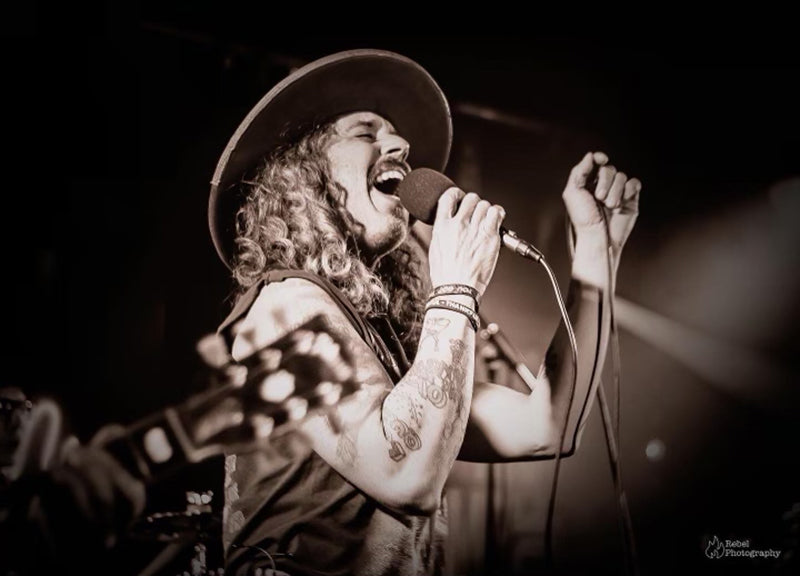
Header image courtesy of Ryan Hamilton.
0 comments
📬
Get this in your inbox
New posts delivered free, the moment they publish.
We respect your privacy. Unsubscribe anytime.
0 Comments
Loading comments...
🗑️ Delete Comment
Enter moderator password to delete this comment:
✏️ Edit Comment
Enter your email to verify ownership:
Need assistance with sales, orders, warranties, or just have questions?



0 comments