COPPER

A PS Audio Publication

Issue 164 • Free Online Magazine

Issue 164 Featured

The Secret History of Tribute Albums, Part One

The Secret History of Tribute Albums, Part One

Are there two Americas? Are they red versus blue, conservative vs. liberal, conspiracy-minded vs. reality-based? The answer is yes, but the divide is not along these lines. The two Americas are populated by people who like Lawrence Welk and people who don’t.

Lawrence Welk specialized in a whipped-potatoes version of popular music. From the early 1950s until his retirement in 1982, Lawrence Welk and his Champagne Music Makers and accordion superstar Myron Floren and Norma Zimmer the Champagne Lady and the whole crew of singing-and-dancing homies produced music that was clean and bright, with all the corners sanded off.

Welk died in 1992, but death couldn’t stop this juggernaut, no more than it could stop Elvis, Marilyn, Jimi, etc. Public television stations continue to run old episodes of The Lawrence Welk Show, with new performances and interviews with surviving cast members. Welk’s audience continues to be replenished by new generations of easy-listening old people.

My grandma Bella was your typical Lawrence Welk customer. Bella, who was born in 1904, loved nice music played by nice people. “Wasn’t that ah-wunnerful?” Welk, a native German speaker, would comment after another duet from his immaculately dressed and hair-styled players. “You can tell they have ah-wunnerful home life.” Bella loved Welk’s music, plus his show was a respite from her soap operas with their nonstop adulteries, divorces, and bouts of amnesia.

“Stevie,” Bella said to me more than once in the 1970s when I looked like the undercover cop on every show from Starsky and Hutch to Serpico, “why can’t you cut your hair like the beautiful boys on Lawrence Welk?”

Did Lawrence Welk perform a valuable service by introducing millions of people to their musical heritage, or did he commit an unforgiveable crime by turning that heritage into zero-calorie Coke? We were a house divided: Bella took the first position. I always took the second. But I’ve since realized that I had one thing completely wrong about Welk. He launched the phenomenon we know today as the tribute album.

Once Is Not Enough

“And now a salute to Gershwin with ah-Bobby and ah-Sissy,” the maestro would announce, before the happy couple puréed one of the Gershwins. Welk saluted many artists in his 30 years on the air, from Stephen Foster to the Beatles and on into the 1970s, a decade fraught with musical traps (such as punk, drugs, and disco) for the bandleader who went to Number 1 on the charts in 1961 with a song that featured a harpsichord.


The result of Welk’s unceasing efforts to pay homage to the gods of pop have led us to the situation we’re in today. Check the Wikipedia page that lists tribute albums. There are hundreds of these things. There are so many salutes to Iron Maiden that they occupy their own page.

Tribute albums have evolved far beyond Welk’s idea of a lone song or a brief medley. They generally fall into two categories, which, in honor of the man, I will call Ah-One and Ah-Two.
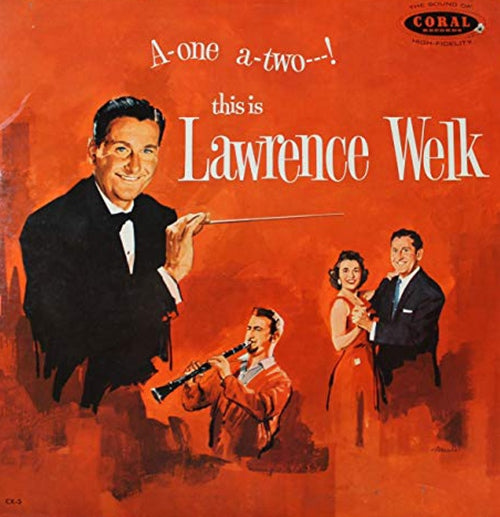
 

"A-one a-two...! This is Lawrence Welk" album cover.

Ah-One is a salute to an entire album. The Beatles’ Abbey Road was the first album to be honored with a tribute, and it happened twice within a month of its release in 1970: George Benson’s The Other Side of Abbey Road and Booker T. & the M.G.’s’ McLemore Avenue. These weren’t track-by-track salutes, but 16 artists gave us just that in 2005 on This Bird Has Flown: 40th Anniversary Tribute to Rubber Soul.

Does waiting 40 years give you deeper insights than waiting a couple of weeks? Based on these three records, that answer is no.

Ah-Two is a salute to an artist’s body of work. Once again, the Beatles were the first subject of this kind of salute with The Chipmunks Sing the Beatles Hits (1964). On this immortal disc, which may also be the first tribute album ever recorded, Alvin and The Chipmunks covered 12 songs from the Beatles’ first two years. Which is more frightening: that The Chipmunks Sing the Beatles Hits spent five months on the Billboard 200, or that the Beatles loved the idea of being chipmunked?

The biggest tribute album of them all was Chimes of Freedom: The Songs of Bob Dylan, released in 2012 to celebrate the 50th anniversary of Amnesty International. 76 artists performed 76 songs on four CDs, with an abridged two-CD follow-up from Starbucks. (I don’t know what Dylan thought of an abridged version of his music available at a very nice and always clean coffee shop, but Welk would’ve loved it!)

A tribute album should show you an old band in a new light; a really good reinvention should punch you in the head or chase your dog up a tree. The artists on Chimes of Freedom, like the artists on so many tribute albums, are too reverential. If you’re going to salute someone, cut loose. Own the song you’ve been assigned. No one on Chimes of Freedom goes head-to-head with Dylan à la Jimi Hendrix on “All Along the Watchtower” – just as none of the 21 artists on Cinnamon Girl: Women Artists Cover Neil Young for Charity push Neil against the wall or even ruffle his hair. They sand the corners off – another legacy of Lawrence Welk.

You can find examples of artists who own it on the Depeche Mode tribute For the Masses (1998), which taught me how good Depeche Mode’s songs were if you could just get somebody else to play them. The highlights came from Failure (“Enjoy the Silence,” an ironic choice for a moody but extremely noisy band) and Rammstein (who pumped some Armageddon-level hysteria into “Stripped”).


Bella Has the Last Word

One Sunday night when I was six, my parents dressed up and fled their responsibilities for the evening, leaving me and my toddler brother in Bella’s care. I wanted to watch Walt Disney’s Wonderful World of Color. Bella wanted to watch The Lawrence Welk Show. We stood in front of the one TV, me the Baby Boomer in my Daniel Boone frontiersman outfit, Bella the short, no-nonsense European immigrant who survived World War I, turning the TV dial back and forth between the two channels. There were only three channels available at the time. Bella won that battle by putting me to bed, where I remained while champagne music wafted down the hall.

It’s been years since I’ve had Bella to argue with, but while I was lucky enough to have her in my life I should’ve admitted that her America still has something to teach me.
 

More from Issue 164

View All Articles in Issue 164

Search Copper Magazine

#227 Seth Lewis Gets in the Groove With Take a Look Around: a Tribute to the Meters by Frank Doris Feb 02, 2026 #227 Passport to Sound: May Anwar’s Audio Learning Experience for Young People by Frank Doris Feb 02, 2026 #227 Conjectures on Cosmic Consciousness by B. Jan Montana Feb 02, 2026 #227 The Big Takeover Turns 45 by Wayne Robins Feb 02, 2026 #227 Music and Chocolate: On the Sensory Connection by Joe Caplan Feb 02, 2026 #227 Singer/Songwriter Chris Berardo: Getting Wilder All the Time by Ray Chelstowski Feb 02, 2026 #227 The Earliest Stars of Country Music, Part One by Jeff Weiner Feb 02, 2026 #227 The Vinyl Beat Goes Down to Tijuana (By Way of Los Angeles), Part Two by Rudy Radelic Feb 02, 2026 #227 How to Play in a Rock Band, 20: On the Road With Blood, Sweat & Tears’ Guitarist Gabe Cummins by Frank Doris Feb 02, 2026 #227 From The Audiophile’s Guide: Audio Specs and Measuring by Paul McGowan Feb 02, 2026 #227 Our Brain is Always Listening by Peter Trübner Feb 02, 2026 #227 PS Audio in the News by PS Audio Staff Feb 02, 2026 #227 The Listening Chair: Sleek Style and Sound From the Luxman L3 by Howard Kneller Feb 02, 2026 #227 The Los Angeles and Orange County Audio Society Celebrates Its 32nd Anniversary, Honoring David and Sheryl Lee Wilson and Bernie Grundman by Harris Fogel Feb 02, 2026 #227 Back to My Reel-to-Reel Roots, Part 26: Half Full – Not Half Empty, Redux by Ken Kessler Feb 02, 2026 #227 That's What Puzzles Us... by Frank Doris Feb 02, 2026 #227 Record-Breaking by Peter Xeni Feb 02, 2026 #227 The Long and Winding Road by B. Jan Montana Feb 02, 2026 #226 JJ Murphy’s Sleep Paralysis is a Genre-Bending Musical Journey Through Jazz, Fusion and More by Frank Doris Jan 05, 2026 #226 Stewardship by Consent by B. Jan Montana Jan 05, 2026 #226 Food, Music, and Sensory Experience: An Interview With Professor Jonathan Zearfoss of the Culinary Institute of America by Joe Caplan Jan 05, 2026 #226 Studio Confidential: A Who’s Who of Recording Engineers Tell Their Stories by Frank Doris Jan 05, 2026 #226 Pilot Radio is Reborn, 50 Years Later: Talking With CEO Barak Epstein by Frank Doris Jan 05, 2026 #226 The Vinyl Beat Goes Down to Tijuana (By Way of Los Angeles), Part One by Rudy Radelic Jan 05, 2026 #226 Capital Audiofest 2025: Must-See Stereo, Part Two by Frank Doris Jan 05, 2026 #226 My Morning Jacket’s Carl Broemel and Tyler Ramsey Collaborate on Their Acoustic Guitar Album, Celestun by Ray Chelstowski Jan 05, 2026 #226 The People Who Make Audio Happen: CanJam SoCal 2025, Part Two by Harris Fogel Jan 05, 2026 #226 How to Play in a Rock Band, 19: Touring Can Make You Crazy, Part One by Frank Doris Jan 05, 2026 #226 Linda Ronstadt Goes Bigger by Wayne Robins Jan 05, 2026 #226 From The Audiophile’s Guide: Active Room Correction and Digital Signal Processing by Paul McGowan Jan 05, 2026 #226 PS Audio in the News by Frank Doris Jan 05, 2026 #226 Back to My Reel-to-Reel Roots, Part 25: Half-Full, Not Empty by Ken Kessler Jan 05, 2026 #226 Happy New Year! by Frank Doris Jan 05, 2026 #226 Turn It Down! by Peter Xeni Jan 05, 2026 #226 Ghost Riders by James Schrimpf Jan 05, 2026 #226 A Factory Tour of Audio Manufacturer German Physiks by Markus "Marsu" Manthey Jan 04, 2026 #225 Capital Audiofest 2025: Must-See Stereo, Part One by Frank Doris Dec 01, 2025 #225 Otis Taylor and the Electrics Delivers a Powerful Set of Hypnotic Modern Blues by Frank Doris Dec 01, 2025 #225 A Christmas Miracle by B. Jan Montana Dec 01, 2025 #225 T.H.E. Show New York 2025, Part Two: Plenty to See, Hear, and Enjoy by Frank Doris Dec 01, 2025 #225 Underappreciated Artists, Part One: Martin Briley by Rich Isaacs Dec 01, 2025 #225 Rock and Roll is Here to Stay by Wayne Robins Dec 01, 2025 #225 A Lifetime of Holiday Record (and CD) Listening by Rudy Radelic Dec 01, 2025 #225 Little Feat: Not Saying Goodbye, Not Yet by Ray Chelstowski Dec 01, 2025 #225 How to Play in a Rock Band, Part 18: Dealing With Burnout by Frank Doris Dec 01, 2025 #225 The People Who Make Audio Happen: CanJam SoCal 2025 by Harris Fogel Dec 01, 2025 #225 Chicago’s Sonic Sanctuaries: Four Hi‑Fi Listening Bars Channeling the Jazz‑Kissa Spirit by Olivier Meunier-Plante Dec 01, 2025

The Secret History of Tribute Albums, Part One

The Secret History of Tribute Albums, Part One

Are there two Americas? Are they red versus blue, conservative vs. liberal, conspiracy-minded vs. reality-based? The answer is yes, but the divide is not along these lines. The two Americas are populated by people who like Lawrence Welk and people who don’t.

Lawrence Welk specialized in a whipped-potatoes version of popular music. From the early 1950s until his retirement in 1982, Lawrence Welk and his Champagne Music Makers and accordion superstar Myron Floren and Norma Zimmer the Champagne Lady and the whole crew of singing-and-dancing homies produced music that was clean and bright, with all the corners sanded off.

Welk died in 1992, but death couldn’t stop this juggernaut, no more than it could stop Elvis, Marilyn, Jimi, etc. Public television stations continue to run old episodes of The Lawrence Welk Show, with new performances and interviews with surviving cast members. Welk’s audience continues to be replenished by new generations of easy-listening old people.

My grandma Bella was your typical Lawrence Welk customer. Bella, who was born in 1904, loved nice music played by nice people. “Wasn’t that ah-wunnerful?” Welk, a native German speaker, would comment after another duet from his immaculately dressed and hair-styled players. “You can tell they have ah-wunnerful home life.” Bella loved Welk’s music, plus his show was a respite from her soap operas with their nonstop adulteries, divorces, and bouts of amnesia.

“Stevie,” Bella said to me more than once in the 1970s when I looked like the undercover cop on every show from Starsky and Hutch to Serpico, “why can’t you cut your hair like the beautiful boys on Lawrence Welk?”

Did Lawrence Welk perform a valuable service by introducing millions of people to their musical heritage, or did he commit an unforgiveable crime by turning that heritage into zero-calorie Coke? We were a house divided: Bella took the first position. I always took the second. But I’ve since realized that I had one thing completely wrong about Welk. He launched the phenomenon we know today as the tribute album.

Once Is Not Enough

“And now a salute to Gershwin with ah-Bobby and ah-Sissy,” the maestro would announce, before the happy couple puréed one of the Gershwins. Welk saluted many artists in his 30 years on the air, from Stephen Foster to the Beatles and on into the 1970s, a decade fraught with musical traps (such as punk, drugs, and disco) for the bandleader who went to Number 1 on the charts in 1961 with a song that featured a harpsichord.


The result of Welk’s unceasing efforts to pay homage to the gods of pop have led us to the situation we’re in today. Check the Wikipedia page that lists tribute albums. There are hundreds of these things. There are so many salutes to Iron Maiden that they occupy their own page.

Tribute albums have evolved far beyond Welk’s idea of a lone song or a brief medley. They generally fall into two categories, which, in honor of the man, I will call Ah-One and Ah-Two.


"A-one a-two...! This is Lawrence Welk" album cover.

Ah-One is a salute to an entire album. The Beatles’ Abbey Road was the first album to be honored with a tribute, and it happened twice within a month of its release in 1970: George Benson’s The Other Side of Abbey Road and Booker T. & the M.G.’s’ McLemore Avenue. These weren’t track-by-track salutes, but 16 artists gave us just that in 2005 on This Bird Has Flown: 40th Anniversary Tribute to Rubber Soul.

Does waiting 40 years give you deeper insights than waiting a couple of weeks? Based on these three records, that answer is no.

Ah-Two is a salute to an artist’s body of work. Once again, the Beatles were the first subject of this kind of salute with The Chipmunks Sing the Beatles Hits (1964). On this immortal disc, which may also be the first tribute album ever recorded, Alvin and The Chipmunks covered 12 songs from the Beatles’ first two years. Which is more frightening: that The Chipmunks Sing the Beatles Hits spent five months on the Billboard 200, or that the Beatles loved the idea of being chipmunked?

The biggest tribute album of them all was Chimes of Freedom: The Songs of Bob Dylan, released in 2012 to celebrate the 50th anniversary of Amnesty International. 76 artists performed 76 songs on four CDs, with an abridged two-CD follow-up from Starbucks. (I don’t know what Dylan thought of an abridged version of his music available at a very nice and always clean coffee shop, but Welk would’ve loved it!)

A tribute album should show you an old band in a new light; a really good reinvention should punch you in the head or chase your dog up a tree. The artists on Chimes of Freedom, like the artists on so many tribute albums, are too reverential. If you’re going to salute someone, cut loose. Own the song you’ve been assigned. No one on Chimes of Freedom goes head-to-head with Dylan à la Jimi Hendrix on “All Along the Watchtower” – just as none of the 21 artists on Cinnamon Girl: Women Artists Cover Neil Young for Charity push Neil against the wall or even ruffle his hair. They sand the corners off – another legacy of Lawrence Welk.

You can find examples of artists who own it on the Depeche Mode tribute For the Masses (1998), which taught me how good Depeche Mode’s songs were if you could just get somebody else to play them. The highlights came from Failure (“Enjoy the Silence,” an ironic choice for a moody but extremely noisy band) and Rammstein (who pumped some Armageddon-level hysteria into “Stripped”).


Bella Has the Last Word

One Sunday night when I was six, my parents dressed up and fled their responsibilities for the evening, leaving me and my toddler brother in Bella’s care. I wanted to watch Walt Disney’s Wonderful World of Color. Bella wanted to watch The Lawrence Welk Show. We stood in front of the one TV, me the Baby Boomer in my Daniel Boone frontiersman outfit, Bella the short, no-nonsense European immigrant who survived World War I, turning the TV dial back and forth between the two channels. There were only three channels available at the time. Bella won that battle by putting me to bed, where I remained while champagne music wafted down the hall.

It’s been years since I’ve had Bella to argue with, but while I was lucky enough to have her in my life I should’ve admitted that her America still has something to teach me.


0 comments

Leave a comment

0 Comments

Your avatar

Loading comments...

🗑️ Delete Comment

Enter moderator password to delete this comment:

✏️ Edit Comment

Enter your email to verify ownership: