COPPER

A PS Audio Publication

Issue 160 • Free Online Magazine

Issue 160 Featured

The Audiophile’s Opinion, Or, Why You Should Join (Or Start) an Audiophile Club

The Audiophile’s Opinion, Or, Why You Should Join (Or Start) an Audiophile Club

Many years back, along with about a dozen fellow audio club members, I attended a product demonstration at a well-known high-end audio writer’s home that made me question my sanity.

Our host put on a selection of music most of us were familiar with – which sounded good – as you would expect from a six-figure system set up by professionals. At the end of the track, he asked attendees in the back row to get up for a second so that he could move one side of the couch away from the wall. He then placed the product – a small, heavy, well-made machined brass disk-shaped quantum harmonizer thingy – right there on the carpeted floor behind the fluffy couch.

After he returned the large piece of furniture to its place, he went back to his chair and replayed the track. Ever the stickler for protocol in A/B comparisons, I was watching to ensure that the volume control was not inadvertently changed – which is crucial, since systems usually sound better even with small increases in sound pressure, potentially giving the component or tweak credit it may not have deserved.

I still don’t understand it – but there it was. Within a few seconds of listening to the same selection, at the same volume, from the same seat, the soundstage blew open with extended width and depth and the music felt much more natural and alive than mere minutes before. We all heard the difference. Then, he reversed things by playing the track again after the thingy was taken out of the room. Immediately, the magical soundstage collapsed. We were dumbfounded. I think I remember shouting, “How is that even possible?!” in my usual calm and reserved manner.

Questions erupted in my disoriented mind. How on Earth could a small piece of machined metal behind a sound-absorbing couch in the back of the room affect my listening experience in the front row so dramatically? Was this an illusion set up by our collective brains like some mass hypnosis? If someone would have told me that this would happen, or if I read it in a review, I don’t think I would have believed it.

I recognize that this was a life-altering moment in my audiophile journey. It’s not that I now believe everything I read or hear about; I just garnered a newfound respect for what I could not explain. You could say I began making room in my crowded mind for the possibility of magic.
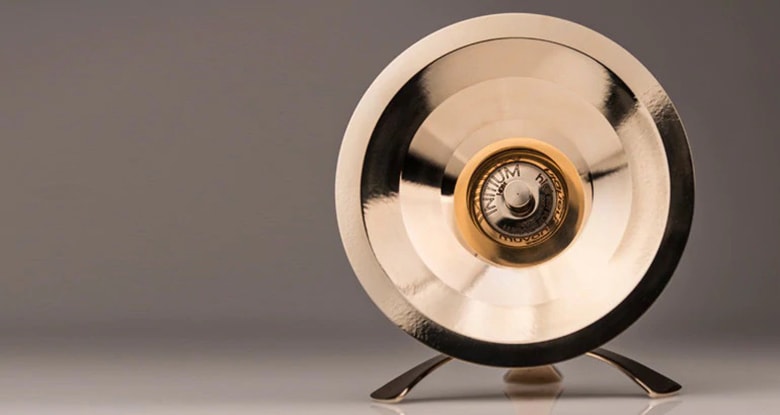
 

Transformative: the High-End Electronics Novum Initium Mk II room tuning device.

Transformative: the High-End Electronics Novum PMR Initium Mk II Passive Multi-Vocal Resonator.


Over these last 40 years, I’ve had many discussions with fellow audiophiles about innovative new gear, system tweaks, and what some would call “snake oil.” In these conversations, whether in-person or on online forums, my questions and comments at times elicited very strong opinions or conjectures that denigrated a product or the design principles behind it, solely because its efficacy seemed impossible – judgements people had formed without having had the experience themselves.

Enthusiasts usually have an opinion on the validity or worth of any given product or tweak. Audiophiles, in general, when presented with an innovative new idea, product or unfamiliar technology, will keep an open mind – but I’ve also met those (especially on high-end audio forums) who, when an innovation does not fit into conventional and accepted parameters, have no compunction about ridiculing and disavowing not just the product, but the very character of those bringing it to market.

I have no problem with rowdy discourse, but what makes me absolutely crazy is that these detractors probably just read about the product somewhere and formed an opinion which was likely a regurgitation of someone else’s thoughts and experience –  someone who may have done the same thing themselves.

Regardless of the nature of the technology or the cost of the product being discussed, and despite how much resistance (and sometimes righteous anger) a new and unfamiliar product can stir up in some people (in which case I suggest therapy) …the only opinion about a product that is truly useful and valid is one that comes from someone who has auditioned it with their own ears –with bonus points awarded to those who have actually heard the product in question in their own system.

Our level of satisfaction is predicated by how our system’s components hang together to re-create music…basically, synergy, or even more appropriately, harmony. This is why I believe we can create extraordinary music reproduction at a wide range of system price points, from a few thousand dollars to “should I buy this audio product or another Formula 1 race car?”
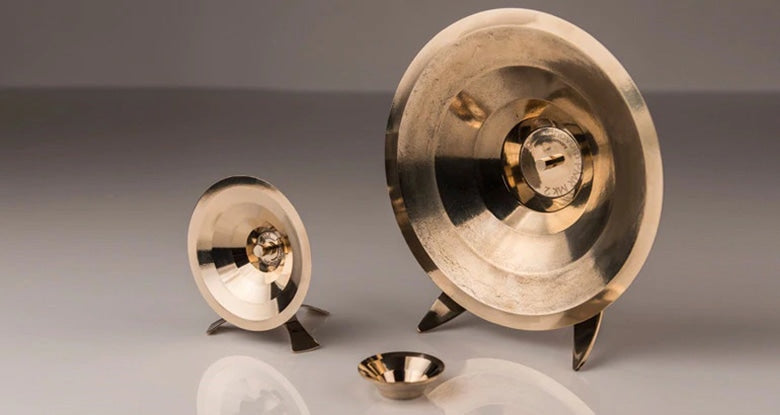
 

A selection of room-tuning products from High-End Electronics.

A selection of room-tuning products from High-End Electronics.


So, getting to the point: Why it’s important to join or start a local audiophile club. First and foremost, if you love music and exceptional high-end gear, you would probably explode if you tried to hold it all in without sharing your excitement with other humans. Being active in ongoing discussions as part of a local audiophile community is an opportunity to expand your knowledge and participate in cutting-edge conversations that explore new ideas, new terrain…to boldly go where no man has gone before (sorry, Gene) and to ask questions of industry pundits as they present the fruits of their labors. Most importantly, this involvement in community encourages us to test what we’ve learned in our own systems and hear what’s true for us. No audio product is “the best”…it can only be the best for you (for now), because all of our ears are wired differently.

As a neutral source of audiophile education, the leadership team of a club should take care to not promote one product or technology over another – they should leave that judgment up to you and your ears.

At our club, the San Francisco Audiophile Society, most, if not all of our events highlight designers, manufacturers and providers of high-end audio equipment or services. There are no sales pitches; we ask our guest speakers to focus on educating our members on the technology and design criteria they’ve used to create their product or service. This way, any resulting product sales become a natural extension of good, clear teaching and an informed customer.

We’ve been very fortunate to learn from industry luminaries like the late Albert Von Schweikert, Michael Fremer, Dr. Rob Robinson, the late Roger Modjeski, Andrew Jones, Rick Schultz, Alon Wolf, Allen Perkins, Richard Schram, Frank Doris, Paul McGowan, Nelson Pass, Galen Gareis, John Curl, Peter Ledermann, David Solomon, George and Carolyn Counnas, EveAnna Manley, Bill Dudleston, and Steve Guttenberg…to name, well, a bunch.

Personally, like most life-long audiophiles, I can’t resist this stuff. Whether it’s cabinet design, room correction, ripping vinyl, choosing tubes, or something completely different that I don’t quite understand…I want to know! I love learning about audio and when I’m lucky enough to be in the conversation when a cool new technology makes its appearance, it flat-out thrills me. I never feel the need to believe or “buy in” to the concept being presented – I just show up with an open mind and open ears, ask questions, enjoy the process, and decide for myself.

In conjunction with audio clubs, well-educated high-end audio dealers are a tremendous asset in our industry, allowing us to hear a product in their system and, if they get a good feeling about our seriousness as a potential client, let us audition it in our homes. If any of this strikes a chord, it’ll be worth it to find your local community of fellow audiophiles who would be happy to explore the wonders of our obsession with you.

I believe that this is one of the significant ways in which technology progresses – by expanding the box that everyone is trying to think their way out of, and by bringing forward bold new ideas that welcome the unconventional. This is especially critical for small audio companies, as getting traction and support from happy customers and racking up a few good reviews can pave the way to success…at which point the detractors will say, “oh, sure, it was obvious all along!” Yeah, of course it was.

So, since the pandemic is receding and you’re already a part of the Copper worldwide community: go, find your local people, live long and prosper…and upgrade when needed.

Note: The beginning of this article references a product which I auditioned many years ago. As hard as I’ve tried, the name of the company that manufactured the expensive brass tweaks eludes me, but it could be the one pictured, or something similar.

******

Copper Community Engagement:

Have you joined or started an audio club? We’d love to hear your thoughts and experiences!

Have you auditioned a crazy audio tweak that shouldn’t have worked, but rocked your world anyway? Tell us about it by leaving a comment below.

Thanks for reading!

Alón Sagee is Chairman and Chief Troublemaker of the San Francisco Audiophile Society. Alón’s writings for Copper can be found in the following issues:

Also, please note:

Header image: Michael Fremer of Stereophile and Analog Planet speaking to the San Francisco Audiophile Society.

More from Issue 160

View All Articles in Issue 160

Search Copper Magazine

#227 Seth Lewis Gets in the Groove With Take a Look Around: a Tribute to the Meters by Frank Doris Feb 02, 2026 #227 Passport to Sound: May Anwar’s Audio Learning Experience for Young People by Frank Doris Feb 02, 2026 #227 Conjectures on Cosmic Consciousness by B. Jan Montana Feb 02, 2026 #227 The Big Takeover Turns 45 by Wayne Robins Feb 02, 2026 #227 Music and Chocolate: On the Sensory Connection by Joe Caplan Feb 02, 2026 #227 Singer/Songwriter Chris Berardo: Getting Wilder All the Time by Ray Chelstowski Feb 02, 2026 #227 The Earliest Stars of Country Music, Part One by Jeff Weiner Feb 02, 2026 #227 The Vinyl Beat Goes Down to Tijuana (By Way of Los Angeles), Part Two by Rudy Radelic Feb 02, 2026 #227 How to Play in a Rock Band, 20: On the Road With Blood, Sweat & Tears’ Guitarist Gabe Cummins by Frank Doris Feb 02, 2026 #227 From The Audiophile’s Guide: Audio Specs and Measuring by Paul McGowan Feb 02, 2026 #227 Our Brain is Always Listening by Peter Trübner Feb 02, 2026 #227 PS Audio in the News by PS Audio Staff Feb 02, 2026 #227 The Listening Chair: Sleek Style and Sound From the Luxman L3 by Howard Kneller Feb 02, 2026 #227 The Los Angeles and Orange County Audio Society Celebrates Its 32nd Anniversary, Honoring David and Sheryl Lee Wilson and Bernie Grundman by Harris Fogel Feb 02, 2026 #227 Back to My Reel-to-Reel Roots, Part 26: Half Full – Not Half Empty, Redux by Ken Kessler Feb 02, 2026 #227 That's What Puzzles Us... by Frank Doris Feb 02, 2026 #227 Record-Breaking by Peter Xeni Feb 02, 2026 #227 The Long and Winding Road by B. Jan Montana Feb 02, 2026 #226 JJ Murphy’s Sleep Paralysis is a Genre-Bending Musical Journey Through Jazz, Fusion and More by Frank Doris Jan 05, 2026 #226 Stewardship by Consent by B. Jan Montana Jan 05, 2026 #226 Food, Music, and Sensory Experience: An Interview With Professor Jonathan Zearfoss of the Culinary Institute of America by Joe Caplan Jan 05, 2026 #226 Studio Confidential: A Who’s Who of Recording Engineers Tell Their Stories by Frank Doris Jan 05, 2026 #226 Pilot Radio is Reborn, 50 Years Later: Talking With CEO Barak Epstein by Frank Doris Jan 05, 2026 #226 The Vinyl Beat Goes Down to Tijuana (By Way of Los Angeles), Part One by Rudy Radelic Jan 05, 2026 #226 Capital Audiofest 2025: Must-See Stereo, Part Two by Frank Doris Jan 05, 2026 #226 My Morning Jacket’s Carl Broemel and Tyler Ramsey Collaborate on Their Acoustic Guitar Album, Celestun by Ray Chelstowski Jan 05, 2026 #226 The People Who Make Audio Happen: CanJam SoCal 2025, Part Two by Harris Fogel Jan 05, 2026 #226 How to Play in a Rock Band, 19: Touring Can Make You Crazy, Part One by Frank Doris Jan 05, 2026 #226 Linda Ronstadt Goes Bigger by Wayne Robins Jan 05, 2026 #226 From The Audiophile’s Guide: Active Room Correction and Digital Signal Processing by Paul McGowan Jan 05, 2026 #226 PS Audio in the News by Frank Doris Jan 05, 2026 #226 Back to My Reel-to-Reel Roots, Part 25: Half-Full, Not Empty by Ken Kessler Jan 05, 2026 #226 Happy New Year! by Frank Doris Jan 05, 2026 #226 Turn It Down! by Peter Xeni Jan 05, 2026 #226 Ghost Riders by James Schrimpf Jan 05, 2026 #226 A Factory Tour of Audio Manufacturer German Physiks by Markus "Marsu" Manthey Jan 04, 2026 #225 Capital Audiofest 2025: Must-See Stereo, Part One by Frank Doris Dec 01, 2025 #225 Otis Taylor and the Electrics Delivers a Powerful Set of Hypnotic Modern Blues by Frank Doris Dec 01, 2025 #225 A Christmas Miracle by B. Jan Montana Dec 01, 2025 #225 T.H.E. Show New York 2025, Part Two: Plenty to See, Hear, and Enjoy by Frank Doris Dec 01, 2025 #225 Underappreciated Artists, Part One: Martin Briley by Rich Isaacs Dec 01, 2025 #225 Rock and Roll is Here to Stay by Wayne Robins Dec 01, 2025 #225 A Lifetime of Holiday Record (and CD) Listening by Rudy Radelic Dec 01, 2025 #225 Little Feat: Not Saying Goodbye, Not Yet by Ray Chelstowski Dec 01, 2025 #225 How to Play in a Rock Band, Part 18: Dealing With Burnout by Frank Doris Dec 01, 2025 #225 The People Who Make Audio Happen: CanJam SoCal 2025 by Harris Fogel Dec 01, 2025 #225 Chicago’s Sonic Sanctuaries: Four Hi‑Fi Listening Bars Channeling the Jazz‑Kissa Spirit by Olivier Meunier-Plante Dec 01, 2025

The Audiophile’s Opinion, Or, Why You Should Join (Or Start) an Audiophile Club

The Audiophile’s Opinion, Or, Why You Should Join (Or Start) an Audiophile Club

Many years back, along with about a dozen fellow audio club members, I attended a product demonstration at a well-known high-end audio writer’s home that made me question my sanity.

Our host put on a selection of music most of us were familiar with – which sounded good – as you would expect from a six-figure system set up by professionals. At the end of the track, he asked attendees in the back row to get up for a second so that he could move one side of the couch away from the wall. He then placed the product – a small, heavy, well-made machined brass disk-shaped quantum harmonizer thingy – right there on the carpeted floor behind the fluffy couch.

After he returned the large piece of furniture to its place, he went back to his chair and replayed the track. Ever the stickler for protocol in A/B comparisons, I was watching to ensure that the volume control was not inadvertently changed – which is crucial, since systems usually sound better even with small increases in sound pressure, potentially giving the component or tweak credit it may not have deserved.

I still don’t understand it – but there it was. Within a few seconds of listening to the same selection, at the same volume, from the same seat, the soundstage blew open with extended width and depth and the music felt much more natural and alive than mere minutes before. We all heard the difference. Then, he reversed things by playing the track again after the thingy was taken out of the room. Immediately, the magical soundstage collapsed. We were dumbfounded. I think I remember shouting, “How is that even possible?!” in my usual calm and reserved manner.

Questions erupted in my disoriented mind. How on Earth could a small piece of machined metal behind a sound-absorbing couch in the back of the room affect my listening experience in the front row so dramatically? Was this an illusion set up by our collective brains like some mass hypnosis? If someone would have told me that this would happen, or if I read it in a review, I don’t think I would have believed it.

I recognize that this was a life-altering moment in my audiophile journey. It’s not that I now believe everything I read or hear about; I just garnered a newfound respect for what I could not explain. You could say I began making room in my crowded mind for the possibility of magic.


Transformative: the High-End Electronics Novum Initium Mk II room tuning device.

Transformative: the High-End Electronics Novum PMR Initium Mk II Passive Multi-Vocal Resonator.


Over these last 40 years, I’ve had many discussions with fellow audiophiles about innovative new gear, system tweaks, and what some would call “snake oil.” In these conversations, whether in-person or on online forums, my questions and comments at times elicited very strong opinions or conjectures that denigrated a product or the design principles behind it, solely because its efficacy seemed impossible – judgements people had formed without having had the experience themselves.

Enthusiasts usually have an opinion on the validity or worth of any given product or tweak. Audiophiles, in general, when presented with an innovative new idea, product or unfamiliar technology, will keep an open mind – but I’ve also met those (especially on high-end audio forums) who, when an innovation does not fit into conventional and accepted parameters, have no compunction about ridiculing and disavowing not just the product, but the very character of those bringing it to market.

I have no problem with rowdy discourse, but what makes me absolutely crazy is that these detractors probably just read about the product somewhere and formed an opinion which was likely a regurgitation of someone else’s thoughts and experience –  someone who may have done the same thing themselves.

Regardless of the nature of the technology or the cost of the product being discussed, and despite how much resistance (and sometimes righteous anger) a new and unfamiliar product can stir up in some people (in which case I suggest therapy) …the only opinion about a product that is truly useful and valid is one that comes from someone who has auditioned it with their own ears –with bonus points awarded to those who have actually heard the product in question in their own system.

Our level of satisfaction is predicated by how our system’s components hang together to re-create music…basically, synergy, or even more appropriately, harmony. This is why I believe we can create extraordinary music reproduction at a wide range of system price points, from a few thousand dollars to “should I buy this audio product or another Formula 1 race car?”


A selection of room-tuning products from High-End Electronics.

A selection of room-tuning products from High-End Electronics.


So, getting to the point: Why it’s important to join or start a local audiophile club. First and foremost, if you love music and exceptional high-end gear, you would probably explode if you tried to hold it all in without sharing your excitement with other humans. Being active in ongoing discussions as part of a local audiophile community is an opportunity to expand your knowledge and participate in cutting-edge conversations that explore new ideas, new terrain…to boldly go where no man has gone before (sorry, Gene) and to ask questions of industry pundits as they present the fruits of their labors. Most importantly, this involvement in community encourages us to test what we’ve learned in our own systems and hear what’s true for us. No audio product is “the best”…it can only be the best for you (for now), because all of our ears are wired differently.

As a neutral source of audiophile education, the leadership team of a club should take care to not promote one product or technology over another – they should leave that judgment up to you and your ears.

At our club, the San Francisco Audiophile Society, most, if not all of our events highlight designers, manufacturers and providers of high-end audio equipment or services. There are no sales pitches; we ask our guest speakers to focus on educating our members on the technology and design criteria they’ve used to create their product or service. This way, any resulting product sales become a natural extension of good, clear teaching and an informed customer.

We’ve been very fortunate to learn from industry luminaries like the late Albert Von Schweikert, Michael Fremer, Dr. Rob Robinson, the late Roger Modjeski, Andrew Jones, Rick Schultz, Alon Wolf, Allen Perkins, Richard Schram, Frank Doris, Paul McGowan, Nelson Pass, Galen Gareis, John Curl, Peter Ledermann, David Solomon, George and Carolyn Counnas, EveAnna Manley, Bill Dudleston, and Steve Guttenberg…to name, well, a bunch.

Personally, like most life-long audiophiles, I can’t resist this stuff. Whether it’s cabinet design, room correction, ripping vinyl, choosing tubes, or something completely different that I don’t quite understand…I want to know! I love learning about audio and when I’m lucky enough to be in the conversation when a cool new technology makes its appearance, it flat-out thrills me. I never feel the need to believe or “buy in” to the concept being presented – I just show up with an open mind and open ears, ask questions, enjoy the process, and decide for myself.

In conjunction with audio clubs, well-educated high-end audio dealers are a tremendous asset in our industry, allowing us to hear a product in their system and, if they get a good feeling about our seriousness as a potential client, let us audition it in our homes. If any of this strikes a chord, it’ll be worth it to find your local community of fellow audiophiles who would be happy to explore the wonders of our obsession with you.

I believe that this is one of the significant ways in which technology progresses – by expanding the box that everyone is trying to think their way out of, and by bringing forward bold new ideas that welcome the unconventional. This is especially critical for small audio companies, as getting traction and support from happy customers and racking up a few good reviews can pave the way to success…at which point the detractors will say, “oh, sure, it was obvious all along!” Yeah, of course it was.

So, since the pandemic is receding and you’re already a part of the Copper worldwide community: go, find your local people, live long and prosper…and upgrade when needed.

Note: The beginning of this article references a product which I auditioned many years ago. As hard as I’ve tried, the name of the company that manufactured the expensive brass tweaks eludes me, but it could be the one pictured, or something similar.

******

Copper Community Engagement:

Have you joined or started an audio club? We’d love to hear your thoughts and experiences!

Have you auditioned a crazy audio tweak that shouldn’t have worked, but rocked your world anyway? Tell us about it by leaving a comment below.

Thanks for reading!

Alón Sagee is Chairman and Chief Troublemaker of the San Francisco Audiophile Society. Alón’s writings for Copper can be found in the following issues:

Also, please note:

Header image: Michael Fremer of Stereophile and Analog Planet speaking to the San Francisco Audiophile Society.

0 comments

Leave a comment

0 Comments

Your avatar

Loading comments...

🗑️ Delete Comment

Enter moderator password to delete this comment:

✏️ Edit Comment

Enter your email to verify ownership: