COPPER

A PS Audio Publication

Issue 101 • Free Online Magazine

Issue 101 THE COPPER INTERVIEW

John Meyer Interview, Part Three

John Meyer Interview, Part Three

To recap from Part One (Issue 99) and Part Two (Issue 100): John Meyer is a pioneer in the field of sound reinforcement. Meyer Sound equipment is used by a who’s who of artists, in touring productions like Cirque de Soleil and in concert halls and theaters around the world. Meyer began his professional career in 1967, worked with the Grateful Dead on their famous Wall of Sound and continues to innovate today. John Meyer graciously took the time to share some of his insights with John Seetoo for Copper.

John Seetoo: Let’s talk about the use of alternative materials for loudspeaker drivers. Larry Hartke (of musical instrument amplifier company Hartke) created the first commercial aluminum cone drivers for bass amplifier speaker cabinets; other manufacturers have used Kevlar, polymer and other materials. Meyer Sound still uses paper cones, if I understand correctly. Is that still your preference for sound quality and overall performance or are there other materials that Meyer Sound is planning to put into production?

John Meyer: Well, we’ve done a lot of research on cone materials. We have materials engineers and several chemists on staff. And we’ve tried working with graphite materials and all kinds of things. What we use is treated paper, that is, not just raw paper, like paper towels. Our paper is a highly treated material in terms of stability, treated with minerals and other agents to give us the characteristics we want. Paper has a nice quality in that it’s self-damping.

Metal cones tend to break up into [unwanted distortion] modes. On the other hand, a lot of people like aluminum domes on the front of speakers because they would break up and create the harmonics typical of a guitar amp speaker.

You have to be very careful with metals because they’re very brittle and they can make a lot of noise — additional noise [not present in the original signal]. Which may be what someone’s looking for if it’s a guitar speaker. Also, the paper we developed is very robust. Paper is really designed to bend, the fibers are designed to flex and will last a long time when properly treated for weather protection, and treated so bugs won’t eat it.

We’re always looking at materials, but so far, paper has turned out to be very beneficial. It doesn’t seem very “techie” to most people because it’s so common, but cellulose is the basis of some very high-tech materials, not just for loudspeaker drivers but in more and more other applications as we discover new ways of working with it.

JS: What do you think was the most frustrating and challenging sound reinforcement problem that Meyer Sound has ever faced, and how did you finally resolve it?

JM: I think that the hardest problem we had was to try and get the sound [of our loudspeakers] to project hundreds of meters out and not be broken up and affected by wind noise. I think we spent five years working on our LEO flagship line array system, experimenting with it, building newer types of horns to try and make sure that the sound was smooth out there in the far field. That was an unknown challenge for us.

We weren’t certain we could even find a solution. Some things are open-ended. You can put a lot of work into it a problem and not find an answer. So that was really exciting because in the end it gave us the results we wanted, and it in our opinion and that of others, the LEO still holds up today as the best far-throw speaker out there.

JS: On that same theme: you have worked with countless artists like Metallica, Ed Sheeran, Steve Miller and many others, as well as theatrical productions like Cirque De Soleil and Broadway hit shows. Are there any particular artists or shows that you recall as anticipating to be problematic, only to be surprised at the end result? Conversely, any that you thought would be a cinch only to become stumped due to logistics, rigging, politics or other circumstances that forced you to make less than optimal compromises or that you would do differently now?

JM: All shows are very demanding. This is an artist’s life’s work we’re dealing with. If they go on the stage and they don’t do well for whatever reason, it’s not a great scene. There’s a lot at stake.

One of the expressions we use is that you don’t think about anything else when you’re doing these shows. From when you’re starting to load in until you load out, there’s very little thinking about politics or anything extraneous. These are complicated shows and demand total attention. There are hundreds and hundreds and hundreds of elements, from the video to the bathrooms, everything required to make the experience work. So these are high stress shows, especially for the artists. And what about the fans out there? Are they in a good mood? Or are they in a bad mood because parking was bad, or something else? There are an endless amount of little details that make these shows what they are from a production perspective. All artists get a little bit stressed with so much at stake.

JS: Congratulations on Meyer Sound Labs’ 40th anniversary. Retrospectively, what do you think your top three achievements have been and that you are most proud of, and what do you see as the company’s direction for the next two decades?

JM: Well I think in the beginning building the HD-1 loudspeaker was a real monument because it demonstrated that we could build a speaker that had linear phase [response] – which was really exciting because that had not been achieved up to that point. The HD-1 was very well behaved and the numbers showed it. Then, our LEO was a really great product, for the reasons I gave earlier.

Today, I think our ULTRA X40 compact point source loudspeaker is really interesting because people think it has a “hi-fi” sound. We put into it everything we’ve learned about how to make high quality sound work for both accurate low-level vocal reproduction and powerful projection, all stuffed in this little box. People love it. We sold far more already than we expected. People recognize that [although it’s compact], they can do shows with it. You can throw the ULTRA X40s and all your stuff in your back of your van and do gigs with them as your mains.


The Meyer Sound ULTRA-X40.

And probably the Bluehorn System is the third. [The Bluehorn System is a full-range powered speaker system with built-in DSP, designed for flat frequency response, phase linearity and sonic transparency. – Ed.] It’s been exciting because that product was basically done to see if we could get phase correction all the way down to 30 Hz, and doing it with high-quality digital processing. I mean, we’re getting over 120 dB of dynamic range, which is really quite an achievement. Bluehorn has definitely become a sonic reference.
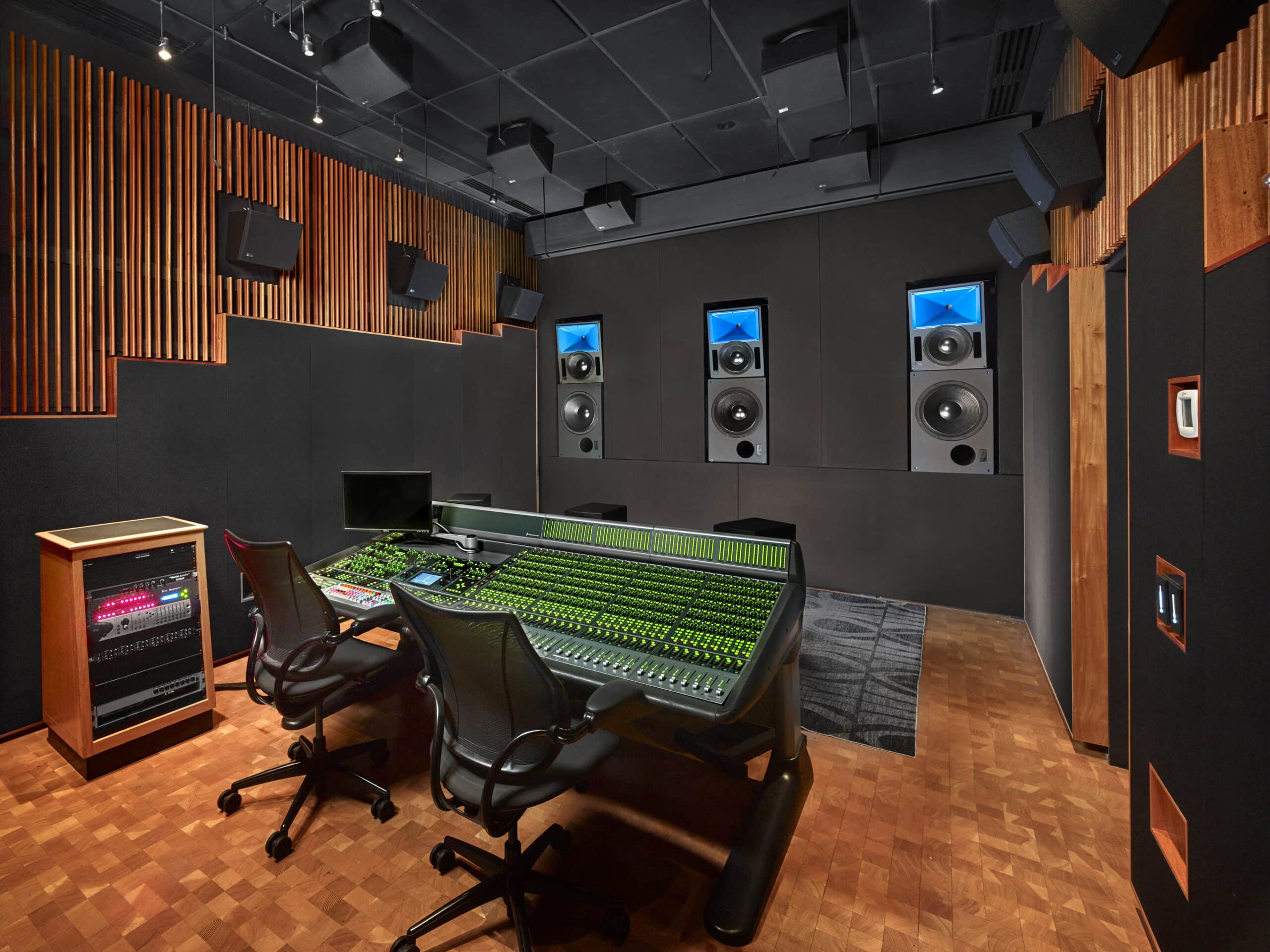
The Meyer Bluehorn system in action.

We didn’t accomplish this without hearing from a lot of skeptics. I think some in the industry have a tendency to, when they can’t do something like make [a speaker with] full bandwidth phase correction, simply say, “We’re phase deaf!” We’ve heard kickback from people saying this, so it’s almost like sour grapes. “Well, maybe it doesn’t matter or maybe we’re deaf to it,” they’ll say. It’s always a challenge to achieve something when everyone is telling you, “Why are you doing that? No one’s going to hear it.”

But that’s true in every field. I think they probably made fun of cell phones at first with people out there saying, “this is a joke, no one’s going to buy that thing.” But you have to do the work to find out if something’s viable, and there is risk in the sense that you don’t know if what you’re creating is what anyone wants.

I think we’re going through a period today where people want to try to create more interesting sonic spaces or environments. So we’re going through a lot of what they now call immersive sound. But this is something we’ve been looking at for a long time. We could say that the Cirque du Soleil shows have been immersive – one of the shows even has speakers in the back of the seats.

From my point of view, the most exciting thing that we’ve put together lately is the system at National Sawdust [performance venue in Brooklyn]. Now we’re giving artists a chance, with our Spacemap acoustic processing system, to be able to change the configuration of the sounds in the mix, change the spatial character of the room, change where the sound is, and it all can be scripted. So we’re giving sound back to the artists so that they control it easily. But in order to make immersive sound like this practical, it’s got to be something really easy to use, so it’s also easy to script and control the sonic changes.

The Stage at National Sawdust: Meyer Sound Concert, September 26, 2019.

You know, we’re still in the infancy of this transition. A lot of promises are being made about what can happen [with immersive audio]. I think we’ll work through this until we create a more interesting sound palette from the artist’s point of view. They are the ones that will have to create something new and compelling. Otherwise, it could be just a gimmick.

I remember some hi-fi people, back in the Fifties, who did a big demonstration over at a planetarium with 15 speakers all around the room. It was a kind of experiment where you could move a sound around the room, but where you could only run one sound, like a train. That’s interesting for about 10 seconds and then the audience wants it to do something more.

With immersive sound, we have to remember we’re dealing with humans who have the capacity to can think of anything. So we want to develop things carefully so that we don’t over promise and disappoint people, considering that their imagination might be way ahead of our ability to create things through technology. That’s what science fiction movies show us, that you can think way ahead to imagine all kinds of possibilities. Materializing them is another thing.

More from Issue 101

View All Articles in Issue 101

Search Copper Magazine

#232 What came first: Art or Music? A Conversation With Artist Jose Acosta by Joe Caplan Jul 06, 2026 #232 Blow By Blow: The Jeff Beck Story: An Insightful Book About a Guitar Icon by Ray Chelstowski Jul 06, 2026 #232 Creed Over Camaraderie? by B. Jan Montana Jul 06, 2026 #232 Chronicles of a Sound Pilgrim at the 2026 Montreal Audiofest by Hugues Morin Jul 06, 2026 #232 The Vinyl Beat: Summer Grooves by Rudy Radelic Jul 06, 2026 #232 Hibbing Hillbilly Dylan's Acoustic Rock by Wayne Robins Jul 06, 2026 #232 Quad Quads and Plasmatronics Tweeters: An Extraordinary System Comes to Life by Frank Doris Jul 06, 2026 #232 In Praise of Live Music, Once Again by Ted Shafran Jul 06, 2026 #232 Allnic Audio’s L-9000 Preamplifier: Design and Engineering Innovation by Howard Kneller Jul 06, 2026 #232 “Best Of” Lists and Rage Bait: Enough Already by Frank Doris Jul 06, 2026 #232 Quick Takes: Bud Shank, Paulo Almeida, Jakob Dreyer, Tim Eriksen and Peter Irvine by Frank Doris Jul 06, 2026 #232 My Impressions of AXPONA 2026, Part 2 by Frank Doris Jul 06, 2026 #232 How to Play in a Rock Band, 25: Encounters With Famous Musicians, Part Three by Frank Doris Jul 06, 2026 #232 Budgets, and Systems From Small to Outrageous by Paul McGowan Jul 06, 2026 #232 PS Audio in the News by PS Audio Staff Jul 06, 2026 #232 Hand It Over by Frank Doris Jul 06, 2026 #232 Difference of Opinion by Peter Xeni Jul 06, 2026 #232 Wabi-sabi Tree by James Schrimpf Jul 06, 2026 #231 Piano Prodigy Jude Kofie Releases His Debut Album On Octave Records by Frank Doris Jun 01, 2026 #231 Underappreciated Artists, Part Two: City Boy by Rich Isaacs Jun 01, 2026 #231 Music and the Art of Creation: Talking With Saxophonist Rob Scheps by Joe Caplan Jun 01, 2026 #231 How to Play in a Rock Band, 24: Further Adventures at the 2026 Montauk Music Festival by Frank Doris Jun 01, 2026 #231 Courtney Barnett: Creature of Habit by Wayne Robins Jun 01, 2026 #231 Angine de Poitrine: Interstellar Guitar Rock Saviors Headed for Late-Night TV Pop Stardom? by Mark Lepage Jun 01, 2026 #231 My Impressions of AXPONA 2026, Part One by Frank Doris Jun 01, 2026 #231 2026 La Jolla Concours d'Elegance: Another Aesthetic Feast by B. Jan Montana Jun 01, 2026 #231 Country Music Icon Jo Dee Messina’s Bridges: A New Beginning by Ray Chelstowski Jun 01, 2026 #231 The Luxury Dispatch Hosts a Video Podcast With Ken Kessler by Ken Kessler Jun 01, 2026 #231 The Vinyl Beat: Tracking in the Motor City by Rudy Radelic Jun 01, 2026 #231 Lots of Fun With DSP: The Ferrum Audio WANDLA DAC and Its Tube Mode by Frank Doris Jun 01, 2026 #231 From The Audiophile's Guide: Digital Source Components and Streaming Audio by Paul McGowan Jun 01, 2026 #231 Onkyo’s Monster M-510 power amplifier by The Staff at Just Audio Jun 01, 2026 #231 PS Audio in the News by PS Audio Staff Jun 01, 2026 #231 Naming Convention by Peter Xeni Jun 01, 2026 #231 Les Invisibles by Frank Doris Jun 01, 2026 #231 Wildlife Scene by James Schrimpf Jun 01, 2026 #230 Camaraderie by B. Jan Montana May 04, 2026 #230 AXPONA 2026: A Family Gathering by Paul McGowan May 04, 2026 #230 Pianist Ryan Benthall Explores Jazz Realms and Far Beyond With Divine Sky by Frank Doris May 04, 2026 #230 The Vinyl Beat in AXPONA-Land by Rudy Radelic May 04, 2026 #230 Teddy Thompson’s Musical Growth Deepens With Never Be the Same by Ray Chelstowski May 04, 2026 #230 More Fun in the Sun: Florida Audio Expo, Part Two by Frank Doris May 04, 2026 #230 CanJam NYC 2026 Show Report: Heady Sound, Part Two by Frank Doris and Harris Fogel May 04, 2026 #230 Sonic Youth On Murray Street by Wayne Robins May 04, 2026 #230 Graffeo Coffee: A Symphony of Sensory Experience by Joe Caplan May 04, 2026 #230 The Saul Authority: The Story of Hi-Fi Pioneer Saul Marantz by Olivier Meunier-Plante May 04, 2026 #230 How to Play in a Rock Band, 23: Encounters With Famous Musicians, Part Two by Frank Doris May 04, 2026

John Meyer Interview, Part Three

John Meyer Interview, Part Three

To recap from Part One (Issue 99) and Part Two (Issue 100): John Meyer is a pioneer in the field of sound reinforcement. Meyer Sound equipment is used by a who’s who of artists, in touring productions like Cirque de Soleil and in concert halls and theaters around the world. Meyer began his professional career in 1967, worked with the Grateful Dead on their famous Wall of Sound and continues to innovate today. John Meyer graciously took the time to share some of his insights with John Seetoo for Copper.

John Seetoo: Let’s talk about the use of alternative materials for loudspeaker drivers. Larry Hartke (of musical instrument amplifier company Hartke) created the first commercial aluminum cone drivers for bass amplifier speaker cabinets; other manufacturers have used Kevlar, polymer and other materials. Meyer Sound still uses paper cones, if I understand correctly. Is that still your preference for sound quality and overall performance or are there other materials that Meyer Sound is planning to put into production?

John Meyer: Well, we’ve done a lot of research on cone materials. We have materials engineers and several chemists on staff. And we’ve tried working with graphite materials and all kinds of things. What we use is treated paper, that is, not just raw paper, like paper towels. Our paper is a highly treated material in terms of stability, treated with minerals and other agents to give us the characteristics we want. Paper has a nice quality in that it’s self-damping.

Metal cones tend to break up into [unwanted distortion] modes. On the other hand, a lot of people like aluminum domes on the front of speakers because they would break up and create the harmonics typical of a guitar amp speaker.

You have to be very careful with metals because they’re very brittle and they can make a lot of noise — additional noise [not present in the original signal]. Which may be what someone’s looking for if it’s a guitar speaker. Also, the paper we developed is very robust. Paper is really designed to bend, the fibers are designed to flex and will last a long time when properly treated for weather protection, and treated so bugs won’t eat it.

We’re always looking at materials, but so far, paper has turned out to be very beneficial. It doesn’t seem very “techie” to most people because it’s so common, but cellulose is the basis of some very high-tech materials, not just for loudspeaker drivers but in more and more other applications as we discover new ways of working with it.

JS: What do you think was the most frustrating and challenging sound reinforcement problem that Meyer Sound has ever faced, and how did you finally resolve it?

JM: I think that the hardest problem we had was to try and get the sound [of our loudspeakers] to project hundreds of meters out and not be broken up and affected by wind noise. I think we spent five years working on our LEO flagship line array system, experimenting with it, building newer types of horns to try and make sure that the sound was smooth out there in the far field. That was an unknown challenge for us.

We weren’t certain we could even find a solution. Some things are open-ended. You can put a lot of work into it a problem and not find an answer. So that was really exciting because in the end it gave us the results we wanted, and it in our opinion and that of others, the LEO still holds up today as the best far-throw speaker out there.

JS: On that same theme: you have worked with countless artists like Metallica, Ed Sheeran, Steve Miller and many others, as well as theatrical productions like Cirque De Soleil and Broadway hit shows. Are there any particular artists or shows that you recall as anticipating to be problematic, only to be surprised at the end result? Conversely, any that you thought would be a cinch only to become stumped due to logistics, rigging, politics or other circumstances that forced you to make less than optimal compromises or that you would do differently now?

JM: All shows are very demanding. This is an artist’s life’s work we’re dealing with. If they go on the stage and they don’t do well for whatever reason, it’s not a great scene. There’s a lot at stake.

One of the expressions we use is that you don’t think about anything else when you’re doing these shows. From when you’re starting to load in until you load out, there’s very little thinking about politics or anything extraneous. These are complicated shows and demand total attention. There are hundreds and hundreds and hundreds of elements, from the video to the bathrooms, everything required to make the experience work. So these are high stress shows, especially for the artists. And what about the fans out there? Are they in a good mood? Or are they in a bad mood because parking was bad, or something else? There are an endless amount of little details that make these shows what they are from a production perspective. All artists get a little bit stressed with so much at stake.

JS: Congratulations on Meyer Sound Labs’ 40th anniversary. Retrospectively, what do you think your top three achievements have been and that you are most proud of, and what do you see as the company’s direction for the next two decades?

JM: Well I think in the beginning building the HD-1 loudspeaker was a real monument because it demonstrated that we could build a speaker that had linear phase [response] – which was really exciting because that had not been achieved up to that point. The HD-1 was very well behaved and the numbers showed it. Then, our LEO was a really great product, for the reasons I gave earlier.

Today, I think our ULTRA X40 compact point source loudspeaker is really interesting because people think it has a “hi-fi” sound. We put into it everything we’ve learned about how to make high quality sound work for both accurate low-level vocal reproduction and powerful projection, all stuffed in this little box. People love it. We sold far more already than we expected. People recognize that [although it’s compact], they can do shows with it. You can throw the ULTRA X40s and all your stuff in your back of your van and do gigs with them as your mains.


The Meyer Sound ULTRA-X40.

And probably the Bluehorn System is the third. [The Bluehorn System is a full-range powered speaker system with built-in DSP, designed for flat frequency response, phase linearity and sonic transparency. – Ed.] It’s been exciting because that product was basically done to see if we could get phase correction all the way down to 30 Hz, and doing it with high-quality digital processing. I mean, we’re getting over 120 dB of dynamic range, which is really quite an achievement. Bluehorn has definitely become a sonic reference.

The Meyer Bluehorn system in action.

We didn’t accomplish this without hearing from a lot of skeptics. I think some in the industry have a tendency to, when they can’t do something like make [a speaker with] full bandwidth phase correction, simply say, “We’re phase deaf!” We’ve heard kickback from people saying this, so it’s almost like sour grapes. “Well, maybe it doesn’t matter or maybe we’re deaf to it,” they’ll say. It’s always a challenge to achieve something when everyone is telling you, “Why are you doing that? No one’s going to hear it.”

But that’s true in every field. I think they probably made fun of cell phones at first with people out there saying, “this is a joke, no one’s going to buy that thing.” But you have to do the work to find out if something’s viable, and there is risk in the sense that you don’t know if what you’re creating is what anyone wants.

I think we’re going through a period today where people want to try to create more interesting sonic spaces or environments. So we’re going through a lot of what they now call immersive sound. But this is something we’ve been looking at for a long time. We could say that the Cirque du Soleil shows have been immersive – one of the shows even has speakers in the back of the seats.

From my point of view, the most exciting thing that we’ve put together lately is the system at National Sawdust [performance venue in Brooklyn]. Now we’re giving artists a chance, with our Spacemap acoustic processing system, to be able to change the configuration of the sounds in the mix, change the spatial character of the room, change where the sound is, and it all can be scripted. So we’re giving sound back to the artists so that they control it easily. But in order to make immersive sound like this practical, it’s got to be something really easy to use, so it’s also easy to script and control the sonic changes.

The Stage at National Sawdust: Meyer Sound Concert, September 26, 2019.

You know, we’re still in the infancy of this transition. A lot of promises are being made about what can happen [with immersive audio]. I think we’ll work through this until we create a more interesting sound palette from the artist’s point of view. They are the ones that will have to create something new and compelling. Otherwise, it could be just a gimmick.

I remember some hi-fi people, back in the Fifties, who did a big demonstration over at a planetarium with 15 speakers all around the room. It was a kind of experiment where you could move a sound around the room, but where you could only run one sound, like a train. That’s interesting for about 10 seconds and then the audience wants it to do something more.

With immersive sound, we have to remember we’re dealing with humans who have the capacity to can think of anything. So we want to develop things carefully so that we don’t over promise and disappoint people, considering that their imagination might be way ahead of our ability to create things through technology. That’s what science fiction movies show us, that you can think way ahead to imagine all kinds of possibilities. Materializing them is another thing.

0 comments

Leave a comment

0 Comments

Your avatar

Loading comments...

🗑️ Delete Comment

Enter moderator password to delete this comment:

✏️ Edit Comment

Enter your email to verify ownership: