COPPER

A PS Audio Publication

Issue 145 • Free Online Magazine

Issue 145 FEATURED

Every Picture Tells A Story, Or, How I Recreated My Record Collection, and Then Some

Every Picture Tells A Story, Or, How I Recreated My Record Collection, and Then Some

Today’s renaissance of vinyl as a chosen physical music format represents an opportunity for baby boomers to recapture their collective youth. In the 1970s, record stores were the place to hang out and learn about music and life. I foolishly sold most of my 4,000-LP collection in 2010, and within two years realized what a colossal mistake I had made. I’ve spent the past eight years rebuilding much of what I previously owned, and then some.

About three quarters of the records came from the used bins of about a dozen stores in and around Long Island, although most were culled from Record Reserve in Northport, NY, where Jack Kerouac once spent time drinking at the still-operating local watering hole Gunther’s Tap Room. From 2015 to 2019, I’d spell Record Reserve’s proprietor Tim Clair occasionally. When I was a teenager I always wanted to work in a record store, and instead was delegated to the dairy department of the Big Apple supermarket in Commack. Never too late, indeed.

I remember that first day working at Record Reserve, when I pulled out a dozen used records from the bins, playing guest DJ. Tim, of course, paid me in records, my modus operandi. Pretty soon I replicated my healthy Elvis Costello section, for example.

Elvis Costello, This Year's Model.

Elvis Costello, This Year’s Model.


I’d met Tim in mid-2012, when I sold two boxes of CDs, Mojo magazines and other memorabilia that had been in storage, and which didn’t get sold in earlier purges that had resulted in me shedding 3,800 LPs, 3,000 CDs, and 2,000 DVDs. Sure, it was a decluttering moment of CD digitizing-to-iTunes madness, and wrongly concluding that my iPod was sufficient for satisfying my music consumption needs.

While Tim tallied what he was going to pay me, I perused Tim’s dollar bin and picked out an intriguing vintage burlesque jazz record on Cameo-Parkway. The music didn’t disappoint. I felt like Al Pacino in Godfather 3. “Just when I thought I was out, they pull me back in!”

A year later, I bought my first new vinyl LP, Amy Winehouse’s Back to Black, replacing a CD that had gone missing. I vowed to follow the same strategy I had when I bought my first CD player in 1985: to only buy on Compact Disc what I didn’t have on vinyl. Well, that idea didn’t last long then, or more recently either. Enticing deluxe vinyl reissues in recent years of the Beatles, Rolling Stones, et al. couldn’t be passed up. Staples for which I hadn’t found original LPs – Nick Drake, the Velvet Underground, Kate Bush, Tom Waits, Neil Young, and Pink Floyd, to name a few – found a home on my shelves. The burgeoning collection spread out to three rooms in my house. I had to delete the Discogs app from my phone because I was using it too much.


The pandemic prompted numerous online purchases to keep my habit going.

A move back to Manhattan in June 2020 presented new possibilities for new store trips once they reopened. Recent visits have included trips to two New York City stores: Moodies Records in the Bronx and Record City in Brooklyn. (Moodies Records is Black-owned, and at one time, there were hundreds of Black-owned record stores in the US; now, according to Record Store Day, there are 32.) During my most recent retail pilgrimage, I found missing pieces for my collection, from when I was a teenager in the mid-1970s, to curios that appealed to my quest to widen my cultural horizons.

Speaking of which, my first grab during this recent sojourn was the soundtrack to the 1975 play For colored girls who have considered suicide when the rainbow is enuf. As a rebellious high schooler who ironically now teaches English composition to college freshmen, I always appreciated the spelling of the last word. My eyes widened when I found Tribute to Uncle Ray, an album by 11-year-old Stevie Wonder singing Ray Charles, which is every bit as good as you can imagine. Having absolutely adored Me’Shell Ndegéocello’s album Bitter on CD, I vaguely remembered the dance track “If That’s Your Boyfriend (He Wasn’t Last Night)”; I found a 12-inch that featured a half-dozen remixes.


Shifting over to the rock section, I picked up a record I had been thinking about the previous week, a double-LP Beach Boys budget collection, High Water, featuring “Good Vibrations,” “God Only Knows,” “I Get Around,” and more favorites of my 15-year-old self, such as “The Little Old Lady from Pasadena.” I never before owned the 1973 Jerry Lee Lewis LP, The Killer Rocks On, but when I saw it had covers of my two favorite Joe South songs, “Walk A Mile in My Shoes” and “Games People Play,” there was no way I could leave without it. I also found a UK pressing of a Strawbs compilation I never owned which I couldn’t pass up, since they were one of my concert favorites during my early college years.

Having recently seen Questlove’s Summer of Soul documentary about the 1969 Harlem Cultural Festival, when I was shopping at Moodies, I couldn’t pass up Fifth Dimension’s The Age of Aquarius. I already had their live album. We have indeed become our parents. My dad, who died in December 2019, always had a thing for Marilyn McCoo. Another pickup was a low-budget Rod Stewart release with the same mid-1960s tracks I already had from a different compilation album, but both records cashed in on his Faces/Every Picture Tells A Story-era early 1970s fame with a rooster haircut cover illustration or photograph. It’s the type of record that only a completist would covet.
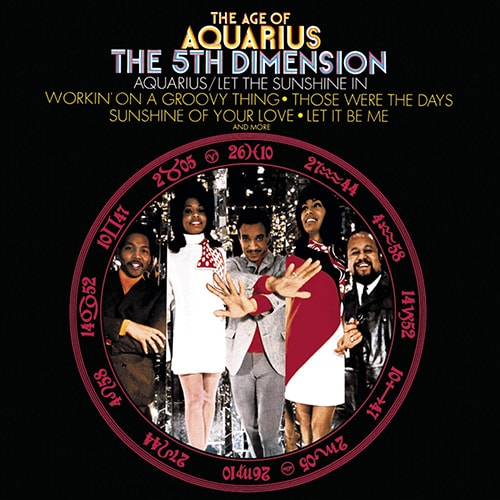
The 5th Dimension, The Age of Aquarius.


Next up was a German near-mint pressing of Steppenwolf Live, originally released in 1970. The greatest hits – “Born to Be Wild,” “Magic Carpet Ride,” and “The Pusher” – were sandwiched onto Side Two, just as I had remembered it. The extended workout “Monster,” with its prominent bass line riff, opened Side Three, also just as I’d left it. This stuff apparently gets laid into your brain’s DNA.

Two weeks ago, I spent several hours at Tim’s new space in Northport, and it was just like old times, trading concert stories with fellow regular patron “Beatle Ted” Iarocci (he met John Lennon and I met Paul McCartney), as Tim played us the newly reissued outtakes from George Harrison’s All Things Must Pass. The love of record stores is not one of them.


“Beatle Ted” Iarocci, Tim Clair and Larry Jaffee at Record Reserve, Northport, New York, August 2021.

It was my first trip back to Long Island since May 16, 2021, when I had attended the long-running record fair at the VFW Hall in Massapequa. After that show I had come back with a bag of records (although I can’t remember the contents). It was the first record show I’d attended since October 2019 in Burbank, California.

No wonder I just had to buy another record cabinet.

Larry Jaffee is the author of the forthcoming book, Resurrection: How Record Store Day Led to the Most Improbable Comeback of the 21st Century, to be published in April 2022. Jaffee is also co-founder of Making Vinyl (https://makingvinyl.com), a B2B conference celebrating the rebirth of the vinyl manufacturing industry.


Header image: Record City, Brooklyn, New York, from the Record City website.

More from Issue 145

View All Articles in Issue 145

Search Copper Magazine

#231 Piano Prodigy Jude Kofie Releases His Debut Album On Octave Records by Frank Doris Jun 01, 2026 #231 Underappreciated Artists, Part Two: City Boy by Rich Isaacs Jun 01, 2026 #231 Music and the Art of Creation: Talking With Saxophonist Rob Scheps by Joe Caplan Jun 01, 2026 #231 How to Play in a Rock Band, 24: Further Adventures at the 2026 Montauk Music Festival by Frank Doris Jun 01, 2026 #231 Courtney Barnett: Creature of Habit by Wayne Robins Jun 01, 2026 #231 Angine de Poitrine: Interstellar Guitar Rock Saviors Headed for Late-Night TV Pop Stardom? by Mark Lepage Jun 01, 2026 #231 My Impressions of AXPONA 2026, Part One by Frank Doris Jun 01, 2026 #231 2026 La Jolla Concours d'Elegance: Another Aesthetic Feast by B. Jan Montana Jun 01, 2026 #231 Country Music Icon Jo Dee Messina’s Bridges: A New Beginning by Ray Chelstowski Jun 01, 2026 #231 The Luxury Dispatch Hosts a Video Podcast With Ken Kessler by Ken Kessler Jun 01, 2026 #231 The Vinyl Beat: Tracking in the Motor City by Rudy Radelic Jun 01, 2026 #231 Lots of Fun With DSP: The Ferrum Audio WANDLA DAC and Its Tube Mode by Frank Doris Jun 01, 2026 #231 From The Audiophile's Guide: Digital Source Components and Streaming Audio by Paul McGowan Jun 01, 2026 #231 Onkyo’s Monster M-510 power amplifier by The Staff at Just Audio Jun 01, 2026 #231 PS Audio in the News by PS Audio Staff Jun 01, 2026 #231 Naming Convention by Peter Xeni Jun 01, 2026 #231 Les Invisibles by Frank Doris Jun 01, 2026 #231 Wildlife Scene by James Schrimpf Jun 01, 2026 #230 Camaraderie by B. Jan Montana May 04, 2026 #230 AXPONA 2026: A Family Gathering by Paul McGowan May 04, 2026 #230 Pianist Ryan Benthall Explores Jazz Realms and Far Beyond With Divine Sky by Frank Doris May 04, 2026 #230 The Vinyl Beat in AXPONA-Land by Rudy Radelic May 04, 2026 #230 Teddy Thompson’s Musical Growth Deepens With Never Be the Same by Ray Chelstowski May 04, 2026 #230 More Fun in the Sun: Florida Audio Expo, Part Two by Frank Doris May 04, 2026 #230 CanJam NYC 2026 Show Report: Heady Sound, Part Two by Frank Doris and Harris Fogel May 04, 2026 #230 Sonic Youth On Murray Street by Wayne Robins May 04, 2026 #230 Graffeo Coffee: A Symphony of Sensory Experience by Joe Caplan May 04, 2026 #230 The Saul Authority: The Story of Hi-Fi Pioneer Saul Marantz by Olivier Meunier-Plante May 04, 2026 #230 How to Play in a Rock Band, 23: Encounters With Famous Musicians, Part Two by Frank Doris May 04, 2026 #230 An Outlier in the Rack: A Vintage BIC Beam Box by The Staff at Just Audio May 04, 2026 #230 PS Audio in the News by PS Audio Staff May 04, 2026 #230 A Cautionary Tale by Rich Isaacs May 04, 2026 #230 Reel-to-Reel Roots, Part 33 (Revised): Ken Kessler Reports On the 2026 (British) AudioJumble by Ken Kessler May 04, 2026 #230 Text Messaging by Frank Doris May 04, 2026 #230 The Audiophile Rat Race by Peter Xeni May 04, 2026 #230 On the Rocks by Rich Isaacs May 04, 2026 #229 The Earliest Stars of Country Music, Part Three by Jeff Weiner Apr 06, 2026 #229 The Healing Power of Music and Sound at the Omega Institute by Joe Caplan Apr 06, 2026 #229 CanJam NYC 2026 Show Report: Heady Sound, Part One by Frank Doris Apr 06, 2026 #229 Florida Audio Expo 2026: Warming Up to High-End Audio, Part One by Frank Doris Apr 06, 2026 #229 Quick Takes: Anne Bisson, Sam Morrison, The Velvet Underground, and the Stooges by Frank Doris Apr 06, 2026 #229 The Vinyl Beat: New Arrivals, and Old Audio Show Demo Scores to Settle by Rudy Radelic Apr 06, 2026 #229 Harvard Gets a High-End Audio Education by Frank Doris Apr 06, 2026 #229 No Country for Old Knees by B. Jan Montana Apr 06, 2026 #229 How To Play in A Rock Band, 22: Encounters With Famous Musicians, Part 1 by Frank Doris Apr 06, 2026 #229 The Soulful Grooves of Guinea-Bissau by Steve Kindig Apr 06, 2026 #229 Four-Hand Piano Performance at Its Finest by Stephan Haberthür Apr 06, 2026

Every Picture Tells A Story, Or, How I Recreated My Record Collection, and Then Some

Every Picture Tells A Story, Or, How I Recreated My Record Collection, and Then Some

Today’s renaissance of vinyl as a chosen physical music format represents an opportunity for baby boomers to recapture their collective youth. In the 1970s, record stores were the place to hang out and learn about music and life. I foolishly sold most of my 4,000-LP collection in 2010, and within two years realized what a colossal mistake I had made. I’ve spent the past eight years rebuilding much of what I previously owned, and then some.

About three quarters of the records came from the used bins of about a dozen stores in and around Long Island, although most were culled from Record Reserve in Northport, NY, where Jack Kerouac once spent time drinking at the still-operating local watering hole Gunther’s Tap Room. From 2015 to 2019, I’d spell Record Reserve’s proprietor Tim Clair occasionally. When I was a teenager I always wanted to work in a record store, and instead was delegated to the dairy department of the Big Apple supermarket in Commack. Never too late, indeed.

I remember that first day working at Record Reserve, when I pulled out a dozen used records from the bins, playing guest DJ. Tim, of course, paid me in records, my modus operandi. Pretty soon I replicated my healthy Elvis Costello section, for example.

Elvis Costello, This Year's Model.

Elvis Costello, This Year’s Model.


I’d met Tim in mid-2012, when I sold two boxes of CDs, Mojo magazines and other memorabilia that had been in storage, and which didn’t get sold in earlier purges that had resulted in me shedding 3,800 LPs, 3,000 CDs, and 2,000 DVDs. Sure, it was a decluttering moment of CD digitizing-to-iTunes madness, and wrongly concluding that my iPod was sufficient for satisfying my music consumption needs.

While Tim tallied what he was going to pay me, I perused Tim’s dollar bin and picked out an intriguing vintage burlesque jazz record on Cameo-Parkway. The music didn’t disappoint. I felt like Al Pacino in Godfather 3. “Just when I thought I was out, they pull me back in!”

A year later, I bought my first new vinyl LP, Amy Winehouse’s Back to Black, replacing a CD that had gone missing. I vowed to follow the same strategy I had when I bought my first CD player in 1985: to only buy on Compact Disc what I didn’t have on vinyl. Well, that idea didn’t last long then, or more recently either. Enticing deluxe vinyl reissues in recent years of the Beatles, Rolling Stones, et al. couldn’t be passed up. Staples for which I hadn’t found original LPs – Nick Drake, the Velvet Underground, Kate Bush, Tom Waits, Neil Young, and Pink Floyd, to name a few – found a home on my shelves. The burgeoning collection spread out to three rooms in my house. I had to delete the Discogs app from my phone because I was using it too much.


The pandemic prompted numerous online purchases to keep my habit going.

A move back to Manhattan in June 2020 presented new possibilities for new store trips once they reopened. Recent visits have included trips to two New York City stores: Moodies Records in the Bronx and Record City in Brooklyn. (Moodies Records is Black-owned, and at one time, there were hundreds of Black-owned record stores in the US; now, according to Record Store Day, there are 32.) During my most recent retail pilgrimage, I found missing pieces for my collection, from when I was a teenager in the mid-1970s, to curios that appealed to my quest to widen my cultural horizons.

Speaking of which, my first grab during this recent sojourn was the soundtrack to the 1975 play For colored girls who have considered suicide when the rainbow is enuf. As a rebellious high schooler who ironically now teaches English composition to college freshmen, I always appreciated the spelling of the last word. My eyes widened when I found Tribute to Uncle Ray, an album by 11-year-old Stevie Wonder singing Ray Charles, which is every bit as good as you can imagine. Having absolutely adored Me’Shell Ndegéocello’s album Bitter on CD, I vaguely remembered the dance track “If That’s Your Boyfriend (He Wasn’t Last Night)”; I found a 12-inch that featured a half-dozen remixes.


Shifting over to the rock section, I picked up a record I had been thinking about the previous week, a double-LP Beach Boys budget collection, High Water, featuring “Good Vibrations,” “God Only Knows,” “I Get Around,” and more favorites of my 15-year-old self, such as “The Little Old Lady from Pasadena.” I never before owned the 1973 Jerry Lee Lewis LP, The Killer Rocks On, but when I saw it had covers of my two favorite Joe South songs, “Walk A Mile in My Shoes” and “Games People Play,” there was no way I could leave without it. I also found a UK pressing of a Strawbs compilation I never owned which I couldn’t pass up, since they were one of my concert favorites during my early college years.

Having recently seen Questlove’s Summer of Soul documentary about the 1969 Harlem Cultural Festival, when I was shopping at Moodies, I couldn’t pass up Fifth Dimension’s The Age of Aquarius. I already had their live album. We have indeed become our parents. My dad, who died in December 2019, always had a thing for Marilyn McCoo. Another pickup was a low-budget Rod Stewart release with the same mid-1960s tracks I already had from a different compilation album, but both records cashed in on his Faces/Every Picture Tells A Story-era early 1970s fame with a rooster haircut cover illustration or photograph. It’s the type of record that only a completist would covet.

The 5th Dimension, The Age of Aquarius.


Next up was a German near-mint pressing of Steppenwolf Live, originally released in 1970. The greatest hits – “Born to Be Wild,” “Magic Carpet Ride,” and “The Pusher” – were sandwiched onto Side Two, just as I had remembered it. The extended workout “Monster,” with its prominent bass line riff, opened Side Three, also just as I’d left it. This stuff apparently gets laid into your brain’s DNA.

Two weeks ago, I spent several hours at Tim’s new space in Northport, and it was just like old times, trading concert stories with fellow regular patron “Beatle Ted” Iarocci (he met John Lennon and I met Paul McCartney), as Tim played us the newly reissued outtakes from George Harrison’s All Things Must Pass. The love of record stores is not one of them.


“Beatle Ted” Iarocci, Tim Clair and Larry Jaffee at Record Reserve, Northport, New York, August 2021.

It was my first trip back to Long Island since May 16, 2021, when I had attended the long-running record fair at the VFW Hall in Massapequa. After that show I had come back with a bag of records (although I can’t remember the contents). It was the first record show I’d attended since October 2019 in Burbank, California.

No wonder I just had to buy another record cabinet.

Larry Jaffee is the author of the forthcoming book, Resurrection: How Record Store Day Led to the Most Improbable Comeback of the 21st Century, to be published in April 2022. Jaffee is also co-founder of Making Vinyl (https://makingvinyl.com), a B2B conference celebrating the rebirth of the vinyl manufacturing industry.


Header image: Record City, Brooklyn, New York, from the Record City website.

0 comments

Leave a comment

0 Comments

Your avatar

Loading comments...

🗑️ Delete Comment

Enter moderator password to delete this comment:

✏️ Edit Comment

Enter your email to verify ownership: