COPPER

A PS Audio Publication

Issue 145 • Free Online Magazine

Issue 145 DISCIPLES OF SOUND

Dar Williams: Writing Songs That Matter

Dar Williams: Writing Songs That Matter

The folk community is quite a bit like the jazz world. You earn respect over time and across a strong body of work. For Dar Williams, the path from debut to heralded show opener was remarkably short. In addition to music that had a fresh voice, she was helped by the public support she received from giants in the genre like the late Nanci Griffith. For thirty years Williams has been making music, writing books, teaching classes in her retreats, and lecturing on a whole range of topics. Now, she is bringing a new album to market, her first in six years on BMG’s new boutique Americana label, Renew. I’ll Meet You Here is her twelfth studio record, to be released on October 1, and reunites her with long-time producer Stewart Lerman, bassist Gail Ann Dorsey and string master Larry Campbell.

In late February of 2020, she cut the title tune in Woodstock with Dorsey and Campbell. When told at the time that they had to postpone a mid-March mixing date, Campbell said he wasn’t feeling well. As it turned out, he had contracted a serious case of COVID-19. By the time he recovered, they knew that a 2020 release would need to be pushed back.

Williams instead worked on her latest book, Writing a Song That Matters, titled after the songwriting retreats she began conducting in 2013. Williams had published two young-adult novels with Scholastic in the mid-2000s, along with a green-subject-matter blog for Huffpost, before she tackled her 2017 urban planning study, What I Found in a Thousand Towns: A Traveling Musician’s Guide to Rebuilding America’s Communities – One Coffee Shop, Dog Run & Open-Mike Night at a Time.

Williams then returned to finish the record, and the result is a collection of songs that sits among her best. The record, like any single great folk song, tells a story. The album unfolds like one big song and finds just the right places to land a punch and plant a kiss. It’s something that will clearly connect with her fans and come to life in live settings in ways that only an audience can help guide.

We got a chance to talk about quite a lot with Dar. Unfortunately, our exchange on the great recording studios of New York City didn’t make the final edit (maybe they will appear in a later piece). But we did talk at length about the new record, her long-time close friend Nanci Griffith, and what brings her real joy.


Ray Chelstowski: I’ll Meet You Here is your first record in six years. Why so long between releases?

Dar Williams: Well arguably I did have a record that came out in 2017, but it was a book (laughs). But seriously, this album was supposed to come out last year, but at some point, the pandemic is allowed to be bigger than your vanity.

RC: How has it been working with a new label?

DW: Oh it’s been just magic. I was with a label [Razor & Tie] for twenty years and I loved them. But they were called a “record company,” and I just couldn’t see how they were transitioning into the streaming industry. A lot of record companies had been making that transition, but by then the owners of Razor & Tie had sold their label to Concord. So I decided to put out an album on my own to see what that was like. Everyone asked if that gave me more freedom, and if I made more money doing it myself. I told them I didn’t have more freedom, and I didn’t make more money. It was just different, and it gave me empathy for all of the people who do this on their own.

I was in L.A. and my manager had me meet with my music publishers. They mentioned that they were starting a new label that would be almost exactly in the vein of what I do musically. If I was to come up with a label “dream team” this would be it, and I knew I’d be crazy to say no to that.

RC: It’s exciting to see a BMG develop a boutique label and really allow it to do what’s best for the artist and the genre.

DW: I totally agree. There are the labels where the staff does literally nothing and they say everything [that goes wrong] is your entire fault. And then there is the [my current] label that does all of this invisible stuff that I don’t even know about. There are all these little anchors and pins and strings that hold everything together, and there are all sorts of ways to do it right. A lot of it is just tied to the infrastructure of the label. Renew does their best to make me look great while they do all of the heavy lifting. So, the fact that it comes out of BMG, where this is a spinoff, is all the better.

RC: You began recording I’ll Meet You Here before the pandemic. How did you finally complete it?

DW: I did the whole album, and there was one track that wasn’t coming along the way we wanted. I thought it needed fresh ears, and went to Larry and asked him if he could do this as a duet. So, that became an easy solution. I was on tour then so we couldn’t mix Larry’s track, “Time Be My Friend.” He was going to come down to New Jersey and do it with the rest of the original team, but I couldn’t make my travel work for the date that we wanted. So we delayed the mixing date by a couple of days. Then Larry said, “I don’t really feel well,” and that became the start of his COVID nightmare. It really became “there but for the grace of God,” because had my travel worked out differently, a lot of really cool creative people at this studio would have probably gotten it.

RC: The record really tracks well and has great pacing. Did you have a vision for that when you went in to record?

DW: I have a vision and I have a great manager and now a great record label. They recommended some tracking that I hadn’t thought of that was better than my ideas (laughs). We did want to end obviously with [the song] “You’re Aging Well” because [the album is all] about the return. I wanted to start either with “Time Be My Friend” or “You Give It All Away,” and it was really great to have them offer up their opinions. But in the end this one kind of tracked itself.

RC: You decided to revisit “You’re Aging Well” from your 1994 album, The Honesty Room. This version has no guitar. What prompted that approach?

DW: We were putting the guitar together with the piano and I flubbed a couple of times. Then Stewart asked, “do we really need the guitar?” and we looked at each other and said “absolutely not.” Bryn Roberts, [who has been playing keyboards with me], is a very accomplished jazz musician [and is] used to holding down entire arrangements on his own. We had been playing together for years, so we took the guitar away and the song took only one take.
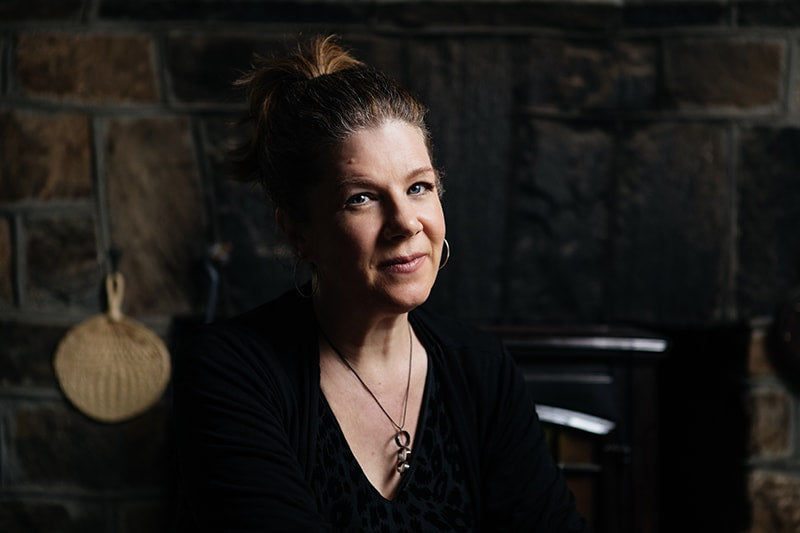

Photo courtesy of Ebru Yildiz.

Photo courtesy of Ebru Yildiz.


RC: I know you’ve worked with (Jayhawks guitarist) Gary Louris on your album Many Great Companions. On so many tracks I can hear The Jayhawks in the arrangements, especially on “Little Town” and “Berkeley.” How do these collaborations influence the final outcome of a record?

DW: I [had done] two albums with basically the same crew. One was called The Green World and the other was called The Beauty Of The Rain. I learned from The Green World that you get the very best album by letting the producer hire the right people for the job and letting them do what they do and get out of their way. On The Beauty Of The Rain I kind of of sat back and let things breathe a bit and it became great to see how people stepped out in their own ways.

It’s no surprise to me that I’d be influenced by Gary Louris. He’s in there! But I’d be the last to know and I like the democracy involved with the final product, of letting everyone with all of their influences do what they do without giving them too much narrative.

RC: You had a long history with Nanci Griffith. Any thoughts you’d like to share on her recent passing?

DW: She loved the song “February,” and at the Rocky Mountain Folks Festival someone said, “Nanci wants to meet you.” So, they brought me back to Nanci and she was flossing her teeth. She said, “oh, oh, oh thank you for coming. I just wanted to say that I loved your song.” She went out of her way to track down an artist that she knew was going to be at this festival, to be sure that this artist knew that she supported her. This was [with] me two years into my career.


RC: I think that your promo photo for this record, where you hold a pen instead of a guitar, is appropriate. You’re a musician, a writer, a teacher, and an activist. What gives you the most joy?

DW: They all give me joy. I love the introverted phenomenon of writing a song and saying, “this is what I want to say,” and I love the fact that the songs exist. I also love stepping back from a page and saying, “that’s exactly what I wanted to say.” I wish that moment for everyone. I also love facilitating that moment. This book that I wrote, What I Found In A Thousand Towns, is about how I would go to a town and talk about how the [people in the town] have found each other and were able to do really cool stuff. Then I started to do a thing where people would bring folding chairs and talk about what they do in their town. That helped everyone walk out saying, “I’m cool,” instead of “Dar’s cool.” Across my career, nothing has made me happier than a feeling of “us” as we walked out the door as opposed to feeling like I have been the center of attention. That’s when I knew I had really accomplished something. That’s still how I feel.


Header image of Dar Williams by Ebru Yildiz.

More from Issue 145

View All Articles in Issue 145

Search Copper Magazine

#225 Capital Audiofest 2025: Must-See Stereo, Part One by Frank Doris Dec 01, 2025 #225 Otis Taylor and the Electrics Delivers a Powerful Set of Hypnotic Modern Blues by Frank Doris Dec 01, 2025 #225 A Christmas Miracle by B. Jan Montana Dec 01, 2025 #225 T.H.E. Show New York 2025, Part Two: Plenty to See, Hear, and Enjoy by Frank Doris Dec 01, 2025 #225 Underappreciated Artists, Part One: Martin Briley by Rich Isaacs Dec 01, 2025 #225 Rock and Roll is Here to Stay by Wayne Robins Dec 01, 2025 #225 A Lifetime of Holiday Record (and CD) Listening by Rudy Radelic Dec 01, 2025 #225 Little Feat: Not Saying Goodbye, Not Yet by Ray Chelstowski Dec 01, 2025 #225 How to Play in a Rock Band, Part 18: Dealing With Burnout by Frank Doris Dec 01, 2025 #225 The People Who Make Audio Happen: CanJam SoCal 2025 by Harris Fogel Dec 01, 2025 #225 Chicago’s Sonic Sanctuaries: Four Hi‑Fi Listening Bars Channeling the Jazz‑Kissa Spirit by Olivier Meunier-Plante Dec 01, 2025 #225 From The Audiophile’s Guide: Controlling Bass Frequencies Through Membrane Absorbers (and How to Build Your Own) by Paul McGowan Dec 01, 2025 #225 Your Editor’s Tips for Attending Audio Shows by Frank Doris Dec 01, 2025 #225 PS Audio in the News by Frank Doris Dec 01, 2025 #225 Back to My Reel-to-Reel Roots, Part 24 by Ken Kessler Dec 01, 2025 #225 Holiday Music by Frank Doris Dec 01, 2025 #225 Puppy Prognostication by Peter Xeni Dec 01, 2025 #225 How to Post Comments on Copper by Frank Doris Dec 01, 2025 #225 Living Color by Rudy Radelic Dec 01, 2025 #224 T.H.E. Show New York 2025, Part One: A New Beginning by Frank Doris Nov 03, 2025 #224 Fool’s Leap of Faith is the Extraordinary Octave Records Debut from Singer/Songwriter Tyler Burba and Visit by Frank Doris Nov 03, 2025 #224 The Beatles’ “Aeolian Cadences.” What? by Wayne Robins Nov 03, 2025 #224 Persona Non Grata by B. Jan Montana Nov 03, 2025 #224 Talking With Recording Engineer Barry Diament of Soundkeeper Recordings, Part Two by Frank Doris Nov 03, 2025 #224 B Sides, B Movies, and Beware of Zombies by Rudy Radelic Nov 03, 2025 #224 The Burn-In Chronicles: 1,000 Hours to Sonic Salvation by Olivier Meunier-Plante Nov 03, 2025 #224 A Conversation With Mat Weisfeld of VPI Industries by Joe Caplan Nov 03, 2025 #224 Blues-Rocker Kenny Wayne Shepherd Celebrates 30 Years of Ledbetter Heights by Ray Chelstowski Nov 03, 2025 #224 Playing in a Rock Band, 17: When Good Gigs Go Bad, Part Two by Frank Doris Nov 03, 2025 #224 From The Audiophile’s Guide: Dealing with Odd-Shaped Rooms by Paul McGowan Nov 03, 2025 #224 TEAC’s TN-3B-SE Turntable Plays Bob Dylan by Howard Kneller Nov 03, 2025 #224 PS Audio in the News by Frank Doris Nov 03, 2025 #224 Lost in Translation by Peter Xeni Nov 03, 2025 #224 Reel-to-Reel Roots, Part 23: Better Than Rice Krispies by Ken Kessler Nov 03, 2025 #224 I Bring Joy! by Frank Doris Nov 03, 2025 #224 Screen Test by Rich Isaacs Nov 03, 2025 #224 How to Post Comments on Copper by Frank Doris Nov 03, 2025 #132 Dr. Patrick Gleeson: The Interview, Part Two by Rich Isaacs Oct 07, 2025 #223 World Fusion Meets Flamenco in Gratitude from Steve Mullins and Rim of the Well by Frank Doris Oct 06, 2025 #223 Judging Albums by Their Covers by Rich Isaacs Oct 06, 2025 #223 Recent Arrivals and 12-inch Royalty by Rudy Radelic Oct 06, 2025 #223 Summer of Creem, Part Two by Wayne Robins Oct 06, 2025 #223 Recording Engineer Barry Diament of Soundkeeper Recordings: Striving for Natural Sound by Frank Doris Oct 06, 2025 #223 Tea on the Terrace by B. Jan Montana Oct 06, 2025 #223 How Good Can Car Audio Get? by Joe Caplan Oct 06, 2025 #223 The Advantages of a Dedicated Listening Room by Paul McGowan Oct 06, 2025 #223 1! 2! 3! 4! Surrounded by the Ramones in Dolby Atmos! by Frank Doris Oct 06, 2025

Dar Williams: Writing Songs That Matter

Dar Williams: Writing Songs That Matter

The folk community is quite a bit like the jazz world. You earn respect over time and across a strong body of work. For Dar Williams, the path from debut to heralded show opener was remarkably short. In addition to music that had a fresh voice, she was helped by the public support she received from giants in the genre like the late Nanci Griffith. For thirty years Williams has been making music, writing books, teaching classes in her retreats, and lecturing on a whole range of topics. Now, she is bringing a new album to market, her first in six years on BMG’s new boutique Americana label, Renew. I’ll Meet You Here is her twelfth studio record, to be released on October 1, and reunites her with long-time producer Stewart Lerman, bassist Gail Ann Dorsey and string master Larry Campbell.

In late February of 2020, she cut the title tune in Woodstock with Dorsey and Campbell. When told at the time that they had to postpone a mid-March mixing date, Campbell said he wasn’t feeling well. As it turned out, he had contracted a serious case of COVID-19. By the time he recovered, they knew that a 2020 release would need to be pushed back.

Williams instead worked on her latest book, Writing a Song That Matters, titled after the songwriting retreats she began conducting in 2013. Williams had published two young-adult novels with Scholastic in the mid-2000s, along with a green-subject-matter blog for Huffpost, before she tackled her 2017 urban planning study, What I Found in a Thousand Towns: A Traveling Musician’s Guide to Rebuilding America’s Communities – One Coffee Shop, Dog Run & Open-Mike Night at a Time.

Williams then returned to finish the record, and the result is a collection of songs that sits among her best. The record, like any single great folk song, tells a story. The album unfolds like one big song and finds just the right places to land a punch and plant a kiss. It’s something that will clearly connect with her fans and come to life in live settings in ways that only an audience can help guide.

We got a chance to talk about quite a lot with Dar. Unfortunately, our exchange on the great recording studios of New York City didn’t make the final edit (maybe they will appear in a later piece). But we did talk at length about the new record, her long-time close friend Nanci Griffith, and what brings her real joy.


Ray Chelstowski: I’ll Meet You Here is your first record in six years. Why so long between releases?

Dar Williams: Well arguably I did have a record that came out in 2017, but it was a book (laughs). But seriously, this album was supposed to come out last year, but at some point, the pandemic is allowed to be bigger than your vanity.

RC: How has it been working with a new label?

DW: Oh it’s been just magic. I was with a label [Razor & Tie] for twenty years and I loved them. But they were called a “record company,” and I just couldn’t see how they were transitioning into the streaming industry. A lot of record companies had been making that transition, but by then the owners of Razor & Tie had sold their label to Concord. So I decided to put out an album on my own to see what that was like. Everyone asked if that gave me more freedom, and if I made more money doing it myself. I told them I didn’t have more freedom, and I didn’t make more money. It was just different, and it gave me empathy for all of the people who do this on their own.

I was in L.A. and my manager had me meet with my music publishers. They mentioned that they were starting a new label that would be almost exactly in the vein of what I do musically. If I was to come up with a label “dream team” this would be it, and I knew I’d be crazy to say no to that.

RC: It’s exciting to see a BMG develop a boutique label and really allow it to do what’s best for the artist and the genre.

DW: I totally agree. There are the labels where the staff does literally nothing and they say everything [that goes wrong] is your entire fault. And then there is the [my current] label that does all of this invisible stuff that I don’t even know about. There are all these little anchors and pins and strings that hold everything together, and there are all sorts of ways to do it right. A lot of it is just tied to the infrastructure of the label. Renew does their best to make me look great while they do all of the heavy lifting. So, the fact that it comes out of BMG, where this is a spinoff, is all the better.

RC: You began recording I’ll Meet You Here before the pandemic. How did you finally complete it?

DW: I did the whole album, and there was one track that wasn’t coming along the way we wanted. I thought it needed fresh ears, and went to Larry and asked him if he could do this as a duet. So, that became an easy solution. I was on tour then so we couldn’t mix Larry’s track, “Time Be My Friend.” He was going to come down to New Jersey and do it with the rest of the original team, but I couldn’t make my travel work for the date that we wanted. So we delayed the mixing date by a couple of days. Then Larry said, “I don’t really feel well,” and that became the start of his COVID nightmare. It really became “there but for the grace of God,” because had my travel worked out differently, a lot of really cool creative people at this studio would have probably gotten it.

RC: The record really tracks well and has great pacing. Did you have a vision for that when you went in to record?

DW: I have a vision and I have a great manager and now a great record label. They recommended some tracking that I hadn’t thought of that was better than my ideas (laughs). We did want to end obviously with [the song] “You’re Aging Well” because [the album is all] about the return. I wanted to start either with “Time Be My Friend” or “You Give It All Away,” and it was really great to have them offer up their opinions. But in the end this one kind of tracked itself.

RC: You decided to revisit “You’re Aging Well” from your 1994 album, The Honesty Room. This version has no guitar. What prompted that approach?

DW: We were putting the guitar together with the piano and I flubbed a couple of times. Then Stewart asked, “do we really need the guitar?” and we looked at each other and said “absolutely not.” Bryn Roberts, [who has been playing keyboards with me], is a very accomplished jazz musician [and is] used to holding down entire arrangements on his own. We had been playing together for years, so we took the guitar away and the song took only one take.


Photo courtesy of Ebru Yildiz.

Photo courtesy of Ebru Yildiz.


RC: I know you’ve worked with (Jayhawks guitarist) Gary Louris on your album Many Great Companions. On so many tracks I can hear The Jayhawks in the arrangements, especially on “Little Town” and “Berkeley.” How do these collaborations influence the final outcome of a record?

DW: I [had done] two albums with basically the same crew. One was called The Green World and the other was called The Beauty Of The Rain. I learned from The Green World that you get the very best album by letting the producer hire the right people for the job and letting them do what they do and get out of their way. On The Beauty Of The Rain I kind of of sat back and let things breathe a bit and it became great to see how people stepped out in their own ways.

It’s no surprise to me that I’d be influenced by Gary Louris. He’s in there! But I’d be the last to know and I like the democracy involved with the final product, of letting everyone with all of their influences do what they do without giving them too much narrative.

RC: You had a long history with Nanci Griffith. Any thoughts you’d like to share on her recent passing?

DW: She loved the song “February,” and at the Rocky Mountain Folks Festival someone said, “Nanci wants to meet you.” So, they brought me back to Nanci and she was flossing her teeth. She said, “oh, oh, oh thank you for coming. I just wanted to say that I loved your song.” She went out of her way to track down an artist that she knew was going to be at this festival, to be sure that this artist knew that she supported her. This was [with] me two years into my career.


RC: I think that your promo photo for this record, where you hold a pen instead of a guitar, is appropriate. You’re a musician, a writer, a teacher, and an activist. What gives you the most joy?

DW: They all give me joy. I love the introverted phenomenon of writing a song and saying, “this is what I want to say,” and I love the fact that the songs exist. I also love stepping back from a page and saying, “that’s exactly what I wanted to say.” I wish that moment for everyone. I also love facilitating that moment. This book that I wrote, What I Found In A Thousand Towns, is about how I would go to a town and talk about how the [people in the town] have found each other and were able to do really cool stuff. Then I started to do a thing where people would bring folding chairs and talk about what they do in their town. That helped everyone walk out saying, “I’m cool,” instead of “Dar’s cool.” Across my career, nothing has made me happier than a feeling of “us” as we walked out the door as opposed to feeling like I have been the center of attention. That’s when I knew I had really accomplished something. That’s still how I feel.


Header image of Dar Williams by Ebru Yildiz.

0 comments

Leave a comment

0 Comments

Your avatar

Loading comments...

🗑️ Delete Comment

Enter moderator password to delete this comment: