COPPER

A PS Audio Publication

Issue 21 • Free Online Magazine

Issue 21 MAKE IT YOURSELF

“CNC” Moving Magnet Cartridge Phono Stage

My friend Bill and I wanted a simple phono pre-amp for shop use, one that was not expensive but would give high end performance. I like the KISS principle and picked the recommended circuit from the National Semiconductor datasheet using two LME49720 op amps.

Two sockets, two chips, two 9V batteries, a switch, two 100uf power supply caps and a handful of .1% and 1% resistors with Panasonic polypropylene caps assembled by Bill on a RatShack perf board and the simple little preamp sounded VERY good!  On initial listening to an acoustic performance it was open, airy and very detailed. It was much better than the internal phono pre of the “inexpensive” shop receiver.

For a total outlay under $50, we were quite pleased. I shared this breadboard phono pre amp with the good folks at Audiokarma.org.  The DIY crowd there then ran with it and went so far as to create PC boards and build of material lists.  The thread is over 125 pages, 2500 replies and 420,000 views. People from all over the world have built these little wonders that the group dubbed “CNC” for Charlotte, North Carolina. The pc board and BOM include switchable input loading so you can try different loads on your favorite moving magnet cartridge. Industry standard is 47k ohm. With the CNC you can also try 18k, 32k and 62k to fine tune the sound. There are also discussions about plugin power supplies so you are not reliant on batteries, including schematics and PC board layouts. I prefer batteries as they provide cleaner DC power. But if you forget to turn off the CNC after use there go your new 9 volts (ask me how I know…) Lantern batteries, rechargeable batteries or AGM batteries are also options. This thread is a wealth of DIY information, including tips on how to populate a pc board and tips on soldering.

http://audiokarma.org/forums/index.php?threads/another-super-high-end-phono-stage-no-expense-spared.371889/

You don’t have to have a premade PC board, but it does make assembly easier.

This pre-amp is also a great way to see for yourself if component changes affect the sound quality. Is there a difference in sound between types of capacitors? How about Op-amps? I believe there are audible differences, especially when you are amplifying a small signal in the millivolts. But don’t take my word for it. The CNC is affordable enough you can try the different components and listen and make your own decisions. My personal preference in op amps is either a pair of Burr Brown OPA2134 or replace the first Opamp with an LME4990 (you will have to put the surface mount chip on a Brown Dog adapter) or LM4562. I also prefer Polypropylene film and foil capacitors for the 1uf DC blocking/coupling capacitor, like the WIMA FKP series. You can also experiment with bypassing the 1uf with .1uf or .01uf caps. I like the Russian Teflon film capacitors as they are affordable and have a very clean top end.  Some folks swear by NOS or Russian paper in oil capacitors.

You will need a case for your pre amp. I have used jewelry boxes, cigar boxes and rat shack aluminum and plastic cases. Bill put the first board in a small, plastic toolbox. I have even gone to an arts and crafts store and used a basswood craft box that looked like a book with hinged lid. Use your imagination- repurpose something that will look cool on your shelf. Happy Listening!

Preliminary Bill of Materials:

Quantity Component
1 PCB Board
2  Resistors 0.25W,  100 ohm
 2 Resistors 0.25W, 130  ohm
 2 Resistors 0.25W, 180 ohm
 6 Resistors 0.25W, 300 ohm
 2 Resistors 0.25W, 2k2 ohm
 4 Resistors 0.25W, 3k3 ohm
 2 Resistors 0.25W, 16k ohm
 2 Resistors 0.25W, 33k ohm
 2 Resistors 0.25W, 82k ohm
4 Resistors 0.25W, 110k ohm
2 Resistors 0.25W, 150k ohm
2 8-Pin DIL Sockets
2 2-Way DIP Switches
2 4-Way DIP Switches
2 AD823 or OPA2134 or LM4562 Op Amps
4 Ceramic Capacitors, 100 nF
2 Polyester Film Capacitors, 47 nF
4 Polyester Film Capacitors, 68 nF
2 Polyester Film Capacitors, 1 uF
4 Electrolytic Capacitors, 22 uF
2 DG301 Screw Terminals, Two Positions
2 DG301 Screw Terminals, Three Positions
2 9V Batteries
2 9V Battery Connectors

Note: The schematic above should be considered preliminary. A complete, detailed schematic will appear in Copper #22, along with a source for finished circuit boards and a link to a Digi-Key shopping cart to simplify purchase of parts. For the PCB work and BOM we give credit and thanks to http://muffsy.com ! —Ed.
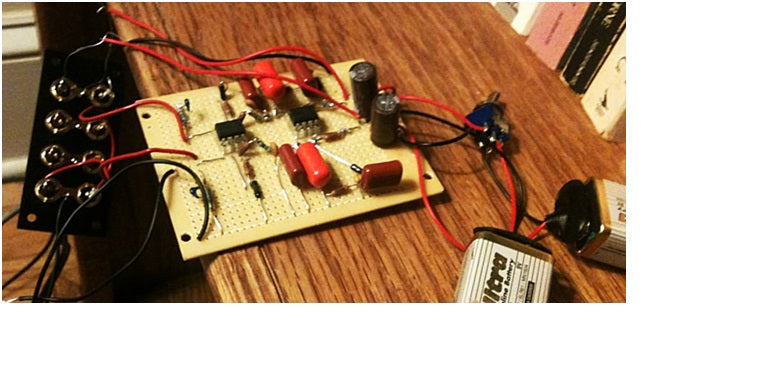

Board #1—before it was christened “CNC”.


“CNC” phono stage in flea market jewelry box.


Inside the jewelry box.
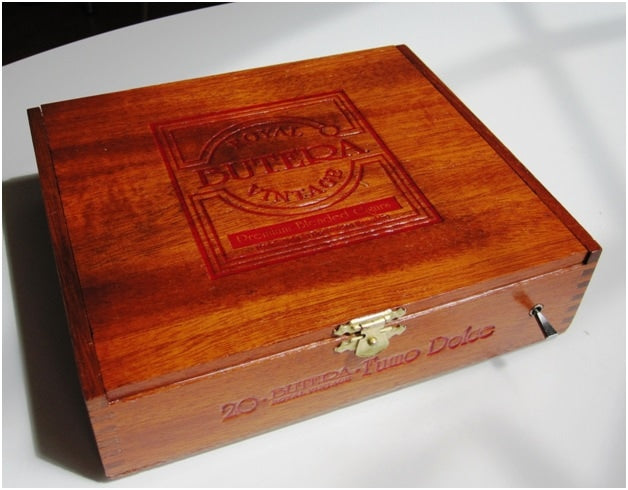

This wooden cigar box cost me $1 at the flea market.


The box had room for spare batteries. The holders were also from Digikey.


Second “CNC” phono stage in a Godinger jewelry box- RCA jacks moved to back.


“TurntableDaddy” Big Bill put board #1 in a cheap toolbox for shop use!


The extra space in the toolbox allowed use of lantern batteries.

More from Issue 21

View All Articles in Issue 21

Search Copper Magazine

#231 Piano Prodigy Jude Kofie Releases His Debut Album On Octave Records by Frank Doris Jun 01, 2026 #231 Underappreciated Artists, Part Two: City Boy by Rich Isaacs Jun 01, 2026 #231 Music and the Art of Creation: Talking With Saxophonist Rob Scheps by Joe Caplan Jun 01, 2026 #231 How to Play in a Rock Band, 24: Further Adventures at the 2026 Montauk Music Festival by Frank Doris Jun 01, 2026 #231 Courtney Barnett: Creature of Habit by Wayne Robins Jun 01, 2026 #231 Angine de Poitrine: Interstellar Guitar Rock Saviors Headed for Late-Night TV Pop Stardom? by Mark Lepage Jun 01, 2026 #231 My Impressions of AXPONA 2026, Part One by Frank Doris Jun 01, 2026 #231 2026 La Jolla Concours d'Elegance: Another Aesthetic Feast by B. Jan Montana Jun 01, 2026 #231 Country Music Icon Jo Dee Messina’s Bridges: A New Beginning by Ray Chelstowski Jun 01, 2026 #231 The Luxury Dispatch Hosts a Video Podcast With Ken Kessler by Ken Kessler Jun 01, 2026 #231 The Vinyl Beat: Tracking in the Motor City by Rudy Radelic Jun 01, 2026 #231 Lots of Fun With DSP: The Ferrum Audio WANDLA DAC and Its Tube Mode by Frank Doris Jun 01, 2026 #231 From The Audiophile's Guide: Digital Source Components and Streaming Audio by Paul McGowan Jun 01, 2026 #231 Onkyo’s Monster M-510 power amplifier by The Staff at Just Audio Jun 01, 2026 #231 PS Audio in the News by PS Audio Staff Jun 01, 2026 #231 Naming Convention by Peter Xeni Jun 01, 2026 #231 Les Invisibles by Frank Doris Jun 01, 2026 #231 Wildlife Scene by James Schrimpf Jun 01, 2026 #230 Camaraderie by B. Jan Montana May 04, 2026 #230 AXPONA 2026: A Family Gathering by Paul McGowan May 04, 2026 #230 Pianist Ryan Benthall Explores Jazz Realms and Far Beyond With Divine Sky by Frank Doris May 04, 2026 #230 The Vinyl Beat in AXPONA-Land by Rudy Radelic May 04, 2026 #230 Teddy Thompson’s Musical Growth Deepens With Never Be the Same by Ray Chelstowski May 04, 2026 #230 More Fun in the Sun: Florida Audio Expo, Part Two by Frank Doris May 04, 2026 #230 CanJam NYC 2026 Show Report: Heady Sound, Part Two by Frank Doris and Harris Fogel May 04, 2026 #230 Sonic Youth On Murray Street by Wayne Robins May 04, 2026 #230 Graffeo Coffee: A Symphony of Sensory Experience by Joe Caplan May 04, 2026 #230 The Saul Authority: The Story of Hi-Fi Pioneer Saul Marantz by Olivier Meunier-Plante May 04, 2026 #230 How to Play in a Rock Band, 23: Encounters With Famous Musicians, Part Two by Frank Doris May 04, 2026 #230 An Outlier in the Rack: A Vintage BIC Beam Box by The Staff at Just Audio May 04, 2026 #230 PS Audio in the News by PS Audio Staff May 04, 2026 #230 A Cautionary Tale by Rich Isaacs May 04, 2026 #230 Reel-to-Reel Roots, Part 33 (Revised): Ken Kessler Reports On the 2026 (British) AudioJumble by Ken Kessler May 04, 2026 #230 Text Messaging by Frank Doris May 04, 2026 #230 The Audiophile Rat Race by Peter Xeni May 04, 2026 #230 On the Rocks by Rich Isaacs May 04, 2026 #229 The Earliest Stars of Country Music, Part Three by Jeff Weiner Apr 06, 2026 #229 The Healing Power of Music and Sound at the Omega Institute by Joe Caplan Apr 06, 2026 #229 CanJam NYC 2026 Show Report: Heady Sound, Part One by Frank Doris Apr 06, 2026 #229 Florida Audio Expo 2026: Warming Up to High-End Audio, Part One by Frank Doris Apr 06, 2026 #229 Quick Takes: Anne Bisson, Sam Morrison, The Velvet Underground, and the Stooges by Frank Doris Apr 06, 2026 #229 The Vinyl Beat: New Arrivals, and Old Audio Show Demo Scores to Settle by Rudy Radelic Apr 06, 2026 #229 Harvard Gets a High-End Audio Education by Frank Doris Apr 06, 2026 #229 No Country for Old Knees by B. Jan Montana Apr 06, 2026 #229 How To Play in A Rock Band, 22: Encounters With Famous Musicians, Part 1 by Frank Doris Apr 06, 2026 #229 The Soulful Grooves of Guinea-Bissau by Steve Kindig Apr 06, 2026 #229 Four-Hand Piano Performance at Its Finest by Stephan Haberthür Apr 06, 2026

“CNC” Moving Magnet Cartridge Phono Stage

My friend Bill and I wanted a simple phono pre-amp for shop use, one that was not expensive but would give high end performance. I like the KISS principle and picked the recommended circuit from the National Semiconductor datasheet using two LME49720 op amps.

Two sockets, two chips, two 9V batteries, a switch, two 100uf power supply caps and a handful of .1% and 1% resistors with Panasonic polypropylene caps assembled by Bill on a RatShack perf board and the simple little preamp sounded VERY good!  On initial listening to an acoustic performance it was open, airy and very detailed. It was much better than the internal phono pre of the “inexpensive” shop receiver.

For a total outlay under $50, we were quite pleased. I shared this breadboard phono pre amp with the good folks at Audiokarma.org.  The DIY crowd there then ran with it and went so far as to create PC boards and build of material lists.  The thread is over 125 pages, 2500 replies and 420,000 views. People from all over the world have built these little wonders that the group dubbed “CNC” for Charlotte, North Carolina. The pc board and BOM include switchable input loading so you can try different loads on your favorite moving magnet cartridge. Industry standard is 47k ohm. With the CNC you can also try 18k, 32k and 62k to fine tune the sound. There are also discussions about plugin power supplies so you are not reliant on batteries, including schematics and PC board layouts. I prefer batteries as they provide cleaner DC power. But if you forget to turn off the CNC after use there go your new 9 volts (ask me how I know…) Lantern batteries, rechargeable batteries or AGM batteries are also options. This thread is a wealth of DIY information, including tips on how to populate a pc board and tips on soldering.

http://audiokarma.org/forums/index.php?threads/another-super-high-end-phono-stage-no-expense-spared.371889/

You don’t have to have a premade PC board, but it does make assembly easier.

This pre-amp is also a great way to see for yourself if component changes affect the sound quality. Is there a difference in sound between types of capacitors? How about Op-amps? I believe there are audible differences, especially when you are amplifying a small signal in the millivolts. But don’t take my word for it. The CNC is affordable enough you can try the different components and listen and make your own decisions. My personal preference in op amps is either a pair of Burr Brown OPA2134 or replace the first Opamp with an LME4990 (you will have to put the surface mount chip on a Brown Dog adapter) or LM4562. I also prefer Polypropylene film and foil capacitors for the 1uf DC blocking/coupling capacitor, like the WIMA FKP series. You can also experiment with bypassing the 1uf with .1uf or .01uf caps. I like the Russian Teflon film capacitors as they are affordable and have a very clean top end.  Some folks swear by NOS or Russian paper in oil capacitors.

You will need a case for your pre amp. I have used jewelry boxes, cigar boxes and rat shack aluminum and plastic cases. Bill put the first board in a small, plastic toolbox. I have even gone to an arts and crafts store and used a basswood craft box that looked like a book with hinged lid. Use your imagination- repurpose something that will look cool on your shelf. Happy Listening!

Preliminary Bill of Materials:

Quantity Component
1 PCB Board
2  Resistors 0.25W,  100 ohm
 2 Resistors 0.25W, 130  ohm
 2 Resistors 0.25W, 180 ohm
 6 Resistors 0.25W, 300 ohm
 2 Resistors 0.25W, 2k2 ohm
 4 Resistors 0.25W, 3k3 ohm
 2 Resistors 0.25W, 16k ohm
 2 Resistors 0.25W, 33k ohm
 2 Resistors 0.25W, 82k ohm
4 Resistors 0.25W, 110k ohm
2 Resistors 0.25W, 150k ohm
2 8-Pin DIL Sockets
2 2-Way DIP Switches
2 4-Way DIP Switches
2 AD823 or OPA2134 or LM4562 Op Amps
4 Ceramic Capacitors, 100 nF
2 Polyester Film Capacitors, 47 nF
4 Polyester Film Capacitors, 68 nF
2 Polyester Film Capacitors, 1 uF
4 Electrolytic Capacitors, 22 uF
2 DG301 Screw Terminals, Two Positions
2 DG301 Screw Terminals, Three Positions
2 9V Batteries
2 9V Battery Connectors

Note: The schematic above should be considered preliminary. A complete, detailed schematic will appear in Copper #22, along with a source for finished circuit boards and a link to a Digi-Key shopping cart to simplify purchase of parts. For the PCB work and BOM we give credit and thanks to http://muffsy.com ! —Ed.


Board #1—before it was christened “CNC”.


“CNC” phono stage in flea market jewelry box.


Inside the jewelry box.


This wooden cigar box cost me $1 at the flea market.


The box had room for spare batteries. The holders were also from Digikey.


Second “CNC” phono stage in a Godinger jewelry box- RCA jacks moved to back.


“TurntableDaddy” Big Bill put board #1 in a cheap toolbox for shop use!


The extra space in the toolbox allowed use of lantern batteries.

0 comments

Leave a comment

0 Comments

Your avatar

Loading comments...

🗑️ Delete Comment

Enter moderator password to delete this comment:

✏️ Edit Comment

Enter your email to verify ownership: