COPPER

A PS Audio Publication

Issue 155 • Free Online Magazine

Issue 155 Twisted Systems

We’re Not Gonna Take It!

We’re Not Gonna Take It!

Can an artist really stop the use of their songs by politicians?

As an artist and manager of the band Twisted Sister, whose music is recognized and sold around the world, I would like to bring some clarity regarding the use, and lack of control by an artist, of songs played at political rallies in the US. It is especially hard to admit that, in truth, there is nothing we can legally do (see below) to stop the use by politicians many of us really dislike.

Oh sure, you see the headlines: “so and so just threatened to sue so and so for using their hit song at political rallies.”

It makes for good theater.

It makes for good headlines and “gotcha” soundbites.

It makes the artist sound empowered.

It creates the narrative that the artist can control the situation.

Here is the truth: If the venue that the music is playing in, say, an auditorium, arena or stadium, and these venues pay yearly performance rights fees to either ASCAP (American Society of Composers, Authors and Publishers), BMI (Broadcast Music, Inc.) or SESAC (originally the Society of European Stage Authors and Composers). The constant theme running through all of these organizations is that they represent the creators – meaning the writers and composers – not the performers of music.

Going back decades, these powerful organizations and their respective political lobbies convinced Congress that the recording artist benefits from record sales and live (touring) performances and they should be grateful that their music is played (for free) on radio, TV and other outlets so they don’t need to be paid! (FYI, these organizations also make money from the touring artist, as the venue where the artist performs has to pay performance licensing fees so that the artists can perform their own music!)

Meanwhile, these organizations managed to induce venues like bars, theaters, nightclubs, arenas and later on, stadiums, to pay money every time recorded music is played. This is one of the many bones of contention that exists between the performers and the rights organizations, which is the subject of another essay for another time.

So, as of this writing, venues have unfettered use (as long as they pay licensing fees) of any of the songs in the ASCAP, BMI and SESAC catalogs (currently these three organizations have about 80 million songs registered).

When you go to a sporting event or a concert hall and hear a song over the PA system, chances are that song is very well known. Did you know that by law, the artist who is singing and/or playing that song gets paid zero, zilch, nada, nothing! That is by an act of Congress! This little tidbit really confuses people and even my family members and friends, who regularly send me texts at these kinds of events when they hear our band’s songs and assume that we must be getting paid.
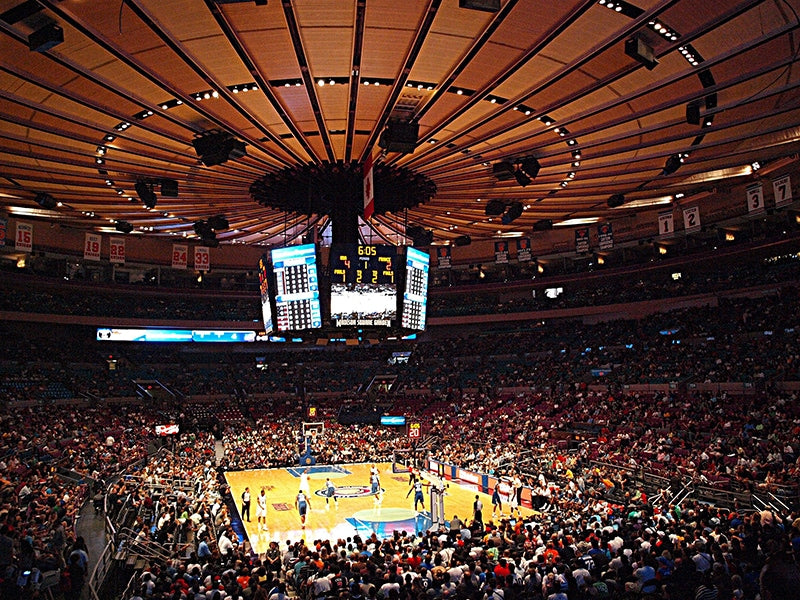
Madison Square Garden, New York, typical of a venue that would pay music licensing fees. Courtesy of Wikimedia Commons/Emmanuel Milou. Madison Square Garden, New York, typical of a venue that would pay music licensing fees. Courtesy of Wikimedia Commons/Emmanuel Milou.

Public performance use through the licensing process pays the writer and publisher, but not the artist. Not only that but no one, not the artist, writer or publisher, has any say as to who can use the music. To be clear: no one can legally stop the use of a song in any venue that pays public performance use fees when the music is used in this manner.

End of story.

But wait…what about all those threatening lawsuits to stop the use of a song played in licensed venues by someone or some organization that the artist(s) hate?

So, what can an artist do?

The first response is to have a publicist send out a threat on the artist’s behalf that the artist will take legal action.

Hopefully, this gets picked up on every imaginable media platform within hours (if not minutes!).

It’s all for show. Period.

Can this backfire against the artist?

The political landscape ain’t what it used to be compared to, say, the 1960s. Back then an artist could say they hated President Nixon or the Vietnam War and there was nearly universal acceptance of such a sentiment by their fan base. Back then, the anti-war “Fish Cheer” (look it up on YouTube if you’re not of a certain age and remember it) used by the San Francisco band Country Joe and the Fish was screamed by everyone attending their performance before the band went into their popular protest song “I-Feel-Like-I’m-Fixin’-to-Die-Rag” at music festivals around America in the late ’60s.

Back then, it seemed, the fan base all hated the war, Nixon and racism.

This was the protest era where songs like “Eve of Destruction,” “The Times They Are-a Changin’,” “War,” “We Shall Overcome,” and “Blowin’ In The Wind” were huge cultural hits, and the phrase “don’t trust anyone over 30” was a common bond.

These days, however, there is a good chance that no matter where you fall on the political landscape, once you stake out a position either supporting or critical of a politician, you will most likely anger 50 percent of your fan base!

That being said, when they fall under a cloud of publicity from an artist, the politician usually stops the use of the song (with rarely ever a comment) so as to not have any extra negative publicity brought to the campaign, and the artist, in turn, calculates the blowback.

If you can’t do it legally, then just scream!

I only wish, one day, an artist simply says this:

“While I can’t legally stop you from using my song, I do not support your beliefs, as they are contrary to everything I/we stand for, so stop exploiting my music for your political gain!” — minus the histrionics.

In other words, the artist should say, “we’re not gonna take it! So…STOP!

Header image courtesy of Pexels.com/Karolina Grabowska, cropped to fit format.


More from Issue 155

View All Articles in Issue 155

Search Copper Magazine

#226 JJ Murphy’s Sleep Paralysis is a Genre-Bending Musical Journey Through Jazz, Fusion and More by Frank Doris Jan 05, 2026 #226 Stewardship by Consent by B. Jan Montana Jan 05, 2026 #226 Food, Music, and Sensory Experience: An Interview With Professor Jonathan Zearfoss of the Culinary Institute of America by Joe Caplan Jan 05, 2026 #226 Studio Confidential: A Who’s Who of Recording Engineers Tell Their Stories by Frank Doris Jan 05, 2026 #226 Pilot Radio is Reborn, 50 Years Later: Talking With CEO Barak Epstein by Frank Doris Jan 05, 2026 #226 The Vinyl Beat Goes Down to Tijuana (By Way of Los Angeles), Part One by Rudy Radelic Jan 05, 2026 #226 Capital Audiofest 2025: Must-See Stereo, Part Two by Frank Doris Jan 05, 2026 #226 My Morning Jacket’s Carl Broemel and Tyler Ramsey Collaborate on Their Acoustic Guitar Album, Celestun by Ray Chelstowski Jan 05, 2026 #226 The People Who Make Audio Happen: CanJam SoCal 2025, Part Two by Harris Fogel Jan 05, 2026 #226 How to Play in a Rock Band, 19: Touring Can Make You Crazy, Part One by Frank Doris Jan 05, 2026 #226 Linda Ronstadt Goes Bigger by Wayne Robins Jan 05, 2026 #226 From The Audiophile’s Guide: Active Room Correction and Digital Signal Processing by Paul McGowan Jan 05, 2026 #226 PS Audio in the News by Frank Doris Jan 05, 2026 #226 Back to My Reel-to-Reel Roots, Part 25: Half-Full, Not Empty by Ken Kessler Jan 05, 2026 #226 Happy New Year! by Frank Doris Jan 05, 2026 #226 Turn It Down! by Peter Xeni Jan 05, 2026 #226 Ghost Riders by James Schrimpf Jan 05, 2026 #226 A Factory Tour of Audio Manufacturer German Physiks by Markus "Marsu" Manthey Jan 04, 2026 #225 Capital Audiofest 2025: Must-See Stereo, Part One by Frank Doris Dec 01, 2025 #225 Otis Taylor and the Electrics Delivers a Powerful Set of Hypnotic Modern Blues by Frank Doris Dec 01, 2025 #225 A Christmas Miracle by B. Jan Montana Dec 01, 2025 #225 T.H.E. Show New York 2025, Part Two: Plenty to See, Hear, and Enjoy by Frank Doris Dec 01, 2025 #225 Underappreciated Artists, Part One: Martin Briley by Rich Isaacs Dec 01, 2025 #225 Rock and Roll is Here to Stay by Wayne Robins Dec 01, 2025 #225 A Lifetime of Holiday Record (and CD) Listening by Rudy Radelic Dec 01, 2025 #225 Little Feat: Not Saying Goodbye, Not Yet by Ray Chelstowski Dec 01, 2025 #225 How to Play in a Rock Band, Part 18: Dealing With Burnout by Frank Doris Dec 01, 2025 #225 The People Who Make Audio Happen: CanJam SoCal 2025 by Harris Fogel Dec 01, 2025 #225 Chicago’s Sonic Sanctuaries: Four Hi‑Fi Listening Bars Channeling the Jazz‑Kissa Spirit by Olivier Meunier-Plante Dec 01, 2025 #225 From The Audiophile’s Guide: Controlling Bass Frequencies Through Membrane Absorbers (and How to Build Your Own) by Paul McGowan Dec 01, 2025 #225 Your Editor’s Tips for Attending Audio Shows by Frank Doris Dec 01, 2025 #225 PS Audio in the News by Frank Doris Dec 01, 2025 #225 Back to My Reel-to-Reel Roots, Part 24 by Ken Kessler Dec 01, 2025 #225 Holiday Music by Frank Doris Dec 01, 2025 #225 Puppy Prognostication by Peter Xeni Dec 01, 2025 #225 How to Post Comments on Copper by Frank Doris Dec 01, 2025 #225 Living Color by Rudy Radelic Dec 01, 2025 #224 T.H.E. Show New York 2025, Part One: A New Beginning by Frank Doris Nov 03, 2025 #224 Fool’s Leap of Faith is the Extraordinary Octave Records Debut from Singer/Songwriter Tyler Burba and Visit by Frank Doris Nov 03, 2025 #224 The Beatles’ “Aeolian Cadences.” What? by Wayne Robins Nov 03, 2025 #224 Persona Non Grata by B. Jan Montana Nov 03, 2025 #224 Talking With Recording Engineer Barry Diament of Soundkeeper Recordings, Part Two by Frank Doris Nov 03, 2025 #224 B Sides, B Movies, and Beware of Zombies by Rudy Radelic Nov 03, 2025 #224 The Burn-In Chronicles: 1,000 Hours to Sonic Salvation by Olivier Meunier-Plante Nov 03, 2025 #224 A Conversation With Mat Weisfeld of VPI Industries by Joe Caplan Nov 03, 2025 #224 Blues-Rocker Kenny Wayne Shepherd Celebrates 30 Years of Ledbetter Heights by Ray Chelstowski Nov 03, 2025 #224 Playing in a Rock Band, 17: When Good Gigs Go Bad, Part Two by Frank Doris Nov 03, 2025

We’re Not Gonna Take It!

We’re Not Gonna Take It!

Can an artist really stop the use of their songs by politicians?

As an artist and manager of the band Twisted Sister, whose music is recognized and sold around the world, I would like to bring some clarity regarding the use, and lack of control by an artist, of songs played at political rallies in the US. It is especially hard to admit that, in truth, there is nothing we can legally do (see below) to stop the use by politicians many of us really dislike.

Oh sure, you see the headlines: “so and so just threatened to sue so and so for using their hit song at political rallies.”

It makes for good theater.

It makes for good headlines and “gotcha” soundbites.

It makes the artist sound empowered.

It creates the narrative that the artist can control the situation.

Here is the truth: If the venue that the music is playing in, say, an auditorium, arena or stadium, and these venues pay yearly performance rights fees to either ASCAP (American Society of Composers, Authors and Publishers), BMI (Broadcast Music, Inc.) or SESAC (originally the Society of European Stage Authors and Composers). The constant theme running through all of these organizations is that they represent the creators – meaning the writers and composers – not the performers of music.

Going back decades, these powerful organizations and their respective political lobbies convinced Congress that the recording artist benefits from record sales and live (touring) performances and they should be grateful that their music is played (for free) on radio, TV and other outlets so they don’t need to be paid! (FYI, these organizations also make money from the touring artist, as the venue where the artist performs has to pay performance licensing fees so that the artists can perform their own music!)

Meanwhile, these organizations managed to induce venues like bars, theaters, nightclubs, arenas and later on, stadiums, to pay money every time recorded music is played. This is one of the many bones of contention that exists between the performers and the rights organizations, which is the subject of another essay for another time.

So, as of this writing, venues have unfettered use (as long as they pay licensing fees) of any of the songs in the ASCAP, BMI and SESAC catalogs (currently these three organizations have about 80 million songs registered).

When you go to a sporting event or a concert hall and hear a song over the PA system, chances are that song is very well known. Did you know that by law, the artist who is singing and/or playing that song gets paid zero, zilch, nada, nothing! That is by an act of Congress! This little tidbit really confuses people and even my family members and friends, who regularly send me texts at these kinds of events when they hear our band’s songs and assume that we must be getting paid.

Madison Square Garden, New York, typical of a venue that would pay music licensing fees. Courtesy of Wikimedia Commons/Emmanuel Milou. Madison Square Garden, New York, typical of a venue that would pay music licensing fees. Courtesy of Wikimedia Commons/Emmanuel Milou.

Public performance use through the licensing process pays the writer and publisher, but not the artist. Not only that but no one, not the artist, writer or publisher, has any say as to who can use the music. To be clear: no one can legally stop the use of a song in any venue that pays public performance use fees when the music is used in this manner.

End of story.

But wait…what about all those threatening lawsuits to stop the use of a song played in licensed venues by someone or some organization that the artist(s) hate?

So, what can an artist do?

The first response is to have a publicist send out a threat on the artist’s behalf that the artist will take legal action.

Hopefully, this gets picked up on every imaginable media platform within hours (if not minutes!).

It’s all for show. Period.

Can this backfire against the artist?

The political landscape ain’t what it used to be compared to, say, the 1960s. Back then an artist could say they hated President Nixon or the Vietnam War and there was nearly universal acceptance of such a sentiment by their fan base. Back then, the anti-war “Fish Cheer” (look it up on YouTube if you’re not of a certain age and remember it) used by the San Francisco band Country Joe and the Fish was screamed by everyone attending their performance before the band went into their popular protest song “I-Feel-Like-I’m-Fixin’-to-Die-Rag” at music festivals around America in the late ’60s.

Back then, it seemed, the fan base all hated the war, Nixon and racism.

This was the protest era where songs like “Eve of Destruction,” “The Times They Are-a Changin’,” “War,” “We Shall Overcome,” and “Blowin’ In The Wind” were huge cultural hits, and the phrase “don’t trust anyone over 30” was a common bond.

These days, however, there is a good chance that no matter where you fall on the political landscape, once you stake out a position either supporting or critical of a politician, you will most likely anger 50 percent of your fan base!

That being said, when they fall under a cloud of publicity from an artist, the politician usually stops the use of the song (with rarely ever a comment) so as to not have any extra negative publicity brought to the campaign, and the artist, in turn, calculates the blowback.

If you can’t do it legally, then just scream!

I only wish, one day, an artist simply says this:

“While I can’t legally stop you from using my song, I do not support your beliefs, as they are contrary to everything I/we stand for, so stop exploiting my music for your political gain!” — minus the histrionics.

In other words, the artist should say, “we’re not gonna take it! So…STOP!

Header image courtesy of Pexels.com/Karolina Grabowska, cropped to fit format.


0 comments

Leave a comment

0 Comments

Your avatar

Loading comments...

🗑️ Delete Comment

Enter moderator password to delete this comment: