COPPER

A PS Audio Publication

Issue 170 • Free Online Magazine

Issue 170 New Vistas

Pilgrimage to Sturgis, Part 28

Pilgrimage to Sturgis, Part 28


It was after 10 when Chip shook me awake the next morning. “Take a shower, Montana, Candy will soon have breakfast ready.”

I was still in a daze after a late night of partying with the Hell’s Angels. A cold shower helped me snap out of it.

“Those guys surprised me with how pleasant they are, Chip,” I commented over breakfast. “Nothing like what I’ve seen in the movies.”

“They are super hosts,” Candy added. “Every time we go there, we party too long. I just love that house.”

“Yah, what a lifestyle, I’m envious.”

“All that glitters is not gold,” Chip responded, “When they’re wearing their colors, they’re just a bunch of bikers looking for fun. But don’t be fooled by that; those guys are businessmen involved in the wholesaling of illegal drugs. Joker didn’t pay for that place with the salary he made as a probation officer.”

“I figured as much. Still, I really enjoyed that beautiful home, the food, and the company.”

“They are always looking to conscript people who won’t attract the attention of the police, Montana, and they see you as a prospect. They draw prospects by making friends, doing some favors, then asking for one in return. Had you stayed the night, you’d have been asked to deliver a package the next morning on your way back to my place. Once you do, you’ve committed a felony and they’ve got you. They’ll hold that over your head to ask for more “favors.” Before you know it, you’re part of a criminal enterprise. You’ll be making good money, but if the hammer ever drops, no jury is going to give you much sympathy. You’ll be judged like one of those bad actors in the biker movies.”

“So they were setting me up! Good lord, I had no idea…”

“Wolves can wag their tails as easily as sheepdogs.”

After packing up, I hugged Candy and thanked them for their hospitality. “I’m not sure why you guys took me in the way you did, but I appreciate it.”

“What comes around goes around Montana. You looked after Red, we look after you.”

“That wasn’t much, it didn’t take long to get him back on the road.”

“It’s not that, Montana,” Chip responded. “You took care of a guy that anyone else would have avoided. I admire that. You tolerated us moving into your campsite in Spearfish without permission. That deserves to be rewarded. You’re welcome here any time.”
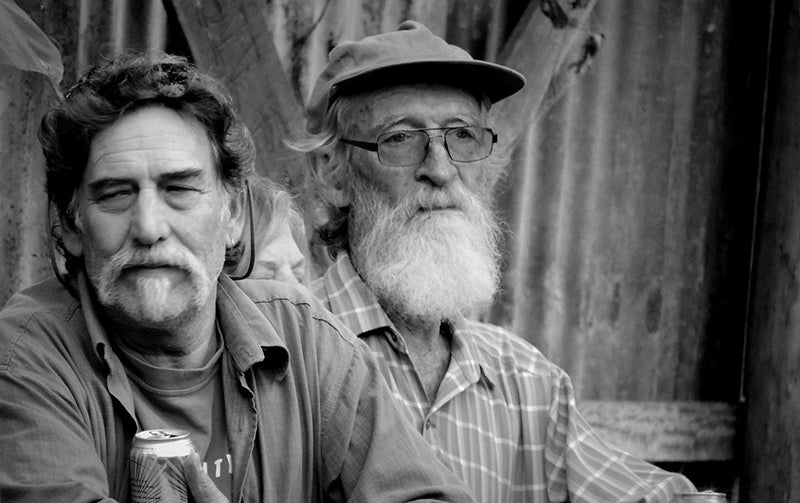


I hugged Chip also, whether he wanted it or not. “Tell the others good-bye for me, please?”

The problem with riding across the prairies is that they never seem to end. With temperatures flirting at 100 degrees and suicidal bugs striking like bullets, a biker could get the idea that somebody “up there” was out to get him.

My mind was reeling with emotion. I was saddened by the thought that this would likely be the end of my renegades adventure. It had been quite an experience. How wrong my initial impressions had been. Chip was more of a patriarch than a bully. And far from being an effete narcissist, the stunning Candy was one of the most loving people I’d ever met. I expected that Spider would be unable or unwilling to pay for the damage he caused to my bike, but he made good. Gimp was not an angry, bitter guy, he was a white knight. Big as he was, KP was almost childlike in his happy-go-lucky attitude towards life.

The only guy who turned out to be exactly as I expected was Red; he was also the man you’d expect to emerge from a boy who had been so abused. Candy’s brother, Jake, on the other hand, turned his childhood misfortune into a tire empire. Was it luck, was it fortitude…a combination of both? Or was he born with the type of character able to meet challenges? How many of us are victims of the personality we are born with? Does that absolve us of the responsibility for the type of adult we turn out to be?

It occurred to me that everyone probably has some tragedy in their background or some burden to carry. Perhaps the point of life is learning how to deal with it. Maybe I should find a way to drop my emotional baggage before it drowns me.

Then an uncomfortable thought drifted across my mind which I buried almost immediately. All the renegades had jobs, even Candy who worked for her brother part time. But Chip never went to work once, nor did he ever talk about work, and he was tight with Joker. Why did the renegades visit California before heading all the way back to Sturgis? Was it possible that Chip was working as a drug runner?

You know what your problem is, Montana, I thought to myself, you’ve got way too much time to think while crossing this grassy ocean.

When I finally got to Mitchell, I stopped at the same roadside restaurant as before to have a milkshake and enjoy the air conditioning. To my disappointment, Lonnie, the Lakota chief, his grandson Richard, and the rancher were nowhere to be seen, but the waitress remembered me. Her name was Carol. I told her about my run-in with the Hell’s Angels and how I almost got myself involved with a dangerous gang of drug pushers.

I may have fictionalized the account a little in Mark Twain fashion, but not to deceive. The mention of guns, knives, chains, threats, and blood crept into the dialogue only to satisfy the expectations of the audience.

“Oh boy, you dodged a bullet there Montana,” she responded. I nodded in agreement with a heavy sigh.

“My niece is doing very well working for drug pushers,” a farmer piped up a few stools over. “She’s with an international pharmaceutical company.”

“I’ll bet she’s not making the kind of money those Hell’s Angels are,” I said. “You should have seen the house they had.”

“She’s not,” he responded, “But the big pharmaceutical companies make exponentially more money than illegal drug pushers. They’re legal drug pushers, but they do lots of illegal things. They buy clinical trials, bribe doctors, distort science, ghost-write so-called peer review articles, and bury evidence on drug-related deaths.”

“Did your niece tell you all this, Ernie?” Carol asked.

“Yes she did. She also told me that they invent silly diseases like restless leg syndrome, dry-eye syndrome, and sleep disorders which require taking nightly doses of habit-forming tranquilizers.”

“Seems like there’s a new disorder on TV every week,” I confirmed.

“Right, and you know about them because Big Pharma spends twice as much money on promotion as they do on research and development. Their hype is especially effective with the most vulnerable elements of society – children and the elderly. They are no better than tobacco and alcohol dealers.”

“You’d think the FDA would go after them,” Carol hoped.

“The big pharmaceutical companies are some of the most powerful and profitable organizations in the world. They consider political payoffs as part of their promotional budget. The FDA will never go after them without Congressional approval.”

“That’s why they get away with all this?” I postulated; “seems hard to believe.”

“The only difference between them and the Hell’s Angels is that the pharma bosses know how to work the system. If you wanna play, you gotta pay. Politicians always need money.”

“Yah, but they do a lot of good too, right Ernie?” Carol asked.

“Yes they do, but for profit, not altruism. They’ll sell you a fake or hazardous drug as fast as a helpful one, and seldom at profit margins that reflect the cost of production. Mis-prescribed or dangerous combinations of drugs kill far more people than illegal ones, but those who play the system get off scot-free. Politicians have nothing to gain by going after them, so they go after ghetto and biker gangs to convince the public that they are serious about drug control.”

“That’s pretty cynical, Ernie.”

“Mark my words Carol, there’ll come a time when government will mandate the use of Big Pharma products.”

With that, Ernie got up, paid his bill, and walked out.

“That’ll never happen,” Carol said. “This isn’t the Soviet Union.”

“Why do old farmers always seem to be such curmudgeons?” I asked.

“Oh, that’s just Ernie. He’s probably hurting from arthritis or something.”

We chuckled as I paid my bill.


Editor’s Note: we are aware that “gimp” can have a derogatory meaning and mean no insult to anyone disabled. In the story, the person with that nickname doesn’t consider it as such, and we present the story in that context.

Previous installments appeared in Issues 143144145146147148149150151152153154155156157158, 159, 160,  161, 162, 163164165, 166, 167, 168 and 169.

Header image: South Dakota prairie, courtesy of Wikimedia Commons/Runner1928.

More from Issue 170

View All Articles in Issue 170

Search Copper Magazine

#227 Seth Lewis Gets in the Groove With Take a Look Around: a Tribute to the Meters by Frank Doris Feb 02, 2026 #227 Passport to Sound: May Anwar’s Audio Learning Experience for Young People by Frank Doris Feb 02, 2026 #227 Conjectures on Cosmic Consciousness by B. Jan Montana Feb 02, 2026 #227 The Big Takeover Turns 45 by Wayne Robins Feb 02, 2026 #227 Music and Chocolate: On the Sensory Connection by Joe Caplan Feb 02, 2026 #227 Singer/Songwriter Chris Berardo: Getting Wilder All the Time by Ray Chelstowski Feb 02, 2026 #227 The Earliest Stars of Country Music, Part One by Jeff Weiner Feb 02, 2026 #227 The Vinyl Beat Goes Down to Tijuana (By Way of Los Angeles), Part Two by Rudy Radelic Feb 02, 2026 #227 How to Play in a Rock Band, 20: On the Road With Blood, Sweat & Tears’ Guitarist Gabe Cummins by Frank Doris Feb 02, 2026 #227 From The Audiophile’s Guide: Audio Specs and Measuring by Paul McGowan Feb 02, 2026 #227 Our Brain is Always Listening by Peter Trübner Feb 02, 2026 #227 PS Audio in the News by PS Audio Staff Feb 02, 2026 #227 The Listening Chair: Sleek Style and Sound From the Luxman L3 by Howard Kneller Feb 02, 2026 #227 The Los Angeles and Orange County Audio Society Celebrates Its 32nd Anniversary, Honoring David and Sheryl Lee Wilson and Bernie Grundman by Harris Fogel Feb 02, 2026 #227 Back to My Reel-to-Reel Roots, Part 26: Half Full – Not Half Empty, Redux by Ken Kessler Feb 02, 2026 #227 That's What Puzzles Us... by Frank Doris Feb 02, 2026 #227 Record-Breaking by Peter Xeni Feb 02, 2026 #227 The Long and Winding Road by B. Jan Montana Feb 02, 2026 #226 JJ Murphy’s Sleep Paralysis is a Genre-Bending Musical Journey Through Jazz, Fusion and More by Frank Doris Jan 05, 2026 #226 Stewardship by Consent by B. Jan Montana Jan 05, 2026 #226 Food, Music, and Sensory Experience: An Interview With Professor Jonathan Zearfoss of the Culinary Institute of America by Joe Caplan Jan 05, 2026 #226 Studio Confidential: A Who’s Who of Recording Engineers Tell Their Stories by Frank Doris Jan 05, 2026 #226 Pilot Radio is Reborn, 50 Years Later: Talking With CEO Barak Epstein by Frank Doris Jan 05, 2026 #226 The Vinyl Beat Goes Down to Tijuana (By Way of Los Angeles), Part One by Rudy Radelic Jan 05, 2026 #226 Capital Audiofest 2025: Must-See Stereo, Part Two by Frank Doris Jan 05, 2026 #226 My Morning Jacket’s Carl Broemel and Tyler Ramsey Collaborate on Their Acoustic Guitar Album, Celestun by Ray Chelstowski Jan 05, 2026 #226 The People Who Make Audio Happen: CanJam SoCal 2025, Part Two by Harris Fogel Jan 05, 2026 #226 How to Play in a Rock Band, 19: Touring Can Make You Crazy, Part One by Frank Doris Jan 05, 2026 #226 Linda Ronstadt Goes Bigger by Wayne Robins Jan 05, 2026 #226 From The Audiophile’s Guide: Active Room Correction and Digital Signal Processing by Paul McGowan Jan 05, 2026 #226 PS Audio in the News by Frank Doris Jan 05, 2026 #226 Back to My Reel-to-Reel Roots, Part 25: Half-Full, Not Empty by Ken Kessler Jan 05, 2026 #226 Happy New Year! by Frank Doris Jan 05, 2026 #226 Turn It Down! by Peter Xeni Jan 05, 2026 #226 Ghost Riders by James Schrimpf Jan 05, 2026 #226 A Factory Tour of Audio Manufacturer German Physiks by Markus "Marsu" Manthey Jan 04, 2026 #225 Capital Audiofest 2025: Must-See Stereo, Part One by Frank Doris Dec 01, 2025 #225 Otis Taylor and the Electrics Delivers a Powerful Set of Hypnotic Modern Blues by Frank Doris Dec 01, 2025 #225 A Christmas Miracle by B. Jan Montana Dec 01, 2025 #225 T.H.E. Show New York 2025, Part Two: Plenty to See, Hear, and Enjoy by Frank Doris Dec 01, 2025 #225 Underappreciated Artists, Part One: Martin Briley by Rich Isaacs Dec 01, 2025 #225 Rock and Roll is Here to Stay by Wayne Robins Dec 01, 2025 #225 A Lifetime of Holiday Record (and CD) Listening by Rudy Radelic Dec 01, 2025 #225 Little Feat: Not Saying Goodbye, Not Yet by Ray Chelstowski Dec 01, 2025 #225 How to Play in a Rock Band, Part 18: Dealing With Burnout by Frank Doris Dec 01, 2025 #225 The People Who Make Audio Happen: CanJam SoCal 2025 by Harris Fogel Dec 01, 2025 #225 Chicago’s Sonic Sanctuaries: Four Hi‑Fi Listening Bars Channeling the Jazz‑Kissa Spirit by Olivier Meunier-Plante Dec 01, 2025

Pilgrimage to Sturgis, Part 28

Pilgrimage to Sturgis, Part 28


It was after 10 when Chip shook me awake the next morning. “Take a shower, Montana, Candy will soon have breakfast ready.”

I was still in a daze after a late night of partying with the Hell’s Angels. A cold shower helped me snap out of it.

“Those guys surprised me with how pleasant they are, Chip,” I commented over breakfast. “Nothing like what I’ve seen in the movies.”

“They are super hosts,” Candy added. “Every time we go there, we party too long. I just love that house.”

“Yah, what a lifestyle, I’m envious.”

“All that glitters is not gold,” Chip responded, “When they’re wearing their colors, they’re just a bunch of bikers looking for fun. But don’t be fooled by that; those guys are businessmen involved in the wholesaling of illegal drugs. Joker didn’t pay for that place with the salary he made as a probation officer.”

“I figured as much. Still, I really enjoyed that beautiful home, the food, and the company.”

“They are always looking to conscript people who won’t attract the attention of the police, Montana, and they see you as a prospect. They draw prospects by making friends, doing some favors, then asking for one in return. Had you stayed the night, you’d have been asked to deliver a package the next morning on your way back to my place. Once you do, you’ve committed a felony and they’ve got you. They’ll hold that over your head to ask for more “favors.” Before you know it, you’re part of a criminal enterprise. You’ll be making good money, but if the hammer ever drops, no jury is going to give you much sympathy. You’ll be judged like one of those bad actors in the biker movies.”

“So they were setting me up! Good lord, I had no idea…”

“Wolves can wag their tails as easily as sheepdogs.”

After packing up, I hugged Candy and thanked them for their hospitality. “I’m not sure why you guys took me in the way you did, but I appreciate it.”

“What comes around goes around Montana. You looked after Red, we look after you.”

“That wasn’t much, it didn’t take long to get him back on the road.”

“It’s not that, Montana,” Chip responded. “You took care of a guy that anyone else would have avoided. I admire that. You tolerated us moving into your campsite in Spearfish without permission. That deserves to be rewarded. You’re welcome here any time.”


I hugged Chip also, whether he wanted it or not. “Tell the others good-bye for me, please?”

The problem with riding across the prairies is that they never seem to end. With temperatures flirting at 100 degrees and suicidal bugs striking like bullets, a biker could get the idea that somebody “up there” was out to get him.

My mind was reeling with emotion. I was saddened by the thought that this would likely be the end of my renegades adventure. It had been quite an experience. How wrong my initial impressions had been. Chip was more of a patriarch than a bully. And far from being an effete narcissist, the stunning Candy was one of the most loving people I’d ever met. I expected that Spider would be unable or unwilling to pay for the damage he caused to my bike, but he made good. Gimp was not an angry, bitter guy, he was a white knight. Big as he was, KP was almost childlike in his happy-go-lucky attitude towards life.

The only guy who turned out to be exactly as I expected was Red; he was also the man you’d expect to emerge from a boy who had been so abused. Candy’s brother, Jake, on the other hand, turned his childhood misfortune into a tire empire. Was it luck, was it fortitude…a combination of both? Or was he born with the type of character able to meet challenges? How many of us are victims of the personality we are born with? Does that absolve us of the responsibility for the type of adult we turn out to be?

It occurred to me that everyone probably has some tragedy in their background or some burden to carry. Perhaps the point of life is learning how to deal with it. Maybe I should find a way to drop my emotional baggage before it drowns me.

Then an uncomfortable thought drifted across my mind which I buried almost immediately. All the renegades had jobs, even Candy who worked for her brother part time. But Chip never went to work once, nor did he ever talk about work, and he was tight with Joker. Why did the renegades visit California before heading all the way back to Sturgis? Was it possible that Chip was working as a drug runner?

You know what your problem is, Montana, I thought to myself, you’ve got way too much time to think while crossing this grassy ocean.

When I finally got to Mitchell, I stopped at the same roadside restaurant as before to have a milkshake and enjoy the air conditioning. To my disappointment, Lonnie, the Lakota chief, his grandson Richard, and the rancher were nowhere to be seen, but the waitress remembered me. Her name was Carol. I told her about my run-in with the Hell’s Angels and how I almost got myself involved with a dangerous gang of drug pushers.

I may have fictionalized the account a little in Mark Twain fashion, but not to deceive. The mention of guns, knives, chains, threats, and blood crept into the dialogue only to satisfy the expectations of the audience.

“Oh boy, you dodged a bullet there Montana,” she responded. I nodded in agreement with a heavy sigh.

“My niece is doing very well working for drug pushers,” a farmer piped up a few stools over. “She’s with an international pharmaceutical company.”

“I’ll bet she’s not making the kind of money those Hell’s Angels are,” I said. “You should have seen the house they had.”

“She’s not,” he responded, “But the big pharmaceutical companies make exponentially more money than illegal drug pushers. They’re legal drug pushers, but they do lots of illegal things. They buy clinical trials, bribe doctors, distort science, ghost-write so-called peer review articles, and bury evidence on drug-related deaths.”

“Did your niece tell you all this, Ernie?” Carol asked.

“Yes she did. She also told me that they invent silly diseases like restless leg syndrome, dry-eye syndrome, and sleep disorders which require taking nightly doses of habit-forming tranquilizers.”

“Seems like there’s a new disorder on TV every week,” I confirmed.

“Right, and you know about them because Big Pharma spends twice as much money on promotion as they do on research and development. Their hype is especially effective with the most vulnerable elements of society – children and the elderly. They are no better than tobacco and alcohol dealers.”

“You’d think the FDA would go after them,” Carol hoped.

“The big pharmaceutical companies are some of the most powerful and profitable organizations in the world. They consider political payoffs as part of their promotional budget. The FDA will never go after them without Congressional approval.”

“That’s why they get away with all this?” I postulated; “seems hard to believe.”

“The only difference between them and the Hell’s Angels is that the pharma bosses know how to work the system. If you wanna play, you gotta pay. Politicians always need money.”

“Yah, but they do a lot of good too, right Ernie?” Carol asked.

“Yes they do, but for profit, not altruism. They’ll sell you a fake or hazardous drug as fast as a helpful one, and seldom at profit margins that reflect the cost of production. Mis-prescribed or dangerous combinations of drugs kill far more people than illegal ones, but those who play the system get off scot-free. Politicians have nothing to gain by going after them, so they go after ghetto and biker gangs to convince the public that they are serious about drug control.”

“That’s pretty cynical, Ernie.”

“Mark my words Carol, there’ll come a time when government will mandate the use of Big Pharma products.”

With that, Ernie got up, paid his bill, and walked out.

“That’ll never happen,” Carol said. “This isn’t the Soviet Union.”

“Why do old farmers always seem to be such curmudgeons?” I asked.

“Oh, that’s just Ernie. He’s probably hurting from arthritis or something.”

We chuckled as I paid my bill.


Editor’s Note: we are aware that “gimp” can have a derogatory meaning and mean no insult to anyone disabled. In the story, the person with that nickname doesn’t consider it as such, and we present the story in that context.

Previous installments appeared in Issues 143144145146147148149150151152153154155156157158, 159, 160,  161, 162, 163164165, 166, 167, 168 and 169.

Header image: South Dakota prairie, courtesy of Wikimedia Commons/Runner1928.

0 comments

Leave a comment

0 Comments

Your avatar

Loading comments...

🗑️ Delete Comment

Enter moderator password to delete this comment:

✏️ Edit Comment

Enter your email to verify ownership: