COPPER

A PS Audio Publication

Issue 189 • Free Online Magazine

Issue 189 Revolutions Per Minute

Modifying a Presto 1-D Cutter Head for Better Performance

Modifying a Presto 1-D Cutter Head for Better Performance

Presto 1-D and 1-C cutter heads are frequently encountered on our lab bench for repair and restoration. Some are just regular repairs to bring them back to original spec, others are rewound to operate at a different impedance, but some undergo more comprehensive and exciting modifications!

We have previously examined modifications where a feedback system was added to a Neumann MS-52H and an Audax R-56 cutter head. This time, we shall discuss adding feedback to a Presto 1-D, which arrived with damaged coils.
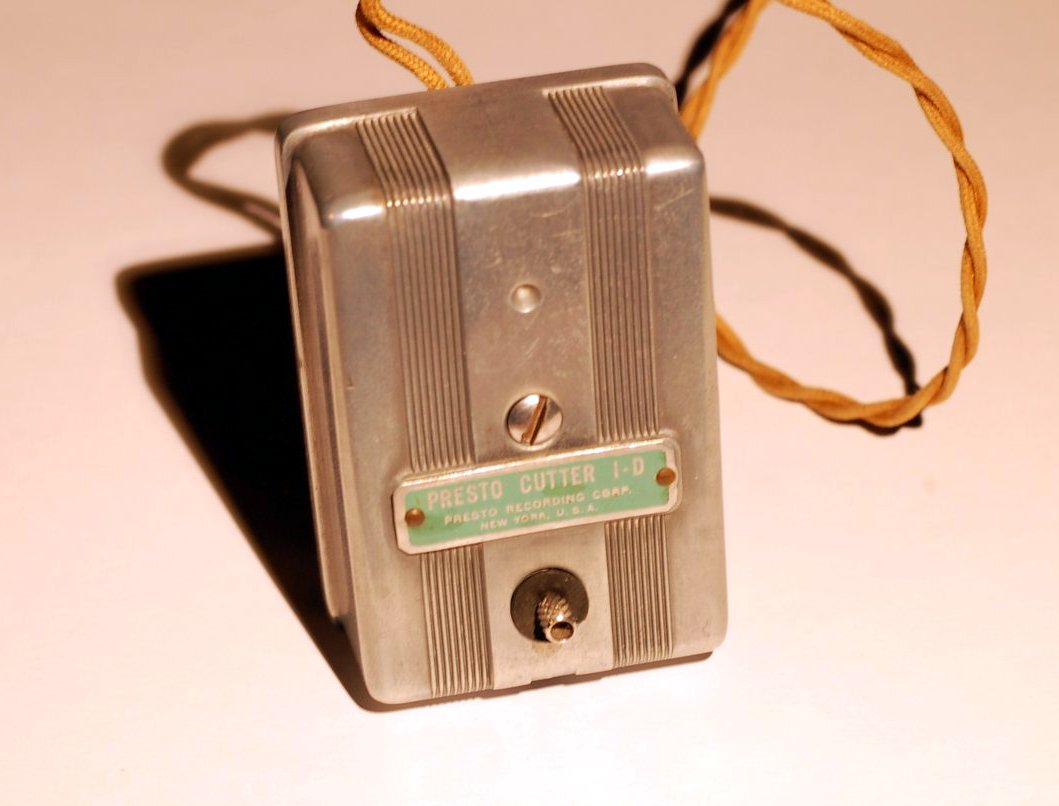
 

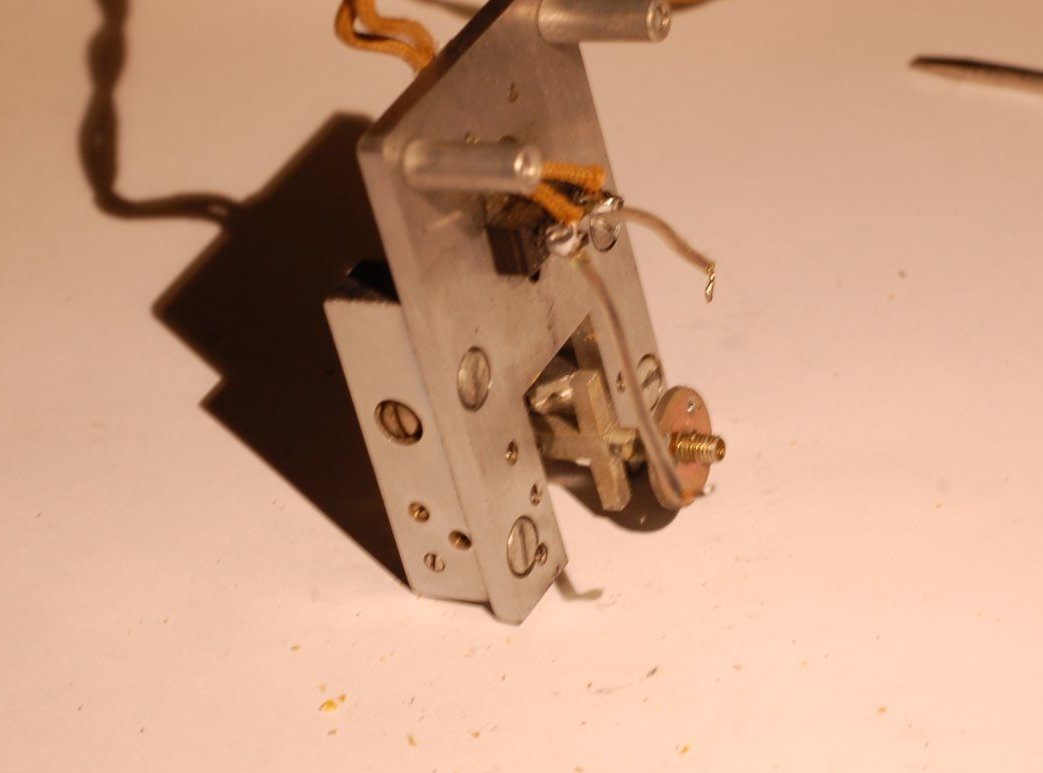
The Presto 1-D consists of a horseshoe magnet, laminated pole pieces, two drive coils, an armature pivoted on a knife-edge bearing, a set of springs, and a large damper. 


The iron armature is quite large and heavy, which is the biggest limiting factor in the performance of the Presto 1-C and 1-D, both of which use the same armature design.


The first step was to machine new coil formers, to accept the new coil assembly that uses feedback as a means of accomplishing more accurate disk cutting.


This took some delicate machining on our 1930s Lorch precision optical lathe, as the wall thickness of the formers is only a small fraction of a millimeter! Thin-wall micromachining has been the subject of several research projects in the fields of mechanical engineering and industrial manufacturing processes for several decades now, due to the challenges it presents. Features with a wall thickness under 1 mm and a height-to-thickness ratio larger than 5 are generally considered particularly difficult to machine. In these coil formers, the height to thickness ratio is around 30, while tight geometric and dimensional tolerances had to be maintained!

The machined formers were then taken to our precision milling machine to drill the tiny holes for the wires to enter and exit the former.


After cleaning and inspecting, a pair of tiny coil formers were selected and brought to our coil-winding machine for the winding operations.


The completed coils were then varnished for stability and assembled into position.


The armature needed to be properly adjusted, and various performance tests could then be conducted to verify that the transducer operated as initially mathematically calculated, under the new feedback configuration.


This modified version shall now be called the Presto 1-DA. It is currently in active service at Epos Laboratories (https://www.instagram.com/eposlab/) in Greece.

Further information, measurements and a mathematical analysis will appear as part of a research paper, to be published in due course.

Many of these feedback techniques originate from the research and development efforts at Agnew Analog Reference Instruments over the past couple of years, towards the design of a new stereophonic cutter head.


This article originally appeared on the Agnew Analog Reference Instruments blog and is used by permission.

All images courtesy of Agnew Analog Reference Instruments.

More from Issue 189

View All Articles in Issue 189

Search Copper Magazine

#225 Capital Audiofest 2025: Must-See Stereo, Part One by Frank Doris Dec 01, 2025 #225 Otis Taylor and the Electrics Delivers a Powerful Set of Hypnotic Modern Blues by Frank Doris Dec 01, 2025 #225 A Christmas Miracle by B. Jan Montana Dec 01, 2025 #225 T.H.E. Show New York 2025, Part Two: Plenty to See, Hear, and Enjoy by Frank Doris Dec 01, 2025 #225 Underappreciated Artists, Part One: Martin Briley by Rich Isaacs Dec 01, 2025 #225 Rock and Roll is Here to Stay by Wayne Robins Dec 01, 2025 #225 A Lifetime of Holiday Record (and CD) Listening by Rudy Radelic Dec 01, 2025 #225 Little Feat: Not Saying Goodbye, Not Yet by Ray Chelstowski Dec 01, 2025 #225 How to Play in a Rock Band, Part 18: Dealing With Burnout by Frank Doris Dec 01, 2025 #225 The People Who Make Audio Happen: CanJam SoCal 2025 by Harris Fogel Dec 01, 2025 #225 Chicago’s Sonic Sanctuaries: Four Hi‑Fi Listening Bars Channeling the Jazz‑Kissa Spirit by Olivier Meunier-Plante Dec 01, 2025 #225 From The Audiophile’s Guide: Controlling Bass Frequencies Through Membrane Absorbers (and How to Build Your Own) by Paul McGowan Dec 01, 2025 #225 Your Editor’s Tips for Attending Audio Shows by Frank Doris Dec 01, 2025 #225 PS Audio in the News by Frank Doris Dec 01, 2025 #225 Back to My Reel-to-Reel Roots, Part 24 by Ken Kessler Dec 01, 2025 #225 Holiday Music by Frank Doris Dec 01, 2025 #225 Puppy Prognostication by Peter Xeni Dec 01, 2025 #225 How to Post Comments on Copper by Frank Doris Dec 01, 2025 #225 Living Color by Rudy Radelic Dec 01, 2025 #224 T.H.E. Show New York 2025, Part One: A New Beginning by Frank Doris Nov 03, 2025 #224 Fool’s Leap of Faith is the Extraordinary Octave Records Debut from Singer/Songwriter Tyler Burba and Visit by Frank Doris Nov 03, 2025 #224 The Beatles’ “Aeolian Cadences.” What? by Wayne Robins Nov 03, 2025 #224 Persona Non Grata by B. Jan Montana Nov 03, 2025 #224 Talking With Recording Engineer Barry Diament of Soundkeeper Recordings, Part Two by Frank Doris Nov 03, 2025 #224 B Sides, B Movies, and Beware of Zombies by Rudy Radelic Nov 03, 2025 #224 The Burn-In Chronicles: 1,000 Hours to Sonic Salvation by Olivier Meunier-Plante Nov 03, 2025 #224 A Conversation With Mat Weisfeld of VPI Industries by Joe Caplan Nov 03, 2025 #224 Blues-Rocker Kenny Wayne Shepherd Celebrates 30 Years of Ledbetter Heights by Ray Chelstowski Nov 03, 2025 #224 Playing in a Rock Band, 17: When Good Gigs Go Bad, Part Two by Frank Doris Nov 03, 2025 #224 From The Audiophile’s Guide: Dealing with Odd-Shaped Rooms by Paul McGowan Nov 03, 2025 #224 TEAC’s TN-3B-SE Turntable Plays Bob Dylan by Howard Kneller Nov 03, 2025 #224 PS Audio in the News by Frank Doris Nov 03, 2025 #224 Lost in Translation by Peter Xeni Nov 03, 2025 #224 Reel-to-Reel Roots, Part 23: Better Than Rice Krispies by Ken Kessler Nov 03, 2025 #224 I Bring Joy! by Frank Doris Nov 03, 2025 #224 Screen Test by Rich Isaacs Nov 03, 2025 #224 How to Post Comments on Copper by Frank Doris Nov 03, 2025 #132 Dr. Patrick Gleeson: The Interview, Part Two by Rich Isaacs Oct 07, 2025 #223 World Fusion Meets Flamenco in Gratitude from Steve Mullins and Rim of the Well by Frank Doris Oct 06, 2025 #223 Judging Albums by Their Covers by Rich Isaacs Oct 06, 2025 #223 Recent Arrivals and 12-inch Royalty by Rudy Radelic Oct 06, 2025 #223 Summer of Creem, Part Two by Wayne Robins Oct 06, 2025 #223 Recording Engineer Barry Diament of Soundkeeper Recordings: Striving for Natural Sound by Frank Doris Oct 06, 2025 #223 Tea on the Terrace by B. Jan Montana Oct 06, 2025 #223 How Good Can Car Audio Get? by Joe Caplan Oct 06, 2025 #223 The Advantages of a Dedicated Listening Room by Paul McGowan Oct 06, 2025 #223 1! 2! 3! 4! Surrounded by the Ramones in Dolby Atmos! by Frank Doris Oct 06, 2025

Modifying a Presto 1-D Cutter Head for Better Performance

Modifying a Presto 1-D Cutter Head for Better Performance

Presto 1-D and 1-C cutter heads are frequently encountered on our lab bench for repair and restoration. Some are just regular repairs to bring them back to original spec, others are rewound to operate at a different impedance, but some undergo more comprehensive and exciting modifications!

We have previously examined modifications where a feedback system was added to a Neumann MS-52H and an Audax R-56 cutter head. This time, we shall discuss adding feedback to a Presto 1-D, which arrived with damaged coils.
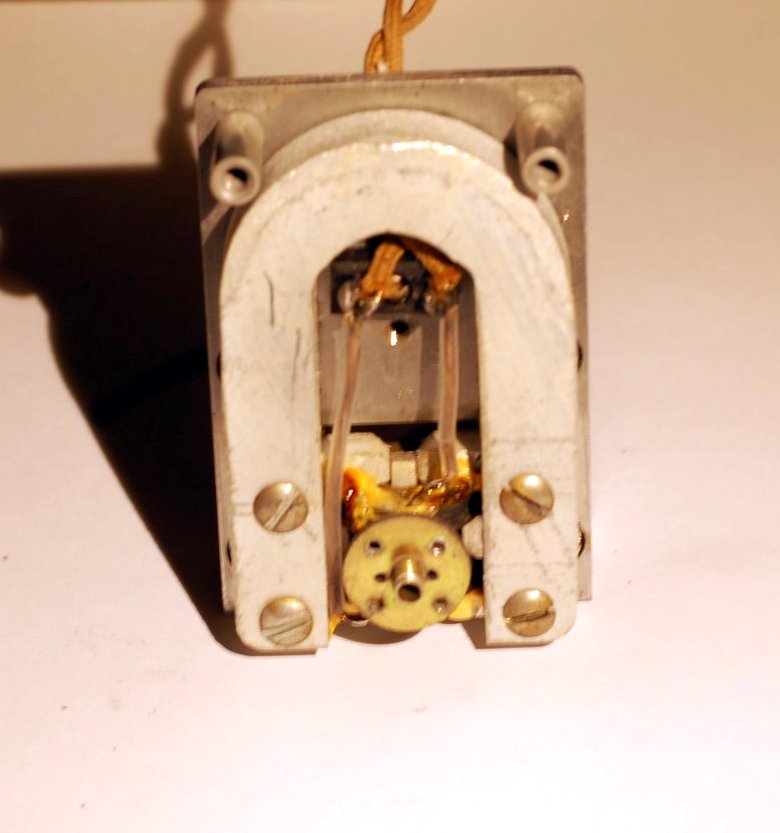
 

The Presto 1-D consists of a horseshoe magnet, laminated pole pieces, two drive coils, an armature pivoted on a knife-edge bearing, a set of springs, and a large damper. 


The iron armature is quite large and heavy, which is the biggest limiting factor in the performance of the Presto 1-C and 1-D, both of which use the same armature design.


The first step was to machine new coil formers, to accept the new coil assembly that uses feedback as a means of accomplishing more accurate disk cutting.


This took some delicate machining on our 1930s Lorch precision optical lathe, as the wall thickness of the formers is only a small fraction of a millimeter! Thin-wall micromachining has been the subject of several research projects in the fields of mechanical engineering and industrial manufacturing processes for several decades now, due to the challenges it presents. Features with a wall thickness under 1 mm and a height-to-thickness ratio larger than 5 are generally considered particularly difficult to machine. In these coil formers, the height to thickness ratio is around 30, while tight geometric and dimensional tolerances had to be maintained!

The machined formers were then taken to our precision milling machine to drill the tiny holes for the wires to enter and exit the former.


After cleaning and inspecting, a pair of tiny coil formers were selected and brought to our coil-winding machine for the winding operations.

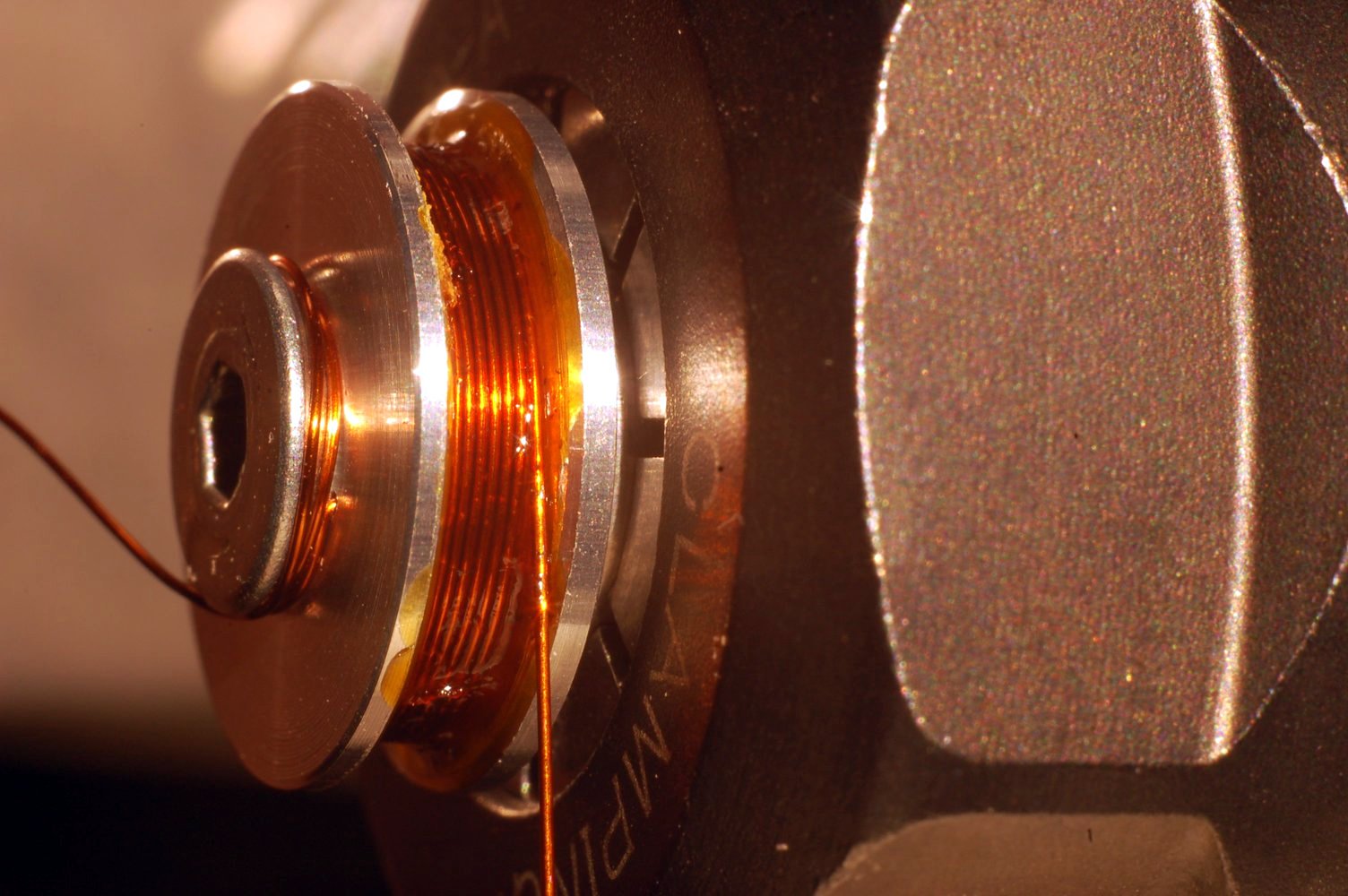
 

The completed coils were then varnished for stability and assembled into position.


The armature needed to be properly adjusted, and various performance tests could then be conducted to verify that the transducer operated as initially mathematically calculated, under the new feedback configuration.


This modified version shall now be called the Presto 1-DA. It is currently in active service at Epos Laboratories (https://www.instagram.com/eposlab/) in Greece.

Further information, measurements and a mathematical analysis will appear as part of a research paper, to be published in due course.

Many of these feedback techniques originate from the research and development efforts at Agnew Analog Reference Instruments over the past couple of years, towards the design of a new stereophonic cutter head.


This article originally appeared on the Agnew Analog Reference Instruments blog and is used by permission.

All images courtesy of Agnew Analog Reference Instruments.

0 comments

Leave a comment

0 Comments

Your avatar

Loading comments...

🗑️ Delete Comment

Enter moderator password to delete this comment: