COPPER

A PS Audio Publication

Issue 133 • Free Online Magazine

Issue 133 NEW VISTAS

Getting High, Part Two

Getting High, Part Two

In Part One (Issue 132), Alón began his quest to scale the heights of Kala Patthar near Mount Everest in Nepal. The story continues here.

After our terrifying landing at Lukla, the world’s most dangerous airport, our expedition guide, Wang Chuk, a thick, strong-looking man with an air of relaxed confidence, met us as we disembarked. His demeanor was that of a highly-trained special ops soldier – cool, calm and completely inured to the harrowed looks on the faces of his clients as we exited the plane and wobbled to the terminal.

As one of the most experienced guides in the Himalayas, Wang Chuk’s big presence welcomed us to his domain as we gathered our gear. So stern was his countenance that I was prepared to cringe while he berated us for showing weakness, as would a drill sergeant in basic training…but no, nothing. All projecting aside, he proved to be a very affable guy. His accented English was fluent and he never raised his voice above conversation level – he didn’t have to, since it had the quality of permeating and electrifying the air around us as he spoke. It was impossible to ignore him when he gave instruction – exactly the kind of guide I would want on a treacherous expedition.
 

After a satisfying meal of Momos, a standard regional dish of stuffed dumplings, we set off on the first leg of our long trek. Our destination was a few hours uphill to the only sizable town on our path, Namché Bazaar – the gateway to Everest. Here we would spend five days allowing our bodies to acclimatize to the thin air of life at high elevation. This stage was critical to our safety. Indeed, stories abound of reckless young foreigners eager to hasten their way up who blew through this town which sits at a reasonable 11,000 feet, but alas, never made it home. Altitude sickness is not something you want to dismiss or challenge.

With Everest calling us from above and five days to prepare for the big climb, we walked around town aimlessly, watching in fascination as a new house was being built; making the locals laugh with horribly mispronounced phrases; shopping for trinkets we didn’t need; and taking our last opportunity to write home via e-mail while sipping on teas and coffees infused with gamey yak butter (oh, yum). Definitely an acquired taste…

Western culture has been affecting Asia for centuries, so it’s probably just a matter of time before they open a Starbucks in Namché. I could just imagine locals bellying up to the counter to place their order: “Uh, hey Tenzin, I’ll have my usual Grande Yak Butter Double Macchiato Half-Caff, no foam, with a dusting of cocoa and just a swish of tail hair.”

New home construction: First, hire porters to carry big rocks from the surrounding terrain. Dump them all in the middle of the unpaved street, leaving a thin trail for passers-by, yaks and very small vehicles to navigate. The masons then chisel the big rocks by hand into uni-form blocks to build the walls. No one seemed to mind the impasse on one of the few roads in this town…it’s just how things are done here. Photo by Alón Sagee.

New home construction: First, hire porters to carry big rocks from the surrounding terrain. Dump them all in the middle of the unpaved street, leaving a thin trail for passers-by, yaks and very small vehicles to navigate. The masons then chisel the big rocks by hand into uni-form blocks to build the walls. No one seemed to mind the impasse on one of the few roads in this town…it’s just how things are done here. Photo by Alón Sagee.


After five long days of acclimatizing in the antithetical luxury of warm indoor lodging, hot showers and good restaurants, we were more than ready to leave the lush life in Namché and get higher.

Our supply packs were already heading up the mountain by porters who got a head start by leaving in the wee hours of early morning. They each carried 80 pounds or more, bent forward with the main pack straps anchored and stretched across their foreheads. Many wore thin sandals for the multi-hour climb to our next camp.

As we plodded ever higher, trees became scarce, replaced by the rocks and ice that were now clearly in charge. In the cold, it’s easy to forget to drink enough water, since it makes one even colder, but I kept encouraging myself that drinking cold water in an icy environment is better than being dead.

Relaxing at our camp on the mountain, a likable 17-year-old Sherpa porter named Dorje was glowing with the euphoria of his first paid ascent. In the Sherpa community, where jobs are scarce, it is an honor to be chosen to work for foreign climbing expeditions. He spoke no English and could only smile and gesture – but to elaborate on those limitations and make his joy very obvious, he bounded up and down the slopes surrounding our first camp, making sure we saw his display. I give him credit; he was fast and agile, and drank in our whoop-whooping celebration of making his family proud.

Even young athletic boys can misstep or lose their balance…but suddenly, something wasn’t right. Dorje was holding his head with both hands like I remember doing during the migraines of my youth. A couple of us rushed to his side as he fell to the frozen ground. Dehydration coupled with physical exertion is a climber’s recipe for cerebral and pulmonary edema. Water collecting in the brain and lungs is extremely dangerous at altitude, and yes, you can drown in your own body when your lungs fill up – and then there’s the brain, which can shut down from the pressure of water roiling inside the skull. This boy was born at high altitude, but, nevertheless, we witnessed the horror of his expanding head right in front of us. One of Dorje’s eyes bulged grotesquely from its usual resting place.

No time to waste. We alerted Wang Chuk and he sprang into action, immediately giving Dorje a dose of Dimox for altitude sickness and calling upon a couple of his strong Sherpa guides to join him as he hoisted the young man onto his back and practically ran down the trail, heading to the nearest rescue station back below the tree line. It was about an hour away even without the added weight. I wanted to help, but Wang Chuk forbade it, as I would have in his place. I followed anyway, but it was hard to keep up with the Sherpas, even with a 140 pound boy on their backs.

Wang Chuk in the lead position carrying the semi-conscious Dorje on his back, on their way to the rescue station. Photo by Alón Sagee.

Wang Chuk in the lead position carrying the semi-conscious Dorje on his back, on their way to the rescue station. Photo by Alón Sagee.


After about 45 minutes of them taking turns carrying their human payload, we approached the rescue station. One of the guides raced ahead to alert the medical staff as to what was coming their way.

Within seconds, Dorje was put in a long yellow vinyl enclosure that looked like a torpedo tube with a small clear window near one end that revealed his face – which by then was a frightening sight with his eye determined to pop out of its socket to escape the mounting pressure. He looked miserable and crestfallen that he let down his family. The portable tube was pumped to an oxygen pressure of 5 atmospheres, which, if I understood correctly, was the equivalent of going down 5,000 feet in altitude in minutes, effectively staunching the cause of the sickness until he could be transported to lower, safer environments.

It broke my heart that this young man might never have another chance like this again and would likely have to live with the dishonor. It was especially poignant that Dorje was showing off for us, and we encouraged his celebration, which made the whole ordeal personal. I really wanted do something, anything to help, but Wang Chuk and the medical staff had the situation under control. All I could do was gesture my condolences through the vinyl window to the one eye that I think was seeing me. Within a few minutes in the tube, Dorje’s face relaxed somewhat as the edema in his head and lungs began to subside.

The doctor told us we saved his life, but It remained to be seen if his brain was damaged. I didn’t expect to find out, ever. All I could do was wish him well and trust he would find his way.


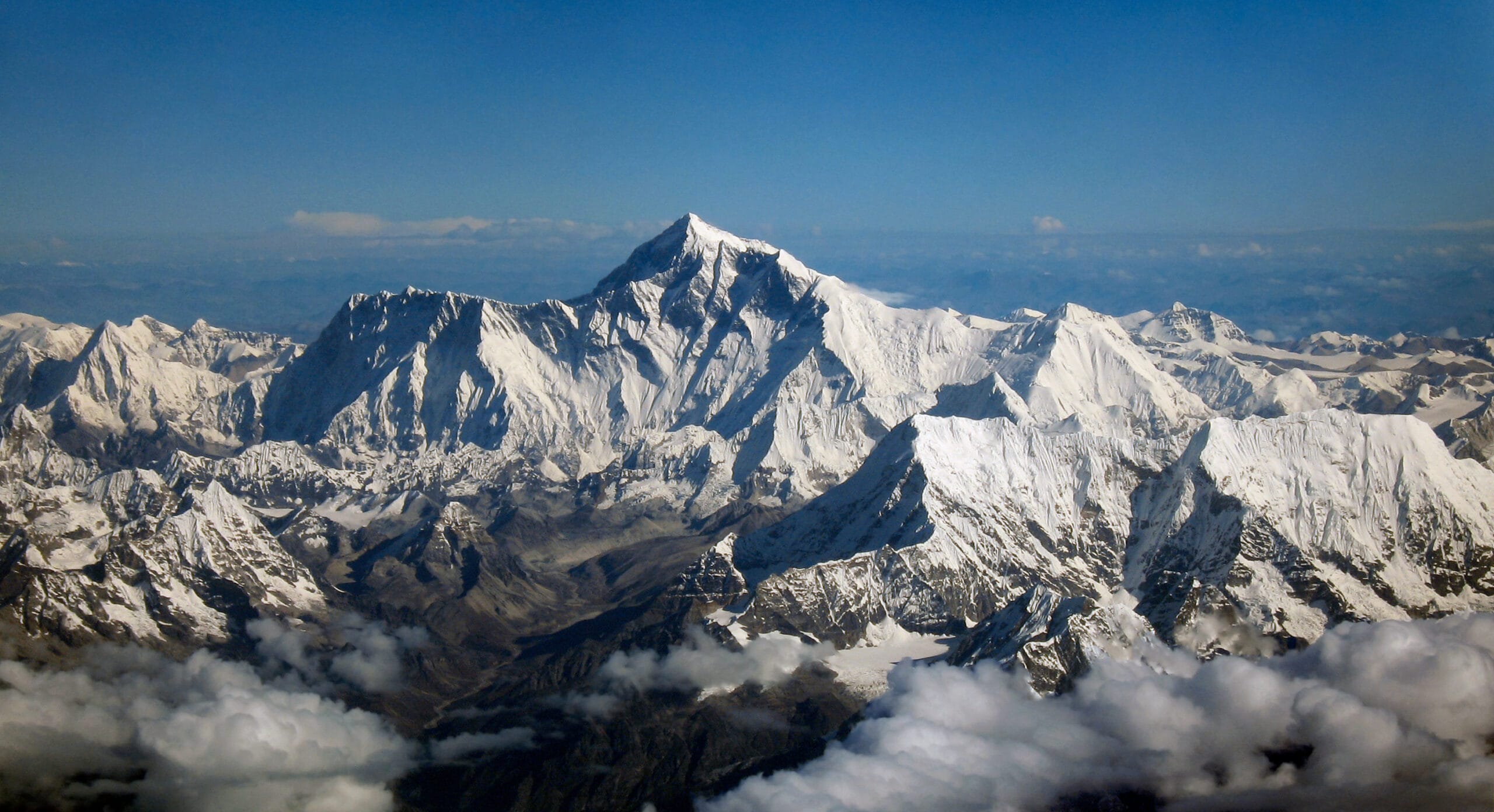
Header image: person walking a trail on Kala Patthar. Courtesy of Wikimedia Commons/ Niklassletteland.

More from Issue 133

View All Articles in Issue 133

Search Copper Magazine

#227 Seth Lewis Gets in the Groove With Take a Look Around: a Tribute to the Meters by Frank Doris Feb 02, 2026 #227 Passport to Sound: May Anwar’s Audio Learning Experience for Young People by Frank Doris Feb 02, 2026 #227 Conjectures on Cosmic Consciousness by B. Jan Montana Feb 02, 2026 #227 The Big Takeover Turns 45 by Wayne Robins Feb 02, 2026 #227 Music and Chocolate: On the Sensory Connection by Joe Caplan Feb 02, 2026 #227 Singer/Songwriter Chris Berardo: Getting Wilder All the Time by Ray Chelstowski Feb 02, 2026 #227 The Earliest Stars of Country Music, Part One by Jeff Weiner Feb 02, 2026 #227 The Vinyl Beat Goes Down to Tijuana (By Way of Los Angeles), Part Two by Rudy Radelic Feb 02, 2026 #227 How to Play in a Rock Band, 20: On the Road With Blood, Sweat & Tears’ Guitarist Gabe Cummins by Frank Doris Feb 02, 2026 #227 From The Audiophile’s Guide: Audio Specs and Measuring by Paul McGowan Feb 02, 2026 #227 Our Brain is Always Listening by Peter Trübner Feb 02, 2026 #227 PS Audio in the News by PS Audio Staff Feb 02, 2026 #227 The Listening Chair: Sleek Style and Sound From the Luxman L3 by Howard Kneller Feb 02, 2026 #227 The Los Angeles and Orange County Audio Society Celebrates Its 32nd Anniversary, Honoring David and Sheryl Lee Wilson and Bernie Grundman by Harris Fogel Feb 02, 2026 #227 Back to My Reel-to-Reel Roots, Part 26: Half Full – Not Half Empty, Redux by Ken Kessler Feb 02, 2026 #227 That's What Puzzles Us... by Frank Doris Feb 02, 2026 #227 Record-Breaking by Peter Xeni Feb 02, 2026 #227 The Long and Winding Road by B. Jan Montana Feb 02, 2026 #226 JJ Murphy’s Sleep Paralysis is a Genre-Bending Musical Journey Through Jazz, Fusion and More by Frank Doris Jan 05, 2026 #226 Stewardship by Consent by B. Jan Montana Jan 05, 2026 #226 Food, Music, and Sensory Experience: An Interview With Professor Jonathan Zearfoss of the Culinary Institute of America by Joe Caplan Jan 05, 2026 #226 Studio Confidential: A Who’s Who of Recording Engineers Tell Their Stories by Frank Doris Jan 05, 2026 #226 Pilot Radio is Reborn, 50 Years Later: Talking With CEO Barak Epstein by Frank Doris Jan 05, 2026 #226 The Vinyl Beat Goes Down to Tijuana (By Way of Los Angeles), Part One by Rudy Radelic Jan 05, 2026 #226 Capital Audiofest 2025: Must-See Stereo, Part Two by Frank Doris Jan 05, 2026 #226 My Morning Jacket’s Carl Broemel and Tyler Ramsey Collaborate on Their Acoustic Guitar Album, Celestun by Ray Chelstowski Jan 05, 2026 #226 The People Who Make Audio Happen: CanJam SoCal 2025, Part Two by Harris Fogel Jan 05, 2026 #226 How to Play in a Rock Band, 19: Touring Can Make You Crazy, Part One by Frank Doris Jan 05, 2026 #226 Linda Ronstadt Goes Bigger by Wayne Robins Jan 05, 2026 #226 From The Audiophile’s Guide: Active Room Correction and Digital Signal Processing by Paul McGowan Jan 05, 2026 #226 PS Audio in the News by Frank Doris Jan 05, 2026 #226 Back to My Reel-to-Reel Roots, Part 25: Half-Full, Not Empty by Ken Kessler Jan 05, 2026 #226 Happy New Year! by Frank Doris Jan 05, 2026 #226 Turn It Down! by Peter Xeni Jan 05, 2026 #226 Ghost Riders by James Schrimpf Jan 05, 2026 #226 A Factory Tour of Audio Manufacturer German Physiks by Markus "Marsu" Manthey Jan 04, 2026 #225 Capital Audiofest 2025: Must-See Stereo, Part One by Frank Doris Dec 01, 2025 #225 Otis Taylor and the Electrics Delivers a Powerful Set of Hypnotic Modern Blues by Frank Doris Dec 01, 2025 #225 A Christmas Miracle by B. Jan Montana Dec 01, 2025 #225 T.H.E. Show New York 2025, Part Two: Plenty to See, Hear, and Enjoy by Frank Doris Dec 01, 2025 #225 Underappreciated Artists, Part One: Martin Briley by Rich Isaacs Dec 01, 2025 #225 Rock and Roll is Here to Stay by Wayne Robins Dec 01, 2025 #225 A Lifetime of Holiday Record (and CD) Listening by Rudy Radelic Dec 01, 2025 #225 Little Feat: Not Saying Goodbye, Not Yet by Ray Chelstowski Dec 01, 2025 #225 How to Play in a Rock Band, Part 18: Dealing With Burnout by Frank Doris Dec 01, 2025 #225 The People Who Make Audio Happen: CanJam SoCal 2025 by Harris Fogel Dec 01, 2025 #225 Chicago’s Sonic Sanctuaries: Four Hi‑Fi Listening Bars Channeling the Jazz‑Kissa Spirit by Olivier Meunier-Plante Dec 01, 2025

Getting High, Part Two

Getting High, Part Two

In Part One (Issue 132), Alón began his quest to scale the heights of Kala Patthar near Mount Everest in Nepal. The story continues here.

After our terrifying landing at Lukla, the world’s most dangerous airport, our expedition guide, Wang Chuk, a thick, strong-looking man with an air of relaxed confidence, met us as we disembarked. His demeanor was that of a highly-trained special ops soldier – cool, calm and completely inured to the harrowed looks on the faces of his clients as we exited the plane and wobbled to the terminal.

As one of the most experienced guides in the Himalayas, Wang Chuk’s big presence welcomed us to his domain as we gathered our gear. So stern was his countenance that I was prepared to cringe while he berated us for showing weakness, as would a drill sergeant in basic training…but no, nothing. All projecting aside, he proved to be a very affable guy. His accented English was fluent and he never raised his voice above conversation level – he didn’t have to, since it had the quality of permeating and electrifying the air around us as he spoke. It was impossible to ignore him when he gave instruction – exactly the kind of guide I would want on a treacherous expedition.


After a satisfying meal of Momos, a standard regional dish of stuffed dumplings, we set off on the first leg of our long trek. Our destination was a few hours uphill to the only sizable town on our path, Namché Bazaar – the gateway to Everest. Here we would spend five days allowing our bodies to acclimatize to the thin air of life at high elevation. This stage was critical to our safety. Indeed, stories abound of reckless young foreigners eager to hasten their way up who blew through this town which sits at a reasonable 11,000 feet, but alas, never made it home. Altitude sickness is not something you want to dismiss or challenge.

With Everest calling us from above and five days to prepare for the big climb, we walked around town aimlessly, watching in fascination as a new house was being built; making the locals laugh with horribly mispronounced phrases; shopping for trinkets we didn’t need; and taking our last opportunity to write home via e-mail while sipping on teas and coffees infused with gamey yak butter (oh, yum). Definitely an acquired taste…

Western culture has been affecting Asia for centuries, so it’s probably just a matter of time before they open a Starbucks in Namché. I could just imagine locals bellying up to the counter to place their order: “Uh, hey Tenzin, I’ll have my usual Grande Yak Butter Double Macchiato Half-Caff, no foam, with a dusting of cocoa and just a swish of tail hair.”

New home construction: First, hire porters to carry big rocks from the surrounding terrain. Dump them all in the middle of the unpaved street, leaving a thin trail for passers-by, yaks and very small vehicles to navigate. The masons then chisel the big rocks by hand into uni-form blocks to build the walls. No one seemed to mind the impasse on one of the few roads in this town…it’s just how things are done here. Photo by Alón Sagee.

New home construction: First, hire porters to carry big rocks from the surrounding terrain. Dump them all in the middle of the unpaved street, leaving a thin trail for passers-by, yaks and very small vehicles to navigate. The masons then chisel the big rocks by hand into uni-form blocks to build the walls. No one seemed to mind the impasse on one of the few roads in this town…it’s just how things are done here. Photo by Alón Sagee.


After five long days of acclimatizing in the antithetical luxury of warm indoor lodging, hot showers and good restaurants, we were more than ready to leave the lush life in Namché and get higher.

Our supply packs were already heading up the mountain by porters who got a head start by leaving in the wee hours of early morning. They each carried 80 pounds or more, bent forward with the main pack straps anchored and stretched across their foreheads. Many wore thin sandals for the multi-hour climb to our next camp.

As we plodded ever higher, trees became scarce, replaced by the rocks and ice that were now clearly in charge. In the cold, it’s easy to forget to drink enough water, since it makes one even colder, but I kept encouraging myself that drinking cold water in an icy environment is better than being dead.

Relaxing at our camp on the mountain, a likable 17-year-old Sherpa porter named Dorje was glowing with the euphoria of his first paid ascent. In the Sherpa community, where jobs are scarce, it is an honor to be chosen to work for foreign climbing expeditions. He spoke no English and could only smile and gesture – but to elaborate on those limitations and make his joy very obvious, he bounded up and down the slopes surrounding our first camp, making sure we saw his display. I give him credit; he was fast and agile, and drank in our whoop-whooping celebration of making his family proud.

Even young athletic boys can misstep or lose their balance…but suddenly, something wasn’t right. Dorje was holding his head with both hands like I remember doing during the migraines of my youth. A couple of us rushed to his side as he fell to the frozen ground. Dehydration coupled with physical exertion is a climber’s recipe for cerebral and pulmonary edema. Water collecting in the brain and lungs is extremely dangerous at altitude, and yes, you can drown in your own body when your lungs fill up – and then there’s the brain, which can shut down from the pressure of water roiling inside the skull. This boy was born at high altitude, but, nevertheless, we witnessed the horror of his expanding head right in front of us. One of Dorje’s eyes bulged grotesquely from its usual resting place.

No time to waste. We alerted Wang Chuk and he sprang into action, immediately giving Dorje a dose of Dimox for altitude sickness and calling upon a couple of his strong Sherpa guides to join him as he hoisted the young man onto his back and practically ran down the trail, heading to the nearest rescue station back below the tree line. It was about an hour away even without the added weight. I wanted to help, but Wang Chuk forbade it, as I would have in his place. I followed anyway, but it was hard to keep up with the Sherpas, even with a 140 pound boy on their backs.

Wang Chuk in the lead position carrying the semi-conscious Dorje on his back, on their way to the rescue station. Photo by Alón Sagee.

Wang Chuk in the lead position carrying the semi-conscious Dorje on his back, on their way to the rescue station. Photo by Alón Sagee.


After about 45 minutes of them taking turns carrying their human payload, we approached the rescue station. One of the guides raced ahead to alert the medical staff as to what was coming their way.

Within seconds, Dorje was put in a long yellow vinyl enclosure that looked like a torpedo tube with a small clear window near one end that revealed his face – which by then was a frightening sight with his eye determined to pop out of its socket to escape the mounting pressure. He looked miserable and crestfallen that he let down his family. The portable tube was pumped to an oxygen pressure of 5 atmospheres, which, if I understood correctly, was the equivalent of going down 5,000 feet in altitude in minutes, effectively staunching the cause of the sickness until he could be transported to lower, safer environments.

It broke my heart that this young man might never have another chance like this again and would likely have to live with the dishonor. It was especially poignant that Dorje was showing off for us, and we encouraged his celebration, which made the whole ordeal personal. I really wanted do something, anything to help, but Wang Chuk and the medical staff had the situation under control. All I could do was gesture my condolences through the vinyl window to the one eye that I think was seeing me. Within a few minutes in the tube, Dorje’s face relaxed somewhat as the edema in his head and lungs began to subside.

The doctor told us we saved his life, but It remained to be seen if his brain was damaged. I didn’t expect to find out, ever. All I could do was wish him well and trust he would find his way.


Header image: person walking a trail on Kala Patthar. Courtesy of Wikimedia Commons/ Niklassletteland.

0 comments

Leave a comment

0 Comments

Your avatar

Loading comments...

🗑️ Delete Comment

Enter moderator password to delete this comment:

✏️ Edit Comment

Enter your email to verify ownership: