Copper Magazine · Issue 175 · A free PS Audio publication
Issue 175 Disciples of Sound

Dave Mason: Timeless Music in a World of Changes

Dave Mason: Timeless Music in a World of Changes

One of the first albums that my older brother Brian handed down to me was Dave Mason’s 1970 solo debut, Alone Together. It was a remarkable record both musically and in how it was marketed. A limited run was released with a die-cut cover that rolled out several times and held a multicolored vinyl album that was not only truly novel and new at the time; it still dazzles when I let folks see it for the first time these days.

On the production side of things Alone Together had an all-star team, with Mason sharing production duties with Tommy LiPuma (Miles Davis). Engineering was handled by Bruce and Doug Botnick (The Doors), and mixing was done by Al Schmitt (Steely Dan). These best-in-class talents were applied to stunning songs that are singular in sound and still stand up to this day. Mason took another turn at them two years ago, revisiting his masterpiece with fresh eyes and ears to waves of critical praise. Alone Together began a relationship that I have had with Mason’s music ever since, and as popular music may at times have drifted away from his singer/songwriter approach, his fan base has only grown and their loyalty only deepened. It’s because his songs are so timeless, and he performs them live with originality and authenticity.
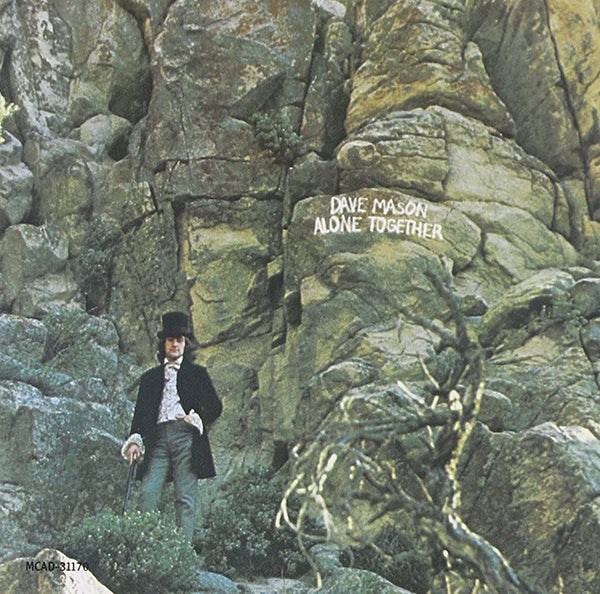
 

Dave Mason, Alone Together, album cover.

Dave Mason, Alone Together, album cover.


Dave Mason is a Rock and Roll Hall of Famer and a former co-founder of Traffic and member of Fleetwood Mac. He has played on some of rock’s most important songs alongside Jimi Hendrix, Paul McCartney, George Harrison, and the Rolling Stones, to name just a few. He has written seminal rock songs like “Feelin’ Alright” and “We Just Disagree,” which have been covered by artists as diverse as Joe Cocker, Three Dog Night, Grand Funk Railroad, ELO, The 5th Dimension, and Coldplay.


It’s a musical life that at times seems so magical that it couldn’t have possibly been lived by one person alone. This remarkable journey has finally been documented in the forthcoming autobiography Only You Know And I Know, named after his song of the same name. Available in May 2023, Its said to be a personal and revealing look at Mason’s ups, as well as his downs.

A long-time road warrior, Dave Mason has also just kicked off his “World In Changes” tour. Joining Mason on this run are band members Johnne Sambataro on guitar and vocals, Alvino Bennett on drums, and new additions Bill Mason on keyboard and vocals plus Ray Cardwell on bass and vocals.

Copper connected with Mason just prior to his first fall date in Thousand Oaks, California and talked about why this was the perfect moment to tell his story, what keeps things fresh for him as he moves through his set list each night, and whether what fans so admire in him can really be called “talent.”

Ray Chelstowski: I’m currently looking at an original copy of your solo album Alone Together. This version has the fold out, die-cut cover and the multicolored vinyl record. Even then, this must have been a very big deal for a label to invest in this kind of production.

Dave Mason: They were all for it. Blue Thumb Records was a boutique label. They really wanted something unique. They actually pressed 250,000 copies in that format.

RC: So, you are finally about to release an autobiography. What took so long?

DM: I can jokingly say that I was “badgered” into it. I have been asked for years by fans to do it. Then of course my wife has been after me about it. If it had been left up to me there would probably have never been a book. There were a number of people who approached me over the years and said that they wanted to do my biography, and one of them, Chris Epting, was very persistent. He had done a number of other ones like the Doobie Brothers book. So we got started.

Outside of doing an interview like this I’m rarely thinking about things that have happened in the past. I’m kind of more inclined to look forward. So, when I could have someone do the research, locate old pictures, confirm the times of every event and also do the writing it made things much easier. He would do the research and write something for me to review and then I’d rewrite things [in a manner of] how I would actually say them. Otherwise it would have never been done.
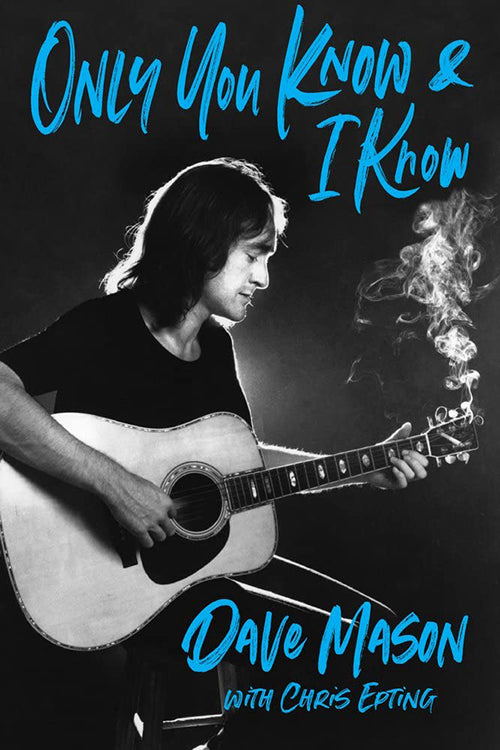
 

 Only You Know and I Know, book cover.

Only You Know and I Know, book cover.


RC: Is there any one overlooked part of your life that this book finally gave you the chance to address?

DM: I really wrote my story. For me it was about writing about someone’s life. To write about playing with this guy and that guy is a musical biography that you could simply read on a one-sheet. So, I approached the writing as being more about my journey and I tried to be very open about it all. Other than [in relation to] events that might have been consequential, I don’t really talk about anyone else. It’s about my ups and my downs. As far as the musical part of it, I’m 76 years old and have been doing this since I was 16. So a lot of the musical parts of the story have been done already, over and over in various places.


RC: But there were large gaps in your studio releases, especially in the 1980s.

DM: Well, the music changed. Suddenly there was punk. It was an angry form of music and that was the flavor of the month. [The music industry] is a commercial business and the labels were more interested in the way things were going [rather than what I was doing]. I had to adapt to the times and [also] deal with my own personal issues. That’s more about what I tried to write the book about.

RC: Do you think an artist even needs a label at this point?

DM: You don’t need a label, but it doesn’t matter anyway because the internet has killed the business. There are no sales any more. You can’t be just a songwriter or recording artist if you want to make money, unless you look like Beyoncé. I write music and have thankfully written some songs that have lasted.

RC: You’ve added some new members to your touring band. Does this give you the ability to keep things fresh?

DM: Yes, but I try to do that anyway. For me it’s all about guitars. That’s what got me into this in the first place. There are some songs like “We Just Disagree” that will musically be the same every night. But then there are others like “Look at You, Look at Me” and “The Low Spark of High-Heeled Boys” that I rearrange. I never really rated myself as a singer. It was just what you had to do. Then I started writing songs and some of those have been interpreted in ways that were musically way better than what I had initially done. For example, ”Feelin’ Alright.” It’s sort of my Bob Hope’s “Thanks for the Memories.” It’s been covered by over 50 major artists and if Joe Cocker hadn’t done his own version there wouldn’t have been any others. So, I’ve been lucky.


RC: I’d say that you’ve created your own luck through a whole lot of talent.

DM: Well, I don’t know about the talent part. I think that I have minimal talent. This is more of a craft. Ninety percent is craft and ten percent is talent.

RC: What do you listen to these days when you’re not playing?

DM: My musical tastes are pretty open. These days I listen to quite a bit of jazz; the true American music. I listen to Jimmy Smith, Jimmy McGriff, Ben Webster, and Miles Davis of course. I’ll listen to the jazz channel on Spectrum and there’s one amazing guitar player after the other and I have no idea who they are. It’s all out there.

RC: Are there any new songs that you’ll be introducing on this upcoming tour?

DM: Not really. But I try to put things in there that keep things interesting so that there’s spontaneity to the show; instead of just standing up there and going through the songs and having people feel like they could have just put the record on at home. I have to make it interesting for me and the band as well. If I can make that happen it will translate to the audience and give them something they didn’t expect. I want them to say, “wow, I didn’t know he could play like that!”


Header image courtesy of Dave Mason.

More from Issue 175

View All Articles in Issue 175

Search Copper Magazine

#236 Magic Boy: The Jimi Hendrix Experience, Live and Rediscovered by Frank Doris Nov 02, 2026 #236 The Great Rhythmic Divide: Composer David Chesky Asks, Why Doesn't the Symphony Orchestra Groove? by David Chesky Nov 02, 2026 #236 More Record Reviews: Roni Eytan’s Microtonal Harmonica, Jane Ira Bloom, and a Frank Zappa Freak Out by Frank Doris Nov 02, 2026 #236 An Album of Inviting Beauty: Goodnight Moon from Acoustic Eidolon, And an Interview With the Artists Who Created it by Frank Doris Nov 02, 2026 #236 Never Ignore Your Inner Voice by B. Jan Montana Nov 02, 2026 #236 Composer Joseph Bertolozzi Uses Bridges, Structures and the World as Musical Instruments, Part One by Joe Caplan Nov 02, 2026 #236 Transmission: A Powerful Horn-Loaded Album from the Huntertones by Ray Chelstowski Nov 02, 2026 #236 Les Quatre Saisons du Québec: a New “Four Seasons” on Tour and on ATMA Classique by Robert Schryer Nov 02, 2026 #236 From The Audiophile's Guide: A Glossary of Terms for Today's Audio Systems, A – M by Paul McGowan Nov 02, 2026 #236 From The Listening Chair: An Introduction to Audiophile Tweaks by Howard Kneller Nov 02, 2026 #236 The Vinyl Beat Grew Two Inches Since October! by Rudy Radelic Nov 02, 2026 #236 How to Play in a Rock Band, Part 29: Figuring Out How to Play the Songs by Frank Doris Nov 02, 2026 #236 The Return of the Residents: Eskimo is On the Road by Wayne Robins Nov 02, 2026 #236 PS Audio in the News by PS Audio Staff Nov 02, 2026 #236 The People Who Make Audio Happen – Fun In Las Vegas at…CES 2026? by Harris Fogel Nov 02, 2026 #236 The Forms of Things Unknown by Frank Doris Nov 02, 2026 #236 Prophetic by Peter Xeni Nov 02, 2026 #236 Here's Looking at You, Kid by Rich Isaacs Nov 02, 2026 Favorites From T.H.E. Show SoCal 2026 by Cam Martin Oct 05, 2026 #235 Singer/Songwriter John David Schrader: On the Need to Create, Part Two by Joe Caplan Oct 05, 2026 #235 A Life in High-End Audio: The Roy Hall Interview, Part Two by Frank Doris Oct 05, 2026 #235 Grammy-Winning Producer, Songwriter, and Guitarist John Leventhal Goes Instrumental With National Drift by Ray Chelstowski Oct 05, 2026 #235 From Swimming Pool to New Listening Room—to Founding an Accidental Audio Company by Gilles Laferrière Oct 05, 2026 #235 The Vinyl Beat’s Size Matters Edition by Rudy Radelic Oct 05, 2026 #235 The Sublime Complexities of Nature by B. Jan Montana Oct 05, 2026 #235 How to Play In a Rock Band, 28: Growing Older and Dealing With It by Frank Doris Oct 05, 2026 #235 Young Rascals: From Bar Band to Stardom by Wayne Robins Oct 05, 2026 #235 Duncan Sheik: In Memoriam by Ray Chelstowski Oct 05, 2026 #235 From The Listening Chair: The Meze Audio 105 Silva Headphones by Howard Kneller Oct 05, 2026 #235 Checking Out Some NOLA Loudspeakers – and Some Thoughts About Audio Writing by Frank Doris Oct 05, 2026 #235 The Kanazawa Phonograph Museum: Music from a Time Capsule by Sebastian Polcyn Oct 05, 2026 #235 PS Audio in the News by PS Audio Staff Oct 05, 2026 #235 From The Audiophile’s Guide: Making the Most Critical Choice by Paul McGowan Oct 05, 2026 #235 Evolutionary Growth by Frank Doris Oct 05, 2026 #235 Speed Racer by Peter Xeni Oct 05, 2026 #235 Happy Halloween! by James Schrimpf Oct 05, 2026 #234 A Life in High-End Audio: The Roy Hall Interview, Part One by Frank Doris Sep 07, 2026 #234 Jason Greenlaw Offers His Personal Perspective on Jazz Guitar in Vantage Point by Frank Doris Sep 07, 2026 #234 Transcendent Phoenix: Lucina Yue Brings the Ancient Konghou Into Modern Times by Frank Doris Sep 07, 2026 #234 We Must All Follow Our Bliss by B. Jan Montana Sep 07, 2026 #234 How to Play in a Rock Band, 27: Leveling Up by Frank Doris Sep 07, 2026 #234 Ross Valory: Traveling Into New Musical Territory With All of the Above by Ray Chelstowski Sep 07, 2026 #234 Singer/Songwriter John David Schrader: On the Need to Create by Joe Caplan Sep 07, 2026 #234 The People Who Make Audio Happen: More From T.H.E. Show SoCal 2026 by Harris Fogel Sep 07, 2026 #234 The Vinyl Beat Digs Into the Gadget Box by Rudy Radelic Sep 07, 2026 #234 The Rolling Stones: Foreign Tongues Spoken Loud by Wayne Robins Sep 07, 2026 #234 Musical Moments by Rich Isaacs Sep 07, 2026

Dave Mason: Timeless Music in a World of Changes

Dave Mason: Timeless Music in a World of Changes

One of the first albums that my older brother Brian handed down to me was Dave Mason’s 1970 solo debut, Alone Together. It was a remarkable record both musically and in how it was marketed. A limited run was released with a die-cut cover that rolled out several times and held a multicolored vinyl album that was not only truly novel and new at the time; it still dazzles when I let folks see it for the first time these days.

On the production side of things Alone Together had an all-star team, with Mason sharing production duties with Tommy LiPuma (Miles Davis). Engineering was handled by Bruce and Doug Botnick (The Doors), and mixing was done by Al Schmitt (Steely Dan). These best-in-class talents were applied to stunning songs that are singular in sound and still stand up to this day. Mason took another turn at them two years ago, revisiting his masterpiece with fresh eyes and ears to waves of critical praise. Alone Together began a relationship that I have had with Mason’s music ever since, and as popular music may at times have drifted away from his singer/songwriter approach, his fan base has only grown and their loyalty only deepened. It’s because his songs are so timeless, and he performs them live with originality and authenticity.


Dave Mason, Alone Together, album cover.

Dave Mason, Alone Together, album cover.


Dave Mason is a Rock and Roll Hall of Famer and a former co-founder of Traffic and member of Fleetwood Mac. He has played on some of rock’s most important songs alongside Jimi Hendrix, Paul McCartney, George Harrison, and the Rolling Stones, to name just a few. He has written seminal rock songs like “Feelin’ Alright” and “We Just Disagree,” which have been covered by artists as diverse as Joe Cocker, Three Dog Night, Grand Funk Railroad, ELO, The 5th Dimension, and Coldplay.


It’s a musical life that at times seems so magical that it couldn’t have possibly been lived by one person alone. This remarkable journey has finally been documented in the forthcoming autobiography Only You Know And I Know, named after his song of the same name. Available in May 2023, Its said to be a personal and revealing look at Mason’s ups, as well as his downs.

A long-time road warrior, Dave Mason has also just kicked off his “World In Changes” tour. Joining Mason on this run are band members Johnne Sambataro on guitar and vocals, Alvino Bennett on drums, and new additions Bill Mason on keyboard and vocals plus Ray Cardwell on bass and vocals.

Copper connected with Mason just prior to his first fall date in Thousand Oaks, California and talked about why this was the perfect moment to tell his story, what keeps things fresh for him as he moves through his set list each night, and whether what fans so admire in him can really be called “talent.”

Ray Chelstowski: I’m currently looking at an original copy of your solo album Alone Together. This version has the fold out, die-cut cover and the multicolored vinyl record. Even then, this must have been a very big deal for a label to invest in this kind of production.

Dave Mason: They were all for it. Blue Thumb Records was a boutique label. They really wanted something unique. They actually pressed 250,000 copies in that format.

RC: So, you are finally about to release an autobiography. What took so long?

DM: I can jokingly say that I was “badgered” into it. I have been asked for years by fans to do it. Then of course my wife has been after me about it. If it had been left up to me there would probably have never been a book. There were a number of people who approached me over the years and said that they wanted to do my biography, and one of them, Chris Epting, was very persistent. He had done a number of other ones like the Doobie Brothers book. So we got started.

Outside of doing an interview like this I’m rarely thinking about things that have happened in the past. I’m kind of more inclined to look forward. So, when I could have someone do the research, locate old pictures, confirm the times of every event and also do the writing it made things much easier. He would do the research and write something for me to review and then I’d rewrite things [in a manner of] how I would actually say them. Otherwise it would have never been done.


 Only You Know and I Know, book cover.

Only You Know and I Know, book cover.


RC: Is there any one overlooked part of your life that this book finally gave you the chance to address?

DM: I really wrote my story. For me it was about writing about someone’s life. To write about playing with this guy and that guy is a musical biography that you could simply read on a one-sheet. So, I approached the writing as being more about my journey and I tried to be very open about it all. Other than [in relation to] events that might have been consequential, I don’t really talk about anyone else. It’s about my ups and my downs. As far as the musical part of it, I’m 76 years old and have been doing this since I was 16. So a lot of the musical parts of the story have been done already, over and over in various places.


RC: But there were large gaps in your studio releases, especially in the 1980s.

DM: Well, the music changed. Suddenly there was punk. It was an angry form of music and that was the flavor of the month. [The music industry] is a commercial business and the labels were more interested in the way things were going [rather than what I was doing]. I had to adapt to the times and [also] deal with my own personal issues. That’s more about what I tried to write the book about.

RC: Do you think an artist even needs a label at this point?

DM: You don’t need a label, but it doesn’t matter anyway because the internet has killed the business. There are no sales any more. You can’t be just a songwriter or recording artist if you want to make money, unless you look like Beyoncé. I write music and have thankfully written some songs that have lasted.

RC: You’ve added some new members to your touring band. Does this give you the ability to keep things fresh?

DM: Yes, but I try to do that anyway. For me it’s all about guitars. That’s what got me into this in the first place. There are some songs like “We Just Disagree” that will musically be the same every night. But then there are others like “Look at You, Look at Me” and “The Low Spark of High-Heeled Boys” that I rearrange. I never really rated myself as a singer. It was just what you had to do. Then I started writing songs and some of those have been interpreted in ways that were musically way better than what I had initially done. For example, ”Feelin’ Alright.” It’s sort of my Bob Hope’s “Thanks for the Memories.” It’s been covered by over 50 major artists and if Joe Cocker hadn’t done his own version there wouldn’t have been any others. So, I’ve been lucky.


RC: I’d say that you’ve created your own luck through a whole lot of talent.

DM: Well, I don’t know about the talent part. I think that I have minimal talent. This is more of a craft. Ninety percent is craft and ten percent is talent.

RC: What do you listen to these days when you’re not playing?

DM: My musical tastes are pretty open. These days I listen to quite a bit of jazz; the true American music. I listen to Jimmy Smith, Jimmy McGriff, Ben Webster, and Miles Davis of course. I’ll listen to the jazz channel on Spectrum and there’s one amazing guitar player after the other and I have no idea who they are. It’s all out there.

RC: Are there any new songs that you’ll be introducing on this upcoming tour?

DM: Not really. But I try to put things in there that keep things interesting so that there’s spontaneity to the show; instead of just standing up there and going through the songs and having people feel like they could have just put the record on at home. I have to make it interesting for me and the band as well. If I can make that happen it will translate to the audience and give them something they didn’t expect. I want them to say, “wow, I didn’t know he could play like that!”


Header image courtesy of Dave Mason.

0 comments

Leave a comment

0 Comments

Your avatar

Loading comments...

🗑️ Delete Comment

Enter moderator password to delete this comment:

✏️ Edit Comment

Enter your email to verify ownership: