COPPER

A PS Audio Publication

Issue 172 • Free Online Magazine

Issue 172 Idle Chatter

Born to Rock: Graham Whitford of Tyler Bryant & The Shakedown

Born to Rock: Graham Whitford of Tyler Bryant & The Shakedown

From being born into a house of classic rock royalty to becoming darlings of present-day indie blues-rock, Graham Whitford’s rock and roll journey was a matter of destiny.

As the son of Aerosmith guitarist Brad Whitford, the guitar was ingrained in a young Graham Whitford’s DNA from birth. Though Whitford’s dreams weren’t initially of the six-string variety, everything changed when his father gifted him a Les Paul at 17.

With guitar in hand, the world moved fast for Whitford. The young player developed his chops quickly and began to forge his signature style. While honing his chops, a chance meeting with fellow up-and-comer Tyler Bryant would change the trajectory of both guitarists’ careers.

An immediate kinship was apparent between Whitford and Bryant, and it wasn’t long before Whitford joined Bryant’s namesake group, Tyler Bryant & The Shakedown, forming a blistering blues-rock duo arguably not seen since 1990s-era Black Crowes lineups.

High praise? To be sure. Valid? You better believe it.

Now five records in, the Shakedown has settled in as a crème of the crop band, proof of which can be found on their trio’s most recent studio affair, Shake the Roots.

Graham dug in with me to run through his early leanings, how he met Tyler Bryant, the formation of indie label Rattle Shake Records, the enduring influence of Aerosmith, and a whole lot more.
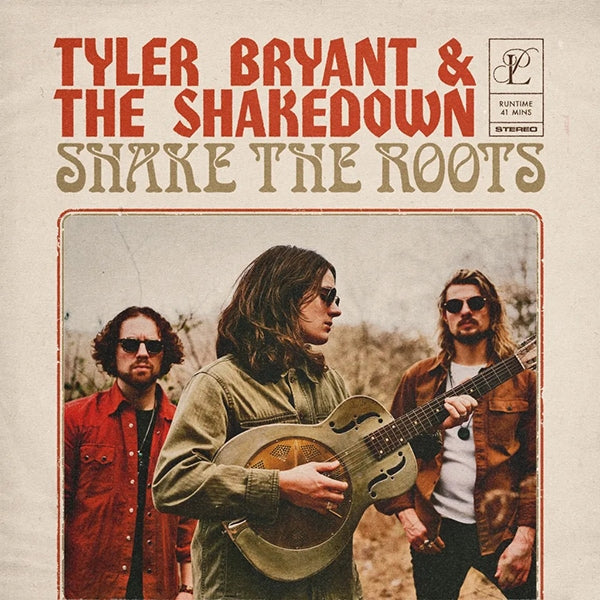
 

Tyler Bryant & The Shakedown, Shake the Roots, album cover.

Tyler Bryant & The Shakedown, Shake the Roots, album cover.


Andrew Daly: What are your earliest memories of the guitar in your life?

Graham Whitford: I have been surrounded by guitars my whole life. However, I started my musical journey on the drums. When I was three, my parents bought me a small drum set for Christmas. I played nothing but drums until I was about 11 or 12. I moved from Massachusetts to New York City when I was 13. We moved into an apartment, and I naturally gravitated to playing more guitar and quickly became obsessed.

AD: What sort of influence has your father had on you as a player? Have you felt the need to shake that influence as you’ve moved forward?

GW: When I was 11 or 12, my dad taught me how to play over 12-bar blues, and after that moment, I couldn’t put the guitar down. During most of my formative years as a guitar player, my dad lived in North Carolina while I was in New York. I was primarily self-taught, learning by watching and listening to my favorite guitar players and trying to mimic what they did. As I became more and more consumed with the guitar, I began to truly appreciate what a special guitar player my dad is. To this day, I learn so much by just watching him play. When someone tells me that my playing reminds them of his, I take it as a great compliment.


AD: How did you get connected with Tyler Bryant?

GW: I met Tyler at a radio interview in New York City. I had recently become friendly with the photographer Robert Knight, who was working with Tyler at the time. Robert and I met early one morning in the city to take some photos. I brought a guitar with me for the shoot. After the photo session, Robert invited me to come with him to a radio interview with Tyler.

I was a big fan of Tyler’s music, so I was excited to meet him. I still had my guitar with me from the photo shoot, so when I walked in, [I’m sure] Tyler thought, “Who is this kid coming to my interview with a guitar?” Robert introduced me as the guy that was going to put Tyler out of a job. Because of this, I don’t think Tyler was too keen on me at first, but we exchanged info and started talking and sharing music.

Not too long after, I competed in a Guitar Center King of the Blues competition and made it to the finals. Tyler was one of the judges. This was the first time we really connected, and we became fast friends. In the summer of 2010, Tyler invited me to go on tour with the band, opening up for Pat Benatar and REO Speedwagon. In early 2011 I moved to Nashville and have been playing with the band ever since.

AD: What led you to join Shakedown officially?

GW: The first thing that really hooked me was the hang. The first time I hung out with Tyler and Caleb, I thought to myself, these are the kind of guys I want to be friends with. There was an immediate attraction to their energy. After I played with the band for the first time at The Ryman [Auditorium] in Nashville, opening up for Heart, I knew it was something special, and I felt that I fit right in.

AD: Your latest record, Shake the Roots, has just been released. Tell us a little about it.

GW: Shake The Roots is going to be the very first release on our brand-new label, Rattle Shake Records. We are very excited about starting our own label and are proud of this new record. We have always taken a grass roots, hands-on approach as a band, and creating our own label seemed like a natural progression.

With this record, we wanted to try and get back to our roots as a band. We reflected on some of our early music from [the] Wild Child [album], and I think we craved the youthful and raw energy that the record had. We also wanted to really let our blues roots shine.
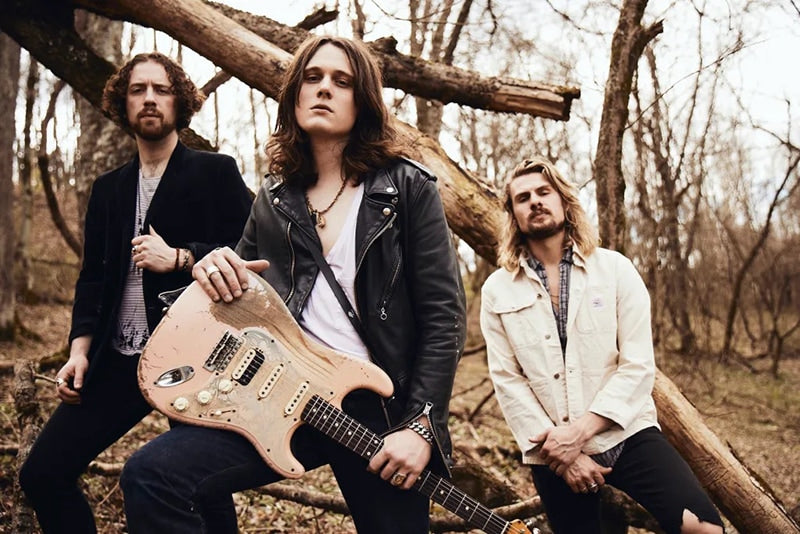
 

Tyler Bryant & the Shakedown. Courtesy of Freeman Promotions.

Tyler Bryant & the Shakedown. Courtesy of Freeman Promotions.


AD: From a production standpoint, what was the band’s approach?

GW: The approach to this record was different in that we didn’t really realize we were making a record until we had all this music recorded that we were really proud of. Most of the songs on it were demos that we turned into masters. We would get together, write a song, record it in Tyler’s studio, and then move on. We felt really strongly about certain songs as we were writing and demoing them, so we treated the [process] like we were making a record. We didn’t set aside two or three weeks to make a record like we normally had in the past. It was slowly put together over time.

AD: As the band’s rhythm guitarist, how do you view your role within the band’s music?

GW: I believe a great rhythm section is a foundation of a great band. Guys like Malcolm Young inspire me. He is the secret ingredient that makes ACϟDC’s music feel so good. As a drummer, I’m fascinated by a great groove, and my goal is always, how can I contribute to the groove and make it groove even harder? I am also attracted to [strong] dynamics, so I try to pay attention to them in my own playing.

AD: What led to the shift towards a more blues-rock sound?

GW: We were trying to boil down what authentically feels like us as a band. At our core, we have always been a blues-rock band, and we wanted to make that the focus of this record. I am always trying to sit in the pocket with my playing. I actively try to play slightly behind the beat. I think you can hear this in songs like “Ain’t None Watered Down.”


AD: Let’s touch on Rattle Shake Records. Why form your own label? Does being without major label support worry you at all?

GW: We wanted to have more control of our own music. And we want to release more music more frequently. We never stop making music as a band, and we want to share more of that music with our fans. Many assume that once you sign a deal with a major label, you hit the big time. That’s not necessarily the case. You still need to put in all the hard work. We felt we had built up enough of a grass roots following at this point that we could succeed at building it on our own.

AD: I recently asked [Aerosmith lead guitarist] Joe Perry if he felt that rock was dead, and he immediately referenced your band as proof of otherwise. Does the music of Aerosmith play a large role in the songwriting process for the Shakedown? I would think it would have to loom large as an influence.

GW: I am very flattered that he would say that. It means a lot coming from Joe. I grew up around Aerosmith’s music, so whether I like it or not, it’s in my DNA. I do believe that I have learned a lot from just hearing it my whole life. I definitely look to Aerosmith’s music for inspiration.

AD: What does the Shakedown need to do to continue to gain traction in an increasingly competitive scene? Where do you see yourself and the Shakedown in five, 10, or 20 years?

GW: We just keep building it. Keep making records, continue refining our songwriting abilities, and touring and making new fans. Hopefully, we will be playing bigger shows and establishing ourselves as a headlining band. In the meantime, we’ll be doing our best to keep rock ‘n’ roll alive for years to come.


Header image courtesy of Michael Heeschen.

More from Issue 172

View All Articles in Issue 172

Search Copper Magazine

#231 Piano Prodigy Jude Kofie Releases His Debut Album On Octave Records by Frank Doris Jun 01, 2026 #231 Underappreciated Artists, Part Two: City Boy by Rich Isaacs Jun 01, 2026 #231 Music and the Art of Creation: Talking With Saxophonist Rob Scheps by Joe Caplan Jun 01, 2026 #231 How to Play in a Rock Band, 24: Further Adventures at the 2026 Montauk Music Festival by Frank Doris Jun 01, 2026 #231 Courtney Barnett: Creature of Habit by Wayne Robins Jun 01, 2026 #231 Angine de Poitrine: Interstellar Guitar Rock Saviors Headed for Late-Night TV Pop Stardom? by Mark Lepage Jun 01, 2026 #231 My Impressions of AXPONA 2026, Part One by Frank Doris Jun 01, 2026 #231 2026 La Jolla Concours d'Elegance: Another Aesthetic Feast by B. Jan Montana Jun 01, 2026 #231 Country Music Icon Jo Dee Messina’s Bridges: A New Beginning by Ray Chelstowski Jun 01, 2026 #231 The Luxury Dispatch Hosts a Video Podcast With Ken Kessler by Ken Kessler Jun 01, 2026 #231 The Vinyl Beat: Tracking in the Motor City by Rudy Radelic Jun 01, 2026 #231 Lots of Fun With DSP: The Ferrum Audio WANDLA DAC and Its Tube Mode by Frank Doris Jun 01, 2026 #231 From The Audiophile's Guide: Digital Source Components and Streaming Audio by Paul McGowan Jun 01, 2026 #231 Onkyo’s Monster M-510 power amplifier by The Staff at Just Audio Jun 01, 2026 #231 PS Audio in the News by PS Audio Staff Jun 01, 2026 #231 Naming Convention by Peter Xeni Jun 01, 2026 #231 Les Invisibles by Frank Doris Jun 01, 2026 #231 Wildlife Scene by James Schrimpf Jun 01, 2026 #230 Camaraderie by B. Jan Montana May 04, 2026 #230 AXPONA 2026: A Family Gathering by Paul McGowan May 04, 2026 #230 Pianist Ryan Benthall Explores Jazz Realms and Far Beyond With Divine Sky by Frank Doris May 04, 2026 #230 The Vinyl Beat in AXPONA-Land by Rudy Radelic May 04, 2026 #230 Teddy Thompson’s Musical Growth Deepens With Never Be the Same by Ray Chelstowski May 04, 2026 #230 More Fun in the Sun: Florida Audio Expo, Part Two by Frank Doris May 04, 2026 #230 CanJam NYC 2026 Show Report: Heady Sound, Part Two by Frank Doris and Harris Fogel May 04, 2026 #230 Sonic Youth On Murray Street by Wayne Robins May 04, 2026 #230 Graffeo Coffee: A Symphony of Sensory Experience by Joe Caplan May 04, 2026 #230 The Saul Authority: The Story of Hi-Fi Pioneer Saul Marantz by Olivier Meunier-Plante May 04, 2026 #230 How to Play in a Rock Band, 23: Encounters With Famous Musicians, Part Two by Frank Doris May 04, 2026 #230 An Outlier in the Rack: A Vintage BIC Beam Box by The Staff at Just Audio May 04, 2026 #230 PS Audio in the News by PS Audio Staff May 04, 2026 #230 A Cautionary Tale by Rich Isaacs May 04, 2026 #230 Reel-to-Reel Roots, Part 33 (Revised): Ken Kessler Reports On the 2026 (British) AudioJumble by Ken Kessler May 04, 2026 #230 Text Messaging by Frank Doris May 04, 2026 #230 The Audiophile Rat Race by Peter Xeni May 04, 2026 #230 On the Rocks by Rich Isaacs May 04, 2026 #229 The Earliest Stars of Country Music, Part Three by Jeff Weiner Apr 06, 2026 #229 The Healing Power of Music and Sound at the Omega Institute by Joe Caplan Apr 06, 2026 #229 CanJam NYC 2026 Show Report: Heady Sound, Part One by Frank Doris Apr 06, 2026 #229 Florida Audio Expo 2026: Warming Up to High-End Audio, Part One by Frank Doris Apr 06, 2026 #229 Quick Takes: Anne Bisson, Sam Morrison, The Velvet Underground, and the Stooges by Frank Doris Apr 06, 2026 #229 The Vinyl Beat: New Arrivals, and Old Audio Show Demo Scores to Settle by Rudy Radelic Apr 06, 2026 #229 Harvard Gets a High-End Audio Education by Frank Doris Apr 06, 2026 #229 No Country for Old Knees by B. Jan Montana Apr 06, 2026 #229 How To Play in A Rock Band, 22: Encounters With Famous Musicians, Part 1 by Frank Doris Apr 06, 2026 #229 The Soulful Grooves of Guinea-Bissau by Steve Kindig Apr 06, 2026 #229 Four-Hand Piano Performance at Its Finest by Stephan Haberthür Apr 06, 2026

Born to Rock: Graham Whitford of Tyler Bryant & The Shakedown

Born to Rock: Graham Whitford of Tyler Bryant & The Shakedown

From being born into a house of classic rock royalty to becoming darlings of present-day indie blues-rock, Graham Whitford’s rock and roll journey was a matter of destiny.

As the son of Aerosmith guitarist Brad Whitford, the guitar was ingrained in a young Graham Whitford’s DNA from birth. Though Whitford’s dreams weren’t initially of the six-string variety, everything changed when his father gifted him a Les Paul at 17.

With guitar in hand, the world moved fast for Whitford. The young player developed his chops quickly and began to forge his signature style. While honing his chops, a chance meeting with fellow up-and-comer Tyler Bryant would change the trajectory of both guitarists’ careers.

An immediate kinship was apparent between Whitford and Bryant, and it wasn’t long before Whitford joined Bryant’s namesake group, Tyler Bryant & The Shakedown, forming a blistering blues-rock duo arguably not seen since 1990s-era Black Crowes lineups.

High praise? To be sure. Valid? You better believe it.

Now five records in, the Shakedown has settled in as a crème of the crop band, proof of which can be found on their trio’s most recent studio affair, Shake the Roots.

Graham dug in with me to run through his early leanings, how he met Tyler Bryant, the formation of indie label Rattle Shake Records, the enduring influence of Aerosmith, and a whole lot more.


Tyler Bryant & The Shakedown, Shake the Roots, album cover.

Tyler Bryant & The Shakedown, Shake the Roots, album cover.


Andrew Daly: What are your earliest memories of the guitar in your life?

Graham Whitford: I have been surrounded by guitars my whole life. However, I started my musical journey on the drums. When I was three, my parents bought me a small drum set for Christmas. I played nothing but drums until I was about 11 or 12. I moved from Massachusetts to New York City when I was 13. We moved into an apartment, and I naturally gravitated to playing more guitar and quickly became obsessed.

AD: What sort of influence has your father had on you as a player? Have you felt the need to shake that influence as you’ve moved forward?

GW: When I was 11 or 12, my dad taught me how to play over 12-bar blues, and after that moment, I couldn’t put the guitar down. During most of my formative years as a guitar player, my dad lived in North Carolina while I was in New York. I was primarily self-taught, learning by watching and listening to my favorite guitar players and trying to mimic what they did. As I became more and more consumed with the guitar, I began to truly appreciate what a special guitar player my dad is. To this day, I learn so much by just watching him play. When someone tells me that my playing reminds them of his, I take it as a great compliment.


AD: How did you get connected with Tyler Bryant?

GW: I met Tyler at a radio interview in New York City. I had recently become friendly with the photographer Robert Knight, who was working with Tyler at the time. Robert and I met early one morning in the city to take some photos. I brought a guitar with me for the shoot. After the photo session, Robert invited me to come with him to a radio interview with Tyler.

I was a big fan of Tyler’s music, so I was excited to meet him. I still had my guitar with me from the photo shoot, so when I walked in, [I’m sure] Tyler thought, “Who is this kid coming to my interview with a guitar?” Robert introduced me as the guy that was going to put Tyler out of a job. Because of this, I don’t think Tyler was too keen on me at first, but we exchanged info and started talking and sharing music.

Not too long after, I competed in a Guitar Center King of the Blues competition and made it to the finals. Tyler was one of the judges. This was the first time we really connected, and we became fast friends. In the summer of 2010, Tyler invited me to go on tour with the band, opening up for Pat Benatar and REO Speedwagon. In early 2011 I moved to Nashville and have been playing with the band ever since.

AD: What led you to join Shakedown officially?

GW: The first thing that really hooked me was the hang. The first time I hung out with Tyler and Caleb, I thought to myself, these are the kind of guys I want to be friends with. There was an immediate attraction to their energy. After I played with the band for the first time at The Ryman [Auditorium] in Nashville, opening up for Heart, I knew it was something special, and I felt that I fit right in.

AD: Your latest record, Shake the Roots, has just been released. Tell us a little about it.

GW: Shake The Roots is going to be the very first release on our brand-new label, Rattle Shake Records. We are very excited about starting our own label and are proud of this new record. We have always taken a grass roots, hands-on approach as a band, and creating our own label seemed like a natural progression.

With this record, we wanted to try and get back to our roots as a band. We reflected on some of our early music from [the] Wild Child [album], and I think we craved the youthful and raw energy that the record had. We also wanted to really let our blues roots shine.


Tyler Bryant & the Shakedown. Courtesy of Freeman Promotions.

Tyler Bryant & the Shakedown. Courtesy of Freeman Promotions.


AD: From a production standpoint, what was the band’s approach?

GW: The approach to this record was different in that we didn’t really realize we were making a record until we had all this music recorded that we were really proud of. Most of the songs on it were demos that we turned into masters. We would get together, write a song, record it in Tyler’s studio, and then move on. We felt really strongly about certain songs as we were writing and demoing them, so we treated the [process] like we were making a record. We didn’t set aside two or three weeks to make a record like we normally had in the past. It was slowly put together over time.

AD: As the band’s rhythm guitarist, how do you view your role within the band’s music?

GW: I believe a great rhythm section is a foundation of a great band. Guys like Malcolm Young inspire me. He is the secret ingredient that makes ACϟDC’s music feel so good. As a drummer, I’m fascinated by a great groove, and my goal is always, how can I contribute to the groove and make it groove even harder? I am also attracted to [strong] dynamics, so I try to pay attention to them in my own playing.

AD: What led to the shift towards a more blues-rock sound?

GW: We were trying to boil down what authentically feels like us as a band. At our core, we have always been a blues-rock band, and we wanted to make that the focus of this record. I am always trying to sit in the pocket with my playing. I actively try to play slightly behind the beat. I think you can hear this in songs like “Ain’t None Watered Down.”


AD: Let’s touch on Rattle Shake Records. Why form your own label? Does being without major label support worry you at all?

GW: We wanted to have more control of our own music. And we want to release more music more frequently. We never stop making music as a band, and we want to share more of that music with our fans. Many assume that once you sign a deal with a major label, you hit the big time. That’s not necessarily the case. You still need to put in all the hard work. We felt we had built up enough of a grass roots following at this point that we could succeed at building it on our own.

AD: I recently asked [Aerosmith lead guitarist] Joe Perry if he felt that rock was dead, and he immediately referenced your band as proof of otherwise. Does the music of Aerosmith play a large role in the songwriting process for the Shakedown? I would think it would have to loom large as an influence.

GW: I am very flattered that he would say that. It means a lot coming from Joe. I grew up around Aerosmith’s music, so whether I like it or not, it’s in my DNA. I do believe that I have learned a lot from just hearing it my whole life. I definitely look to Aerosmith’s music for inspiration.

AD: What does the Shakedown need to do to continue to gain traction in an increasingly competitive scene? Where do you see yourself and the Shakedown in five, 10, or 20 years?

GW: We just keep building it. Keep making records, continue refining our songwriting abilities, and touring and making new fans. Hopefully, we will be playing bigger shows and establishing ourselves as a headlining band. In the meantime, we’ll be doing our best to keep rock ‘n’ roll alive for years to come.


Header image courtesy of Michael Heeschen.

0 comments

Leave a comment

0 Comments

Your avatar

Loading comments...

🗑️ Delete Comment

Enter moderator password to delete this comment:

✏️ Edit Comment

Enter your email to verify ownership: