An Interview with Kelly Hansen of Foreigner: Feels Like the Last Time
By Ray Chelstowski•
Foreigner burst onto the rock scene in 1976 with songs and a sound that were unlike anything else. There was an energy to the music and a depth of production quality that made songs like “Feels Like the First Time” and “Cold As Ice” soar to the top of the charts and sit in heavy radio rotation. There was a moment between that launch and the mid-1980s where I can hardly remember not hearing one of their songs on the handful of stations I’d listen to. But arguably my most memorable Foreigner moment was on my honeymoon in Florence, Italy, when I was waiting for my wife to get ready for dinner and the band appeared on Italian television for a post-performance interview, and founding front man Lou Gramm was introduced in Italian with his birth name, Grammatico. That night they lit up the TV like they had always done, and would always do thereafter, regardless of the changes that would occur within their lineup.
Now, this chapter in rock history comes to a close. The band has decided that their upcoming tour will be their last. Just like the way they arrived; their exit will be one big bang. It will begin in early spring with a limited residency at The Venetian in Las Vegas, and will be followed by a world tour that opens with special guest Loverboy. Through a partnership with the Grammy Museum Foundation, the band has launched a choir contest, where winners from each of the markets they are scheduled to play will have the opportunity to sing a cappella versions of classic rock songs before the band stakes the stage. It’s another groundbreaking move by a band that’s always found a way to set rock on new and ambitious paths.
Copper had the opportunity to speak with lead singer Kelly Hansen, who has fronted the group since 2005. (The Iineup also includes founding member and guitarist Mick Jones, noted Dokken bassist Jeff Pilson, Michael Bluestein on keyboards, guitarist Bruce Watson, Chris Frazier on drums, and guitarist Luis Carlos Maldonado.) We spoke about the tour, the band’s legacy and who will carry the flame forward, the partnership with the Grammy Museum, and whether this is really the end to an act that has never lost a bit of its steam through more than four decades of evolution.
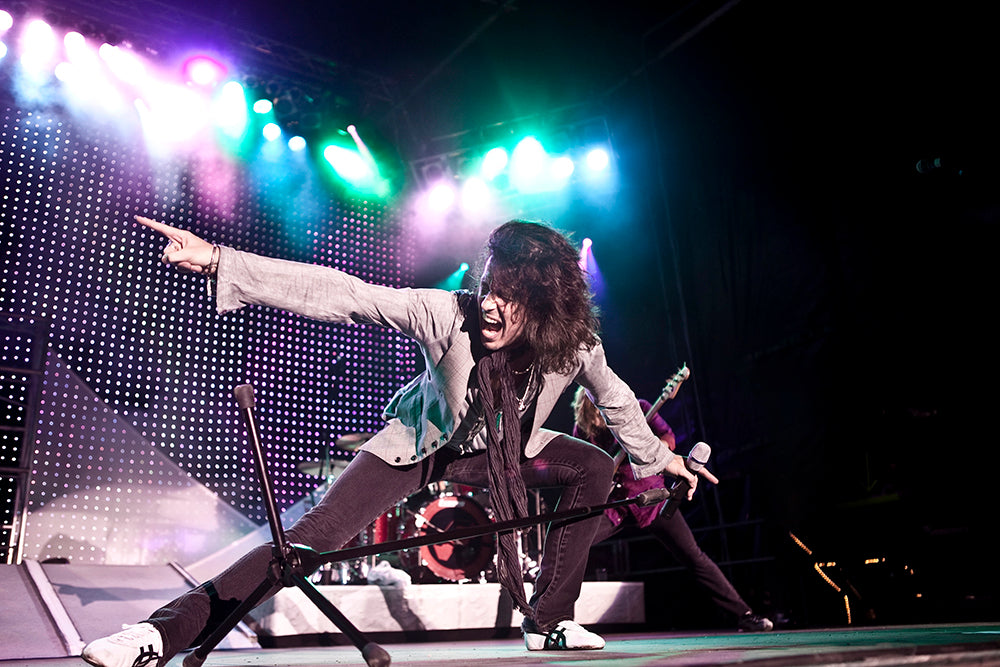
Kelly Hansen. Courtesy of S. Schweiger.
Ray Chelstowski: While this may be Foreigner’s final tour, is their music something that you or your bandmates might keep alive on your own? Kelly
Hansen: Well, my part in this decision is tied to the fact that these are very difficult songs to sing [unless] you’re young. I’m going to be 62 years old next month and it gets harder every year. I don’t want to do these songs at less than the level that they deserve. That heavily factored into the reason why we made this decision.
RC: Is recording new material off the table?
KH: Well, not [for] an entire album. We kind of decided that making albums didn’t make sense for us anymore. In 2009 when we made the album Can’t Slow Down we spent a year of our lives and hundreds of thousands of dollars, and the day it was released it was available for free on the internet. That’s not a model that you can support anymore. Doing a single song or a mini-campaign is definitely possible. We have a bunch of stuff in different states of completion, so that’s a possibility. And most music that classic rock bands are making isn’t meant to chart. It’s meant to drive people to the live show.
RC: You have tapped into a younger audience with high streaming numbers and music appearing on programming like Stranger Things. How do you market the band after the touring has ended?
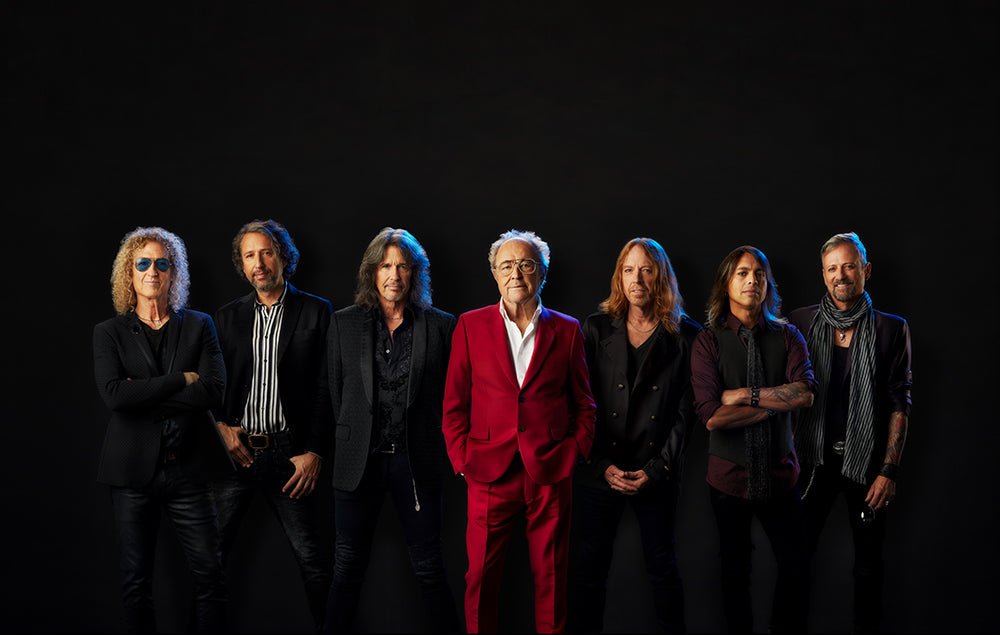
Foreigner. Courtesy of Karsten Staiger.
KH: Well as you said a lot of it has to do with placement in movies and television shows. That comes down to musical directors and consultants who are looking for something iconic that a lot of people will know. When a younger audience hears a song and goes to learn more about the band, they discover the catalog. Over the last 10 years I’ve seen a lot younger people at our shows. They know the words to the songs so I know that they weren’t dragged there by their parents. I think that is really due to these placements and social media.
RC: You’ve been with the band since 2005. What song remains the one you have to work the hardest at getting right each night?
KH: They all have their own special requirements that are challenging and require a lot of focus on my part. But in terms of notes and pitch, “Urgent” and “Juke Box Hero” are really up there and they come usually at the end of the set when your voice starts to get fatigued. “Night Life” is also up there and when we have done it it’s usually the show opener. That’s difficult because there’s no warm up except for what you do backstage. Then on “Waiting [for a Girl Like You]” there’s a falsetto thing that I do at the end that’s really high which is difficult because it’s a very low-register song and you have to get the timbre right. That takes a whole different kind of concentration. If your voice isn’t completely right, or tired or hoarse it gets difficult to do those low-register songs.
RC: What is the most important lesson you’ve learned from founding member, guitarist and songwriter Mick Jones?
KH: I’ve had many experiences in my musical career with people who were talented and tuned in and have what I call “big ears,” especially in regard to arrangements. It’s one of the things I have always loved about Foreigner songs. The arrangements, the parts and the power chords were very orchestrated compositions. That’s in large part due to Mick’s musical influences that brought him to France and led to all of the things that he did. When we started working together we really saw things the same way. In the studio he was always very particular with what he wanted for vocals but was always open to my input.
RC: How will the residence at The Venetian differ from what fans will hear on the larger tour?
KH: When we go to Las Vegas and do a residency we are able to stay set up, and that allows us to stretch our legs a little bit and relax and try some things that we might not be able to do on an “every day” show. We are still working out the details but it makes everything a lot more relaxing. Vegas is also a different audience. There’s a hard-ticket audience that comes to see you and that’s why they are buying that ticket. Then there are the fairs and festivals where a person might buy a ticket to the fair and there’s a band playing but they don’t know it’s you. Then there’s something like The Venetian where people are coming from all over the world to see you play, so the audience behaves differently than any other kind. That creates and obligation on our end because we know that people are coming from far away and spending a lot of money to come see us.
RC: The partnership with the Grammy Museum Foundation is very cool. How did this come about?
KH: We’ve been working with them for quite a long time, over 15 years. Choirs would come and perform with us on stage during “I Want to Know What Love Is.” What we have tried to do is raise awareness about the lack of funding of music and arts in schools. I’m a product of the public school system and we all felt like this was a way to give back. This year we are going to have several choirs open for us, and then there will be a winner chosen and they will get an award from our partner, Bose, and everyone else who has participated will receive a donation to their program. It’s also about having fun and showing these kids what it’s like to perform in front of thousands of people. We get to see their faces and see their reactions, and the notes we get from parents and choir directors about how this experience has affected their kids makes this a really good thing all the way around. We’re happy to do it and I think we get the better end of it all because we get to witness all of this.
RC: Is there a final tour live recording in the works for fans after the tour concludes?
KH: I don’t know if we’ve actually considered that. That’s a very interesting proposition. Thanks for giving us that idea. We’ve certainly done a lot of live audio stuff but we haven’t [considered] something like documenting this final tour, in a visual sense. That’s something to definitely think about!
RC: The Who and others have infamously called it quits many times before, only to return to the stage. Is there any chance that you guys could change your minds?
KH: I’ve been on the road every year for the last 18, nine months out of every year. Although it’s wonderful and I’m grateful for the opportunity, you miss things like family and pursuing any other interest. I feel now like I’d like to live a life. Every person goes through their own life arc. When I was 20 years old all I wanted to do was be in a big rock band. But as you get older, life changes. I feel like we’ve really done our best to deliver these songs as correctly as possible and I feel good about it all. I don’t want to be one of those bands that shouldn’t be out there performing but still is.
RC: So, what’s next for you after this tour ends, and will it involve music?
KH: I don’t know. It might. I don’t know what the future holds for me. I don’t have anything planned because my first order of business is to take a break, enjoy my family, and [figure out] where our next move is and what we are doing; setting up the next section of my life. But I suspect that there might be things that develop that I really can’t say “no” to and I look forward to that.
Header image of Kelly Hansen courtesy of Krishta Abruzzini.
An Interview with Kelly Hansen of Foreigner: Feels Like the Last Time
— By Ray Chelstowski —
Foreigner burst onto the rock scene in 1976 with songs and a sound that were unlike anything else. There was an energy to the music and a depth of production quality that made songs like “Feels Like the First Time” and “Cold As Ice” soar to the top of the charts and sit in heavy radio rotation. There was a moment between that launch and the mid-1980s where I can hardly remember not hearing one of their songs on the handful of stations I’d listen to. But arguably my most memorable Foreigner moment was on my honeymoon in Florence, Italy, when I was waiting for my wife to get ready for dinner and the band appeared on Italian television for a post-performance interview, and founding front man Lou Gramm was introduced in Italian with his birth name, Grammatico. That night they lit up the TV like they had always done, and would always do thereafter, regardless of the changes that would occur within their lineup.
Now, this chapter in rock history comes to a close. The band has decided that their upcoming tour will be their last. Just like the way they arrived; their exit will be one big bang. It will begin in early spring with a limited residency at The Venetian in Las Vegas, and will be followed by a world tour that opens with special guest Loverboy. Through a partnership with the Grammy Museum Foundation, the band has launched a choir contest, where winners from each of the markets they are scheduled to play will have the opportunity to sing a cappella versions of classic rock songs before the band stakes the stage. It’s another groundbreaking move by a band that’s always found a way to set rock on new and ambitious paths.
Copper had the opportunity to speak with lead singer Kelly Hansen, who has fronted the group since 2005. (The Iineup also includes founding member and guitarist Mick Jones, noted Dokken bassist Jeff Pilson, Michael Bluestein on keyboards, guitarist Bruce Watson, Chris Frazier on drums, and guitarist Luis Carlos Maldonado.) We spoke about the tour, the band’s legacy and who will carry the flame forward, the partnership with the Grammy Museum, and whether this is really the end to an act that has never lost a bit of its steam through more than four decades of evolution.
Kelly Hansen. Courtesy of S. Schweiger.
Ray Chelstowski: While this may be Foreigner’s final tour, is their music something that you or your bandmates might keep alive on your own? Kelly
Hansen: Well, my part in this decision is tied to the fact that these are very difficult songs to sing [unless] you’re young. I’m going to be 62 years old next month and it gets harder every year. I don’t want to do these songs at less than the level that they deserve. That heavily factored into the reason why we made this decision.
RC: Is recording new material off the table?
KH: Well, not [for] an entire album. We kind of decided that making albums didn’t make sense for us anymore. In 2009 when we made the album Can’t Slow Down we spent a year of our lives and hundreds of thousands of dollars, and the day it was released it was available for free on the internet. That’s not a model that you can support anymore. Doing a single song or a mini-campaign is definitely possible. We have a bunch of stuff in different states of completion, so that’s a possibility. And most music that classic rock bands are making isn’t meant to chart. It’s meant to drive people to the live show.
RC: You have tapped into a younger audience with high streaming numbers and music appearing on programming like Stranger Things. How do you market the band after the touring has ended?
Foreigner. Courtesy of Karsten Staiger.
KH: Well as you said a lot of it has to do with placement in movies and television shows. That comes down to musical directors and consultants who are looking for something iconic that a lot of people will know. When a younger audience hears a song and goes to learn more about the band, they discover the catalog. Over the last 10 years I’ve seen a lot younger people at our shows. They know the words to the songs so I know that they weren’t dragged there by their parents. I think that is really due to these placements and social media.
RC: You’ve been with the band since 2005. What song remains the one you have to work the hardest at getting right each night?
KH: They all have their own special requirements that are challenging and require a lot of focus on my part. But in terms of notes and pitch, “Urgent” and “Juke Box Hero” are really up there and they come usually at the end of the set when your voice starts to get fatigued. “Night Life” is also up there and when we have done it it’s usually the show opener. That’s difficult because there’s no warm up except for what you do backstage. Then on “Waiting [for a Girl Like You]” there’s a falsetto thing that I do at the end that’s really high which is difficult because it’s a very low-register song and you have to get the timbre right. That takes a whole different kind of concentration. If your voice isn’t completely right, or tired or hoarse it gets difficult to do those low-register songs.
RC: What is the most important lesson you’ve learned from founding member, guitarist and songwriter Mick Jones?
KH: I’ve had many experiences in my musical career with people who were talented and tuned in and have what I call “big ears,” especially in regard to arrangements. It’s one of the things I have always loved about Foreigner songs. The arrangements, the parts and the power chords were very orchestrated compositions. That’s in large part due to Mick’s musical influences that brought him to France and led to all of the things that he did. When we started working together we really saw things the same way. In the studio he was always very particular with what he wanted for vocals but was always open to my input.
RC: How will the residence at The Venetian differ from what fans will hear on the larger tour?
KH: When we go to Las Vegas and do a residency we are able to stay set up, and that allows us to stretch our legs a little bit and relax and try some things that we might not be able to do on an “every day” show. We are still working out the details but it makes everything a lot more relaxing. Vegas is also a different audience. There’s a hard-ticket audience that comes to see you and that’s why they are buying that ticket. Then there are the fairs and festivals where a person might buy a ticket to the fair and there’s a band playing but they don’t know it’s you. Then there’s something like The Venetian where people are coming from all over the world to see you play, so the audience behaves differently than any other kind. That creates and obligation on our end because we know that people are coming from far away and spending a lot of money to come see us.
RC: The partnership with the Grammy Museum Foundation is very cool. How did this come about?
KH: We’ve been working with them for quite a long time, over 15 years. Choirs would come and perform with us on stage during “I Want to Know What Love Is.” What we have tried to do is raise awareness about the lack of funding of music and arts in schools. I’m a product of the public school system and we all felt like this was a way to give back. This year we are going to have several choirs open for us, and then there will be a winner chosen and they will get an award from our partner, Bose, and everyone else who has participated will receive a donation to their program. It’s also about having fun and showing these kids what it’s like to perform in front of thousands of people. We get to see their faces and see their reactions, and the notes we get from parents and choir directors about how this experience has affected their kids makes this a really good thing all the way around. We’re happy to do it and I think we get the better end of it all because we get to witness all of this.
RC: Is there a final tour live recording in the works for fans after the tour concludes?
KH: I don’t know if we’ve actually considered that. That’s a very interesting proposition. Thanks for giving us that idea. We’ve certainly done a lot of live audio stuff but we haven’t [considered] something like documenting this final tour, in a visual sense. That’s something to definitely think about!
RC: The Who and others have infamously called it quits many times before, only to return to the stage. Is there any chance that you guys could change your minds?
KH: I’ve been on the road every year for the last 18, nine months out of every year. Although it’s wonderful and I’m grateful for the opportunity, you miss things like family and pursuing any other interest. I feel now like I’d like to live a life. Every person goes through their own life arc. When I was 20 years old all I wanted to do was be in a big rock band. But as you get older, life changes. I feel like we’ve really done our best to deliver these songs as correctly as possible and I feel good about it all. I don’t want to be one of those bands that shouldn’t be out there performing but still is.
RC: So, what’s next for you after this tour ends, and will it involve music?
KH: I don’t know. It might. I don’t know what the future holds for me. I don’t have anything planned because my first order of business is to take a break, enjoy my family, and [figure out] where our next move is and what we are doing; setting up the next section of my life. But I suspect that there might be things that develop that I really can’t say “no” to and I look forward to that.
Header image of Kelly Hansen courtesy of Krishta Abruzzini.
0 comments
📬
Get this in your inbox
New posts delivered free, the moment they publish.
We respect your privacy. Unsubscribe anytime.
0 Comments
Loading comments...
🗑️ Delete Comment
Enter moderator password to delete this comment:
✏️ Edit Comment
Enter your email to verify ownership:
Need assistance with sales, orders, warranties, or just have questions?




0 comments