
 The trick of getting two channels out of one groove was to cut the single groove in a V shape—at 45-degree angles. This permits the cutting head of the mastering lathe to place left channel information on one side of the V shape, the right channel on the other side. As the needle traces the groove, it moves both up and down and left and right.
On the cartridge side of the contraption, the needle has a magnet affixed to the end of it (in a moving magnet cartridge) and two coils of wire mounted in the same 45˚ angle as the record groove. When you play a record, the magnet gets closer and further from each coil, generating a voltage that is the musical signal.
Kind of cool, right?
I put together a video on the subject which might lend some further clarity if you're interested: How do vinyl records make stereo?
The trick of getting two channels out of one groove was to cut the single groove in a V shape—at 45-degree angles. This permits the cutting head of the mastering lathe to place left channel information on one side of the V shape, the right channel on the other side. As the needle traces the groove, it moves both up and down and left and right.
On the cartridge side of the contraption, the needle has a magnet affixed to the end of it (in a moving magnet cartridge) and two coils of wire mounted in the same 45˚ angle as the record groove. When you play a record, the magnet gets closer and further from each coil, generating a voltage that is the musical signal.
Kind of cool, right?
I put together a video on the subject which might lend some further clarity if you're interested: How do vinyl records make stereo?
The great mystery of vinyl
Look at a needle tracing its path along the grooves of a record album. Notice anything strange? Like, how is it that single needle following along in a single groove can make stereo? It might not be something you think about but now that I mention it, can you tell a friend or spouse how it works?
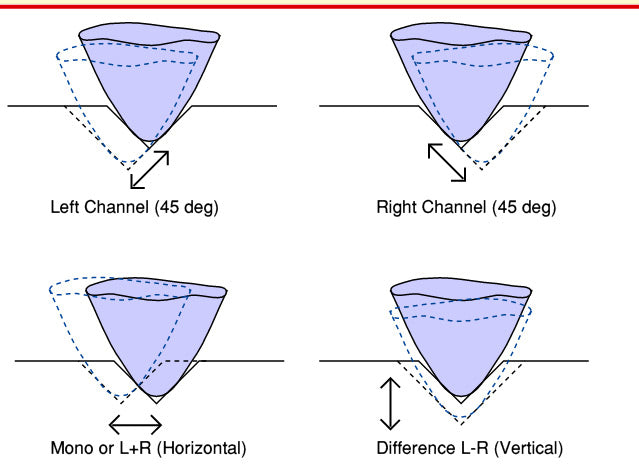
It's a good question and one that has a relatively simple answer. Take a look at this drawing.
The trick of getting two channels out of one groove was to cut the single groove in a V shape—at 45-degree angles. This permits the cutting head of the mastering lathe to place left channel information on one side of the V shape, the right channel on the other side. As the needle traces the groove, it moves both up and down and left and right.
On the cartridge side of the contraption, the needle has a magnet affixed to the end of it (in a moving magnet cartridge) and two coils of wire mounted in the same 45˚ angle as the record groove. When you play a record, the magnet gets closer and further from each coil, generating a voltage that is the musical signal.
Kind of cool, right?
I put together a video on the subject which might lend some further clarity if you're interested: How do vinyl records make stereo?
The trick of getting two channels out of one groove was to cut the single groove in a V shape—at 45-degree angles. This permits the cutting head of the mastering lathe to place left channel information on one side of the V shape, the right channel on the other side. As the needle traces the groove, it moves both up and down and left and right.
On the cartridge side of the contraption, the needle has a magnet affixed to the end of it (in a moving magnet cartridge) and two coils of wire mounted in the same 45˚ angle as the record groove. When you play a record, the magnet gets closer and further from each coil, generating a voltage that is the musical signal.
Kind of cool, right?
I put together a video on the subject which might lend some further clarity if you're interested: How do vinyl records make stereo?

0 comments