COPPER

A PS Audio Publication

Issue 145 • Free Online Magazine

Issue 145 WAYNE'S WORDS

The New New Orleans Sounds

The New New Orleans Sounds

Beyond jazz, the music to which the Crescent City gave birth, New Orleans rock and R&B music has always meant something simple and straightforward to me. Piano-based, from the early 1950s forward, with a lot of boogie, a little woogie, some stride, some glide, a little rhumba rhythm: Professor Longhair and James Booker did it best solo. Fats Domino, Huey “Piano” Smith and the Clowns, and player around town Mac Rebennack (later known as Dr. John) did it best with bands with a big backbeat. It’s a small city by population, so all the musicians knew each other, played on each other’s records, sometimes went under assumed names or appeared anonymously.

There were a few studios: Fats Domino and Lloyd Price were among the many who recorded at Cosimo Matassa’s J&M; in the mid-1960s but really taking off in the 1970s, Sea-Saint Studios of Marshall Sehorn and pianist/songwriter/producer Allen Toussaint became essential to the instrumental group the Meters, which became the house band in 1969. The leader, Art Neville, put together his large family group as the Neville Brothers Band, radio and concert staples of the 1970s and 1980s; Aaron Neville, with his gorgeous fluid tenor voice, had a productive solo career. Before major labels got involved, indies such as Imperial in L.A., Ace (forever associated with New Orleans but located in Jackson, Mississippi), Minit, and Josie were the main imprints for New Orleans rock and R&B. The 1970s and 1980s saw the emergence of rock bands such as the Radiators and Lil Queenie & the Percolators.

But since I have not been down there for quite a few years, I missed out on what might have been bubbling aside from the lively hip-hop variation of bounce music, some of whose purveyors attach the culture of twerking and cross-dressing in the same way hip-hop in New York included graffiti art and its own fashion codes. The 2018 movie Buckjumping, now streaming on Amazon Prime, offers a look at a number of dance and music trends and traditions, from Mardi Gras Indian groups, to a competitive high school dance troupe, to gender-bending bounce clubs.

Tradition-bound as New Orleans is (the Preservation Hall, the home of deepest roots of jazz in the French Quarter, is just getting back on its feet after 15 months of COVID and more damage by Hurricane Ida), a new generation of musicians is emerging. It seems like every week for the last few months, another band or artist from New Orleans or kindred regional music like Cajun zydeco has been releasing new music. And there’s also archival material to be found. Here’s a rundown of what I’ve been listening to from NOLA and the Gulf Coast in recent months.

Shakespeare & the Blues: e.g., rhapsodic (Nouveau Electric)

Shakespeare & the Blues, e.g. rhapsodic album cover.

High energy jams from where you’d least expect it: a trio consisting of drums (Cam Smith), Bryan Webre (bass and electronics), and the concert harp, played by Cassie Watson Francillon. That’s not mouth harp or harmonica; that’s the big string instrument you’d see in orchestras, or played in 19th century soirees of the landed aristocracy. It’s an unusual instrument for any act on the non-classical spectrum, much less in a band called Shakespeare & the Blues. Francillon doesn’t exactly play the blues here, but with her two colleagues in the band and on her solo albums on Bandcamp, she seems intent on taking an instrument from the plantation to PlayStation, taking the genteel passivity of the harp and playing it with intensity and bite. It’s not like she’s plugging it in and breaking strings: she allows Smith and Webre to provide a heavy bottom when needed, or lighter textures, as required.

This is music completely beyond category, something that might even extend the long spectrum of New York’s long-running, avant-garde Bang on a Can festival. Could you see this trio on a float throwing beaded necklaces at the crowds at Mardi Gras? Well, you could possibly see it, but you might not hear them. For the loud stuff, you’d need to listen to Nouveau Electric Records’ owner Louis Bichot’s Lost Bayou Ramblers, the only Cajun band that comes with a mosh pit to go with its crawfish pot: They’re the Clash of Cajun music. Consider that the LBR have performed at a tribute to the Pogues; also that Webre has played with spin-off band Michon’s Melody Makers and its albums like Cosmic Cajuns from Saturn.

Shakespeare & the Blues. Photo courtesy of Connor Reever. 

Shakespeare & the Blues. Photo courtesy of Connor Reever.


Shakespeare & the Blues offer sundry stylistic mashups, especially with Webre and Smith as both a rhythm section and bottomless resource of electronic sounds and loops. There’s not much singing here, but there are oddities of sampled narration. The best is the unlikely appearance of the comedian first known as Jack Roy, and a sample from a sketch called “How Rodney Dangerfield Got His Name.” To say what takes place is to give away the punchline, but it involves William Shakespeare. Which I think is Shakespeare & the Blues’ way of saying that anything and everything can fit into their music, especially if you like trap beats and the weaving and bobbing sound of the not-always-ethereal harp.


Silver Synthetic (Third Man)

Silver Synthetic, album cover.
Silver Synthetic is a rock band from New Orleans that also cuts against the grain of the players’ roots. Chris Lyons, the main songwriter, was in the punk/psych Bottomfeeders. But in a weird quirk of songwriting fate, he started writing songs that required a more genteel touch. Appropriately, Silver Synthetic was recorded in Lyons’ living room in New Orleans’ Gentilly neighborhood. But the strumming guitars and buoyant melodies bring to mind a host of 1960s and 1970s influences: Laurel Canyon folk-rock, and Creedence Clearwater Revival riffs that forget about any claim about being born on the bayou and instead make you think of once-bucolic Northern California: not exactly the working class San Francisco suburb of El Cerrito, where CCR was from, but more like Marin County before the wealthy dentists moved in. In other words, Silver Synthetic turns rock and roll geography upside down.
Silver Synthetic. Photo courtesy of Alison Green. 

Silver Synthetic. Photo courtesy of Alison Green.


There’s even a song called “Around the Bend” that suggests a softer, melodic mélange of CCR’s “Up Around the Bend” and the Velvet Underground’s “Train Coming Round the Bend” from Loaded. The song “Chasm Killer” sounds like a title from the early days of Neil Young and Crazy Horse, but with the aggression turned down. It’s such a normal-sounding record that it sounds like it’s from another time. Suppose Joey Ramone started out as a folk singer, and then decided to form a band like Poco. Strange and lovely.


Dumpstaphunk: Where Do We Go From Here (Mascot Label Group/The Funk Garage)

Dumpstaphunk, "Where Do We Go From Here" album cover.

Before the musical GPS goes totally awry, we’ve got the deep dive into Dumpstaphunk’s latest. The opening cut, “United Nations Stomp,” sounds so much like a Buddy Miles punch of peace and love that I wasn’t surprised when I found out that it is a cover of a Buddy Miles tune from 1973, with Marcus King bringing the Hendrix/Eddie Hazel guitar fire. It’s all “everybody clap your hands, everybody stomp your feet,” and it’s mixed to play loud. The immediate reaction is to think of a Funkadelic spin-off. But Dumpstaphunk’s New Orleans’ bona fides run deep: It’s led by Ivan Neville of the city’s first family of funk, and features Ivan’s cousin, Ian Neville. The songs tend to be long, which allows a lot of stretching out for the band’s jam band fans. But the vibe is definitely 1970s funk, with that particular NOLA hot sauce, and covers of the rare New Orleans band Blackmail’s “Let’s Get at It,” and a seven minute version of Sly and the Family Stone’s “In Time” (from Fresh, 1973). Together for almost 18 years (since their 2003 debut at the New Orleans Jazz and Heritage Festival), the band’s command of the deep New Orleans pocket and impeccable taste for reviving lost funk classics make this one of the better party records from a band that makes everything old sound new again.


Header image: Dumpstaphunk, courtesy of Jeff Farsai.

More from Issue 145

View All Articles in Issue 145

Search Copper Magazine

#231 Piano Prodigy Jude Kofie Releases His Debut Album On Octave Records by Frank Doris Jun 01, 2026 #231 Underappreciated Artists, Part Two: City Boy by Rich Isaacs Jun 01, 2026 #231 Music and the Art of Creation: Talking With Saxophonist Rob Scheps by Joe Caplan Jun 01, 2026 #231 How to Play in a Rock Band, 24: Further Adventures at the 2026 Montauk Music Festival by Frank Doris Jun 01, 2026 #231 Courtney Barnett: Creature of Habit by Wayne Robins Jun 01, 2026 #231 Angine de Poitrine: Interstellar Guitar Rock Saviors Headed for Late-Night TV Pop Stardom? by Mark Lepage Jun 01, 2026 #231 My Impressions of AXPONA 2026, Part One by Frank Doris Jun 01, 2026 #231 2026 La Jolla Concours d'Elegance: Another Aesthetic Feast by B. Jan Montana Jun 01, 2026 #231 Country Music Icon Jo Dee Messina’s Bridges: A New Beginning by Ray Chelstowski Jun 01, 2026 #231 The Luxury Dispatch Hosts a Video Podcast With Ken Kessler by Ken Kessler Jun 01, 2026 #231 The Vinyl Beat: Tracking in the Motor City by Rudy Radelic Jun 01, 2026 #231 Lots of Fun With DSP: The Ferrum Audio WANDLA DAC and Its Tube Mode by Frank Doris Jun 01, 2026 #231 From The Audiophile's Guide: Digital Source Components and Streaming Audio by Paul McGowan Jun 01, 2026 #231 Onkyo’s Monster M-510 power amplifier by The Staff at Just Audio Jun 01, 2026 #231 PS Audio in the News by PS Audio Staff Jun 01, 2026 #231 Naming Convention by Peter Xeni Jun 01, 2026 #231 Les Invisibles by Frank Doris Jun 01, 2026 #231 Wildlife Scene by James Schrimpf Jun 01, 2026 #230 Camaraderie by B. Jan Montana May 04, 2026 #230 AXPONA 2026: A Family Gathering by Paul McGowan May 04, 2026 #230 Pianist Ryan Benthall Explores Jazz Realms and Far Beyond With Divine Sky by Frank Doris May 04, 2026 #230 The Vinyl Beat in AXPONA-Land by Rudy Radelic May 04, 2026 #230 Teddy Thompson’s Musical Growth Deepens With Never Be the Same by Ray Chelstowski May 04, 2026 #230 More Fun in the Sun: Florida Audio Expo, Part Two by Frank Doris May 04, 2026 #230 CanJam NYC 2026 Show Report: Heady Sound, Part Two by Frank Doris and Harris Fogel May 04, 2026 #230 Sonic Youth On Murray Street by Wayne Robins May 04, 2026 #230 Graffeo Coffee: A Symphony of Sensory Experience by Joe Caplan May 04, 2026 #230 The Saul Authority: The Story of Hi-Fi Pioneer Saul Marantz by Olivier Meunier-Plante May 04, 2026 #230 How to Play in a Rock Band, 23: Encounters With Famous Musicians, Part Two by Frank Doris May 04, 2026 #230 An Outlier in the Rack: A Vintage BIC Beam Box by The Staff at Just Audio May 04, 2026 #230 PS Audio in the News by PS Audio Staff May 04, 2026 #230 A Cautionary Tale by Rich Isaacs May 04, 2026 #230 Reel-to-Reel Roots, Part 33 (Revised): Ken Kessler Reports On the 2026 (British) AudioJumble by Ken Kessler May 04, 2026 #230 Text Messaging by Frank Doris May 04, 2026 #230 The Audiophile Rat Race by Peter Xeni May 04, 2026 #230 On the Rocks by Rich Isaacs May 04, 2026 #229 The Earliest Stars of Country Music, Part Three by Jeff Weiner Apr 06, 2026 #229 The Healing Power of Music and Sound at the Omega Institute by Joe Caplan Apr 06, 2026 #229 CanJam NYC 2026 Show Report: Heady Sound, Part One by Frank Doris Apr 06, 2026 #229 Florida Audio Expo 2026: Warming Up to High-End Audio, Part One by Frank Doris Apr 06, 2026 #229 Quick Takes: Anne Bisson, Sam Morrison, The Velvet Underground, and the Stooges by Frank Doris Apr 06, 2026 #229 The Vinyl Beat: New Arrivals, and Old Audio Show Demo Scores to Settle by Rudy Radelic Apr 06, 2026 #229 Harvard Gets a High-End Audio Education by Frank Doris Apr 06, 2026 #229 No Country for Old Knees by B. Jan Montana Apr 06, 2026 #229 How To Play in A Rock Band, 22: Encounters With Famous Musicians, Part 1 by Frank Doris Apr 06, 2026 #229 The Soulful Grooves of Guinea-Bissau by Steve Kindig Apr 06, 2026 #229 Four-Hand Piano Performance at Its Finest by Stephan Haberthür Apr 06, 2026

The New New Orleans Sounds

The New New Orleans Sounds

Beyond jazz, the music to which the Crescent City gave birth, New Orleans rock and R&B music has always meant something simple and straightforward to me. Piano-based, from the early 1950s forward, with a lot of boogie, a little woogie, some stride, some glide, a little rhumba rhythm: Professor Longhair and James Booker did it best solo. Fats Domino, Huey “Piano” Smith and the Clowns, and player around town Mac Rebennack (later known as Dr. John) did it best with bands with a big backbeat. It’s a small city by population, so all the musicians knew each other, played on each other’s records, sometimes went under assumed names or appeared anonymously.

There were a few studios: Fats Domino and Lloyd Price were among the many who recorded at Cosimo Matassa’s J&M; in the mid-1960s but really taking off in the 1970s, Sea-Saint Studios of Marshall Sehorn and pianist/songwriter/producer Allen Toussaint became essential to the instrumental group the Meters, which became the house band in 1969. The leader, Art Neville, put together his large family group as the Neville Brothers Band, radio and concert staples of the 1970s and 1980s; Aaron Neville, with his gorgeous fluid tenor voice, had a productive solo career. Before major labels got involved, indies such as Imperial in L.A., Ace (forever associated with New Orleans but located in Jackson, Mississippi), Minit, and Josie were the main imprints for New Orleans rock and R&B. The 1970s and 1980s saw the emergence of rock bands such as the Radiators and Lil Queenie & the Percolators.

But since I have not been down there for quite a few years, I missed out on what might have been bubbling aside from the lively hip-hop variation of bounce music, some of whose purveyors attach the culture of twerking and cross-dressing in the same way hip-hop in New York included graffiti art and its own fashion codes. The 2018 movie Buckjumping, now streaming on Amazon Prime, offers a look at a number of dance and music trends and traditions, from Mardi Gras Indian groups, to a competitive high school dance troupe, to gender-bending bounce clubs.

Tradition-bound as New Orleans is (the Preservation Hall, the home of deepest roots of jazz in the French Quarter, is just getting back on its feet after 15 months of COVID and more damage by Hurricane Ida), a new generation of musicians is emerging. It seems like every week for the last few months, another band or artist from New Orleans or kindred regional music like Cajun zydeco has been releasing new music. And there’s also archival material to be found. Here’s a rundown of what I’ve been listening to from NOLA and the Gulf Coast in recent months.

Shakespeare & the Blues: e.g., rhapsodic (Nouveau Electric)

Shakespeare & the Blues, e.g. rhapsodic album cover.

High energy jams from where you’d least expect it: a trio consisting of drums (Cam Smith), Bryan Webre (bass and electronics), and the concert harp, played by Cassie Watson Francillon. That’s not mouth harp or harmonica; that’s the big string instrument you’d see in orchestras, or played in 19th century soirees of the landed aristocracy. It’s an unusual instrument for any act on the non-classical spectrum, much less in a band called Shakespeare & the Blues. Francillon doesn’t exactly play the blues here, but with her two colleagues in the band and on her solo albums on Bandcamp, she seems intent on taking an instrument from the plantation to PlayStation, taking the genteel passivity of the harp and playing it with intensity and bite. It’s not like she’s plugging it in and breaking strings: she allows Smith and Webre to provide a heavy bottom when needed, or lighter textures, as required.

This is music completely beyond category, something that might even extend the long spectrum of New York’s long-running, avant-garde Bang on a Can festival. Could you see this trio on a float throwing beaded necklaces at the crowds at Mardi Gras? Well, you could possibly see it, but you might not hear them. For the loud stuff, you’d need to listen to Nouveau Electric Records’ owner Louis Bichot’s Lost Bayou Ramblers, the only Cajun band that comes with a mosh pit to go with its crawfish pot: They’re the Clash of Cajun music. Consider that the LBR have performed at a tribute to the Pogues; also that Webre has played with spin-off band Michon’s Melody Makers and its albums like Cosmic Cajuns from Saturn.

Shakespeare & the Blues. Photo courtesy of Connor Reever. 

Shakespeare & the Blues. Photo courtesy of Connor Reever.


Shakespeare & the Blues offer sundry stylistic mashups, especially with Webre and Smith as both a rhythm section and bottomless resource of electronic sounds and loops. There’s not much singing here, but there are oddities of sampled narration. The best is the unlikely appearance of the comedian first known as Jack Roy, and a sample from a sketch called “How Rodney Dangerfield Got His Name.” To say what takes place is to give away the punchline, but it involves William Shakespeare. Which I think is Shakespeare & the Blues’ way of saying that anything and everything can fit into their music, especially if you like trap beats and the weaving and bobbing sound of the not-always-ethereal harp.


Silver Synthetic (Third Man)

Silver Synthetic, album cover.
Silver Synthetic is a rock band from New Orleans that also cuts against the grain of the players’ roots. Chris Lyons, the main songwriter, was in the punk/psych Bottomfeeders. But in a weird quirk of songwriting fate, he started writing songs that required a more genteel touch. Appropriately, Silver Synthetic was recorded in Lyons’ living room in New Orleans’ Gentilly neighborhood. But the strumming guitars and buoyant melodies bring to mind a host of 1960s and 1970s influences: Laurel Canyon folk-rock, and Creedence Clearwater Revival riffs that forget about any claim about being born on the bayou and instead make you think of once-bucolic Northern California: not exactly the working class San Francisco suburb of El Cerrito, where CCR was from, but more like Marin County before the wealthy dentists moved in. In other words, Silver Synthetic turns rock and roll geography upside down.
Silver Synthetic. Photo courtesy of Alison Green. 

Silver Synthetic. Photo courtesy of Alison Green.


There’s even a song called “Around the Bend” that suggests a softer, melodic mélange of CCR’s “Up Around the Bend” and the Velvet Underground’s “Train Coming Round the Bend” from Loaded. The song “Chasm Killer” sounds like a title from the early days of Neil Young and Crazy Horse, but with the aggression turned down. It’s such a normal-sounding record that it sounds like it’s from another time. Suppose Joey Ramone started out as a folk singer, and then decided to form a band like Poco. Strange and lovely.


Dumpstaphunk: Where Do We Go From Here (Mascot Label Group/The Funk Garage)
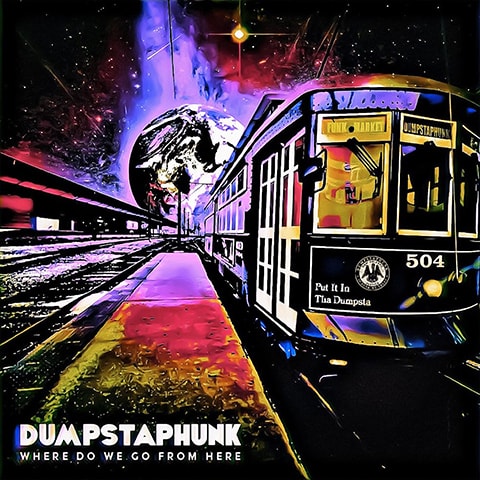
Dumpstaphunk, "Where Do We Go From Here" album cover.

Before the musical GPS goes totally awry, we’ve got the deep dive into Dumpstaphunk’s latest. The opening cut, “United Nations Stomp,” sounds so much like a Buddy Miles punch of peace and love that I wasn’t surprised when I found out that it is a cover of a Buddy Miles tune from 1973, with Marcus King bringing the Hendrix/Eddie Hazel guitar fire. It’s all “everybody clap your hands, everybody stomp your feet,” and it’s mixed to play loud. The immediate reaction is to think of a Funkadelic spin-off. But Dumpstaphunk’s New Orleans’ bona fides run deep: It’s led by Ivan Neville of the city’s first family of funk, and features Ivan’s cousin, Ian Neville. The songs tend to be long, which allows a lot of stretching out for the band’s jam band fans. But the vibe is definitely 1970s funk, with that particular NOLA hot sauce, and covers of the rare New Orleans band Blackmail’s “Let’s Get at It,” and a seven minute version of Sly and the Family Stone’s “In Time” (from Fresh, 1973). Together for almost 18 years (since their 2003 debut at the New Orleans Jazz and Heritage Festival), the band’s command of the deep New Orleans pocket and impeccable taste for reviving lost funk classics make this one of the better party records from a band that makes everything old sound new again.


Header image: Dumpstaphunk, courtesy of Jeff Farsai.

0 comments

Leave a comment

0 Comments

Your avatar

Loading comments...

🗑️ Delete Comment

Enter moderator password to delete this comment:

✏️ Edit Comment

Enter your email to verify ownership: