Copper Magazine · Issue 168 · A free PS Audio publication
Issue 168 Disciples of Sound

The Harlequins: A Cincinnati Band Has Plenty to Say

The Harlequins: A Cincinnati Band Has Plenty to Say

In 1984, On July 4th weekend, Bruce Springsteen & The E Street Band made their second stop on the “Born in the U.S.A.” tour. It had begun with three dates in St. Paul, Minnesota. But when the band rolled into Cincinnati’s Riverfront Stadium, the shows were so electrifying that they spawned a bootleg tape series called “Born in Cincinnati” that’s popular to this day. A few weeks later I was camped out in Saratoga Springs, New York with friends, having just finished a series of Grateful Dead shows. I was waiting for Springsteen to appear at Saratoga Performing Arts Center (SPAC) that weekend. I’m not sure how we got our hands on copies of “Born In Cincinnati” that week, but it began what has now become a lifetime love for one of America’s best rock towns.

Cincinnati has been quietly fueling a rock resolve that is more common than you might think. They boast what could be the largest number of used record stores in any major US city – and they all rock. Shake It Records, Everybody’s Records, Plaid Room Records, and Black Plastic are just a few of the spots I regularly patronized when I had an office in town. Their selections were broad and the finds I made there remain some of my finest in my collection. I’m spinning one right now!

The city has also birthed some remarkable musical acts, like Bootsy Collins, The National (formed in Brooklyn but the members were from Cincinnati), the Isley Brothers, and Adrian Belew (King Crimson, Talking Heads). But beneath that rarified surface is a rock scene that has always bubbled, but maybe never quite burst. There, bands like The Harlequins brought forward a garage-psych sound that provided a grit, attitude, and artistry you’d expect to find in Chelsea or the Lower East Side of Manhattan. As part of a national garage-psych revival with bands like the Black Lips, Gringo Star, La Luz, and Thee Oh Sees, The Harlequins have created a presence throughout the Cincinnati region that has left a mark and is defined by a singular sense of authenticity.

A power rock trio with Michael Oliva on guitar and vocals, Alex Stenard on bass, and Robert Stamler on drums, the band is celebrating their 15-year anniversary with the release of TIME, their seventh full-length album and first since 2016’s acclaimed One With You. The first single, “The Tower,” finds the band spreading their wings a bit, taking their sound slightly away from the garage and letting it soar within a cosmic cloud. The result is infectious.

Copper spoke with Michael Oliva about why the record took so long to make, how it evolved over time, the bands that helped influence their sound, and how the city of Cincinnati and its rock scene have made them the band they are today.
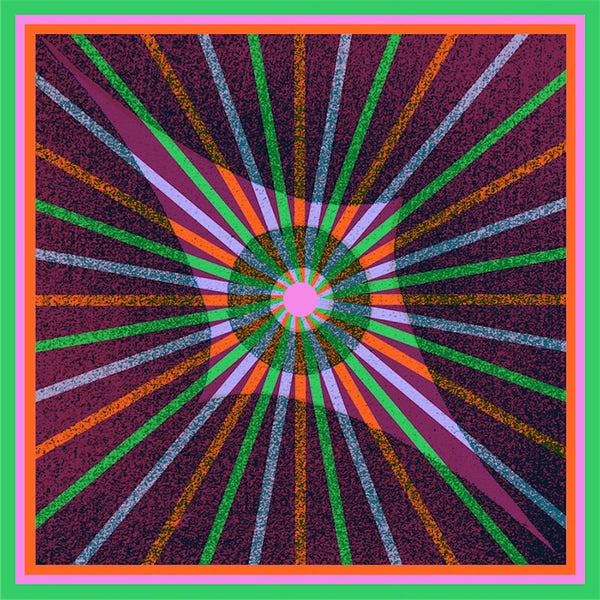
 

The Harlequins, TIME, album cover.

The Harlequins, TIME, album cover.


Ray Chelstowski: You started recording TIME in 2017, right after your last studio record. What took so long for this to be completed?

Michael Oliva: Yeah, it’s tough. But it’s like abandoning a child in a way; you just don’t do it. In 2016 we put out [our] last record and then started writing and recording again in 2017, working and touring full time. That slowed recording sessions down a bit because we were still plugging the last record. Then I broke my index finger on my left hand and the recovery took almost eight months. So that was the first setback. Around that time, we marked about our 10-year milestone as a band. I think that every three or four years ushers in a new era where you retrain your physicality and your connections, because when you’re around that long sometimes the bands just die off. Also, around this time our bass player opened up a pizza restaurant and he got busy with that. So those were the three main things that started slowing our normal hit-and-run process of recording.

RC: How had the initial vision for the record evolved since then?

MO: The process took a lot longer than usual for us. Writing and recording took over three years, and we had it pretty much wrapped up by 2020. But then it took a while to get it mastered. Finally, when the live music scene became impacted by COVID we decided to wait. We didn’t want to put the record out and not be able to perform it live. That’s said, in the last two years it might have been nice to add some things to make it a little more current. I had been thinking about doing that but didn’t want to change anything, because we had caught lightning in a bottle and I didn’t want to tweak things too much. It however definitely did change over time, and that’s probably because it took this long to complete.

RC: Your first single, “The Tower,” sounds a bit more psychedelic than garage. That’s a departure from your previous work. Is that sound consistent throughout the record?

MO: I wanted this album to be a little more like our first album, which was eclectic; it was like a kaleidoscope of psychedelic pop. There’s a slight live element to this record, but in the past I wanted to record only in [a] way that we could replicate it live. So, we never add any extra sounds. On this album we decided to have more fun with everything and color every song to its own individual strengths versus making just one uniform record. In 2017, the [Beatles’] White Album mono mixes came out and I listened heavily to that, and I felt like it hit so much harder than the stereo version. The meat was in the center. So while this isn’t a mono record, there is a focus on the sonic experience where there are mono-heavy elements with some stereo imaging on specific instruments. I just wanted to make an audiophile record.


RC: You say this is more of “audiophile” record. How do you define that?

MO: [Most of] these songs have a live edge, but others offered us an opportunity to explore other avenues and get away with it. I don’t think things should be “overly dressed,” and this album certainly isn’t. But the things I was going for that set it apart involved the drum set up, where I used four mics, and then I deadened the sound so it [sounded] more like 1970s drum parts. I like taking that and kind of choking the mix and just experimenting with gear.

RC: Since you did add a bit more texture to this record, if you could take one more instrument/player out with you on tour, what would it be and why?

MO: In the early days I was much more of a purist where I wouldn’t even do many solos, but I always wanted to fill as much space as I could. I think that’s easier with less people, because each person has more room to expand their frequency, their wheelhouse. But for [playing] live it would be nice to have a killer synth or Hammond player who can also sing. It’s hard to say. Maybe just some kind of sampler [synthesizer], because I think it would be more fun and could separate things from the pack a little bit.
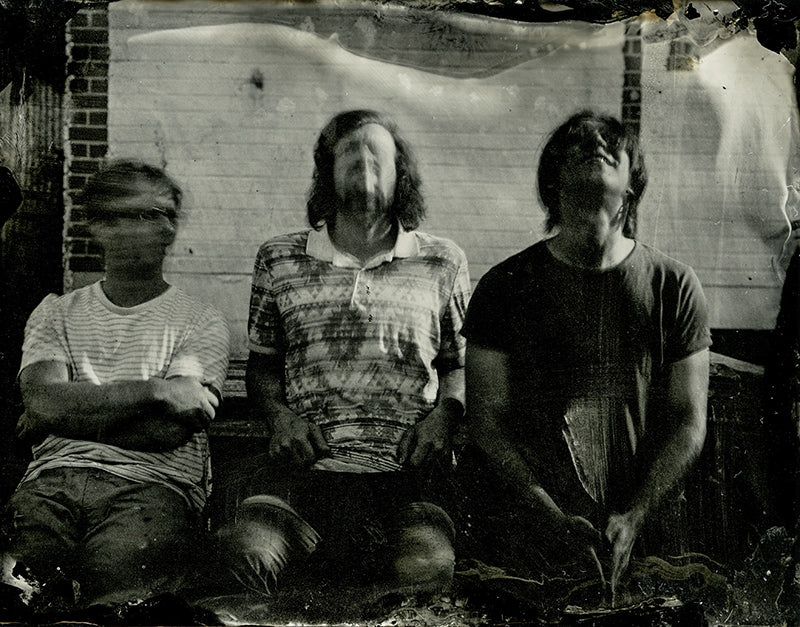
 

The Harlequins. Courtesy of Michael Wilson.

The Harlequins. Courtesy of Michael Wilson.


RC: Who were the bands that most inspired your sound?

MO: I’ll be democratic about this and not speak for my other bandmates. These are my top personal picks. Obviously the Beatles; because they are psychedelic and have all of those great pop songs. I’d also add Can; particularly the Tago Mago period. I’d also include The Monks, especially the album Black Monk Time. You could even throw James Brown in because of that repetitive beat you find in funk songs like “Sex Machine.” On the flip side of that are the melodic-based performers like Harry Nilsson and Brian Wilson. Then I’d say The Breeders and Devo, both from Ohio. There are touches of that throughout our music but they’re well-hidden. The Cramps as well. They started off kind of “surfy” but evolved into almost that dark psychobilly kind of sound. Lastly, The Fall, and Gringo Star.

RC: Cincy is known for having really great used record stores. Everybody’s Records, Shake It Records, Black Plastic Records, and Plaid Room are just a few that come to mind. Is there any one that’s your go-to place for music?

MO: Well, when you play in the town for this long you get to know all of the people, some not as well as I’d like but they’re all great. I think that Shake It has been around the longest. Everybody’s is a staple. Black Plastic is great and the owner Steve Schmalz has been in Cincy bands forever. Plaid Room is also cool. I’ve only been there once so I haven’t had the chance to explore it as much as I’d like because I don’t get out that way very often. But I would say in my youth I went to Shake It the most.

RC: You are always defined as a Midwest band. How has the region and Cincinnati specifically helped shape your sound?

MO: Cincy is really on the map now. In the past eight years people from the coasts have been buying up real estate. It’s crazy to see the change. But for the longest time no one wanted anything to do with it. It had been a “pass over town” where big bands would hit Cleveland and just skip the rest of the state. It was a shame because Cincinnati, in my opinion of course, has always been the coolest city in Ohio (laughs). There are a lot of hard-core rock fans here and I think that for a long time this city was a hidden secret. That always made us feel a bit like underdogs and we enjoyed changing people’s minds of what they could expect from a city like ours.


Header image of The Harlequins courtesy of Ryan Back.

More from Issue 168

View All Articles in Issue 168

Search Copper Magazine

#236 Magic Boy: The Jimi Hendrix Experience, Live and Rediscovered by Frank Doris Nov 02, 2026 #236 The Great Rhythmic Divide: Composer David Chesky Asks, Why Doesn't the Symphony Orchestra Groove? by David Chesky Nov 02, 2026 #236 More Record Reviews: Roni Eytan’s Microtonal Harmonica, Jane Ira Bloom, and a Frank Zappa Freak Out by Frank Doris Nov 02, 2026 #236 An Album of Inviting Beauty: Goodnight Moon from Acoustic Eidolon, And an Interview With the Artists Who Created it by Frank Doris Nov 02, 2026 #236 Never Ignore Your Inner Voice by B. Jan Montana Nov 02, 2026 #236 Composer Joseph Bertolozzi Uses Bridges, Structures and the World as Musical Instruments, Part One by Joe Caplan Nov 02, 2026 #236 Transmission: A Powerful Horn-Loaded Album from the Huntertones by Ray Chelstowski Nov 02, 2026 #236 Les Quatre Saisons du Québec: a New “Four Seasons” on Tour and on ATMA Classique by Robert Schryer Nov 02, 2026 #236 From The Audiophile's Guide: A Glossary of Terms for Today's Audio Systems, A – M by Paul McGowan Nov 02, 2026 #236 From The Listening Chair: An Introduction to Audiophile Tweaks by Howard Kneller Nov 02, 2026 #236 The Vinyl Beat Grew Two Inches Since October! by Rudy Radelic Nov 02, 2026 #236 How to Play in a Rock Band, Part 29: Figuring Out How to Play the Songs by Frank Doris Nov 02, 2026 #236 The Return of the Residents: Eskimo is On the Road by Wayne Robins Nov 02, 2026 #236 PS Audio in the News by PS Audio Staff Nov 02, 2026 #236 The People Who Make Audio Happen – Fun In Las Vegas at…CES 2026? by Harris Fogel Nov 02, 2026 #236 The Forms of Things Unknown by Frank Doris Nov 02, 2026 #236 Prophetic by Peter Xeni Nov 02, 2026 #236 Here's Looking at You, Kid by Rich Isaacs Nov 02, 2026 Favorites From T.H.E. Show SoCal 2026 by Cam Martin Oct 05, 2026 #235 Singer/Songwriter John David Schrader: On the Need to Create, Part Two by Joe Caplan Oct 05, 2026 #235 A Life in High-End Audio: The Roy Hall Interview, Part Two by Frank Doris Oct 05, 2026 #235 Grammy-Winning Producer, Songwriter, and Guitarist John Leventhal Goes Instrumental With National Drift by Ray Chelstowski Oct 05, 2026 #235 From Swimming Pool to New Listening Room—to Founding an Accidental Audio Company by Gilles Laferrière Oct 05, 2026 #235 The Vinyl Beat’s Size Matters Edition by Rudy Radelic Oct 05, 2026 #235 The Sublime Complexities of Nature by B. Jan Montana Oct 05, 2026 #235 How to Play In a Rock Band, 28: Growing Older and Dealing With It by Frank Doris Oct 05, 2026 #235 Young Rascals: From Bar Band to Stardom by Wayne Robins Oct 05, 2026 #235 Duncan Sheik: In Memoriam by Ray Chelstowski Oct 05, 2026 #235 From The Listening Chair: The Meze Audio 105 Silva Headphones by Howard Kneller Oct 05, 2026 #235 Checking Out Some NOLA Loudspeakers – and Some Thoughts About Audio Writing by Frank Doris Oct 05, 2026 #235 The Kanazawa Phonograph Museum: Music from a Time Capsule by Sebastian Polcyn Oct 05, 2026 #235 PS Audio in the News by PS Audio Staff Oct 05, 2026 #235 From The Audiophile’s Guide: Making the Most Critical Choice by Paul McGowan Oct 05, 2026 #235 Evolutionary Growth by Frank Doris Oct 05, 2026 #235 Speed Racer by Peter Xeni Oct 05, 2026 #235 Happy Halloween! by James Schrimpf Oct 05, 2026 #234 A Life in High-End Audio: The Roy Hall Interview, Part One by Frank Doris Sep 07, 2026 #234 Jason Greenlaw Offers His Personal Perspective on Jazz Guitar in Vantage Point by Frank Doris Sep 07, 2026 #234 Transcendent Phoenix: Lucina Yue Brings the Ancient Konghou Into Modern Times by Frank Doris Sep 07, 2026 #234 We Must All Follow Our Bliss by B. Jan Montana Sep 07, 2026 #234 How to Play in a Rock Band, 27: Leveling Up by Frank Doris Sep 07, 2026 #234 Ross Valory: Traveling Into New Musical Territory With All of the Above by Ray Chelstowski Sep 07, 2026 #234 Singer/Songwriter John David Schrader: On the Need to Create by Joe Caplan Sep 07, 2026 #234 The People Who Make Audio Happen: More From T.H.E. Show SoCal 2026 by Harris Fogel Sep 07, 2026 #234 The Vinyl Beat Digs Into the Gadget Box by Rudy Radelic Sep 07, 2026 #234 The Rolling Stones: Foreign Tongues Spoken Loud by Wayne Robins Sep 07, 2026 #234 Musical Moments by Rich Isaacs Sep 07, 2026

The Harlequins: A Cincinnati Band Has Plenty to Say

The Harlequins: A Cincinnati Band Has Plenty to Say

In 1984, On July 4th weekend, Bruce Springsteen & The E Street Band made their second stop on the “Born in the U.S.A.” tour. It had begun with three dates in St. Paul, Minnesota. But when the band rolled into Cincinnati’s Riverfront Stadium, the shows were so electrifying that they spawned a bootleg tape series called “Born in Cincinnati” that’s popular to this day. A few weeks later I was camped out in Saratoga Springs, New York with friends, having just finished a series of Grateful Dead shows. I was waiting for Springsteen to appear at Saratoga Performing Arts Center (SPAC) that weekend. I’m not sure how we got our hands on copies of “Born In Cincinnati” that week, but it began what has now become a lifetime love for one of America’s best rock towns.

Cincinnati has been quietly fueling a rock resolve that is more common than you might think. They boast what could be the largest number of used record stores in any major US city – and they all rock. Shake It Records, Everybody’s Records, Plaid Room Records, and Black Plastic are just a few of the spots I regularly patronized when I had an office in town. Their selections were broad and the finds I made there remain some of my finest in my collection. I’m spinning one right now!

The city has also birthed some remarkable musical acts, like Bootsy Collins, The National (formed in Brooklyn but the members were from Cincinnati), the Isley Brothers, and Adrian Belew (King Crimson, Talking Heads). But beneath that rarified surface is a rock scene that has always bubbled, but maybe never quite burst. There, bands like The Harlequins brought forward a garage-psych sound that provided a grit, attitude, and artistry you’d expect to find in Chelsea or the Lower East Side of Manhattan. As part of a national garage-psych revival with bands like the Black Lips, Gringo Star, La Luz, and Thee Oh Sees, The Harlequins have created a presence throughout the Cincinnati region that has left a mark and is defined by a singular sense of authenticity.

A power rock trio with Michael Oliva on guitar and vocals, Alex Stenard on bass, and Robert Stamler on drums, the band is celebrating their 15-year anniversary with the release of TIME, their seventh full-length album and first since 2016’s acclaimed One With You. The first single, “The Tower,” finds the band spreading their wings a bit, taking their sound slightly away from the garage and letting it soar within a cosmic cloud. The result is infectious.

Copper spoke with Michael Oliva about why the record took so long to make, how it evolved over time, the bands that helped influence their sound, and how the city of Cincinnati and its rock scene have made them the band they are today.


The Harlequins, TIME, album cover.

The Harlequins, TIME, album cover.


Ray Chelstowski: You started recording TIME in 2017, right after your last studio record. What took so long for this to be completed?

Michael Oliva: Yeah, it’s tough. But it’s like abandoning a child in a way; you just don’t do it. In 2016 we put out [our] last record and then started writing and recording again in 2017, working and touring full time. That slowed recording sessions down a bit because we were still plugging the last record. Then I broke my index finger on my left hand and the recovery took almost eight months. So that was the first setback. Around that time, we marked about our 10-year milestone as a band. I think that every three or four years ushers in a new era where you retrain your physicality and your connections, because when you’re around that long sometimes the bands just die off. Also, around this time our bass player opened up a pizza restaurant and he got busy with that. So those were the three main things that started slowing our normal hit-and-run process of recording.

RC: How had the initial vision for the record evolved since then?

MO: The process took a lot longer than usual for us. Writing and recording took over three years, and we had it pretty much wrapped up by 2020. But then it took a while to get it mastered. Finally, when the live music scene became impacted by COVID we decided to wait. We didn’t want to put the record out and not be able to perform it live. That’s said, in the last two years it might have been nice to add some things to make it a little more current. I had been thinking about doing that but didn’t want to change anything, because we had caught lightning in a bottle and I didn’t want to tweak things too much. It however definitely did change over time, and that’s probably because it took this long to complete.

RC: Your first single, “The Tower,” sounds a bit more psychedelic than garage. That’s a departure from your previous work. Is that sound consistent throughout the record?

MO: I wanted this album to be a little more like our first album, which was eclectic; it was like a kaleidoscope of psychedelic pop. There’s a slight live element to this record, but in the past I wanted to record only in [a] way that we could replicate it live. So, we never add any extra sounds. On this album we decided to have more fun with everything and color every song to its own individual strengths versus making just one uniform record. In 2017, the [Beatles’] White Album mono mixes came out and I listened heavily to that, and I felt like it hit so much harder than the stereo version. The meat was in the center. So while this isn’t a mono record, there is a focus on the sonic experience where there are mono-heavy elements with some stereo imaging on specific instruments. I just wanted to make an audiophile record.


RC: You say this is more of “audiophile” record. How do you define that?

MO: [Most of] these songs have a live edge, but others offered us an opportunity to explore other avenues and get away with it. I don’t think things should be “overly dressed,” and this album certainly isn’t. But the things I was going for that set it apart involved the drum set up, where I used four mics, and then I deadened the sound so it [sounded] more like 1970s drum parts. I like taking that and kind of choking the mix and just experimenting with gear.

RC: Since you did add a bit more texture to this record, if you could take one more instrument/player out with you on tour, what would it be and why?

MO: In the early days I was much more of a purist where I wouldn’t even do many solos, but I always wanted to fill as much space as I could. I think that’s easier with less people, because each person has more room to expand their frequency, their wheelhouse. But for [playing] live it would be nice to have a killer synth or Hammond player who can also sing. It’s hard to say. Maybe just some kind of sampler [synthesizer], because I think it would be more fun and could separate things from the pack a little bit.


The Harlequins. Courtesy of Michael Wilson.

The Harlequins. Courtesy of Michael Wilson.


RC: Who were the bands that most inspired your sound?

MO: I’ll be democratic about this and not speak for my other bandmates. These are my top personal picks. Obviously the Beatles; because they are psychedelic and have all of those great pop songs. I’d also add Can; particularly the Tago Mago period. I’d also include The Monks, especially the album Black Monk Time. You could even throw James Brown in because of that repetitive beat you find in funk songs like “Sex Machine.” On the flip side of that are the melodic-based performers like Harry Nilsson and Brian Wilson. Then I’d say The Breeders and Devo, both from Ohio. There are touches of that throughout our music but they’re well-hidden. The Cramps as well. They started off kind of “surfy” but evolved into almost that dark psychobilly kind of sound. Lastly, The Fall, and Gringo Star.

RC: Cincy is known for having really great used record stores. Everybody’s Records, Shake It Records, Black Plastic Records, and Plaid Room are just a few that come to mind. Is there any one that’s your go-to place for music?

MO: Well, when you play in the town for this long you get to know all of the people, some not as well as I’d like but they’re all great. I think that Shake It has been around the longest. Everybody’s is a staple. Black Plastic is great and the owner Steve Schmalz has been in Cincy bands forever. Plaid Room is also cool. I’ve only been there once so I haven’t had the chance to explore it as much as I’d like because I don’t get out that way very often. But I would say in my youth I went to Shake It the most.

RC: You are always defined as a Midwest band. How has the region and Cincinnati specifically helped shape your sound?

MO: Cincy is really on the map now. In the past eight years people from the coasts have been buying up real estate. It’s crazy to see the change. But for the longest time no one wanted anything to do with it. It had been a “pass over town” where big bands would hit Cleveland and just skip the rest of the state. It was a shame because Cincinnati, in my opinion of course, has always been the coolest city in Ohio (laughs). There are a lot of hard-core rock fans here and I think that for a long time this city was a hidden secret. That always made us feel a bit like underdogs and we enjoyed changing people’s minds of what they could expect from a city like ours.


Header image of The Harlequins courtesy of Ryan Back.

0 comments

Leave a comment

0 Comments

Your avatar

Loading comments...

🗑️ Delete Comment

Enter moderator password to delete this comment:

✏️ Edit Comment

Enter your email to verify ownership: