COPPER

A PS Audio Publication

Issue 134 • Free Online Magazine

Issue 134

Streaming Audio and Other Rants

Streaming Audio and Other Rants

First off, I hope many of you are listening to my new Podcast called The Jay Jay French Connection: Beyond the Music (available on Spotify, Apple Music and Podcastone.com)

Great topics, great guests, and my new book, Twisted Business: Lessons From my Life in Rock n Roll is coming out in September.

Among the many fun things one can do to while away the hours in this pandemic exile is nonstop net surfing.

The fact that our phones now know our inner thoughts to the degree that all we have to do apparently is think of something and then…poof, the subject magically appears in the Google search engine is eerie, to say the least. So terrifying is this Big Brother aspect that the fact that it happens is a rant all to itself.

I will however, hold back on that in favor of commenting about all the various “expert” opinions about speaker cables, turntables, digital vs. analog, and my current pet peeve, hi-res streaming.

Perhaps I’ve been in this game too long.

I know what I know and I know what I hear.

When the “experts” tell us on their YouTube channel that there is no difference in cables, or that digital is better because it just has to be, I still watch, to see how wrong they can be. I get that audio can be confusing, but such opinions are about as valid as someone saying that “all rap music sucks” or, “all country music sounds the same,” or all the other well-worn cliches that we hear that are now given greater exposure thanks to the internet.

There simply is no alternative to actually experiencing things to know all you need to know.

The latest truism, as far as I’m concerned, is the myth that if you listen to music streamed over TIDAL or Qobuz (for example) and you have the ability to listen at higher bit rates (assuming that your D/A converter is capable) then the higher bit rates must sound better.

Well, after much listening and comparing, I will say that that is not always the case.

One of the enjoyable aspects of this kind of high-end streaming is that you can pick the version you want to listen to – hi-res at various sample and bit rates, CD-quality, or various formats.

It even gets a little crazier if you have TIDAL and Qobuz because they don’t even sound similar, track-for-track and bit rate-to-bit rate. It is a little crazy, I know; but if you have spent serious dosh on gear, wouldn’t you want to feel better about your investment? And I’m not even talking about how the way the music is sent from your streamer to your D/A converter – the actual cable and interface connections — because using a USB cable versus a digital coax cable and making comparisons can also cause one to reach for the Prozac!

Here is the point. If you listen to enough streaming and you know that the source was mastered at 44.1 kHz/16-bit, I don’t care if the version that you are streaming at is 88, 176, 192 or 386 kHz at 24 bits. The playback at 44.1 kHz/16-bit, at least to my ears, sounds best.

What is even more confounding is that the streaming services say that all they do is stream what the record labels send them. In theory, then, there should be no difference between the sound quality of the various services if, in fact, that is the case.

Why then, do they sound different?

And what about FLAC files?

I had a producer friend come over to my house to listen to The Beatles “Apple” USB stick box set. It contains all the Beatles’ studio albums, in their UK configurations. For the first time, all the Beatles’ music is now available in two modes, standard “Red Book” CD, and all the albums are also on FLAC files. I can easily go back and forth. As I can decode both, it made for a very interesting exercise.
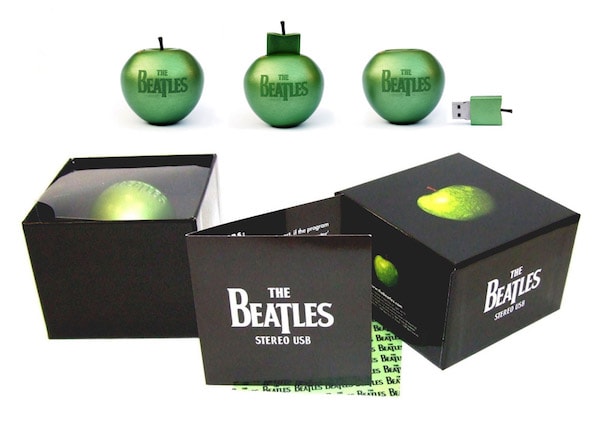
The Beatles USB box set. The Beatles USB box set.

While the FLAC files sounded “hotter,” they didn’t sound better.

The only digital medium so far that has consistently sounded better then Red Book audio to me is SACD. That is probably why SACD ain’t dying too soon!

After you read this, if you have the option to play back streamed digital music, please try all of these options on your systems and report back to me.

In a recent interview, Michael Fremer of Analog Planet and Stereophile was asked about hi-res digital files being used to press vinyl. Wouldn’t the hi-res digital file sound better than the vinyl? However, Michael stated that vinyl cut from a hi-res digital master can sound even better than listening to the digital file via digital playback electronics, and I agree, having many recordings I’ve used to make the comparisons.

When I interviewed Giles Martin several years ago about the 2017 remixed and remastered version of the Beatles’ Sgt. Pepper’s Lonely Hearts Club Band, he also confided that he prefers the sound of the vinyl to digital-only playback of the hi-res digital files it was made from, and most importantly, he can’t explain why other than, “it just does!”

The point is: when it comes to digital, not all digital files are equal (even when it says they are) and not all hi-res files sound better than standard CD-quality.

Please chime in on this.


Header image: Cambridge Audio DacMagic 100.


More from Issue 134

View All Articles in Issue 134

Search Copper Magazine

#226 JJ Murphy’s Sleep Paralysis is a Genre-Bending Musical Journey Through Jazz, Fusion and More by Frank Doris Jan 05, 2026 #226 Stewardship by Consent by B. Jan Montana Jan 05, 2026 #226 Food, Music, and Sensory Experience: An Interview With Professor Jonathan Zearfoss of the Culinary Institute of America by Joe Caplan Jan 05, 2026 #226 Studio Confidential: A Who’s Who of Recording Engineers Tell Their Stories by Frank Doris Jan 05, 2026 #226 Pilot Radio is Reborn, 50 Years Later: Talking With CEO Barak Epstein by Frank Doris Jan 05, 2026 #226 The Vinyl Beat Goes Down to Tijuana (By Way of Los Angeles), Part One by Rudy Radelic Jan 05, 2026 #226 Capital Audiofest 2025: Must-See Stereo, Part Two by Frank Doris Jan 05, 2026 #226 My Morning Jacket’s Carl Broemel and Tyler Ramsey Collaborate on Their Acoustic Guitar Album, Celestun by Ray Chelstowski Jan 05, 2026 #226 The People Who Make Audio Happen: CanJam SoCal 2025, Part Two by Harris Fogel Jan 05, 2026 #226 How to Play in a Rock Band, 19: Touring Can Make You Crazy, Part One by Frank Doris Jan 05, 2026 #226 Linda Ronstadt Goes Bigger by Wayne Robins Jan 05, 2026 #226 From The Audiophile’s Guide: Active Room Correction and Digital Signal Processing by Paul McGowan Jan 05, 2026 #226 PS Audio in the News by Frank Doris Jan 05, 2026 #226 Back to My Reel-to-Reel Roots, Part 25: Half-Full, Not Empty by Ken Kessler Jan 05, 2026 #226 Happy New Year! by Frank Doris Jan 05, 2026 #226 Turn It Down! by Peter Xeni Jan 05, 2026 #226 Ghost Riders by James Schrimpf Jan 05, 2026 #226 A Factory Tour of Audio Manufacturer German Physiks by Markus "Marsu" Manthey Jan 04, 2026 #225 Capital Audiofest 2025: Must-See Stereo, Part One by Frank Doris Dec 01, 2025 #225 Otis Taylor and the Electrics Delivers a Powerful Set of Hypnotic Modern Blues by Frank Doris Dec 01, 2025 #225 A Christmas Miracle by B. Jan Montana Dec 01, 2025 #225 T.H.E. Show New York 2025, Part Two: Plenty to See, Hear, and Enjoy by Frank Doris Dec 01, 2025 #225 Underappreciated Artists, Part One: Martin Briley by Rich Isaacs Dec 01, 2025 #225 Rock and Roll is Here to Stay by Wayne Robins Dec 01, 2025 #225 A Lifetime of Holiday Record (and CD) Listening by Rudy Radelic Dec 01, 2025 #225 Little Feat: Not Saying Goodbye, Not Yet by Ray Chelstowski Dec 01, 2025 #225 How to Play in a Rock Band, Part 18: Dealing With Burnout by Frank Doris Dec 01, 2025 #225 The People Who Make Audio Happen: CanJam SoCal 2025 by Harris Fogel Dec 01, 2025 #225 Chicago’s Sonic Sanctuaries: Four Hi‑Fi Listening Bars Channeling the Jazz‑Kissa Spirit by Olivier Meunier-Plante Dec 01, 2025 #225 From The Audiophile’s Guide: Controlling Bass Frequencies Through Membrane Absorbers (and How to Build Your Own) by Paul McGowan Dec 01, 2025 #225 Your Editor’s Tips for Attending Audio Shows by Frank Doris Dec 01, 2025 #225 PS Audio in the News by Frank Doris Dec 01, 2025 #225 Back to My Reel-to-Reel Roots, Part 24 by Ken Kessler Dec 01, 2025 #225 Holiday Music by Frank Doris Dec 01, 2025 #225 Puppy Prognostication by Peter Xeni Dec 01, 2025 #225 How to Post Comments on Copper by Frank Doris Dec 01, 2025 #225 Living Color by Rudy Radelic Dec 01, 2025 #224 T.H.E. Show New York 2025, Part One: A New Beginning by Frank Doris Nov 03, 2025 #224 Fool’s Leap of Faith is the Extraordinary Octave Records Debut from Singer/Songwriter Tyler Burba and Visit by Frank Doris Nov 03, 2025 #224 The Beatles’ “Aeolian Cadences.” What? by Wayne Robins Nov 03, 2025 #224 Persona Non Grata by B. Jan Montana Nov 03, 2025 #224 Talking With Recording Engineer Barry Diament of Soundkeeper Recordings, Part Two by Frank Doris Nov 03, 2025 #224 B Sides, B Movies, and Beware of Zombies by Rudy Radelic Nov 03, 2025 #224 The Burn-In Chronicles: 1,000 Hours to Sonic Salvation by Olivier Meunier-Plante Nov 03, 2025 #224 A Conversation With Mat Weisfeld of VPI Industries by Joe Caplan Nov 03, 2025 #224 Blues-Rocker Kenny Wayne Shepherd Celebrates 30 Years of Ledbetter Heights by Ray Chelstowski Nov 03, 2025 #224 Playing in a Rock Band, 17: When Good Gigs Go Bad, Part Two by Frank Doris Nov 03, 2025

Streaming Audio and Other Rants

Streaming Audio and Other Rants

First off, I hope many of you are listening to my new Podcast called The Jay Jay French Connection: Beyond the Music (available on Spotify, Apple Music and Podcastone.com)

Great topics, great guests, and my new book, Twisted Business: Lessons From my Life in Rock n Roll is coming out in September.

Among the many fun things one can do to while away the hours in this pandemic exile is nonstop net surfing.

The fact that our phones now know our inner thoughts to the degree that all we have to do apparently is think of something and then…poof, the subject magically appears in the Google search engine is eerie, to say the least. So terrifying is this Big Brother aspect that the fact that it happens is a rant all to itself.

I will however, hold back on that in favor of commenting about all the various “expert” opinions about speaker cables, turntables, digital vs. analog, and my current pet peeve, hi-res streaming.

Perhaps I’ve been in this game too long.

I know what I know and I know what I hear.

When the “experts” tell us on their YouTube channel that there is no difference in cables, or that digital is better because it just has to be, I still watch, to see how wrong they can be. I get that audio can be confusing, but such opinions are about as valid as someone saying that “all rap music sucks” or, “all country music sounds the same,” or all the other well-worn cliches that we hear that are now given greater exposure thanks to the internet.

There simply is no alternative to actually experiencing things to know all you need to know.

The latest truism, as far as I’m concerned, is the myth that if you listen to music streamed over TIDAL or Qobuz (for example) and you have the ability to listen at higher bit rates (assuming that your D/A converter is capable) then the higher bit rates must sound better.

Well, after much listening and comparing, I will say that that is not always the case.

One of the enjoyable aspects of this kind of high-end streaming is that you can pick the version you want to listen to – hi-res at various sample and bit rates, CD-quality, or various formats.

It even gets a little crazier if you have TIDAL and Qobuz because they don’t even sound similar, track-for-track and bit rate-to-bit rate. It is a little crazy, I know; but if you have spent serious dosh on gear, wouldn’t you want to feel better about your investment? And I’m not even talking about how the way the music is sent from your streamer to your D/A converter – the actual cable and interface connections — because using a USB cable versus a digital coax cable and making comparisons can also cause one to reach for the Prozac!

Here is the point. If you listen to enough streaming and you know that the source was mastered at 44.1 kHz/16-bit, I don’t care if the version that you are streaming at is 88, 176, 192 or 386 kHz at 24 bits. The playback at 44.1 kHz/16-bit, at least to my ears, sounds best.

What is even more confounding is that the streaming services say that all they do is stream what the record labels send them. In theory, then, there should be no difference between the sound quality of the various services if, in fact, that is the case.

Why then, do they sound different?

And what about FLAC files?

I had a producer friend come over to my house to listen to The Beatles “Apple” USB stick box set. It contains all the Beatles’ studio albums, in their UK configurations. For the first time, all the Beatles’ music is now available in two modes, standard “Red Book” CD, and all the albums are also on FLAC files. I can easily go back and forth. As I can decode both, it made for a very interesting exercise.

The Beatles USB box set. The Beatles USB box set.

While the FLAC files sounded “hotter,” they didn’t sound better.

The only digital medium so far that has consistently sounded better then Red Book audio to me is SACD. That is probably why SACD ain’t dying too soon!

After you read this, if you have the option to play back streamed digital music, please try all of these options on your systems and report back to me.

In a recent interview, Michael Fremer of Analog Planet and Stereophile was asked about hi-res digital files being used to press vinyl. Wouldn’t the hi-res digital file sound better than the vinyl? However, Michael stated that vinyl cut from a hi-res digital master can sound even better than listening to the digital file via digital playback electronics, and I agree, having many recordings I’ve used to make the comparisons.

When I interviewed Giles Martin several years ago about the 2017 remixed and remastered version of the Beatles’ Sgt. Pepper’s Lonely Hearts Club Band, he also confided that he prefers the sound of the vinyl to digital-only playback of the hi-res digital files it was made from, and most importantly, he can’t explain why other than, “it just does!”

The point is: when it comes to digital, not all digital files are equal (even when it says they are) and not all hi-res files sound better than standard CD-quality.

Please chime in on this.


Header image: Cambridge Audio DacMagic 100.


0 comments

Leave a comment

0 Comments

Your avatar

Loading comments...

🗑️ Delete Comment

Enter moderator password to delete this comment: