COPPER

A PS Audio Publication

Issue 147 • Free Online Magazine

Issue 147 STREAMING SESSIONS

Stream of Consciousness: Better Sound From My Computer Audio, Part One

Stream of Consciousness: Better Sound From My Computer Audio, Part One

As something of a musical magpie, I have always been of the mind that it’s just such a special thing to physically own the commodity that you buy. Call me old-fashioned – in this age of streaming audio, the concept of ownership seems to be less significant for many people than it once was. But, I like the concept of keeping what you paid for until you decide to sell it. As circumstances allow, I think this ownership model is quite comforting when looking at buying any particular asset, unless of course it is just too expensive to obtain in the first place. There is something very satisfying about owning what you enjoy.

It’s true that the law of diminishing returns can also be a factor (in audio equipment or anything else), and the point at which the curve of diminishing returns kicks in for you is likely influenced by your income, what equipment you already own, the space you might have for new gear, and perhaps most importantly, the value you personally place on that incremental step of improvement(s) gained from the shelling out of greenbacks. This is nothing new…so, what is this preamble actually about?

In this series, I’m going to talk about how I was able to squeeze more quality out of my existing computer music setup in my system – without spending any money.

Although I like to own my music, I appreciate value for money, and music subscription services certainly offer that. Circumstances have also changed. Before the pandemic kicked in and killed off my local second-hand record store, it used to be a great source of pleasure to go in and browse the racks, pay for the album, and then leave the store able to play the record at my leisure and enjoy the liner notes and artwork. I have fond memories of buying my first records and cassette tapes. I remember where I was and how much I paid for them. It’s a common shared experience.

15 years ago, where I lived there were at least three High Street vinyl stores that sold used records, not to mention the retailers selling new vinyl. Not anymore.

It’s likely that like me, you too have collections of vinyl albums and CDs and maybe tape cassettes and other formats, and although you don’t dig them out very often, you’ll never part with them. They represent part of your personal musical developmental DNA and growth.

As a result, I have a modest music library on NAS (network attached storage) hard drives, so that I can play this treasured collection of tunes, as and when the moment takes me. Most of it consists of CDs ripped to FLAC or WAV files, as I have painstakingly sloughed away all my not-so surreptitiously sibilant MP3 recordings. In a concerted effort to get the most out of my music, I thought I would pursue the goal of making my music more accessible than ever before, while also realizing the greater potential of what my existing audio system has to offer. I also thought I would aim for that target without spending one red cent, in an exercise of dispelling GAS (Gear Acquisition Syndrome).

Do I need a bigger power amp? Possibly. Do I need a new DAC? I’d like one. Can I upgrade my capacitors in my speakers? Yes, but they already sound good, even excellent. Should I take out a Roon subscription? I could, but that would mean another subscription, and my project goal was to spend a budget of zero. (Call it lockdown logic!)

My solution would be a combination of, one, smarter hardware routing and setting up of my Oppo UDP-203 Blu-ray player with an external Arcam irDAC, and two, obtaining some excellent software.

Oppo UDP-203 universal disc player. It's no longer available, yet still has its fans.

Oppo UDP-203 universal disc player. It’s no longer available, yet still has its fans.


Although it’s a convenient way to connect your streaming audio source to your system, one of the limitations of streaming music from your NAS or computer to your preamp or receiver is that you are limited to the sound quality of the preamp or receiver’s internal DAC. (Also, sometimes a receiver or preamp has a limited number of digital and especially optical digital inputs it will accommodate – perhaps only one for the audio output of a TV, for example.)

But if you already have a nice DAC, say, one that you’re using with a disc transport, then you can use that one instead of your preamp or receiver’s built-in DAC. It may improve your sound significantly.

Instead of connecting my NAS to my Yamaha AV receiver via the RJ-45 LAN Ethernet connection, I connected the NAS to the RJ-45 LAN Ethernet port on the Oppo, and then ran the coaxial digital output from the Oppo to my Arcam DAC, the line output of which then went to a line input on my A/V receiver.
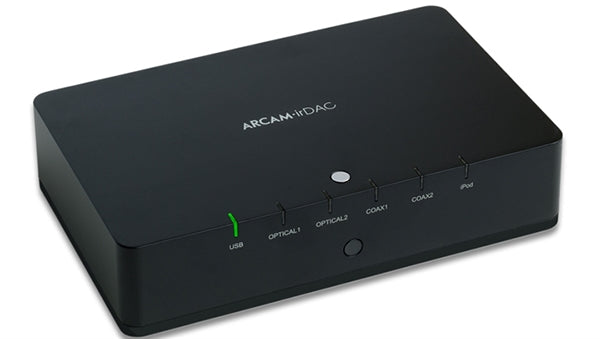
Arcam irDAC.

Arcam irDAC.


One simple beauty of this kind of setup is that as DACs improve over time (in fact, my Arcam is no longer made), it’s possible to swap them out for newer units with better sound quality or functionality. (I have been considering the Denafrips Ares II DAC, but the Arcam sounds so good I haven’t done anything yet.)

One of the most significant improvements in sound quality potential was because I could take advantage of the Oppo UDP-203’s 192 kHz digital audio processing rather than being limited by its HDMI audio output into my receiver (as I was glad to learn from my telephone conversation with Oppo customer service in Germany; I’m based in the UK). Via Oppo’s mobile app, it’s also possible to select either 48 kHz, 96 kHz or 192 kHz LPCM audio output, so you can listen for any possible differences. (Although the mobile app is less than super-slick in use and would benefit from a software update, this feature would be nice to have been included on the remote control.)

Arcam irDAC, rear panel.

Arcam irDAC, rear panel.

Another unforeseen benefit is that the Oppo’s HDMI display is far more informative about each track’s details and is generally slicker to navigate compared to the Yamaha’s on-screen navigation.

Although Oppo gear is no longer being made, it is greatly loved and has somewhat of a loyal fan base. And of course, the same principle I used to connect it applies to any device that has a digital out, (rather settling for a receiver or preamp’s built-in DAC).

Sensible component routing is sometimes it’s screamingly obvious, as was my case – bypass my receiver’s internal DAC with a better one, which I already had on hand and wasn’t using to its full potential! The point is, look at your existing system’s components and think about whether they could be better utilized, especially in the case of enjoying computer or streaming audio.

In our next article we will look at using better software to help us iron out the creases in our computer audio systems, and further improve accessibility to our much-loved tunes.

Header image: Oppo UDP-203, rear panel.

More from Issue 147

View All Articles in Issue 147

Search Copper Magazine

#226 JJ Murphy’s Sleep Paralysis is a Genre-Bending Musical Journey Through Jazz, Fusion and More by Frank Doris Jan 05, 2026 #226 Stewardship by Consent by B. Jan Montana Jan 05, 2026 #226 Food, Music, and Sensory Experience: An Interview With Professor Jonathan Zearfoss of the Culinary Institute of America by Joe Caplan Jan 05, 2026 #226 Studio Confidential: A Who’s Who of Recording Engineers Tell Their Stories by Frank Doris Jan 05, 2026 #226 Pilot Radio is Reborn, 50 Years Later: Talking With CEO Barak Epstein by Frank Doris Jan 05, 2026 #226 The Vinyl Beat Goes Down to Tijuana (By Way of Los Angeles), Part One by Rudy Radelic Jan 05, 2026 #226 Capital Audiofest 2025: Must-See Stereo, Part Two by Frank Doris Jan 05, 2026 #226 My Morning Jacket’s Carl Broemel and Tyler Ramsey Collaborate on Their Acoustic Guitar Album, Celestun by Ray Chelstowski Jan 05, 2026 #226 The People Who Make Audio Happen: CanJam SoCal 2025, Part Two by Harris Fogel Jan 05, 2026 #226 How to Play in a Rock Band, 19: Touring Can Make You Crazy, Part One by Frank Doris Jan 05, 2026 #226 Linda Ronstadt Goes Bigger by Wayne Robins Jan 05, 2026 #226 From The Audiophile’s Guide: Active Room Correction and Digital Signal Processing by Paul McGowan Jan 05, 2026 #226 PS Audio in the News by Frank Doris Jan 05, 2026 #226 Back to My Reel-to-Reel Roots, Part 25: Half-Full, Not Empty by Ken Kessler Jan 05, 2026 #226 Happy New Year! by Frank Doris Jan 05, 2026 #226 Turn It Down! by Peter Xeni Jan 05, 2026 #226 Ghost Riders by James Schrimpf Jan 05, 2026 #226 A Factory Tour of Audio Manufacturer German Physiks by Markus "Marsu" Manthey Jan 04, 2026 #225 Capital Audiofest 2025: Must-See Stereo, Part One by Frank Doris Dec 01, 2025 #225 Otis Taylor and the Electrics Delivers a Powerful Set of Hypnotic Modern Blues by Frank Doris Dec 01, 2025 #225 A Christmas Miracle by B. Jan Montana Dec 01, 2025 #225 T.H.E. Show New York 2025, Part Two: Plenty to See, Hear, and Enjoy by Frank Doris Dec 01, 2025 #225 Underappreciated Artists, Part One: Martin Briley by Rich Isaacs Dec 01, 2025 #225 Rock and Roll is Here to Stay by Wayne Robins Dec 01, 2025 #225 A Lifetime of Holiday Record (and CD) Listening by Rudy Radelic Dec 01, 2025 #225 Little Feat: Not Saying Goodbye, Not Yet by Ray Chelstowski Dec 01, 2025 #225 How to Play in a Rock Band, Part 18: Dealing With Burnout by Frank Doris Dec 01, 2025 #225 The People Who Make Audio Happen: CanJam SoCal 2025 by Harris Fogel Dec 01, 2025 #225 Chicago’s Sonic Sanctuaries: Four Hi‑Fi Listening Bars Channeling the Jazz‑Kissa Spirit by Olivier Meunier-Plante Dec 01, 2025 #225 From The Audiophile’s Guide: Controlling Bass Frequencies Through Membrane Absorbers (and How to Build Your Own) by Paul McGowan Dec 01, 2025 #225 Your Editor’s Tips for Attending Audio Shows by Frank Doris Dec 01, 2025 #225 PS Audio in the News by Frank Doris Dec 01, 2025 #225 Back to My Reel-to-Reel Roots, Part 24 by Ken Kessler Dec 01, 2025 #225 Holiday Music by Frank Doris Dec 01, 2025 #225 Puppy Prognostication by Peter Xeni Dec 01, 2025 #225 How to Post Comments on Copper by Frank Doris Dec 01, 2025 #225 Living Color by Rudy Radelic Dec 01, 2025 #224 T.H.E. Show New York 2025, Part One: A New Beginning by Frank Doris Nov 03, 2025 #224 Fool’s Leap of Faith is the Extraordinary Octave Records Debut from Singer/Songwriter Tyler Burba and Visit by Frank Doris Nov 03, 2025 #224 The Beatles’ “Aeolian Cadences.” What? by Wayne Robins Nov 03, 2025 #224 Persona Non Grata by B. Jan Montana Nov 03, 2025 #224 Talking With Recording Engineer Barry Diament of Soundkeeper Recordings, Part Two by Frank Doris Nov 03, 2025 #224 B Sides, B Movies, and Beware of Zombies by Rudy Radelic Nov 03, 2025 #224 The Burn-In Chronicles: 1,000 Hours to Sonic Salvation by Olivier Meunier-Plante Nov 03, 2025 #224 A Conversation With Mat Weisfeld of VPI Industries by Joe Caplan Nov 03, 2025 #224 Blues-Rocker Kenny Wayne Shepherd Celebrates 30 Years of Ledbetter Heights by Ray Chelstowski Nov 03, 2025 #224 Playing in a Rock Band, 17: When Good Gigs Go Bad, Part Two by Frank Doris Nov 03, 2025

Stream of Consciousness: Better Sound From My Computer Audio, Part One

Stream of Consciousness: Better Sound From My Computer Audio, Part One

As something of a musical magpie, I have always been of the mind that it’s just such a special thing to physically own the commodity that you buy. Call me old-fashioned – in this age of streaming audio, the concept of ownership seems to be less significant for many people than it once was. But, I like the concept of keeping what you paid for until you decide to sell it. As circumstances allow, I think this ownership model is quite comforting when looking at buying any particular asset, unless of course it is just too expensive to obtain in the first place. There is something very satisfying about owning what you enjoy.

It’s true that the law of diminishing returns can also be a factor (in audio equipment or anything else), and the point at which the curve of diminishing returns kicks in for you is likely influenced by your income, what equipment you already own, the space you might have for new gear, and perhaps most importantly, the value you personally place on that incremental step of improvement(s) gained from the shelling out of greenbacks. This is nothing new…so, what is this preamble actually about?

In this series, I’m going to talk about how I was able to squeeze more quality out of my existing computer music setup in my system – without spending any money.

Although I like to own my music, I appreciate value for money, and music subscription services certainly offer that. Circumstances have also changed. Before the pandemic kicked in and killed off my local second-hand record store, it used to be a great source of pleasure to go in and browse the racks, pay for the album, and then leave the store able to play the record at my leisure and enjoy the liner notes and artwork. I have fond memories of buying my first records and cassette tapes. I remember where I was and how much I paid for them. It’s a common shared experience.

15 years ago, where I lived there were at least three High Street vinyl stores that sold used records, not to mention the retailers selling new vinyl. Not anymore.

It’s likely that like me, you too have collections of vinyl albums and CDs and maybe tape cassettes and other formats, and although you don’t dig them out very often, you’ll never part with them. They represent part of your personal musical developmental DNA and growth.

As a result, I have a modest music library on NAS (network attached storage) hard drives, so that I can play this treasured collection of tunes, as and when the moment takes me. Most of it consists of CDs ripped to FLAC or WAV files, as I have painstakingly sloughed away all my not-so surreptitiously sibilant MP3 recordings. In a concerted effort to get the most out of my music, I thought I would pursue the goal of making my music more accessible than ever before, while also realizing the greater potential of what my existing audio system has to offer. I also thought I would aim for that target without spending one red cent, in an exercise of dispelling GAS (Gear Acquisition Syndrome).

Do I need a bigger power amp? Possibly. Do I need a new DAC? I’d like one. Can I upgrade my capacitors in my speakers? Yes, but they already sound good, even excellent. Should I take out a Roon subscription? I could, but that would mean another subscription, and my project goal was to spend a budget of zero. (Call it lockdown logic!)

My solution would be a combination of, one, smarter hardware routing and setting up of my Oppo UDP-203 Blu-ray player with an external Arcam irDAC, and two, obtaining some excellent software.

Oppo UDP-203 universal disc player. It's no longer available, yet still has its fans.

Oppo UDP-203 universal disc player. It’s no longer available, yet still has its fans.


Although it’s a convenient way to connect your streaming audio source to your system, one of the limitations of streaming music from your NAS or computer to your preamp or receiver is that you are limited to the sound quality of the preamp or receiver’s internal DAC. (Also, sometimes a receiver or preamp has a limited number of digital and especially optical digital inputs it will accommodate – perhaps only one for the audio output of a TV, for example.)

But if you already have a nice DAC, say, one that you’re using with a disc transport, then you can use that one instead of your preamp or receiver’s built-in DAC. It may improve your sound significantly.

Instead of connecting my NAS to my Yamaha AV receiver via the RJ-45 LAN Ethernet connection, I connected the NAS to the RJ-45 LAN Ethernet port on the Oppo, and then ran the coaxial digital output from the Oppo to my Arcam DAC, the line output of which then went to a line input on my A/V receiver.

Arcam irDAC.

Arcam irDAC.


One simple beauty of this kind of setup is that as DACs improve over time (in fact, my Arcam is no longer made), it’s possible to swap them out for newer units with better sound quality or functionality. (I have been considering the Denafrips Ares II DAC, but the Arcam sounds so good I haven’t done anything yet.)

One of the most significant improvements in sound quality potential was because I could take advantage of the Oppo UDP-203’s 192 kHz digital audio processing rather than being limited by its HDMI audio output into my receiver (as I was glad to learn from my telephone conversation with Oppo customer service in Germany; I’m based in the UK). Via Oppo’s mobile app, it’s also possible to select either 48 kHz, 96 kHz or 192 kHz LPCM audio output, so you can listen for any possible differences. (Although the mobile app is less than super-slick in use and would benefit from a software update, this feature would be nice to have been included on the remote control.)

Arcam irDAC, rear panel.

Arcam irDAC, rear panel.

Another unforeseen benefit is that the Oppo’s HDMI display is far more informative about each track’s details and is generally slicker to navigate compared to the Yamaha’s on-screen navigation.

Although Oppo gear is no longer being made, it is greatly loved and has somewhat of a loyal fan base. And of course, the same principle I used to connect it applies to any device that has a digital out, (rather settling for a receiver or preamp’s built-in DAC).

Sensible component routing is sometimes it’s screamingly obvious, as was my case – bypass my receiver’s internal DAC with a better one, which I already had on hand and wasn’t using to its full potential! The point is, look at your existing system’s components and think about whether they could be better utilized, especially in the case of enjoying computer or streaming audio.

In our next article we will look at using better software to help us iron out the creases in our computer audio systems, and further improve accessibility to our much-loved tunes.

Header image: Oppo UDP-203, rear panel.

0 comments

Leave a comment

0 Comments

Your avatar

Loading comments...

🗑️ Delete Comment

Enter moderator password to delete this comment: