COPPER

A PS Audio Publication

Issue 159 • Free Online Magazine

Issue 159 Disciples of Sound

Still Got the Knack: Rock Bassist Prescott Niles

Still Got the Knack: Rock Bassist Prescott Niles

The Knack officially arrived on the scene in June of 1979 and set the music world on fire with their mesmerizing rocker “My Sharona.” It was Capitol Records’ fastest Gold record debut single since the Beatles’ “I Want to Hold Your Hand.” The song is largely a rhythm section affair and begins with an unforgettable and hypnotic bass line that is now part of rock’s great legacy.

The debut album, Get the Knack, sold over one million copies in less than two months and spent five weeks at Number 1 on the Billboard albums chart. While Rolling Stone would label them as “the new Fab Four,” the Knack created a sound that was entirely their own. It begins and sits with the signature bottom that bassist Prescott Niles and drummer Bruce Gary would provide to each and every song. This was especially true live.

The band’s live shows were an electric affair, full of energy. They embodied more of a punk attitude than the “new wave” label the media would quickly attach to their music. Live recordings like Havin’ a Rave-Up! Live in Los Angeles from 1978 cast a light on how tight, talented and versatile singer/guitarist Doug Fieger, guitarist Berton Averre, Niles, and Gary really were. It’s also why, after a 1982 breakup, their return in the late 1980s and 1990s was so widely and warmly welcomed. Unfortunately, their reunion would end with Fieger’s death in 2010 at the age of 57.

That, however, hasn’t seen interest wane in The Knack, with Smile Records about to release a compelling new live album on Record Store Day, April 23, 2022. Recorded in Hollywood on September 25, 2001, just two weeks after the events of 9/11, Live at the House of Blues captures a 70-minute set and features the Knack’s founding trio of Fieger, Averre, and Niles, alongside drummer Dave Henderson. It’s a solid addition to the band’s already strong catalog of live music.
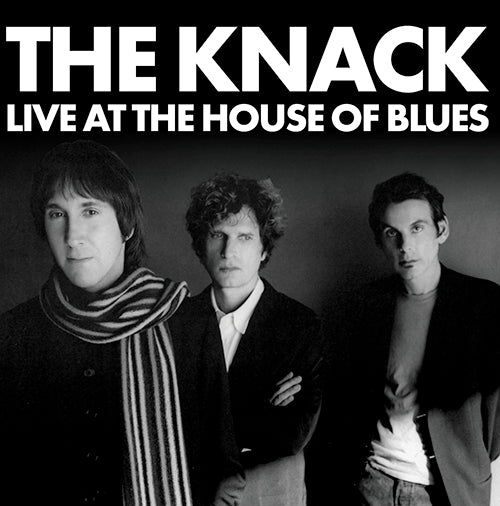
 

The Knack Live at the House of Blues, album cover.

The Knack Live at the House of Blues, album cover.


Copper had the opportunity to speak with Prescott Niles about the band’s legacy, and his rich rock past and present, including his ongoing role in the group Missing Persons.

Ray Chelstowski: The concert captured on the new album was held two weeks after 9/11. Was it a tough call to go forward after an event like that?

Prescott Niles: I used to have an inside joke with Berton that “whatever could go wrong will go wrong.” I called it “Knack Karma.” So, after we played the House of Blues we had a record release party. While we were at the party everyone’s attention turned to the news on the TVs because it was being announced that the Gulf War had just started. I looked at Berton and said, “we’re done!” No one really cared about a new Knack album after that.

RC: What’s another example of “Knack Karma?”

PN: Sometimes when we would play Detroit, Doug’s brother would introduce us. Geoffrey Fieger is a big-time lawyer. At one point he represented Jack Kevorkian (the late right-to-die activist). So, we are playing a show there, maybe in 1998 or so, and Jeffrey comes backstage to meet with us before introducing the band and he’s with this old guy. I asked, “Is that Doug’s uncle or something?” It wasn’t. Geoffrey [had] brought Kevorkian to our dressing room! Can you imagine that? I had nothing against what he was doing; I just couldn’t believe that Geoffrey brought him to a Knack concert. Everyone shook Kevorkian’s hand. I didn’t. Four days later Doug got really sick. A week later our tour drummer Terry Bozzio got bronchitis. The tour ended in just two weeks. What do you call that? It was a Twilight Zone moment!


RC: You and drummer Bruce Gary had an electric symmetry together. Was it like that from the beginning?

PN: I lived in England from 1973 to 1975. And I came back to LA a couple of times. It was a great time music-wise in London. This was the glam rock period. We had a band we’d put together with a Scottish drummer. He unfortunately got into heroin, so we had to audition other drummers when we came back to LA. One of the people we auditioned was Bruce Gary. Then we went to New York and auditioned a few other drummers, one who was named Mark Bell. He ended up playing in the Ramones and replaced their original drummer. We returned to England and were assuming we’d have Bruce Gary play drums for us. Instead, in the two weeks before Bruce was supposed to join our band, he had met Jack Bruce and decided to play with him, Mick Taylor, and others. So, we never got to play with him.

When our group broke up I got to speaking with Bruce [Gary] again and he told me he was with a group in LA and that they were going to open up for John Mayall. He thought it would be great if I could join them on bass and got me a ticket back to the States through management. We played one gig at the Whiskey [a Go Go] and the group broke up. Bruce went back to England again. So here were two chances to work with Bruce that didn’t work out.

Then fast forward to 1978. Bruce calls me and tells me he’s with a new group that I’d be great for. He was playing with Doug and Berton. They were cutting demos and Doug was playing bass but he wanted to play rhythm guitar, and that was it. Our first gig was at the Whiskey, June 1, 1978, and it was like magic. We knew that we had it and knew we were really going somewhere.


RC: The Knack is often compared to bands from that period like the Romantics, the Cars, and Cheap Trick.

PN: Well, Cheap Trick preceded The Knack, and Robin Zander is just a great singer. They were a real tight rock/pop band and their guitarist, Rick Nielsen, was a real comic book character. So, they had an entirely different appeal. They were very clever. The Cars on the other hand were very formulaic. They had great songs and a great look but as a live act they really stayed within their own pocket.


Dale Bozzio of Missing Persons and Prescott Niles. Courtesy of Prescott Niles.

Dale Bozzio of Missing Persons and Prescott Niles. Courtesy of Prescott Niles.


RC: You often covered a wide range of music when you performed live, including The Monkees’ “Last Train To Clarksville.” Was there anything that was off limits?

PN: When we started out in LA our sound was different and we really got people going with it. What a lot of people don’t know is that we had a lot of people join us on stage and jam. Eddie Money came up once and we did “Two Tickets [to Paradise]” with him. Tom Petty jammed with us at the Troubadour. Bruce Springsteen also jammed with us. Later on, Ray Manzarek of the Doors came up and we did some of their songs. I was always prideful of the fact that real musicians wanted to play with us, which at that time was rare.

RC: Your bass line owns the opening to “My Sharona.” At what point in playing that during the first rehearsals did you know that you guys had something big?

PN: Mike Chapman [the producer] knew we had a hit with “My Sharona.” When the album was put together and released, the label didn’t release a single. Instead, they gave the entire album to radio and “My Sharona” became the most requested song in America. It happened in two days. Capitol Records had to rush-release “My Sharona” two weeks later. So the album went to number one before the single did, which I’m very proud of.
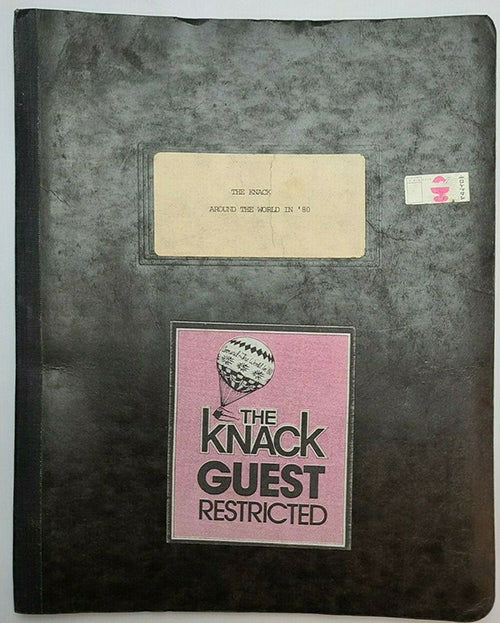
 

The Knack's 1980 tour book.

The Knack’s 1980 tour book.


RC: You almost recorded the album as quickly as it charted.

PN: Again, we recorded the album with Mike Chapman when he was also working with Blondie on the single “Heart of Glass” for the Parallel Lines album. We came into Whitney Recording Studios in Glendale (California), did the whole album, mixed and mastered it in a month. When we finished, Blondie was still working on their “Heart of Glass” single. It was an example of how fast we worked. When we got together we were electric. We were what I call “one-take wonders!”

RC: Get The Knack has one of rock’s most iconic and memorable covers. Was it always intended to be a tip of the hat to the Beatles?

PN: First of all, Doug was Beatle-obsessed. We all were. A friend of mine, Randee St. Nicholas, who is married to Nick St. Nicholas of Steppenwolf, was an aspiring artist. We had no money for a photo shoot so I asked Randee if she wanted to shoot us. She said sure, and shot that album cover. If you look her up now you’ll see that she’s shot everybody. But we were her first album cover, it was just improv, and now it’s a classic.
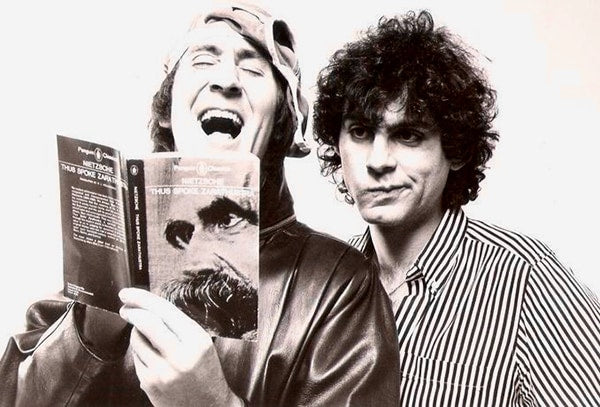
 

The late Doug Fieger and Prescott Niles of the Knack. Courtesy of Prescott Niles.

The late Doug Fieger and Prescott Niles of the Knack. Courtesy of Prescott Niles.


RC: You have so many stories of your encounters with famous rock musicians. How did your time with George Harrison come about?

PN: When I lived in London I became friends with [former Rolling Stones guitarist] Mick Taylor’s wife, Rose. We would go dancing and I met George one night. In 1986 I got a call from a producer named Bob Rose. Apparently my name had come up and he was doing a session with someone but wouldn’t tell me who it was. So, I went to the studio and Jim Keltner was drumming. At that point I was told we would be playing behind George Harrison. After I got over the initial shock I remembered that I had met him and he of course knew the Knack. I was playing off charts, and I tracked with him in the control room, which was great. He hadn’t been recording for some time. So, as we are playing I’m following the chart and trying not to get ahead of the beat. We finished the track and it sounded really good. I got a rough cut of [the song] “Someplace Else,” and George and the producer went back to England. I was supposed to join them and do some other tracks but they ended up cutting another version of the song and I never got a chance to play with him again.


RC: What’s next?

PN: In May, I am playing bass with Missing Persons for this big festival in Pasadena called “Cruel World,” which features a ton of acts including Morrissey and Blondie. I’ve known Dale Bozzio for a very long time and we’ve been playing shows together for a decade. I also perform with Gary Myrick, who had the hit “She Talks In Stereo” with Gary Myrick and the Figures. And, there’s a new guitar player, Rocky Kramer, who’s from Finland. A movie is being made about him and I’m in the film. Lastly, I played on an album called American Train Music. It came out a few months ago. Carla Olson from the Textones put it together and we did a version of “Train Kept A-Rollin’” together. Do we have time to talk about what my kids are up to?

RC: Prescott Niles’ adult kids, Gabe, Noah and Olivia, have founded an LA-based band called Gateway Drugs. The band has released a pair of LPs and proudly carry the Niles musical legacy forward for a new generation of listeners to enjoy and share.


Header image courtesy of Prescott Niles.

More from Issue 159

View All Articles in Issue 159

Search Copper Magazine

#227 Seth Lewis Gets in the Groove With Take a Look Around: a Tribute to the Meters by Frank Doris Feb 02, 2026 #227 Passport to Sound: May Anwar’s Audio Learning Experience for Young People by Frank Doris Feb 02, 2026 #227 Conjectures on Cosmic Consciousness by B. Jan Montana Feb 02, 2026 #227 The Big Takeover Turns 45 by Wayne Robins Feb 02, 2026 #227 Music and Chocolate: On the Sensory Connection by Joe Caplan Feb 02, 2026 #227 Singer/Songwriter Chris Berardo: Getting Wilder All the Time by Ray Chelstowski Feb 02, 2026 #227 The Earliest Stars of Country Music, Part One by Jeff Weiner Feb 02, 2026 #227 The Vinyl Beat Goes Down to Tijuana (By Way of Los Angeles), Part Two by Rudy Radelic Feb 02, 2026 #227 How to Play in a Rock Band, 20: On the Road With Blood, Sweat & Tears’ Guitarist Gabe Cummins by Frank Doris Feb 02, 2026 #227 From The Audiophile’s Guide: Audio Specs and Measuring by Paul McGowan Feb 02, 2026 #227 Our Brain is Always Listening by Peter Trübner Feb 02, 2026 #227 PS Audio in the News by PS Audio Staff Feb 02, 2026 #227 The Listening Chair: Sleek Style and Sound From the Luxman L3 by Howard Kneller Feb 02, 2026 #227 The Los Angeles and Orange County Audio Society Celebrates Its 32nd Anniversary, Honoring David and Sheryl Lee Wilson and Bernie Grundman by Harris Fogel Feb 02, 2026 #227 Back to My Reel-to-Reel Roots, Part 26: Half Full – Not Half Empty, Redux by Ken Kessler Feb 02, 2026 #227 That's What Puzzles Us... by Frank Doris Feb 02, 2026 #227 Record-Breaking by Peter Xeni Feb 02, 2026 #227 The Long and Winding Road by B. Jan Montana Feb 02, 2026 #226 JJ Murphy’s Sleep Paralysis is a Genre-Bending Musical Journey Through Jazz, Fusion and More by Frank Doris Jan 05, 2026 #226 Stewardship by Consent by B. Jan Montana Jan 05, 2026 #226 Food, Music, and Sensory Experience: An Interview With Professor Jonathan Zearfoss of the Culinary Institute of America by Joe Caplan Jan 05, 2026 #226 Studio Confidential: A Who’s Who of Recording Engineers Tell Their Stories by Frank Doris Jan 05, 2026 #226 Pilot Radio is Reborn, 50 Years Later: Talking With CEO Barak Epstein by Frank Doris Jan 05, 2026 #226 The Vinyl Beat Goes Down to Tijuana (By Way of Los Angeles), Part One by Rudy Radelic Jan 05, 2026 #226 Capital Audiofest 2025: Must-See Stereo, Part Two by Frank Doris Jan 05, 2026 #226 My Morning Jacket’s Carl Broemel and Tyler Ramsey Collaborate on Their Acoustic Guitar Album, Celestun by Ray Chelstowski Jan 05, 2026 #226 The People Who Make Audio Happen: CanJam SoCal 2025, Part Two by Harris Fogel Jan 05, 2026 #226 How to Play in a Rock Band, 19: Touring Can Make You Crazy, Part One by Frank Doris Jan 05, 2026 #226 Linda Ronstadt Goes Bigger by Wayne Robins Jan 05, 2026 #226 From The Audiophile’s Guide: Active Room Correction and Digital Signal Processing by Paul McGowan Jan 05, 2026 #226 PS Audio in the News by Frank Doris Jan 05, 2026 #226 Back to My Reel-to-Reel Roots, Part 25: Half-Full, Not Empty by Ken Kessler Jan 05, 2026 #226 Happy New Year! by Frank Doris Jan 05, 2026 #226 Turn It Down! by Peter Xeni Jan 05, 2026 #226 Ghost Riders by James Schrimpf Jan 05, 2026 #226 A Factory Tour of Audio Manufacturer German Physiks by Markus "Marsu" Manthey Jan 04, 2026 #225 Capital Audiofest 2025: Must-See Stereo, Part One by Frank Doris Dec 01, 2025 #225 Otis Taylor and the Electrics Delivers a Powerful Set of Hypnotic Modern Blues by Frank Doris Dec 01, 2025 #225 A Christmas Miracle by B. Jan Montana Dec 01, 2025 #225 T.H.E. Show New York 2025, Part Two: Plenty to See, Hear, and Enjoy by Frank Doris Dec 01, 2025 #225 Underappreciated Artists, Part One: Martin Briley by Rich Isaacs Dec 01, 2025 #225 Rock and Roll is Here to Stay by Wayne Robins Dec 01, 2025 #225 A Lifetime of Holiday Record (and CD) Listening by Rudy Radelic Dec 01, 2025 #225 Little Feat: Not Saying Goodbye, Not Yet by Ray Chelstowski Dec 01, 2025 #225 How to Play in a Rock Band, Part 18: Dealing With Burnout by Frank Doris Dec 01, 2025 #225 The People Who Make Audio Happen: CanJam SoCal 2025 by Harris Fogel Dec 01, 2025 #225 Chicago’s Sonic Sanctuaries: Four Hi‑Fi Listening Bars Channeling the Jazz‑Kissa Spirit by Olivier Meunier-Plante Dec 01, 2025

Still Got the Knack: Rock Bassist Prescott Niles

Still Got the Knack: Rock Bassist Prescott Niles

The Knack officially arrived on the scene in June of 1979 and set the music world on fire with their mesmerizing rocker “My Sharona.” It was Capitol Records’ fastest Gold record debut single since the Beatles’ “I Want to Hold Your Hand.” The song is largely a rhythm section affair and begins with an unforgettable and hypnotic bass line that is now part of rock’s great legacy.

The debut album, Get the Knack, sold over one million copies in less than two months and spent five weeks at Number 1 on the Billboard albums chart. While Rolling Stone would label them as “the new Fab Four,” the Knack created a sound that was entirely their own. It begins and sits with the signature bottom that bassist Prescott Niles and drummer Bruce Gary would provide to each and every song. This was especially true live.

The band’s live shows were an electric affair, full of energy. They embodied more of a punk attitude than the “new wave” label the media would quickly attach to their music. Live recordings like Havin’ a Rave-Up! Live in Los Angeles from 1978 cast a light on how tight, talented and versatile singer/guitarist Doug Fieger, guitarist Berton Averre, Niles, and Gary really were. It’s also why, after a 1982 breakup, their return in the late 1980s and 1990s was so widely and warmly welcomed. Unfortunately, their reunion would end with Fieger’s death in 2010 at the age of 57.

That, however, hasn’t seen interest wane in The Knack, with Smile Records about to release a compelling new live album on Record Store Day, April 23, 2022. Recorded in Hollywood on September 25, 2001, just two weeks after the events of 9/11, Live at the House of Blues captures a 70-minute set and features the Knack’s founding trio of Fieger, Averre, and Niles, alongside drummer Dave Henderson. It’s a solid addition to the band’s already strong catalog of live music.


The Knack Live at the House of Blues, album cover.

The Knack Live at the House of Blues, album cover.


Copper had the opportunity to speak with Prescott Niles about the band’s legacy, and his rich rock past and present, including his ongoing role in the group Missing Persons.

Ray Chelstowski: The concert captured on the new album was held two weeks after 9/11. Was it a tough call to go forward after an event like that?

Prescott Niles: I used to have an inside joke with Berton that “whatever could go wrong will go wrong.” I called it “Knack Karma.” So, after we played the House of Blues we had a record release party. While we were at the party everyone’s attention turned to the news on the TVs because it was being announced that the Gulf War had just started. I looked at Berton and said, “we’re done!” No one really cared about a new Knack album after that.

RC: What’s another example of “Knack Karma?”

PN: Sometimes when we would play Detroit, Doug’s brother would introduce us. Geoffrey Fieger is a big-time lawyer. At one point he represented Jack Kevorkian (the late right-to-die activist). So, we are playing a show there, maybe in 1998 or so, and Jeffrey comes backstage to meet with us before introducing the band and he’s with this old guy. I asked, “Is that Doug’s uncle or something?” It wasn’t. Geoffrey [had] brought Kevorkian to our dressing room! Can you imagine that? I had nothing against what he was doing; I just couldn’t believe that Geoffrey brought him to a Knack concert. Everyone shook Kevorkian’s hand. I didn’t. Four days later Doug got really sick. A week later our tour drummer Terry Bozzio got bronchitis. The tour ended in just two weeks. What do you call that? It was a Twilight Zone moment!


RC: You and drummer Bruce Gary had an electric symmetry together. Was it like that from the beginning?

PN: I lived in England from 1973 to 1975. And I came back to LA a couple of times. It was a great time music-wise in London. This was the glam rock period. We had a band we’d put together with a Scottish drummer. He unfortunately got into heroin, so we had to audition other drummers when we came back to LA. One of the people we auditioned was Bruce Gary. Then we went to New York and auditioned a few other drummers, one who was named Mark Bell. He ended up playing in the Ramones and replaced their original drummer. We returned to England and were assuming we’d have Bruce Gary play drums for us. Instead, in the two weeks before Bruce was supposed to join our band, he had met Jack Bruce and decided to play with him, Mick Taylor, and others. So, we never got to play with him.

When our group broke up I got to speaking with Bruce [Gary] again and he told me he was with a group in LA and that they were going to open up for John Mayall. He thought it would be great if I could join them on bass and got me a ticket back to the States through management. We played one gig at the Whiskey [a Go Go] and the group broke up. Bruce went back to England again. So here were two chances to work with Bruce that didn’t work out.

Then fast forward to 1978. Bruce calls me and tells me he’s with a new group that I’d be great for. He was playing with Doug and Berton. They were cutting demos and Doug was playing bass but he wanted to play rhythm guitar, and that was it. Our first gig was at the Whiskey, June 1, 1978, and it was like magic. We knew that we had it and knew we were really going somewhere.


RC: The Knack is often compared to bands from that period like the Romantics, the Cars, and Cheap Trick.

PN: Well, Cheap Trick preceded The Knack, and Robin Zander is just a great singer. They were a real tight rock/pop band and their guitarist, Rick Nielsen, was a real comic book character. So, they had an entirely different appeal. They were very clever. The Cars on the other hand were very formulaic. They had great songs and a great look but as a live act they really stayed within their own pocket.


Dale Bozzio of Missing Persons and Prescott Niles. Courtesy of Prescott Niles.

Dale Bozzio of Missing Persons and Prescott Niles. Courtesy of Prescott Niles.


RC: You often covered a wide range of music when you performed live, including The Monkees’ “Last Train To Clarksville.” Was there anything that was off limits?

PN: When we started out in LA our sound was different and we really got people going with it. What a lot of people don’t know is that we had a lot of people join us on stage and jam. Eddie Money came up once and we did “Two Tickets [to Paradise]” with him. Tom Petty jammed with us at the Troubadour. Bruce Springsteen also jammed with us. Later on, Ray Manzarek of the Doors came up and we did some of their songs. I was always prideful of the fact that real musicians wanted to play with us, which at that time was rare.

RC: Your bass line owns the opening to “My Sharona.” At what point in playing that during the first rehearsals did you know that you guys had something big?

PN: Mike Chapman [the producer] knew we had a hit with “My Sharona.” When the album was put together and released, the label didn’t release a single. Instead, they gave the entire album to radio and “My Sharona” became the most requested song in America. It happened in two days. Capitol Records had to rush-release “My Sharona” two weeks later. So the album went to number one before the single did, which I’m very proud of.


The Knack's 1980 tour book.

The Knack’s 1980 tour book.


RC: You almost recorded the album as quickly as it charted.

PN: Again, we recorded the album with Mike Chapman when he was also working with Blondie on the single “Heart of Glass” for the Parallel Lines album. We came into Whitney Recording Studios in Glendale (California), did the whole album, mixed and mastered it in a month. When we finished, Blondie was still working on their “Heart of Glass” single. It was an example of how fast we worked. When we got together we were electric. We were what I call “one-take wonders!”

RC: Get The Knack has one of rock’s most iconic and memorable covers. Was it always intended to be a tip of the hat to the Beatles?

PN: First of all, Doug was Beatle-obsessed. We all were. A friend of mine, Randee St. Nicholas, who is married to Nick St. Nicholas of Steppenwolf, was an aspiring artist. We had no money for a photo shoot so I asked Randee if she wanted to shoot us. She said sure, and shot that album cover. If you look her up now you’ll see that she’s shot everybody. But we were her first album cover, it was just improv, and now it’s a classic.


The late Doug Fieger and Prescott Niles of the Knack. Courtesy of Prescott Niles.

The late Doug Fieger and Prescott Niles of the Knack. Courtesy of Prescott Niles.


RC: You have so many stories of your encounters with famous rock musicians. How did your time with George Harrison come about?

PN: When I lived in London I became friends with [former Rolling Stones guitarist] Mick Taylor’s wife, Rose. We would go dancing and I met George one night. In 1986 I got a call from a producer named Bob Rose. Apparently my name had come up and he was doing a session with someone but wouldn’t tell me who it was. So, I went to the studio and Jim Keltner was drumming. At that point I was told we would be playing behind George Harrison. After I got over the initial shock I remembered that I had met him and he of course knew the Knack. I was playing off charts, and I tracked with him in the control room, which was great. He hadn’t been recording for some time. So, as we are playing I’m following the chart and trying not to get ahead of the beat. We finished the track and it sounded really good. I got a rough cut of [the song] “Someplace Else,” and George and the producer went back to England. I was supposed to join them and do some other tracks but they ended up cutting another version of the song and I never got a chance to play with him again.


RC: What’s next?

PN: In May, I am playing bass with Missing Persons for this big festival in Pasadena called “Cruel World,” which features a ton of acts including Morrissey and Blondie. I’ve known Dale Bozzio for a very long time and we’ve been playing shows together for a decade. I also perform with Gary Myrick, who had the hit “She Talks In Stereo” with Gary Myrick and the Figures. And, there’s a new guitar player, Rocky Kramer, who’s from Finland. A movie is being made about him and I’m in the film. Lastly, I played on an album called American Train Music. It came out a few months ago. Carla Olson from the Textones put it together and we did a version of “Train Kept A-Rollin’” together. Do we have time to talk about what my kids are up to?

RC: Prescott Niles’ adult kids, Gabe, Noah and Olivia, have founded an LA-based band called Gateway Drugs. The band has released a pair of LPs and proudly carry the Niles musical legacy forward for a new generation of listeners to enjoy and share.


Header image courtesy of Prescott Niles.

0 comments

Leave a comment

0 Comments

Your avatar

Loading comments...

🗑️ Delete Comment

Enter moderator password to delete this comment:

✏️ Edit Comment

Enter your email to verify ownership: