COPPER

A PS Audio Publication

Issue 95 • Free Online Magazine

Issue 95 TRADING EIGHTS

Miles Davis: Eight Great Tracks

Miles Davis: Eight Great Tracks

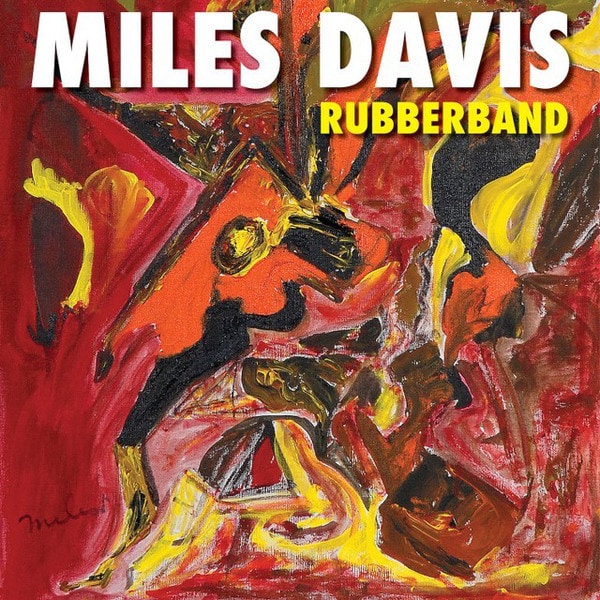
Here’s something you don’t hear every day: Miles Davis has a new album! Yes, the great trumpeter has been dead since 1991, but his record Rubberband was just released this September. And while we’re celebrating, 2019 also marks the 50th anniversary of the famed Bitches Brew album.

In 1944, as a teen trumpeter in St. Louis, Davis was tapped to fill in for Art Blakey at a Billy Eckstine concert, and the pros encouraged him. So, that same year he headed to New York to study at the Juilliard School. But Charlie Parker liked his style enough to hire him, and he quickly left school for a real-life education.

Davis’ innovations spread across the subgenres of cool jazz and outgrowths of bebop. He influenced a couple of generations of players, and – just as important – he allowed himself to be influenced by younger musicians, even outside of jazz. He was an outspoken fan of Jimi Hendrix, for example, and later he championed Michael Jackson’s music.

It was tougher than usual to choose which cuts to feature here. Davis made over 50 studio records. All I could do was cherry-pick from among this impressive harvest. Enjoy these eight great tracks from Miles Davis.

  1. “Bluing”

    Bluing
    Prestige
    1951

    Many of us remember the influx of EP albums in the 1980s. But 30 years before that, the jazz music industry used 10-inch LPs to release singles in a genre where tunes could go on for quite a while. From 1951, the 10-minute “Bluing” is so long that it had to be split over the two sides of the disc.

    Supported by the delicate touch of Walter Bishop on piano, plus four other top-notch musicians (Sonny Rollins, Tommy Potter, Art Blakey, and Jackie McLean), “Bluing” is a great example of Davis’ more gentle bop style before it took a hard turn.


    1. “Blue ‘n’ Boogie”

      Miles Davis All-Star Sextet
      Prestige
      1954

      On this 10-inch LP, Side A is the 1944 Dizzy Gillespie tune “Blue ‘n’ Boogie.” In an interview, Davis once explained that his goal on this track was to combine a funky blues sound with the “fire and improvisation of bebop.” He was certainly the guy to do it.

      Besides the raucous drumming of Kenny Clarke and Davis’ lithe solos, the other sextet members contribute equally. Percy Heath’s walking bassline is practically skipping down the sidewalk. Starting at 2:00 J.J. Johnson shows that a trombone can be a virtuoso instrument (a special treat, since the Davis Quintet had no trombone). Horace Silver is on piano and Lucky Thompson on tenor sax.


      1. “Oleo”

        Bags’ Groove
        Prestige
        1957

        Longtime Davis collaborator Sonny Rollins wrote “Oleo” and plays tenor sax on the album Bags’ Groove (the title track refers to a Milt Jackson tune written a few years before). Rollins’ composition premiered on this record, and grew into a hard bop standard.

        The Davis All-Stars (as the quintet is sometimes referred to) is made up of inventors of hard bop, a term that incorporates musical features that should be in conflict but work well together: uneven-length of phrases, dissonance, and a strong gospel-like swing rhythm. Davis’ playing is sly and charming.


        1. “Drad-Dog”

          Someday My Prince Will Come
          Columbia
          1961

          One of the draws of Someday My Prince Will Come is the presence of tenor sax player Hank Mobley in his only record with the Davis Quintet. John Coltrane, who plays only on one track, gets billed above Mobley on the cover; Columbia knew what would sell. But Mobley proves an apt partner for Davis’ musical vision. Too bad they didn’t work together more.

          The sultry “Dread-Dog,” a Davis composition, opens with a slow, misty solo on muted trumpet, matched in style by Mobley’s horn starting at 1:22.


          1. “Pinocchio”

            Nefertiti
            Columbia
            1968

            Wayne Shorter and Herbie Hancock wrote most of the celebrated album Nefertiti. The personnel comprise what is known as the Davis Second Great Quintet: Davis on trumpet, Hancock on piano, Shorter on tenor sax, Ron Carter on bass, and Tony Williams on drums. That fivesome is credited with inventing the dissonant small-group style of “post-bop.”

            Shorter wrote “Pinocchio,” and throughout the first playing of the long, complex melody he perfectly doubles Davis’ laid-back line at the lower octave. They make it sound like as easy as playing catch in the back yard.


            1. “Sweet Pea”

              Water Babies
              Columbia
              1976

              Since Davis sometimes had a habit of showing up in the studio to record random tracks, some of his albums took a while to coalesce, and sometimes not even under his own guidance. Water Babies was one of those. When Davis announced he was retiring in 1975, producers at Columbia Records started sweeping the vaults for material to put in a farewell album.

              Of course, Davis didn’t end up retiring for long, but his temporary rest did the jazz world a favor by bringing out a bunch of tunes it might not have heard otherwise. Water Babies is a combination of tracks recorded by the quintet in 1967-68, mostly outtakes from earlier albums.

              “Sweet Pea” was composed by Wayne Shorter. It’s a wandering slow ballad. Davis’ trumpet plays the role of a lovelorn man, sometimes whimpering, sometimes sobbing, sometimes wailing in desperation. Its interactions with Herbie Hancock’s piano and Roy Carter’s punctuating bassline give the piece the texture of etched porcelain.


              1. “Come Get It”

                Star People
                Columbia
                1983

                Mino Cinélu is the real treasure of the Star People album. This French jazz percussionist has a thrilling touch on hand-struck drums, one of those players who really understands the subtleties of energy, accent, and pitch in percussion.

                “Come Get It” starts with the sound of Cinélu’s congas. Drum set (Al Foster) quickly joins in, bringing the sound more solidly into the jazz realm. The guitar and bass groove is laid in so deep that Davis doesn’t even deign to come in until around 2:20, subtly at first, like he’s testing out whether he belongs in the room. Yeah, he does, and his hard-bop solo will make your hair stand on end.

                httpv://en.wikipedia.org/wiki/Star_People


                1. “This Is It”

                  Rubberband
                  Rhino Entertainment
                  2019

                  In 1985, after 30 years with Columbia Records, Davis suddenly left them and signed with Warner Bros. Apparently he had vague ideas of starting with jazz versions of pop and R&B tunes, as he’d done on his final Columbia album, You’re Under Arrest. But Davis was listless and unfocused in the studio, only laying down a track every few months. So the head of studio, Tommy LiPuma, stepped in, and had bassist Marcus Miller write a bunch of jazz tunes for Davis.

                  The result was an album called Tutu. And the earlier jazzed-up pop tracks were shelved. Three came out in a box set in 1992. This new album contains those, plus eight more. The funk-infused “This Is It” has a terrifying edginess that proves this album was worth bringing back up from the crypt. The wild guitar line is played by Mike Stern.

                  More from Issue 95

                  View All Articles in Issue 95

                  Search Copper Magazine

                  #231 Piano Prodigy Jude Kofie Releases His Debut Album On Octave Records by Frank Doris Jun 01, 2026 #231 Underappreciated Artists, Part Two: City Boy by Rich Isaacs Jun 01, 2026 #231 Music and the Art of Creation: Talking With Saxophonist Rob Scheps by Joe Caplan Jun 01, 2026 #231 How to Play in a Rock Band, 24: Further Adventures at the 2026 Montauk Music Festival by Frank Doris Jun 01, 2026 #231 Courtney Barnett: Creature of Habit by Wayne Robins Jun 01, 2026 #231 Angine de Poitrine: Interstellar Guitar Rock Saviors Headed for Late-Night TV Pop Stardom? by Mark Lepage Jun 01, 2026 #231 My Impressions of AXPONA 2026, Part One by Frank Doris Jun 01, 2026 #231 2026 La Jolla Concours d'Elegance: Another Aesthetic Feast by B. Jan Montana Jun 01, 2026 #231 Country Music Icon Jo Dee Messina’s Bridges: A New Beginning by Ray Chelstowski Jun 01, 2026 #231 The Luxury Dispatch Hosts a Video Podcast With Ken Kessler by Ken Kessler Jun 01, 2026 #231 The Vinyl Beat: Tracking in the Motor City by Rudy Radelic Jun 01, 2026 #231 Lots of Fun With DSP: The Ferrum Audio WANDLA DAC and Its Tube Mode by Frank Doris Jun 01, 2026 #231 From The Audiophile's Guide: Digital Source Components and Streaming Audio by Paul McGowan Jun 01, 2026 #231 Onkyo’s Monster M-510 power amplifier by The Staff at Just Audio Jun 01, 2026 #231 PS Audio in the News by PS Audio Staff Jun 01, 2026 #231 Naming Convention by Peter Xeni Jun 01, 2026 #231 Les Invisibles by Frank Doris Jun 01, 2026 #231 Wildlife Scene by James Schrimpf Jun 01, 2026 #230 Camaraderie by B. Jan Montana May 04, 2026 #230 AXPONA 2026: A Family Gathering by Paul McGowan May 04, 2026 #230 Pianist Ryan Benthall Explores Jazz Realms and Far Beyond With Divine Sky by Frank Doris May 04, 2026 #230 The Vinyl Beat in AXPONA-Land by Rudy Radelic May 04, 2026 #230 Teddy Thompson’s Musical Growth Deepens With Never Be the Same by Ray Chelstowski May 04, 2026 #230 More Fun in the Sun: Florida Audio Expo, Part Two by Frank Doris May 04, 2026 #230 CanJam NYC 2026 Show Report: Heady Sound, Part Two by Frank Doris and Harris Fogel May 04, 2026 #230 Sonic Youth On Murray Street by Wayne Robins May 04, 2026 #230 Graffeo Coffee: A Symphony of Sensory Experience by Joe Caplan May 04, 2026 #230 The Saul Authority: The Story of Hi-Fi Pioneer Saul Marantz by Olivier Meunier-Plante May 04, 2026 #230 How to Play in a Rock Band, 23: Encounters With Famous Musicians, Part Two by Frank Doris May 04, 2026 #230 An Outlier in the Rack: A Vintage BIC Beam Box by The Staff at Just Audio May 04, 2026 #230 PS Audio in the News by PS Audio Staff May 04, 2026 #230 A Cautionary Tale by Rich Isaacs May 04, 2026 #230 Reel-to-Reel Roots, Part 33 (Revised): Ken Kessler Reports On the 2026 (British) AudioJumble by Ken Kessler May 04, 2026 #230 Text Messaging by Frank Doris May 04, 2026 #230 The Audiophile Rat Race by Peter Xeni May 04, 2026 #230 On the Rocks by Rich Isaacs May 04, 2026 #229 The Earliest Stars of Country Music, Part Three by Jeff Weiner Apr 06, 2026 #229 The Healing Power of Music and Sound at the Omega Institute by Joe Caplan Apr 06, 2026 #229 CanJam NYC 2026 Show Report: Heady Sound, Part One by Frank Doris Apr 06, 2026 #229 Florida Audio Expo 2026: Warming Up to High-End Audio, Part One by Frank Doris Apr 06, 2026 #229 Quick Takes: Anne Bisson, Sam Morrison, The Velvet Underground, and the Stooges by Frank Doris Apr 06, 2026 #229 The Vinyl Beat: New Arrivals, and Old Audio Show Demo Scores to Settle by Rudy Radelic Apr 06, 2026 #229 Harvard Gets a High-End Audio Education by Frank Doris Apr 06, 2026 #229 No Country for Old Knees by B. Jan Montana Apr 06, 2026 #229 How To Play in A Rock Band, 22: Encounters With Famous Musicians, Part 1 by Frank Doris Apr 06, 2026 #229 The Soulful Grooves of Guinea-Bissau by Steve Kindig Apr 06, 2026 #229 Four-Hand Piano Performance at Its Finest by Stephan Haberthür Apr 06, 2026

                  Miles Davis: Eight Great Tracks

                  Miles Davis: Eight Great Tracks

                  Here’s something you don’t hear every day: Miles Davis has a new album! Yes, the great trumpeter has been dead since 1991, but his record Rubberband was just released this September. And while we’re celebrating, 2019 also marks the 50th anniversary of the famed Bitches Brew album.

                  In 1944, as a teen trumpeter in St. Louis, Davis was tapped to fill in for Art Blakey at a Billy Eckstine concert, and the pros encouraged him. So, that same year he headed to New York to study at the Juilliard School. But Charlie Parker liked his style enough to hire him, and he quickly left school for a real-life education.

                  Davis’ innovations spread across the subgenres of cool jazz and outgrowths of bebop. He influenced a couple of generations of players, and – just as important – he allowed himself to be influenced by younger musicians, even outside of jazz. He was an outspoken fan of Jimi Hendrix, for example, and later he championed Michael Jackson’s music.

                  It was tougher than usual to choose which cuts to feature here. Davis made over 50 studio records. All I could do was cherry-pick from among this impressive harvest. Enjoy these eight great tracks from Miles Davis.

                  1. “Bluing”

                    Bluing
                    Prestige
                    1951

                    Many of us remember the influx of EP albums in the 1980s. But 30 years before that, the jazz music industry used 10-inch LPs to release singles in a genre where tunes could go on for quite a while. From 1951, the 10-minute “Bluing” is so long that it had to be split over the two sides of the disc.

                    Supported by the delicate touch of Walter Bishop on piano, plus four other top-notch musicians (Sonny Rollins, Tommy Potter, Art Blakey, and Jackie McLean), “Bluing” is a great example of Davis’ more gentle bop style before it took a hard turn.


                    1. “Blue ‘n’ Boogie”

                      Miles Davis All-Star Sextet
                      Prestige
                      1954

                      On this 10-inch LP, Side A is the 1944 Dizzy Gillespie tune “Blue ‘n’ Boogie.” In an interview, Davis once explained that his goal on this track was to combine a funky blues sound with the “fire and improvisation of bebop.” He was certainly the guy to do it.

                      Besides the raucous drumming of Kenny Clarke and Davis’ lithe solos, the other sextet members contribute equally. Percy Heath’s walking bassline is practically skipping down the sidewalk. Starting at 2:00 J.J. Johnson shows that a trombone can be a virtuoso instrument (a special treat, since the Davis Quintet had no trombone). Horace Silver is on piano and Lucky Thompson on tenor sax.


                      1. “Oleo”

                        Bags’ Groove
                        Prestige
                        1957

                        Longtime Davis collaborator Sonny Rollins wrote “Oleo” and plays tenor sax on the album Bags’ Groove (the title track refers to a Milt Jackson tune written a few years before). Rollins’ composition premiered on this record, and grew into a hard bop standard.

                        The Davis All-Stars (as the quintet is sometimes referred to) is made up of inventors of hard bop, a term that incorporates musical features that should be in conflict but work well together: uneven-length of phrases, dissonance, and a strong gospel-like swing rhythm. Davis’ playing is sly and charming.


                        1. “Drad-Dog”

                          Someday My Prince Will Come
                          Columbia
                          1961

                          One of the draws of Someday My Prince Will Come is the presence of tenor sax player Hank Mobley in his only record with the Davis Quintet. John Coltrane, who plays only on one track, gets billed above Mobley on the cover; Columbia knew what would sell. But Mobley proves an apt partner for Davis’ musical vision. Too bad they didn’t work together more.

                          The sultry “Dread-Dog,” a Davis composition, opens with a slow, misty solo on muted trumpet, matched in style by Mobley’s horn starting at 1:22.


                          1. “Pinocchio”

                            Nefertiti
                            Columbia
                            1968

                            Wayne Shorter and Herbie Hancock wrote most of the celebrated album Nefertiti. The personnel comprise what is known as the Davis Second Great Quintet: Davis on trumpet, Hancock on piano, Shorter on tenor sax, Ron Carter on bass, and Tony Williams on drums. That fivesome is credited with inventing the dissonant small-group style of “post-bop.”

                            Shorter wrote “Pinocchio,” and throughout the first playing of the long, complex melody he perfectly doubles Davis’ laid-back line at the lower octave. They make it sound like as easy as playing catch in the back yard.


                            1. “Sweet Pea”

                              Water Babies
                              Columbia
                              1976

                              Since Davis sometimes had a habit of showing up in the studio to record random tracks, some of his albums took a while to coalesce, and sometimes not even under his own guidance. Water Babies was one of those. When Davis announced he was retiring in 1975, producers at Columbia Records started sweeping the vaults for material to put in a farewell album.

                              Of course, Davis didn’t end up retiring for long, but his temporary rest did the jazz world a favor by bringing out a bunch of tunes it might not have heard otherwise. Water Babies is a combination of tracks recorded by the quintet in 1967-68, mostly outtakes from earlier albums.

                              “Sweet Pea” was composed by Wayne Shorter. It’s a wandering slow ballad. Davis’ trumpet plays the role of a lovelorn man, sometimes whimpering, sometimes sobbing, sometimes wailing in desperation. Its interactions with Herbie Hancock’s piano and Roy Carter’s punctuating bassline give the piece the texture of etched porcelain.


                              1. “Come Get It”

                                Star People
                                Columbia
                                1983

                                Mino Cinélu is the real treasure of the Star People album. This French jazz percussionist has a thrilling touch on hand-struck drums, one of those players who really understands the subtleties of energy, accent, and pitch in percussion.

                                “Come Get It” starts with the sound of Cinélu’s congas. Drum set (Al Foster) quickly joins in, bringing the sound more solidly into the jazz realm. The guitar and bass groove is laid in so deep that Davis doesn’t even deign to come in until around 2:20, subtly at first, like he’s testing out whether he belongs in the room. Yeah, he does, and his hard-bop solo will make your hair stand on end.

                                httpv://en.wikipedia.org/wiki/Star_People


                                1. “This Is It”

                                  Rubberband
                                  Rhino Entertainment
                                  2019

                                  In 1985, after 30 years with Columbia Records, Davis suddenly left them and signed with Warner Bros. Apparently he had vague ideas of starting with jazz versions of pop and R&B tunes, as he’d done on his final Columbia album, You’re Under Arrest. But Davis was listless and unfocused in the studio, only laying down a track every few months. So the head of studio, Tommy LiPuma, stepped in, and had bassist Marcus Miller write a bunch of jazz tunes for Davis.

                                  The result was an album called Tutu. And the earlier jazzed-up pop tracks were shelved. Three came out in a box set in 1992. This new album contains those, plus eight more. The funk-infused “This Is It” has a terrifying edginess that proves this album was worth bringing back up from the crypt. The wild guitar line is played by Mike Stern.

                                  0 comments

                                  Leave a comment

                                  0 Comments

                                  Your avatar

                                  Loading comments...

                                  🗑️ Delete Comment

                                  Enter moderator password to delete this comment:

                                  ✏️ Edit Comment

                                  Enter your email to verify ownership: