COPPER

A PS Audio Publication

Issue 158 • Free Online Magazine

Issue 158 Idle Chatter

Kevin Whelan of the Wrens and Aeon Station

Kevin Whelan of the Wrens and Aeon Station

Kevin Whelan is an indie-rock veteran who had long been on the scene with his band, the Wrens. The group, dating back to 1989, has been beloved by fans and acclaimed by critics, but hadn’t released any new music since 2003’s The Meadowlands, despite some fits and starts. Whelan grew tired of waiting on the other band members to release new music, and knew he had to make a change.

In 2021, in the wake of the Wrens’ demise, Whelan formed a new outfit, Aeon Station, with the intent of reaching a patient fanbase and to finally express the thoughts and feelings he’d long been harboring through the only means he knew how – by making music.

To say the songs have had a long journey is an understatement, as they were locked in a limbo of sorts. The tracks were originally intended for a new Wrens album, which never came to be, and for a long time, Whelan feared they would never receive the light of day.

Aeon Station’s Kevin Whelan is joined by old Wrens bandmates Greg Whelan on guitar and Jerry MacDonald on drums, with assistance from producer and guitarist Tom Beaujour. The album, Observatory, is everything fans of Whelan and company have been waiting for all these years, and then some.

I caught up with Kevin Whelan to ask him about his life, career, and newest music.
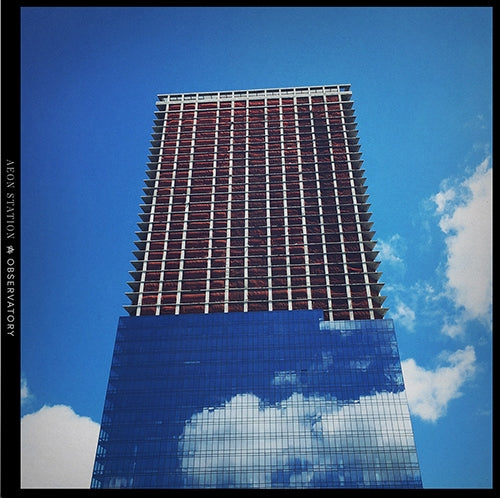
 

Aeon Station, Observatory, album cover.


Andrew Daly: Kevin, I appreciate you taking the time to talk. How have you been holding up over the last year or so? What have you been up to?

Kevin Whelan: Thanks so much for asking me to do this [interview] and let your readers know about Aeon Station. I think the last few years have been a bit of suspended animation with trying to figure out this new life in the times of COVID, and what it means for each of us. These past twelve months have really [brought] this renewed focus and enjoyment with music. Given all of the life challenges we are all facing, it has been a lot of fun to just disappear into music.

AD: Before we dive into your professional career, let’s go back a bit. What first got you hooked on music?

KW: I would say, my mom. My parents loved music but were not musical. One day, my mom bought a piano from a fellow school teacher. She only brought it home because she needed to fill space in the dining room. I would look at that old wooden box with these broken keys and be captivated. I asked for piano lessons.

AD: Who were some of your early influences?

KW: That’s super easy: the Beatles and Liberace.


AD: Let’s talk about recent events. Tell us about your new project, Aeon Station, and your new record, Observatory. How did they come together?

KW: It all came together very fast. I laugh because I say fast, but nothing in my musical life has been fast. But the name for the project, and the album title didn’t come together until May of 2021. The album has five songs that I wrote, recorded, and completed in 2014. The other five songs were written and completed in 2021.

AD: Let’s dig into the lyrical themes on your new album. What message and emotions are you trying to convey? What do you want your listeners to take away from this record?

KW: It’s a great question because it’s really important to me. Without something to sing about, then it’s just a piece of music. And for me, without the words, it’s not alive yet, but [writing the lyrics is] also the hardest part as I question myself over and over again. In saying that, and thanks for asking, with Observatory, I wanted it to be honest and genuine. As I’ve gotten older, I’ve realized the closer I get to being completely genuine, the clearer I become. [And] that the message is clearer to understand.

Believe me, I am beyond happy if anyone takes to the songs and makes them their own. [If they] interpret or have their lives reflected in it for them; that is a success. So, I’m really trying to say is, what I want them to take away from it…that is up to them. [Having the] strength to make it through, believing in your dreams no matter how weird it gets, and not diminishing yourself to elevate others.

AD: As fans know, you were a member of the indie band the Wrens. How does this new project compare to your past work? What can fans expect? What excites you most about it?

KW: I love being a Wren and always will be. Being in the Wrens truly defined my life, from [the] jobs I chose, to relationships, to the way I directed my goals. I hope that anyone listening to the music [of Aeon Station] is met with familiarity and respect to the Wrens and our work, but that they also see a new idea here and there. What excited me about [the new album] is that they are new songs that are now [also] part of a long collection of songs I’ve been part of. Also, it’s so dumb, but after thirty years, I’m actually enjoying just writing songs that have no intent or expectations, other than just sitting at the piano.

AD: Easy questions now. What are a few of your favorite albums, and why?

KW: Oh wow, like all crazy music fans, I have way too many. But let’s go with: the Flaming Lips’ Yoshimi Battles the Pink Robots because it’s still Beatles songs wrapped in their weirdness. David Bowie’s Aladdin Sane for the pianos, lyrics, and singing. Vampire Weekend’s Modern Vampires of the City because for twelve songs in a row, it’s near-perfect.

AD: What other passions do you have? How do those passions inform your music, if at all?

KW: My family, [and] my work at Johnson & Johnson. Honestly, I don’t really have any other passion outside of music. Music is the one thing that is always there. I would say, just life in the office, travel, and the ups and downs of life directly influence the music.

AD: What sort of equipment do you use in the studio, and live?

KW: Well, at home, I’m a hot mess. I only use one Peluso mic, one old Peavey keyboard amp my parents bought when I was 16, and a Mac from 2005 with Logic [Pro recording software]. The other part is awesome, which is working with Tom Beaujour at his Nuthouse Recording studio in Hoboken, New Jersey.


As far as live, I play an old Yamaha bass, again bought when I was 16. It’s been sawed up, drowned, lit on fire, thrown, broken, and I’m not kidding. It’s a great old pirate of a friend. It’s sort of the Michael Myers of bass guitars. (laughs)

AD: Do you collect vinyl? CDs? Cassettes? Or are you all digital now? If you do collect physical media, why is that important to you, and why would you feel that keeping physical media alive is important in this day and age?

KW: I have vinyl, CDs, cassettes, mini-cassettes, and on and on. And yes, of course, digital. The physical because music is physical, and it’s art. To have that in your home or office, I feel defines who you are as much as a painting on the wall, or books, or furniture. As for digital, it offers amazing access to so many great songs from artists I would have never known. I am glad to see both finding a space to exist.

AD: Last one. What’s next on your docket? What are you looking forward to most in the post-COVID world? Do you plan on hitting the road or playing any festivals in 2022?

KW: Next will be shows in 2022. Given COVID safety, it will be awfully nice to play music again. I haven’t played a show in over 11 years. Thanks again for these questions and for supporting the music. You truly have no idea how much it means to me.

Header image courtesy of Ebru Yildiz.

More from Issue 158

View All Articles in Issue 158

Search Copper Magazine

#231 Piano Prodigy Jude Kofie Releases His Debut Album On Octave Records by Frank Doris Jun 01, 2026 #231 Underappreciated Artists, Part Two: City Boy by Rich Isaacs Jun 01, 2026 #231 Music and the Art of Creation: Talking With Saxophonist Rob Scheps by Joe Caplan Jun 01, 2026 #231 How to Play in a Rock Band, 24: Further Adventures at the 2026 Montauk Music Festival by Frank Doris Jun 01, 2026 #231 Courtney Barnett: Creature of Habit by Wayne Robins Jun 01, 2026 #231 Angine de Poitrine: Interstellar Guitar Rock Saviors Headed for Late-Night TV Pop Stardom? by Mark Lepage Jun 01, 2026 #231 My Impressions of AXPONA 2026, Part One by Frank Doris Jun 01, 2026 #231 2026 La Jolla Concours d'Elegance: Another Aesthetic Feast by B. Jan Montana Jun 01, 2026 #231 Country Music Icon Jo Dee Messina’s Bridges: A New Beginning by Ray Chelstowski Jun 01, 2026 #231 The Luxury Dispatch Hosts a Video Podcast With Ken Kessler by Ken Kessler Jun 01, 2026 #231 The Vinyl Beat: Tracking in the Motor City by Rudy Radelic Jun 01, 2026 #231 Lots of Fun With DSP: The Ferrum Audio WANDLA DAC and Its Tube Mode by Frank Doris Jun 01, 2026 #231 From The Audiophile's Guide: Digital Source Components and Streaming Audio by Paul McGowan Jun 01, 2026 #231 Onkyo’s Monster M-510 power amplifier by The Staff at Just Audio Jun 01, 2026 #231 PS Audio in the News by PS Audio Staff Jun 01, 2026 #231 Naming Convention by Peter Xeni Jun 01, 2026 #231 Les Invisibles by Frank Doris Jun 01, 2026 #231 Wildlife Scene by James Schrimpf Jun 01, 2026 #230 Camaraderie by B. Jan Montana May 04, 2026 #230 AXPONA 2026: A Family Gathering by Paul McGowan May 04, 2026 #230 Pianist Ryan Benthall Explores Jazz Realms and Far Beyond With Divine Sky by Frank Doris May 04, 2026 #230 The Vinyl Beat in AXPONA-Land by Rudy Radelic May 04, 2026 #230 Teddy Thompson’s Musical Growth Deepens With Never Be the Same by Ray Chelstowski May 04, 2026 #230 More Fun in the Sun: Florida Audio Expo, Part Two by Frank Doris May 04, 2026 #230 CanJam NYC 2026 Show Report: Heady Sound, Part Two by Frank Doris and Harris Fogel May 04, 2026 #230 Sonic Youth On Murray Street by Wayne Robins May 04, 2026 #230 Graffeo Coffee: A Symphony of Sensory Experience by Joe Caplan May 04, 2026 #230 The Saul Authority: The Story of Hi-Fi Pioneer Saul Marantz by Olivier Meunier-Plante May 04, 2026 #230 How to Play in a Rock Band, 23: Encounters With Famous Musicians, Part Two by Frank Doris May 04, 2026 #230 An Outlier in the Rack: A Vintage BIC Beam Box by The Staff at Just Audio May 04, 2026 #230 PS Audio in the News by PS Audio Staff May 04, 2026 #230 A Cautionary Tale by Rich Isaacs May 04, 2026 #230 Reel-to-Reel Roots, Part 33 (Revised): Ken Kessler Reports On the 2026 (British) AudioJumble by Ken Kessler May 04, 2026 #230 Text Messaging by Frank Doris May 04, 2026 #230 The Audiophile Rat Race by Peter Xeni May 04, 2026 #230 On the Rocks by Rich Isaacs May 04, 2026 #229 The Earliest Stars of Country Music, Part Three by Jeff Weiner Apr 06, 2026 #229 The Healing Power of Music and Sound at the Omega Institute by Joe Caplan Apr 06, 2026 #229 CanJam NYC 2026 Show Report: Heady Sound, Part One by Frank Doris Apr 06, 2026 #229 Florida Audio Expo 2026: Warming Up to High-End Audio, Part One by Frank Doris Apr 06, 2026 #229 Quick Takes: Anne Bisson, Sam Morrison, The Velvet Underground, and the Stooges by Frank Doris Apr 06, 2026 #229 The Vinyl Beat: New Arrivals, and Old Audio Show Demo Scores to Settle by Rudy Radelic Apr 06, 2026 #229 Harvard Gets a High-End Audio Education by Frank Doris Apr 06, 2026 #229 No Country for Old Knees by B. Jan Montana Apr 06, 2026 #229 How To Play in A Rock Band, 22: Encounters With Famous Musicians, Part 1 by Frank Doris Apr 06, 2026 #229 The Soulful Grooves of Guinea-Bissau by Steve Kindig Apr 06, 2026 #229 Four-Hand Piano Performance at Its Finest by Stephan Haberthür Apr 06, 2026

Kevin Whelan of the Wrens and Aeon Station

Kevin Whelan of the Wrens and Aeon Station

Kevin Whelan is an indie-rock veteran who had long been on the scene with his band, the Wrens. The group, dating back to 1989, has been beloved by fans and acclaimed by critics, but hadn’t released any new music since 2003’s The Meadowlands, despite some fits and starts. Whelan grew tired of waiting on the other band members to release new music, and knew he had to make a change.

In 2021, in the wake of the Wrens’ demise, Whelan formed a new outfit, Aeon Station, with the intent of reaching a patient fanbase and to finally express the thoughts and feelings he’d long been harboring through the only means he knew how – by making music.

To say the songs have had a long journey is an understatement, as they were locked in a limbo of sorts. The tracks were originally intended for a new Wrens album, which never came to be, and for a long time, Whelan feared they would never receive the light of day.

Aeon Station’s Kevin Whelan is joined by old Wrens bandmates Greg Whelan on guitar and Jerry MacDonald on drums, with assistance from producer and guitarist Tom Beaujour. The album, Observatory, is everything fans of Whelan and company have been waiting for all these years, and then some.

I caught up with Kevin Whelan to ask him about his life, career, and newest music.


Aeon Station, Observatory, album cover.


Andrew Daly: Kevin, I appreciate you taking the time to talk. How have you been holding up over the last year or so? What have you been up to?

Kevin Whelan: Thanks so much for asking me to do this [interview] and let your readers know about Aeon Station. I think the last few years have been a bit of suspended animation with trying to figure out this new life in the times of COVID, and what it means for each of us. These past twelve months have really [brought] this renewed focus and enjoyment with music. Given all of the life challenges we are all facing, it has been a lot of fun to just disappear into music.

AD: Before we dive into your professional career, let’s go back a bit. What first got you hooked on music?

KW: I would say, my mom. My parents loved music but were not musical. One day, my mom bought a piano from a fellow school teacher. She only brought it home because she needed to fill space in the dining room. I would look at that old wooden box with these broken keys and be captivated. I asked for piano lessons.

AD: Who were some of your early influences?

KW: That’s super easy: the Beatles and Liberace.


AD: Let’s talk about recent events. Tell us about your new project, Aeon Station, and your new record, Observatory. How did they come together?

KW: It all came together very fast. I laugh because I say fast, but nothing in my musical life has been fast. But the name for the project, and the album title didn’t come together until May of 2021. The album has five songs that I wrote, recorded, and completed in 2014. The other five songs were written and completed in 2021.

AD: Let’s dig into the lyrical themes on your new album. What message and emotions are you trying to convey? What do you want your listeners to take away from this record?

KW: It’s a great question because it’s really important to me. Without something to sing about, then it’s just a piece of music. And for me, without the words, it’s not alive yet, but [writing the lyrics is] also the hardest part as I question myself over and over again. In saying that, and thanks for asking, with Observatory, I wanted it to be honest and genuine. As I’ve gotten older, I’ve realized the closer I get to being completely genuine, the clearer I become. [And] that the message is clearer to understand.

Believe me, I am beyond happy if anyone takes to the songs and makes them their own. [If they] interpret or have their lives reflected in it for them; that is a success. So, I’m really trying to say is, what I want them to take away from it…that is up to them. [Having the] strength to make it through, believing in your dreams no matter how weird it gets, and not diminishing yourself to elevate others.

AD: As fans know, you were a member of the indie band the Wrens. How does this new project compare to your past work? What can fans expect? What excites you most about it?

KW: I love being a Wren and always will be. Being in the Wrens truly defined my life, from [the] jobs I chose, to relationships, to the way I directed my goals. I hope that anyone listening to the music [of Aeon Station] is met with familiarity and respect to the Wrens and our work, but that they also see a new idea here and there. What excited me about [the new album] is that they are new songs that are now [also] part of a long collection of songs I’ve been part of. Also, it’s so dumb, but after thirty years, I’m actually enjoying just writing songs that have no intent or expectations, other than just sitting at the piano.

AD: Easy questions now. What are a few of your favorite albums, and why?

KW: Oh wow, like all crazy music fans, I have way too many. But let’s go with: the Flaming Lips’ Yoshimi Battles the Pink Robots because it’s still Beatles songs wrapped in their weirdness. David Bowie’s Aladdin Sane for the pianos, lyrics, and singing. Vampire Weekend’s Modern Vampires of the City because for twelve songs in a row, it’s near-perfect.

AD: What other passions do you have? How do those passions inform your music, if at all?

KW: My family, [and] my work at Johnson & Johnson. Honestly, I don’t really have any other passion outside of music. Music is the one thing that is always there. I would say, just life in the office, travel, and the ups and downs of life directly influence the music.

AD: What sort of equipment do you use in the studio, and live?

KW: Well, at home, I’m a hot mess. I only use one Peluso mic, one old Peavey keyboard amp my parents bought when I was 16, and a Mac from 2005 with Logic [Pro recording software]. The other part is awesome, which is working with Tom Beaujour at his Nuthouse Recording studio in Hoboken, New Jersey.


As far as live, I play an old Yamaha bass, again bought when I was 16. It’s been sawed up, drowned, lit on fire, thrown, broken, and I’m not kidding. It’s a great old pirate of a friend. It’s sort of the Michael Myers of bass guitars. (laughs)

AD: Do you collect vinyl? CDs? Cassettes? Or are you all digital now? If you do collect physical media, why is that important to you, and why would you feel that keeping physical media alive is important in this day and age?

KW: I have vinyl, CDs, cassettes, mini-cassettes, and on and on. And yes, of course, digital. The physical because music is physical, and it’s art. To have that in your home or office, I feel defines who you are as much as a painting on the wall, or books, or furniture. As for digital, it offers amazing access to so many great songs from artists I would have never known. I am glad to see both finding a space to exist.

AD: Last one. What’s next on your docket? What are you looking forward to most in the post-COVID world? Do you plan on hitting the road or playing any festivals in 2022?

KW: Next will be shows in 2022. Given COVID safety, it will be awfully nice to play music again. I haven’t played a show in over 11 years. Thanks again for these questions and for supporting the music. You truly have no idea how much it means to me.

Header image courtesy of Ebru Yildiz.

0 comments

Leave a comment

0 Comments

Your avatar

Loading comments...

🗑️ Delete Comment

Enter moderator password to delete this comment:

✏️ Edit Comment

Enter your email to verify ownership: