COPPER

A PS Audio Publication

Issue 163 • Free Online Magazine

Issue 163 Frankly Speaking

How AXPONA Got Its Groove Back, Part Two

How AXPONA Got Its Groove Back, Part Two

Part One of this report appeared in Issue 162. To recap my usual caveats: it was impossible to cover everything even in three days. I never make definitive judgments about sound at shows. If I hear something I like, great; if not, I know it’s tough to get good, let alone optimal sound at these events. I’m not going to go into chapter and verse about every product spec (and I managed to miss some prices and model numbers, mea culpa); links to products and manufacturers are provided with more information.

This installment will be on the shorter side and there will be a longer Part Three conclusion in Issue 164.

On with the show:

MoFi Distribution (part of Mobile Fidelity) had three rooms packed with gear – no surprise, considering the extent of their product catalog. Just a small sampling: Balanced Audio Technology (tube electronics), Dr. Feickert Analogue (beautifully-made turntables including the $7,495 Blackbird on exhibit; I think these don’t get the attention they deserve), Falcon Acoustics (makers of the classic LS3/5a BBC-designed monitors, $3,295 – $3,495/pair, which I could happily live with forever after were I forced to choose one small speaker to ride out into the sunset with), Koetsu cartridges, QUAD, Piega, and Wharfedale loudspeakers, Whest Audio phono preamplifiers, and a lot more.

Two things struck me the most: first, the Fender-branded Fender x MoFi PrecisionDeck turntable ($3,495), replete with a gorgeous, classic three-tone sunburst guitar finish. Talk about smart cross-marketing. I was told the first run sold out almost immediately. Secondly, the Manger Audio P2 floorstanding speakers ($21,995/pair). The Manger Sound Transducer is a proprietary driver which utilizes the principle of bending waves, where high frequencies propagate from the center of the driver, and the frequencies the driver produces get lower towards the edge. Ever since I first heard a Manger driver 30-odd years ago, I have been impressed by the rightness of its sound, and the P2 emphatically confirmed this impression.
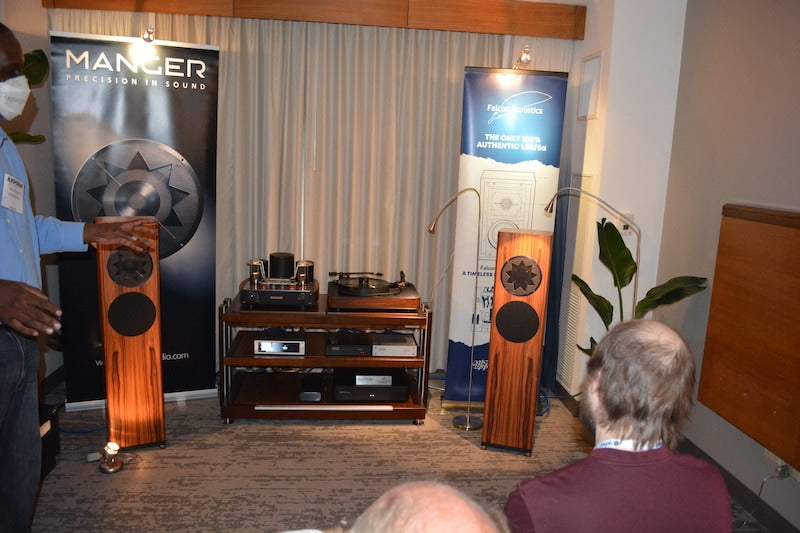
 

Manger loudspeakers and associated equipment in one of the MoFi rooms.

Manger loudspeakers and associated equipment in one of the MoFi rooms.


Once again proving that you can’t make definitive sonic judgments at shows, I had heard EMM Labs electronics and Credo Audio speakers at a previous show and, though they could play remarkably loud and clear, they didn’t blow my mind. At AXPONA, they did. By chance, they happened to be playing the same electronic dance music track I’d heard before, only this time the sound was warm, rich, and spacious. And did I mention loud? The bass extension was almost scary. You’d expect to hear nasty distortion – or the sound of drivers blowing – at such volume levels, but this system simply sailed through everything. The room also included a VPI turntable with DS Audio optical cartridges, and van den Hul cartridges.
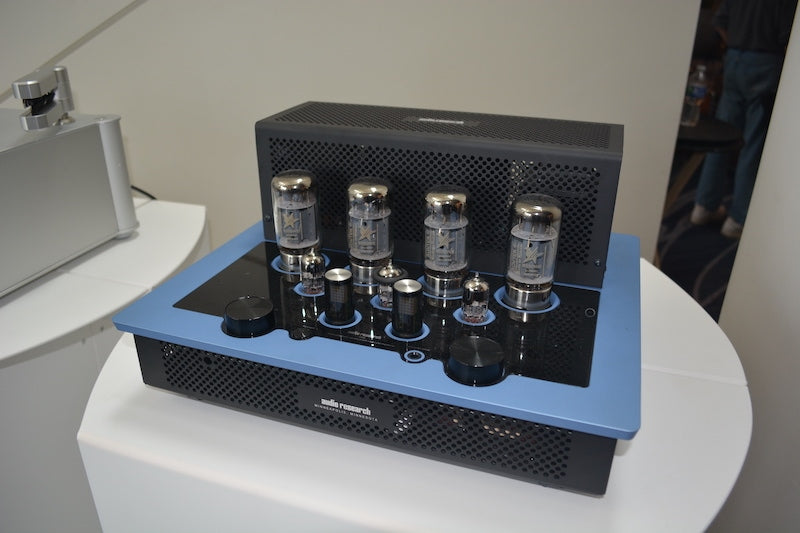
 

A new generation for a new generation: the Audio Research I/50 integrated amplifier. It comes in five other striking colors.
A new generation for a new generation: the Audio Research I/50 integrated amplifier. It comes in five other striking colors.


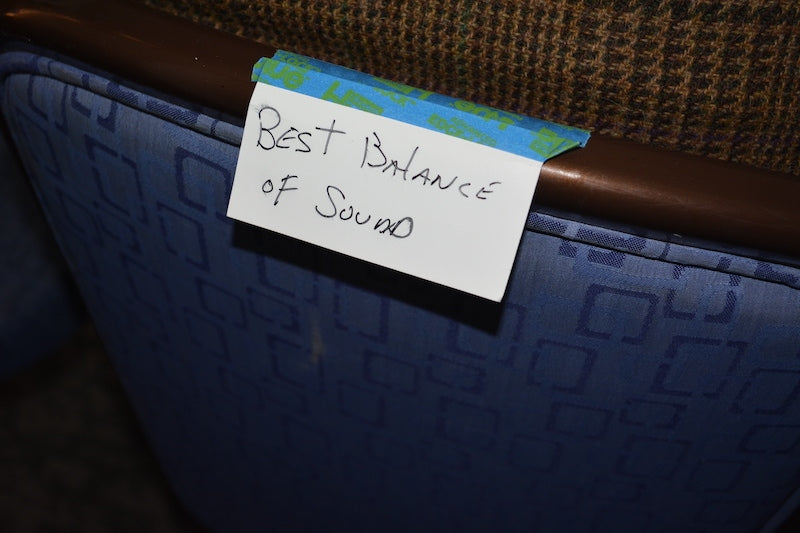
You always want to sit in the sweet spot.

You always want to sit in the sweet spot.


One of the Ansuz/Aavik/Borresen rooms has what I thought was the best visual presentation idea at the show, with this attractive video backdrop. The gear was quite attractive as well.

One of the Audio Group Denmark (Ansuz/Aavik/Børresen) rooms had what I thought was one of the most attractive presentations at the show, with a video wall as a backdrop for their striking gear.
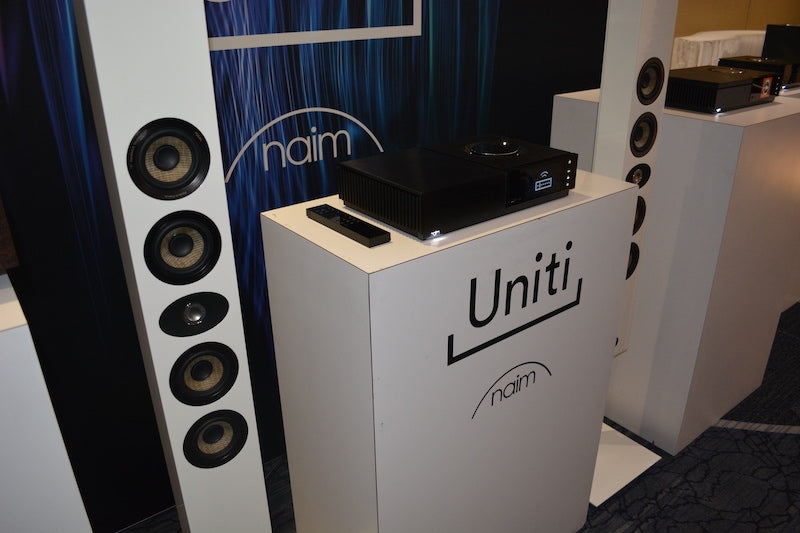
 

Spotted at the Focal Naim America booth: the Naim Uniti Atom, one of several all-in-one streaming audio products at AXPONA.

Spotted at the Focal Naim America booth: the Naim Uniti Atom, one of several all-in-one streaming audio products at AXPONA.


Disclaimer: Roy Hall is a friend and a Copper contributor. Now that that’s out of the way, I have to say that the Music Hall Audio/AMPED America/Acoustique Quality/Pangea (equipment racks) and Spin-Clean (you can guess) room had excellent sound. One system featured the recently-introduced Music Hall Stealth direct-drive turntable ($1,649), which comes with a pre-mounted Ortofon 2M Blue cartridge, and plays 33-1/3, 45 and yes, 78 rpm records. The system included AMPED electronics and Acoustique Quality Canto 5 loudspeakers. Not only did this system sound musical and detailed, it made me realize something so obvious I should have thought of it 40 years earlier: you know an unfamiliar system is good when you can tell who the artist is who you’re hearing. Sounds like a given, right? Not always. On this system, when I heard an unfamiliar track by a familiar singer, I immediately knew who it was. On other systems, not so much.

The AMPED electronics also once again proved that, at this point in the audio technology game, any prejudices one may have about Class D amplification should be thrown out the window. If the point hadn’t been hammered home to me with the AMPED gear (AMP 2250 250 watt-per-channel stereo amp, $3,500 and the new AAP-1 preamplifier, $3,000), the Atma-Sphere Class D monoblock amplifier removed any trace of a shred of a speck of a doubt. It was especially surprising to encounter this diminutive 100 WPC unit in light of the fact that the company has been known for statement-quality tube electronics for more than 35 years. But here was this unassuming little amp just singing smoothly in a modest system, with a you-are-there quality to the music. My apologies for not taking notes on the rest of the system, which was not listed in the show directory.
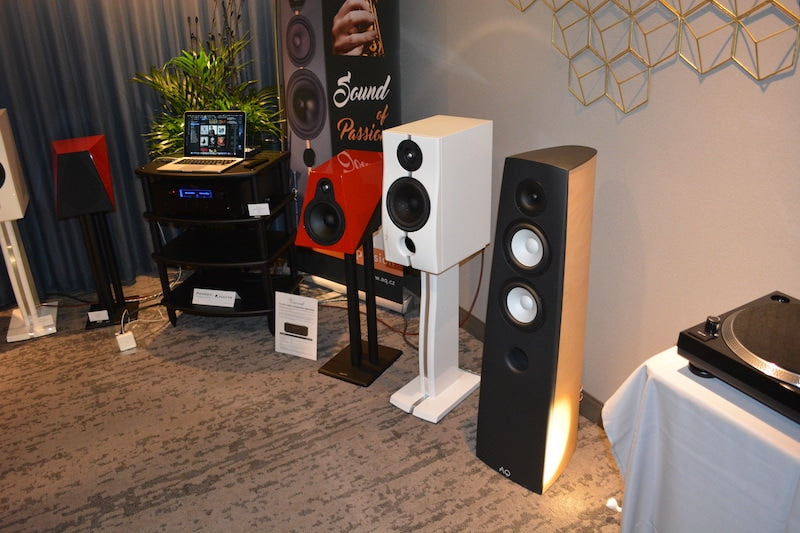
 

A selection of Acoustique Quality loudspeakers.
A selection of Acoustique Quality loudspeakers.


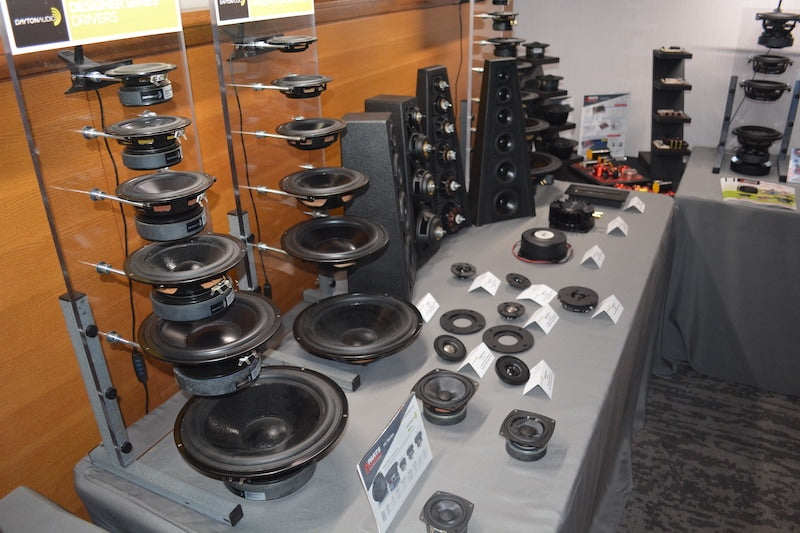
DIY heaven: loudspeaker drivers in the Parts Express room. They were playing speakers that were built from parts from their catalog, and they sounded good. Do it yourself for less!
DIY heaven: loudspeaker drivers in the Parts Express room. They were playing speakers that were built from parts from their catalog, and they sounded good. Do it yourself for less!


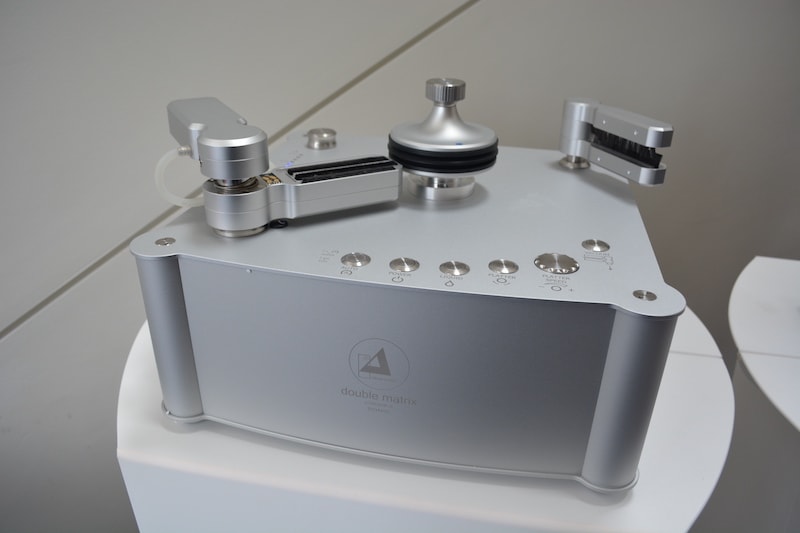
Can record cleaning machines be beautiful? Sure, if they're the Clearaudio Double Matrix Professional SONIC.

Can record cleaning machines be beautiful? Sure, if they’re the Clearaudio Double Matrix Professional SONIC.


I’m continually heartened by the seemingly never-ending developments in record-playback technology. Just how much is really in those vinyl record grooves anyway? According to someone who didn’t want to be named, there may be even more to be heard, thanks to a potential advancement they wouldn’t give any details about. In the here and now, among the smorgasbord of turntables, arms, cartridges and accessories, the new Radial Audio Stealth One linear tracking tonearm caught my attention. The arm uses optoelectronic tracking of the stylus position to maintain a 90-degree position and eliminate any skating forces. According to engineer Dean Slindee, he had the ideas for producing it 30 years ago but had to wait until now for the necessary tech to become available. The arm retails for $4,500 and comes with a T-square alignment tool.
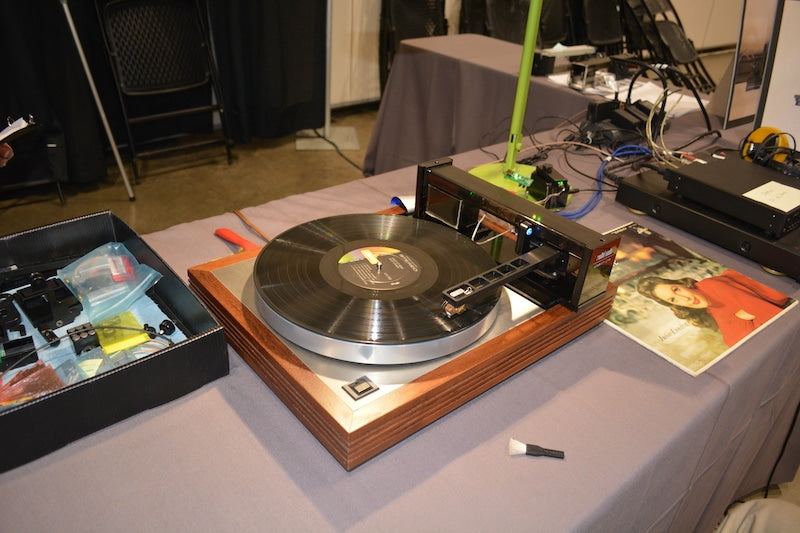
 

Going straight: the Radial Audio Stealth One linear tracking arm on a Linn LP12 turntable.

Going straight: the Radial Audio Stealth One linear tracking arm on a Linn LP12 turntable.


Bucking trends has always been…well, something of an audiophile trend. And to paraphrase Mark Twain, the reports of the death of CD are greatly exaggerated. The McIntosh Group/Pro-Ject introduced not one, but two new CD players. According to the Group’s Jeff Coates, this enables Pro-Ject to now offer every type of source component. All products are made in Europe, including their very cool phono stage that has infinitely variable cartridge loading for precise fine-tuning, and which can accommodate two turntables.

It’s an old salesperson’s trick: any system can be made to sound “better” if played loud. There was a lot of loud music to be heard at AXPONA. At one point an exhibitor warned me, “They’re about to play Nine Inch Nails and they like to listen loud!” Well, that wouldn’t have fazed me in the least (maybe I would have countered with some Meshuggah) but I appreciated the heads up. It’s quite another thing for a system to sound good at lower volumes. A few exhibitors took this strength-in-subtlety approach, including Luxman. They played a selection of music at quieter levels, a welcome respite during a frantic show. The sound was exceptionally pure, and when I mentioned that to Luxman’s John Pravel, he responded that there are no odd-order harmonics in nature, and audio equipment shouldn’t have them either!
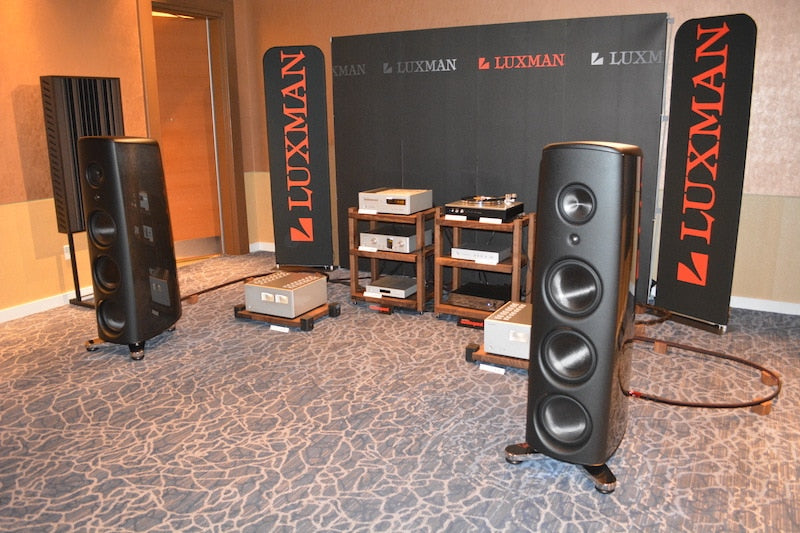
 

The Luxman/Magico exhibit.

The Luxman/Magico exhibit.


At first, I thought the room was a little bass-shy until I listened more carefully and realized my ears had become skewed by the bass bombast of a couple of rooms I’d visited just before. (I have a sound level meter app on my phone, but remind me to spring for a spectrum analyzer phone app one of these days.) Luxman showed a bunch of new gear, all beautifully minimalist and elegant in design, including the M-10X mono/stereo power amp (from 150 to 600 watts into 8 ohms depending on configuration, $19,995), D-10X SACD player with MQA and USB DSD ($16,995), PD-151 MKII turntable ($6,490) and LMC-5 cartridge ($2,695), along with the C-900u preamp ($15,995) and E-250 phono preamp ($2,395). All of this was heard through Magico M6 loudspeakers ($185,000/pair).


Header image: Credo Audio loudspeakers and EMM Labs electronics. Photos courtesy of the author.

More from Issue 163

View All Articles in Issue 163

Search Copper Magazine

#234 A Life in High-End Audio: The Roy Hall Interview, Part One by Frank Doris Sep 07, 2026 #234 Jason Greenlaw Offers His Personal Perspective on Jazz Guitar in Vantage Point by Frank Doris Sep 07, 2026 #234 Transcendent Phoenix: Lucina Yue Brings the Ancient Konghou Into Modern Times by Frank Doris Sep 07, 2026 #234 We Must All Follow Our Bliss by B. Jan Montana Sep 07, 2026 #234 How to Play in a Rock Band, 27: Leveling Up by Frank Doris Sep 07, 2026 #234 Ross Valory: Traveling Into New Musical Territory With All of the Above by Ray Chelstowski Sep 07, 2026 #234 Singer/Songwriter John David Schrader: On the Need to Create by Joe Caplan Sep 07, 2026 #234 The People Who Make Audio Happen: More From T.H.E. Show SoCal 2026 by Harris Fogel Sep 07, 2026 #234 The Vinyl Beat Digs Into the Gadget Box by Rudy Radelic Sep 07, 2026 #234 The Rolling Stones: Foreign Tongues Spoken Loud by Wayne Robins Sep 07, 2026 #234 Musical Moments by Rich Isaacs Sep 07, 2026 #234 Rags for Solo Piano and a Dog: David Chesky's Ragtime Music for the Modern Age by Frankly Speaking Sep 07, 2026 #234 HIGH END 2026, Vienna: Here to Stay by Carsten Barnbeck Sep 07, 2026 #234 From The Audiophile’s Guide: The Two Main Types of Loudpeakers – Box and Panel by Paul McGowan Sep 07, 2026 #234 Letting it Slide by Frank Doris Sep 07, 2026 #234 PS Audio in the News by PS Audio Staff Sep 07, 2026 #234 Long Playing by Peter Xeni Sep 07, 2026 #234 La Mer by B. Jan Montana Sep 07, 2026 #233 A Report From The Total Hi-Fi Experience Show SoCal 2026 by B. Jan Montana Aug 03, 2026 #233 Bluegrass Meets Country, Folk, Jazz and More in All That We Carried by The Squid City Slingers by Frank Doris Aug 03, 2026 #233 Corey Glover and One Tribe Nation: A Variegated Musical Collective by Ray Chelstowski Aug 03, 2026 #233 Excursions with Clive: The Late Clive Davis, A Personal History by Wayne Robins Aug 03, 2026 #233 AI, Art, and Music: A Conversation With Synthography Art by Joe Caplan Aug 03, 2026 #233 New American Symphonies: A Rediscovered Gem and a Vital Contemporary Work by Frank Doris Aug 03, 2026 #233 The Vinyl Beat: Genesis, the Dave Clark Five, Antonio Carlos Jobim and More by Rudy Radelic Aug 03, 2026 #233 How to Play in a Rock Band, 26: When It's Time to Record Your Music by Frank Doris Aug 03, 2026 #233 More From T.H.E. Show 2026, and the People Who Made it Happen by Harris Fogel Aug 03, 2026 #233 Underappreciated Artists, Part Three: Icehouse by Rich Isaacs Aug 03, 2026 #233 The Surprisingly Rich and Varied Music of Somalia by Steve Kindig Aug 03, 2026 #233 A Remarkable Discographic Legacy: The LP Recordings of the Basel Symphony Orchestra by Stephan Haberthür Aug 03, 2026 #233 From The Audiophile’s Guide: The Importance of Loudspeakers by Paul McGowan Aug 03, 2026 #233 From Swimming Pool to New Listening Room: A Conversation with Norman Varney of AV RoomService by Gilles Laferrière Aug 03, 2026 #233 PS Audio in the News by PS Audio Staff Aug 03, 2026 #233 Audio Jewelry by Peter Xeni Aug 03, 2026 #233 Enrich Your Life by Frank Doris Aug 03, 2026 #233 The Searcher by James Schrimpf Aug 03, 2026 #232 What came first: Art or Music? A Conversation With Artist Jose Acosta by Joe Caplan Jul 06, 2026 #232 Blow By Blow: The Jeff Beck Story: An Insightful Book About a Guitar Icon by Ray Chelstowski Jul 06, 2026 #232 Creed Over Camaraderie? by B. Jan Montana Jul 06, 2026 #232 Chronicles of a Sound Pilgrim at the 2026 Montreal Audiofest by Hugues Morin Jul 06, 2026 #232 The Vinyl Beat: Summer Grooves by Rudy Radelic Jul 06, 2026 #232 Hibbing Hillbilly Dylan's Acoustic Rock by Wayne Robins Jul 06, 2026 #232 Quad Quads and Plasmatronics Tweeters: An Extraordinary System Comes to Life by Frank Doris Jul 06, 2026 #232 In Praise of Live Music, Once Again by Ted Shafran Jul 06, 2026 #232 Allnic Audio’s L-9000 Preamplifier: Design and Engineering Innovation by Howard Kneller Jul 06, 2026 #232 “Best Of” Lists and Rage Bait: Enough Already by Frank Doris Jul 06, 2026 #232 Quick Takes: Bud Shank, Paulo Almeida, Jakob Dreyer, Tim Eriksen and Peter Irvine by Frank Doris Jul 06, 2026

How AXPONA Got Its Groove Back, Part Two

How AXPONA Got Its Groove Back, Part Two

Part One of this report appeared in Issue 162. To recap my usual caveats: it was impossible to cover everything even in three days. I never make definitive judgments about sound at shows. If I hear something I like, great; if not, I know it’s tough to get good, let alone optimal sound at these events. I’m not going to go into chapter and verse about every product spec (and I managed to miss some prices and model numbers, mea culpa); links to products and manufacturers are provided with more information.

This installment will be on the shorter side and there will be a longer Part Three conclusion in Issue 164.

On with the show:

MoFi Distribution (part of Mobile Fidelity) had three rooms packed with gear – no surprise, considering the extent of their product catalog. Just a small sampling: Balanced Audio Technology (tube electronics), Dr. Feickert Analogue (beautifully-made turntables including the $7,495 Blackbird on exhibit; I think these don’t get the attention they deserve), Falcon Acoustics (makers of the classic LS3/5a BBC-designed monitors, $3,295 – $3,495/pair, which I could happily live with forever after were I forced to choose one small speaker to ride out into the sunset with), Koetsu cartridges, QUAD, Piega, and Wharfedale loudspeakers, Whest Audio phono preamplifiers, and a lot more.

Two things struck me the most: first, the Fender-branded Fender x MoFi PrecisionDeck turntable ($3,495), replete with a gorgeous, classic three-tone sunburst guitar finish. Talk about smart cross-marketing. I was told the first run sold out almost immediately. Secondly, the Manger Audio P2 floorstanding speakers ($21,995/pair). The Manger Sound Transducer is a proprietary driver which utilizes the principle of bending waves, where high frequencies propagate from the center of the driver, and the frequencies the driver produces get lower towards the edge. Ever since I first heard a Manger driver 30-odd years ago, I have been impressed by the rightness of its sound, and the P2 emphatically confirmed this impression.


Manger loudspeakers and associated equipment in one of the MoFi rooms.

Manger loudspeakers and associated equipment in one of the MoFi rooms.


Once again proving that you can’t make definitive sonic judgments at shows, I had heard EMM Labs electronics and Credo Audio speakers at a previous show and, though they could play remarkably loud and clear, they didn’t blow my mind. At AXPONA, they did. By chance, they happened to be playing the same electronic dance music track I’d heard before, only this time the sound was warm, rich, and spacious. And did I mention loud? The bass extension was almost scary. You’d expect to hear nasty distortion – or the sound of drivers blowing – at such volume levels, but this system simply sailed through everything. The room also included a VPI turntable with DS Audio optical cartridges, and van den Hul cartridges.


A new generation for a new generation: the Audio Research I/50 integrated amplifier. It comes in five other striking colors.

A new generation for a new generation: the Audio Research I/50 integrated amplifier. It comes in five other striking colors.


You always want to sit in the sweet spot.

You always want to sit in the sweet spot.


One of the Ansuz/Aavik/Borresen rooms has what I thought was the best visual presentation idea at the show, with this attractive video backdrop. The gear was quite attractive as well.

One of the Audio Group Denmark (Ansuz/Aavik/Børresen) rooms had what I thought was one of the most attractive presentations at the show, with a video wall as a backdrop for their striking gear.


Spotted at the Focal Naim America booth: the Naim Uniti Atom, one of several all-in-one streaming audio products at AXPONA.

Spotted at the Focal Naim America booth: the Naim Uniti Atom, one of several all-in-one streaming audio products at AXPONA.


Disclaimer: Roy Hall is a friend and a Copper contributor. Now that that’s out of the way, I have to say that the Music Hall Audio/AMPED America/Acoustique Quality/Pangea (equipment racks) and Spin-Clean (you can guess) room had excellent sound. One system featured the recently-introduced Music Hall Stealth direct-drive turntable ($1,649), which comes with a pre-mounted Ortofon 2M Blue cartridge, and plays 33-1/3, 45 and yes, 78 rpm records. The system included AMPED electronics and Acoustique Quality Canto 5 loudspeakers. Not only did this system sound musical and detailed, it made me realize something so obvious I should have thought of it 40 years earlier: you know an unfamiliar system is good when you can tell who the artist is who you’re hearing. Sounds like a given, right? Not always. On this system, when I heard an unfamiliar track by a familiar singer, I immediately knew who it was. On other systems, not so much.

The AMPED electronics also once again proved that, at this point in the audio technology game, any prejudices one may have about Class D amplification should be thrown out the window. If the point hadn’t been hammered home to me with the AMPED gear (AMP 2250 250 watt-per-channel stereo amp, $3,500 and the new AAP-1 preamplifier, $3,000), the Atma-Sphere Class D monoblock amplifier removed any trace of a shred of a speck of a doubt. It was especially surprising to encounter this diminutive 100 WPC unit in light of the fact that the company has been known for statement-quality tube electronics for more than 35 years. But here was this unassuming little amp just singing smoothly in a modest system, with a you-are-there quality to the music. My apologies for not taking notes on the rest of the system, which was not listed in the show directory.


A selection of Acoustique Quality loudspeakers.

A selection of Acoustique Quality loudspeakers.


DIY heaven: loudspeaker drivers in the Parts Express room. They were playing speakers that were built from parts from their catalog, and they sounded good. Do it yourself for less!

DIY heaven: loudspeaker drivers in the Parts Express room. They were playing speakers that were built from parts from their catalog, and they sounded good. Do it yourself for less!


Can record cleaning machines be beautiful? Sure, if they're the Clearaudio Double Matrix Professional SONIC.

Can record cleaning machines be beautiful? Sure, if they’re the Clearaudio Double Matrix Professional SONIC.


I’m continually heartened by the seemingly never-ending developments in record-playback technology. Just how much is really in those vinyl record grooves anyway? According to someone who didn’t want to be named, there may be even more to be heard, thanks to a potential advancement they wouldn’t give any details about. In the here and now, among the smorgasbord of turntables, arms, cartridges and accessories, the new Radial Audio Stealth One linear tracking tonearm caught my attention. The arm uses optoelectronic tracking of the stylus position to maintain a 90-degree position and eliminate any skating forces. According to engineer Dean Slindee, he had the ideas for producing it 30 years ago but had to wait until now for the necessary tech to become available. The arm retails for $4,500 and comes with a T-square alignment tool.


Going straight: the Radial Audio Stealth One linear tracking arm on a Linn LP12 turntable.

Going straight: the Radial Audio Stealth One linear tracking arm on a Linn LP12 turntable.


Bucking trends has always been…well, something of an audiophile trend. And to paraphrase Mark Twain, the reports of the death of CD are greatly exaggerated. The McIntosh Group/Pro-Ject introduced not one, but two new CD players. According to the Group’s Jeff Coates, this enables Pro-Ject to now offer every type of source component. All products are made in Europe, including their very cool phono stage that has infinitely variable cartridge loading for precise fine-tuning, and which can accommodate two turntables.

It’s an old salesperson’s trick: any system can be made to sound “better” if played loud. There was a lot of loud music to be heard at AXPONA. At one point an exhibitor warned me, “They’re about to play Nine Inch Nails and they like to listen loud!” Well, that wouldn’t have fazed me in the least (maybe I would have countered with some Meshuggah) but I appreciated the heads up. It’s quite another thing for a system to sound good at lower volumes. A few exhibitors took this strength-in-subtlety approach, including Luxman. They played a selection of music at quieter levels, a welcome respite during a frantic show. The sound was exceptionally pure, and when I mentioned that to Luxman’s John Pravel, he responded that there are no odd-order harmonics in nature, and audio equipment shouldn’t have them either!


The Luxman/Magico exhibit.

The Luxman/Magico exhibit.


At first, I thought the room was a little bass-shy until I listened more carefully and realized my ears had become skewed by the bass bombast of a couple of rooms I’d visited just before. (I have a sound level meter app on my phone, but remind me to spring for a spectrum analyzer phone app one of these days.) Luxman showed a bunch of new gear, all beautifully minimalist and elegant in design, including the M-10X mono/stereo power amp (from 150 to 600 watts into 8 ohms depending on configuration, $19,995), D-10X SACD player with MQA and USB DSD ($16,995), PD-151 MKII turntable ($6,490) and LMC-5 cartridge ($2,695), along with the C-900u preamp ($15,995) and E-250 phono preamp ($2,395). All of this was heard through Magico M6 loudspeakers ($185,000/pair).


Header image: Credo Audio loudspeakers and EMM Labs electronics. Photos courtesy of the author.

0 comments

Leave a comment

0 Comments

Your avatar

Loading comments...

🗑️ Delete Comment

Enter moderator password to delete this comment:

✏️ Edit Comment

Enter your email to verify ownership: