COPPER

A PS Audio Publication

Issue 118 • Free Online Magazine

Issue 118 TWISTED SYSTEMS

(Going for) The Absolute Sound…for Less

(Going for) The Absolute Sound…for Less

Besides being the name of the legendary high-end audio magazine, the phrase and the magazine The Absolute Sound was created by the late Harry Pearson (founder of said magazine) in order to explain its goal. The attainment of this elusive and always-moving target was based on the theory that an audio system’s purity of reproduction was related to its ability to re-create the illusion of acoustic instruments playing in real space, reproduced in your living room.

To begin with, I thought this was sheer nonsense, because anyone who has ever made a record or attended a recording session knows that the final sound that is reproduced on vinyl, CD, cassette, downloads, streaming…is what is simply an interpretation of an event in which a whole bunch of ears (not yours) think that what is good and what they think is being recorded should sound like. That is what a record producer does.

These events, for the most part, are recorded by using mostly average gear, through mostly average wires, listened to in the studio by mostly horrendous playback monitors connected mostly by the cheapest zip cord and cables through compressors, limiters and EQ circuits made up if mostly cheap electronics…I could go on but I think you get the point. Even with all this mediocrity, a lot of great music has been recorded and reproduced with enough ambience and technical skills to actually give one a great “in-home” experience.


Is it all just an illusion?

As many of you may have read, recording studios (including some legendary ones) are closing down due to the high overhead, as well as the ability for many artists to now record at home with inexpensive digital recording equipment. I am aware that some of the studios that have remained open have upgraded to better cables, speakers and gear. I would bet, however, that most of the vinyl that the readers of this column cherish was recorded under less-than-stellar conditions. I find it so ironic that we spend so much effort and money on the final reproduction of the music, when so little care was taken at its creation. Very few producers and engineers I have met are audiophiles.

This does not include direct-to-disc recording because they may comprise 1/1000th of an average record collection! (That experience, however, has come at a higher and higher price tag over the years.)

Well, I’m here to give you some good news on “the absolute sound” front.

Maybe it’s because I’m never short of opinions or afraid to wade in on most things, but I’m asked about music-related issues frequently. Everything from, what is the best show I ever saw, to what was the first concert I ever went to, who is the best this, that and the other thing…

“Will you listen to my kid’s band’s demo tape? They’re amazing!”

“No, really, I wouldn’t waste your time but the guitar player sounds just like Jimi…or Stevie Ray…Or Keith…” blah, blah, blah. I try to be nice. I do listen.

Mostly it’s truly excruciating. But I try to keep this in perspective because I was young once and I’m sure most of the bands I was in were pretty bad.

When friends of friends come over and hear my reference audio system I get these kind of questions: “How much is that turntable…WHAT? Can it really make a difference?” “How much are those speaker cables? You’re kidding, right?” On and on. On the other hand, someone told me their Sonos system is really good but compared to what I have…OMG.

So then the next series of questions often revolves around what it would cost to buy a system that the wife won’t kill me over, and how close can one get to a great-sounding stereo system that plays vinyl.

This made me think back to my early days in audio.

1968 to be exact.

Back then I owned a Sony STR-6050 receiver, an AR-XA turntable with a Dust Bug pivoted record brush, a Shure M91 cartridge and a pair of KLH Model Six speakers, all wired with lamp cord from the hardware store.
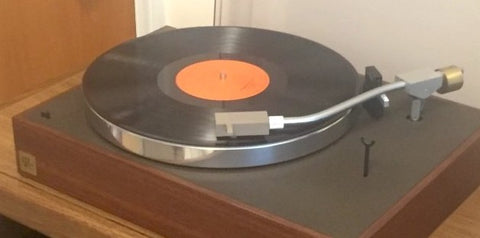

AR-XA turntable.

I thought it sounded pretty d*mn good actually. (I was also pretty high most of the time but still…)

When I ask my friends what they think they could or would consider a financial investment in a good vinyl-playback system today, the figure comes up around $2,500 – $3,000.

Let’s put this then in perspective relative to 1968 dollars and what I got for the money then and what one can get for the money today.

In 1968, $100 is worth about $750.00 today, $200 is worth about $1,500.00,

$300 is equal to $2,250.00 today and so on.

In 1968 my cost of the stereo listed above was about $910. $110 for the turntable and cartridge, $400 for the speakers and $400 for the Sony receiver. That comes to about $910.00, which is close to $6,900.00 today!

For less than half that (say $2,500.00 today) you can buy a pair of speakers, a turntable/cartridge, an integrated amp and cables that would totally destroy (outperform) anything from my hippie era.

The value of good-sounding hi-fi needn’t cost an arm and a leg for a casual listener (one who is now accustomed to a Sonos life style). Great-sounding audio (with vinyl at the epicenter, but which could easily be replaced by a digital front end) is now better than ever. I know. I recommend products and put together these kinds of systems for my friends.

Imagine if your friend actually wanted to invest 7K?

Well, all I can say is, not only could they get something that would really blow them away, but they could settle in with the beverage and companion of their choice and if it’s legal in their state, get some edibles to make the experience complete.

Note that this is all about analog for the moment. This is also not about the kind of person who can just throw money around.


A classic: the Rega Planar 3 turntable.

Hell, if you could afford to just spend $50,000 as an entry point then you are seriously missing one of the joys of this hobby.

The greatest satisfaction I got from all the changes and upgrades to my systems over the years is that the passion to listen to the music I love, and the ability of the gear to uncover more sonic information, especially on material I know so well, are what make this such a great hobby.

If either you or someone else you know who is asking for advice on where to start would like some recommendations, here are some suggestions for very good sounding but very reasonably priced gear, made by companies who want you as a lifetime customer and know how to build the really big stuff.

PS – I have no financial interest in any of these companies (or any audio companies for that matter). I do know the lineage and know some of the people and the reputations these companies have. I have also owned over 200 pieces of audio gear over the last 50 years and I know value. There are surely other options besides my suggestions. I just know that you can’t go wrong with any of these if tight budgets are an important part of your decision making.


VPI Cliffwood turntable.

A word about speakers…

Speakers have the single greatest effect on an audio system. The one caveat is that, given a good basic design, a speaker will reveal much of what is fed from downstream. It doesn’t matter how much they cost or their size as much as how they work in the room they are placed in. Also, you need to have an understanding of their power handling and sensitivity rating in order to have a good match with the amplifier (or integrated amp) driving them and ensure they’ll play at the volumes you’d like in your listening room.

I would not install a $500 turntable in a system that retails for $20,000 and up because you are doing the remaining components (amp, preamp, speakers) a disservice to their ability to reproduce all that the source can extract. On the other hand, I would connect a great $500 speaker to an otherwise crazy-high-budget system and it would show you how good all the associated gear is.

I know because I have done it.

One last mention.

Once you get into the range of $2,500 and up, little things start to matter, meaning they can be upgrades to a better experience. That is the fun part of all this. The turntables listed can show what a better cartridge can do, the amps can always be upgraded, and separates like more expensive phono stages and outboard D/A converters will also sound better.

There is a ladder here. Many people will stop at the first step and be happy. The great part of these components is that they give you a glimpse of the “absolute sound” without causing the absolute destruction of your bank account.

Turntables (approximately $1,000 range including arm and pre-mounted cartridge)

Rega Planar 3
Pro-Ject X1
VPI Cliffwood

Outboard phono stages

Pro-Ject phono box S2, moving magnet/moving coil (MM/MC)-capable, $199
Parasound Zphono (MM/MC), $200
VPI Cliffwood (MM only), $499


Parasound zPhono phono preamp.

Integrated amplifiers (under $1,000)

Musical Fidelity M-2si
ELAC Discovery DS-A101-G integrated amplifier/server
PS Audio Sprout100 (includes built-in phono stage, DAC and Bluetooth)


Elac Discovery DS-A101-G integrated amplifier/server.

Speakers (under $600)

Elac Uni-Fi UB5, $499 per pair
Vanatoo Transparent Zero ($319 – $359) and the Transparent One Encore ($499 – $599, both with built-in amplifiers)
Monitor Audio Bronze 100


Vanatoo Transparent Zero loudspeakers.

Cables

I suggest the WIreWorld Oasis speaker and interconnect cables because I have them and because the price point is important. (A 2-meter speaker cable pair runs about $280, and it’s about $100 for a pair of 1-meter Interconnects.)

There are lots of good choices from Nordost, AudioQuest and StraightWire, to name a few that are also reasonably priced. I advise keeping the total cost of the speaker cables and interconnects at no more than 10 percent of total purchase price. The cable game is a very controversial (the better the system, the less controversial) and costly part of this hobby. Cables really can make a difference but mostly in highly-resolving (meaning expensive) systems and spending a lot on them is not for the faint of heart.

More from Issue 118

View All Articles in Issue 118

Search Copper Magazine

#230 Camaraderie by B. Jan Montana May 04, 2026 #230 AXPONA 2026: A Family Gathering by Paul McGowan May 04, 2026 #230 Pianist Ryan Benthall Explores Jazz Realms and Far Beyond With Divine Sky by Frank Doris May 04, 2026 #230 The Vinyl Beat in AXPONA-Land by Rudy Radelic May 04, 2026 #230 Teddy Thompson’s Musical Growth Deepens With Never Be the Same by Ray Chelstowski May 04, 2026 #230 More Fun in the Sun: Florida Audio Expo, Part Two by Frank Doris May 04, 2026 #230 CanJam NYC 2026 Show Report: Heady Sound, Part Two by Frank Doris and Harris Fogel May 04, 2026 #230 Sonic Youth On Murray Street by Wayne Robins May 04, 2026 #230 Graffeo Coffee: A Symphony of Sensory Experience by Joe Caplan May 04, 2026 #230 The Saul Authority: The Story of Hi-Fi Pioneer Saul Marantz by Olivier Meunier-Plante May 04, 2026 #230 How to Play in a Rock Band, 23: Encounters With Famous Musicians, Part Two by Frank Doris May 04, 2026 #230 An Outlier in the Rack: A Vintage BIC Beam Box by The Staff at Just Audio May 04, 2026 #230 PS Audio in the News by PS Audio Staff May 04, 2026 #230 A Cautionary Tale by Rich Isaacs May 04, 2026 #230 Reel-to-Reel Roots, Part 33 (Revised): Ken Kessler Reports On the 2026 (British) AudioJumble by Ken Kessler May 04, 2026 #230 Text Messaging by Frank Doris May 04, 2026 #230 The Audiophile Rat Race by Peter Xeni May 04, 2026 #230 On the Rocks by Rich Isaacs May 04, 2026 #229 The Earliest Stars of Country Music, Part Three by Jeff Weiner Apr 06, 2026 #229 The Healing Power of Music and Sound at the Omega Institute by Joe Caplan Apr 06, 2026 #229 CanJam NYC 2026 Show Report: Heady Sound, Part One by Frank Doris Apr 06, 2026 #229 Florida Audio Expo 2026: Warming Up to High-End Audio, Part One by Frank Doris Apr 06, 2026 #229 Quick Takes: Anne Bisson, Sam Morrison, The Velvet Underground, and the Stooges by Frank Doris Apr 06, 2026 #229 The Vinyl Beat: New Arrivals, and Old Audio Show Demo Scores to Settle by Rudy Radelic Apr 06, 2026 #229 Harvard Gets a High-End Audio Education by Frank Doris Apr 06, 2026 #229 No Country for Old Knees by B. Jan Montana Apr 06, 2026 #229 How To Play in A Rock Band, 22: Encounters With Famous Musicians, Part 1 by Frank Doris Apr 06, 2026 #229 The Soulful Grooves of Guinea-Bissau by Steve Kindig Apr 06, 2026 #229 Four-Hand Piano Performance at Its Finest by Stephan Haberthür Apr 06, 2026 #229 The People Who Make Audio Happen: Supreme Acoustics Systems’ Las Vegas Grand Opening by Harris Fogel Apr 06, 2026 #229 Blue Öyster Cult: Tyranny and Expectations by Wayne Robins Apr 06, 2026 #229 Guitarist Rick Vito’s Cinematic New Album, Slidemaster by Ray Chelstowski Apr 06, 2026 #229 Measurements and Observational Listening by Paul McGowan Apr 06, 2026 #229 PS Audio in the News by PS Audio Staff Apr 06, 2026 #229 Back to My Reel-to-Reel Roots, Part 28: The Cassette Strikes Back by Ken Kessler Apr 06, 2026 #229 Are You Receiving Me? by Frank Doris Apr 06, 2026 #229 Hospitality by Peter Xeni Apr 06, 2026 #229 Cantina Gateway by James Schrimpf Apr 06, 2026 #228 Serita’s Black Rose Duo Shakes Your Soul With a Blend of Funk, Rock, Blues and a Whole Lot More by Frank Doris Mar 02, 2026 #228 Vinyl, A Love Story by Wayne Robins Mar 02, 2026 #228 Thrill Seeker by B. Jan Montana Mar 02, 2026 #228 The Vinyl Beat: Donald Byrd, Bill Evans, Wes Montgomery, Eddie Palmieri and Frank Sinatra by Rudy Radelic Mar 02, 2026 #228 Listening to Prestige: The History of a Vitally Important Jazz Record Label by Frank Doris Mar 02, 2026 #228 How to Play in a Rock Band, 21: Touring With James Lee Stanley by Frank Doris Mar 02, 2026 #228 The NAMM 2026 Show: The Music Industry’s Premier Event by John Volanski Mar 02, 2026 #228 The Earliest Stars of Country Music, Part Two by Jeff Weiner Mar 02, 2026 #228 From The Audiophile's Guide: A Brief History of Stereophonic Sound by Paul McGowan Mar 02, 2026

(Going for) The Absolute Sound…for Less

(Going for) The Absolute Sound…for Less

Besides being the name of the legendary high-end audio magazine, the phrase and the magazine The Absolute Sound was created by the late Harry Pearson (founder of said magazine) in order to explain its goal. The attainment of this elusive and always-moving target was based on the theory that an audio system’s purity of reproduction was related to its ability to re-create the illusion of acoustic instruments playing in real space, reproduced in your living room.

To begin with, I thought this was sheer nonsense, because anyone who has ever made a record or attended a recording session knows that the final sound that is reproduced on vinyl, CD, cassette, downloads, streaming…is what is simply an interpretation of an event in which a whole bunch of ears (not yours) think that what is good and what they think is being recorded should sound like. That is what a record producer does.

These events, for the most part, are recorded by using mostly average gear, through mostly average wires, listened to in the studio by mostly horrendous playback monitors connected mostly by the cheapest zip cord and cables through compressors, limiters and EQ circuits made up if mostly cheap electronics…I could go on but I think you get the point. Even with all this mediocrity, a lot of great music has been recorded and reproduced with enough ambience and technical skills to actually give one a great “in-home” experience.


Is it all just an illusion?

As many of you may have read, recording studios (including some legendary ones) are closing down due to the high overhead, as well as the ability for many artists to now record at home with inexpensive digital recording equipment. I am aware that some of the studios that have remained open have upgraded to better cables, speakers and gear. I would bet, however, that most of the vinyl that the readers of this column cherish was recorded under less-than-stellar conditions. I find it so ironic that we spend so much effort and money on the final reproduction of the music, when so little care was taken at its creation. Very few producers and engineers I have met are audiophiles.

This does not include direct-to-disc recording because they may comprise 1/1000th of an average record collection! (That experience, however, has come at a higher and higher price tag over the years.)

Well, I’m here to give you some good news on “the absolute sound” front.

Maybe it’s because I’m never short of opinions or afraid to wade in on most things, but I’m asked about music-related issues frequently. Everything from, what is the best show I ever saw, to what was the first concert I ever went to, who is the best this, that and the other thing…

“Will you listen to my kid’s band’s demo tape? They’re amazing!”

“No, really, I wouldn’t waste your time but the guitar player sounds just like Jimi…or Stevie Ray…Or Keith…” blah, blah, blah. I try to be nice. I do listen.

Mostly it’s truly excruciating. But I try to keep this in perspective because I was young once and I’m sure most of the bands I was in were pretty bad.

When friends of friends come over and hear my reference audio system I get these kind of questions: “How much is that turntable…WHAT? Can it really make a difference?” “How much are those speaker cables? You’re kidding, right?” On and on. On the other hand, someone told me their Sonos system is really good but compared to what I have…OMG.

So then the next series of questions often revolves around what it would cost to buy a system that the wife won’t kill me over, and how close can one get to a great-sounding stereo system that plays vinyl.

This made me think back to my early days in audio.

1968 to be exact.

Back then I owned a Sony STR-6050 receiver, an AR-XA turntable with a Dust Bug pivoted record brush, a Shure M91 cartridge and a pair of KLH Model Six speakers, all wired with lamp cord from the hardware store.


AR-XA turntable.

I thought it sounded pretty d*mn good actually. (I was also pretty high most of the time but still…)

When I ask my friends what they think they could or would consider a financial investment in a good vinyl-playback system today, the figure comes up around $2,500 – $3,000.

Let’s put this then in perspective relative to 1968 dollars and what I got for the money then and what one can get for the money today.

In 1968, $100 is worth about $750.00 today, $200 is worth about $1,500.00,

$300 is equal to $2,250.00 today and so on.

In 1968 my cost of the stereo listed above was about $910. $110 for the turntable and cartridge, $400 for the speakers and $400 for the Sony receiver. That comes to about $910.00, which is close to $6,900.00 today!

For less than half that (say $2,500.00 today) you can buy a pair of speakers, a turntable/cartridge, an integrated amp and cables that would totally destroy (outperform) anything from my hippie era.

The value of good-sounding hi-fi needn’t cost an arm and a leg for a casual listener (one who is now accustomed to a Sonos life style). Great-sounding audio (with vinyl at the epicenter, but which could easily be replaced by a digital front end) is now better than ever. I know. I recommend products and put together these kinds of systems for my friends.

Imagine if your friend actually wanted to invest 7K?

Well, all I can say is, not only could they get something that would really blow them away, but they could settle in with the beverage and companion of their choice and if it’s legal in their state, get some edibles to make the experience complete.

Note that this is all about analog for the moment. This is also not about the kind of person who can just throw money around.


A classic: the Rega Planar 3 turntable.

Hell, if you could afford to just spend $50,000 as an entry point then you are seriously missing one of the joys of this hobby.

The greatest satisfaction I got from all the changes and upgrades to my systems over the years is that the passion to listen to the music I love, and the ability of the gear to uncover more sonic information, especially on material I know so well, are what make this such a great hobby.

If either you or someone else you know who is asking for advice on where to start would like some recommendations, here are some suggestions for very good sounding but very reasonably priced gear, made by companies who want you as a lifetime customer and know how to build the really big stuff.

PS – I have no financial interest in any of these companies (or any audio companies for that matter). I do know the lineage and know some of the people and the reputations these companies have. I have also owned over 200 pieces of audio gear over the last 50 years and I know value. There are surely other options besides my suggestions. I just know that you can’t go wrong with any of these if tight budgets are an important part of your decision making.


VPI Cliffwood turntable.

A word about speakers…

Speakers have the single greatest effect on an audio system. The one caveat is that, given a good basic design, a speaker will reveal much of what is fed from downstream. It doesn’t matter how much they cost or their size as much as how they work in the room they are placed in. Also, you need to have an understanding of their power handling and sensitivity rating in order to have a good match with the amplifier (or integrated amp) driving them and ensure they’ll play at the volumes you’d like in your listening room.

I would not install a $500 turntable in a system that retails for $20,000 and up because you are doing the remaining components (amp, preamp, speakers) a disservice to their ability to reproduce all that the source can extract. On the other hand, I would connect a great $500 speaker to an otherwise crazy-high-budget system and it would show you how good all the associated gear is.

I know because I have done it.

One last mention.

Once you get into the range of $2,500 and up, little things start to matter, meaning they can be upgrades to a better experience. That is the fun part of all this. The turntables listed can show what a better cartridge can do, the amps can always be upgraded, and separates like more expensive phono stages and outboard D/A converters will also sound better.

There is a ladder here. Many people will stop at the first step and be happy. The great part of these components is that they give you a glimpse of the “absolute sound” without causing the absolute destruction of your bank account.

Turntables (approximately $1,000 range including arm and pre-mounted cartridge)

Rega Planar 3
Pro-Ject X1
VPI Cliffwood

Outboard phono stages

Pro-Ject phono box S2, moving magnet/moving coil (MM/MC)-capable, $199
Parasound Zphono (MM/MC), $200
VPI Cliffwood (MM only), $499


Parasound zPhono phono preamp.

Integrated amplifiers (under $1,000)

Musical Fidelity M-2si
ELAC Discovery DS-A101-G integrated amplifier/server
PS Audio Sprout100 (includes built-in phono stage, DAC and Bluetooth)


Elac Discovery DS-A101-G integrated amplifier/server.

Speakers (under $600)

Elac Uni-Fi UB5, $499 per pair
Vanatoo Transparent Zero ($319 – $359) and the Transparent One Encore ($499 – $599, both with built-in amplifiers)
Monitor Audio Bronze 100


Vanatoo Transparent Zero loudspeakers.

Cables

I suggest the WIreWorld Oasis speaker and interconnect cables because I have them and because the price point is important. (A 2-meter speaker cable pair runs about $280, and it’s about $100 for a pair of 1-meter Interconnects.)

There are lots of good choices from Nordost, AudioQuest and StraightWire, to name a few that are also reasonably priced. I advise keeping the total cost of the speaker cables and interconnects at no more than 10 percent of total purchase price. The cable game is a very controversial (the better the system, the less controversial) and costly part of this hobby. Cables really can make a difference but mostly in highly-resolving (meaning expensive) systems and spending a lot on them is not for the faint of heart.

0 comments

Leave a comment

0 Comments

Your avatar

Loading comments...

🗑️ Delete Comment

Enter moderator password to delete this comment:

✏️ Edit Comment

Enter your email to verify ownership: