COPPER

A PS Audio Publication

Issue 176 • Free Online Magazine

Issue 176 Disciples of Sound

Glen Phillips of Toad the Wet Sprocket: There Is So Much Here

Glen Phillips of Toad the Wet Sprocket: There Is So Much Here

When Toad The Wet Sprocket released their 1994 masterpiece, Dulcinea, the band’s front man and songwriter Glen Phillips was considered to be one of those voices that would carry rock and roll into the new millennium and beyond. It didn’t quite work out that way. While the band continued to perform regularly for their avid fan base, they seemed to halt production on new material, and Phillips would dabble with solo projects that met events like his divorce head-on, with remarkably candid lyrics and thoughts that were completely open and raw. That recently changed with the release of his fifth solo album, There Is So Much Here, on Compass Records.

Here Phillips celebrates a good amount of life’s simple moments and delivers that message through songs that reside among his best-written work. The first two singles, “Big Changes” and “Stone Throat” will make fans sit up and take notice of a sound they connected with as early as Toad’s first album, 1989’s Bread & Circus. The music is firm, with hooky pop elements and steady full band support. There’s nothing showy about this music. It’s really all about the songs. They reflect what, in its entirety, is a truly triumphant return by one of rock’s most genuine and gifted composers.

Copper caught up with Phillips as he was about to head out on his fall tour, to talk about the new record, the state of music-making today, and what might be in store for Toad The Wet Sprocket into 2023 and beyond.


Ray Chelstowski: You are known for performing barefoot. How did that begin?

Glen Phillips: Well, I grew up in Santa Barbara spending a lot of time in sandals or being barefoot and most of our touring happens in the summer when it’s hot out (laughs). It’s mostly that and at one point it was just unique enough that if I went on stage with shoes there’d probably be someone in the front row asking me to take my shoes off. I don’t know how many schticks start like that.

RC: You founded Toad in high school where you really established a signature sound. Did you know then that you had discovered something that would last this long?

GP: At that time, I probably thought that we were going to put out a record after [finishing] school, like every other band. If there’s a vision to be found back there it’s the result of a lot of navel gazing. I’ve always been very curious about the intricacies of relationships. I think it’s more of that viewpoint against a broader range of interests. When we made our first record I was 16 years old and I wasn’t talking about whether I was going to get detention. That kind of music doesn’t age well. Our music kind of started with ponderous over-thinking and then stayed there.
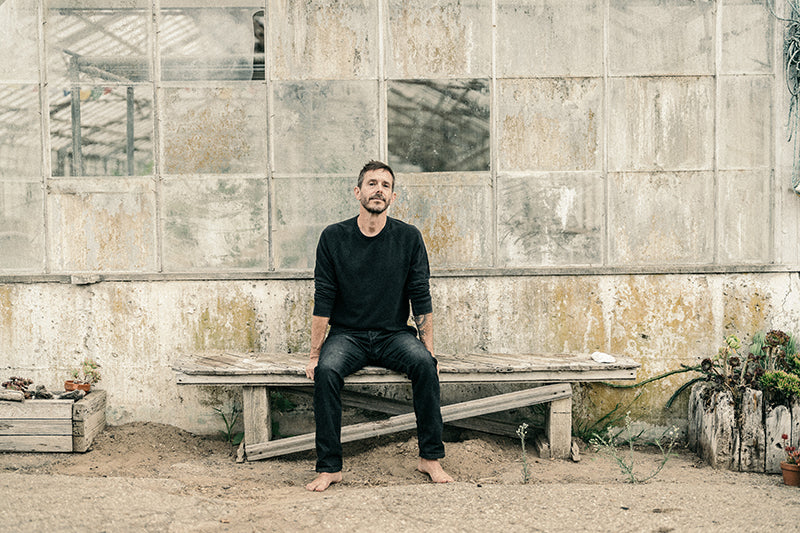
 

Glen Phillips. Courtesy of Chris Orwig.

Glen Phillips. Courtesy of Chris Orwig.


RC: How do you know when a song you’re writing is better for your solo career or for Toad?

GP: It’s been an interesting up and down. There are some of my solo records I really like. But with others it’s like I’m running away from something instead of embracing something. Occasionally I find myself running toward something someone has told me to run to. The last two records felt more like my own voice and what I wanted to sound like at that moment. But I haven’t had a real sound as a solo artist and I feel like I’ve written songs for [my solo work] that are as good as anything I’ve ever written. It still doesn’t measure up to what I’ve been able to do with Toad. Toad has a definable sound and there’s such great collaboration among everyone, and we really know how to make a compelling record together. With [There Is So Much Here] I feel like I allowed myself to have fun in the studio like I haven’t in a very long time. Usually, I think about touring with [the songs] and shy away from using a band. This time I decided to have all of the fun and not worry about the logistics and it was great. When I do a solo record I learn a lot and it gives me a good amount of things to take back to the band.


RC: Where did you record the new album?

GP: My friend John Morgenthau has a studio in Vancouver, Washington. He invited me to come up. Post-divorce, my gear needed a place to live and so it’s been hiding out in his studio. John got me motivated to get all of my songs together. I actually took all of the songs from a songwriting game that I play with [singer/songwriter] Matt the Electrician. It’s a “Bob Schneider-style” game. (Bob Schneider is a musician and songwriter.] Matt’s out of Austin, Texas and there’s about 22 people in the game right now. Each week he sends out a prompt. This week I wrote four verses for [a song called] “Bitten by the Bug.” I love writing this way and it really helps me stay in shape.

RC: When you hit the road to support There Is So Much Here will it be just you and a guitar?

GP: Yes. I like to write songs that don’t require any particular production. If you can write around it it’s a lot of fun. In my world I like a song that I can always sing by a campfire and about 90 percent of what I write works like that.

RC: You’ve said that this could have been released as two EPs. Do you still favor the album format?

GP: It feels strange putting out records because the record itself was a product of technology. It’s not like people made 45-minute groups of songs before the invention of the LP. That somehow became the measure of a complete work. It was because of the technology and an entire industry was built around it. That might not be the model anymore and yet I do find myself reluctant to step into some of the modern solutions. I heard this interview where Jackson Browne was said to say something like, “in the ’70s you just got in the bus and played the show. That was the job. Now I have to update my what?” I don’t want to have to care about how to not utterly disappear. So, you need a team. It’s too much to be done by one person.

RC: What’s next with Toad the Wet Sprocket?

GP: In general, with Toad, we’ve only made only two records in the last 20 years. Now the band is in a place where we are tighter, we’re all excited about how we sound live and are getting along really well. So we’re feeling an inspiration we haven’t felt in some time.


Header image of Glen Phillips courtesy of Chris Orwig.

More from Issue 176

View All Articles in Issue 176

Search Copper Magazine

#228 Serita’s Black Rose Duo Shakes Your Soul With a Blend of Funk, Rock, Blues and a Whole Lot More by Frank Doris Mar 02, 2026 #228 Vinyl, A Love Story by Wayne Robins Mar 02, 2026 #228 Thrill Seeker by B. Jan Montana Mar 02, 2026 #228 The Vinyl Beat: Donald Byrd, Bill Evans, Wes Montgomery, Eddie Palmieri and Frank Sinatra by Rudy Radelic Mar 02, 2026 #228 Listening to Prestige: The History of a Vitally Important Jazz Record Label by Frank Doris Mar 02, 2026 #228 How to Play in a Rock Band, 21: Touring With James Lee Stanley by Frank Doris Mar 02, 2026 #228 The NAMM 2026 Show: The Music Industry’s Premier Event by John Volanski Mar 02, 2026 #228 The Earliest Stars of Country Music, Part Two by Jeff Weiner Mar 02, 2026 #228 From The Audiophile's Guide: A Brief History of Stereophonic Sound by Paul McGowan Mar 02, 2026 #228 A Bone to Pick With Streaming Audio by Frank Doris Mar 02, 2026 #228 Blast Off With Bluesman Duke Robillard by Ray Chelstowski Mar 02, 2026 #228 A Visit to the Marten Loudspeaker Factory in Göteborg, Sweden by Ingo Schulz and Sebastian Polcyn Mar 02, 2026 #228 Pure Distortion by Peter Xeni Mar 02, 2026 #228 A Nagra Factory Tour by Markus "Marsu" Manthey Mar 02, 2026 #228 Back to My Reel-to-Reel Roots, Part 27: Noodge and Ye Shall Receive, Part Two by Ken Kessler Mar 02, 2026 #228 PS Audio in the News by PS Audio Staff Mar 02, 2026 #228 90-Degree Stereo by Frank Doris Mar 02, 2026 #228 The Keys to Art by Rich Isaacs Mar 02, 2026 #227 Seth Lewis Gets in the Groove With Take a Look Around: a Tribute to the Meters by Frank Doris Feb 02, 2026 #227 Passport to Sound: May Anwar’s Audio Learning Experience for Young People by Frank Doris Feb 02, 2026 #227 Conjectures on Cosmic Consciousness by B. Jan Montana Feb 02, 2026 #227 The Big Takeover Turns 45 by Wayne Robins Feb 02, 2026 #227 Music and Chocolate: On the Sensory Connection by Joe Caplan Feb 02, 2026 #227 Singer/Songwriter Chris Berardo: Getting Wilder All the Time by Ray Chelstowski Feb 02, 2026 #227 The Earliest Stars of Country Music, Part One by Jeff Weiner Feb 02, 2026 #227 The Vinyl Beat Goes Down to Tijuana (By Way of Los Angeles), Part Two by Rudy Radelic Feb 02, 2026 #227 How to Play in a Rock Band, 20: On the Road With Blood, Sweat & Tears’ Guitarist Gabe Cummins by Frank Doris Feb 02, 2026 #227 From The Audiophile’s Guide: Audio Specs and Measuring by Paul McGowan Feb 02, 2026 #227 Our Brain is Always Listening by Peter Trübner Feb 02, 2026 #227 PS Audio in the News by PS Audio Staff Feb 02, 2026 #227 The Listening Chair: Sleek Style and Sound From the Luxman L3 by Howard Kneller Feb 02, 2026 #227 The Los Angeles and Orange County Audio Society Celebrates Its 32nd Anniversary, Honoring David and Sheryl Lee Wilson and Bernie Grundman by Harris Fogel Feb 02, 2026 #227 Back to My Reel-to-Reel Roots, Part 26: Half Full – Not Half Empty, Redux by Ken Kessler Feb 02, 2026 #227 That's What Puzzles Us... by Frank Doris Feb 02, 2026 #227 Record-Breaking by Peter Xeni Feb 02, 2026 #227 The Long and Winding Road by B. Jan Montana Feb 02, 2026 #226 JJ Murphy’s Sleep Paralysis is a Genre-Bending Musical Journey Through Jazz, Fusion and More by Frank Doris Jan 05, 2026 #226 Stewardship by Consent by B. Jan Montana Jan 05, 2026 #226 Food, Music, and Sensory Experience: An Interview With Professor Jonathan Zearfoss of the Culinary Institute of America by Joe Caplan Jan 05, 2026 #226 Studio Confidential: A Who’s Who of Recording Engineers Tell Their Stories by Frank Doris Jan 05, 2026 #226 Pilot Radio is Reborn, 50 Years Later: Talking With CEO Barak Epstein by Frank Doris Jan 05, 2026 #226 The Vinyl Beat Goes Down to Tijuana (By Way of Los Angeles), Part One by Rudy Radelic Jan 05, 2026 #226 Capital Audiofest 2025: Must-See Stereo, Part Two by Frank Doris Jan 05, 2026 #226 My Morning Jacket’s Carl Broemel and Tyler Ramsey Collaborate on Their Acoustic Guitar Album, Celestun by Ray Chelstowski Jan 05, 2026 #226 The People Who Make Audio Happen: CanJam SoCal 2025, Part Two by Harris Fogel Jan 05, 2026 #226 How to Play in a Rock Band, 19: Touring Can Make You Crazy, Part One by Frank Doris Jan 05, 2026 #226 Linda Ronstadt Goes Bigger by Wayne Robins Jan 05, 2026

Glen Phillips of Toad the Wet Sprocket: There Is So Much Here

Glen Phillips of Toad the Wet Sprocket: There Is So Much Here

When Toad The Wet Sprocket released their 1994 masterpiece, Dulcinea, the band’s front man and songwriter Glen Phillips was considered to be one of those voices that would carry rock and roll into the new millennium and beyond. It didn’t quite work out that way. While the band continued to perform regularly for their avid fan base, they seemed to halt production on new material, and Phillips would dabble with solo projects that met events like his divorce head-on, with remarkably candid lyrics and thoughts that were completely open and raw. That recently changed with the release of his fifth solo album, There Is So Much Here, on Compass Records.

Here Phillips celebrates a good amount of life’s simple moments and delivers that message through songs that reside among his best-written work. The first two singles, “Big Changes” and “Stone Throat” will make fans sit up and take notice of a sound they connected with as early as Toad’s first album, 1989’s Bread & Circus. The music is firm, with hooky pop elements and steady full band support. There’s nothing showy about this music. It’s really all about the songs. They reflect what, in its entirety, is a truly triumphant return by one of rock’s most genuine and gifted composers.

Copper caught up with Phillips as he was about to head out on his fall tour, to talk about the new record, the state of music-making today, and what might be in store for Toad The Wet Sprocket into 2023 and beyond.


Ray Chelstowski: You are known for performing barefoot. How did that begin?

Glen Phillips: Well, I grew up in Santa Barbara spending a lot of time in sandals or being barefoot and most of our touring happens in the summer when it’s hot out (laughs). It’s mostly that and at one point it was just unique enough that if I went on stage with shoes there’d probably be someone in the front row asking me to take my shoes off. I don’t know how many schticks start like that.

RC: You founded Toad in high school where you really established a signature sound. Did you know then that you had discovered something that would last this long?

GP: At that time, I probably thought that we were going to put out a record after [finishing] school, like every other band. If there’s a vision to be found back there it’s the result of a lot of navel gazing. I’ve always been very curious about the intricacies of relationships. I think it’s more of that viewpoint against a broader range of interests. When we made our first record I was 16 years old and I wasn’t talking about whether I was going to get detention. That kind of music doesn’t age well. Our music kind of started with ponderous over-thinking and then stayed there.


Glen Phillips. Courtesy of Chris Orwig.

Glen Phillips. Courtesy of Chris Orwig.


RC: How do you know when a song you’re writing is better for your solo career or for Toad?

GP: It’s been an interesting up and down. There are some of my solo records I really like. But with others it’s like I’m running away from something instead of embracing something. Occasionally I find myself running toward something someone has told me to run to. The last two records felt more like my own voice and what I wanted to sound like at that moment. But I haven’t had a real sound as a solo artist and I feel like I’ve written songs for [my solo work] that are as good as anything I’ve ever written. It still doesn’t measure up to what I’ve been able to do with Toad. Toad has a definable sound and there’s such great collaboration among everyone, and we really know how to make a compelling record together. With [There Is So Much Here] I feel like I allowed myself to have fun in the studio like I haven’t in a very long time. Usually, I think about touring with [the songs] and shy away from using a band. This time I decided to have all of the fun and not worry about the logistics and it was great. When I do a solo record I learn a lot and it gives me a good amount of things to take back to the band.


RC: Where did you record the new album?

GP: My friend John Morgenthau has a studio in Vancouver, Washington. He invited me to come up. Post-divorce, my gear needed a place to live and so it’s been hiding out in his studio. John got me motivated to get all of my songs together. I actually took all of the songs from a songwriting game that I play with [singer/songwriter] Matt the Electrician. It’s a “Bob Schneider-style” game. (Bob Schneider is a musician and songwriter.] Matt’s out of Austin, Texas and there’s about 22 people in the game right now. Each week he sends out a prompt. This week I wrote four verses for [a song called] “Bitten by the Bug.” I love writing this way and it really helps me stay in shape.

RC: When you hit the road to support There Is So Much Here will it be just you and a guitar?

GP: Yes. I like to write songs that don’t require any particular production. If you can write around it it’s a lot of fun. In my world I like a song that I can always sing by a campfire and about 90 percent of what I write works like that.

RC: You’ve said that this could have been released as two EPs. Do you still favor the album format?

GP: It feels strange putting out records because the record itself was a product of technology. It’s not like people made 45-minute groups of songs before the invention of the LP. That somehow became the measure of a complete work. It was because of the technology and an entire industry was built around it. That might not be the model anymore and yet I do find myself reluctant to step into some of the modern solutions. I heard this interview where Jackson Browne was said to say something like, “in the ’70s you just got in the bus and played the show. That was the job. Now I have to update my what?” I don’t want to have to care about how to not utterly disappear. So, you need a team. It’s too much to be done by one person.

RC: What’s next with Toad the Wet Sprocket?

GP: In general, with Toad, we’ve only made only two records in the last 20 years. Now the band is in a place where we are tighter, we’re all excited about how we sound live and are getting along really well. So we’re feeling an inspiration we haven’t felt in some time.


Header image of Glen Phillips courtesy of Chris Orwig.

0 comments

Leave a comment

0 Comments

Your avatar

Loading comments...

🗑️ Delete Comment

Enter moderator password to delete this comment:

✏️ Edit Comment

Enter your email to verify ownership: