COPPER

A PS Audio Publication

Issue 170 • Free Online Magazine

Issue 170 Disciples of Sound

Duncan Sheik: From Barely Breathing to Broadway and Beyond

Duncan Sheik: From Barely Breathing to Broadway and Beyond

Some of the most interesting paths in music (and in life for that matter) come with winding turns and heading into peaks and valleys. Few know that better than Duncan Sheik. He launched his career as a singer/songwriter with his 1996 self-titled debut album, which featured the chart-topping hit “Barely Breathing.” The song racked up 55 consecutive weeks on the Billboard Hot 100 and earned him a Grammy Award nomination for Best Male Pop Vocal Performance. It would continue to be heard in hit television shows and films for over 15 more years.

During that period, Duncan continued to record ambitious studio albums that put creativity at the forefront, but never delivered hits as strong as that debut. When his relationship with Atlantic Records came to a close, his career took what might be the most important turn he’d taken to date (or since). Sheik began work in the world of musical theater, and turned things on their head with a mold-breaking approach to composition that propelled his songs and scores for productions like rock musical Spring Awakening into a place that rightfully enjoyed remarkable acclaim.

After a seven-year break from studio recording, Sheik has just released a new studio album, his ninth. Claptrap is another musical expression that takes a decided turn from what his fans might most expect to hear him perform.  The record was created during the pandemic, in a studio apartment in New York City by Sheik alone. With Claptrap, Sheik has moved into a sound that features delicate acoustic elements that are augmented by a sense of atmosphere and space. While he might say that he was influenced on this album by the dynamic electronic music of artists such as Cocteau Twins and Talk Talk, I can hear sounds reminiscent of Griffin House and his 2005 EP series, House of David. Here’s his single, “Maybe.”


We caught up with Sheik and talked about the process of making the record, how his Buddhist faith has come to inform his writing, and whether he thinks that having a hit as big as “Barely Breathing” helps, hurts or forever defines a career. Lastly, we talked about his plans to get his entire catalogue out in front of fans live.

Ray Chelstowski: It’s been seven years since your last studio release of original material, Legerdemain, and six since the one before that, Whisper House, which was essentially a musical score. How do you know when it’s time to make a new record?

Duncan Sheik: Well, after the album Legerdemain came out, in quick succession I had American Psycho come out on Broadway and a bunch of other projects that I just had to get done because they were going to premiere in 2019. I had three shows [debut] in 2019, and then most importantly, we also had a daughter. So life just happened, and there wasn’t really an opportunity to spend time thinking about writing my own songs for a “Duncan Sheik record.” Really though, I think that when the pandemic happened, myself and many other artists were given the opportunity to get some other work done. I’m not trying to sound glib. I know that a lot of people went through a great deal and I went through COVID a few months ago and know that this isn’t fun.  But it did allow me to take some time out and experiment.
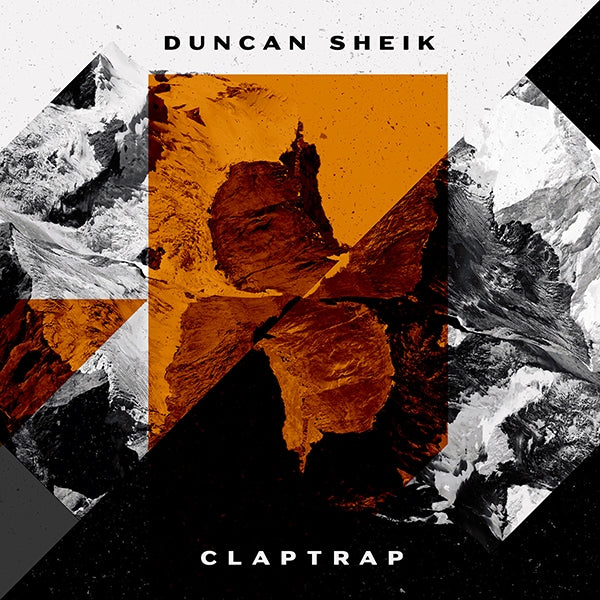
 

Claptrap, album cover.

Claptrap, album cover.


RC: What is the process of creating an album like for you and how long does it take?

DS: In March of 2020 I was living in a two-bedroom apartment in New York City that was way too small for me to work in. So, I rented a studio apartment that was ten blocks away so I could literally just put some gear there and be a dad and be around, but also be in a space where I could be alone for three to four hours a day. I would go there where I had a [Roland] Juno 106 and a (Sequential Circuits] Prophet synth and some outboard gear and some nice microphones and guitars. I threw them into a space that was no more than 250 square feet. I’m surprised that I didn’t get kicked out, many times, because I was sort of loud for the entire 18 months I was in the space.

So, I’d go there and initially I was just experimenting. I didn’t know what these songs were going to be and I really didn’t even know if they were going to be songs. I was just trying to initially be as avant-garde as I could be. I was going to make some real “arty” music that was only going to appeal to four people. And then as I went down the road with that process, things became more song-like and evolved back into something that more resembled a “normal pop song.” In the end, I think the final product is more approachable.


RC: The song “Scorpios” includes some tasty guitar playing. Why don’t you put more of your guitar skills on display in your work?

DS: I appreciate that. The truth is frankly that it’s the first time I’ve ever done that. Part of that was because I’d worked previously with Gerry Leonard, who played guitar for David Bowie, Rufus Wainwright, and Susanne Vega. Gerry’s a real genius player and I’d let him do the “pyrotechnics.” Now, because it was only me in this little studio apartment making my own stuff, it was like how it was when I was 12 [years old]. Then, I had my first four-track recorder and I’d be playing a lot of guitar in my bedroom. I was getting back to that experience, rocking out, and trying not to do anything that’s too embarrassing.

RC: Your faith seems to have informed the message of this record.

DS: For what it’s worth I was raised Catholic. Then I went away to boarding school when I was 12. By the age of 15 I was doing all of that boarding school stuff like reading about existentialism. For about five years I didn’t practice [religion] at all. Then when I was in college I felt like as though I needed to find a “practice.” I started studying Eastern religions and when I was 19 I started practicing Buddhism officially. I’ve been a practicing Buddhist for thirty years now, but when the pandemic happened, and I had my first daughter, I went through my late midlife crisis. I had nothing to complain about, but I had a lot of questions I had about how I was feeling, even with everything good [that was] happening. This gave me clarity and those things that were conflicts slipped away. I learned that happiness is about equanimity.

RC: You last charted a single twenty years ago with “On a High.” How freeing is it to simply make the kind of music that you want?

DS: The last time I had any single on the radio was with my last Atlantic record. After that I wondered what would happen to me – would I need to find a new career? Part of that is what allowed me to focus on [creating] Spring Awakening and doing the theater stuff. That was a real boon. Not just in the financial sense, it [told me], I can actually do this and people will want to listen to the music I make. [I had] a crisis of confidence for a while.

RC: The song “Barely Breathing” is one of those songs that appeared everywhere. It launched your career. Has it ever held it back?

DS: If “Barely Breathing” had not been a top radio hit that [had] Atlantic Records [behind it], I might have had have a different career. But that’s not what happened, that [wasn’t] my destiny. You’re being silly if you entertain the idea that you “screwed up” by allowing [a song] to become commercial. Now I can do more “arty” stuff and maybe it’ll become successful. The fact that I [even] have the freedom to do that is amazing.

RC: If you take this record out on the road, what will the band look like?

DS: The challenge is that I now have a whole bunch of theater projects that are lined up through the fall and spring, so I’m probably not going to be able to tour until next summer. I’m frustrated about it. If I tour this record I need a five- or six-person band, and I want to do it properly. I just have to wait for the right moment.

More from Issue 170

View All Articles in Issue 170

Search Copper Magazine

#225 Capital Audiofest 2025: Must-See Stereo, Part One by Frank Doris Dec 01, 2025 #225 Otis Taylor and the Electrics Delivers a Powerful Set of Hypnotic Modern Blues by Frank Doris Dec 01, 2025 #225 A Christmas Miracle by B. Jan Montana Dec 01, 2025 #225 T.H.E. Show New York 2025, Part Two: Plenty to See, Hear, and Enjoy by Frank Doris Dec 01, 2025 #225 Underappreciated Artists, Part One: Martin Briley by Rich Isaacs Dec 01, 2025 #225 Rock and Roll is Here to Stay by Wayne Robins Dec 01, 2025 #225 A Lifetime of Holiday Record (and CD) Listening by Rudy Radelic Dec 01, 2025 #225 Little Feat: Not Saying Goodbye, Not Yet by Ray Chelstowski Dec 01, 2025 #225 How to Play in a Rock Band, Part 18: Dealing With Burnout by Frank Doris Dec 01, 2025 #225 The People Who Make Audio Happen: CanJam SoCal 2025 by Harris Fogel Dec 01, 2025 #225 Chicago’s Sonic Sanctuaries: Four Hi‑Fi Listening Bars Channeling the Jazz‑Kissa Spirit by Olivier Meunier-Plante Dec 01, 2025 #225 From The Audiophile’s Guide: Controlling Bass Frequencies Through Membrane Absorbers (and How to Build Your Own) by Paul McGowan Dec 01, 2025 #225 Your Editor’s Tips for Attending Audio Shows by Frank Doris Dec 01, 2025 #225 PS Audio in the News by Frank Doris Dec 01, 2025 #225 Back to My Reel-to-Reel Roots, Part 24 by Ken Kessler Dec 01, 2025 #225 Holiday Music by Frank Doris Dec 01, 2025 #225 Puppy Prognostication by Peter Xeni Dec 01, 2025 #225 How to Post Comments on Copper by Frank Doris Dec 01, 2025 #225 Living Color by Rudy Radelic Dec 01, 2025 #224 T.H.E. Show New York 2025, Part One: A New Beginning by Frank Doris Nov 03, 2025 #224 Fool’s Leap of Faith is the Extraordinary Octave Records Debut from Singer/Songwriter Tyler Burba and Visit by Frank Doris Nov 03, 2025 #224 The Beatles’ “Aeolian Cadences.” What? by Wayne Robins Nov 03, 2025 #224 Persona Non Grata by B. Jan Montana Nov 03, 2025 #224 Talking With Recording Engineer Barry Diament of Soundkeeper Recordings, Part Two by Frank Doris Nov 03, 2025 #224 B Sides, B Movies, and Beware of Zombies by Rudy Radelic Nov 03, 2025 #224 The Burn-In Chronicles: 1,000 Hours to Sonic Salvation by Olivier Meunier-Plante Nov 03, 2025 #224 A Conversation With Mat Weisfeld of VPI Industries by Joe Caplan Nov 03, 2025 #224 Blues-Rocker Kenny Wayne Shepherd Celebrates 30 Years of Ledbetter Heights by Ray Chelstowski Nov 03, 2025 #224 Playing in a Rock Band, 17: When Good Gigs Go Bad, Part Two by Frank Doris Nov 03, 2025 #224 From The Audiophile’s Guide: Dealing with Odd-Shaped Rooms by Paul McGowan Nov 03, 2025 #224 TEAC’s TN-3B-SE Turntable Plays Bob Dylan by Howard Kneller Nov 03, 2025 #224 PS Audio in the News by Frank Doris Nov 03, 2025 #224 Lost in Translation by Peter Xeni Nov 03, 2025 #224 Reel-to-Reel Roots, Part 23: Better Than Rice Krispies by Ken Kessler Nov 03, 2025 #224 I Bring Joy! by Frank Doris Nov 03, 2025 #224 Screen Test by Rich Isaacs Nov 03, 2025 #224 How to Post Comments on Copper by Frank Doris Nov 03, 2025 #132 Dr. Patrick Gleeson: The Interview, Part Two by Rich Isaacs Oct 07, 2025 #223 World Fusion Meets Flamenco in Gratitude from Steve Mullins and Rim of the Well by Frank Doris Oct 06, 2025 #223 Judging Albums by Their Covers by Rich Isaacs Oct 06, 2025 #223 Recent Arrivals and 12-inch Royalty by Rudy Radelic Oct 06, 2025 #223 Summer of Creem, Part Two by Wayne Robins Oct 06, 2025 #223 Recording Engineer Barry Diament of Soundkeeper Recordings: Striving for Natural Sound by Frank Doris Oct 06, 2025 #223 Tea on the Terrace by B. Jan Montana Oct 06, 2025 #223 How Good Can Car Audio Get? by Joe Caplan Oct 06, 2025 #223 The Advantages of a Dedicated Listening Room by Paul McGowan Oct 06, 2025 #223 1! 2! 3! 4! Surrounded by the Ramones in Dolby Atmos! by Frank Doris Oct 06, 2025

Duncan Sheik: From Barely Breathing to Broadway and Beyond

Duncan Sheik: From Barely Breathing to Broadway and Beyond

Some of the most interesting paths in music (and in life for that matter) come with winding turns and heading into peaks and valleys. Few know that better than Duncan Sheik. He launched his career as a singer/songwriter with his 1996 self-titled debut album, which featured the chart-topping hit “Barely Breathing.” The song racked up 55 consecutive weeks on the Billboard Hot 100 and earned him a Grammy Award nomination for Best Male Pop Vocal Performance. It would continue to be heard in hit television shows and films for over 15 more years.

During that period, Duncan continued to record ambitious studio albums that put creativity at the forefront, but never delivered hits as strong as that debut. When his relationship with Atlantic Records came to a close, his career took what might be the most important turn he’d taken to date (or since). Sheik began work in the world of musical theater, and turned things on their head with a mold-breaking approach to composition that propelled his songs and scores for productions like rock musical Spring Awakening into a place that rightfully enjoyed remarkable acclaim.

After a seven-year break from studio recording, Sheik has just released a new studio album, his ninth. Claptrap is another musical expression that takes a decided turn from what his fans might most expect to hear him perform.  The record was created during the pandemic, in a studio apartment in New York City by Sheik alone. With Claptrap, Sheik has moved into a sound that features delicate acoustic elements that are augmented by a sense of atmosphere and space. While he might say that he was influenced on this album by the dynamic electronic music of artists such as Cocteau Twins and Talk Talk, I can hear sounds reminiscent of Griffin House and his 2005 EP series, House of David. Here’s his single, “Maybe.”


We caught up with Sheik and talked about the process of making the record, how his Buddhist faith has come to inform his writing, and whether he thinks that having a hit as big as “Barely Breathing” helps, hurts or forever defines a career. Lastly, we talked about his plans to get his entire catalogue out in front of fans live.

Ray Chelstowski: It’s been seven years since your last studio release of original material, Legerdemain, and six since the one before that, Whisper House, which was essentially a musical score. How do you know when it’s time to make a new record?

Duncan Sheik: Well, after the album Legerdemain came out, in quick succession I had American Psycho come out on Broadway and a bunch of other projects that I just had to get done because they were going to premiere in 2019. I had three shows [debut] in 2019, and then most importantly, we also had a daughter. So life just happened, and there wasn’t really an opportunity to spend time thinking about writing my own songs for a “Duncan Sheik record.” Really though, I think that when the pandemic happened, myself and many other artists were given the opportunity to get some other work done. I’m not trying to sound glib. I know that a lot of people went through a great deal and I went through COVID a few months ago and know that this isn’t fun.  But it did allow me to take some time out and experiment.


Claptrap, album cover.

Claptrap, album cover.


RC: What is the process of creating an album like for you and how long does it take?

DS: In March of 2020 I was living in a two-bedroom apartment in New York City that was way too small for me to work in. So, I rented a studio apartment that was ten blocks away so I could literally just put some gear there and be a dad and be around, but also be in a space where I could be alone for three to four hours a day. I would go there where I had a [Roland] Juno 106 and a (Sequential Circuits] Prophet synth and some outboard gear and some nice microphones and guitars. I threw them into a space that was no more than 250 square feet. I’m surprised that I didn’t get kicked out, many times, because I was sort of loud for the entire 18 months I was in the space.

So, I’d go there and initially I was just experimenting. I didn’t know what these songs were going to be and I really didn’t even know if they were going to be songs. I was just trying to initially be as avant-garde as I could be. I was going to make some real “arty” music that was only going to appeal to four people. And then as I went down the road with that process, things became more song-like and evolved back into something that more resembled a “normal pop song.” In the end, I think the final product is more approachable.


RC: The song “Scorpios” includes some tasty guitar playing. Why don’t you put more of your guitar skills on display in your work?

DS: I appreciate that. The truth is frankly that it’s the first time I’ve ever done that. Part of that was because I’d worked previously with Gerry Leonard, who played guitar for David Bowie, Rufus Wainwright, and Susanne Vega. Gerry’s a real genius player and I’d let him do the “pyrotechnics.” Now, because it was only me in this little studio apartment making my own stuff, it was like how it was when I was 12 [years old]. Then, I had my first four-track recorder and I’d be playing a lot of guitar in my bedroom. I was getting back to that experience, rocking out, and trying not to do anything that’s too embarrassing.

RC: Your faith seems to have informed the message of this record.

DS: For what it’s worth I was raised Catholic. Then I went away to boarding school when I was 12. By the age of 15 I was doing all of that boarding school stuff like reading about existentialism. For about five years I didn’t practice [religion] at all. Then when I was in college I felt like as though I needed to find a “practice.” I started studying Eastern religions and when I was 19 I started practicing Buddhism officially. I’ve been a practicing Buddhist for thirty years now, but when the pandemic happened, and I had my first daughter, I went through my late midlife crisis. I had nothing to complain about, but I had a lot of questions I had about how I was feeling, even with everything good [that was] happening. This gave me clarity and those things that were conflicts slipped away. I learned that happiness is about equanimity.

RC: You last charted a single twenty years ago with “On a High.” How freeing is it to simply make the kind of music that you want?

DS: The last time I had any single on the radio was with my last Atlantic record. After that I wondered what would happen to me – would I need to find a new career? Part of that is what allowed me to focus on [creating] Spring Awakening and doing the theater stuff. That was a real boon. Not just in the financial sense, it [told me], I can actually do this and people will want to listen to the music I make. [I had] a crisis of confidence for a while.

RC: The song “Barely Breathing” is one of those songs that appeared everywhere. It launched your career. Has it ever held it back?

DS: If “Barely Breathing” had not been a top radio hit that [had] Atlantic Records [behind it], I might have had have a different career. But that’s not what happened, that [wasn’t] my destiny. You’re being silly if you entertain the idea that you “screwed up” by allowing [a song] to become commercial. Now I can do more “arty” stuff and maybe it’ll become successful. The fact that I [even] have the freedom to do that is amazing.

RC: If you take this record out on the road, what will the band look like?

DS: The challenge is that I now have a whole bunch of theater projects that are lined up through the fall and spring, so I’m probably not going to be able to tour until next summer. I’m frustrated about it. If I tour this record I need a five- or six-person band, and I want to do it properly. I just have to wait for the right moment.

0 comments

Leave a comment

0 Comments

Your avatar

Loading comments...

🗑️ Delete Comment

Enter moderator password to delete this comment: