Copper

We're Golden!
We're Golden!
Welcome to Copper #50! It's hard to believe we've reached our 50th issue---and thanks to all of you for supporting us, and helping us to reach this milestone. Even more unbelievable is... Read more...
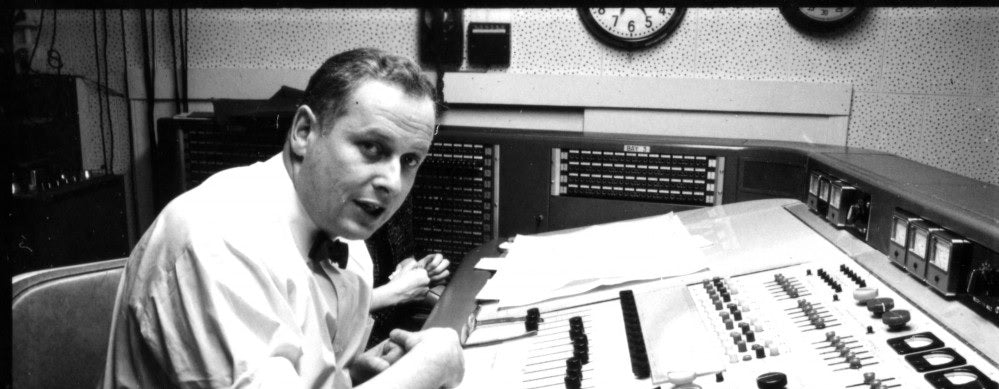
Tom Fine, Part 2
Tom Fine, Part 2
[Tom Fine is an archival/recording/mastering engineer, and if if his name sounds familiar, it’s likely because he’s the son of Robert Fine and Wilma Cozart Fine. One of the rare husband-wife teams in... Read more...
Qobuz Comes to the US; Circuit City Returns?
If CES is good for nothing else, it’s good for generating press-releases. As we can read in the press-release that will follow, Qobuz (koh-BOOZ, if you’re French; KO-buzz, if you’re a Yank) is indeed coming to the US. The streaming service was the first to offer hi-res downloads, but until now, has been available only in Europe. Qobuz did participate in the Hi-Res Pavilion at CES, along with MQA and numerous other companies. LAS VEGAS, Jan. 3, 2018 /PRNewswire/ — Qobuz, a European commercial online music streaming and downloading service, announced today its... Read more...
Mozart Chamber Music
Mozart’s string quartets and sonatas are deservedly adored members of the classical canon. But he wrote many other genres of chamber music as well. Three recent recordings remind us to pay attention to some of these less-performed works. In the early music scene, the Kuijken family of Belgium is revered as a group of experts on historical performance, and now two generations of them have turned their attention to Mozart’s two piano quartets (piano, violin, viola, cello). This is the first and only recording by the particular ensemble calling themselves... Read more...
Cables: Time is of the Essence, Part 3
[We began this series of articles by Belden engineer Galen Gareis in Copper #48 , and continued it in Copper #49. We now present the conclusion of  Time is of the Essence, on time-based distortions in audio cable design,—Ed.] 7) Dielectric effects Dielectrics have a disproportionate impact upon weak electromagnetic signals. Four-fifths or more of the current magnitude at audio frequencies is below 3,000 Hz, and this clumping is often called “spectral density”. This energy does not stop in plastic or air. It emanates out in an inverse-log power decay through all the materials it encounters along the way. Electromagnetic fields are most... Read more...
The River Runs Through It: Rick Hall
Trains and rivers run through America like blood brooding through the veins of a thoroughbred.   There are few things more magical to a working man than looking down that track at a crossing, seeing the long gleam of sunlight glinting on metal stretching a ribbon far away from where you are, or where you’re going.  And there is a special quality of light and sound in the early morning on a river laughing at a boy wishing to divine its secrets and catch a fish.  You put trains and rivers... Read more...
Yellow Light Machine
When you hear the word “indie,” you probably think of New York. Or Toronto. Maybe Seattle. Even Reykjavik. But what about Nairobi, Kenya? There’s a burgeoning indie music scene there,... Read more...
Equal Time
Equal Time
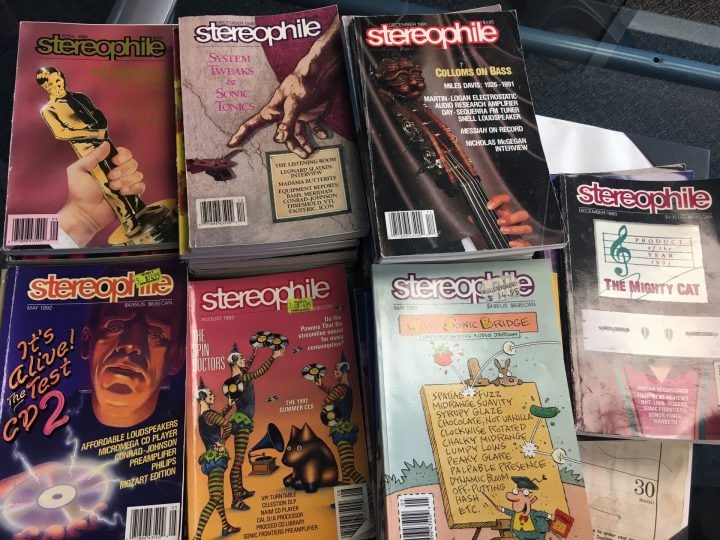
In Copper #48 I began the perusal of a hefty box of old issues of The Absolute Sound, kindly sent by Australian reader Ian Lobb (and again, goodonya, mate!). Last issue I focused on the influence of TAS‘ founder... Read more...
Jazz
Jazz
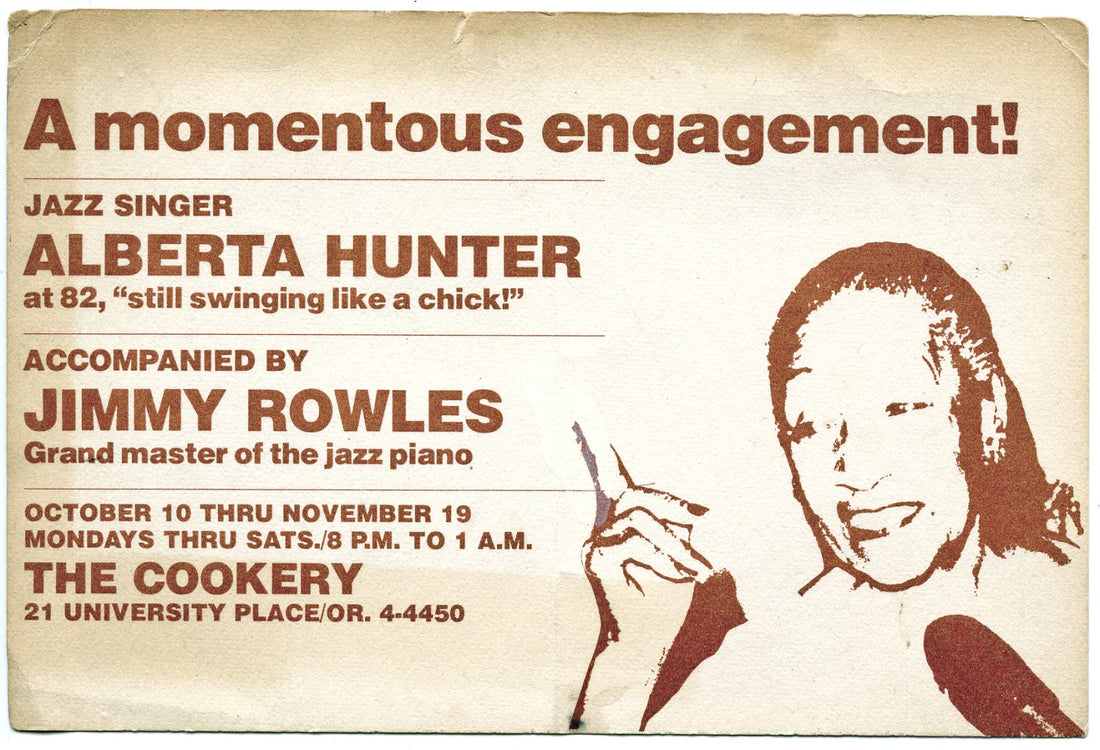
“God bless you honey, God bless you”, said Alberta Hunter to my mother. Greenwich Village in the seventies was dirty and gritty. Crime was rampant and bodies floating in the Hudson... Read more...
The Final Countdown!
We’ve arrived at the finals of the ‘67 Psychedelic Shoot-out!!! There was no way of knowing how this whole exercise was going to peel out. It really just started as me ranting about the differences between The Beatles’ Sgt. Pepper’s Lonely Hearts Club Band  and the Rolling Stones’ Their Satanic Majesties Request, and grew, as things like this tend to do, into something much larger. I’m really in awe over this whole exercise. In awe…really…like, um..why? Simply because, as a by product of the 60’s counter culture revolution spearheaded by the Beatles, the... Read more...
“The Japanese Beethoven”
Modern popular music differs most significantly from classical music in that the original performance is considered to be the definitive expression, and any others that follow are generally considered to be ‘covers’.  Furthermore, it is considered bad form for a ‘cover’ version to attempt to replicate the original – a ‘cover’ is expected to provide some variation, innovation, or other interpretive departure from the original.  With classical music, the emphasis is on the composition itself – a specific recipe that sets out the notes each instrument has to play, and... Read more...
What Is a Bass? Part 4: Electronic Guitars
I want to wrap up this attempt to answer the question of what goes into a bass (a question only asked by one person) by talking a little about the electronic circuits that go into stringed instruments. But it occurs to me that some readers may not know why I’m focusing on basses (besides the obvious fact that I’m a bassist). [For the latecomers to this series: Part 1 Part 2 Part 3 —Ed.] In the beginning, basses and guitars were different versions of one instrument  (either you thought of it as a bass... Read more...
Voices
Whenever people talk seriously about recorded music, sooner or later the matter of scale comes up. Some musics and musical experiences get big. Others win by staying small. So, public versus intimate. Meta vs. miniature. Universal vs. individual. Recordings invite confusion: who actually expects to actually hear the actual Berlioz Requiem in her living room? Live performance offers fewer confusions. Yet I can’t help thinking of a night I spent in Chicago thirty-odd years ago: we had taken our teenage daughter to a Madonna performance. Quite an evening. Soldier Field was packed with... Read more...
As Real As It Gets
As Real As It Gets