COPPER

A PS Audio Publication

Issue 21 • Free Online Magazine

Issue 21 MAKE IT YOURSELF

“CNC” Moving Magnet Cartridge Phono Stage

My friend Bill and I wanted a simple phono pre-amp for shop use, one that was not expensive but would give high end performance. I like the KISS principle and picked the recommended circuit from the National Semiconductor datasheet using two LME49720 op amps.

Two sockets, two chips, two 9V batteries, a switch, two 100uf power supply caps and a handful of .1% and 1% resistors with Panasonic polypropylene caps assembled by Bill on a RatShack perf board and the simple little preamp sounded VERY good!  On initial listening to an acoustic performance it was open, airy and very detailed. It was much better than the internal phono pre of the “inexpensive” shop receiver.

For a total outlay under $50, we were quite pleased. I shared this breadboard phono pre amp with the good folks at Audiokarma.org.  The DIY crowd there then ran with it and went so far as to create PC boards and build of material lists.  The thread is over 125 pages, 2500 replies and 420,000 views. People from all over the world have built these little wonders that the group dubbed “CNC” for Charlotte, North Carolina. The pc board and BOM include switchable input loading so you can try different loads on your favorite moving magnet cartridge. Industry standard is 47k ohm. With the CNC you can also try 18k, 32k and 62k to fine tune the sound. There are also discussions about plugin power supplies so you are not reliant on batteries, including schematics and PC board layouts. I prefer batteries as they provide cleaner DC power. But if you forget to turn off the CNC after use there go your new 9 volts (ask me how I know…) Lantern batteries, rechargeable batteries or AGM batteries are also options. This thread is a wealth of DIY information, including tips on how to populate a pc board and tips on soldering.

http://audiokarma.org/forums/index.php?threads/another-super-high-end-phono-stage-no-expense-spared.371889/

You don’t have to have a premade PC board, but it does make assembly easier.

This pre-amp is also a great way to see for yourself if component changes affect the sound quality. Is there a difference in sound between types of capacitors? How about Op-amps? I believe there are audible differences, especially when you are amplifying a small signal in the millivolts. But don’t take my word for it. The CNC is affordable enough you can try the different components and listen and make your own decisions. My personal preference in op amps is either a pair of Burr Brown OPA2134 or replace the first Opamp with an LME4990 (you will have to put the surface mount chip on a Brown Dog adapter) or LM4562. I also prefer Polypropylene film and foil capacitors for the 1uf DC blocking/coupling capacitor, like the WIMA FKP series. You can also experiment with bypassing the 1uf with .1uf or .01uf caps. I like the Russian Teflon film capacitors as they are affordable and have a very clean top end.  Some folks swear by NOS or Russian paper in oil capacitors.

You will need a case for your pre amp. I have used jewelry boxes, cigar boxes and rat shack aluminum and plastic cases. Bill put the first board in a small, plastic toolbox. I have even gone to an arts and crafts store and used a basswood craft box that looked like a book with hinged lid. Use your imagination- repurpose something that will look cool on your shelf. Happy Listening!

Preliminary Bill of Materials:

Quantity Component
1 PCB Board
2  Resistors 0.25W,  100 ohm
 2 Resistors 0.25W, 130  ohm
 2 Resistors 0.25W, 180 ohm
 6 Resistors 0.25W, 300 ohm
 2 Resistors 0.25W, 2k2 ohm
 4 Resistors 0.25W, 3k3 ohm
 2 Resistors 0.25W, 16k ohm
 2 Resistors 0.25W, 33k ohm
 2 Resistors 0.25W, 82k ohm
4 Resistors 0.25W, 110k ohm
2 Resistors 0.25W, 150k ohm
2 8-Pin DIL Sockets
2 2-Way DIP Switches
2 4-Way DIP Switches
2 AD823 or OPA2134 or LM4562 Op Amps
4 Ceramic Capacitors, 100 nF
2 Polyester Film Capacitors, 47 nF
4 Polyester Film Capacitors, 68 nF
2 Polyester Film Capacitors, 1 uF
4 Electrolytic Capacitors, 22 uF
2 DG301 Screw Terminals, Two Positions
2 DG301 Screw Terminals, Three Positions
2 9V Batteries
2 9V Battery Connectors

Note: The schematic above should be considered preliminary. A complete, detailed schematic will appear in Copper #22, along with a source for finished circuit boards and a link to a Digi-Key shopping cart to simplify purchase of parts. For the PCB work and BOM we give credit and thanks to http://muffsy.com ! —Ed.
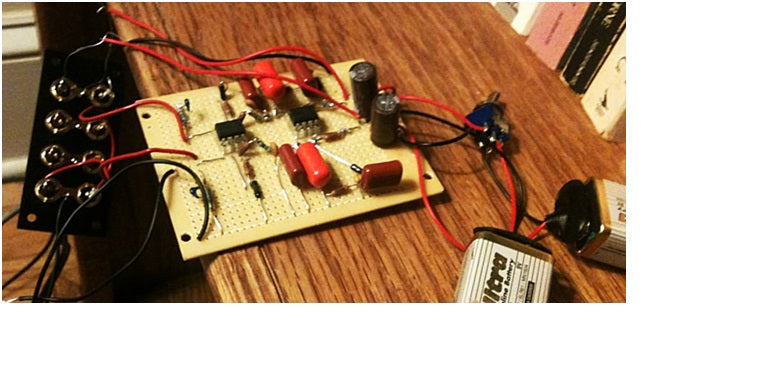

Board #1—before it was christened “CNC”.


“CNC” phono stage in flea market jewelry box.


Inside the jewelry box.
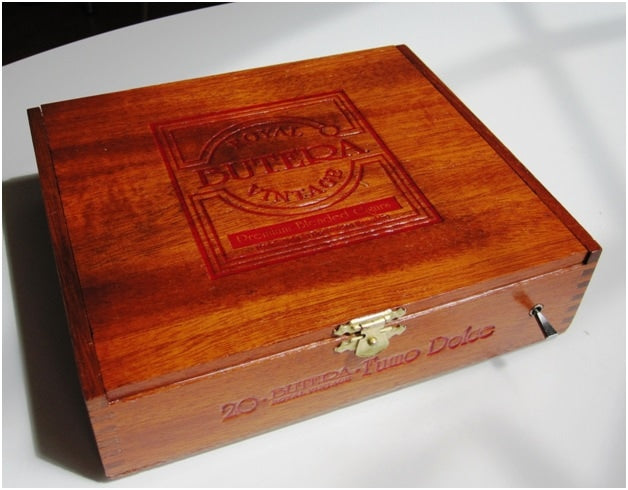

This wooden cigar box cost me $1 at the flea market.


The box had room for spare batteries. The holders were also from Digikey.


Second “CNC” phono stage in a Godinger jewelry box- RCA jacks moved to back.


“TurntableDaddy” Big Bill put board #1 in a cheap toolbox for shop use!


The extra space in the toolbox allowed use of lantern batteries.

More from Issue 21

View All Articles in Issue 21

Search Copper Magazine

#226 JJ Murphy’s Sleep Paralysis is a Genre-Bending Musical Journey Through Jazz, Fusion and More by Frank Doris Jan 05, 2026 #226 Stewardship by Consent by B. Jan Montana Jan 05, 2026 #226 Food, Music, and Sensory Experience: An Interview With Professor Jonathan Zearfoss of the Culinary Institute of America by Joe Caplan Jan 05, 2026 #226 Studio Confidential: A Who’s Who of Recording Engineers Tell Their Stories by Frank Doris Jan 05, 2026 #226 Pilot Radio is Reborn, 50 Years Later: Talking With CEO Barak Epstein by Frank Doris Jan 05, 2026 #226 The Vinyl Beat Goes Down to Tijuana (By Way of Los Angeles), Part One by Rudy Radelic Jan 05, 2026 #226 Capital Audiofest 2025: Must-See Stereo, Part Two by Frank Doris Jan 05, 2026 #226 My Morning Jacket’s Carl Broemel and Tyler Ramsey Collaborate on Their Acoustic Guitar Album, Celestun by Ray Chelstowski Jan 05, 2026 #226 The People Who Make Audio Happen: CanJam SoCal 2025, Part Two by Harris Fogel Jan 05, 2026 #226 How to Play in a Rock Band, 19: Touring Can Make You Crazy, Part One by Frank Doris Jan 05, 2026 #226 Linda Ronstadt Goes Bigger by Wayne Robins Jan 05, 2026 #226 From The Audiophile’s Guide: Active Room Correction and Digital Signal Processing by Paul McGowan Jan 05, 2026 #226 PS Audio in the News by Frank Doris Jan 05, 2026 #226 Back to My Reel-to-Reel Roots, Part 25: Half-Full, Not Empty by Ken Kessler Jan 05, 2026 #226 Happy New Year! by Frank Doris Jan 05, 2026 #226 Turn It Down! by Peter Xeni Jan 05, 2026 #226 Ghost Riders by James Schrimpf Jan 05, 2026 #226 A Factory Tour of Audio Manufacturer German Physiks by Markus "Marsu" Manthey Jan 04, 2026 #225 Capital Audiofest 2025: Must-See Stereo, Part One by Frank Doris Dec 01, 2025 #225 Otis Taylor and the Electrics Delivers a Powerful Set of Hypnotic Modern Blues by Frank Doris Dec 01, 2025 #225 A Christmas Miracle by B. Jan Montana Dec 01, 2025 #225 T.H.E. Show New York 2025, Part Two: Plenty to See, Hear, and Enjoy by Frank Doris Dec 01, 2025 #225 Underappreciated Artists, Part One: Martin Briley by Rich Isaacs Dec 01, 2025 #225 Rock and Roll is Here to Stay by Wayne Robins Dec 01, 2025 #225 A Lifetime of Holiday Record (and CD) Listening by Rudy Radelic Dec 01, 2025 #225 Little Feat: Not Saying Goodbye, Not Yet by Ray Chelstowski Dec 01, 2025 #225 How to Play in a Rock Band, Part 18: Dealing With Burnout by Frank Doris Dec 01, 2025 #225 The People Who Make Audio Happen: CanJam SoCal 2025 by Harris Fogel Dec 01, 2025 #225 Chicago’s Sonic Sanctuaries: Four Hi‑Fi Listening Bars Channeling the Jazz‑Kissa Spirit by Olivier Meunier-Plante Dec 01, 2025 #225 From The Audiophile’s Guide: Controlling Bass Frequencies Through Membrane Absorbers (and How to Build Your Own) by Paul McGowan Dec 01, 2025 #225 Your Editor’s Tips for Attending Audio Shows by Frank Doris Dec 01, 2025 #225 PS Audio in the News by Frank Doris Dec 01, 2025 #225 Back to My Reel-to-Reel Roots, Part 24 by Ken Kessler Dec 01, 2025 #225 Holiday Music by Frank Doris Dec 01, 2025 #225 Puppy Prognostication by Peter Xeni Dec 01, 2025 #225 How to Post Comments on Copper by Frank Doris Dec 01, 2025 #225 Living Color by Rudy Radelic Dec 01, 2025 #224 T.H.E. Show New York 2025, Part One: A New Beginning by Frank Doris Nov 03, 2025 #224 Fool’s Leap of Faith is the Extraordinary Octave Records Debut from Singer/Songwriter Tyler Burba and Visit by Frank Doris Nov 03, 2025 #224 The Beatles’ “Aeolian Cadences.” What? by Wayne Robins Nov 03, 2025 #224 Persona Non Grata by B. Jan Montana Nov 03, 2025 #224 Talking With Recording Engineer Barry Diament of Soundkeeper Recordings, Part Two by Frank Doris Nov 03, 2025 #224 B Sides, B Movies, and Beware of Zombies by Rudy Radelic Nov 03, 2025 #224 The Burn-In Chronicles: 1,000 Hours to Sonic Salvation by Olivier Meunier-Plante Nov 03, 2025 #224 A Conversation With Mat Weisfeld of VPI Industries by Joe Caplan Nov 03, 2025 #224 Blues-Rocker Kenny Wayne Shepherd Celebrates 30 Years of Ledbetter Heights by Ray Chelstowski Nov 03, 2025 #224 Playing in a Rock Band, 17: When Good Gigs Go Bad, Part Two by Frank Doris Nov 03, 2025

“CNC” Moving Magnet Cartridge Phono Stage

My friend Bill and I wanted a simple phono pre-amp for shop use, one that was not expensive but would give high end performance. I like the KISS principle and picked the recommended circuit from the National Semiconductor datasheet using two LME49720 op amps.

Two sockets, two chips, two 9V batteries, a switch, two 100uf power supply caps and a handful of .1% and 1% resistors with Panasonic polypropylene caps assembled by Bill on a RatShack perf board and the simple little preamp sounded VERY good!  On initial listening to an acoustic performance it was open, airy and very detailed. It was much better than the internal phono pre of the “inexpensive” shop receiver.

For a total outlay under $50, we were quite pleased. I shared this breadboard phono pre amp with the good folks at Audiokarma.org.  The DIY crowd there then ran with it and went so far as to create PC boards and build of material lists.  The thread is over 125 pages, 2500 replies and 420,000 views. People from all over the world have built these little wonders that the group dubbed “CNC” for Charlotte, North Carolina. The pc board and BOM include switchable input loading so you can try different loads on your favorite moving magnet cartridge. Industry standard is 47k ohm. With the CNC you can also try 18k, 32k and 62k to fine tune the sound. There are also discussions about plugin power supplies so you are not reliant on batteries, including schematics and PC board layouts. I prefer batteries as they provide cleaner DC power. But if you forget to turn off the CNC after use there go your new 9 volts (ask me how I know…) Lantern batteries, rechargeable batteries or AGM batteries are also options. This thread is a wealth of DIY information, including tips on how to populate a pc board and tips on soldering.

http://audiokarma.org/forums/index.php?threads/another-super-high-end-phono-stage-no-expense-spared.371889/

You don’t have to have a premade PC board, but it does make assembly easier.

This pre-amp is also a great way to see for yourself if component changes affect the sound quality. Is there a difference in sound between types of capacitors? How about Op-amps? I believe there are audible differences, especially when you are amplifying a small signal in the millivolts. But don’t take my word for it. The CNC is affordable enough you can try the different components and listen and make your own decisions. My personal preference in op amps is either a pair of Burr Brown OPA2134 or replace the first Opamp with an LME4990 (you will have to put the surface mount chip on a Brown Dog adapter) or LM4562. I also prefer Polypropylene film and foil capacitors for the 1uf DC blocking/coupling capacitor, like the WIMA FKP series. You can also experiment with bypassing the 1uf with .1uf or .01uf caps. I like the Russian Teflon film capacitors as they are affordable and have a very clean top end.  Some folks swear by NOS or Russian paper in oil capacitors.

You will need a case for your pre amp. I have used jewelry boxes, cigar boxes and rat shack aluminum and plastic cases. Bill put the first board in a small, plastic toolbox. I have even gone to an arts and crafts store and used a basswood craft box that looked like a book with hinged lid. Use your imagination- repurpose something that will look cool on your shelf. Happy Listening!

Preliminary Bill of Materials:

Quantity Component
1 PCB Board
2  Resistors 0.25W,  100 ohm
 2 Resistors 0.25W, 130  ohm
 2 Resistors 0.25W, 180 ohm
 6 Resistors 0.25W, 300 ohm
 2 Resistors 0.25W, 2k2 ohm
 4 Resistors 0.25W, 3k3 ohm
 2 Resistors 0.25W, 16k ohm
 2 Resistors 0.25W, 33k ohm
 2 Resistors 0.25W, 82k ohm
4 Resistors 0.25W, 110k ohm
2 Resistors 0.25W, 150k ohm
2 8-Pin DIL Sockets
2 2-Way DIP Switches
2 4-Way DIP Switches
2 AD823 or OPA2134 or LM4562 Op Amps
4 Ceramic Capacitors, 100 nF
2 Polyester Film Capacitors, 47 nF
4 Polyester Film Capacitors, 68 nF
2 Polyester Film Capacitors, 1 uF
4 Electrolytic Capacitors, 22 uF
2 DG301 Screw Terminals, Two Positions
2 DG301 Screw Terminals, Three Positions
2 9V Batteries
2 9V Battery Connectors

Note: The schematic above should be considered preliminary. A complete, detailed schematic will appear in Copper #22, along with a source for finished circuit boards and a link to a Digi-Key shopping cart to simplify purchase of parts. For the PCB work and BOM we give credit and thanks to http://muffsy.com ! —Ed.


Board #1—before it was christened “CNC”.


“CNC” phono stage in flea market jewelry box.


Inside the jewelry box.


This wooden cigar box cost me $1 at the flea market.


The box had room for spare batteries. The holders were also from Digikey.


Second “CNC” phono stage in a Godinger jewelry box- RCA jacks moved to back.


“TurntableDaddy” Big Bill put board #1 in a cheap toolbox for shop use!


The extra space in the toolbox allowed use of lantern batteries.

0 comments

Leave a comment

0 Comments

Your avatar

Loading comments...

🗑️ Delete Comment

Enter moderator password to delete this comment: